Appendicitis
{ A Disorder of Digestive System}
Contents
•
•
•
•
•
•
•
•

Appendix
Functions
Introduction of Appendicitis.
Symptoms.
Causes.
Pathophysiology
Treatment.
Complications.
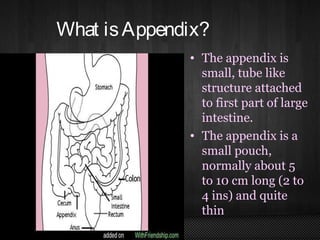
What is Appendix?
• The appendix is
small, tube like
structure attached
to first part of large
intestine.
• The appendix is a
small pouch,
normally about 5
to 10 cm long (2 to
4 ins) and quite
thin
Functions
• The appendix has no known function in
humans.
• Evidence suggests that our evolutionary
ancestors used their appendixes to digest
tough food like tree bark, but we don't use
ours in digestion now.
• Whether the appendix has a function or
not, it can be removed without any ill
effects.
What is Appendicitis?
• It refers to the
condition
characterized by
inflammation of
the appendix.
• If untreated, mortality is high, mainly because of
the risk of rupture leading to infection and
inflammation of the intestinal lining
(peritoneum)
• If the blockage is not treated, the appendix can
burst and spread infection into the abdomen.
This causes a condition called peritonitis.
• Appendicitis is a medical emergency. Treatment
almost always involves removing the appendix.
Anyone can get appendicitis, but it is more
common among people between 10 to 30 years
old.
Symptoms
• The main symptom is pain in the abdomen. ,
often on the right side.
• Swelling in the abdomen.
• Loss of appetite
• Nausea and vomiting
• Constipation or diarrhea
• Inability to pass gas
• Low fever
• Not everyone with appendicitis has all these
symptoms.
Causes
• An obstruction. Food waste or a hard piece of stool
(fecal stone) can block the opening of the cavity that
runs the length of your appendix.
• An infection. Appendicitis may also follow an
infection, such as a gastrointestinal viral infection,
or it may result from other types of inflammation.
• In both cases, bacteria inside the appendix multiply
rapidly, causing the appendix to become inflamed,
swollen and filled with pus. If not treated promptly,
the appendix can rupture.
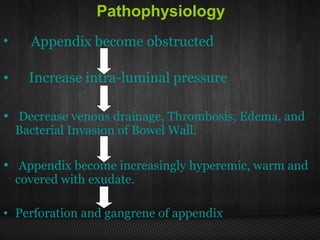
Pathophysiology
•

Appendix become obstructed

•

Increase intra-luminal pressure

• Decrease venous drainage, Thrombosis, Edema, and
Bacterial Invasion of Bowel Wall.

• Appendix become increasingly hyperemic, warm and
covered with exudate.

• Perforation and gangrene of appendix
Treatment & Management
Medical examination: The original test for
appendicitis, a simple examination of the belly
remains important in making the diagnosis.
Changes in the abdominal exam help doctors tell
if appendicitis is progressing, as well.
CT scan (computed tomography): A CT scanner
uses X-rays and a computer to create detailed
images. In appendicitis, CT scans can show the
inflamed appendix, and whether it has ruptured.
Ultrasound: An ultrasound uses sound waves to
detect signs of appendicitis, such as a swollen
appendix.
Complete blood count (CBC): An increased
number of white blood cells -- a sign of infection
and inflammation -- are often seen on blood
tests during appendicitis.
• Surgery to remove the appendix, which is called
an appendectomy, is the standard treatment for
appendicitis.
Complications..
• If your appendix bursts, it releases pus to other parts of the
body, which can cause an infection in the abdomen called
peritonitis.
• Peritonitis is the painful swelling of the abdomen area
around the stomach and liver. The condition causes your
normal bowel movements to stop and your bowel to
become blocked.
• This causes:
• severe abdominal pain
• a fever of 38ºC (100.4ºF) or more
• a rapid heartbeat
• If peritonitis is not treated immediately it can cause longterm problems and may even be fatal
Preventing Appendicitis
• Studies have shown that the incidence of
appendicitis is a lot lower in countries
where a high-fiber diet is common.
• It is not known exactly why this is, but
one possible reason is that fiber makes our
stools softer, reducing the chances of them
getting stuck in the appendix.
• Foods high in fiber include:
–
–
–

wholegrain cereals, bread, rice.
vegetables, such as carrots
fruits
Appendicitis
Appendicitis

Appendicitis

  • 1.
    Appendicitis { A Disorderof Digestive System}
  • 2.
  • 3.
    What is Appendix? •The appendix is small, tube like structure attached to first part of large intestine. • The appendix is a small pouch, normally about 5 to 10 cm long (2 to 4 ins) and quite thin
  • 4.
    Functions • The appendixhas no known function in humans. • Evidence suggests that our evolutionary ancestors used their appendixes to digest tough food like tree bark, but we don't use ours in digestion now. • Whether the appendix has a function or not, it can be removed without any ill effects.
  • 5.
    What is Appendicitis? •It refers to the condition characterized by inflammation of the appendix.
  • 6.
    • If untreated,mortality is high, mainly because of the risk of rupture leading to infection and inflammation of the intestinal lining (peritoneum) • If the blockage is not treated, the appendix can burst and spread infection into the abdomen. This causes a condition called peritonitis. • Appendicitis is a medical emergency. Treatment almost always involves removing the appendix. Anyone can get appendicitis, but it is more common among people between 10 to 30 years old.
  • 7.
    Symptoms • The mainsymptom is pain in the abdomen. , often on the right side. • Swelling in the abdomen. • Loss of appetite • Nausea and vomiting • Constipation or diarrhea • Inability to pass gas • Low fever • Not everyone with appendicitis has all these symptoms.
  • 8.
    Causes • An obstruction.Food waste or a hard piece of stool (fecal stone) can block the opening of the cavity that runs the length of your appendix. • An infection. Appendicitis may also follow an infection, such as a gastrointestinal viral infection, or it may result from other types of inflammation. • In both cases, bacteria inside the appendix multiply rapidly, causing the appendix to become inflamed, swollen and filled with pus. If not treated promptly, the appendix can rupture.
  • 9.
    Pathophysiology • Appendix become obstructed • Increaseintra-luminal pressure • Decrease venous drainage, Thrombosis, Edema, and Bacterial Invasion of Bowel Wall. • Appendix become increasingly hyperemic, warm and covered with exudate. • Perforation and gangrene of appendix
  • 10.
    Treatment & Management Medicalexamination: The original test for appendicitis, a simple examination of the belly remains important in making the diagnosis. Changes in the abdominal exam help doctors tell if appendicitis is progressing, as well. CT scan (computed tomography): A CT scanner uses X-rays and a computer to create detailed images. In appendicitis, CT scans can show the inflamed appendix, and whether it has ruptured. Ultrasound: An ultrasound uses sound waves to detect signs of appendicitis, such as a swollen appendix.
  • 11.
    Complete blood count(CBC): An increased number of white blood cells -- a sign of infection and inflammation -- are often seen on blood tests during appendicitis. • Surgery to remove the appendix, which is called an appendectomy, is the standard treatment for appendicitis.
  • 12.
    Complications.. • If yourappendix bursts, it releases pus to other parts of the body, which can cause an infection in the abdomen called peritonitis. • Peritonitis is the painful swelling of the abdomen area around the stomach and liver. The condition causes your normal bowel movements to stop and your bowel to become blocked. • This causes: • severe abdominal pain • a fever of 38ºC (100.4ºF) or more • a rapid heartbeat • If peritonitis is not treated immediately it can cause longterm problems and may even be fatal
  • 13.
    Preventing Appendicitis • Studieshave shown that the incidence of appendicitis is a lot lower in countries where a high-fiber diet is common. • It is not known exactly why this is, but one possible reason is that fiber makes our stools softer, reducing the chances of them getting stuck in the appendix. • Foods high in fiber include: – – – wholegrain cereals, bread, rice. vegetables, such as carrots fruits