The Industrial Revolution
 Major job was agriculture
   Husband, wife and children worked along side of each
    other
   Little food was produced
      just enough to survive
      if there were leftovers they were sold
      there was little incentive (motive) to increase production
 Shift from agricultural based economy to
  manufacturing based economy
 Starts in Britain
   Expansion of farmland, good weather, improved
    transportation and new crops led to an increase in the
    food supply
   Population grew
   Britain had ready money (capital) that they could invest
    in industrial machines and factories
   Natural resources were plentiful
      Rivers
   Supply of markets
 domestic system
   also known as the “putting- out system”
      people worked from their homes, generally during the winter
       months, production costs were low
 spinning jenny and the water frame
   these inventions led to the beginning of the factory
    system
      an organized method of production that brought together
       workers and machines under the control of managers
 Steam engine allowed for machinery to be driven and
 not have to be located by a river
 Steam engine created an increased need for coal
   Locomotives
 Puddling became possible to create a better quality of
 iron
   Britain was then able to produce more high quality iron
    than the rest of the world combined
 Railroads
   Created new jobs
   increased need for coal
 Electricity
   Generator
   Morse code
   Light bulb
   Electric streetcar
 The British parliament passed laws to keep its
  inventions and processes a secret
 Belgium
   went at the same rate as Britain and was comparable
 France
   most workers remained in agriculture
 Germany
 United States
   The Northeast
 Cities grew larger because of the mills and workers
  needed
 Rural areas were changed to cities and towns
 Housing shortages, bad water and sewers
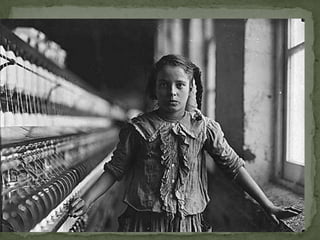
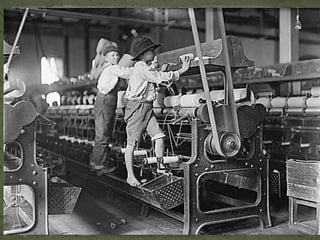
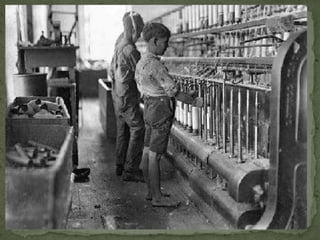
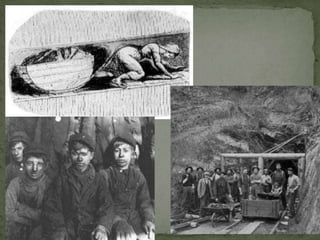
 Child labor was cheaper, and easier to get/train
   Children were routinely beat
 Increases in levels of alcoholism, prostitution, divorce
  and crime
 Rise of industrial capitalism
   Economic system based on industrial production
 Made up of people who built factories, bought the
  machines and figured out where the markets were
 Not to be confused with the industrial working class
   Worked 12-16 hours a day
   No security of employment, no minimum wage
   Cotton mills were the worst
      “in the cotton-spinning work, these creatures are kept, 14
       hours in each day, locked up, summer and winter, in a heat of
       from 80-84 degrees”
   Dirty, dusty, dangerous and unhealthy
 Coal mine conditions were also harsh
   Men still had to dig out the coal even with the new
    machines
   Horses, women, children, mules hauled the coal carts on
    rails to the lift
   Cave-ins, explosions and gas fumes
Industrialization and nationalism

Industrialization and nationalism

  • 1.
  • 2.
     Major jobwas agriculture  Husband, wife and children worked along side of each other  Little food was produced  just enough to survive  if there were leftovers they were sold  there was little incentive (motive) to increase production
  • 3.
     Shift fromagricultural based economy to manufacturing based economy  Starts in Britain  Expansion of farmland, good weather, improved transportation and new crops led to an increase in the food supply  Population grew  Britain had ready money (capital) that they could invest in industrial machines and factories  Natural resources were plentiful  Rivers  Supply of markets
  • 4.
     domestic system  also known as the “putting- out system”  people worked from their homes, generally during the winter months, production costs were low  spinning jenny and the water frame  these inventions led to the beginning of the factory system  an organized method of production that brought together workers and machines under the control of managers  Steam engine allowed for machinery to be driven and not have to be located by a river
  • 6.
     Steam enginecreated an increased need for coal  Locomotives  Puddling became possible to create a better quality of iron  Britain was then able to produce more high quality iron than the rest of the world combined
  • 7.
     Railroads  Created new jobs  increased need for coal  Electricity  Generator  Morse code  Light bulb  Electric streetcar
  • 8.
     The Britishparliament passed laws to keep its inventions and processes a secret  Belgium  went at the same rate as Britain and was comparable  France  most workers remained in agriculture  Germany  United States  The Northeast
  • 9.
     Cities grewlarger because of the mills and workers needed  Rural areas were changed to cities and towns  Housing shortages, bad water and sewers  Child labor was cheaper, and easier to get/train  Children were routinely beat  Increases in levels of alcoholism, prostitution, divorce and crime
  • 11.
     Rise ofindustrial capitalism  Economic system based on industrial production  Made up of people who built factories, bought the machines and figured out where the markets were  Not to be confused with the industrial working class  Worked 12-16 hours a day  No security of employment, no minimum wage  Cotton mills were the worst  “in the cotton-spinning work, these creatures are kept, 14 hours in each day, locked up, summer and winter, in a heat of from 80-84 degrees”  Dirty, dusty, dangerous and unhealthy
  • 13.
     Coal mineconditions were also harsh  Men still had to dig out the coal even with the new machines  Horses, women, children, mules hauled the coal carts on rails to the lift  Cave-ins, explosions and gas fumes