The Industrial
                             Revolution
                          Chapter 23, Lesson 1 & Chapter 24, Lesson 1


Wednesday, April 17, 13
The Industrial
          Revolution
          GUIDING QUESTIONS What was the significance of the Agricultural
          Revolution in Great Britain? Why did the Industrial Revolution start in
          Great Britain? What factors fed the spread of industrialization in Europe
          and North America? What was the social impact of industrialization in
          Europe?


Wednesday, April 17, 13
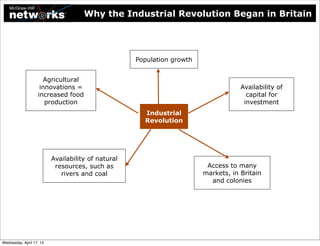
Why the Industrial Revolution Began in Britain


                                                    Population growth


                     Agricultural
                    innovations =                                                   Availability of
                   increased food                                                     capital for
                      production                                                     investment
                                                      Industrial
                                                      Revolution


                          Availability of natural
                           resources, such as                            Access to many
                             rivers and coal                            markets, in Britain
                                                                          and colonies


Wednesday, April 17, 13
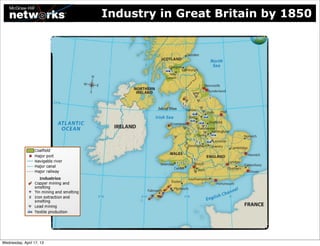
Industry in Great Britain by 1850


Wednesday, April 17, 13
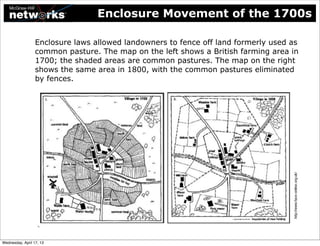
Enclosure Movement of the 1700s

                  Enclosure laws allowed landowners to fence off land formerly used as
                  common pasture. The map on the left shows a British farming area in
                  1700; the shaded areas are common pastures. The map on the right
                  shows the same area in 1800, with the common pastures eliminated
                  by fences.


Wednesday, April 17, 13
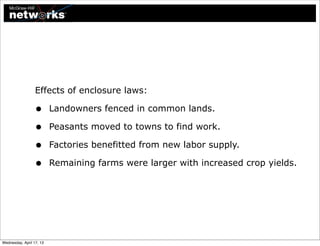
Effects of enclosure laws:

                  •       Landowners fenced in common lands.

                  •       Peasants moved to towns to find work.

                  •       Factories benefitted from new labor supply.

                  •       Remaining farms were larger with increased crop yields.


Wednesday, April 17, 13
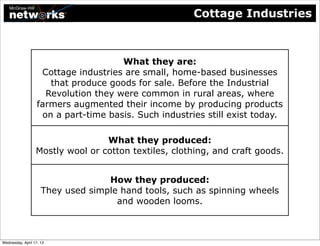
Cottage Industries


                                      What they are:
                    Cottage industries are small, home-based businesses
                      that produce goods for sale. Before the Industrial
                     Revolution they were common in rural areas, where
                   farmers augmented their income by producing products
                    on a part-time basis. Such industries still exist today.

                                  What they produced:
                  Mostly wool or cotton textiles, clothing, and craft goods.


                                   How they produced:
                     They used simple hand tools, such as spinning wheels
                                     and wooden looms.


Wednesday, April 17, 13
Inventions of the Industrial Revolution


              •       Puddling

                          •   Produced bar iron without hammering.

                          •   Faster production and better quality.

              •       Steam engine

                          •   Transformed transportation and agriculture.

                          •   With James Watt’s improvements, enabled to drive
                              machinery.


Wednesday, April 17, 13
Spread of Industrialization


              •       Spread first to countries whose government were ready
                      for it: Belgium, France, Germany.

              •       Spread in America once population moved from farms to
                      cities.

              •       Railway system was a key factor both in Europe and the
                      United States.


Wednesday, April 17, 13
Famine and Immigration


              •       Famine and poverty caused many people in Europe to
                      move to different countries in search of a better life.

              •       A potato famine in Ireland killed a million people and
                      caused a million more to emigrate to the United States.

              •       Other Europeans emigrated to large cities in other
                      countries, believing that industrialization brought new
                      economic opportunities.


Wednesday, April 17, 13
Visual Summary


Wednesday, April 17, 13
The Growth of Industrial
          Prosperity
          GUIDING QUESTIONS What were the causes and effects of the Second
          Industrial Revolution in Western Europe? How was socialism a response
          to industrialization?


Wednesday, April 17, 13
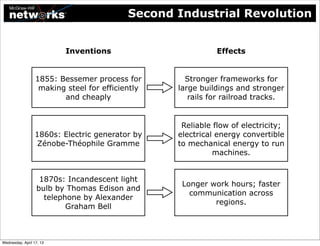
Second Industrial Revolution


                          Inventions                        Effects


                  1855: Bessemer process for        Stronger frameworks for
                   making steel for efficiently   large buildings and stronger
                         and cheaply                 rails for railroad tracks.


                                                   Reliable flow of electricity;
                  1860s: Electric generator by    electrical energy convertible
                   Zénobe-Théophile Gramme        to mechanical energy to run
                                                            machines.


                   1870s: Incandescent light
                                                   Longer work hours; faster
                  bulb by Thomas Edison and
                                                     communication across
                    telephone by Alexander
                                                           regions.
                          Graham Bell


Wednesday, April 17, 13
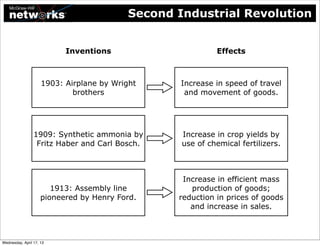
Second Industrial Revolution


                           Inventions                      Effects


                     1903: Airplane by Wright     Increase in speed of travel
                             brothers              and movement of goods.


                 1909: Synthetic ammonia by       Increase in crop yields by
                  Fritz Haber and Carl Bosch.     use of chemical fertilizers.


                                                  Increase in efficient mass
                        1913: Assembly line         production of goods;
                     pioneered by Henry Ford.    reduction in prices of goods
                                                    and increase in sales.


Wednesday, April 17, 13
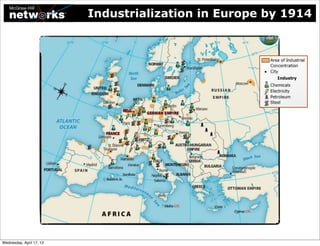
Industrialization in Europe by 1914


Wednesday, April 17, 13
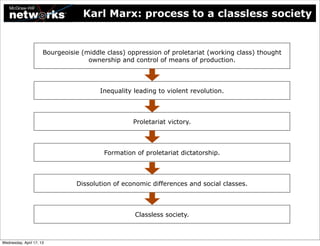
Karl Marx: process to a classless society


                      Bourgeoisie (middle class) oppression of proletariat (working class) thought
                                    ownership and control of means of production.


                                        Inequality leading to violent revolution.


                                                  Proletariat victory.


                                         Formation of proletariat dictatorship.


                                Dissolution of economic differences and social classes.


                                                   Classless society.


Wednesday, April 17, 13
Visual Summary


Wednesday, April 17, 13

The Industrial Revolution

  • 1.
    The Industrial Revolution Chapter 23, Lesson 1 & Chapter 24, Lesson 1 Wednesday, April 17, 13
  • 2.
    The Industrial Revolution GUIDING QUESTIONS What was the significance of the Agricultural Revolution in Great Britain? Why did the Industrial Revolution start in Great Britain? What factors fed the spread of industrialization in Europe and North America? What was the social impact of industrialization in Europe? Wednesday, April 17, 13
  • 3.
    Why the IndustrialRevolution Began in Britain Population growth Agricultural innovations = Availability of increased food capital for production investment Industrial Revolution Availability of natural resources, such as Access to many rivers and coal markets, in Britain and colonies Wednesday, April 17, 13
  • 4.
    Industry in GreatBritain by 1850 Wednesday, April 17, 13
  • 5.
    Enclosure Movement ofthe 1700s Enclosure laws allowed landowners to fence off land formerly used as common pasture. The map on the left shows a British farming area in 1700; the shaded areas are common pastures. The map on the right shows the same area in 1800, with the common pastures eliminated by fences. Wednesday, April 17, 13
  • 6.
    Effects of enclosurelaws: • Landowners fenced in common lands. • Peasants moved to towns to find work. • Factories benefitted from new labor supply. • Remaining farms were larger with increased crop yields. Wednesday, April 17, 13
  • 7.
    Cottage Industries What they are: Cottage industries are small, home-based businesses that produce goods for sale. Before the Industrial Revolution they were common in rural areas, where farmers augmented their income by producing products on a part-time basis. Such industries still exist today. What they produced: Mostly wool or cotton textiles, clothing, and craft goods. How they produced: They used simple hand tools, such as spinning wheels and wooden looms. Wednesday, April 17, 13
  • 8.
    Inventions of theIndustrial Revolution • Puddling • Produced bar iron without hammering. • Faster production and better quality. • Steam engine • Transformed transportation and agriculture. • With James Watt’s improvements, enabled to drive machinery. Wednesday, April 17, 13
  • 9.
    Spread of Industrialization • Spread first to countries whose government were ready for it: Belgium, France, Germany. • Spread in America once population moved from farms to cities. • Railway system was a key factor both in Europe and the United States. Wednesday, April 17, 13
  • 10.
    Famine and Immigration • Famine and poverty caused many people in Europe to move to different countries in search of a better life. • A potato famine in Ireland killed a million people and caused a million more to emigrate to the United States. • Other Europeans emigrated to large cities in other countries, believing that industrialization brought new economic opportunities. Wednesday, April 17, 13
  • 11.
  • 12.
    The Growth ofIndustrial Prosperity GUIDING QUESTIONS What were the causes and effects of the Second Industrial Revolution in Western Europe? How was socialism a response to industrialization? Wednesday, April 17, 13
  • 13.
    Second Industrial Revolution Inventions Effects 1855: Bessemer process for Stronger frameworks for making steel for efficiently large buildings and stronger and cheaply rails for railroad tracks. Reliable flow of electricity; 1860s: Electric generator by electrical energy convertible Zénobe-Théophile Gramme to mechanical energy to run machines. 1870s: Incandescent light Longer work hours; faster bulb by Thomas Edison and communication across telephone by Alexander regions. Graham Bell Wednesday, April 17, 13
  • 14.
    Second Industrial Revolution Inventions Effects 1903: Airplane by Wright Increase in speed of travel brothers and movement of goods. 1909: Synthetic ammonia by Increase in crop yields by Fritz Haber and Carl Bosch. use of chemical fertilizers. Increase in efficient mass 1913: Assembly line production of goods; pioneered by Henry Ford. reduction in prices of goods and increase in sales. Wednesday, April 17, 13
  • 15.
    Industrialization in Europeby 1914 Wednesday, April 17, 13
  • 16.
    Karl Marx: processto a classless society Bourgeoisie (middle class) oppression of proletariat (working class) thought ownership and control of means of production. Inequality leading to violent revolution. Proletariat victory. Formation of proletariat dictatorship. Dissolution of economic differences and social classes. Classless society. Wednesday, April 17, 13
  • 17.