Occupational Hygiene--Overview
DrAshok Laddha
Occupational health
physician-
Definition of Hygiene
 conditions or practices conducive to maintaining health and preventing disease,
especially through cleanliness.
 word hygiene comes from Hygeia, the Greek goddess of health, who was the
daughter of Aesculapius, the god of medicine. Since the arrival of the Industrial
Revolution (c.1750-1850) and the discovery of the germ theory of disease in the
second half of the nineteenth century, hygiene and sanitation have been at the
forefront of the struggle against illness and disease.
Types of Hygiene
 Personal Hygiene—Head to toe
 Industrial/occupational hygiene
 Environmental hygiene
 Mental hygiene
 Food hygiene
 Sexual Hygiene
 Sleep hygiene
 Water hygiene
 Respiratory hygiene
Water Hygiene--Definition
 Water hygiene focuses on natural and anthropogenic pollutants (from soil and
through air precipitation, chemicals, waste, sewage) present in water,
affecting human health.
Personal Hygiene-
 Personal hygiene involves those practices performed by an individual to care for one's bodily
health and well being, through cleanliness.
 Personal hygiene when working involves:
 1. Keeping yourself clean and tidy , including the hair and especially the hands
 2. Avoiding unhygienic habits
 3. Wearing clean personal protective equipment's
 4. Washing your hands regularly throughout the work period. Always wash your hands when
they are likely to be contaminated, for instance after going to the toilet or after handling raw
material, contact with chemicals etc
 5. Every worker have a moral and legal responsibility to ensure that they do not contaminate
.
 Respiratory Hygiene
 a positive attitude towards hygiene/health/safety/sops/policies and a willingness to help
maintain a high standard at the workplace.
Food Hygiene---
 Food hygiene is concerned with the hygiene practices that prevent food
poisoning. The five key principles of food hygiene,
 Prevent contaminating food with mixing chemicals, spreading from people,
and animals .
 Separate raw and cooked foods to prevent contaminating the cooked foods.
 Cook foods for the appropriate length of time and at the appropriate
temperature to kill pathogens.
 Store food at the proper temperature.
 Use safe water and raw materials
 Avoid Reheating
Mental Hygiene-----
 A widely accepted definition of health by mental health specialists is
psychoanalyst Sigmund Freud's definition: the capacity "to work and to love".]
 According to the (WHO), mental health includes "subjective well-being,
perceived self-efficacy, autonomy, competence, inter-generational
dependence, and self-actualization of one's intellectual and emotional
potential, among others. The WHO further states that the well-being of an
individual is encompassed in the realization of their abilities, coping with
normal stresses of life, productive work and contribution to their
community. Cultural differences, subjective assessments, and competing
professional theories all affect how "mental health" is defined.
 The branch of psychiatry that deals with the science and practice of
maintaining and restoring mental health, and of preventing mental disorder
through education, early treatment, and public health measures.
Sleep Hygiene----
 Sleep hygiene is defined as behaviors that one can do to help promote good
sleep using behavioral interventions.
 Obtaining healthy sleep is important for both physical and mental health. It
can also improve productivity and overall quality of life.
Industrial Hygiene
• Industrial hygiene is the science of protecting and
enhancing the health and safety of people at work
and in their communities.
• Health and safety hazards cover a wide range of
chemical, physical, biological and ergonomic
stressors.
• Those dedicated to anticipating, recognizing,
evaluating and controlling those hazards are known
as industrial hygienists.
Occupational Hygiene
 Occupational hygiene (United States: industrial hygiene (IH)) is the
anticipation, recognition, evaluation, control and prevention of hazards from
work that may result in injury, illness, or affect the well being of workers.
What is the difference between
Industrial and Occupational Hygiene?
 None really. The term Industrial Hygiene originated in the USA while in other
parts of the world it is known as Occupational Hygiene. In some ways the
term Occupational is a better description as health risks occur in all places
that people work such as industrial places.
Who is the best hygienist in world
 Mother
 River
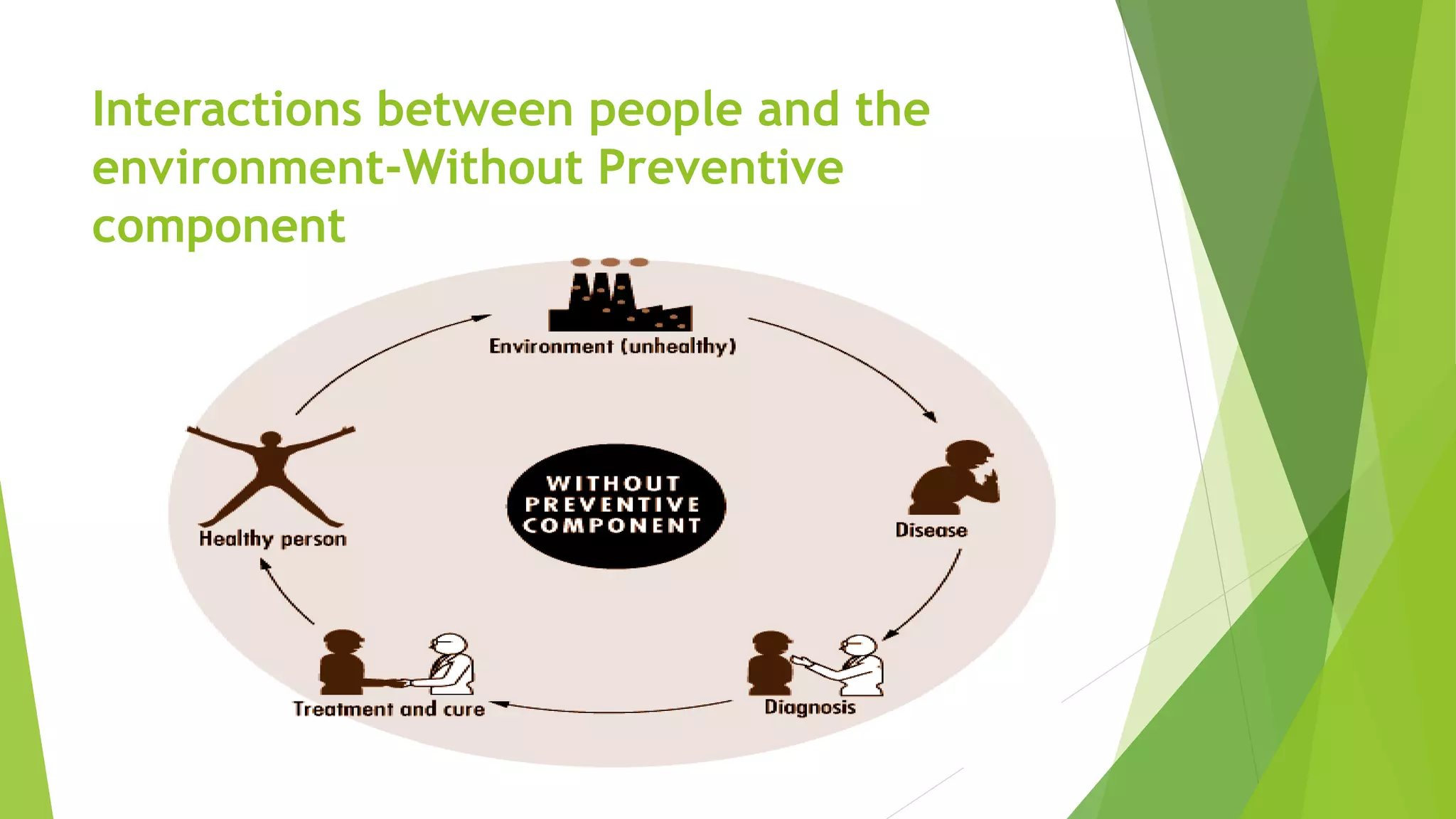
Interactions between people and the
environment-Without Preventive
component
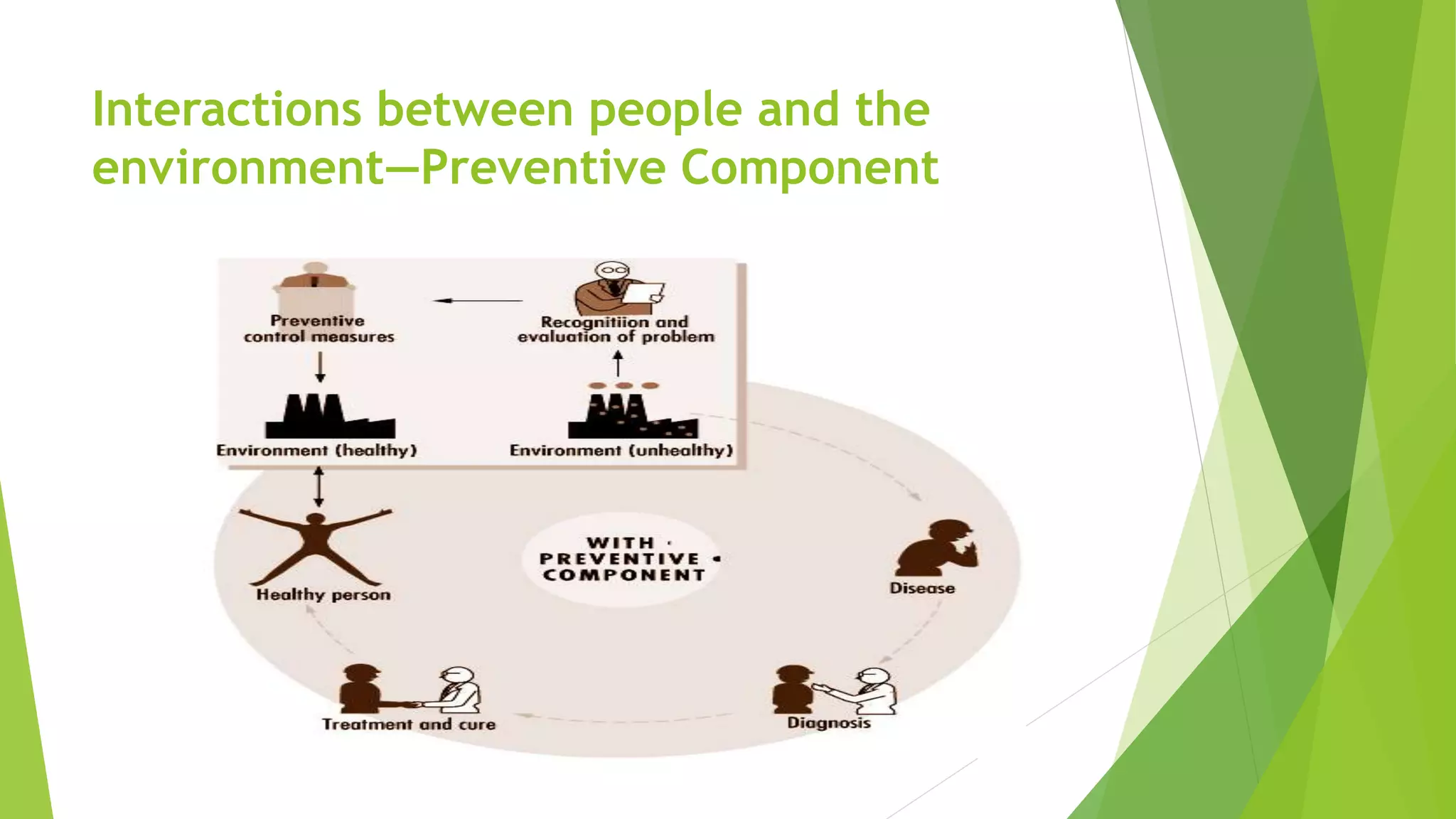
Interactions between people and the
environment—Preventive Component
Occupational Hygiene Vs Environmental
Hygiene
 occupational and environmental health are strongly linked by:
 · the source of the health threat is usually the same
 · common methodologies, particularly in health assessment and exposure control
 · the contribution that occupational epidemiology makes to knowledge of the effects of
environmental exposure
 · the effects that occupational disease has on well-being in the home and the community,
and conversely the effect of environmental pathology on worker productivity
 · the scientific need to consider total exposures in order to determine dose-response
relationships
 · the efficiency in human resource development and utilization gained by such a linkage
 · improvements in exposure control decisions stemming from the broader view
 · greater consistency in standard setting facilitated by the link
 · the fact that linking environmental and occupational health enhances the incentive for
rectification of hazards to both the workforce and the community.(ILO ENCYLOPEDIA)
Definitions
 Anticipation: Involves identifying potential hazards in the workplace before they
are introduced.
 Recognition: Involves identifying the potential hazard that a chemical, physical or
biological agent - or an adverse ergonomic situation - poses to health.
 Evaluation: Evaluate the extent of the exposure.
 This often involves measuring the personal exposure of a worker to the
hazard/agent in the workplace and understanding what PPE they currently use.
 Compare to SDS recommendations including occupational exposure limits, where
such criteria exist.
 Control: The elimination or reduction of identified and measured hazards.
 Use the hierarchy of controls to eliminate or reduce hazards.
Objective
 To protect the health and well being of employees by eliminating or reducing
health hazards that arise from the workplace environment.
Occupational Hygienist
 The person having a college or university degree or degrees in engineering,
chemistry, physics, health physics, nursing, medicine, or related field, by
virtue of special studies, training, experience, and/or certification has
acquired competence in IH.
Different Hats
• IHs wear many different hats
• Sometimes as a:
– Scientist
– Investigator
– Trainer/Educator
– Technician
– Policy enforcer
– Engineer
– Emergency Responder
– and more!
Role of Occupational Helath Physician
 Main authority and pays important role in every aspect
 Expert advice for solving occupational and environmental health issues
 Medical surveillance
 Advisor to management
 Important role in biological monitoring
 Research gap identification
 Analysis of toxicity and health data
Historical events of Industrial Hygiene-1
 Following eminent doctors were responsible for developing industrial hygiene
concept
1. Hippocrates fourth century BC-Noted lead toxicity in mining industry
2. Rudolf Virchow-1948—Crystalized the concept of social medicine(Classic statement
by him-( medicine is social science and Politics are nothing else than medicine on
large scale)
3. Greek Physician –Galen –described pathology of lead toxicity
4. 1700-Bernardo ramazzini—Father of Industrial medicine Published book on disease
of workers
5. Dr. Alice Hamilton investigated many dangerous occupations and had tremendous
influence on early regulation of occupational hazards in the United States. In 1919
she became the first woman faculty member at Harvard University and wrote
Exploring the Dangerous Trades.
Historical events of Industrial Hygiene
 1830-Charles Thackrah authored the first book on occupational diseases
published in England. His views on disease and prevention helped stimulate
factory and health legislation.
 1775-Percival Pott described occupational cancer among English chimney
sweeps, identifying soot and the lack of hygiene measures as a cause of
scrotal cancer. The result was the Chimney-Sweeps Act of 1788.
 1500-Georgius Agricola “All substances are poisons . . . the right dose
differentiates a poison and a remedy.”
Why is Occupational Hygiene Important?
 Good occupational hygiene benefits workers and industry alike, resulting in:
 Improved worker health and increased life expectancy;
 Reduction in the number of people who leave employment early through
injury or illness;
 Lower social and health care costs as well as maximizing worker potential;
and
 More efficient working processes with technological improvements and
increased productivity.
Benefits of Occupational Hygiene
Program
 Improve health and hygiene
 Reduce compensation
 Improve job satisfaction
 Reduce absenteeism
 Improve productivity
 Improve workers’ attitude towards management
Importance of Occupational Hygiene
 Understand what industrial hygiene is
 Recognize its importance in the workplace
 Identify ways industrial hygiene helps
protect you
 Help promote industrial hygiene on
the job
Methods of Occupational hygiene to
protect workers on the job
 Investigation
 Recommendation
 Research
 Anticipating
and controlling
 Training
 Advising
 Enforcing
Types of Health Hazard-Common
workplace hazards
 Biological
 Chemical
 Physical
 Ergonomics
 Blood borne hazards
 Radiation Hazards
 Psychological/Organizational hazards
 Natural Hazards
 Social hazards
 Cultural /Practice hazard
Hazard-Definition
 Hazard: a biological, chemical or physical agent that is reasonably likely to
cause illness or injury in the absence of its control.
Pathways of Exposure
 Air
 Water
 Food
 Animals
 People
 Surfaces
Significant routes of exposure
 Inhalation
 Skin and eye absorption
 What does skin notation mean?
 Ingestion
 Percutaneous
Chemical Hazards
 Irritants---Respiratory/Eye/Skin
 Asphyxiants
 CNS Agents
 Specific organ agents
 Genetic activity
Acute versus Chronic
Recognition of Chemical Hazards
 Odors
 Not all agents have detectable odor
 Frequent headaches
 Dermatitis
 Drowsiness
 Personality changes
 Clusters of problems
Anticipation of CHEMICAL hazards
 MSD SHEET
 Permissible exposure Limit—TWA/STEL/Ceiling C---As per OSH
 TLV—As per ACGIH
Irritants
 Reversible
 Ir- reversible
 Primary
 Secondary
 Sensitization—Irritant has delayed Reaction
Asphyxiants
Simple Asphyxiants
 N2
 CO2
 He
 CH4
 Dilute air so oxygen
content is low
Chemical Asphyxiants
 CO
 HCN
 H2S
 Interact at cellular
level to inhibit oxygen
uptake.
Biological Hazards
 Classification Of Biological hazards at workplace
 biological hazards can be classified into six categories:
 contact with infected living animals ;
 contact with contaminated animal products ;
 tick, flea, or mite bite ;
 contact with human or animal waste ;
 contact with infected patient or blood and
 raising dust containing pathogens .
 This method of classifying occupational infections is commonly used because it
provides a means to link diseases and occupations in the Haz-Map database. We
deemed that this type of classification can explain effectively the relationship
between biological hazards and occupational diseases, and is the most realistic
classification to apply at the workplace.
Physical Hazard Definition
 A physical hazard is a type of occupational hazard that involves
environmental hazards that can cause harm with or without contact. Physical
hazards include ergonomic hazards, radiation, heat and cold stress,
vibration hazards, and noise hazards
Physical Hazards at workplace
 Dust
 Fiber
 Noise
 Heat stress
 Cold Stress
 Ionizing Radiation Hazards
 Non ionizing Radiation Hazards
 Vibration
 Corrosive
 Ergonomic Hazards
 Indoor air quality
 Light
Examples of Physical Hazards—Safety
Hazards
 Spills on floors or tripping hazards, such as blocked aisles or cords running
across the floor
 Working from heights, including ladders, scaffolds, roofs, or any raised work
area
 Unguarded machinery and moving machinery parts; guards removed or
moving parts that a worker can accidentally touch
 Electrical hazards like frayed cords, missing ground pins, improper wiring
Confined spaces
 Machinery-related hazards (lockout/tagout, boiler safety, forklifts, etc.)
HAVS
 HAVS was first widely recognized as a potential occupational hazard in the
mid-1980s. It was first known as "vibration white finger.“
 HAVS causes symptoms in fingers, hands and arms, as a result of using
vibrating tools. It used to be called vibration white finger. The name was
changed to HAVS, as other symptoms may occur in addition to white fingers.
 Vibration can be explained as the back and forth motion produced by objects
such as tools, machinery and equipment. It has two components: ƒFrequency
(or repeat rate) ƒAmplitude (or displacement) Some objects vibrate by design,
such as jackhammers and sanders, while others vibrate due to defects or
malfunctioning.
Vibration types
 Several different types of occupational vibration can be hazardous to the
human body.
 Hand-arm vibration: Results when a piece of equipment, such as a chain saw
or drill, transmits vibrations to the limb holding the equipment. Can cause
circulatory damage, commonly known as “white finger.”
 Whole-body vibration: Results when the entire body is supported – through
standing, sitting or reclining – on a piece of equipment and absorbs the
mechanical vibration from that equipment.
 Low frequency: Vibrations occurring at a low level that can cause motion
sickness or postural insatiability.
 Noise: Noise travels through the air via vibrations; too much can lead to
hearing loss.
Sources of HAVS
 Sources of vibration that can cause HAVS are very varied and include pneumatic
drills,
 jackhammers,
 asphalt breakers,
 power chain saws,
 chipping tools,
 concrete vibrators and levelers,
 needle guns and scrabbles,
 polishers, power jigsaws,
 sanders and angle grinders,
 riveters,
 compactors,
 power lawnmowers and even electronic games in which the hand controls vibrate.
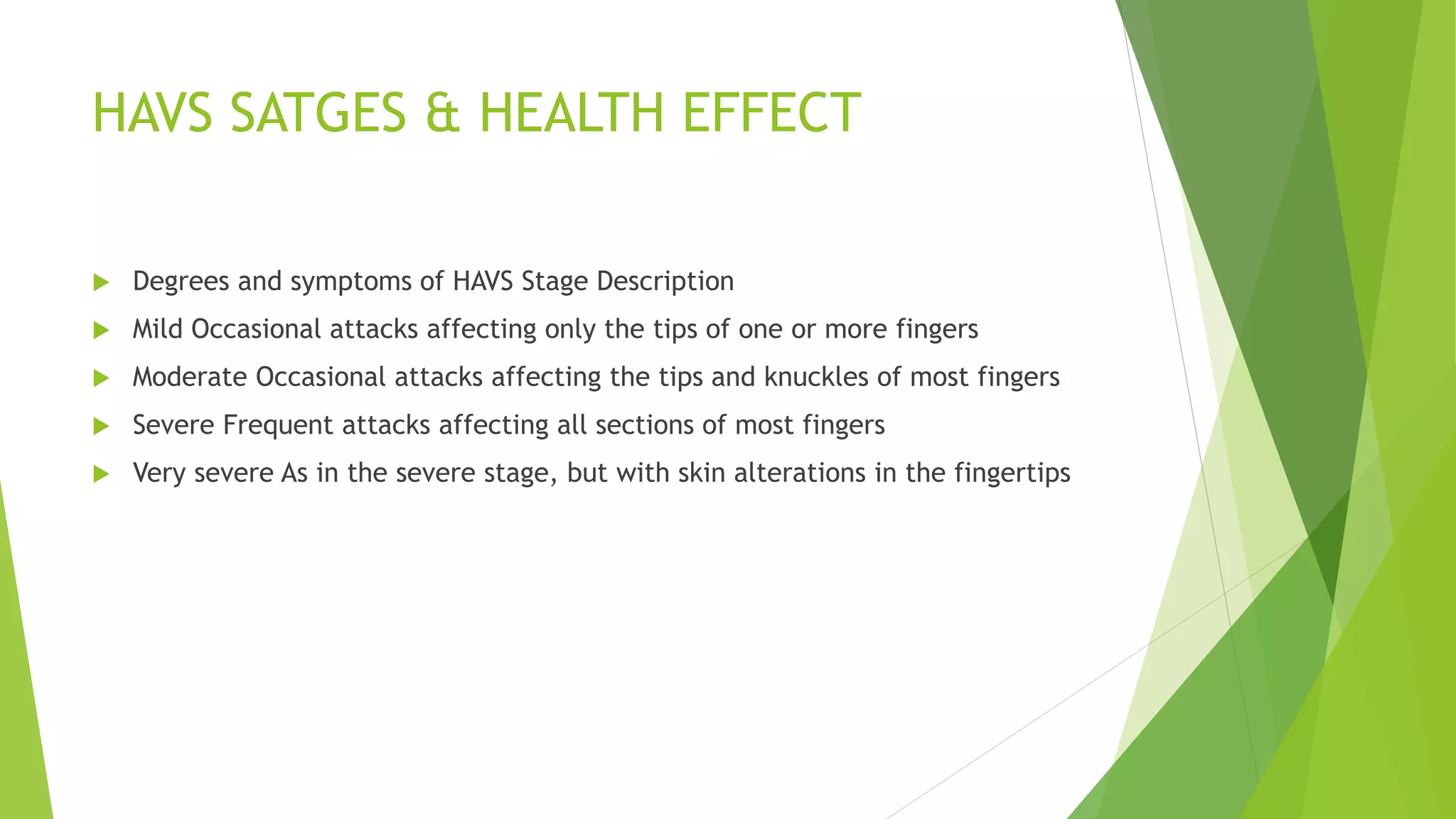
HAVS SATGES & HEALTH EFFECT
 Degrees and symptoms of HAVS Stage Description
 Mild Occasional attacks affecting only the tips of one or more fingers
 Moderate Occasional attacks affecting the tips and knuckles of most fingers
 Severe Frequent attacks affecting all sections of most fingers
 Very severe As in the severe stage, but with skin alterations in the fingertips
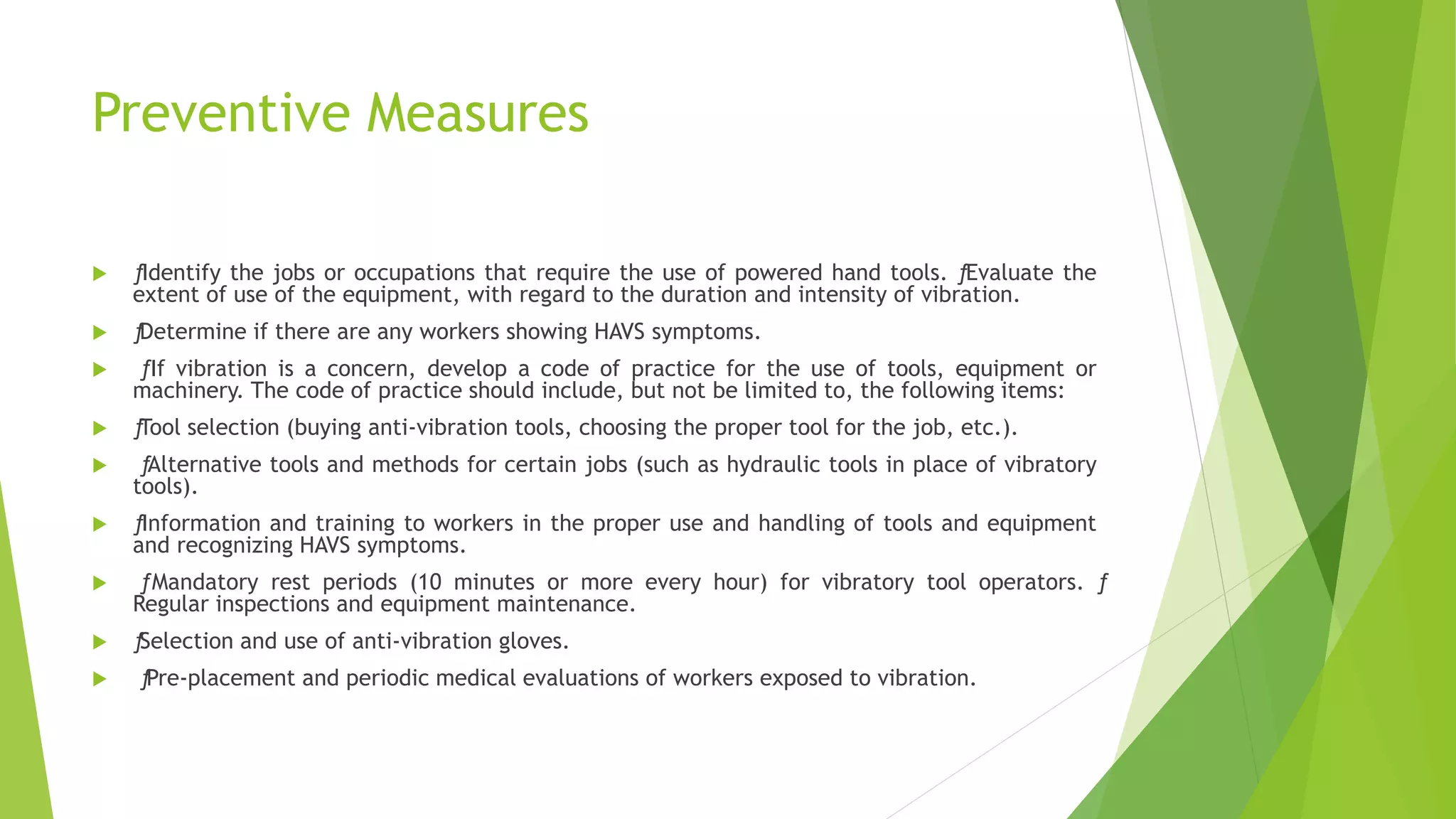
Preventive Measures
 ƒIdentify the jobs or occupations that require the use of powered hand tools. ƒEvaluate the
extent of use of the equipment, with regard to the duration and intensity of vibration.
 ƒDetermine if there are any workers showing HAVS symptoms.
 ƒIf vibration is a concern, develop a code of practice for the use of tools, equipment or
machinery. The code of practice should include, but not be limited to, the following items:
 ƒTool selection (buying anti-vibration tools, choosing the proper tool for the job, etc.).
 ƒAlternative tools and methods for certain jobs (such as hydraulic tools in place of vibratory
tools).
 ƒInformation and training to workers in the proper use and handling of tools and equipment
and recognizing HAVS symptoms.
 ƒ Mandatory rest periods (10 minutes or more every hour) for vibratory tool operators. ƒ
Regular inspections and equipment maintenance.
 ƒSelection and use of anti-vibration gloves.
 ƒPre-placement and periodic medical evaluations of workers exposed to vibration.
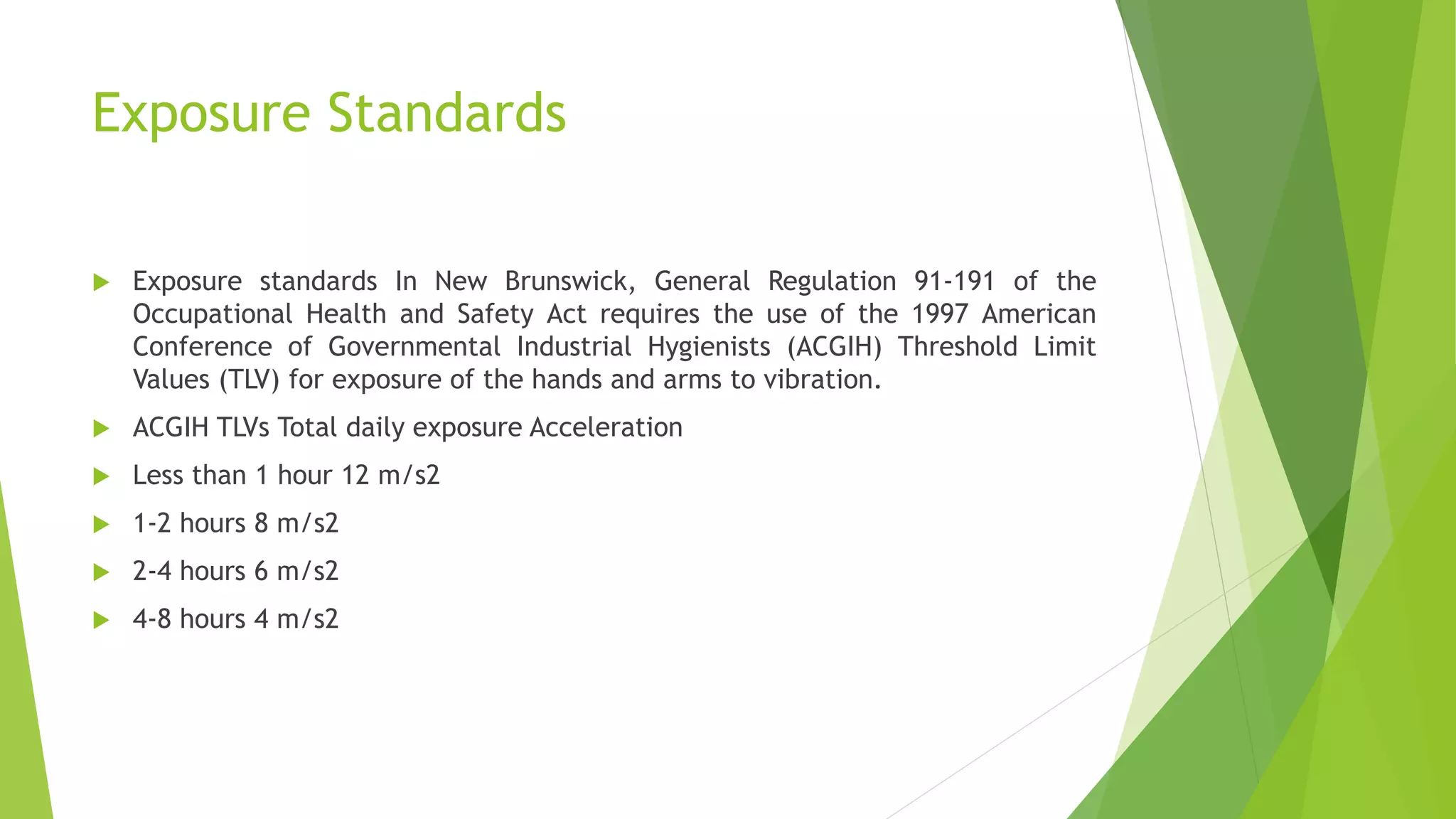
Exposure Standards
 Exposure standards In New Brunswick, General Regulation 91-191 of the
Occupational Health and Safety Act requires the use of the 1997 American
Conference of Governmental Industrial Hygienists (ACGIH) Threshold Limit
Values (TLV) for exposure of the hands and arms to vibration.
 ACGIH TLVs Total daily exposure Acceleration
 Less than 1 hour 12 m/s2
 1-2 hours 8 m/s2
 2-4 hours 6 m/s2
 4-8 hours 4 m/s2
Heat Stress
 Heat stress includes a series of conditions where the body is under stress from
overheating. Heat-related illnesses include heat cramps, heat exhaustion,
heat rash, or heat stroke, each with its own symptoms and treatments.
Symptoms can range from profuse sweating to dizziness, cessation of
sweating, and collapse.
 At greatest risk of heat stroke are the elderly, children, and people with
medical conditions, such as heart disease. However, even young and healthy
individuals can succumb to heat if they participate in strenuous physical
activities during hot weather.
 Certain behaviors also put people at greater risk: drinking alcohol, taking part
in strenuous outdoor physical activities in hot weather, and taking
medications that impair the body’s ability to regulate its temperature or that
inhibit perspiration. Heat stress can be induced by high temperatures, heavy
work loads, and clothing inappropriate for the heat and humidity.
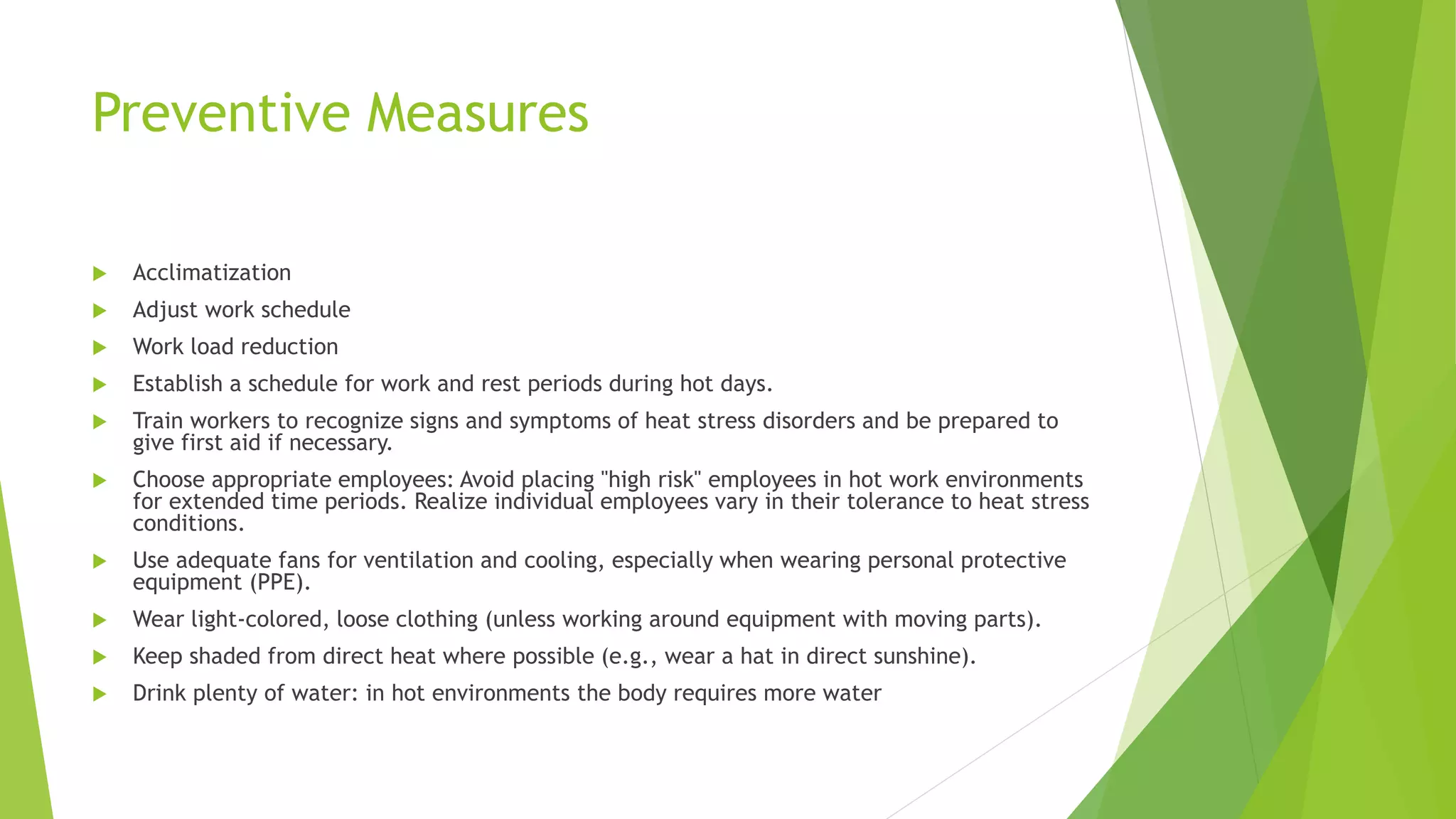
Preventive Measures
 Acclimatization
 Adjust work schedule
 Work load reduction
 Establish a schedule for work and rest periods during hot days.
 Train workers to recognize signs and symptoms of heat stress disorders and be prepared to
give first aid if necessary.
 Choose appropriate employees: Avoid placing "high risk" employees in hot work environments
for extended time periods. Realize individual employees vary in their tolerance to heat stress
conditions.
 Use adequate fans for ventilation and cooling, especially when wearing personal protective
equipment (PPE).
 Wear light-colored, loose clothing (unless working around equipment with moving parts).
 Keep shaded from direct heat where possible (e.g., wear a hat in direct sunshine).
 Drink plenty of water: in hot environments the body requires more water
Cold Stress
 Cold stress occurs by driving down the skin temperature, and eventually the
internal body temperature. When the body is unable to warm itself,
serious cold-related illnesses and injuries may occur, and permanent tissue
damage and death may result.
 Types of cold stress include: trench foot, frostbite, and hypothermia.
Indoor air quality
 Indoor air quality (IAQ) is a term which refers to the air quality within and
around buildings and structures, especially as it relates to the health and
comfort of building occupants.
 Common causes of indoor air problems include inadequate temperature, lack
of humidity or lighting; exposure to chemicals, dusts, gases, vapors and odors;
or a lack of fresh air from the ventilation system. People generally develop
symptoms within a few hours of starting the workday and feel better after
leaving the building
 IAQ is part of IEQ
Ergonomic Hazards
 Repetitive Movement
 Awkward Position
 Computer related Hazards
 Shift Work
 MSD
 Manual Material Handling
 Im proper Tools
 Long hours sitting/Standing
 Office Setting
 Improper Ventilation
Psychological Hazards
 Stress : Workplace stress is the harmful physical and emotional responses that
can happen when there is a conflict between job demands on the employee
and the amount of control an employee has over meeting these demands.
 Violence/Bullying: Most people think of workplace violence and bullying as
acts of physical assault. However, it is a much broader problem, consisting of
any act in which a person is abused, threatened, intimidated, assaulted,
degraded, or humiliated in his or her employment.
Examples of -Organizational Hazards
 Workload demands
 Workplace violence
 Intensity and/or pace
 Respect (or lack thereof)
 Flexibility
 Control or say about things
 Social support or relations
 Sexual harassment
Natural Hazard
 Natural hazard is an unexpected and /or uncontrollable natural event of
unusual magnitude that might threaten people
 Natural hazards are naturally occurring physical phenomena caused either by
rapid or slow onset events which can be geophysical (earthquakes, landslides,
tsunamis and volcanic activity), hydrological (avalanches and floods),
climatological (extreme temperatures, drought and wildfires), meteorological
(cyclones and submarine earth quake—)Produced by especially weather-
forming processes
Types of natural Hazards
 Avalanches and landslides.
 Earthquakes.
 Sinkholes.
 Volcanic eruptions.
 Floods.
 Limnic eruptions.
 Tsunami.
 Blizzards
Flood Hazards
 Persons entering areas and buildings subject to flooding face a variety of potential
hazards,
 electrical hazards
 structural hazards,
 displacement of wildlife,
 exposure to chemicals and sewage in contaminated floodwater, and mold growth
from water-impacted building materials.
 life safety issues
 Heat Stress/Cold Stress
 Biological and infectious hazard
 carbon monoxide poisoning must be considered before any cleanup or response is
initiated.
Limnic Eruption
 A limnic eruption, also referred to as a lake overturn, is a rare type of
natural disaster in which dissolved carbon dioxide (CO2) suddenly erupts from
deep lake waters, forming a gas cloud that can suffocate wildlife, livestock,
and humans.
Worksite Analysis
 A worksite analysis is an essential first step that helps an industrial hygienist
determine what jobs and work stations are the sources of potential problems.
During the worksite analysis, the industrial hygienist measures and identifies
exposures, problem and tasks, and risks. The most-effective worksite analyses
include all jobs, operations, and work activities. The industrial hygienist
inspects, researches, or analyzes how the particular chemicals or physical
hazards at that worksite affect worker health. If a situation hazardous to
health is discovered, the industrial hygienist recommends the appropriate
corrective actions.
Key factors
 Employee exposure to hazard
 Control of hazards to protect workers
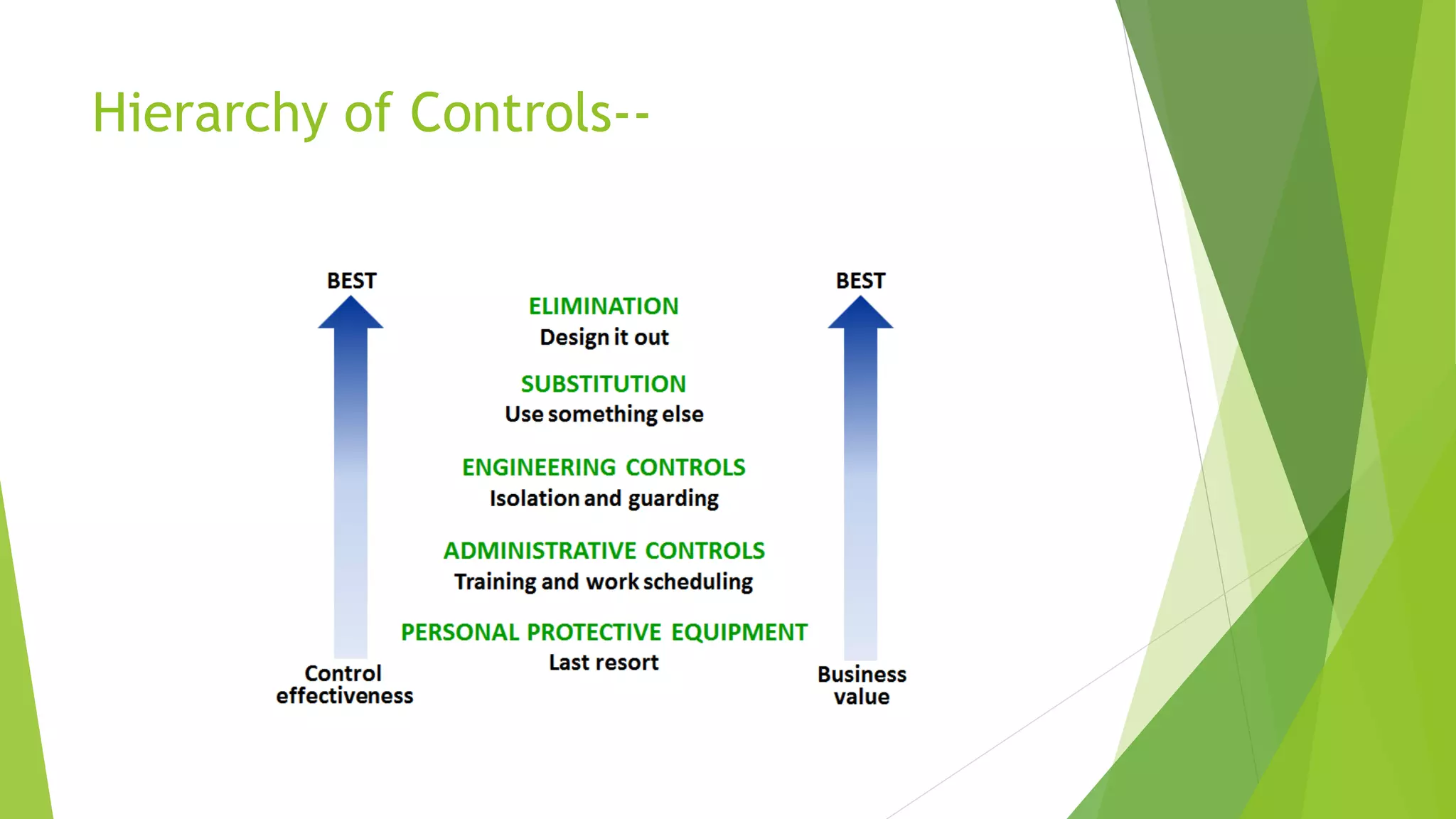
Hierarchy of Controls--
 Elimination
 Substitution
 Isolation
 Administrative control
 Engineering control
 PPE
Hierarchy of Controls--
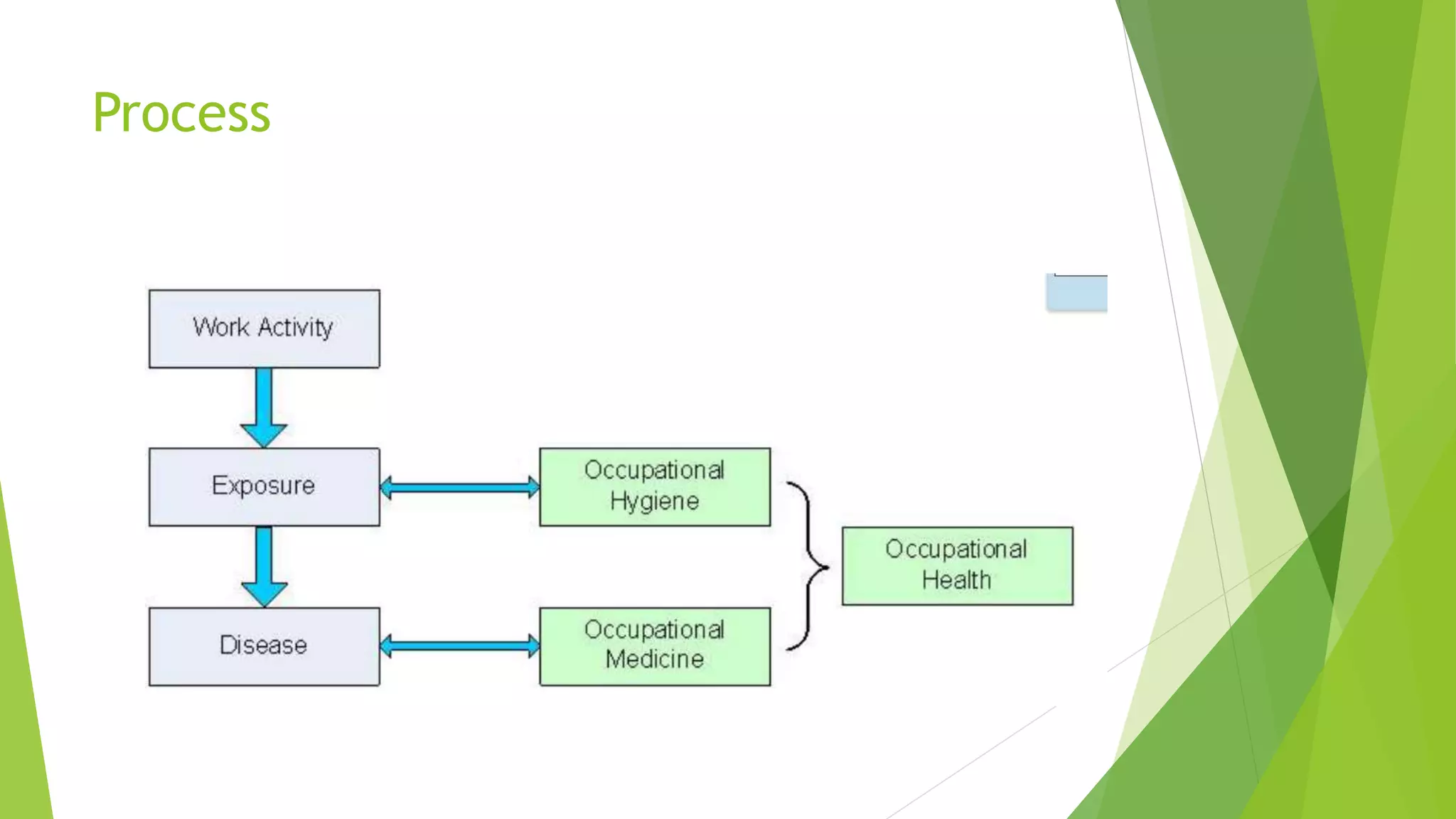
Process
4 Critical elements----for successful of
safety and health management program
 management commitment and employee involvement,
 worksite analysis,
 hazard prevention and control, and
 safety and health training.
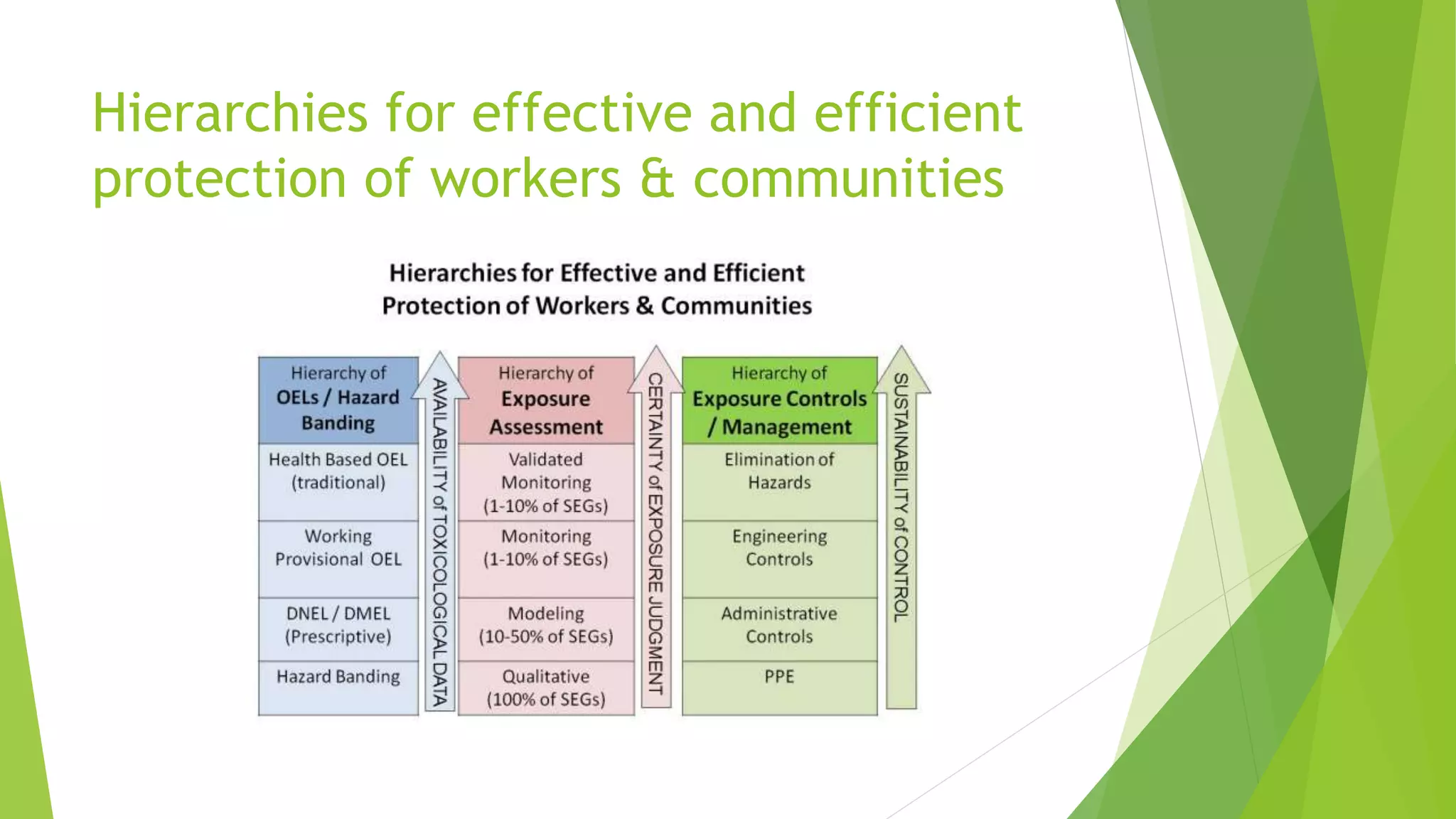
Hierarchies for effective and efficient
protection of workers & communities
Industrial Hygiene Monitoring
 Industrial hygiene monitoring also known as exposure monitoring is a
process of evaluating and documenting employee potential exposures to
biological, chemical and physical hazards. Monitoring can be qualitative,
semi-quantitative or quantitative.
Definitions
 Qualitative IH Assessment - Evaluation of potential personal exposure to
workplace chemicals, physical, radiological, and/or biological agents based on
personal experience and professional judgment
 Quantitative IH Assessment - Evaluation of actual personal workplace
exposure to chemical, physical, radiological, and/or biological agents using
accredited numerical and mathematical analysis
Purpose of Qualitative Assessment
 Assessing and managing occupational exposures to chemical, physical,
radiological, and biological agents
 Use of a systematic, repeatable assessment approach involving
knowledgeable employees
 Making best use of resources (people, time, & $)
 A means to target areas or tasks of greater risk for training, planning, &
budgeting
 Help develop IH monitoring plans
 Satisfy expectation of the Annual Comprehensive Evaluation
Comparison of IH and Risk Assessment
Industrial Hygiene Risk Assessement
Anticipation and Recognition Hazard Identification
Evaluation Toxicity and exposure assessment and
Risk Characterization
Control Risk Management
Hazard Communication Risk Communication
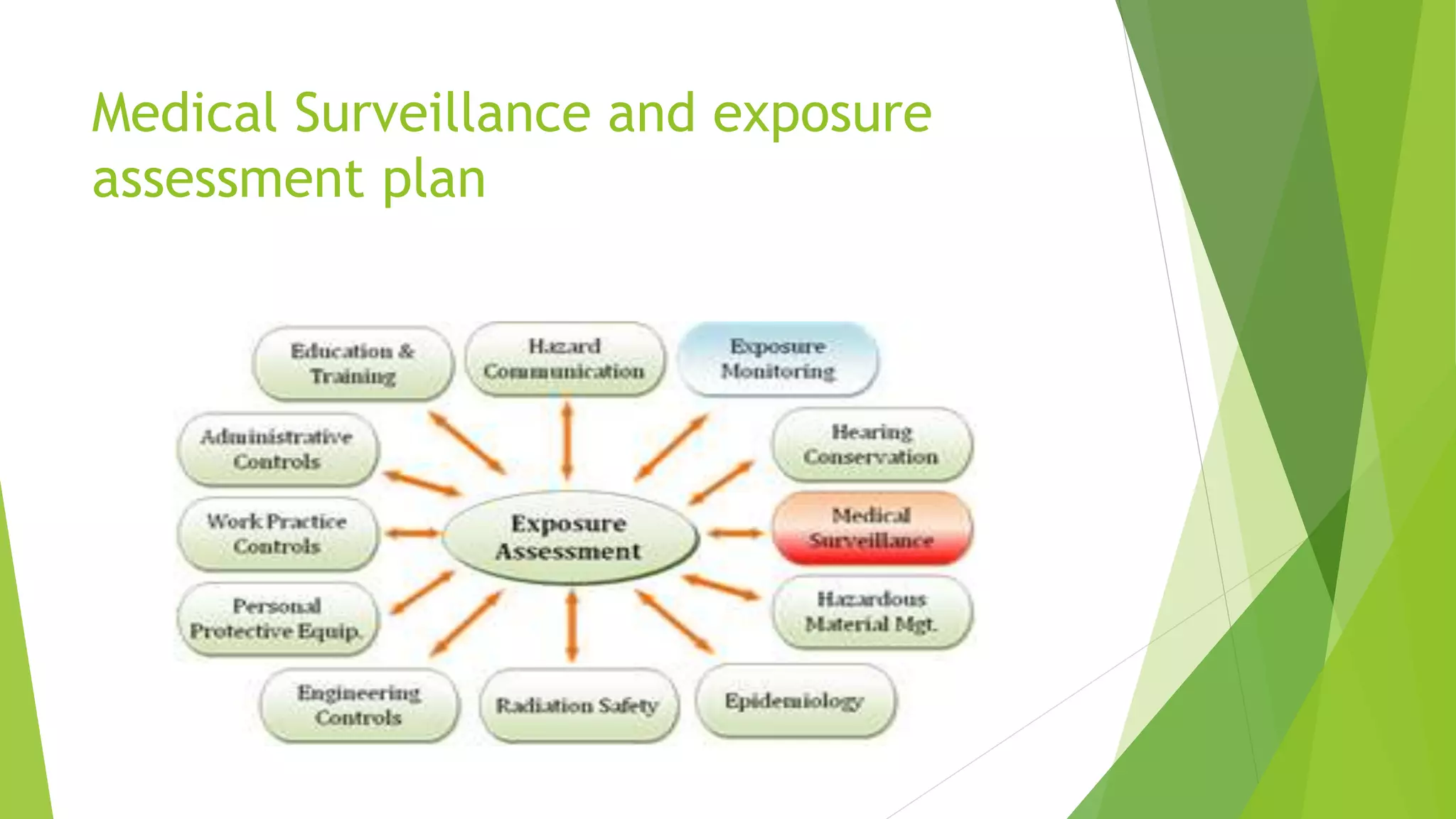
Medical Surveillance and exposure
assessment plan
Benefits of a Health Hazard Evaluation
 Benefits of a Health Hazard Evaluation
 o Provide current health hazard data to employers and employees
 o Identify problems and offer workplace solutions
 o Generate exposure and human toxicity data
 o Identify research gaps
Why? Exposure assessment
 Reasons for an Exposure Assessment
 o Determine magnitude/significance of health hazards
 o Identify exposure sources o Regulatory compliance
 o Evaluate need for or effectiveness of exposure controls
 o Determine need for PPE
 o Measure task or process-specific exposures
 o Provide exposure data for epidemiology studies, surveillance, or other
research
Biological Monitoring
 Biological monitoring is the measurement and assessment of chemicals or
their metabolites (substances the body converts the chemical into) in exposed
workers. These measurements are made on samples of breath, urine or blood,
or any combination of these. Biological monitoring measurements reflect the
total uptake of a chemical by an individual by all routes (inhalation,
ingestion, through the skin or by a combination of these routes). Thus it
differs from environmental monitoring which measures an individual’s
exposure (see Figure 1). Table 1
Biological Effect Monitoring
 Biological effect monitoring is the measurement and assessment of early
biological effects caused by absorption of chemicals. It normally involves
measuring biochemical responses (for example, measuring plasma and
erythrocyte cholinesterase activity in workers exposed to organophosphorus
pesticides; or measuring increases in urinary protein following exposure to
cadmium). These responses may have potential health implications for the
individual, and may arise from causes other than occupational exposure.
Consequently, biological effect monitoring should always be carried out with
the close involvement of an occupational health physician.
Role of Biological Monitoring
 Biological monitoring for chemical exposure contributes to the aim of
preventing unacceptable health risks by providing information on the control
of occupational exposure.
 It can give an indication of absorption by all routes of exposure, consequently,
it is often used to complement personal air monitoring (which measures the
concentration of a chemical in the air in a person’s breathing zone).
Therefore, biological monitoring may be particularly useful for those
chemicals which are easily absorbed through the skin or taken in by ingestion,
or where exposure is controlled by personal protective equipment.
Biological Monitoring Program
components
 Define the purpose of the program
 Appoint a competent person to manage the program
 Define the monitoring strategy
 Consult on the program with employees or their representatives
 Discuss and agree the program with the individual employees concerned
 Establish procedures for sample collection, storage, transportation, analysis
and quality assurance
 Establish procedures for feedback, including interpretation or results
 Ensure arrangements are in place for acting on the results and evaluating the
effectiveness of the program
Take home message
 Personal Hygiene--------------------Is the cornerstone
 Maximum emphasis should be on personal hygiene
Q-1
 A workplace that has noise level above 100 dB is an example of what type of
hazard?
 Chemical
 Ergonomic
 Physical
 Biological
Q-2
 Chemical hazards in the workplace are often the most complex hazards to
implement proper controls due to the multitude of variables that affect the
situation.
 True
 False
Q-3
 Who is the father of industrial hygiene?
Q-4
 Which of the following would be considered a workplace hazard?
 Heat stress
 Noise
 Exit Sign
 Chemical vapors
 1,2 & 4
Q-5
 What is Hazard?
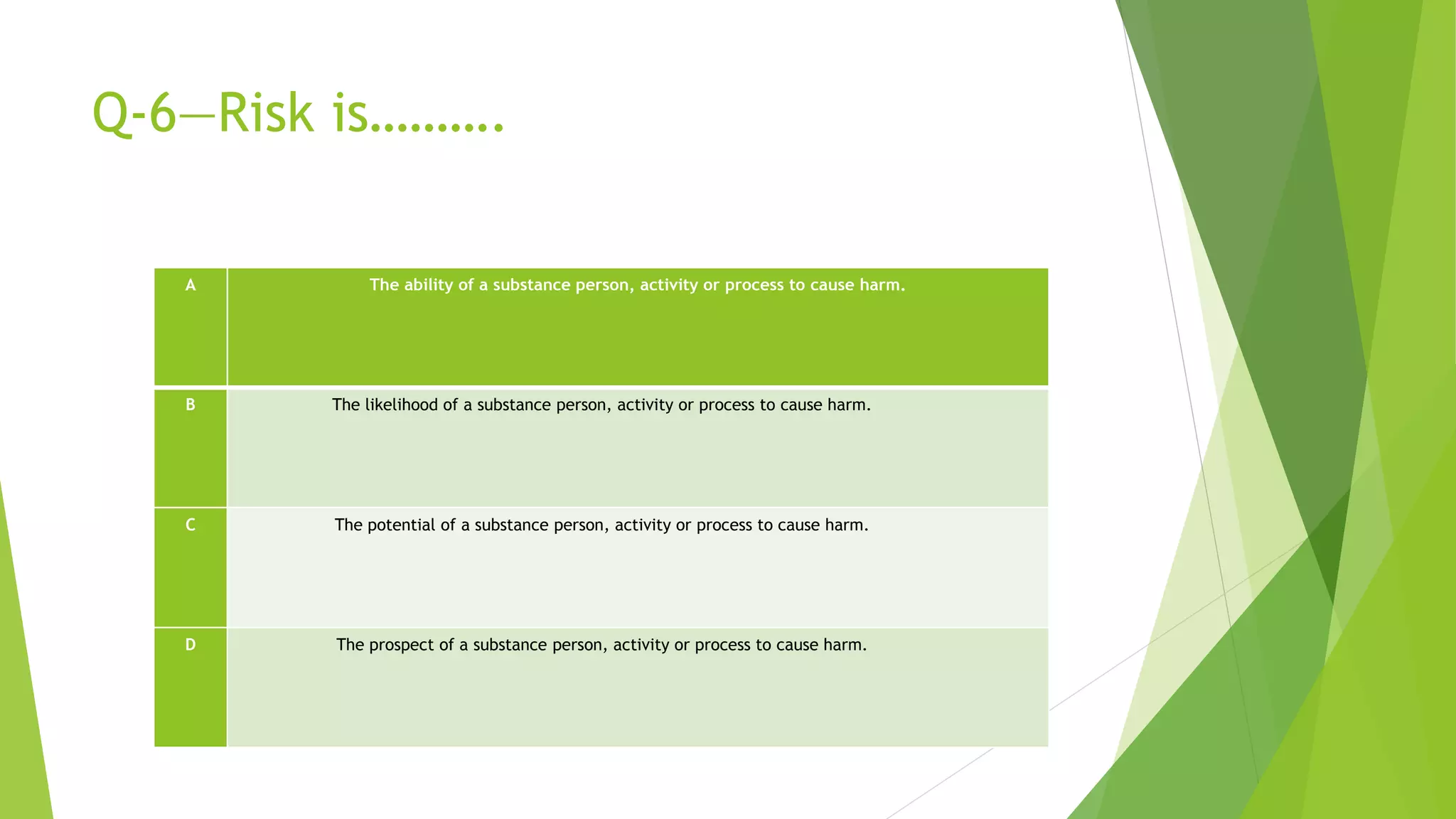
Q-6—Risk is……….
A The ability of a substance person, activity or process to cause harm.
B The likelihood of a substance person, activity or process to cause harm.
C The potential of a substance person, activity or process to cause harm.
D The prospect of a substance person, activity or process to cause harm.
Q-7
 Q-7-Disorder which occurs in employees when individuals use same muscle
repetitively to perform tasks is classified as
 tag out regulations
 tag in regulations
 ergonomics
 cumulative trauma disorders
Q-8
 A hazard is any situation that has the potential to cause injury, illness, or
death
 True
 False
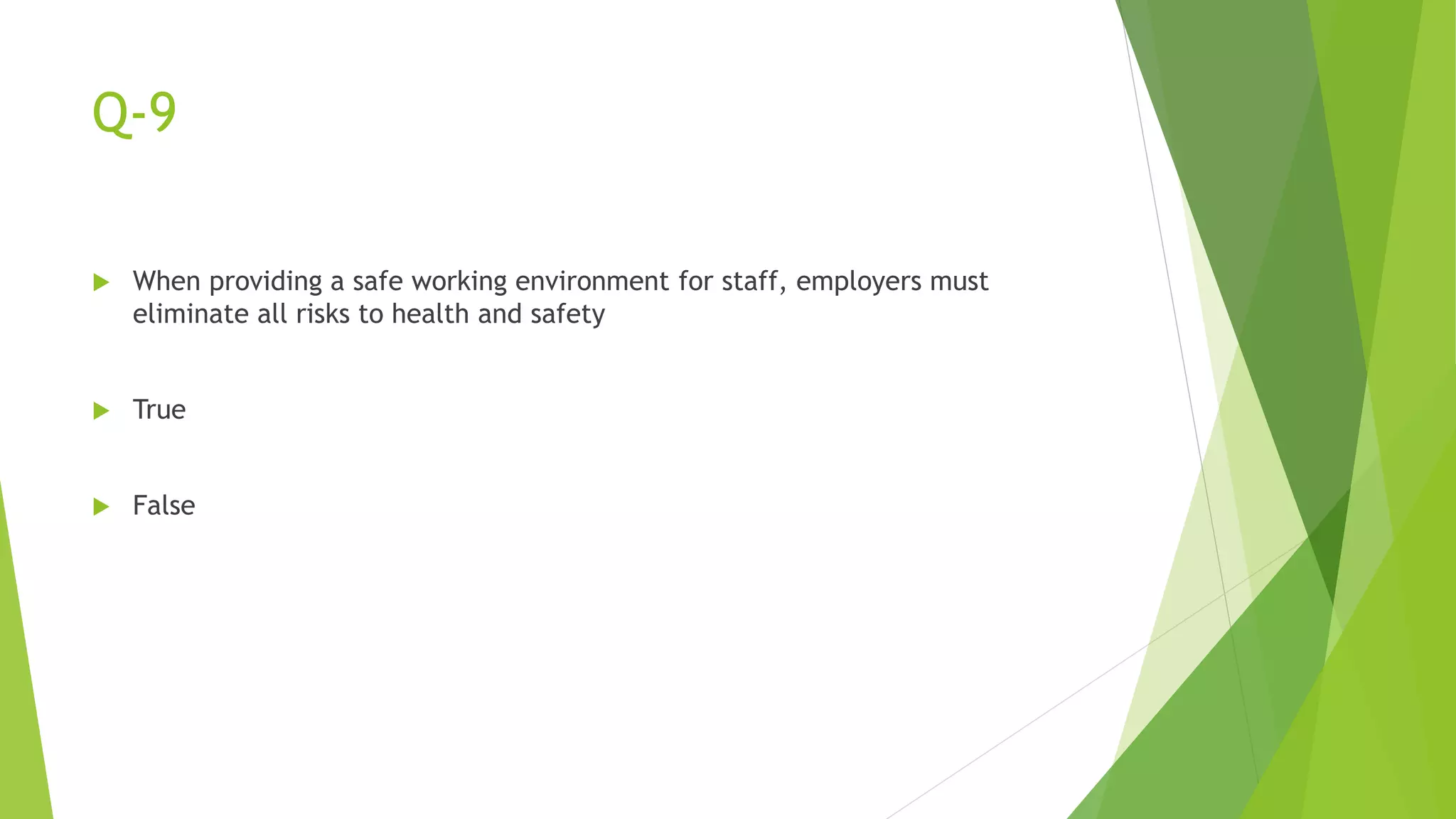
Q-9
 When providing a safe working environment for staff, employers must
eliminate all risks to health and safety
 True
 False
Q-10
Name the categories of costs of workplace in juries to the organization
Human
Social
Organizational
Economic
All of the above
Q-11
 Carbon monoxide is----
 Chemical aspyxiant
 Simple asphyxiant
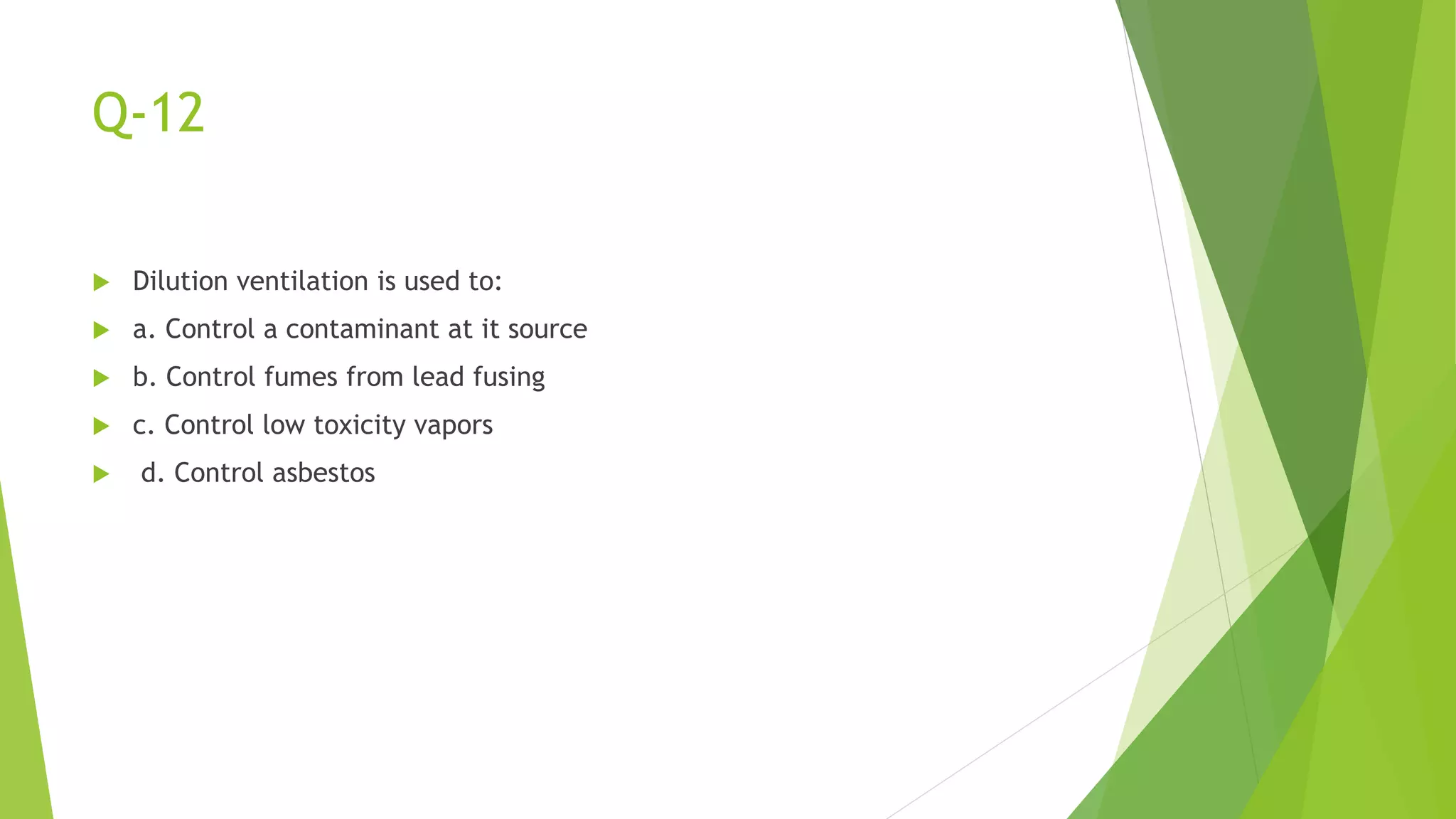
Q-12
 Dilution ventilation is used to:
 a. Control a contaminant at it source
 b. Control fumes from lead fusing
 c. Control low toxicity vapors
 d. Control asbestos
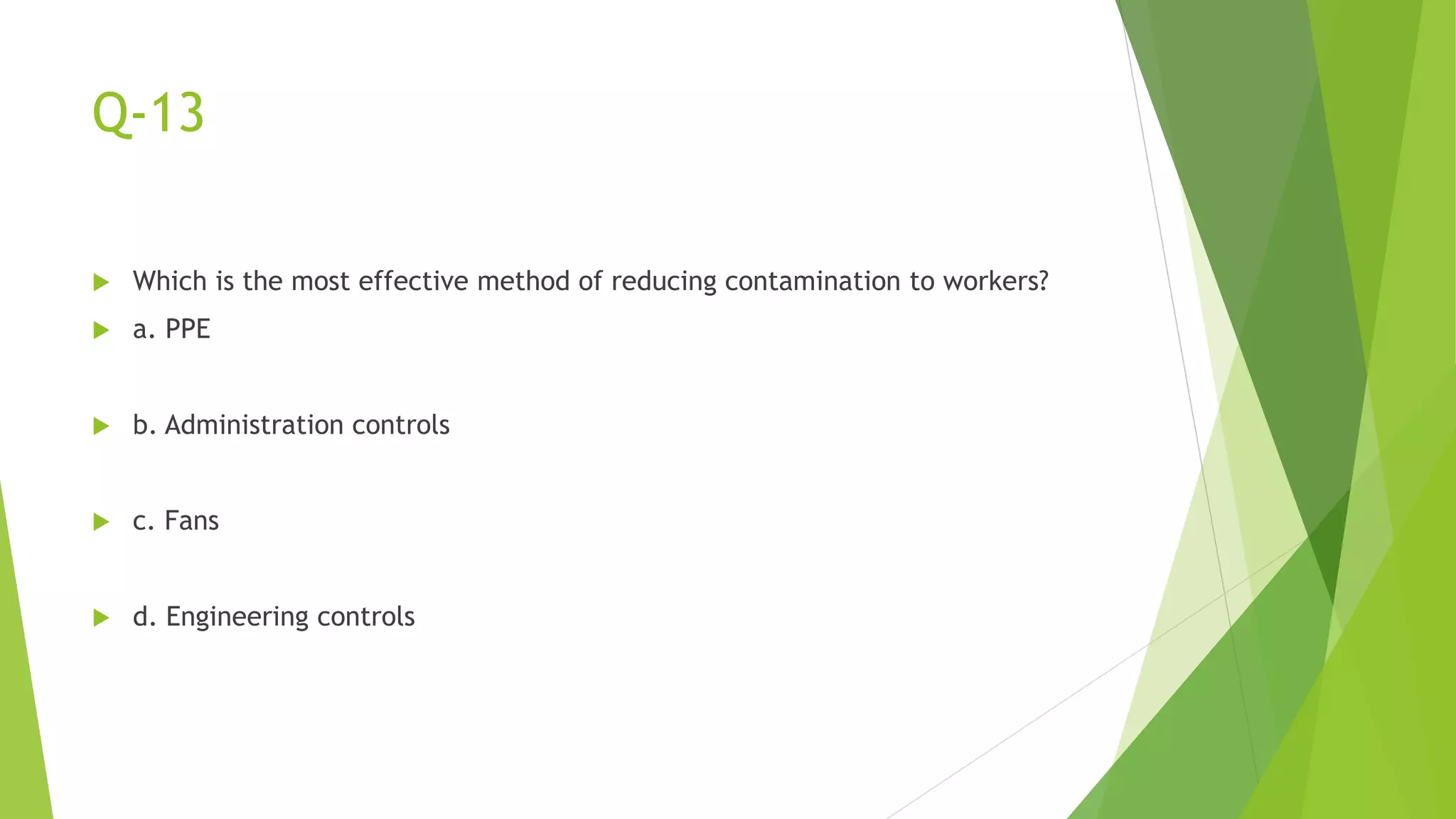
Q-13
 Which is the most effective method of reducing contamination to workers?
 a. PPE
 b. Administration controls
 c. Fans
 d. Engineering controls
Q-14
 A hazard analysis can be used to evaluate a potential hazard; what other
information should be considered?
 a. Injury reports
 b. Statistical data
 c. Risk assessment
 d. Fatality investigations
Q-15
 TLVs and PELs are published by which of the following agencies?
 a. NIOSH and OSHA
 b. ACGIH and MSHA
 c. ACGIH and OSHA
 d. OSHA and MSHA
Q-16
 Strategies for controlling occupational health hazards include all of the
following, except:
 a. Inspections and audits
 b. Engineering controls
 c. Administrative controls
 d. Personal Protective Equipment
Q-17
 Industrial hygiene concerns itself only with the control of occupational
diseases. So its contribution to accident prevention is nil.
 True
 False
Q-18
 For example it is common in high noise environments to use ________ and ear
muff
Q-19
 This aspect of Occupational Hygiene is often referred to as the 'Art' of
Occupational Hygiene and is used in a similar sense to the 'art' of ________.
 Specialty (medicine)
 Medicine
 Physician
 Surgery
Q-20
 Methods of controlling employee exposures by job rotating, work assignment,
or time periods away from the hazard.is example of
 Administrative control
 Engineering control

Industrial hygiene

  • 1.
  • 2.
    Definition of Hygiene conditions or practices conducive to maintaining health and preventing disease, especially through cleanliness.  word hygiene comes from Hygeia, the Greek goddess of health, who was the daughter of Aesculapius, the god of medicine. Since the arrival of the Industrial Revolution (c.1750-1850) and the discovery of the germ theory of disease in the second half of the nineteenth century, hygiene and sanitation have been at the forefront of the struggle against illness and disease.
  • 3.
    Types of Hygiene Personal Hygiene—Head to toe  Industrial/occupational hygiene  Environmental hygiene  Mental hygiene  Food hygiene  Sexual Hygiene  Sleep hygiene  Water hygiene  Respiratory hygiene
  • 4.
    Water Hygiene--Definition  Waterhygiene focuses on natural and anthropogenic pollutants (from soil and through air precipitation, chemicals, waste, sewage) present in water, affecting human health.
  • 5.
    Personal Hygiene-  Personalhygiene involves those practices performed by an individual to care for one's bodily health and well being, through cleanliness.  Personal hygiene when working involves:  1. Keeping yourself clean and tidy , including the hair and especially the hands  2. Avoiding unhygienic habits  3. Wearing clean personal protective equipment's  4. Washing your hands regularly throughout the work period. Always wash your hands when they are likely to be contaminated, for instance after going to the toilet or after handling raw material, contact with chemicals etc  5. Every worker have a moral and legal responsibility to ensure that they do not contaminate .  Respiratory Hygiene  a positive attitude towards hygiene/health/safety/sops/policies and a willingness to help maintain a high standard at the workplace.
  • 6.
    Food Hygiene---  Foodhygiene is concerned with the hygiene practices that prevent food poisoning. The five key principles of food hygiene,  Prevent contaminating food with mixing chemicals, spreading from people, and animals .  Separate raw and cooked foods to prevent contaminating the cooked foods.  Cook foods for the appropriate length of time and at the appropriate temperature to kill pathogens.  Store food at the proper temperature.  Use safe water and raw materials  Avoid Reheating
  • 7.
    Mental Hygiene-----  Awidely accepted definition of health by mental health specialists is psychoanalyst Sigmund Freud's definition: the capacity "to work and to love".]  According to the (WHO), mental health includes "subjective well-being, perceived self-efficacy, autonomy, competence, inter-generational dependence, and self-actualization of one's intellectual and emotional potential, among others. The WHO further states that the well-being of an individual is encompassed in the realization of their abilities, coping with normal stresses of life, productive work and contribution to their community. Cultural differences, subjective assessments, and competing professional theories all affect how "mental health" is defined.  The branch of psychiatry that deals with the science and practice of maintaining and restoring mental health, and of preventing mental disorder through education, early treatment, and public health measures.
  • 8.
    Sleep Hygiene----  Sleephygiene is defined as behaviors that one can do to help promote good sleep using behavioral interventions.  Obtaining healthy sleep is important for both physical and mental health. It can also improve productivity and overall quality of life.
  • 9.
    Industrial Hygiene • Industrialhygiene is the science of protecting and enhancing the health and safety of people at work and in their communities. • Health and safety hazards cover a wide range of chemical, physical, biological and ergonomic stressors. • Those dedicated to anticipating, recognizing, evaluating and controlling those hazards are known as industrial hygienists.
  • 10.
    Occupational Hygiene  Occupationalhygiene (United States: industrial hygiene (IH)) is the anticipation, recognition, evaluation, control and prevention of hazards from work that may result in injury, illness, or affect the well being of workers.
  • 11.
    What is thedifference between Industrial and Occupational Hygiene?  None really. The term Industrial Hygiene originated in the USA while in other parts of the world it is known as Occupational Hygiene. In some ways the term Occupational is a better description as health risks occur in all places that people work such as industrial places.
  • 12.
    Who is thebest hygienist in world  Mother  River
  • 13.
    Interactions between peopleand the environment-Without Preventive component
  • 14.
    Interactions between peopleand the environment—Preventive Component
  • 15.
    Occupational Hygiene VsEnvironmental Hygiene  occupational and environmental health are strongly linked by:  · the source of the health threat is usually the same  · common methodologies, particularly in health assessment and exposure control  · the contribution that occupational epidemiology makes to knowledge of the effects of environmental exposure  · the effects that occupational disease has on well-being in the home and the community, and conversely the effect of environmental pathology on worker productivity  · the scientific need to consider total exposures in order to determine dose-response relationships  · the efficiency in human resource development and utilization gained by such a linkage  · improvements in exposure control decisions stemming from the broader view  · greater consistency in standard setting facilitated by the link  · the fact that linking environmental and occupational health enhances the incentive for rectification of hazards to both the workforce and the community.(ILO ENCYLOPEDIA)
  • 16.
    Definitions  Anticipation: Involvesidentifying potential hazards in the workplace before they are introduced.  Recognition: Involves identifying the potential hazard that a chemical, physical or biological agent - or an adverse ergonomic situation - poses to health.  Evaluation: Evaluate the extent of the exposure.  This often involves measuring the personal exposure of a worker to the hazard/agent in the workplace and understanding what PPE they currently use.  Compare to SDS recommendations including occupational exposure limits, where such criteria exist.  Control: The elimination or reduction of identified and measured hazards.  Use the hierarchy of controls to eliminate or reduce hazards.
  • 17.
    Objective  To protectthe health and well being of employees by eliminating or reducing health hazards that arise from the workplace environment.
  • 18.
    Occupational Hygienist  Theperson having a college or university degree or degrees in engineering, chemistry, physics, health physics, nursing, medicine, or related field, by virtue of special studies, training, experience, and/or certification has acquired competence in IH.
  • 19.
    Different Hats • IHswear many different hats • Sometimes as a: – Scientist – Investigator – Trainer/Educator – Technician – Policy enforcer – Engineer – Emergency Responder – and more!
  • 20.
    Role of OccupationalHelath Physician  Main authority and pays important role in every aspect  Expert advice for solving occupational and environmental health issues  Medical surveillance  Advisor to management  Important role in biological monitoring  Research gap identification  Analysis of toxicity and health data
  • 21.
    Historical events ofIndustrial Hygiene-1  Following eminent doctors were responsible for developing industrial hygiene concept 1. Hippocrates fourth century BC-Noted lead toxicity in mining industry 2. Rudolf Virchow-1948—Crystalized the concept of social medicine(Classic statement by him-( medicine is social science and Politics are nothing else than medicine on large scale) 3. Greek Physician –Galen –described pathology of lead toxicity 4. 1700-Bernardo ramazzini—Father of Industrial medicine Published book on disease of workers 5. Dr. Alice Hamilton investigated many dangerous occupations and had tremendous influence on early regulation of occupational hazards in the United States. In 1919 she became the first woman faculty member at Harvard University and wrote Exploring the Dangerous Trades.
  • 22.
    Historical events ofIndustrial Hygiene  1830-Charles Thackrah authored the first book on occupational diseases published in England. His views on disease and prevention helped stimulate factory and health legislation.  1775-Percival Pott described occupational cancer among English chimney sweeps, identifying soot and the lack of hygiene measures as a cause of scrotal cancer. The result was the Chimney-Sweeps Act of 1788.  1500-Georgius Agricola “All substances are poisons . . . the right dose differentiates a poison and a remedy.”
  • 23.
    Why is OccupationalHygiene Important?  Good occupational hygiene benefits workers and industry alike, resulting in:  Improved worker health and increased life expectancy;  Reduction in the number of people who leave employment early through injury or illness;  Lower social and health care costs as well as maximizing worker potential; and  More efficient working processes with technological improvements and increased productivity.
  • 24.
    Benefits of OccupationalHygiene Program  Improve health and hygiene  Reduce compensation  Improve job satisfaction  Reduce absenteeism  Improve productivity  Improve workers’ attitude towards management
  • 25.
    Importance of OccupationalHygiene  Understand what industrial hygiene is  Recognize its importance in the workplace  Identify ways industrial hygiene helps protect you  Help promote industrial hygiene on the job
  • 26.
    Methods of Occupationalhygiene to protect workers on the job  Investigation  Recommendation  Research  Anticipating and controlling  Training  Advising  Enforcing
  • 27.
    Types of HealthHazard-Common workplace hazards  Biological  Chemical  Physical  Ergonomics  Blood borne hazards  Radiation Hazards  Psychological/Organizational hazards  Natural Hazards  Social hazards  Cultural /Practice hazard
  • 28.
    Hazard-Definition  Hazard: abiological, chemical or physical agent that is reasonably likely to cause illness or injury in the absence of its control.
  • 29.
    Pathways of Exposure Air  Water  Food  Animals  People  Surfaces
  • 30.
    Significant routes ofexposure  Inhalation  Skin and eye absorption  What does skin notation mean?  Ingestion  Percutaneous
  • 31.
    Chemical Hazards  Irritants---Respiratory/Eye/Skin Asphyxiants  CNS Agents  Specific organ agents  Genetic activity Acute versus Chronic
  • 32.
    Recognition of ChemicalHazards  Odors  Not all agents have detectable odor  Frequent headaches  Dermatitis  Drowsiness  Personality changes  Clusters of problems
  • 33.
    Anticipation of CHEMICALhazards  MSD SHEET  Permissible exposure Limit—TWA/STEL/Ceiling C---As per OSH  TLV—As per ACGIH
  • 34.
    Irritants  Reversible  Ir-reversible  Primary  Secondary  Sensitization—Irritant has delayed Reaction
  • 35.
    Asphyxiants Simple Asphyxiants  N2 CO2  He  CH4  Dilute air so oxygen content is low Chemical Asphyxiants  CO  HCN  H2S  Interact at cellular level to inhibit oxygen uptake.
  • 36.
    Biological Hazards  ClassificationOf Biological hazards at workplace  biological hazards can be classified into six categories:  contact with infected living animals ;  contact with contaminated animal products ;  tick, flea, or mite bite ;  contact with human or animal waste ;  contact with infected patient or blood and  raising dust containing pathogens .  This method of classifying occupational infections is commonly used because it provides a means to link diseases and occupations in the Haz-Map database. We deemed that this type of classification can explain effectively the relationship between biological hazards and occupational diseases, and is the most realistic classification to apply at the workplace.
  • 37.
    Physical Hazard Definition A physical hazard is a type of occupational hazard that involves environmental hazards that can cause harm with or without contact. Physical hazards include ergonomic hazards, radiation, heat and cold stress, vibration hazards, and noise hazards
  • 38.
    Physical Hazards atworkplace  Dust  Fiber  Noise  Heat stress  Cold Stress  Ionizing Radiation Hazards  Non ionizing Radiation Hazards  Vibration  Corrosive  Ergonomic Hazards  Indoor air quality  Light
  • 39.
    Examples of PhysicalHazards—Safety Hazards  Spills on floors or tripping hazards, such as blocked aisles or cords running across the floor  Working from heights, including ladders, scaffolds, roofs, or any raised work area  Unguarded machinery and moving machinery parts; guards removed or moving parts that a worker can accidentally touch  Electrical hazards like frayed cords, missing ground pins, improper wiring Confined spaces  Machinery-related hazards (lockout/tagout, boiler safety, forklifts, etc.)
  • 40.
    HAVS  HAVS wasfirst widely recognized as a potential occupational hazard in the mid-1980s. It was first known as "vibration white finger.“  HAVS causes symptoms in fingers, hands and arms, as a result of using vibrating tools. It used to be called vibration white finger. The name was changed to HAVS, as other symptoms may occur in addition to white fingers.  Vibration can be explained as the back and forth motion produced by objects such as tools, machinery and equipment. It has two components: ƒFrequency (or repeat rate) ƒAmplitude (or displacement) Some objects vibrate by design, such as jackhammers and sanders, while others vibrate due to defects or malfunctioning.
  • 41.
    Vibration types  Severaldifferent types of occupational vibration can be hazardous to the human body.  Hand-arm vibration: Results when a piece of equipment, such as a chain saw or drill, transmits vibrations to the limb holding the equipment. Can cause circulatory damage, commonly known as “white finger.”  Whole-body vibration: Results when the entire body is supported – through standing, sitting or reclining – on a piece of equipment and absorbs the mechanical vibration from that equipment.  Low frequency: Vibrations occurring at a low level that can cause motion sickness or postural insatiability.  Noise: Noise travels through the air via vibrations; too much can lead to hearing loss.
  • 42.
    Sources of HAVS Sources of vibration that can cause HAVS are very varied and include pneumatic drills,  jackhammers,  asphalt breakers,  power chain saws,  chipping tools,  concrete vibrators and levelers,  needle guns and scrabbles,  polishers, power jigsaws,  sanders and angle grinders,  riveters,  compactors,  power lawnmowers and even electronic games in which the hand controls vibrate.
  • 43.
    HAVS SATGES &HEALTH EFFECT  Degrees and symptoms of HAVS Stage Description  Mild Occasional attacks affecting only the tips of one or more fingers  Moderate Occasional attacks affecting the tips and knuckles of most fingers  Severe Frequent attacks affecting all sections of most fingers  Very severe As in the severe stage, but with skin alterations in the fingertips
  • 44.
    Preventive Measures  ƒIdentifythe jobs or occupations that require the use of powered hand tools. ƒEvaluate the extent of use of the equipment, with regard to the duration and intensity of vibration.  ƒDetermine if there are any workers showing HAVS symptoms.  ƒIf vibration is a concern, develop a code of practice for the use of tools, equipment or machinery. The code of practice should include, but not be limited to, the following items:  ƒTool selection (buying anti-vibration tools, choosing the proper tool for the job, etc.).  ƒAlternative tools and methods for certain jobs (such as hydraulic tools in place of vibratory tools).  ƒInformation and training to workers in the proper use and handling of tools and equipment and recognizing HAVS symptoms.  ƒ Mandatory rest periods (10 minutes or more every hour) for vibratory tool operators. ƒ Regular inspections and equipment maintenance.  ƒSelection and use of anti-vibration gloves.  ƒPre-placement and periodic medical evaluations of workers exposed to vibration.
  • 45.
    Exposure Standards  Exposurestandards In New Brunswick, General Regulation 91-191 of the Occupational Health and Safety Act requires the use of the 1997 American Conference of Governmental Industrial Hygienists (ACGIH) Threshold Limit Values (TLV) for exposure of the hands and arms to vibration.  ACGIH TLVs Total daily exposure Acceleration  Less than 1 hour 12 m/s2  1-2 hours 8 m/s2  2-4 hours 6 m/s2  4-8 hours 4 m/s2
  • 46.
    Heat Stress  Heatstress includes a series of conditions where the body is under stress from overheating. Heat-related illnesses include heat cramps, heat exhaustion, heat rash, or heat stroke, each with its own symptoms and treatments. Symptoms can range from profuse sweating to dizziness, cessation of sweating, and collapse.  At greatest risk of heat stroke are the elderly, children, and people with medical conditions, such as heart disease. However, even young and healthy individuals can succumb to heat if they participate in strenuous physical activities during hot weather.  Certain behaviors also put people at greater risk: drinking alcohol, taking part in strenuous outdoor physical activities in hot weather, and taking medications that impair the body’s ability to regulate its temperature or that inhibit perspiration. Heat stress can be induced by high temperatures, heavy work loads, and clothing inappropriate for the heat and humidity.
  • 47.
    Preventive Measures  Acclimatization Adjust work schedule  Work load reduction  Establish a schedule for work and rest periods during hot days.  Train workers to recognize signs and symptoms of heat stress disorders and be prepared to give first aid if necessary.  Choose appropriate employees: Avoid placing "high risk" employees in hot work environments for extended time periods. Realize individual employees vary in their tolerance to heat stress conditions.  Use adequate fans for ventilation and cooling, especially when wearing personal protective equipment (PPE).  Wear light-colored, loose clothing (unless working around equipment with moving parts).  Keep shaded from direct heat where possible (e.g., wear a hat in direct sunshine).  Drink plenty of water: in hot environments the body requires more water
  • 48.
    Cold Stress  Coldstress occurs by driving down the skin temperature, and eventually the internal body temperature. When the body is unable to warm itself, serious cold-related illnesses and injuries may occur, and permanent tissue damage and death may result.  Types of cold stress include: trench foot, frostbite, and hypothermia.
  • 49.
    Indoor air quality Indoor air quality (IAQ) is a term which refers to the air quality within and around buildings and structures, especially as it relates to the health and comfort of building occupants.  Common causes of indoor air problems include inadequate temperature, lack of humidity or lighting; exposure to chemicals, dusts, gases, vapors and odors; or a lack of fresh air from the ventilation system. People generally develop symptoms within a few hours of starting the workday and feel better after leaving the building  IAQ is part of IEQ
  • 50.
    Ergonomic Hazards  RepetitiveMovement  Awkward Position  Computer related Hazards  Shift Work  MSD  Manual Material Handling  Im proper Tools  Long hours sitting/Standing  Office Setting  Improper Ventilation
  • 51.
    Psychological Hazards  Stress: Workplace stress is the harmful physical and emotional responses that can happen when there is a conflict between job demands on the employee and the amount of control an employee has over meeting these demands.  Violence/Bullying: Most people think of workplace violence and bullying as acts of physical assault. However, it is a much broader problem, consisting of any act in which a person is abused, threatened, intimidated, assaulted, degraded, or humiliated in his or her employment.
  • 52.
    Examples of -OrganizationalHazards  Workload demands  Workplace violence  Intensity and/or pace  Respect (or lack thereof)  Flexibility  Control or say about things  Social support or relations  Sexual harassment
  • 53.
    Natural Hazard  Naturalhazard is an unexpected and /or uncontrollable natural event of unusual magnitude that might threaten people  Natural hazards are naturally occurring physical phenomena caused either by rapid or slow onset events which can be geophysical (earthquakes, landslides, tsunamis and volcanic activity), hydrological (avalanches and floods), climatological (extreme temperatures, drought and wildfires), meteorological (cyclones and submarine earth quake—)Produced by especially weather- forming processes
  • 54.
    Types of naturalHazards  Avalanches and landslides.  Earthquakes.  Sinkholes.  Volcanic eruptions.  Floods.  Limnic eruptions.  Tsunami.  Blizzards
  • 55.
    Flood Hazards  Personsentering areas and buildings subject to flooding face a variety of potential hazards,  electrical hazards  structural hazards,  displacement of wildlife,  exposure to chemicals and sewage in contaminated floodwater, and mold growth from water-impacted building materials.  life safety issues  Heat Stress/Cold Stress  Biological and infectious hazard  carbon monoxide poisoning must be considered before any cleanup or response is initiated.
  • 56.
    Limnic Eruption  Alimnic eruption, also referred to as a lake overturn, is a rare type of natural disaster in which dissolved carbon dioxide (CO2) suddenly erupts from deep lake waters, forming a gas cloud that can suffocate wildlife, livestock, and humans.
  • 57.
    Worksite Analysis  Aworksite analysis is an essential first step that helps an industrial hygienist determine what jobs and work stations are the sources of potential problems. During the worksite analysis, the industrial hygienist measures and identifies exposures, problem and tasks, and risks. The most-effective worksite analyses include all jobs, operations, and work activities. The industrial hygienist inspects, researches, or analyzes how the particular chemicals or physical hazards at that worksite affect worker health. If a situation hazardous to health is discovered, the industrial hygienist recommends the appropriate corrective actions.
  • 58.
    Key factors  Employeeexposure to hazard  Control of hazards to protect workers
  • 59.
    Hierarchy of Controls-- Elimination  Substitution  Isolation  Administrative control  Engineering control  PPE
  • 60.
  • 61.
  • 62.
    4 Critical elements----forsuccessful of safety and health management program  management commitment and employee involvement,  worksite analysis,  hazard prevention and control, and  safety and health training.
  • 63.
    Hierarchies for effectiveand efficient protection of workers & communities
  • 64.
    Industrial Hygiene Monitoring Industrial hygiene monitoring also known as exposure monitoring is a process of evaluating and documenting employee potential exposures to biological, chemical and physical hazards. Monitoring can be qualitative, semi-quantitative or quantitative.
  • 65.
    Definitions  Qualitative IHAssessment - Evaluation of potential personal exposure to workplace chemicals, physical, radiological, and/or biological agents based on personal experience and professional judgment  Quantitative IH Assessment - Evaluation of actual personal workplace exposure to chemical, physical, radiological, and/or biological agents using accredited numerical and mathematical analysis
  • 66.
    Purpose of QualitativeAssessment  Assessing and managing occupational exposures to chemical, physical, radiological, and biological agents  Use of a systematic, repeatable assessment approach involving knowledgeable employees  Making best use of resources (people, time, & $)  A means to target areas or tasks of greater risk for training, planning, & budgeting  Help develop IH monitoring plans  Satisfy expectation of the Annual Comprehensive Evaluation
  • 67.
    Comparison of IHand Risk Assessment Industrial Hygiene Risk Assessement Anticipation and Recognition Hazard Identification Evaluation Toxicity and exposure assessment and Risk Characterization Control Risk Management Hazard Communication Risk Communication
  • 68.
    Medical Surveillance andexposure assessment plan
  • 69.
    Benefits of aHealth Hazard Evaluation  Benefits of a Health Hazard Evaluation  o Provide current health hazard data to employers and employees  o Identify problems and offer workplace solutions  o Generate exposure and human toxicity data  o Identify research gaps
  • 70.
    Why? Exposure assessment Reasons for an Exposure Assessment  o Determine magnitude/significance of health hazards  o Identify exposure sources o Regulatory compliance  o Evaluate need for or effectiveness of exposure controls  o Determine need for PPE  o Measure task or process-specific exposures  o Provide exposure data for epidemiology studies, surveillance, or other research
  • 71.
    Biological Monitoring  Biologicalmonitoring is the measurement and assessment of chemicals or their metabolites (substances the body converts the chemical into) in exposed workers. These measurements are made on samples of breath, urine or blood, or any combination of these. Biological monitoring measurements reflect the total uptake of a chemical by an individual by all routes (inhalation, ingestion, through the skin or by a combination of these routes). Thus it differs from environmental monitoring which measures an individual’s exposure (see Figure 1). Table 1
  • 72.
    Biological Effect Monitoring Biological effect monitoring is the measurement and assessment of early biological effects caused by absorption of chemicals. It normally involves measuring biochemical responses (for example, measuring plasma and erythrocyte cholinesterase activity in workers exposed to organophosphorus pesticides; or measuring increases in urinary protein following exposure to cadmium). These responses may have potential health implications for the individual, and may arise from causes other than occupational exposure. Consequently, biological effect monitoring should always be carried out with the close involvement of an occupational health physician.
  • 73.
    Role of BiologicalMonitoring  Biological monitoring for chemical exposure contributes to the aim of preventing unacceptable health risks by providing information on the control of occupational exposure.  It can give an indication of absorption by all routes of exposure, consequently, it is often used to complement personal air monitoring (which measures the concentration of a chemical in the air in a person’s breathing zone). Therefore, biological monitoring may be particularly useful for those chemicals which are easily absorbed through the skin or taken in by ingestion, or where exposure is controlled by personal protective equipment.
  • 74.
    Biological Monitoring Program components Define the purpose of the program  Appoint a competent person to manage the program  Define the monitoring strategy  Consult on the program with employees or their representatives  Discuss and agree the program with the individual employees concerned  Establish procedures for sample collection, storage, transportation, analysis and quality assurance  Establish procedures for feedback, including interpretation or results  Ensure arrangements are in place for acting on the results and evaluating the effectiveness of the program
  • 75.
    Take home message Personal Hygiene--------------------Is the cornerstone  Maximum emphasis should be on personal hygiene
  • 76.
    Q-1  A workplacethat has noise level above 100 dB is an example of what type of hazard?  Chemical  Ergonomic  Physical  Biological
  • 77.
    Q-2  Chemical hazardsin the workplace are often the most complex hazards to implement proper controls due to the multitude of variables that affect the situation.  True  False
  • 78.
    Q-3  Who isthe father of industrial hygiene?
  • 79.
    Q-4  Which ofthe following would be considered a workplace hazard?  Heat stress  Noise  Exit Sign  Chemical vapors  1,2 & 4
  • 80.
  • 81.
    Q-6—Risk is………. A Theability of a substance person, activity or process to cause harm. B The likelihood of a substance person, activity or process to cause harm. C The potential of a substance person, activity or process to cause harm. D The prospect of a substance person, activity or process to cause harm.
  • 82.
    Q-7  Q-7-Disorder whichoccurs in employees when individuals use same muscle repetitively to perform tasks is classified as  tag out regulations  tag in regulations  ergonomics  cumulative trauma disorders
  • 83.
    Q-8  A hazardis any situation that has the potential to cause injury, illness, or death  True  False
  • 84.
    Q-9  When providinga safe working environment for staff, employers must eliminate all risks to health and safety  True  False
  • 85.
    Q-10 Name the categoriesof costs of workplace in juries to the organization Human Social Organizational Economic All of the above
  • 86.
    Q-11  Carbon monoxideis----  Chemical aspyxiant  Simple asphyxiant
  • 87.
    Q-12  Dilution ventilationis used to:  a. Control a contaminant at it source  b. Control fumes from lead fusing  c. Control low toxicity vapors  d. Control asbestos
  • 88.
    Q-13  Which isthe most effective method of reducing contamination to workers?  a. PPE  b. Administration controls  c. Fans  d. Engineering controls
  • 89.
    Q-14  A hazardanalysis can be used to evaluate a potential hazard; what other information should be considered?  a. Injury reports  b. Statistical data  c. Risk assessment  d. Fatality investigations
  • 90.
    Q-15  TLVs andPELs are published by which of the following agencies?  a. NIOSH and OSHA  b. ACGIH and MSHA  c. ACGIH and OSHA  d. OSHA and MSHA
  • 91.
    Q-16  Strategies forcontrolling occupational health hazards include all of the following, except:  a. Inspections and audits  b. Engineering controls  c. Administrative controls  d. Personal Protective Equipment
  • 92.
    Q-17  Industrial hygieneconcerns itself only with the control of occupational diseases. So its contribution to accident prevention is nil.  True  False
  • 93.
    Q-18  For exampleit is common in high noise environments to use ________ and ear muff
  • 94.
    Q-19  This aspectof Occupational Hygiene is often referred to as the 'Art' of Occupational Hygiene and is used in a similar sense to the 'art' of ________.  Specialty (medicine)  Medicine  Physician  Surgery
  • 95.
    Q-20  Methods ofcontrolling employee exposures by job rotating, work assignment, or time periods away from the hazard.is example of  Administrative control  Engineering control