Welcome To Our Presentation 
The Presentation On 
“INDUSTRIAL HYGIENE” 
1
Prepared By: 
Md. Feroz Mahmud ID:130103023 (Group Leader) 
Md. Neser Uddin ID:120103025 
Md.Salauddin al mamun ID:090103022 
2
Industrial Hygiene 
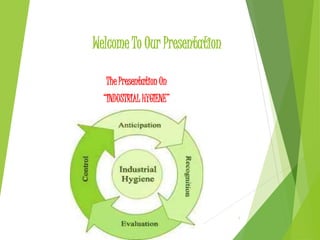
Industrial hygiene is defined as the recognition, 
evaluation and control of workplace hazards. 
 Its origins are based on limiting personal 
exposures to chemicals, and have evolved to 
address the control of most other workplace 
hazards including over-exposure to noise, heat, 
vibration, and repetitive motion 
3
OSHAct of 1970 
 The purpose of the OSHAct is to 
“assure so far as possible every working, 
man and woman in the nation safe and 
healthful working conditions and to 
preserve our human resources.” 
4
Environmental 
Factors or Stresses 
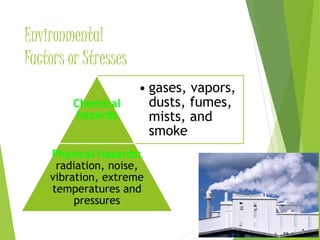
• gases, vapors, 
dusts, fumes, 
mists, and 
smoke 
Chemical 
hazards 
Physical hazards: 
radiation, noise, 
vibration, extreme 
temperatures and 
pressures 
5
Environmental 
Factors or Stresses 
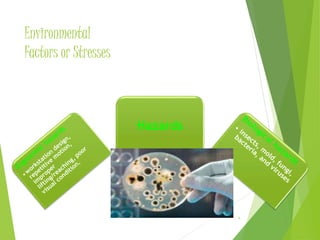
Hazards 
6
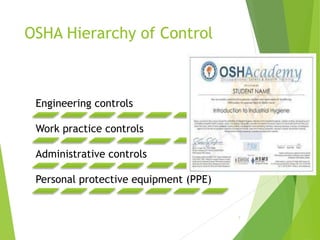
OSHA Hierarchy of Control 
Engineering controls 
Work practice controls 
Administrative controls 
Personal protective equipment (PPE) 
7
Types of Exposure 
 Acute 
 Short term period between exposure and onset of 
symptoms 
 Chronic 
 Long time period between exposure to an agent and the 
onset of symptoms 
8
Types of Air Contaminants 
 Fibers 
 solid, slender, elongated structures 
 length several times the diameter 
 Gases 
 formless fluids that expand to occupy a space 
 arc-welding, internal combustion engine exhaust air 
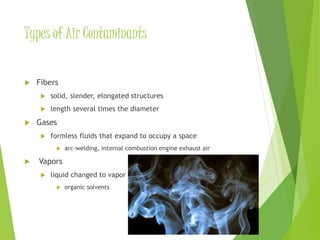
 Vapors 
 liquid changed to vapor 
 organic solvents 
9
Protection 
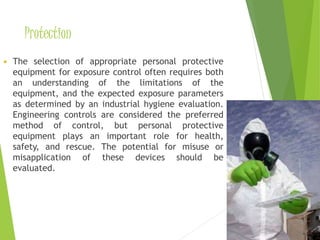
 The selection of appropriate personal protective 
equipment for exposure control often requires both 
an understanding of the limitations of the 
equipment, and the expected exposure parameters 
as determined by an industrial hygiene evaluation. 
Engineering controls are considered the preferred 
method of control, but personal protective 
equipment plays an important role for health, 
safety, and rescue. The potential for misuse or 
misapplication of these devices should be 
evaluated. 
10
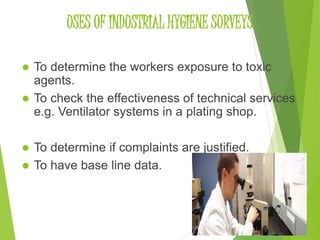
USES OF INDUSTRIAL HYGIENE SURVEYS 
 To determine the workers exposure to toxic 
agents. 
 To check the effectiveness of technical services 
e.g. Ventilator systems in a plating shop. 
 To determine if complaints are justified. 
 To have base line data. 
11
 To compare the standard of working 
environment 
 To assess fire/explosion level of flammable 
/explosive substances. 
 To have safe and healthy work environment 
 To find the effectiveness of a new machine 
process or systems 
 To protect the workers health and well being 
12
BENEFITS 
 You can keep the known hazards under control 
 Find causes 
 Establish Hygiene Standards 
 Make the work environment ambient 
 Prevent accidents 
 Increase morale of workers 
 Eco friendly manufacturer
ECONOMIC BENEFITS 
Increased production. 
Less expenditure on curative 
aspect on the part of sick 
people. 
Less absenteeism.
PEOPLE CONTRIBUTING TO INDUSTRIAL HYGIENE 
 Occupational Physician. 
 Industrial Hygienist. 
 Safety Officer. 
 Occupational Health Nurse.
Thank To All Of You. 
16

Industrial hygiene

  • 1.
    Welcome To OurPresentation The Presentation On “INDUSTRIAL HYGIENE” 1
  • 2.
    Prepared By: Md.Feroz Mahmud ID:130103023 (Group Leader) Md. Neser Uddin ID:120103025 Md.Salauddin al mamun ID:090103022 2
  • 3.
    Industrial Hygiene Industrialhygiene is defined as the recognition, evaluation and control of workplace hazards.  Its origins are based on limiting personal exposures to chemicals, and have evolved to address the control of most other workplace hazards including over-exposure to noise, heat, vibration, and repetitive motion 3
  • 4.
    OSHAct of 1970  The purpose of the OSHAct is to “assure so far as possible every working, man and woman in the nation safe and healthful working conditions and to preserve our human resources.” 4
  • 5.
    Environmental Factors orStresses • gases, vapors, dusts, fumes, mists, and smoke Chemical hazards Physical hazards: radiation, noise, vibration, extreme temperatures and pressures 5
  • 6.
    Environmental Factors orStresses Hazards 6
  • 7.
    OSHA Hierarchy ofControl Engineering controls Work practice controls Administrative controls Personal protective equipment (PPE) 7
  • 8.
    Types of Exposure  Acute  Short term period between exposure and onset of symptoms  Chronic  Long time period between exposure to an agent and the onset of symptoms 8
  • 9.
    Types of AirContaminants  Fibers  solid, slender, elongated structures  length several times the diameter  Gases  formless fluids that expand to occupy a space  arc-welding, internal combustion engine exhaust air  Vapors  liquid changed to vapor  organic solvents 9
  • 10.
    Protection  Theselection of appropriate personal protective equipment for exposure control often requires both an understanding of the limitations of the equipment, and the expected exposure parameters as determined by an industrial hygiene evaluation. Engineering controls are considered the preferred method of control, but personal protective equipment plays an important role for health, safety, and rescue. The potential for misuse or misapplication of these devices should be evaluated. 10
  • 11.
    USES OF INDUSTRIALHYGIENE SURVEYS  To determine the workers exposure to toxic agents.  To check the effectiveness of technical services e.g. Ventilator systems in a plating shop.  To determine if complaints are justified.  To have base line data. 11
  • 12.
     To comparethe standard of working environment  To assess fire/explosion level of flammable /explosive substances.  To have safe and healthy work environment  To find the effectiveness of a new machine process or systems  To protect the workers health and well being 12
  • 13.
    BENEFITS  Youcan keep the known hazards under control  Find causes  Establish Hygiene Standards  Make the work environment ambient  Prevent accidents  Increase morale of workers  Eco friendly manufacturer
  • 14.
    ECONOMIC BENEFITS Increasedproduction. Less expenditure on curative aspect on the part of sick people. Less absenteeism.
  • 15.
    PEOPLE CONTRIBUTING TOINDUSTRIAL HYGIENE  Occupational Physician.  Industrial Hygienist.  Safety Officer.  Occupational Health Nurse.
  • 16.
    Thank To AllOf You. 16