Workplace –walk through survey
By Dr. Ashok Laddha
Emergency Medicine
Occupational health physician
Introduction
• This procedure outlines the requirements for
the conduct of regular worksite inspections in
workplaces. Regular workplace inspections are
performed to ensure a safe working
environment is maintained. These inspections
aim to identify hazards in the workplace and
to minimise risks to health, safety or
environmental harm.
Definition-1
• The recognition of hazards in the workplace begins
with a walk-through survey. This provides the industrial
hygienist/occupational health specialist information on
the different plant processes and operations, the
health services available in the company, the health
status of employees, the safety provisions for workers,
and the condition of facilities such as food service,
sanitary, and waste disposal facilities. Occupational
hazards are initially identified during the walk-through
to facilitate subsequent hazard evaluation using
appropriate industrial hygiene methods.
Definition-2
• Type of plant test in which each section of a plan
is described, discussed, and reviewed to verify its
elements and the coordination between different
materials.
• The walkthrough survey is not a site inspection
but rather a technical review of the operations,
workers, and materials in a workplace used to
more clearly identify potential health hazards and
help guide a qualitative assessment
objective
• To identify potential workplace health hazard
and assess the presence appropriate
measures for their control
Purpose
• The Occupational Hygiene Program provides
information to departments, supervisors and
workers to allow for informed decision-making
regarding exposure to hazardous agents in the
workplace
How does survey help u?
• Walk through survey a part of occupational
hygiene surveys is useful for evaluation of
employee exposures to hazardous chemical
substances and physical agents in the
workplace environment and anticipate the
hazards that may result from process, as
required by legislation.
Advantage of survey
• A survey is a way to
• gather data about a specific topic, often in a confidential manner.
• Conducting surveys in the workplace can help you gauge employee
attitudes and perceptions .
• The advantage of conducting surveys in the workplace is that the
process will give you a detailed picture about the operation and
process.
• Help in identification of new hazards
• Useful in obtaining factual information
• Help in hazard identification
• Help in risk assessment
• Help in risk prioritization
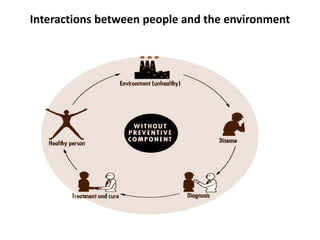
Interactions between people and the environment
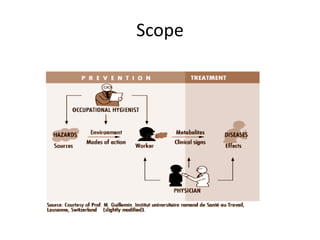
Scope
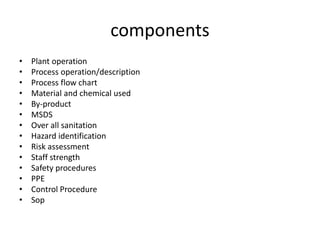
components
• Plant operation
• Process operation/description
• Process flow chart
• Material and chemical used
• By-product
• MSDS
• Over all sanitation
• Hazard identification
• Risk assessment
• Staff strength
• Safety procedures
• PPE
• Control Procedure
• Sop
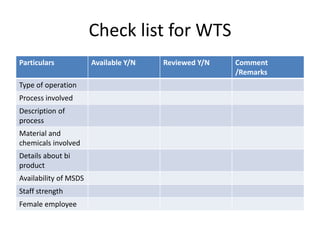
Check list for WTS
Particulars Available Y/N Reviewed Y/N Comment
/Remarks
Type of operation
Process involved
Description of
process
Material and
chemicals involved
Details about bi
product
Availability of MSDS
Staff strength
Female employee
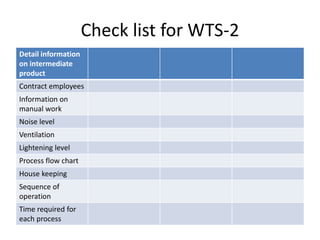
Check list for WTS-2
Detail information
on intermediate
product
Contract employees
Information on
manual work
Noise level
Ventilation
Lightening level
Process flow chart
House keeping
Sequence of
operation
Time required for
each process
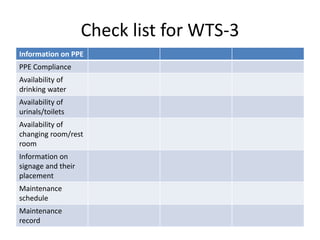
Check list for WTS-3
Information on PPE
PPE Compliance
Availability of
drinking water
Availability of
urinals/toilets
Availability of
changing room/rest
room
Information on
signage and their
placement
Maintenance
schedule
Maintenance
record
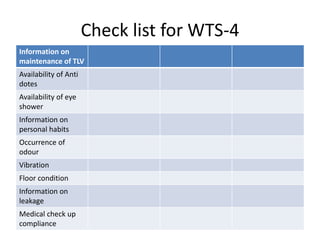
Check list for WTS-4
Information on
maintenance of TLV
Availability of Anti
dotes
Availability of eye
shower
Information on
personal habits
Occurrence of
odour
Vibration
Floor condition
Information on
leakage
Medical check up
compliance
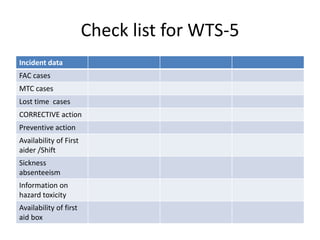
Check list for WTS-5
Incident data
FAC cases
MTC cases
Lost time cases
CORRECTIVE action
Preventive action
Availability of First
aider /Shift
Sickness
absenteeism
Information on
hazard toxicity
Availability of first
aid box
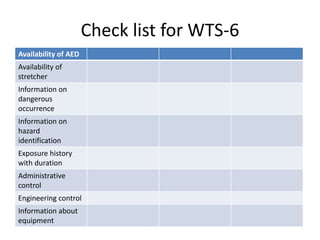
Check list for WTS-6
Availability of AED
Availability of
stretcher
Information on
dangerous
occurrence
Information on
hazard
identification
Exposure history
with duration
Administrative
control
Engineering control
Information about
equipment
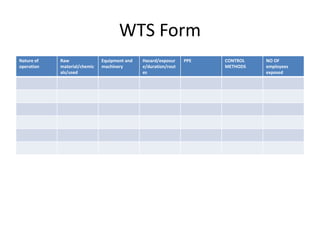
WTS Form
Nature of
operation
Raw
material/chemic
als/used
Equipment and
machinery
Hazard/exposur
e/duration/rout
es
PPE CONTROL
METHODS
NO OF
employees
exposed
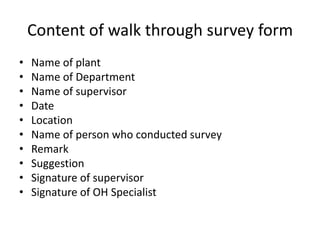
Content of walk through survey form
• Name of plant
• Name of Department
• Name of supervisor
• Date
• Location
• Name of person who conducted survey
• Remark
• Suggestion
• Signature of supervisor
• Signature of OH Specialist
Responsibility
• Occupational health specialist
• Occupational health nurse
• Safety personnel
Out come
• A strengthened advocacy in both the
implementation of these regulations and in
the evaluation and control of these hazards
could further help in reducing the outcomes
that these hazards may cause. Note that a
workplace that is free from occupational
hazards will create a safe working
environment which would increase employees
performance and productivity.

workplace Walk through survey-----hazard evalutaion

  • 1.
    Workplace –walk throughsurvey By Dr. Ashok Laddha Emergency Medicine Occupational health physician
  • 2.
    Introduction • This procedureoutlines the requirements for the conduct of regular worksite inspections in workplaces. Regular workplace inspections are performed to ensure a safe working environment is maintained. These inspections aim to identify hazards in the workplace and to minimise risks to health, safety or environmental harm.
  • 3.
    Definition-1 • The recognitionof hazards in the workplace begins with a walk-through survey. This provides the industrial hygienist/occupational health specialist information on the different plant processes and operations, the health services available in the company, the health status of employees, the safety provisions for workers, and the condition of facilities such as food service, sanitary, and waste disposal facilities. Occupational hazards are initially identified during the walk-through to facilitate subsequent hazard evaluation using appropriate industrial hygiene methods.
  • 4.
    Definition-2 • Type ofplant test in which each section of a plan is described, discussed, and reviewed to verify its elements and the coordination between different materials. • The walkthrough survey is not a site inspection but rather a technical review of the operations, workers, and materials in a workplace used to more clearly identify potential health hazards and help guide a qualitative assessment
  • 5.
    objective • To identifypotential workplace health hazard and assess the presence appropriate measures for their control
  • 6.
    Purpose • The OccupationalHygiene Program provides information to departments, supervisors and workers to allow for informed decision-making regarding exposure to hazardous agents in the workplace
  • 7.
    How does surveyhelp u? • Walk through survey a part of occupational hygiene surveys is useful for evaluation of employee exposures to hazardous chemical substances and physical agents in the workplace environment and anticipate the hazards that may result from process, as required by legislation.
  • 8.
    Advantage of survey •A survey is a way to • gather data about a specific topic, often in a confidential manner. • Conducting surveys in the workplace can help you gauge employee attitudes and perceptions . • The advantage of conducting surveys in the workplace is that the process will give you a detailed picture about the operation and process. • Help in identification of new hazards • Useful in obtaining factual information • Help in hazard identification • Help in risk assessment • Help in risk prioritization
  • 9.
    Interactions between peopleand the environment
  • 10.
  • 11.
    components • Plant operation •Process operation/description • Process flow chart • Material and chemical used • By-product • MSDS • Over all sanitation • Hazard identification • Risk assessment • Staff strength • Safety procedures • PPE • Control Procedure • Sop
  • 12.
    Check list forWTS Particulars Available Y/N Reviewed Y/N Comment /Remarks Type of operation Process involved Description of process Material and chemicals involved Details about bi product Availability of MSDS Staff strength Female employee
  • 13.
    Check list forWTS-2 Detail information on intermediate product Contract employees Information on manual work Noise level Ventilation Lightening level Process flow chart House keeping Sequence of operation Time required for each process
  • 14.
    Check list forWTS-3 Information on PPE PPE Compliance Availability of drinking water Availability of urinals/toilets Availability of changing room/rest room Information on signage and their placement Maintenance schedule Maintenance record
  • 15.
    Check list forWTS-4 Information on maintenance of TLV Availability of Anti dotes Availability of eye shower Information on personal habits Occurrence of odour Vibration Floor condition Information on leakage Medical check up compliance
  • 16.
    Check list forWTS-5 Incident data FAC cases MTC cases Lost time cases CORRECTIVE action Preventive action Availability of First aider /Shift Sickness absenteeism Information on hazard toxicity Availability of first aid box
  • 17.
    Check list forWTS-6 Availability of AED Availability of stretcher Information on dangerous occurrence Information on hazard identification Exposure history with duration Administrative control Engineering control Information about equipment
  • 18.
    WTS Form Nature of operation Raw material/chemic als/used Equipmentand machinery Hazard/exposur e/duration/rout es PPE CONTROL METHODS NO OF employees exposed
  • 19.
    Content of walkthrough survey form • Name of plant • Name of Department • Name of supervisor • Date • Location • Name of person who conducted survey • Remark • Suggestion • Signature of supervisor • Signature of OH Specialist
  • 20.
    Responsibility • Occupational healthspecialist • Occupational health nurse • Safety personnel
  • 21.
    Out come • Astrengthened advocacy in both the implementation of these regulations and in the evaluation and control of these hazards could further help in reducing the outcomes that these hazards may cause. Note that a workplace that is free from occupational hazards will create a safe working environment which would increase employees performance and productivity.