What is Occupational Hygiene?


                   Mike Slater
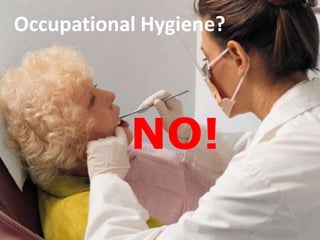
Occupational
Hygiene?
Occupational

               NO!
Hygiene?
Occupational Hygiene?


           NO!
Hygiene
“Conditions or practices conducive
to maintaining health and
preventing disease”

http://oxforddictionaries.com
Occupational hygiene is
about the prevention of
ill health caused by work
According to
the WHO,
globally, there
are:
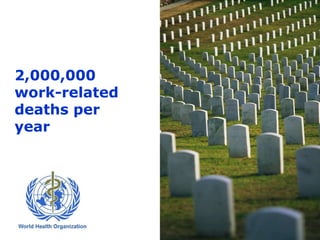
2,000,000
work-related
deaths per
year
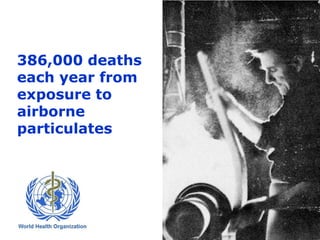
386,000 deaths
each year from
exposure to
airborne
particulates
152,000
deaths per
year from
carcinogens in
the workplace
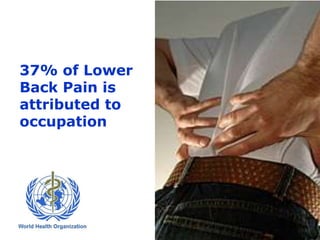
37% of Lower
Back Pain is
attributed to
occupation
Occupational hygiene is
about the prevention of
ill health caused by work
We do that by the
We do that by the

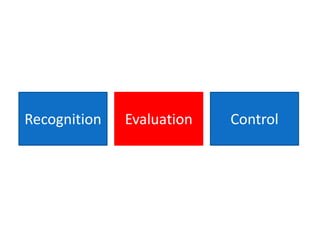
Recognition
We do that by the

Recognition   Evaluation
We do that by the

Recognition   Evaluation   Control
We do that by the

Recognition   Evaluation   Control


of hazardous agents
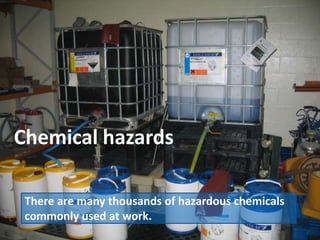
Chemical hazards

 There are many thousands of hazardous chemicals
 commonly used at work.
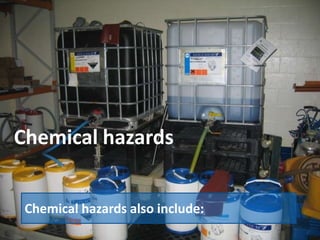
Chemical hazards


 Chemical hazards also include:
Silica released during stone cutting
                           activities
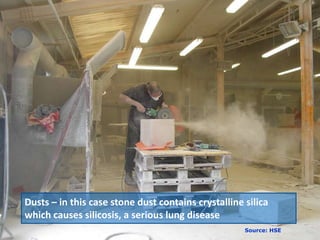
Dusts – in this case stone dust contains crystalline silica
which causes silicosis, a serious lung disease
                                                     Source: HSE
Now you see it


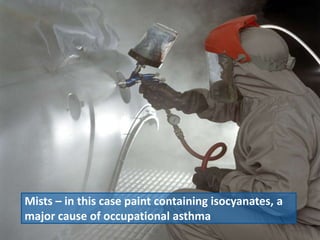
 Mists – in this case paint containing isocyanates, a
 major cause of occupational asthma
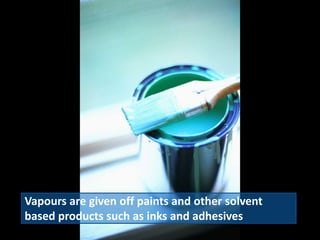
Vapours are given off paints and other solvent
based products such as inks and adhesives
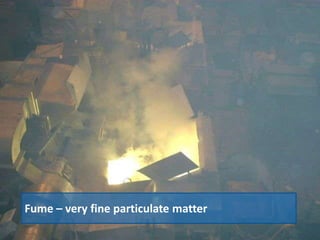
Fume – very fine particulate matter
Physical agents


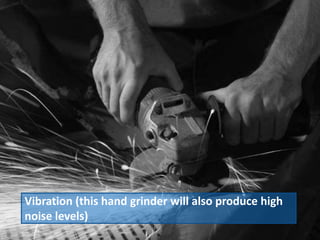
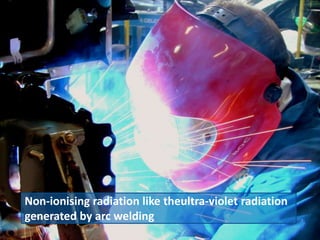
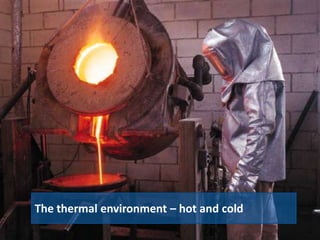
 Hazardous physical agents include noise,
Vibration (this hand grinder will also produce high
noise levels)
Non-ionising radiation like theultra-violet radiation
generated by arc welding
The thermal environment – hot and cold
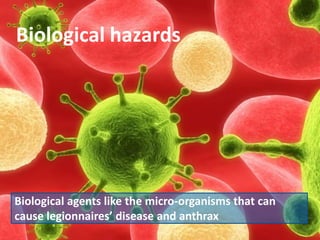
Biological hazards


Biological agents like the micro-organisms that can
cause legionnaires’ disease and anthrax
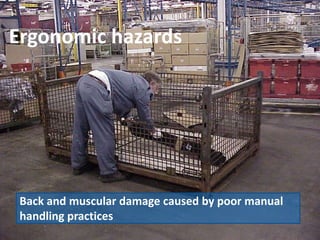
Ergonomic hazards


 Back and muscular damage caused by poor manual
 handling practices
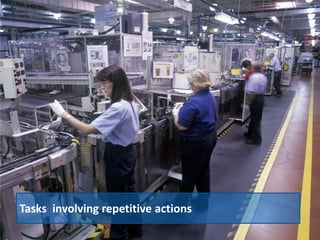
Tasks involving repetitive actions
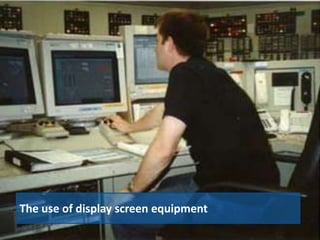
The use of display screen equipment
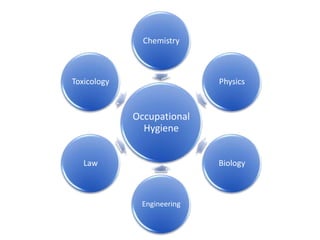
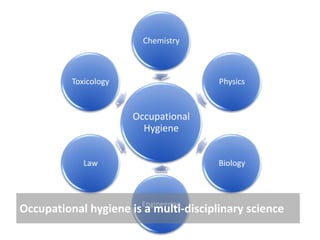
Chemistry


Toxicology                  Physics


             Occupational
               Hygiene


   Law                      Biology


              Engineering
Chemistry


          Toxicology                   Physics


                       Occupational
                         Hygiene


             Law                       Biology


Occupational hygiene isEngineering
                        a multi-disciplinary science
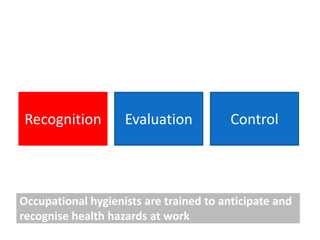
Recognition   Evaluation   Control
Recognition         Evaluation           Control


Occupational hygienists are trained to anticipate and
recognise health hazards at work
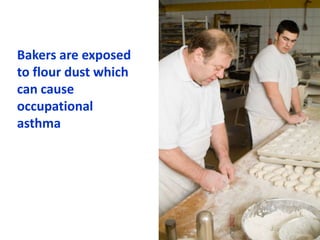
Bakers are exposed
to flour dust which
can cause
occupational
asthma
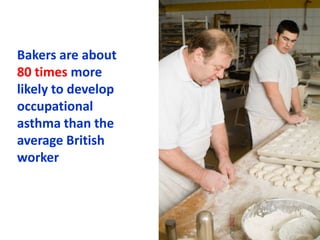
Bakers are about
80 times more
likely to develop
occupational
asthma than the
average British
worker
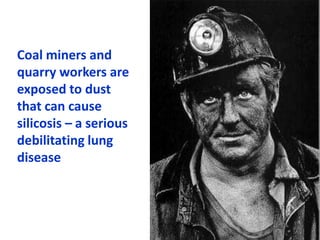
Coal miners and
quarry workers are
exposed to dust
that can cause
silicosis – a serious
debilitating lung
disease
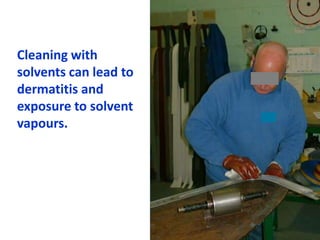
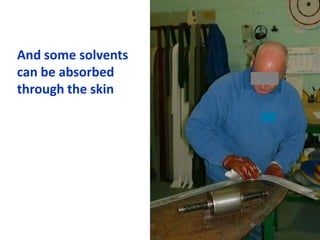
Cleaning with
solvents can lead to
dermatitis and
exposure to solvent
vapours.
And some solvents
can be absorbed
through the skin
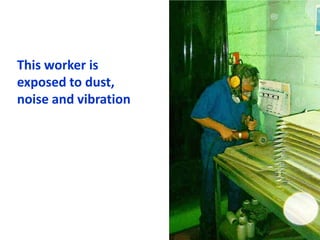
This worker is
exposed to dust,
noise and vibration
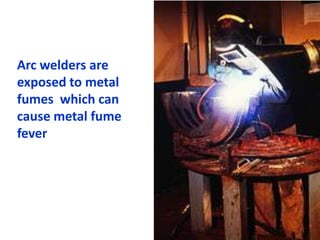
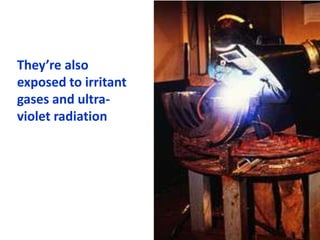
Arc welders are
exposed to metal
fumes which can
cause metal fume
fever
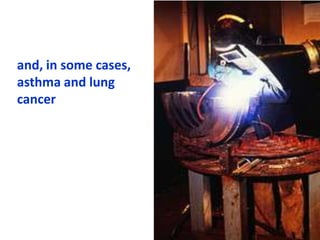
and, in some cases,
asthma and lung
cancer
They’re also
exposed to irritant
gases and ultra-
violet radiation
Recognition   Evaluation   Control
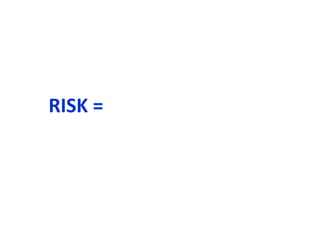
RISK =
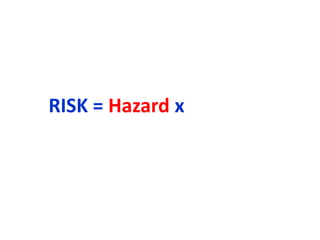
RISK = Hazard x
RISK = Hazard x Exposure


Exposure assessment is an important part of the
occupational hygienist’s role
RISK = Hazard x Exposure


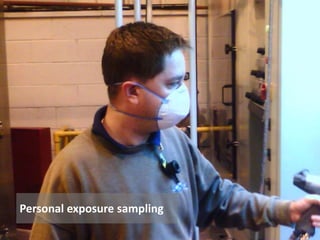
This can involve:
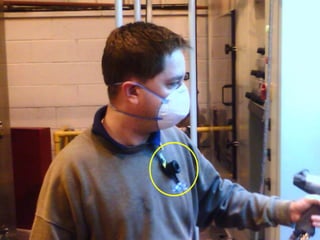
Personal exposure sampling
Exposure modelling
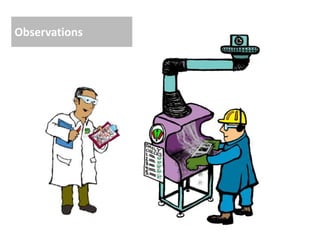
Observations
Biological
Monitoring


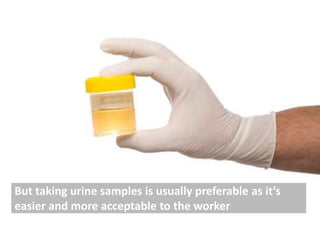
Which may involve taking blood samples
But taking urine samples is usually preferable as it’s
easier and more acceptable to the worker
Recognition   Evaluation   Control
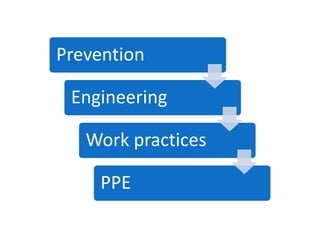
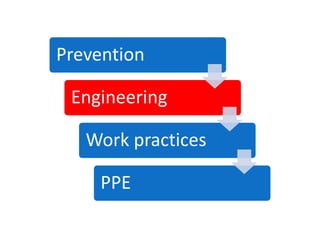
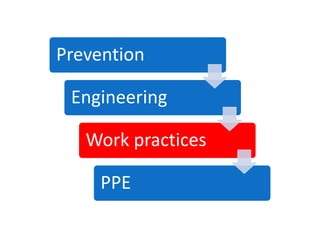
Prevention

 Engineering

   Work practices

     PPE
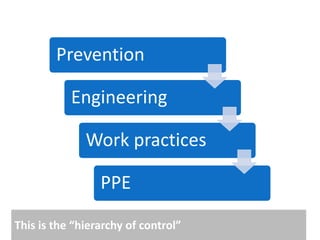
Prevention

           Engineering

              Work practices

                 PPE

This is the “hierarchy of control”
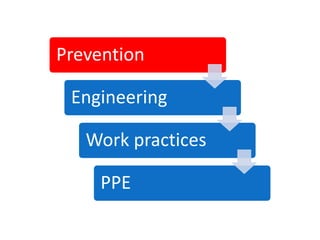
Prevention

 Engineering

   Work practices

     PPE
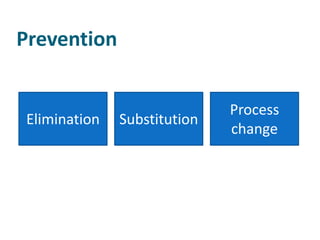
Prevention


                             Process
Elimination   Substitution
                             change
Prevention

 Engineering

   Work practices

     PPE
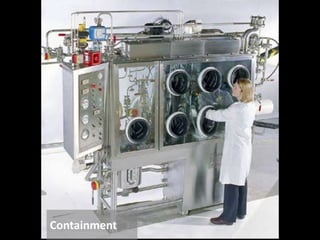
Containment
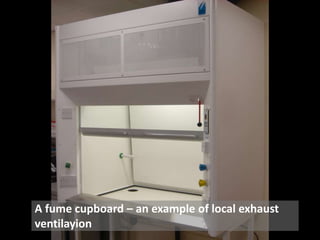
A fume cupboard – an example of local exhaust
ventilayion
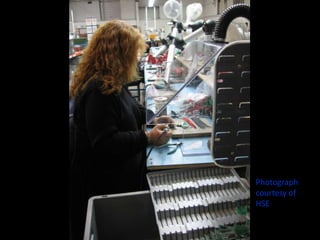
Photograph
courtesy of
HSE
Prevention

 Engineering

   Work practices

     PPE
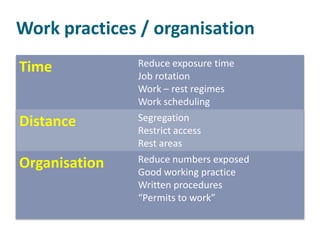
Work practices / organisation
Time           Reduce exposure time
               Job rotation
               Work – rest regimes
               Work scheduling
Distance       Segregation
               Restrict access
               Rest areas
Organisation   Reduce numbers exposed
               Good working practice
               Written procedures
               “Permits to work”
Prevention

       Engineering

          Work practices

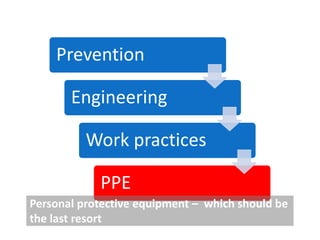
            PPE
Personal protective equipment – which should be
the last resort
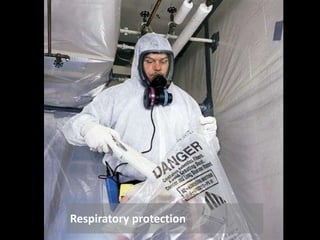
Respiratory protection
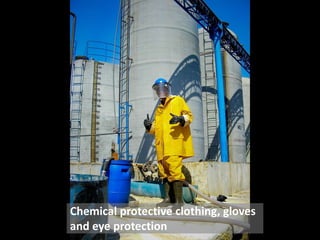
Chemical protective clothing, gloves
and eye protection
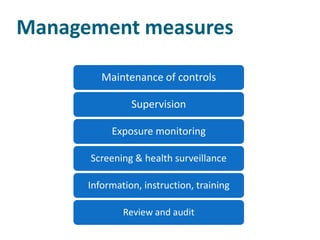
Management measures

         Maintenance of controls

                Supervision

           Exposure monitoring

      Screening & health surveillance

      Information, instruction, training

              Review and audit
www.bohs.org
www.bohs.org
The organisation for anyone interested in
occupational hygiene in the UK
http://www.slideshare.net/mikeslater

mike@diamondenv.co.uk

http://diamondenv.wordpress.com

Twitter: @diamondenv


Mike Slater
Picture credits:
 Stock.XCHNG - www.sxc.hu/
 Cirrus Research - www.cirrusresearch.co.uk
 The Health and Safety Executive – www.hse.gov.uk
 www.bbc.co.uk/schools/primaryhistory/victorian_britain/children_in_facto
  ries/
 www.beautifulbritain.co.uk
Mike Slater, Diamond Environmental Ltd. (mike@diamondenv.co.uk)


    This presentation is distributed under the Creative Commons
               Attribution-NonCommercial-ShareAlike
                      UK:International Licence

What is occupational hygiene?

Editor's Notes

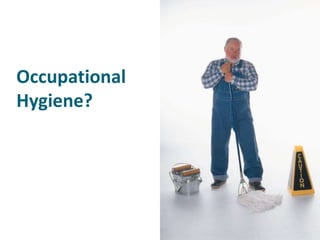
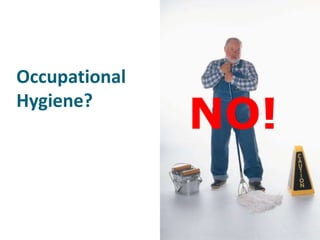
  • #4 No – it isn’t about cleaning the workplace
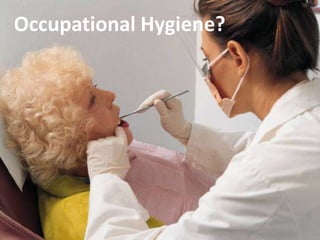
  • #6 It isn’t anything to do with dental hygiene
  • #8 Also known as industrial hygiene
  • #13 Picture source http://www.hse.gov.uk/guidance/
  • #14 Also known as industrial hygiene
  • #22 Dusts – in this case stone dust contains crystalline silica which causes silicosis, a serious lung disease
  • #23 Mists – in this case paint containing isocyanates, a majpr cause of occupational asthma
  • #24 Mists – in this case paint containing isocyanates, a majpr cause of occupational asthma
  • #27 Noise and vibration
  • #28 Non-ionising radiation like the UV generated by arc welding
  • #29 Thermal environment – hot and cold
  • #32 Tasks involving repetitive actions
  • #33 The use of display screen equipment
  • #34 Multidisciplinary
  • #35 Multidisciplinary
  • #38 Exposure to flour dust is likely to present a significant risk in commercial and industrial bakeries
  • #39 Exposure to flour dust is likely to present a significant risk in commercial and industrial bakeries
  • #40 Silicosis and coal miner’s pneumoconiosisStill a problem today
  • #55 Exposure modellingA relatively new approachStill being developedA lot of work needed
  • #56 Carry out a walkthrough surveyWe’ll come back to this laterSee Page 26 of book
  • #57 Sometimes air sampling doesn’t provide the answer and biological monitoring may be neededThis may involve taking blood sampleshttp://www.pharmaceutical-technology.com/contractors/trials/cepha/cepha3.html
  • #58 But it’s more likely to involve analysing urine sampleshttp://www.fightdrugabuse.com/pros-and-cons-of-urine-drug-testing/