Occupational Health & Safety in the Library Your guide to  The Safe Plan System
This presentation summarises information about: Common library hazards Workplace health and safety regulation Identifying and managing risks
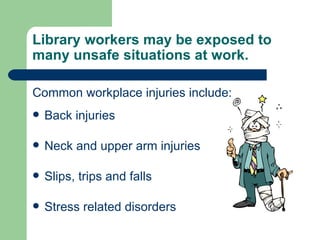
Library workers may be exposed to many unsafe situations at work.  Common workplace injuries include: Back injuries Neck and upper arm injuries Slips, trips and falls Stress related disorders
Queensland Workplace Health & Safety Legislation Consists of three main parts: The Workplace Health & Safety Act (1995) The Workplace Health & Safety Regulation (1997) Industry Codes of Practice & Advisory Standards
Employers’ Obligations: Ensure the health and safety of each of the employer’s workers at work Ensure their own health and safety Ensure the health and safety of other people who are not workers; for example visitors and patrons.
Workers’ Obligations Comply with the employer’s instructions regarding health and safety Use personal protective equipment if it is provided and if you have been trained in its use Do not deliberately interfere with, or misuse, anything that has been provided for workplace health and safety Do not deliberately endanger anyone’s workplace health and safety Do not deliberately injure yourself
Your Workplace Health & Safety Officers WH&S Representative –  Brad Colbourne ext. 290 Workplace Rehabilitation Co-Ordinator Lillias Connell ext. 445 Risk Management/WH&S Co-Ordinator  George Dragon ext. 226
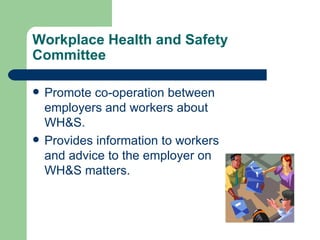
Workplace Health and Safety Committee Promote co-operation between employers and workers about WH&S. Provides information to workers and advice to the employer on WH&S matters.
Risk Management Everyone’s responsibility!
Risk Management –  Everyone’s Responsibility Identify hazards Assess the risk Decide on control measures to manage the risk Make the changes Monitor the effectiveness of measures.
Training  Workplace training should include: Safe work procedures Correct use of equipment, tools, furniture, PPE, etc. Hazard identification methods Risk control methods Efficient movements and postures As part of the induction training, you should be advised of emergency exits, first aid facilities and any trained first aid officers, location of fire extinguishers and emergency contact phone numbers.
Workplace Health & Safety Further information: WH&S Information Kit Council’s Intranet Your supervisor WHSR (Brad) Workplace Rehabilitation Co-Ordinator (Lillias) Risk Management/WH&S Co-Ordinator (George) Workplace Health and Safety Committee.

Occupational Health & Safety

  • 1.
    Occupational Health &Safety in the Library Your guide to The Safe Plan System
  • 2.
    This presentation summarisesinformation about: Common library hazards Workplace health and safety regulation Identifying and managing risks
  • 3.
    Library workers maybe exposed to many unsafe situations at work. Common workplace injuries include: Back injuries Neck and upper arm injuries Slips, trips and falls Stress related disorders
  • 4.
    Queensland Workplace Health& Safety Legislation Consists of three main parts: The Workplace Health & Safety Act (1995) The Workplace Health & Safety Regulation (1997) Industry Codes of Practice & Advisory Standards
  • 5.
    Employers’ Obligations: Ensurethe health and safety of each of the employer’s workers at work Ensure their own health and safety Ensure the health and safety of other people who are not workers; for example visitors and patrons.
  • 6.
    Workers’ Obligations Complywith the employer’s instructions regarding health and safety Use personal protective equipment if it is provided and if you have been trained in its use Do not deliberately interfere with, or misuse, anything that has been provided for workplace health and safety Do not deliberately endanger anyone’s workplace health and safety Do not deliberately injure yourself
  • 7.
    Your Workplace Health& Safety Officers WH&S Representative – Brad Colbourne ext. 290 Workplace Rehabilitation Co-Ordinator Lillias Connell ext. 445 Risk Management/WH&S Co-Ordinator George Dragon ext. 226
  • 8.
    Workplace Health andSafety Committee Promote co-operation between employers and workers about WH&S. Provides information to workers and advice to the employer on WH&S matters.
  • 9.
  • 10.
    Risk Management – Everyone’s Responsibility Identify hazards Assess the risk Decide on control measures to manage the risk Make the changes Monitor the effectiveness of measures.
  • 11.
    Training Workplacetraining should include: Safe work procedures Correct use of equipment, tools, furniture, PPE, etc. Hazard identification methods Risk control methods Efficient movements and postures As part of the induction training, you should be advised of emergency exits, first aid facilities and any trained first aid officers, location of fire extinguishers and emergency contact phone numbers.
  • 12.
    Workplace Health &Safety Further information: WH&S Information Kit Council’s Intranet Your supervisor WHSR (Brad) Workplace Rehabilitation Co-Ordinator (Lillias) Risk Management/WH&S Co-Ordinator (George) Workplace Health and Safety Committee.

Editor's Notes

  • #2 Like all workplaces, libraries have a range of hazards that pose varying levels of risk. These guidelines aim to highlight some of the more common library hazards and some general principles to help in their control.