Rise and Fall of the
Inca Civilization
Mrs. Sample
6th Grade SS
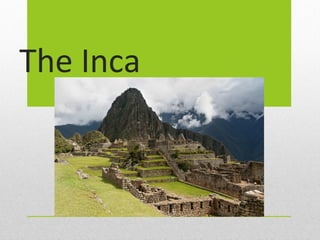
The Inca
Rise of the Inca
• 1200 AD, Incas settled in Cuzco, a village in the
Andes Mountains (now in Peru).
• Known as “City of the Sun” (sun god was most
important to the Incas)
• Most were farmers.

• 1438 AD, Pachacuti became ruler of the Incas
and conquered more lands/people.
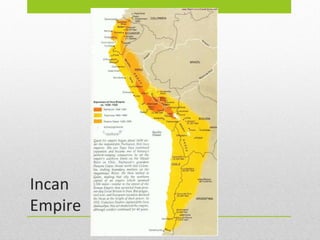
• empire stretched 2,500 miles and ruled 12 million people
• used runners to spread news—at a rate of 250 miles a day
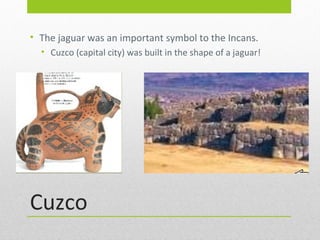
• The jaguar was an important symbol to the Incans.
• Cuzco (capital city) was built in the shape of a jaguar!

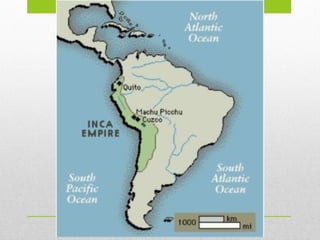
Cuzco
Incan
Empire
Incan Accomplishments
• excellent farmers, builders, and managers
• roads and aqueducts:
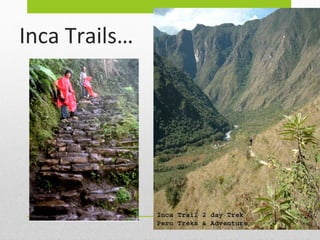
• built more than 19,000 miles of roads (over
mountains!)
• built canals and aqueducts to carry water to
dry areas
• aqueduct—pipe or channel designed to
carry water to a distant source; irrigates
dry land
Inca Trails…
Incan Accomplishments (continued)
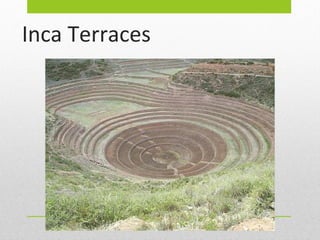
• Farming: cut terraces into the Andes to create farmland
• developed a large variety of foods
• discovered ways to store and preserve food
• Kept extra food in storehouses and distributed to
villages when the crops failed

• potato was a staple food (due to it being able
to grow in the high altitudes of the Andes)
• other foods: tomatoes, maize, lima beans,
peppers, grains
Inca Terraces
• Inca ruins are some of the most impressive
architecture in the world.
• Created a system of stone roads still in use today.
• Inca runners carried messages in a relay system
• Built swinging bridges made of rope (to go over
canyons and rivers)
• They cut stone with such precisions that each block
fit exactly with its neighbor.
– fit was so tight, even a knife wouldn’t fit in the
cracks

Architecture
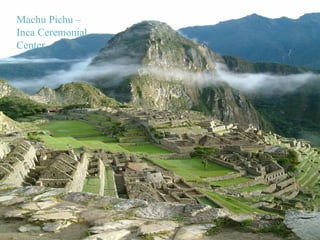
Macchu Picchu

Machu Pichu –
Inca Ceremonial
Center
Incan Government & Records
• nobles conducted a census to count people so
they could be taxed
• no written language
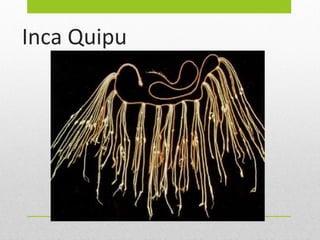
• recorded information on knotted strings called
Quipus:
• each color represented a different item and knots
of different sizes at different intervals stood for
numbers
Inca Quipu
Incan Religion
• like the Aztec, also polytheistic
• main god was the sun god

• Sacrifice was a big part—usually a
white llama was used.
• believed in reincarnation
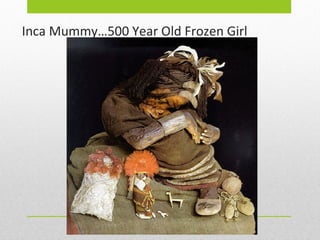
Inca Mummy…500 Year Old Frozen Girl
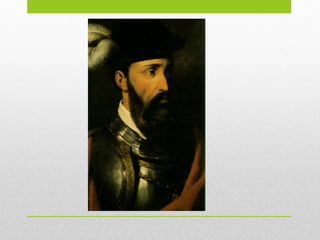
Francisco Pizarro- Spanish
Conquistador

• Pizarro was also from the Extremadura.
• He was not of noble birth; could not even
write his name.
• At age 16, Pizarro fled a job herding pigs in
Italy.
• 1502--He arrived in the Americas and
became very wealthy by exploring Panama.
• heard a rumor that there was a great
empire filled with gold in the mountains of
South America
• 1530s--Inca thought they ruled most of
the world; two threats from the north
proved they did not.
1.They couldn’t stop the spread of smallpox.
2. They couldn’t scare away Pizarro.

The Inca
• Pizarro led 160 soldiers to the Incan
homeland.
• raided Incan storehouses & fired guns at
villagers
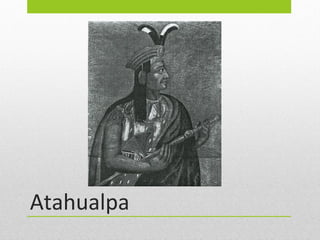
• Atahualpa, Incan emperor, thought Pizarro
was crazy--how could he stand up to an
army of 80,000 Incan warriors?
• 1532--Pizarro came up with a plan to
defeat the Inca.

Pizarro Conquers the Inca
Atahualpa
• Spanish messengers invited Atahualpa to a
meeting.
• He agreed & left most of his army behind-brought only 5,000 bodyguards.
• Pizarro’s 160 soldiers attacked the Inca &
kidnapped Atahualpa.
• Pizarro offered to free Atahualpa if he filled one
room with gold & one with silver.
• Atahualpa kept his end of the bargain, but
Pizarro killed him in 1533.

Pizarro Defeats the
Inca
• Spanish king made Pizarro the governor of
Peru.
• Pizarro’s conquest of Peru opened most of
South America to Spanish rule.
• Spain controlled a vast territory covering
375,000 miles with almost seven million
inhabitants.

After Conquering the Inca…

Inca Civilization- Rise and Fall

  • 1.
    Rise and Fallof the Inca Civilization Mrs. Sample 6th Grade SS
  • 2.
  • 3.
    Rise of theInca • 1200 AD, Incas settled in Cuzco, a village in the Andes Mountains (now in Peru). • Known as “City of the Sun” (sun god was most important to the Incas) • Most were farmers. • 1438 AD, Pachacuti became ruler of the Incas and conquered more lands/people. • empire stretched 2,500 miles and ruled 12 million people • used runners to spread news—at a rate of 250 miles a day
  • 4.
    • The jaguarwas an important symbol to the Incans. • Cuzco (capital city) was built in the shape of a jaguar! Cuzco
  • 5.
  • 6.
    Incan Accomplishments • excellentfarmers, builders, and managers • roads and aqueducts: • built more than 19,000 miles of roads (over mountains!) • built canals and aqueducts to carry water to dry areas • aqueduct—pipe or channel designed to carry water to a distant source; irrigates dry land
  • 7.
  • 8.
    Incan Accomplishments (continued) •Farming: cut terraces into the Andes to create farmland • developed a large variety of foods • discovered ways to store and preserve food • Kept extra food in storehouses and distributed to villages when the crops failed • potato was a staple food (due to it being able to grow in the high altitudes of the Andes) • other foods: tomatoes, maize, lima beans, peppers, grains
  • 9.
  • 10.
    • Inca ruinsare some of the most impressive architecture in the world. • Created a system of stone roads still in use today. • Inca runners carried messages in a relay system • Built swinging bridges made of rope (to go over canyons and rivers) • They cut stone with such precisions that each block fit exactly with its neighbor. – fit was so tight, even a knife wouldn’t fit in the cracks Architecture
  • 11.
    Macchu Picchu Machu Pichu– Inca Ceremonial Center
  • 12.
    Incan Government &Records • nobles conducted a census to count people so they could be taxed • no written language • recorded information on knotted strings called Quipus: • each color represented a different item and knots of different sizes at different intervals stood for numbers
  • 13.
  • 14.
    Incan Religion • likethe Aztec, also polytheistic • main god was the sun god • Sacrifice was a big part—usually a white llama was used. • believed in reincarnation
  • 15.
    Inca Mummy…500 YearOld Frozen Girl
  • 16.
    Francisco Pizarro- Spanish Conquistador •Pizarro was also from the Extremadura. • He was not of noble birth; could not even write his name. • At age 16, Pizarro fled a job herding pigs in Italy. • 1502--He arrived in the Americas and became very wealthy by exploring Panama. • heard a rumor that there was a great empire filled with gold in the mountains of South America
  • 18.
    • 1530s--Inca thoughtthey ruled most of the world; two threats from the north proved they did not. 1.They couldn’t stop the spread of smallpox. 2. They couldn’t scare away Pizarro. The Inca
  • 20.
    • Pizarro led160 soldiers to the Incan homeland. • raided Incan storehouses & fired guns at villagers • Atahualpa, Incan emperor, thought Pizarro was crazy--how could he stand up to an army of 80,000 Incan warriors? • 1532--Pizarro came up with a plan to defeat the Inca. Pizarro Conquers the Inca
  • 21.
  • 22.
    • Spanish messengersinvited Atahualpa to a meeting. • He agreed & left most of his army behind-brought only 5,000 bodyguards. • Pizarro’s 160 soldiers attacked the Inca & kidnapped Atahualpa. • Pizarro offered to free Atahualpa if he filled one room with gold & one with silver. • Atahualpa kept his end of the bargain, but Pizarro killed him in 1533. Pizarro Defeats the Inca
  • 23.
    • Spanish kingmade Pizarro the governor of Peru. • Pizarro’s conquest of Peru opened most of South America to Spanish rule. • Spain controlled a vast territory covering 375,000 miles with almost seven million inhabitants. After Conquering the Inca…