Shateel Arafat Chowdhry
                ID: 113014038
              Department: CSE
University of Liberal Arts Bangladesh(ULAB)

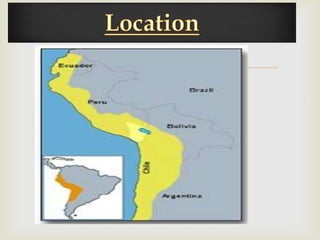
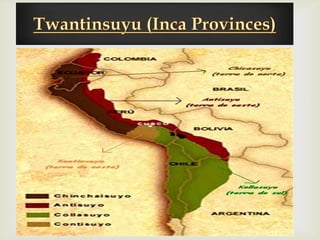
 Located in the Andes Mountains of South America.


 West Coast of South American in
  Colombia, Peru, Ecuador, Chile, and Argentina.


 Founded by Manco Capac in the beginning of 12th
  century.

 He was Considered the son of the sun god Inti.

 As the myth says, Manco Capac came up this valley from
  the south; following instructions of the sun god he threw
  his golden staff into the Cusco earth, and when the staff
  disappeared, suggesting the land's fertility, he founded
  his city Cuzco.



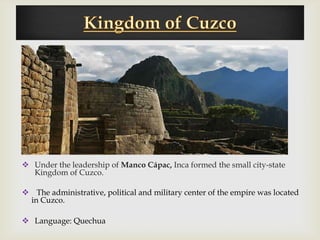
 Under the leadership of Manco Cápac, Inca formed the small city-state
  Kingdom of Cuzco.

 The administrative, political and military center of the empire was located
 in Cuzco.

 Language: Quechua

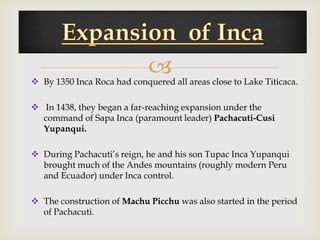
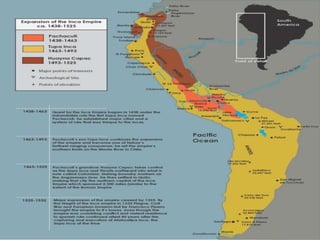
 By 1350 Inca Roca had conquered all areas close to Lake Titicaca.

 In 1438, they began a far-reaching expansion under the
  command of Sapa Inca (paramount leader) Pachacuti-Cusi
  Yupanqui.

 During Pachacuti’s reign, he and his son Tupac Inca Yupanqui
  brought much of the Andes mountains (roughly modern Peru
  and Ecuador) under Inca control.

 The construction of Machu Picchu was also started in the period
  of Pachacuti.




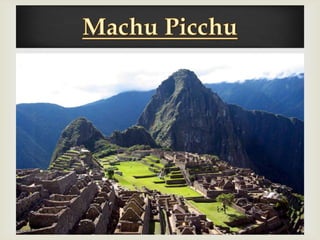
 Machu Picchu is located in the Cuzco Region.

 Pachacuti started to build the Machu Picchu and the construction
  finished at the end of Tupac Inca Yupanqui’s period in 1493.


 Machu Picchu is located about 2,450 metres above from sea level.


 It was abandoned just over 100 years later, in 1572, as a belated
  result of the Spanish Conquest.

 There’s a dispute among Archaeologists that Machu Picchu is
  either sacred religious site or agricultural station.

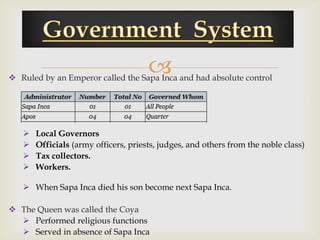
 Ruled by an Emperor called the Sapa Inca and had absolute control


      Local Governors
      Officials (army officers, priests, judges, and others from the noble class)
      Tax collectors.
      Workers.

    When Sapa Inca died his son become next Sapa Inca.

 The Queen was called the Coya
   Performed religious functions
   Served in absence of Sapa Inca
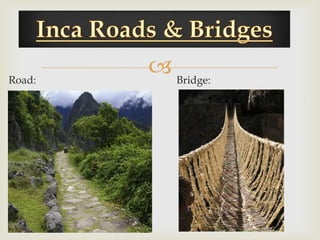
Road:
         Bridge:

 Farming

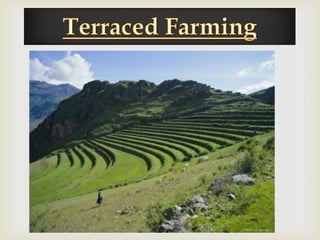
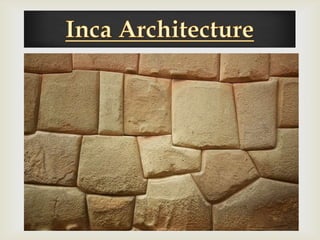
   Created terraces in mountains to farm on secured
    by stone walls
   Farmers spent part of year working land for
    emperor
   Grew corn, potatoes, cotton, squash, and beans
   Government gave part of harvest to people and
    stored the rest

 Mita System

 Mita was one kind of labour tax. The Incas required
  all the taxpayers to work for a certain period in each
  year for the Empire. This labour were called Mita.

 Women had to weave clothes.

 Men had to cultivate & build structures.




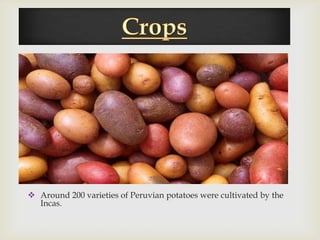
 Around 200 varieties of Peruvian potatoes were cultivated by the
  Incas.



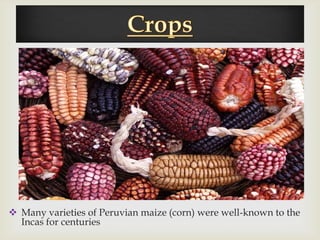
 Many varieties of Peruvian maize (corn) were well-known to the
  Incas for centuries
 4 Class in society :         
      Sapa Inca himself
      Royal
      Nobel
      Ayllu


 People lived in close communities called Ayllus.
 Ayllu lived together in a restricted area and
  sharing land, animals, and crops.

 Some woman can leave ayllus for better life which is called Chosen
  Woman.

 Regulated society by arranging marriages to make sure men and women
  settled down.
 People conquered by the Incans were put into Incan army.
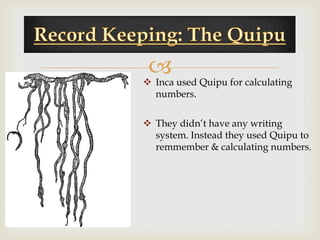
 used Quipu for calculating
 Inca
  numbers.


 They didn’t have any writing
  system. Instead they used Quipu to
  remmember & calculating numbers.

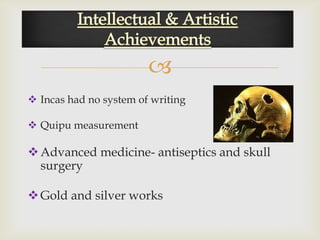
 Incas had no system of writing

 Quipu measurement

 Advanced medicine- antiseptics and skull
  surgery

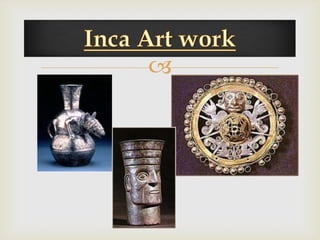
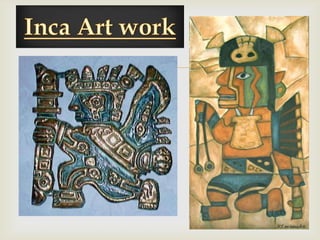
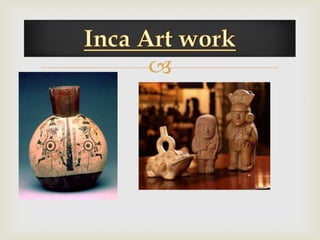
 Gold and silver works
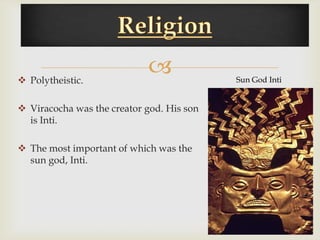
 Polytheistic.
                                          Sun God Inti


 Viracocha was the creator god. His son
  is Inti.

 The most important of which was the
  sun god, Inti.

 Human Sacrifice was part of a religious ritual.

 Involved mainly children

 Happened around an important event.

 Held a feast, took them to the top of a
  mountain, gave them something to intoxicate them

 Were either strangled, hit on the head, or left to die
  of exposure





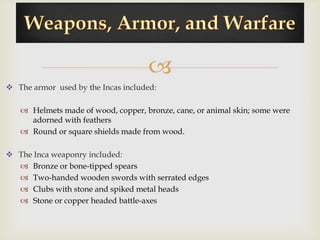
 The armor used by the Incas included:

    Helmets made of wood, copper, bronze, cane, or animal skin; some were
     adorned with feathers
    Round or square shields made from wood.

 The Inca weaponry included:
   Bronze or bone-tipped spears
   Two-handed wooden swords with serrated edges
   Clubs with stone and spiked metal heads
   Stone or copper headed battle-axes

 From 1527 to 1532, brothers Huáscar and Atahualpa fought over the
  Inca Empire

 Their father, Sapa Inca Huayna Capac, had allowed each to rule a
  part of the Empire as regent during his reign: Huáscar in Cuzco and
  Atahualpa in Quito.

 When Huayna Capac and his eldest son and heir Ninan
  Cuyuchi, died in 1527 , Atahualpa and Huáscar went to war over
  who would succeed their father.

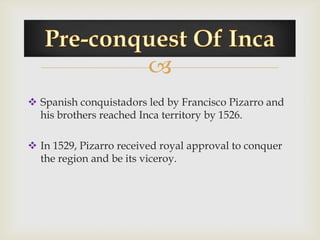
 Spanish conquistadors led by Francisco Pizarro and
  his brothers reached Inca territory by 1526.

 In 1529, Pizarro received royal approval to conquer
  the region and be its viceroy.


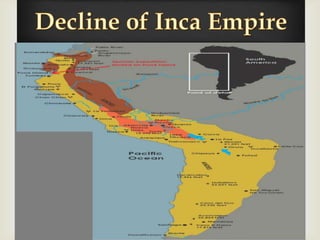
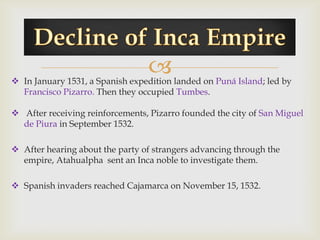
 In January 1531, a Spanish expedition landed on Puná Island; led by
  Francisco Pizarro. Then they occupied Tumbes.

 After receiving reinforcements, Pizarro founded the city of San Miguel
  de Piura in September 1532.

 After hearing about the party of strangers advancing through the
  empire, Atahualpha sent an Inca noble to investigate them.

 Spanish invaders reached Cajamarca on November 15, 1532.

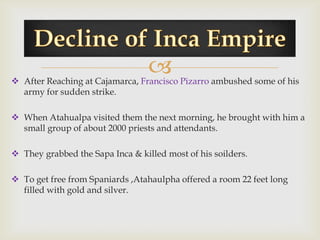
 After Reaching at Cajamarca, Francisco Pizarro ambushed some of his
  army for sudden strike.

 When Atahualpa visited them the next morning, he brought with him a
  small group of about 2000 priests and attendants.

 They grabbed the Sapa Inca & killed most of his soilders.

 To get free from Spaniards ,Atahaulpha offered a room 22 feet long
  filled with gold and silver.

 Smallpox causing disaster for the Incas.

 1527 A.D.- Sapa Inca Huayna Capac died of smallpox.

 The civil war weakened the Inca empire.

 Casualties and losses : At least 100,000 killed and
  Tumebamba city destroyed.

 Inca empire was too big to control from the capital Cuzco.

Thank You

Inca Civilization

  • 1.
    Shateel Arafat Chowdhry ID: 113014038 Department: CSE University of Liberal Arts Bangladesh(ULAB)
  • 2.
      Located inthe Andes Mountains of South America.  West Coast of South American in Colombia, Peru, Ecuador, Chile, and Argentina.
  • 3.
  • 4.
      Founded byManco Capac in the beginning of 12th century.  He was Considered the son of the sun god Inti.  As the myth says, Manco Capac came up this valley from the south; following instructions of the sun god he threw his golden staff into the Cusco earth, and when the staff disappeared, suggesting the land's fertility, he founded his city Cuzco.
  • 5.
      Under theleadership of Manco Cápac, Inca formed the small city-state Kingdom of Cuzco.  The administrative, political and military center of the empire was located in Cuzco.  Language: Quechua
  • 6.
      By 1350Inca Roca had conquered all areas close to Lake Titicaca.  In 1438, they began a far-reaching expansion under the command of Sapa Inca (paramount leader) Pachacuti-Cusi Yupanqui.  During Pachacuti’s reign, he and his son Tupac Inca Yupanqui brought much of the Andes mountains (roughly modern Peru and Ecuador) under Inca control.  The construction of Machu Picchu was also started in the period of Pachacuti.
  • 7.
  • 8.
  • 9.
  • 10.
      Machu Picchuis located in the Cuzco Region.  Pachacuti started to build the Machu Picchu and the construction finished at the end of Tupac Inca Yupanqui’s period in 1493.  Machu Picchu is located about 2,450 metres above from sea level.  It was abandoned just over 100 years later, in 1572, as a belated result of the Spanish Conquest.  There’s a dispute among Archaeologists that Machu Picchu is either sacred religious site or agricultural station.
  • 11.
      Ruled byan Emperor called the Sapa Inca and had absolute control  Local Governors  Officials (army officers, priests, judges, and others from the noble class)  Tax collectors.  Workers.  When Sapa Inca died his son become next Sapa Inca.  The Queen was called the Coya  Performed religious functions  Served in absence of Sapa Inca
  • 12.
    Road:  Bridge:
  • 13.
      Farming  Created terraces in mountains to farm on secured by stone walls  Farmers spent part of year working land for emperor  Grew corn, potatoes, cotton, squash, and beans  Government gave part of harvest to people and stored the rest  Mita System
  • 14.
      Mita wasone kind of labour tax. The Incas required all the taxpayers to work for a certain period in each year for the Empire. This labour were called Mita.  Women had to weave clothes.  Men had to cultivate & build structures.
  • 15.
  • 16.
      Around 200varieties of Peruvian potatoes were cultivated by the Incas.
  • 17.
      Many varietiesof Peruvian maize (corn) were well-known to the Incas for centuries
  • 18.
     4 Classin society :   Sapa Inca himself  Royal  Nobel  Ayllu  People lived in close communities called Ayllus.  Ayllu lived together in a restricted area and sharing land, animals, and crops.  Some woman can leave ayllus for better life which is called Chosen Woman.  Regulated society by arranging marriages to make sure men and women settled down.  People conquered by the Incans were put into Incan army.
  • 19.
     used Quipufor calculating  Inca numbers.  They didn’t have any writing system. Instead they used Quipu to remmember & calculating numbers.
  • 20.
      Incas hadno system of writing  Quipu measurement  Advanced medicine- antiseptics and skull surgery  Gold and silver works
  • 21.
     Polytheistic.  Sun God Inti  Viracocha was the creator god. His son is Inti.  The most important of which was the sun god, Inti.
  • 22.
      Human Sacrificewas part of a religious ritual.  Involved mainly children  Happened around an important event.  Held a feast, took them to the top of a mountain, gave them something to intoxicate them  Were either strangled, hit on the head, or left to die of exposure
  • 23.
  • 24.
  • 25.
  • 26.
  • 27.
      The armorused by the Incas included:  Helmets made of wood, copper, bronze, cane, or animal skin; some were adorned with feathers  Round or square shields made from wood.  The Inca weaponry included:  Bronze or bone-tipped spears  Two-handed wooden swords with serrated edges  Clubs with stone and spiked metal heads  Stone or copper headed battle-axes
  • 28.
      From 1527to 1532, brothers Huáscar and Atahualpa fought over the Inca Empire  Their father, Sapa Inca Huayna Capac, had allowed each to rule a part of the Empire as regent during his reign: Huáscar in Cuzco and Atahualpa in Quito.  When Huayna Capac and his eldest son and heir Ninan Cuyuchi, died in 1527 , Atahualpa and Huáscar went to war over who would succeed their father.
  • 29.
      Spanish conquistadorsled by Francisco Pizarro and his brothers reached Inca territory by 1526.  In 1529, Pizarro received royal approval to conquer the region and be its viceroy.
  • 30.
  • 31.
      In January1531, a Spanish expedition landed on Puná Island; led by Francisco Pizarro. Then they occupied Tumbes.  After receiving reinforcements, Pizarro founded the city of San Miguel de Piura in September 1532.  After hearing about the party of strangers advancing through the empire, Atahualpha sent an Inca noble to investigate them.  Spanish invaders reached Cajamarca on November 15, 1532.
  • 32.
      After Reachingat Cajamarca, Francisco Pizarro ambushed some of his army for sudden strike.  When Atahualpa visited them the next morning, he brought with him a small group of about 2000 priests and attendants.  They grabbed the Sapa Inca & killed most of his soilders.  To get free from Spaniards ,Atahaulpha offered a room 22 feet long filled with gold and silver.
  • 33.
      Smallpox causingdisaster for the Incas.  1527 A.D.- Sapa Inca Huayna Capac died of smallpox.  The civil war weakened the Inca empire.  Casualties and losses : At least 100,000 killed and Tumebamba city destroyed.  Inca empire was too big to control from the capital Cuzco.
  • 34.