OCENOGRAPHY
• Study of ocean science is known as oceanography
• Formally began with British expedition in 1873-
1876 successful deep sea expedition
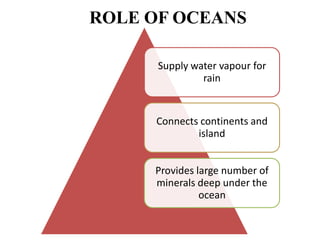
ROLE OF OCEANS
Supply water vapour for
rain
Connects continents and
island
Provides large number of
minerals deep under the
ocean
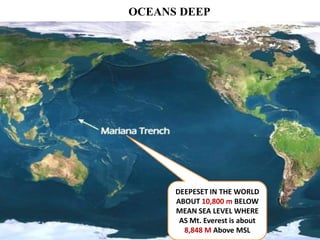
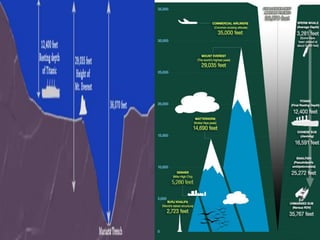
OCEANS DEEP
DEEPESET IN THE WORLD
ABOUT 10,800 m BELOW
MEAN SEA LEVEL WHERE
AS Mt. Everest is about
8,848 M Above MSL
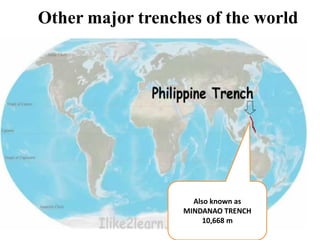
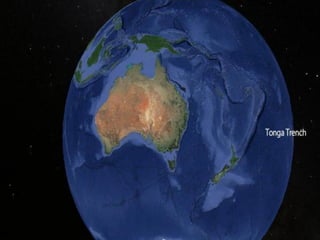
Other major trenches of the world
Also known as
MINDANAO TRENCH
10,668 m
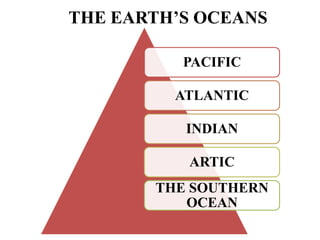
THE EARTH’S OCEANS
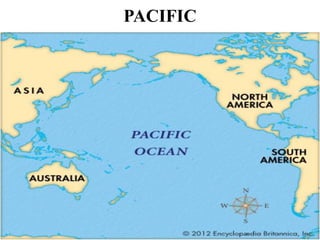
PACIFIC
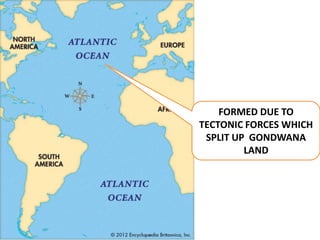
ATLANTIC
INDIAN
ARTIC
THE SOUTHERN
OCEAN
PACIFIC
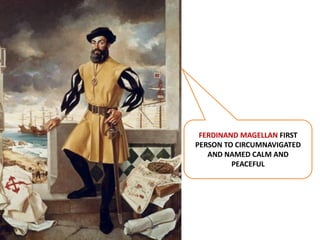
FERDINAND MAGELLAN FIRST
PERSON TO CIRCUMNAVIGATED
AND NAMED CALM AND
PEACEFUL
Largest and deepest ocean in the
world occupies 1/3 of total area
Formed 250-300 million years
ago
Islands in this oceans are mostly
volcanic origin
Beset by typhoons and
hurricanes
Pacific ocean is shrinking as
continents move
FORMED DUE TO
TECTONIC FORCES WHICH
SPLIT UP GONDWANA
LAND
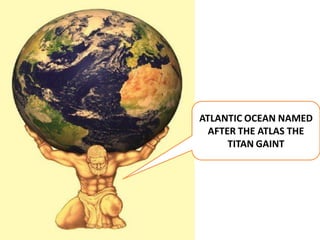
ATLANTIC OCEAN NAMED
AFTER THE ATLAS THE
TITAN GAINT
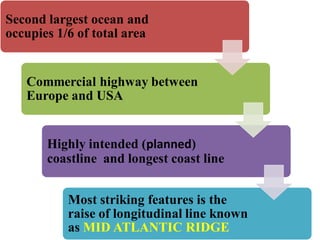
Second largest ocean and
occupies 1/6 of total area
Commercial highway between
Europe and USA
Highly intended (planned)
coastline and longest coast line
Most striking features is the
raise of longitudinal line known
as MID ATLANTIC RIDGE
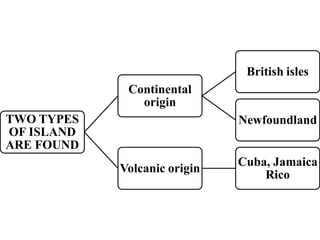
TWO TYPES
OF ISLAND
ARE FOUND
Continental
origin
British isles
Newfoundland
Volcanic origin
Cuba, Jamaica
Rico
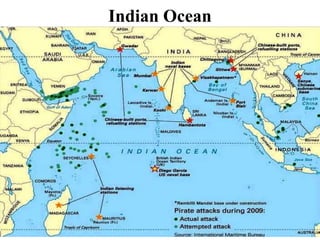
Indian Ocean
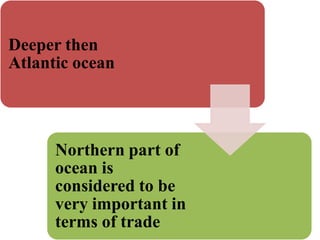
Deeper then
Atlantic ocean
Northern part of
ocean is
considered to be
very important in
terms of trade
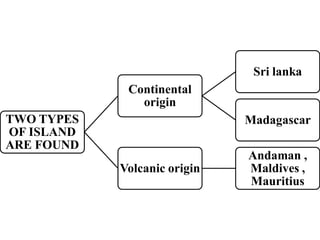
TWO TYPES
OF ISLAND
ARE FOUND
Continental
origin
Sri lanka
Madagascar
Volcanic origin
Andaman ,
Maldives ,
Mauritius

Importance of ocean