AUSTRALIA – LAND, CLIMATE AND
NATURAL VEGETATION
INTRODUCTION
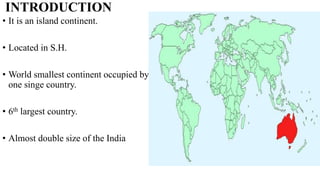
• It is an island continent.
• Located in S.H.
• World smallest continent occupied by
one singe country.
• 6th largest country.
• Almost double size of the India
Discovery
• First sighted by Dutch navigator William
Janszoon in 1606.
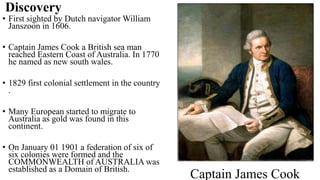
• Captain James Cook a British sea man
reached Eastern Coast of Australia. In 1770
he named as new south wales.
• 1829 first colonial settlement in the country
.
• Many European started to migrate to
Australia as gold was found in this
continent.
• On January 01 1901 a federation of six of
six colonies were formed and the
COMMONWEALTH of AUSTRALIA was
established as a Domain of British.
Captain James Cook
LOCATION
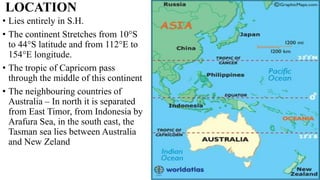
• Lies entirely in S.H.
• The continent Stretches from 10°S
to 44°S latitude and from 112°E to
154°E longitude.
• The tropic of Capricorn pass
through the middle of this continent
• The neighbouring countries of
Australia – In north it is separated
from East Timor, from Indonesia by
Arafura Sea, in the south east, the
Tasman sea lies between Australia
and New Zeland
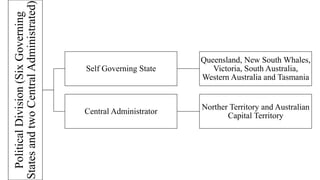
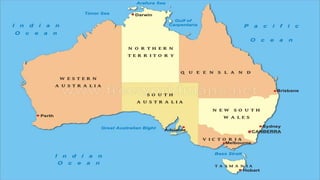
PoliticalDivision(SixGoverning
StatesandtwoCentralAdministrated)
Self Governing State
Queensland, New South Whales,
Victoria, South Australia,
Western Australia and Tasmania
Central Administrator
Norther Territory and Australian
Capital Territory
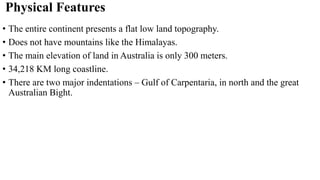
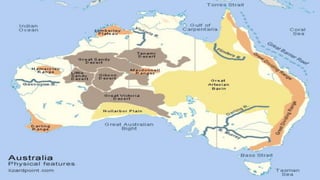
Physical Features
• The entire continent presents a flat low land topography.
• Does not have mountains like the Himalayas.
• The main elevation of land in Australia is only 300 meters.
• 34,218 KM long coastline.
• There are two major indentations – Gulf of Carpentaria, in north and the great
Australian Bight.
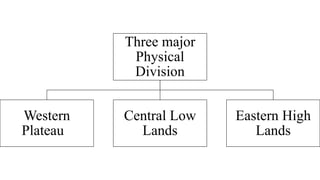
Three major
Physical
Division
Western
Plateau
Central Low
Lands
Eastern High
Lands
Western Plateau
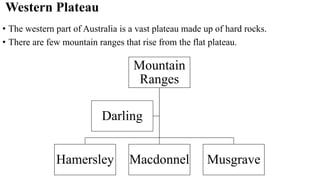
• The western part of Australia is a vast plateau made up of hard rocks.
• There are few mountain ranges that rise from the flat plateau.
Mountain
Ranges
Hamersley Macdonnel Musgrave
Darling
Western Plateau
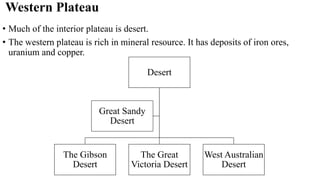
• Much of the interior plateau is desert.
• The western plateau is rich in mineral resource. It has deposits of iron ores,
uranium and copper.
Desert
The Gibson
Desert
The Great
Victoria Desert
West Australian
Desert
Great Sandy
Desert
The Central Low Lands
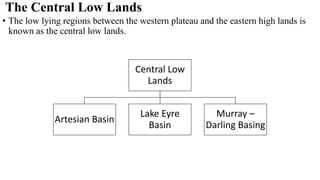
• The low lying regions between the western plateau and the eastern high lands is
known as the central low lands.
Central Low
Lands
Artesian Basin
Lake Eyre
Basin
Murray –
Darling Basing
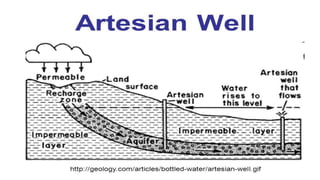
• The Great Artesian Basin is mainly located in the states of Queensland and New
South Whales.
• It is the world’s largest Artesian Basin known for ground water reserves.
• It is a flat where a layer of preamble or porous rock is sandwiched in a saucer like
formation.
Australia-land ,climate and utilisation

Australia-land ,climate and utilisation

  • 1.
    AUSTRALIA – LAND,CLIMATE AND NATURAL VEGETATION
  • 2.
    INTRODUCTION • It isan island continent. • Located in S.H. • World smallest continent occupied by one singe country. • 6th largest country. • Almost double size of the India
  • 3.
    Discovery • First sightedby Dutch navigator William Janszoon in 1606. • Captain James Cook a British sea man reached Eastern Coast of Australia. In 1770 he named as new south wales. • 1829 first colonial settlement in the country . • Many European started to migrate to Australia as gold was found in this continent. • On January 01 1901 a federation of six of six colonies were formed and the COMMONWEALTH of AUSTRALIA was established as a Domain of British. Captain James Cook
  • 4.
    LOCATION • Lies entirelyin S.H. • The continent Stretches from 10°S to 44°S latitude and from 112°E to 154°E longitude. • The tropic of Capricorn pass through the middle of this continent • The neighbouring countries of Australia – In north it is separated from East Timor, from Indonesia by Arafura Sea, in the south east, the Tasman sea lies between Australia and New Zeland
  • 5.
    PoliticalDivision(SixGoverning StatesandtwoCentralAdministrated) Self Governing State Queensland,New South Whales, Victoria, South Australia, Western Australia and Tasmania Central Administrator Norther Territory and Australian Capital Territory
  • 7.
    Physical Features • Theentire continent presents a flat low land topography. • Does not have mountains like the Himalayas. • The main elevation of land in Australia is only 300 meters. • 34,218 KM long coastline. • There are two major indentations – Gulf of Carpentaria, in north and the great Australian Bight.
  • 8.
  • 10.
    Western Plateau • Thewestern part of Australia is a vast plateau made up of hard rocks. • There are few mountain ranges that rise from the flat plateau. Mountain Ranges Hamersley Macdonnel Musgrave Darling
  • 11.
    Western Plateau • Muchof the interior plateau is desert. • The western plateau is rich in mineral resource. It has deposits of iron ores, uranium and copper. Desert The Gibson Desert The Great Victoria Desert West Australian Desert Great Sandy Desert
  • 12.
    The Central LowLands • The low lying regions between the western plateau and the eastern high lands is known as the central low lands. Central Low Lands Artesian Basin Lake Eyre Basin Murray – Darling Basing
  • 13.
    • The GreatArtesian Basin is mainly located in the states of Queensland and New South Whales. • It is the world’s largest Artesian Basin known for ground water reserves. • It is a flat where a layer of preamble or porous rock is sandwiched in a saucer like formation.