http://www.iaeme.com/IJCIET/index.asp 865 editor@iaeme.com
International Journal of Civil Engineering and Technology (IJCIET)
Volume 10, Issue 02, February 2019, pp. 865–873, Article ID: IJCIET_10_02_083
Available online at http://www.iaeme.com/ijciet/issues.asp?JType=IJCIET&VType=10&IType=2
ISSN Print: 0976-6308 and ISSN Online: 0976-6316
©IAEME Publication Scopus Indexed
PERFORMANCE ANALYSIS TO SUPPORT B2C
SYSTEM IN AIRLINE INDONESIA BASED ON
SOA USING ENTERPRISE SERVICE BUS
Finda Anisa Putri, Abba Suganda Girsang
Computer Science Department, BINUS Graduate Program-Master of Computer Science,
Bina Nusantara University, Jakarta, Indonesia 11480
Email : finda.putri@binus.ac.id, agirsang@binus.edu
ABSTRACT
System airline as one of business to customer (B2C) is an enterprise application
which needs service system architecture. Many systems that have been connected to
this system has complexity of integration. SOA using enterprise service bus (ESB) is
one way to manage the integration of information systems. ESB is a software
infrastructure that can solve complexity problems with n-to-n integration, where n is
the number of integrated applications. The business case has been implemented each
function of services and ESB. The results obtained show that each services and ESB
has its own strengths and weakness. As regards strengths, it should be noted that ESB
copes very well with both kinds of files and small and large size but put the effort if the
application of ESB is not working well it can be affected to another application
system. N-to-n integration performs as good enough with small files and size but need
to manage if there were any add or updated with the service. This research
implemented SOA using ESB to proves to be a good choice for integration solution in
a business environment with a large number of users and diversified communications.
Key words: Enterprise Service Bus, SOA, Airline, Performance, Integration.
Cite this Article: Finda Anisa Putri, Abba Suganda Girsang, Performance Analysis to
Support B2C System in Airline Indonesia Based on SOA Using Enterprise Service
Bus, International Journal of Civil Engineering and Technology (IJCIET) 10(2), 2019,
pp. 865–873.
http://www.iaeme.com/IJCIET/issues.asp?JType=IJCIET&VType=10&IType=2
1. INTRODUCTION
The digital era is now starting to lead to online transactions, one of the most popular web-
based platforms in this era and very important is electronic commerce (e-commerce). E-
commerce is about using computer system and internet to propose the business including
selling, buying, exchanging products, servicing and information (Ueasangkomsate, 2015). In
recent decades, e-commerce has developed rapidly as a series of dynamically growing
technologies, where applications and business are radically transferred into digital. The airline
industry is one of the industries that has long started selling tickets via online compared to
Performance Analysis to Support B2C System in Airline Indonesia Based on SOA Using
Enterprise Service Bus
http://www.iaeme.com/IJCIET/index.asp 866 editor@iaeme.com
other industries (Arridha , Mohamed , & Elias , 2014). Starting to lead to online transactions,
as well as airline ticket booking. The use of the Internet as a booking method offers
companies and consumers benefits by reducing costs and providing the latest information to
both parties (Mouakket , 2014). Purchasing online airline ticket has developed using an online
system or can be called with e-ticketing. This makes it easy for customers to be able to buy
airplane tickets, giving savings to customers and the airlines themselves. Getting a lot of
customers is one of the fundamentals of success in airlines, so the company cooperates with
several companies to get benefits from each other. Successful service companies recognize
the relevance of cultivating loyal customers to increase sales and work to build long-term
relationships with their customers through the membership in loyalty program (Vilkaite-
Vaitone & Papsiene , 2016). The Airlines also offer additional services, such as adding
luggage, ordering food and selecting seats on the plane. These additional services can be
called ancillary products. The ancillary product that can increase the profitability of an airline
in the process of booking an online flight ticket can be said to be an ancillary revenue.
Ancillary revenue has become a popular revenue stream (Uddin & Leon , 2017), because
airlines look for ways to increase revenue by selling a variety of products or services when
consumers travel on airplanes. Cooperates with several companies and providing ancillary
products are parts of online reservation ticket in B2C that is connected to other applications
via web services. Web services are able to function in program language standard using in
development or its platform to communicate with or sending message with other applications
or web services not based on standards and technologies of other platform (Platform
Independence) (Kaewrattanapat & Nookhong, 2017). The application of web services for
system of B2C has been developed on a n-to-n basis which is considered irrelevant because
the number of services that continues to increase and become complex is difficult to control
and manage. Different standards for web service applications are often also an obstacle if
companies need integration and communication between web services B2C system must be
interoperable to support enterprise business processes. Service oriented architecture helps us
to develop concrete solution to achieve business processes flexibility. SOA is a logical way of
designing system which provides services to either end-user or to other services distributed
over a network via interfaces (Kavitha, Shanmugapriya, & Dhayalan, 2017). In contrast, an
SOA can support the execution of an enterprise’s strategy in an environment with dynamic
changes (Chang & Hwang, 2015). ESB (Enterprise Service Bus) has been created in order to
enable the integration and interoperation of different applications, services or other resources
within an organization (Górski & Pietrasik , 2017). Enterprise Service Bus (ESB), a form of
centralized service by utilizing the SOA architecture that combines several web services in a
container in the form of ESB to facilitate applications with different platforms to
communicate with each other in accessing data (RajKumar & Vinod , 2015). In this article,
every service connected in a B2C system is analyzed by the work test results using ESB and
n-to-n. Some parameters measured in this case are services with different message types and
transmission times for access to messages. The tools used to measure this are SOAP-UI with
speed units in milliseconds.
1.1. Related Studies
In this paper, B2C system built a model architecture based on Service Oriented Architecture.
Currently the application active using n-to-n web services that connected for many
application. Modification the system of B2C with establish the service using Enterprise
Service Bus which could make some comparison performance for the booking system and get
the design for service implementation.
Finda Anisa Putri, Abba Suganda Girsang
http://www.iaeme.com/IJCIET/index.asp 867 editor@iaeme.com
1.2. Service Oriented Architecture and Enterprise Service Bus
Agility, cooperation and efficiency are the most important factors in influencing the success
of a company. These factors determine the capabilities of companies to respond to changing
business needs. Traditional fixed and centralized infrastructure does not meet the company to
build an application integration that continues to grow for the needs of the business world and
can be a difficult, inefficient and expensive system (Sri & Priyadarsini, 2015). Service-
oriented Architecture (SOA) is a kind of architecture model and a set of design methodology,
which aims to maximize the reuse of neutral services in application to improve IT adaptability
and efficiency (You, Xu, & Wang, 2016). The key conception of SOA is services, each
application of SOA is regarded as service for calling and managing. The SOA defines the
design principles: The functions are divided into less and reused model by using
modularization. The clients and servers of loosing coupling do not require the close
dependence. The encapsulation encloses function modularization (Wei, 2015). There are three
roles in SOA, namely service brokers, service providers and service requester. The framework
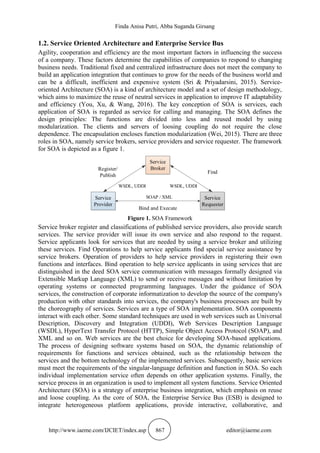
for SOA is depicted as a figure 1.
Service
Broker
Service
Provider
Service
Requester
Register/
Publish
Find
Bind and Execute
WSDL, UDDI
SOAP / XML
WSDL, UDDI
Figure 1. SOA Framework
Service broker register and classifications of published service providers, also provide search
services. The service provider will issue its own service and also respond to the request.
Service applicants look for services that are needed by using a service broker and utilizing
these services. Find Operations to help service applicants find special service assistance by
service brokers. Operation of providers to help service providers in registering their own
functions and interfaces. Bind operation to help service applicants in using services that are
distinguished in the deed SOA service communication with messages formally designed via
Extensible Markup Language (XML) to send or receive messages and without limitation by
operating systems or connected programming languages. Under the guidance of SOA
services, the construction of corporate informatization to develop the source of the company's
production with other standards into services, the company's business processes are built by
the choreography of services. Services are a type of SOA implementation. SOA components
interact with each other. Some standard techniques are used in web services such as Universal
Description, Discovery and Integration (UDDI), Web Services Description Language
(WSDL), HyperText Transfer Protocol (HTTP), Simple Object Access Protocol (SOAP), and
XML and so on. Web services are the best choice for developing SOA-based applications.
The process of designing software systems based on SOA, the dynamic relationship of
requirements for functions and services obtained, such as the relationship between the
services and the bottom technology of the implemented services. Subsequently, basic services
must meet the requirements of the singular-language definition and function in SOA. So each
individual implementation service often depends on other application systems. Finally, the
service process in an organization is used to implement all system functions. Service Oriented
Architecture (SOA) is a strategy of enterprise business integration, which emphasis on reuse
and loose coupling. As the core of SOA, the Enterprise Service Bus (ESB) is designed to
integrate heterogeneous platform applications, provide interactive, collaborative, and
Performance Analysis to Support B2C System in Airline Indonesia Based on SOA Using
Enterprise Service Bus
http://www.iaeme.com/IJCIET/index.asp 868 editor@iaeme.com
combined web-based distributed bus services for SOA. This article explores a cross-platform,
cross-system application integration solution based on ESB to deal with the issues facing the
enterprise informatization under the traditional architectures. The messages integrated through
ESB need to be translated, subscribed, published and sent. The types of messages can contain
decomposition of information, notification of information, registration of information and
storage of information etc. The principle is: through the standard integration technology,
SOA, Web Service and XML technologies are fused into a unified distributed architecture,
which are easy to deploy and manageable (Ma, Yao, & Shan, 2017). The difference from the
solution that uses ESB is publishes the service address by building the necessary
modifications without changing the technical way in the data section associated with the
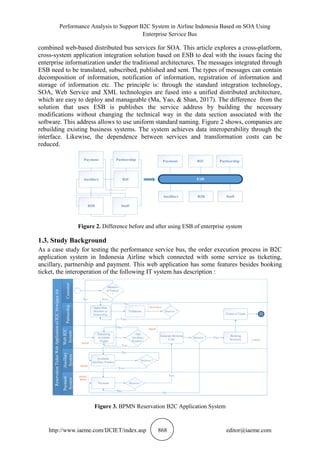
software. This address allows to use uniform standard naming. Figure 2 shows, companies are
rebuilding existing business systems. The system achieves data interoperability through the
interface. Likewise, the dependence between services and transformation costs can be
reduced.
Payment Partnership
Ancillary B2C
B2B Staff
ESB
Payment PartnershipB2C
Ancillary B2B Staff
Figure 2. Difference before and after using ESB of enterprise system
1.3. Study Background
As a case study for testing the performance service bus, the order execution process in B2C
application system in Indonesia Airline which connected with some service as ticketing,
ancillary, partnership and payment. This web application has some features besides booking
ticket, the interoperation of the following IT system has description :
Customer
WebB2C
System
Ancillary
System
Partnership
Payment
System
Member
of Partner
?
Input Data
Member of
Partnership
Validation Success ?
Searching
Available
Flights
Add
Ancillary
Product ?
Available
Ancillary Product
Success ?
Payment Success ?
Generate Booking
Code
Success ?
Booking
Summary
Ticket of Flight
Yes
Yes
Yes
Yes
Yes
Yes
No
No
No
No No
ReservationTicketWebApplicationofB2CSriwijayaAir
No
SOAP/REST
SOAP
SOAP
SOAP/
REST
SOAP
SOAP
Figure 3. BPMN Reservation B2C Application System
Finda Anisa Putri, Abba Suganda Girsang
http://www.iaeme.com/IJCIET/index.asp 869 editor@iaeme.com
 Ticketing Sytem - provide services to determine availability of flight schedules based
on route, date and number of passengers. Continue with generate booking code based
on Passenger Number Record as an unique code to identify the ordered.
 Ancillary System - Additional features in carrying out airline ticket purchase
transactions such as buying luggage, food and flexible seat selection
 Partnership System - Partnership that has worked with this airline to reserve tickets by
making a profit in accordance with the agreement.
 Payment System - Payment of ticket and ancillary product reservations can be made
with several payment methods available.
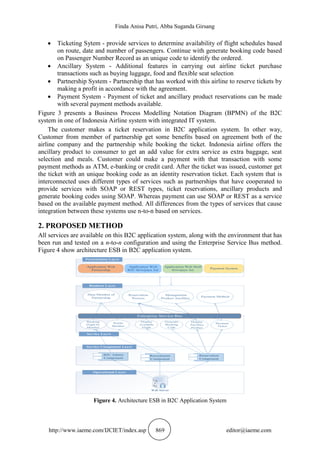
Figure 3 presents a Business Process Modelling Notation Diagram (BPMN) of the B2C
system in one of Indonesia Airline system with integrated IT system.
The customer makes a ticket reservation in B2C application system. In other way,
Customer from member of partnership get some benefits based on agreement both of the
airline company and the partnership while booking the ticket. Indonesia airline offers the
ancillary product to consumer to get an add value for extra service as extra baggage, seat
selection and meals. Customer could make a payment with that transaction with some
payment methods as ATM, e-banking or credit card. After the ticket was issued, customer get
the ticket with an unique booking code as an identity reservation ticket. Each system that is
interconnected uses different types of services such as partnerships that have cooperated to
provide services with SOAP or REST types, ticket reservations, ancillary products and
generate booking codes using SOAP. Whereas payment can use SOAP or REST as a service
based on the available payment method. All differences from the types of services that cause
integration between these systems use n-to-n based on services.
2. PROPOSED METHOD
All services are available on this B2C application system, along with the environment that has
been run and tested on a n-to-n configuration and using the Enterprise Service Bus method.
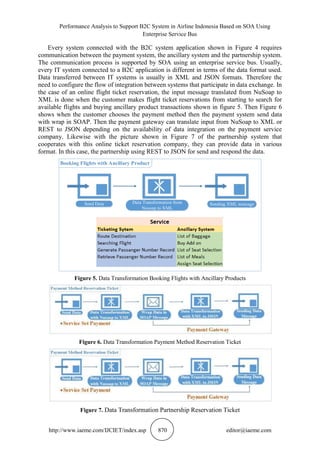
Figure 4 show architecture ESB in B2C application system.
Service Layer
Application Web
B2C Sriwijaya Air
Application Web
Partnership
Presentation Layer
Business Layer
Reservation
Process
Data Member of
Partnership
Booking
Flight by
Member
Profile
Member
Display
Available
Flight
Generate
Booking
Code
Service Component Layer
B2C Admin
Component
Recruitment
Component
Reservation
Component
Operational Layer
Web Server
Application Web Staff
Sriwijaya Air
Management
Product Ancillary
Display
Ancillary
Product
Payment System
Payment Method
Payment
Ticket
Enterprise Service Bus
Figure 4. Architecture ESB in B2C Application System
Performance Analysis to Support B2C System in Airline Indonesia Based on SOA Using
Enterprise Service Bus
http://www.iaeme.com/IJCIET/index.asp 870 editor@iaeme.com
Every system connected with the B2C system application shown in Figure 4 requires
communication between the payment system, the ancillary system and the partnership system.
The communication process is supported by SOA using an enterprise service bus. Usually,
every IT system connected to a B2C application is different in terms of the data format used.
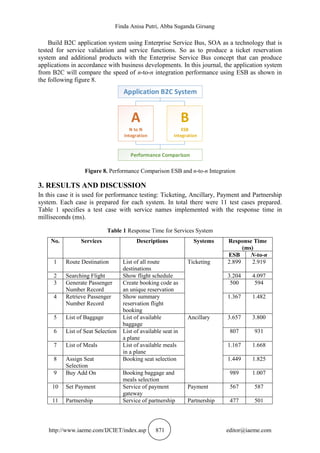
Data transferred between IT systems is usually in XML and JSON formats. Therefore the
need to configure the flow of integration between systems that participate in data exchange. In
the case of an online flight ticket reservation, the input message translated from NuSoap to
XML is done when the customer makes flight ticket reservations from starting to search for
available flights and buying ancillary product transactions shown in figure 5. Then Figure 6
shows when the customer chooses the payment method then the payment system send data
with wrap in SOAP. Then the payment gateway can translate input from NuSoap to XML or
REST to JSON depending on the availability of data integration on the payment service
company. Likewise with the picture shown in Figure 7 of the partnership system that
cooperates with this online ticket reservation company, they can provide data in various
format. In this case, the partnership using REST to JSON for send and respond the data.
Send Data Sending XML messageData Transformation from
Nusoap to XML
Booking Flights with Ancillary Product
Figure 5. Data Transformation Booking Flights with Ancillary Products
Figure 6. Data Transformation Payment Method Reservation Ticket
Figure 7. Data Transformation Partnership Reservation Ticket
Finda Anisa Putri, Abba Suganda Girsang
http://www.iaeme.com/IJCIET/index.asp 871 editor@iaeme.com
Build B2C application system using Enterprise Service Bus, SOA as a technology that is
tested for service validation and service functions. So as to produce a ticket reservation
system and additional products with the Enterprise Service Bus concept that can produce
applications in accordance with business developments. In this journal, the application system
from B2C will compare the speed of n-to-n integration performance using ESB as shown in
the following figure 8.
Application B2C System
A
N to N
Integration
B
ESB
Integration
Performance Comparison
Figure 8. Performance Comparison ESB and n-to-n Integration
3. RESULTS AND DISCUSSION
In this case it is used for performance testing: Ticketing, Ancillary, Payment and Partnership
system. Each case is prepared for each system. In total there were 11 test cases prepared.
Table 1 specifies a test case with service names implemented with the response time in
milliseconds (ms).
Table 1 Response Time for Services System
No. Services Descriptions Systems Response Time
(ms)
ESB N-to-n
1 Route Destination List of all route
destinations
Ticketing 2.899 2.919
2 Searching Flight Show flight schedule 3.204 4.097
3 Generate Passenger
Number Record
Create booking code as
an unique reservation
500 594
4 Retrieve Passenger
Number Record
Show summary
reservation flight
booking
1.367 1.482
5 List of Baggage List of available
baggage
Ancillary 3.657 3.800
6 List of Seat Selection List of available seat in
a plane
807 931
7 List of Meals List of available meals
in a plane
1.167 1.668
8 Assign Seat
Selection
Booking seat selection 1.449 1.825
9 Buy Add On Booking baggage and
meals selection
989 1.007
10 Set Payment Service of payment
gateway
Payment 567 587
11 Partnership Service of partnership Partnership 477 501
Performance Analysis to Support B2C System in Airline Indonesia Based on SOA Using
Enterprise Service Bus
http://www.iaeme.com/IJCIET/index.asp 872 editor@iaeme.com
Getting the performance test steps for the integration solution, each test case listed in
Table 1 is executed 5 times. The value of the performance measure is taken the lowest value
for each test case. The number of messages there is not increased for these services. Using a
monitor with a Windows system and a tool used to collect performance measurements is a
SOAP UI configured in terms of the test cases listed in the table (Table 1). Displaying the
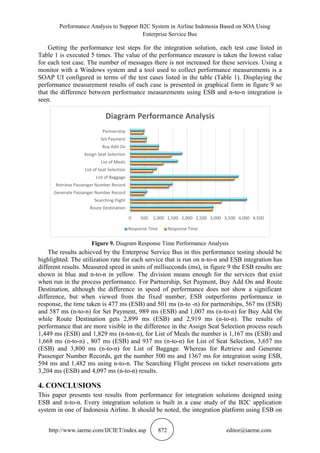
performance measurement results of each case is presented in graphical form in figure 9 so
that the difference between performance measurements using ESB and n-to-n integration is
seen.
Figure 9. Diagram Response Time Performance Analysis
The results achieved by the Enterprise Service Bus in this performance testing should be
highlighted. The utilization rate for each service that is run on n-to-n and ESB integration has
different results. Measured speed in units of milliseconds (ms), in figure 9 the ESB results are
shown in blue and n-to-n in yellow. The division means enough for the services that exist
when run in the process performance. For Partnership, Set Payment, Buy Add On and Route
Destination, although the difference in speed of performance does not show a significant
difference, but when viewed from the fixed number, ESB outperforms performance in
response, the time taken is 477 ms (ESB) and 501 ms (n-to -n) for partnerships, 567 ms (ESB)
and 587 ms (n-to-n) for Set Payment, 989 ms (ESB) and 1,007 ms (n-to-n) for Buy Add On
while Route Destination gets 2,899 ms (ESB) and 2,919 ms (n-to-n). The results of
performance that are more visible in the difference in the Assign Seat Selection process reach
1,449 ms (ESB) and 1,829 ms (n-ton-n), for List of Meals the number is 1,167 ms (ESB) and
1,668 ms (n-to-n) , 807 ms (ESB) and 937 ms (n-to-n) for List of Seat Selection, 3,657 ms
(ESB) and 3,800 ms (n-to-n) for List of Baggage. Whereas for Retrieve and Generate
Passenger Number Records, get the number 500 ms and 1367 ms for integration using ESB,
594 ms and 1,482 ms using n-to-n. The Searching Flight process on ticket reservations gets
3,204 ms (ESB) and 4,097 ms (n-to-n) results.
4. CONCLUSIONS
This paper presents test results from performance for integration solutions designed using
ESB and n-to-n. Every integration solution is built in a case study of the B2C application
system in one of Indonesia Airline. It should be noted, the integration platform using ESB on
0 500 1,000 1,500 2,000 2,500 3,000 3,500 4,000 4,500
Route Destination
Searching Flight
Generate Passanger Number Record
Retrieve Passenger Number Record
List of Baggage
List of Seat Selection
List of Meals
Assign Seat Selection
Buy Add On
Set Payment
Partnership
Diagram Performance Analysis
Response Time Response Time
Finda Anisa Putri, Abba Suganda Girsang
http://www.iaeme.com/IJCIET/index.asp 873 editor@iaeme.com
companies can turn services into a software asset that can be managed quantitatively and
increase service reuse. The test results for each service in ESB integration through the process
proved to outperform in terms of performance it generates compared to n-to-n.
REFERENCES
[1] P. Ueasangkomsate, "Adoption E-Commerce for Export Market of Small and Medium
Enterprises in Thailand," 2015.
[2] R. R. Arridha , H. Mohamed and N. F. Elias , "The Determinants of Airline Online
Services Satisfaction: A conceptual model," in International Conference on Computer and
Information Sciences (ICCOINS) , Kuala Lumpur, Malaysia , 2014.
[3] S. Mouakket , "Investigating the Motives of Customers’ Continuance Intentions towards
Online Reservation: The Role of E-Service Quality," Journal of Organizational and End
User Computing, vol. 26, no. 2, pp. 18-40, 2014.
[4] N. Vilkaite-Vaitone and P. Papsiene , "Influence of Customer Loyalty Program on
Organizational Performance: a Case of Airline Industry," Economics, vol. 27(1), p. 109–
116, March 2016.
[5] N. Uddin and S. Leon , "Airline Ancillary Services: An Investigation into Passenger
Purchase Behavior," The Transportation Research Forum, vol. 56, 2017.
[6] N. Kaewrattanapat and J. Nookhong, "Recruitment Agency Based on SOA and XML,"
vol. 8, 2017.
[7] V. Kavitha, D. P. Shanmugapriya and D. V. Dhayalan, "Business Process Management
system using SOA," Advances in Computational Sciences and Technology, vol. 10, pp.
1457-1462, 2017.
[8] T.-K. Chang and E. T. Y. Hwang, "An SOA-Based System Modeling Methodology,"
Journal of Internet Technology, vol. 16, pp. 547-561, 15 May 2015.
[9] T. Górski and K. Pietrasik , "Performance analysis of Enterprise Service Buses," Journal
of Theoretical and Applied Computer Science, vol. 10, pp. 16-32, 2017.
[10] N. RajKumar and V. Vinod , “Integrated Educational Information Systems for Disabled
Schools via a Service Bus using SOA,” Indian Journal of Science and Technology, vol. 8,
no. 13, July 2015.
[11] S. A. Sri and R. Priyadarsini, "Digital Campus Information System Based on SOA Using
Aspect Oriented Software Development," International Journal of Technology and
Engineering System, vol. 7 No. 2, pp. 130-133, 2015.
[12] Y. You, Y. Xu and L. Wang, "Car Service Spare Parts Procurement Process
Improvements Based on SOA," Indonesian Journal of Electrical Engineering and
Computer Science, vol. 3 No. 3, pp. 554-563, September 2016.
[13] N. Wei, "Research on an Information Application Integration Platform Based on SOA and
Web Service," International Journal of Multimedia and Ubiquitous Engineering, vol. 10,
pp. 165-174, 2015.
[14] X. Ma, Q.-b. Yao and S. Shan, “The Study and Application of System Integration Based
on ESB for Enterprise Group,” in International Conference on Wireless Communication
and Network Engineering (WCNE 2017), Xiamen, Chia, 2017.

Ijciet 10 02_083

  • 1.
    http://www.iaeme.com/IJCIET/index.asp 865 editor@iaeme.com InternationalJournal of Civil Engineering and Technology (IJCIET) Volume 10, Issue 02, February 2019, pp. 865–873, Article ID: IJCIET_10_02_083 Available online at http://www.iaeme.com/ijciet/issues.asp?JType=IJCIET&VType=10&IType=2 ISSN Print: 0976-6308 and ISSN Online: 0976-6316 ©IAEME Publication Scopus Indexed PERFORMANCE ANALYSIS TO SUPPORT B2C SYSTEM IN AIRLINE INDONESIA BASED ON SOA USING ENTERPRISE SERVICE BUS Finda Anisa Putri, Abba Suganda Girsang Computer Science Department, BINUS Graduate Program-Master of Computer Science, Bina Nusantara University, Jakarta, Indonesia 11480 Email : finda.putri@binus.ac.id, agirsang@binus.edu ABSTRACT System airline as one of business to customer (B2C) is an enterprise application which needs service system architecture. Many systems that have been connected to this system has complexity of integration. SOA using enterprise service bus (ESB) is one way to manage the integration of information systems. ESB is a software infrastructure that can solve complexity problems with n-to-n integration, where n is the number of integrated applications. The business case has been implemented each function of services and ESB. The results obtained show that each services and ESB has its own strengths and weakness. As regards strengths, it should be noted that ESB copes very well with both kinds of files and small and large size but put the effort if the application of ESB is not working well it can be affected to another application system. N-to-n integration performs as good enough with small files and size but need to manage if there were any add or updated with the service. This research implemented SOA using ESB to proves to be a good choice for integration solution in a business environment with a large number of users and diversified communications. Key words: Enterprise Service Bus, SOA, Airline, Performance, Integration. Cite this Article: Finda Anisa Putri, Abba Suganda Girsang, Performance Analysis to Support B2C System in Airline Indonesia Based on SOA Using Enterprise Service Bus, International Journal of Civil Engineering and Technology (IJCIET) 10(2), 2019, pp. 865–873. http://www.iaeme.com/IJCIET/issues.asp?JType=IJCIET&VType=10&IType=2 1. INTRODUCTION The digital era is now starting to lead to online transactions, one of the most popular web- based platforms in this era and very important is electronic commerce (e-commerce). E- commerce is about using computer system and internet to propose the business including selling, buying, exchanging products, servicing and information (Ueasangkomsate, 2015). In recent decades, e-commerce has developed rapidly as a series of dynamically growing technologies, where applications and business are radically transferred into digital. The airline industry is one of the industries that has long started selling tickets via online compared to
  • 2.
    Performance Analysis toSupport B2C System in Airline Indonesia Based on SOA Using Enterprise Service Bus http://www.iaeme.com/IJCIET/index.asp 866 editor@iaeme.com other industries (Arridha , Mohamed , & Elias , 2014). Starting to lead to online transactions, as well as airline ticket booking. The use of the Internet as a booking method offers companies and consumers benefits by reducing costs and providing the latest information to both parties (Mouakket , 2014). Purchasing online airline ticket has developed using an online system or can be called with e-ticketing. This makes it easy for customers to be able to buy airplane tickets, giving savings to customers and the airlines themselves. Getting a lot of customers is one of the fundamentals of success in airlines, so the company cooperates with several companies to get benefits from each other. Successful service companies recognize the relevance of cultivating loyal customers to increase sales and work to build long-term relationships with their customers through the membership in loyalty program (Vilkaite- Vaitone & Papsiene , 2016). The Airlines also offer additional services, such as adding luggage, ordering food and selecting seats on the plane. These additional services can be called ancillary products. The ancillary product that can increase the profitability of an airline in the process of booking an online flight ticket can be said to be an ancillary revenue. Ancillary revenue has become a popular revenue stream (Uddin & Leon , 2017), because airlines look for ways to increase revenue by selling a variety of products or services when consumers travel on airplanes. Cooperates with several companies and providing ancillary products are parts of online reservation ticket in B2C that is connected to other applications via web services. Web services are able to function in program language standard using in development or its platform to communicate with or sending message with other applications or web services not based on standards and technologies of other platform (Platform Independence) (Kaewrattanapat & Nookhong, 2017). The application of web services for system of B2C has been developed on a n-to-n basis which is considered irrelevant because the number of services that continues to increase and become complex is difficult to control and manage. Different standards for web service applications are often also an obstacle if companies need integration and communication between web services B2C system must be interoperable to support enterprise business processes. Service oriented architecture helps us to develop concrete solution to achieve business processes flexibility. SOA is a logical way of designing system which provides services to either end-user or to other services distributed over a network via interfaces (Kavitha, Shanmugapriya, & Dhayalan, 2017). In contrast, an SOA can support the execution of an enterprise’s strategy in an environment with dynamic changes (Chang & Hwang, 2015). ESB (Enterprise Service Bus) has been created in order to enable the integration and interoperation of different applications, services or other resources within an organization (Górski & Pietrasik , 2017). Enterprise Service Bus (ESB), a form of centralized service by utilizing the SOA architecture that combines several web services in a container in the form of ESB to facilitate applications with different platforms to communicate with each other in accessing data (RajKumar & Vinod , 2015). In this article, every service connected in a B2C system is analyzed by the work test results using ESB and n-to-n. Some parameters measured in this case are services with different message types and transmission times for access to messages. The tools used to measure this are SOAP-UI with speed units in milliseconds. 1.1. Related Studies In this paper, B2C system built a model architecture based on Service Oriented Architecture. Currently the application active using n-to-n web services that connected for many application. Modification the system of B2C with establish the service using Enterprise Service Bus which could make some comparison performance for the booking system and get the design for service implementation.
  • 3.
    Finda Anisa Putri,Abba Suganda Girsang http://www.iaeme.com/IJCIET/index.asp 867 editor@iaeme.com 1.2. Service Oriented Architecture and Enterprise Service Bus Agility, cooperation and efficiency are the most important factors in influencing the success of a company. These factors determine the capabilities of companies to respond to changing business needs. Traditional fixed and centralized infrastructure does not meet the company to build an application integration that continues to grow for the needs of the business world and can be a difficult, inefficient and expensive system (Sri & Priyadarsini, 2015). Service- oriented Architecture (SOA) is a kind of architecture model and a set of design methodology, which aims to maximize the reuse of neutral services in application to improve IT adaptability and efficiency (You, Xu, & Wang, 2016). The key conception of SOA is services, each application of SOA is regarded as service for calling and managing. The SOA defines the design principles: The functions are divided into less and reused model by using modularization. The clients and servers of loosing coupling do not require the close dependence. The encapsulation encloses function modularization (Wei, 2015). There are three roles in SOA, namely service brokers, service providers and service requester. The framework for SOA is depicted as a figure 1. Service Broker Service Provider Service Requester Register/ Publish Find Bind and Execute WSDL, UDDI SOAP / XML WSDL, UDDI Figure 1. SOA Framework Service broker register and classifications of published service providers, also provide search services. The service provider will issue its own service and also respond to the request. Service applicants look for services that are needed by using a service broker and utilizing these services. Find Operations to help service applicants find special service assistance by service brokers. Operation of providers to help service providers in registering their own functions and interfaces. Bind operation to help service applicants in using services that are distinguished in the deed SOA service communication with messages formally designed via Extensible Markup Language (XML) to send or receive messages and without limitation by operating systems or connected programming languages. Under the guidance of SOA services, the construction of corporate informatization to develop the source of the company's production with other standards into services, the company's business processes are built by the choreography of services. Services are a type of SOA implementation. SOA components interact with each other. Some standard techniques are used in web services such as Universal Description, Discovery and Integration (UDDI), Web Services Description Language (WSDL), HyperText Transfer Protocol (HTTP), Simple Object Access Protocol (SOAP), and XML and so on. Web services are the best choice for developing SOA-based applications. The process of designing software systems based on SOA, the dynamic relationship of requirements for functions and services obtained, such as the relationship between the services and the bottom technology of the implemented services. Subsequently, basic services must meet the requirements of the singular-language definition and function in SOA. So each individual implementation service often depends on other application systems. Finally, the service process in an organization is used to implement all system functions. Service Oriented Architecture (SOA) is a strategy of enterprise business integration, which emphasis on reuse and loose coupling. As the core of SOA, the Enterprise Service Bus (ESB) is designed to integrate heterogeneous platform applications, provide interactive, collaborative, and
  • 4.
    Performance Analysis toSupport B2C System in Airline Indonesia Based on SOA Using Enterprise Service Bus http://www.iaeme.com/IJCIET/index.asp 868 editor@iaeme.com combined web-based distributed bus services for SOA. This article explores a cross-platform, cross-system application integration solution based on ESB to deal with the issues facing the enterprise informatization under the traditional architectures. The messages integrated through ESB need to be translated, subscribed, published and sent. The types of messages can contain decomposition of information, notification of information, registration of information and storage of information etc. The principle is: through the standard integration technology, SOA, Web Service and XML technologies are fused into a unified distributed architecture, which are easy to deploy and manageable (Ma, Yao, & Shan, 2017). The difference from the solution that uses ESB is publishes the service address by building the necessary modifications without changing the technical way in the data section associated with the software. This address allows to use uniform standard naming. Figure 2 shows, companies are rebuilding existing business systems. The system achieves data interoperability through the interface. Likewise, the dependence between services and transformation costs can be reduced. Payment Partnership Ancillary B2C B2B Staff ESB Payment PartnershipB2C Ancillary B2B Staff Figure 2. Difference before and after using ESB of enterprise system 1.3. Study Background As a case study for testing the performance service bus, the order execution process in B2C application system in Indonesia Airline which connected with some service as ticketing, ancillary, partnership and payment. This web application has some features besides booking ticket, the interoperation of the following IT system has description : Customer WebB2C System Ancillary System Partnership Payment System Member of Partner ? Input Data Member of Partnership Validation Success ? Searching Available Flights Add Ancillary Product ? Available Ancillary Product Success ? Payment Success ? Generate Booking Code Success ? Booking Summary Ticket of Flight Yes Yes Yes Yes Yes Yes No No No No No ReservationTicketWebApplicationofB2CSriwijayaAir No SOAP/REST SOAP SOAP SOAP/ REST SOAP SOAP Figure 3. BPMN Reservation B2C Application System
  • 5.
    Finda Anisa Putri,Abba Suganda Girsang http://www.iaeme.com/IJCIET/index.asp 869 editor@iaeme.com  Ticketing Sytem - provide services to determine availability of flight schedules based on route, date and number of passengers. Continue with generate booking code based on Passenger Number Record as an unique code to identify the ordered.  Ancillary System - Additional features in carrying out airline ticket purchase transactions such as buying luggage, food and flexible seat selection  Partnership System - Partnership that has worked with this airline to reserve tickets by making a profit in accordance with the agreement.  Payment System - Payment of ticket and ancillary product reservations can be made with several payment methods available. Figure 3 presents a Business Process Modelling Notation Diagram (BPMN) of the B2C system in one of Indonesia Airline system with integrated IT system. The customer makes a ticket reservation in B2C application system. In other way, Customer from member of partnership get some benefits based on agreement both of the airline company and the partnership while booking the ticket. Indonesia airline offers the ancillary product to consumer to get an add value for extra service as extra baggage, seat selection and meals. Customer could make a payment with that transaction with some payment methods as ATM, e-banking or credit card. After the ticket was issued, customer get the ticket with an unique booking code as an identity reservation ticket. Each system that is interconnected uses different types of services such as partnerships that have cooperated to provide services with SOAP or REST types, ticket reservations, ancillary products and generate booking codes using SOAP. Whereas payment can use SOAP or REST as a service based on the available payment method. All differences from the types of services that cause integration between these systems use n-to-n based on services. 2. PROPOSED METHOD All services are available on this B2C application system, along with the environment that has been run and tested on a n-to-n configuration and using the Enterprise Service Bus method. Figure 4 show architecture ESB in B2C application system. Service Layer Application Web B2C Sriwijaya Air Application Web Partnership Presentation Layer Business Layer Reservation Process Data Member of Partnership Booking Flight by Member Profile Member Display Available Flight Generate Booking Code Service Component Layer B2C Admin Component Recruitment Component Reservation Component Operational Layer Web Server Application Web Staff Sriwijaya Air Management Product Ancillary Display Ancillary Product Payment System Payment Method Payment Ticket Enterprise Service Bus Figure 4. Architecture ESB in B2C Application System
  • 6.
    Performance Analysis toSupport B2C System in Airline Indonesia Based on SOA Using Enterprise Service Bus http://www.iaeme.com/IJCIET/index.asp 870 editor@iaeme.com Every system connected with the B2C system application shown in Figure 4 requires communication between the payment system, the ancillary system and the partnership system. The communication process is supported by SOA using an enterprise service bus. Usually, every IT system connected to a B2C application is different in terms of the data format used. Data transferred between IT systems is usually in XML and JSON formats. Therefore the need to configure the flow of integration between systems that participate in data exchange. In the case of an online flight ticket reservation, the input message translated from NuSoap to XML is done when the customer makes flight ticket reservations from starting to search for available flights and buying ancillary product transactions shown in figure 5. Then Figure 6 shows when the customer chooses the payment method then the payment system send data with wrap in SOAP. Then the payment gateway can translate input from NuSoap to XML or REST to JSON depending on the availability of data integration on the payment service company. Likewise with the picture shown in Figure 7 of the partnership system that cooperates with this online ticket reservation company, they can provide data in various format. In this case, the partnership using REST to JSON for send and respond the data. Send Data Sending XML messageData Transformation from Nusoap to XML Booking Flights with Ancillary Product Figure 5. Data Transformation Booking Flights with Ancillary Products Figure 6. Data Transformation Payment Method Reservation Ticket Figure 7. Data Transformation Partnership Reservation Ticket
  • 7.
    Finda Anisa Putri,Abba Suganda Girsang http://www.iaeme.com/IJCIET/index.asp 871 editor@iaeme.com Build B2C application system using Enterprise Service Bus, SOA as a technology that is tested for service validation and service functions. So as to produce a ticket reservation system and additional products with the Enterprise Service Bus concept that can produce applications in accordance with business developments. In this journal, the application system from B2C will compare the speed of n-to-n integration performance using ESB as shown in the following figure 8. Application B2C System A N to N Integration B ESB Integration Performance Comparison Figure 8. Performance Comparison ESB and n-to-n Integration 3. RESULTS AND DISCUSSION In this case it is used for performance testing: Ticketing, Ancillary, Payment and Partnership system. Each case is prepared for each system. In total there were 11 test cases prepared. Table 1 specifies a test case with service names implemented with the response time in milliseconds (ms). Table 1 Response Time for Services System No. Services Descriptions Systems Response Time (ms) ESB N-to-n 1 Route Destination List of all route destinations Ticketing 2.899 2.919 2 Searching Flight Show flight schedule 3.204 4.097 3 Generate Passenger Number Record Create booking code as an unique reservation 500 594 4 Retrieve Passenger Number Record Show summary reservation flight booking 1.367 1.482 5 List of Baggage List of available baggage Ancillary 3.657 3.800 6 List of Seat Selection List of available seat in a plane 807 931 7 List of Meals List of available meals in a plane 1.167 1.668 8 Assign Seat Selection Booking seat selection 1.449 1.825 9 Buy Add On Booking baggage and meals selection 989 1.007 10 Set Payment Service of payment gateway Payment 567 587 11 Partnership Service of partnership Partnership 477 501
  • 8.
    Performance Analysis toSupport B2C System in Airline Indonesia Based on SOA Using Enterprise Service Bus http://www.iaeme.com/IJCIET/index.asp 872 editor@iaeme.com Getting the performance test steps for the integration solution, each test case listed in Table 1 is executed 5 times. The value of the performance measure is taken the lowest value for each test case. The number of messages there is not increased for these services. Using a monitor with a Windows system and a tool used to collect performance measurements is a SOAP UI configured in terms of the test cases listed in the table (Table 1). Displaying the performance measurement results of each case is presented in graphical form in figure 9 so that the difference between performance measurements using ESB and n-to-n integration is seen. Figure 9. Diagram Response Time Performance Analysis The results achieved by the Enterprise Service Bus in this performance testing should be highlighted. The utilization rate for each service that is run on n-to-n and ESB integration has different results. Measured speed in units of milliseconds (ms), in figure 9 the ESB results are shown in blue and n-to-n in yellow. The division means enough for the services that exist when run in the process performance. For Partnership, Set Payment, Buy Add On and Route Destination, although the difference in speed of performance does not show a significant difference, but when viewed from the fixed number, ESB outperforms performance in response, the time taken is 477 ms (ESB) and 501 ms (n-to -n) for partnerships, 567 ms (ESB) and 587 ms (n-to-n) for Set Payment, 989 ms (ESB) and 1,007 ms (n-to-n) for Buy Add On while Route Destination gets 2,899 ms (ESB) and 2,919 ms (n-to-n). The results of performance that are more visible in the difference in the Assign Seat Selection process reach 1,449 ms (ESB) and 1,829 ms (n-ton-n), for List of Meals the number is 1,167 ms (ESB) and 1,668 ms (n-to-n) , 807 ms (ESB) and 937 ms (n-to-n) for List of Seat Selection, 3,657 ms (ESB) and 3,800 ms (n-to-n) for List of Baggage. Whereas for Retrieve and Generate Passenger Number Records, get the number 500 ms and 1367 ms for integration using ESB, 594 ms and 1,482 ms using n-to-n. The Searching Flight process on ticket reservations gets 3,204 ms (ESB) and 4,097 ms (n-to-n) results. 4. CONCLUSIONS This paper presents test results from performance for integration solutions designed using ESB and n-to-n. Every integration solution is built in a case study of the B2C application system in one of Indonesia Airline. It should be noted, the integration platform using ESB on 0 500 1,000 1,500 2,000 2,500 3,000 3,500 4,000 4,500 Route Destination Searching Flight Generate Passanger Number Record Retrieve Passenger Number Record List of Baggage List of Seat Selection List of Meals Assign Seat Selection Buy Add On Set Payment Partnership Diagram Performance Analysis Response Time Response Time
  • 9.
    Finda Anisa Putri,Abba Suganda Girsang http://www.iaeme.com/IJCIET/index.asp 873 editor@iaeme.com companies can turn services into a software asset that can be managed quantitatively and increase service reuse. The test results for each service in ESB integration through the process proved to outperform in terms of performance it generates compared to n-to-n. REFERENCES [1] P. Ueasangkomsate, "Adoption E-Commerce for Export Market of Small and Medium Enterprises in Thailand," 2015. [2] R. R. Arridha , H. Mohamed and N. F. Elias , "The Determinants of Airline Online Services Satisfaction: A conceptual model," in International Conference on Computer and Information Sciences (ICCOINS) , Kuala Lumpur, Malaysia , 2014. [3] S. Mouakket , "Investigating the Motives of Customers’ Continuance Intentions towards Online Reservation: The Role of E-Service Quality," Journal of Organizational and End User Computing, vol. 26, no. 2, pp. 18-40, 2014. [4] N. Vilkaite-Vaitone and P. Papsiene , "Influence of Customer Loyalty Program on Organizational Performance: a Case of Airline Industry," Economics, vol. 27(1), p. 109– 116, March 2016. [5] N. Uddin and S. Leon , "Airline Ancillary Services: An Investigation into Passenger Purchase Behavior," The Transportation Research Forum, vol. 56, 2017. [6] N. Kaewrattanapat and J. Nookhong, "Recruitment Agency Based on SOA and XML," vol. 8, 2017. [7] V. Kavitha, D. P. Shanmugapriya and D. V. Dhayalan, "Business Process Management system using SOA," Advances in Computational Sciences and Technology, vol. 10, pp. 1457-1462, 2017. [8] T.-K. Chang and E. T. Y. Hwang, "An SOA-Based System Modeling Methodology," Journal of Internet Technology, vol. 16, pp. 547-561, 15 May 2015. [9] T. Górski and K. Pietrasik , "Performance analysis of Enterprise Service Buses," Journal of Theoretical and Applied Computer Science, vol. 10, pp. 16-32, 2017. [10] N. RajKumar and V. Vinod , “Integrated Educational Information Systems for Disabled Schools via a Service Bus using SOA,” Indian Journal of Science and Technology, vol. 8, no. 13, July 2015. [11] S. A. Sri and R. Priyadarsini, "Digital Campus Information System Based on SOA Using Aspect Oriented Software Development," International Journal of Technology and Engineering System, vol. 7 No. 2, pp. 130-133, 2015. [12] Y. You, Y. Xu and L. Wang, "Car Service Spare Parts Procurement Process Improvements Based on SOA," Indonesian Journal of Electrical Engineering and Computer Science, vol. 3 No. 3, pp. 554-563, September 2016. [13] N. Wei, "Research on an Information Application Integration Platform Based on SOA and Web Service," International Journal of Multimedia and Ubiquitous Engineering, vol. 10, pp. 165-174, 2015. [14] X. Ma, Q.-b. Yao and S. Shan, “The Study and Application of System Integration Based on ESB for Enterprise Group,” in International Conference on Wireless Communication and Network Engineering (WCNE 2017), Xiamen, Chia, 2017.