Case Study: Hypothyroidism

          Team: ATCG
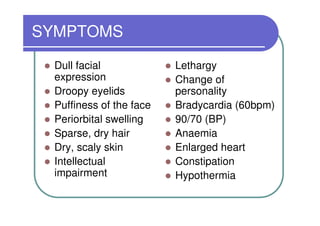
SYMPTOMS

 Dull facial             Lethargy
 expression              Change of
 Droopy eyelids          personality
 Puffiness of the face   Bradycardia (60bpm)
 Periorbital swelling    90/70 (BP)
 Sparse, dry hair        Anaemia
 Dry, scaly skin         Enlarged heart
 Intellectual            Constipation
 impairment              Hypothermia
SYMPTOMS (contd.)

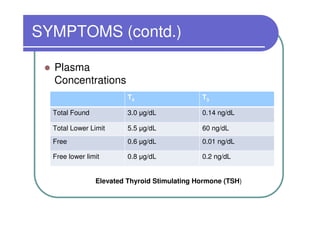
  Plasma
  Concentrations
                         T4                   T3

  Total Found            3.0 µg/dL            0.14 ng/dL

  Total Lower Limit      5.5 µg/dL            60 ng/dL
  Free                   0.6 µg/dL            0.01 ng/dL

  Free lower limit       0.8 µg/dL            0.2 ng/dL


                Elevated Thyroid Stimulating Hormone (TSH)
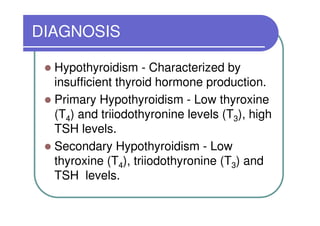
DIAGNOSIS

  Hypothyroidism - Characterized by
  insufficient thyroid hormone production.
  Primary Hypothyroidism - Low thyroxine
  (T4) and triiodothyronine levels (T3), high
  TSH levels.
  Secondary Hypothyroidism - Low
  thyroxine (T4), triiodothyronine (T3) and
  TSH levels.
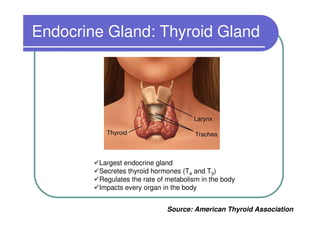
Endocrine Gland: Thyroid Gland


        Largest endocrine gland
        Secretes thyroid hormones (T4 and T3)
        Regulates the rate of metabolism in the body
        Impacts every organ in the body


                             Source: American Thyroid Association
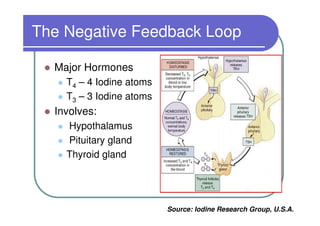
The Negative Feedback Loop

  Major Hormones
    T4 – 4 Iodine atoms
    T3 – 3 Iodine atoms
  Involves:
    Hypothalamus
    Pituitary gland
    Thyroid gland


                          Source: Iodine Research Group, U.S.A.
Causes of Hypothyroidism

  Autoimmune Disorder (Hashimoto’s
  Disease)
  Lymphocytic Thyroiditis
  Thyroid Destruction
  Pituitary or Hypothalamic Disease
  Medication
  Iodine Deficiency
GOITRE

  Nodular enlargement of the thyroid gland
  Causes:
    Iodine deficiency or Primary hypothyroidism
    Hyperthyroidism
    Injury or Infection
    Tumour (Cancerous and Benign)
  Not present in all patients
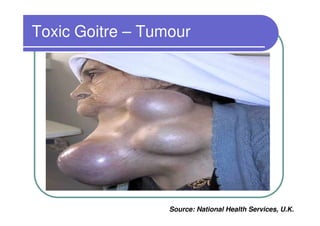
Toxic Goitre – Tumour


                  Source: National Health Services, U.K.
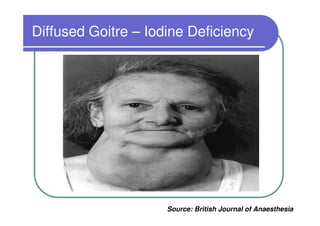
Diffused Goitre – Iodine Deficiency


                     Source: British Journal of Anaesthesia
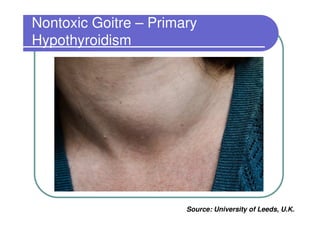
Nontoxic Goitre – Primary
Hypothyroidism


                       Source: University of Leeds, U.K.
TREATMENT

  No Cure (Except in case of iodine
  deficiency)
  Thyroxine tablets (Lifelong medication)
  Individually tailored dosage
  Review
    Change in circumstances
    Every year
REFERENCES

  VanPutte, C., Regan, J. and Russo, A. (2010)
  Seely's Essentials of Anatomy & Physiology.
  McGraw-Hill, New York.
  American Thyroid Association (2008)
  “Hypothyroidism“
  http://www.thyroid.org/Information/
  Hypothyroidism.pdf (Accessed 25 April 2010).
  Cooper, D., McDermott, M. and Wartofsky, L.
  (2004) Hypothyroidism. The journal of Clinical
  Endocrinology & Metabolism, 89(110), 5-8.
TEAM: ATCG


THANK YOU

Hypothyrodism

  • 1.
  • 2.
    SYMPTOMS Dull facial Lethargy expression Change of Droopy eyelids personality Puffiness of the face Bradycardia (60bpm) Periorbital swelling 90/70 (BP) Sparse, dry hair Anaemia Dry, scaly skin Enlarged heart Intellectual Constipation impairment Hypothermia
  • 3.
    SYMPTOMS (contd.) Plasma Concentrations T4 T3 Total Found 3.0 µg/dL 0.14 ng/dL Total Lower Limit 5.5 µg/dL 60 ng/dL Free 0.6 µg/dL 0.01 ng/dL Free lower limit 0.8 µg/dL 0.2 ng/dL Elevated Thyroid Stimulating Hormone (TSH)
  • 4.
    DIAGNOSIS Hypothyroidism- Characterized by insufficient thyroid hormone production. Primary Hypothyroidism - Low thyroxine (T4) and triiodothyronine levels (T3), high TSH levels. Secondary Hypothyroidism - Low thyroxine (T4), triiodothyronine (T3) and TSH levels.
  • 5.
    Endocrine Gland: ThyroidGland Largest endocrine gland Secretes thyroid hormones (T4 and T3) Regulates the rate of metabolism in the body Impacts every organ in the body Source: American Thyroid Association
  • 6.
    The Negative FeedbackLoop Major Hormones T4 – 4 Iodine atoms T3 – 3 Iodine atoms Involves: Hypothalamus Pituitary gland Thyroid gland Source: Iodine Research Group, U.S.A.
  • 7.
    Causes of Hypothyroidism Autoimmune Disorder (Hashimoto’s Disease) Lymphocytic Thyroiditis Thyroid Destruction Pituitary or Hypothalamic Disease Medication Iodine Deficiency
  • 8.
    GOITRE Nodularenlargement of the thyroid gland Causes: Iodine deficiency or Primary hypothyroidism Hyperthyroidism Injury or Infection Tumour (Cancerous and Benign) Not present in all patients
  • 9.
    Toxic Goitre –Tumour Source: National Health Services, U.K.
  • 10.
    Diffused Goitre –Iodine Deficiency Source: British Journal of Anaesthesia
  • 11.
    Nontoxic Goitre –Primary Hypothyroidism Source: University of Leeds, U.K.
  • 12.
    TREATMENT NoCure (Except in case of iodine deficiency) Thyroxine tablets (Lifelong medication) Individually tailored dosage Review Change in circumstances Every year
  • 13.
    REFERENCES VanPutte,C., Regan, J. and Russo, A. (2010) Seely's Essentials of Anatomy & Physiology. McGraw-Hill, New York. American Thyroid Association (2008) “Hypothyroidism“ http://www.thyroid.org/Information/ Hypothyroidism.pdf (Accessed 25 April 2010). Cooper, D., McDermott, M. and Wartofsky, L. (2004) Hypothyroidism. The journal of Clinical Endocrinology & Metabolism, 89(110), 5-8.
  • 14.