Hypothyroidism
Dr.HASSAN EL MEEDANI
UNDERSUPERVISION OF DR.AMAL AL ALI
CONSULTANT FM,ASSOCIATE DIRECTOR OF FM PROGRAM
Objectives
• Case discussion
• Epidemiology
• Classification
• Causes
• Clinical approach
• Screening
• Diagnosis
• Hypothyroidism with pregnancy
• Treatment and dose adjustment
• Referral and consultation
Case 1
A 27 years old, female, presents to the office with a chief complaint of
chronic fatigue for about 4 months. She reports 17 pounds weight gain over
the last 3 months, despite a decreased appetite . She became more sleepy
lately.
What is your approach for the case above ?
How can the diagnosis best be confirmed?
What is the MOST likely cause of this patient’s disease ?
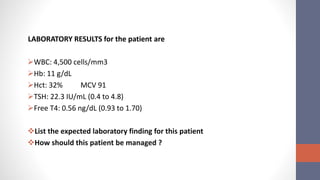
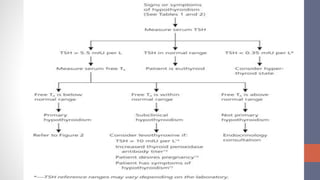
LABORATORY RESULTS for the patient are
WBC: 4,500 cells/mm3
Hb: 11 g/dL
Hct: 32% MCV 91
TSH: 22.3 IU/mL (0.4 to 4.8)
Free T4: 0.56 ng/dL (0.93 to 1.70)
List the expected laboratory finding for this patient
How should this patient be managed ?
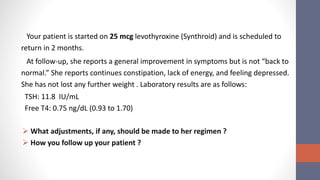
Your patient is started on 25 mcg levothyroxine (Synthroid) and is scheduled to
return in 2 months.
At follow-up, she reports a general improvement in symptoms but is not “back to
normal.” She reports continues constipation, lack of energy, and feeling depressed.
She has not lost any further weight . Laboratory results are as follows:
TSH: 11.8 IU/mL
Free T4: 0.75 ng/dL (0.93 to 1.70)
 What adjustments, if any, should be made to her regimen ?
 How you follow up your patient ?
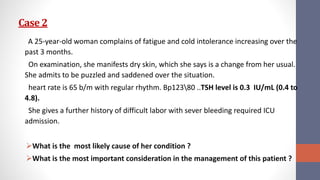
Case 2
A 25-year-old woman complains of fatigue and cold intolerance increasing over the
past 3 months.
On examination, she manifests dry skin, which she says is a change from her usual.
She admits to be puzzled and saddened over the situation.
heart rate is 65 b/m with regular rhythm. Bp12380 ..TSH level is 0.3 IU/mL (0.4 to
4.8).
She gives a further history of difficult labor with sever bleeding required ICU
admission.
What is the most likely cause of her condition ?
What is the most important consideration in the management of this patient ?
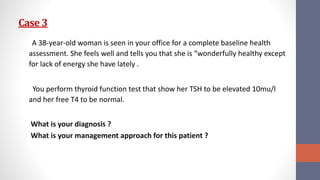
Case 3
A 38-year-old woman is seen in your office for a complete baseline health
assessment. She feels well and tells you that she is “wonderfully healthy except
for lack of energy she have lately .
You perform thyroid function test that show her TSH to be elevated 10mu/l
and her free T4 to be normal.
What is your diagnosis ?
What is your management approach for this patient ?
Types:
• Subclinical hypothyroidism is characterized by a serum TSH above the upper
reference limit in combination with a normal free thyroxine (T4). This
designation is only applicable when thyroid function has been stable for weeks
or more, the hypothalamic-pituitary-thyroid axis is normal, and there is no
recent or ongoing severe illness.
• Overt Hypothyroidism elevated TSH, usually above 10 mIU/L, in combination
with a subnormal free T4.
Epidemiology
• Data blow derived from the National Health and Nutrition Examination
Survey (NHANES III) in USA.
• The prevalence of subclinical disease was 4.3% and overt disease 0.3%.
• The prevalence increases with age, and is higher in females than in males.
Ratio 2:1
• It is estimated that nearly 13 million Americans have undiagnosed
hypothyroidism.
Causes
• Hypothyroidism may occur as a result of gland failure (Primary), or
insufficient thyroid gland stimulation by the hypothalamus or pituitary gland
(Secondary).
• Primary Hypothyroidism result from congenital abnormalities, autoimmune
destruction (Hashimoto disease), iodine deficiency, and infiltrative diseases.
• Autoimmune thyroid disease is the most common etiology of hypothyroidism
in the United States.
• The Most common cause worldwide is iodine deficiency.
Cont’d
• Iatrogenic.
• Disorders generally associated with transient hypothyroidism include
postpartum thyroiditis, subacute thyroiditis, silent thyroiditis, and thyroiditis
associated with thyroid-stimulating hormone (TSH) receptor-blocking
antibodies.
• Drugs classically associated with thyroid dysfunction include lithium,
amiodarone, interferon alfa, interleukin-2, and tyrosine kinase inhibitors .
Cont’d
Central hypothyroidism occurs when there is insufficient production of bioactive
TSH due to :
a) Pituitary or hypothalamic tumors (including craniopharyngiomas), inflammatory
(lymphocytic or granulomatous hypophysitis) or infiltrative diseases.
b)Hemorrhagic necrosis
c)Surgical and radiation treatment for pituitary or hypothalamic disease.
Cont’d
• Consumptive hypothyroidism is a rare condition that may occur in patients
with hemangiomata and other tumors in which type 3 iodothyronine
deiodinase is expressed, resulting in accelerated degradation of T4 and
triiodothyronine (T3).
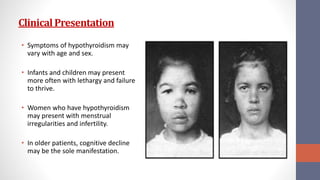
Clinical Presentation
• Symptoms of hypothyroidism may
vary with age and sex.
• Infants and children may present
more often with lethargy and failure
to thrive.
• Women who have hypothyroidism
may present with menstrual
irregularities and infertility.
• In older patients, cognitive decline
may be the sole manifestation.
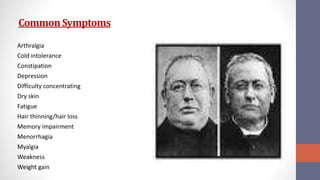
CommonSymptoms
Arthralgia
Cold intolerance
Constipation
Depression
Difficulty concentrating
Dry skin
Fatigue
Hair thinning/hair loss
Memory impairment
Menorrhagia
Myalgia
Weakness
Weight gain
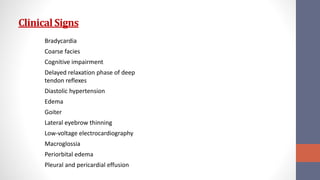
Clinical Signs
Bradycardia
Coarse facies
Cognitive impairment
Delayed relaxation phase of deep
tendon reflexes
Diastolic hypertension
Edema
Goiter
Lateral eyebrow thinning
Low-voltage electrocardiography
Macroglossia
Periorbital edema
Pleural and pericardial effusion
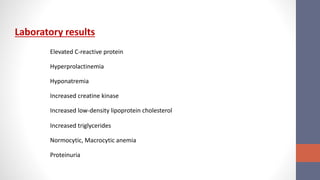
Laboratory results
Elevated C-reactive protein
Hyperprolactinemia
Hyponatremia
Increased creatine kinase
Increased low-density lipoprotein cholesterol
Increased triglycerides
Normocytic, Macrocytic anemia
Proteinuria
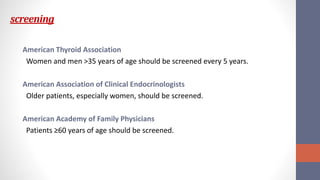
screening
American Thyroid Association
Women and men >35 years of age should be screened every 5 years.
American Association of Clinical Endocrinologists
Older patients, especially women, should be screened.
American Academy of Family Physicians
Patients ≥60 years of age should be screened.
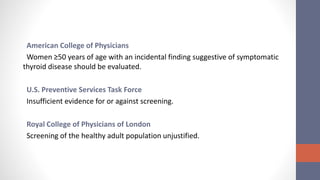
American College of Physicians
Women ≥50 years of age with an incidental finding suggestive of symptomatic
thyroid disease should be evaluated.
U.S. Preventive Services Task Force
Insufficient evidence for or against screening.
Royal College of Physicians of London
Screening of the healthy adult population unjustified.
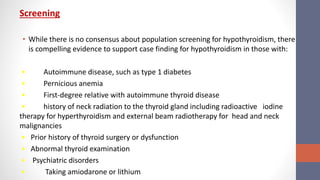
Screening
• While there is no consensus about population screening for hypothyroidism, there
is compelling evidence to support case finding for hypothyroidism in those with:
• Autoimmune disease, such as type 1 diabetes
• Pernicious anemia
• First-degree relative with autoimmune thyroid disease
• history of neck radiation to the thyroid gland including radioactive iodine
therapy for hyperthyroidism and external beam radiotherapy for head and neck
malignancies
• Prior history of thyroid surgery or dysfunction
• Abnormal thyroid examination
• Psychiatric disorders
• Taking amiodarone or lithium
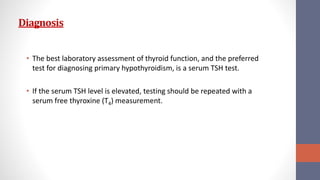
Diagnosis
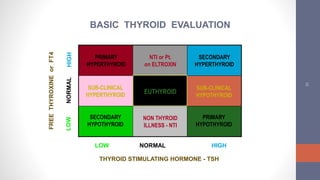
• The best laboratory assessment of thyroid function, and the preferred
test for diagnosing primary hypothyroidism, is a serum TSH test.
• If the serum TSH level is elevated, testing should be repeated with a
serum free thyroxine (T4) measurement.
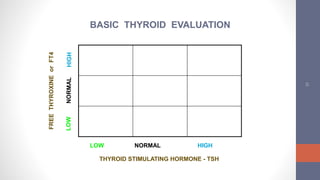
22
LOW NORMAL HIGH
THYROID STIMULATING HORMONE - TSH
FREETHYROXINEorFT4
BASIC THYROID EVALUATION
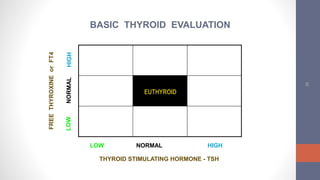
23
FREETHYROXINEorFT4
EUTHYROID
LOW NORMAL HIGH
THYROID STIMULATING HORMONE - TSH
BASIC THYROID EVALUATION
24
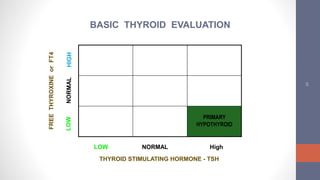
FREETHYROXINEorFT4
PRIMARY
HYPOTHYROID
LOW NORMAL High
THYROID STIMULATING HORMONE - TSH
BASIC THYROID EVALUATION
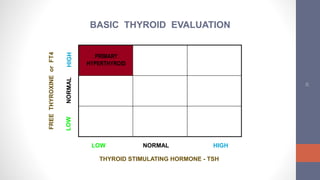
25
FREETHYROXINEorFT4
PRIMARY
HYPERTHYROID
LOW NORMAL HIGH
THYROID STIMULATING HORMONE - TSH
BASIC THYROID EVALUATION
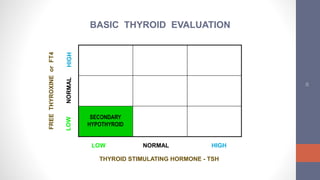
26
FREETHYROXINEorFT4
SECONDARY
HYPOTHYROID
LOW NORMAL HIGH
THYROID STIMULATING HORMONE - TSH
BASIC THYROID EVALUATION
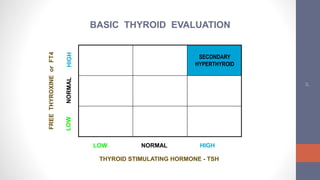
27
FREETHYROXINEorFT4
SECONDARY
HYPERTHYROID
LOW NORMAL HIGH
THYROID STIMULATING HORMONE - TSH
BASIC THYROID EVALUATION
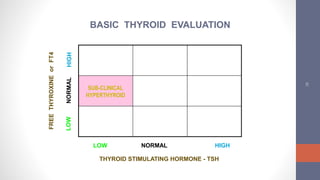
28
FREETHYROXINEorFT4
SUB-CLINICAL
HYPERTHYROID
LOW NORMAL HIGH
THYROID STIMULATING HORMONE - TSH
BASIC THYROID EVALUATION
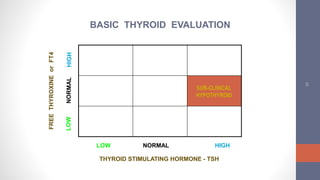
29
FREETHYROXINEorFT4
SUB-CLINICAL
HYPOTHYROID
LOW NORMAL HIGH
THYROID STIMULATING HORMONE - TSH
BASIC THYROID EVALUATION
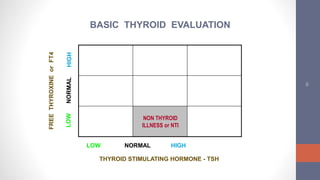
30
FREETHYROXINEorFT4
NON THYROID
ILLNESS or NTI
LOW NORMAL HIGH
THYROID STIMULATING HORMONE - TSH
BASIC THYROID EVALUATION
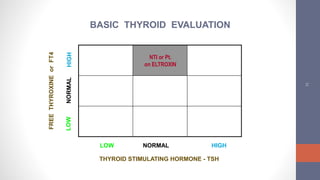
31
FREETHYROXINEorFT4
NTI or Pt.
on ELTROXIN
LOW NORMAL HIGH
THYROID STIMULATING HORMONE - TSH
BASIC THYROID EVALUATION
32
FREETHYROXINEorFT4
EUTHYROID
SUB-CLINICAL
HYPERTHYROID
NON THYROID
ILLNESS - NTI
NTI or Pt.
on ELTROXIN
SUB-CLINICAL
HYPOTHYROID
SECONDARY
HYPERTHYROID
SECONDARY
HYPOTHYROID
PRIMARY
HYPERTHYROID
PRIMARY
HYPOTHYROID
LOW NORMAL HIGH
THYROID STIMULATING HORMONE - TSH
BASIC THYROID EVALUATION
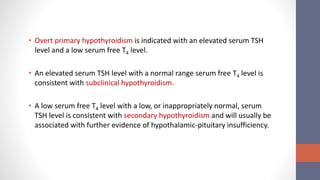
• Overt primary hypothyroidism is indicated with an elevated serum TSH
level and a low serum free T4 level.
• An elevated serum TSH level with a normal range serum free T4 level is
consistent with subclinical hypothyroidism.
• A low serum free T4 level with a low, or inappropriately normal, serum
TSH level is consistent with secondary hypothyroidism and will usually be
associated with further evidence of hypothalamic-pituitary insufficiency.
Treatment
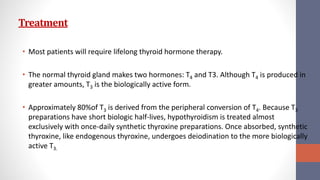
• Most patients will require lifelong thyroid hormone therapy.
• The normal thyroid gland makes two hormones: T4 and T3. Although T4 is produced in
greater amounts, T3 is the biologically active form.
• Approximately 80%of T3 is derived from the peripheral conversion of T4. Because T3
preparations have short biologic half-lives, hypothyroidism is treated almost
exclusively with once-daily synthetic thyroxine preparations. Once absorbed, synthetic
thyroxine, like endogenous thyroxine, undergoes deiodination to the more biologically
active T3.
• The starting dosage of levothyroxine in young, healthy adults for complete
replacement is 1.6 mcg per kg per day.
• Levothyroxine dosing for infants and children is weight-based and varies by age.
• Thyroid hormone is generally taken in the morning, 30 minutes before eating.
• Patients who have difficulty with morning levothyroxine dosing may find
bedtime dosing an effective alternative.
• In a well-designed study conducted in the Netherlands, bedtime dosing of
levothyroxine resulted in lower TSH and higher free T4 levels, but no
difference in quality of life.
• Alternatively, patients with marked difficulty in adhering to a once-daily
levothyroxine regimen can safely take their entire week's dosage of
levothyroxine once weekly.
SpecialPopulations
• Six populations deserve special consideration:
(1) older patients
(2) patients with known or suspected ischemic heart disease
(3) pregnant women
(4) patients with persistent symptoms of hypothyroidism despite taking adequate
doses of levothyroxine
(5) patients with subclinical hypothyroidism
(6) patients suspected of having myxedema coma
OLDERPATIENTSAND PATIENTSWITH ISCHEMICHEART
DISEASE
• Initial dosage is generally 25 mcg or 50 mcg daily, with the dosage
increased by 25 mcg every three to four weeks until the estimated full
replacement dose is reached.
• Thyroid hormone increases heart rate and contractility, therefore increases
myocardial oxygen demand. Starting at higher doses may precipitate acute
coronary syndrome or an arrhythmia.
• However, there are no high-quality studies that show that lower starting
doses and slow titration result in fewer adverse effects than full-dose
levothyroxine replacement in these patients.
PREGNANCY
• Thyroid hormone requirements increase during pregnancy.
• In one prospective study, 85% of pregnant patients required a median increase
of 47% in their thyroid hormone requirements.
• These increases in levothyroxine dosing were required as early as the fifth week
of pregnancy in some patients, which is before the first scheduled prenatal care
visit.
• It is recommended that women on fixed doses of levothyroxine take nine
doses each week (one extra dose on two days of the week), instead of the
usual seven, as soon as pregnancy is confirmed.
• Serum TSH should be measured at four to six weeks' gestation, then every
four to six weeks until 20 weeks' gestation, then again at 24 to 28 weeks' and
32 to 34 weeks' gestation (Grade C).
• The increase in thyroid hormone requirement lasts throughout pregnancy.
• Hypothyroidism during pregnancy should be treated with levothyroxine, with
a serum TSH goal of less than 2.5 mIU per L (Grade A).
• Screening for hypothyroidism in pregnancy apply only for high risk pregnant
ladies for hypothyroidism(Grade C).
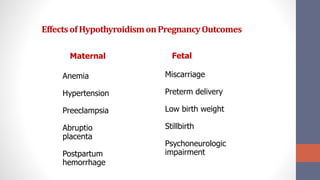
EffectsofHypothyroidismonPregnancyOutcomes
Anemia
Hypertension
Preeclampsia
Abruptio
placenta
Postpartum
hemorrhage
Maternal Fetal
Miscarriage
Preterm delivery
Low birth weight
Stillbirth
Psychoneurologic
impairment
PATIENTSWITH PERSISTENTSYMPTOMS
• A small number of patients with hypothyroidism, mostly women, treated with
an adequate dose of levothyroxine will report persistent symptoms such as
fatigue, depressed mood, and weight gain despite having a TSH level in the
normal range.
• Some patients may have an alternative cause for their symptoms; so a limited
laboratory and clinical investigation is reasonable.
• Combination T3/T4 therapy, in the form of desiccated thyroid hormone
preparations (thyroid USP, Armour thyroid) or levothyroxine plus liothyronine
(Cytomel), is sometimes prescribed for those patients.
• Desiccated thyroid hormone preparations are not recommended by the
AACE for the treatment of hypothyroidism, and a meta-analysis of 11
randomized controlled trials of combination T3/T4 therapy versus T4
monotherapy showed no improvements in bodily pain, depression, or
quality of life.
• A subsequent study showed that a small subset of patients who have a
specific type 2 deiodinase polymorphism may benefit from combination
therapy.
• However, there is insufficient evidence to recommend the use of
combination T3/T4 in treatment of primary hypothyroidism. Furthermore,
genetic testing for a type 2 deiodinase polymorphism is not practical.
AlternativeCausesofPersistentSymptoms inPatientswith
Normal-RangeTSHLevels
Adrenal insufficiency (rare)
Anemia
B12 deficiency
Iron deficiency
Chronic kidney disease
Depression, anxiety disorder, and/or somatoform disorders
Liver disease
Obstructive sleep apnea
Viral infection (e.g., mononucleosis, Lyme disease, human immunodeficiency
virus/AIDS)
Vitamin D deficiency
CommonReasonsforAbnormalTSHLevelsona Previously
StableDosageofThyroidHormone
• Decreased absorption of thyroid hormone:
a) Patient is now taking thyroid hormone with food.
b)Patient takes thyroid hormone within four hours of calcium, iron, soy
products, or aluminum-containing antacids.
c) Patient is prescribed medication that decreases absorption of thyroid
hormone, such as cholestyramine (Questran), colestipol (Colestid), orlistat
(Xenical), or sucralfate (Carafate).
• Patient nonadherent to thyroid hormone regimen (missing doses).
• Patient is now pregnant or recently started or stopped estrogen-containing oral
contraceptive or hormone therapy.
• Generic substitution for brand name or vice versa, or substitution of one generic
formulation for another.
• Patient started on sertraline (Zoloft), another selective serotonin reuptake
inhibitor, or a tricyclic antidepressant.
• Patient started on carbamazepine (Tegretol) or phenytoin (Dilantin).
SUBCLINICALHYPOTHYROIDISM
• Subclinical hypothyroidism is a biochemical diagnosis defined by a normal-range
free T4 level and an elevated TSH level.
• Patients may or may not have symptoms attributable to hypothyroidism. On
repeat testing, TSH levels may spontaneously normalize in many patients.
• However, in a prospective study of 107 patients older than 55 years, an initial
TSH level greater than 10 to 15 mIU per L was the variable most strongly
associated with progression to overt hypothyroidism.
• Elevated thyroid peroxidase antibody titers also increase the risk of progressing to
frank thyroid gland failure, even when the TSH level is less than 10 mIU per L.
• Treatment with levothyroxine should be considered for patients with:
1 Initial TSH levels greater than 10 mIU per L.
2 Elevated thyroid peroxidase antibody titers.
3 Symptoms suggestive of hypothyroidism and TSH levels between 5 and 10 mIU
per L.
4 Pregnancy or are attempting to conceive.
Myxedemacoma
• Myxedema coma is a rare but extremely severe manifestation of
hypothyroidism that most commonly occurs in older women who have a
history of primary hypothyroidism.
• Mental status changes including lethargy, cognitive dysfunction, and even
psychosis, and hypothermia are the hallmark features of myxedema coma.
• Hyponatremia, hypoventilation, and bradycardia can also occur.
• Because myxedema coma is a medical emergency with a high mortality rate,
even with appropriate treatment, patients should be managed in the ICU where
proper ventilatory, electrolyte, and hemodynamic support can be given.
Corticosteroids may also be needed.
• A search for precipitating causes such as infection, cardiac disease, metabolic
disturbances, or drug use is critical.
Treatment Summary
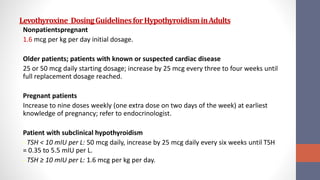
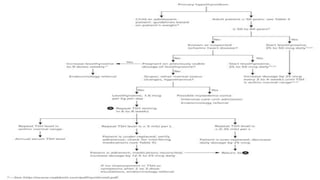
Levothyroxine DosingGuidelinesforHypothyroidisminAdults
Nonpatientspregnant
1.6 mcg per kg per day initial dosage.
Older patients; patients with known or suspected cardiac disease
25 or 50 mcg daily starting dosage; increase by 25 mcg every three to four weeks until
full replacement dosage reached.
Pregnant patients
Increase to nine doses weekly (one extra dose on two days of the week) at earliest
knowledge of pregnancy; refer to endocrinologist.
Patient with subclinical hypothyroidism
- TSH < 10 mIU per L: 50 mcg daily, increase by 25 mcg daily every six weeks until TSH
= 0.35 to 5.5 mIU per L.
- TSH ≥ 10 mIU per L: 1.6 mcg per kg per day.
Whento referpatients with hypothyroidism:
• Age??.
• Cardiac disease.
• Coexisting endocrine diseases.
• Myxedema coma suspected.
• Pregnancy.
• Presence of goiter, nodule, or other structural thyroid gland
abnormality.
• Unresponsive to therapy.
• References :
• American academy of endocrinologists…
• American thyroid assosciation…
• American academy of family physicians…
• Uptodate .com
thank you

Hypothyroidism final draft

  • 1.
    Hypothyroidism Dr.HASSAN EL MEEDANI UNDERSUPERVISIONOF DR.AMAL AL ALI CONSULTANT FM,ASSOCIATE DIRECTOR OF FM PROGRAM
  • 2.
    Objectives • Case discussion •Epidemiology • Classification • Causes • Clinical approach • Screening • Diagnosis • Hypothyroidism with pregnancy • Treatment and dose adjustment • Referral and consultation
  • 3.
    Case 1 A 27years old, female, presents to the office with a chief complaint of chronic fatigue for about 4 months. She reports 17 pounds weight gain over the last 3 months, despite a decreased appetite . She became more sleepy lately. What is your approach for the case above ? How can the diagnosis best be confirmed? What is the MOST likely cause of this patient’s disease ?
  • 4.
    LABORATORY RESULTS forthe patient are WBC: 4,500 cells/mm3 Hb: 11 g/dL Hct: 32% MCV 91 TSH: 22.3 IU/mL (0.4 to 4.8) Free T4: 0.56 ng/dL (0.93 to 1.70) List the expected laboratory finding for this patient How should this patient be managed ?
  • 5.
    Your patient isstarted on 25 mcg levothyroxine (Synthroid) and is scheduled to return in 2 months. At follow-up, she reports a general improvement in symptoms but is not “back to normal.” She reports continues constipation, lack of energy, and feeling depressed. She has not lost any further weight . Laboratory results are as follows: TSH: 11.8 IU/mL Free T4: 0.75 ng/dL (0.93 to 1.70)  What adjustments, if any, should be made to her regimen ?  How you follow up your patient ?
  • 6.
    Case 2 A 25-year-oldwoman complains of fatigue and cold intolerance increasing over the past 3 months. On examination, she manifests dry skin, which she says is a change from her usual. She admits to be puzzled and saddened over the situation. heart rate is 65 b/m with regular rhythm. Bp12380 ..TSH level is 0.3 IU/mL (0.4 to 4.8). She gives a further history of difficult labor with sever bleeding required ICU admission. What is the most likely cause of her condition ? What is the most important consideration in the management of this patient ?
  • 7.
    Case 3 A 38-year-oldwoman is seen in your office for a complete baseline health assessment. She feels well and tells you that she is “wonderfully healthy except for lack of energy she have lately . You perform thyroid function test that show her TSH to be elevated 10mu/l and her free T4 to be normal. What is your diagnosis ? What is your management approach for this patient ?
  • 8.
    Types: • Subclinical hypothyroidismis characterized by a serum TSH above the upper reference limit in combination with a normal free thyroxine (T4). This designation is only applicable when thyroid function has been stable for weeks or more, the hypothalamic-pituitary-thyroid axis is normal, and there is no recent or ongoing severe illness. • Overt Hypothyroidism elevated TSH, usually above 10 mIU/L, in combination with a subnormal free T4.
  • 9.
    Epidemiology • Data blowderived from the National Health and Nutrition Examination Survey (NHANES III) in USA. • The prevalence of subclinical disease was 4.3% and overt disease 0.3%. • The prevalence increases with age, and is higher in females than in males. Ratio 2:1 • It is estimated that nearly 13 million Americans have undiagnosed hypothyroidism.
  • 10.
    Causes • Hypothyroidism mayoccur as a result of gland failure (Primary), or insufficient thyroid gland stimulation by the hypothalamus or pituitary gland (Secondary). • Primary Hypothyroidism result from congenital abnormalities, autoimmune destruction (Hashimoto disease), iodine deficiency, and infiltrative diseases. • Autoimmune thyroid disease is the most common etiology of hypothyroidism in the United States. • The Most common cause worldwide is iodine deficiency.
  • 11.
    Cont’d • Iatrogenic. • Disordersgenerally associated with transient hypothyroidism include postpartum thyroiditis, subacute thyroiditis, silent thyroiditis, and thyroiditis associated with thyroid-stimulating hormone (TSH) receptor-blocking antibodies. • Drugs classically associated with thyroid dysfunction include lithium, amiodarone, interferon alfa, interleukin-2, and tyrosine kinase inhibitors .
  • 12.
    Cont’d Central hypothyroidism occurswhen there is insufficient production of bioactive TSH due to : a) Pituitary or hypothalamic tumors (including craniopharyngiomas), inflammatory (lymphocytic or granulomatous hypophysitis) or infiltrative diseases. b)Hemorrhagic necrosis c)Surgical and radiation treatment for pituitary or hypothalamic disease.
  • 13.
    Cont’d • Consumptive hypothyroidismis a rare condition that may occur in patients with hemangiomata and other tumors in which type 3 iodothyronine deiodinase is expressed, resulting in accelerated degradation of T4 and triiodothyronine (T3).
  • 14.
    Clinical Presentation • Symptomsof hypothyroidism may vary with age and sex. • Infants and children may present more often with lethargy and failure to thrive. • Women who have hypothyroidism may present with menstrual irregularities and infertility. • In older patients, cognitive decline may be the sole manifestation.
  • 15.
    CommonSymptoms Arthralgia Cold intolerance Constipation Depression Difficulty concentrating Dryskin Fatigue Hair thinning/hair loss Memory impairment Menorrhagia Myalgia Weakness Weight gain
  • 16.
    Clinical Signs Bradycardia Coarse facies Cognitiveimpairment Delayed relaxation phase of deep tendon reflexes Diastolic hypertension Edema Goiter Lateral eyebrow thinning Low-voltage electrocardiography Macroglossia Periorbital edema Pleural and pericardial effusion
  • 17.
    Laboratory results Elevated C-reactiveprotein Hyperprolactinemia Hyponatremia Increased creatine kinase Increased low-density lipoprotein cholesterol Increased triglycerides Normocytic, Macrocytic anemia Proteinuria
  • 18.
    screening American Thyroid Association Womenand men >35 years of age should be screened every 5 years. American Association of Clinical Endocrinologists Older patients, especially women, should be screened. American Academy of Family Physicians Patients ≥60 years of age should be screened.
  • 19.
    American College ofPhysicians Women ≥50 years of age with an incidental finding suggestive of symptomatic thyroid disease should be evaluated. U.S. Preventive Services Task Force Insufficient evidence for or against screening. Royal College of Physicians of London Screening of the healthy adult population unjustified.
  • 20.
    Screening • While thereis no consensus about population screening for hypothyroidism, there is compelling evidence to support case finding for hypothyroidism in those with: • Autoimmune disease, such as type 1 diabetes • Pernicious anemia • First-degree relative with autoimmune thyroid disease • history of neck radiation to the thyroid gland including radioactive iodine therapy for hyperthyroidism and external beam radiotherapy for head and neck malignancies • Prior history of thyroid surgery or dysfunction • Abnormal thyroid examination • Psychiatric disorders • Taking amiodarone or lithium
  • 21.
    Diagnosis • The bestlaboratory assessment of thyroid function, and the preferred test for diagnosing primary hypothyroidism, is a serum TSH test. • If the serum TSH level is elevated, testing should be repeated with a serum free thyroxine (T4) measurement.
  • 22.
    22 LOW NORMAL HIGH THYROIDSTIMULATING HORMONE - TSH FREETHYROXINEorFT4 BASIC THYROID EVALUATION
  • 23.
    23 FREETHYROXINEorFT4 EUTHYROID LOW NORMAL HIGH THYROIDSTIMULATING HORMONE - TSH BASIC THYROID EVALUATION
  • 24.
    24 FREETHYROXINEorFT4 PRIMARY HYPOTHYROID LOW NORMAL High THYROIDSTIMULATING HORMONE - TSH BASIC THYROID EVALUATION
  • 25.
    25 FREETHYROXINEorFT4 PRIMARY HYPERTHYROID LOW NORMAL HIGH THYROIDSTIMULATING HORMONE - TSH BASIC THYROID EVALUATION
  • 26.
    26 FREETHYROXINEorFT4 SECONDARY HYPOTHYROID LOW NORMAL HIGH THYROIDSTIMULATING HORMONE - TSH BASIC THYROID EVALUATION
  • 27.
    27 FREETHYROXINEorFT4 SECONDARY HYPERTHYROID LOW NORMAL HIGH THYROIDSTIMULATING HORMONE - TSH BASIC THYROID EVALUATION
  • 28.
    28 FREETHYROXINEorFT4 SUB-CLINICAL HYPERTHYROID LOW NORMAL HIGH THYROIDSTIMULATING HORMONE - TSH BASIC THYROID EVALUATION
  • 29.
    29 FREETHYROXINEorFT4 SUB-CLINICAL HYPOTHYROID LOW NORMAL HIGH THYROIDSTIMULATING HORMONE - TSH BASIC THYROID EVALUATION
  • 30.
    30 FREETHYROXINEorFT4 NON THYROID ILLNESS orNTI LOW NORMAL HIGH THYROID STIMULATING HORMONE - TSH BASIC THYROID EVALUATION
  • 31.
    31 FREETHYROXINEorFT4 NTI or Pt. onELTROXIN LOW NORMAL HIGH THYROID STIMULATING HORMONE - TSH BASIC THYROID EVALUATION
  • 32.
    32 FREETHYROXINEorFT4 EUTHYROID SUB-CLINICAL HYPERTHYROID NON THYROID ILLNESS -NTI NTI or Pt. on ELTROXIN SUB-CLINICAL HYPOTHYROID SECONDARY HYPERTHYROID SECONDARY HYPOTHYROID PRIMARY HYPERTHYROID PRIMARY HYPOTHYROID LOW NORMAL HIGH THYROID STIMULATING HORMONE - TSH BASIC THYROID EVALUATION
  • 33.
    • Overt primaryhypothyroidism is indicated with an elevated serum TSH level and a low serum free T4 level. • An elevated serum TSH level with a normal range serum free T4 level is consistent with subclinical hypothyroidism. • A low serum free T4 level with a low, or inappropriately normal, serum TSH level is consistent with secondary hypothyroidism and will usually be associated with further evidence of hypothalamic-pituitary insufficiency.
  • 35.
    Treatment • Most patientswill require lifelong thyroid hormone therapy. • The normal thyroid gland makes two hormones: T4 and T3. Although T4 is produced in greater amounts, T3 is the biologically active form. • Approximately 80%of T3 is derived from the peripheral conversion of T4. Because T3 preparations have short biologic half-lives, hypothyroidism is treated almost exclusively with once-daily synthetic thyroxine preparations. Once absorbed, synthetic thyroxine, like endogenous thyroxine, undergoes deiodination to the more biologically active T3.
  • 36.
    • The startingdosage of levothyroxine in young, healthy adults for complete replacement is 1.6 mcg per kg per day. • Levothyroxine dosing for infants and children is weight-based and varies by age. • Thyroid hormone is generally taken in the morning, 30 minutes before eating.
  • 37.
    • Patients whohave difficulty with morning levothyroxine dosing may find bedtime dosing an effective alternative. • In a well-designed study conducted in the Netherlands, bedtime dosing of levothyroxine resulted in lower TSH and higher free T4 levels, but no difference in quality of life. • Alternatively, patients with marked difficulty in adhering to a once-daily levothyroxine regimen can safely take their entire week's dosage of levothyroxine once weekly.
  • 38.
    SpecialPopulations • Six populationsdeserve special consideration: (1) older patients (2) patients with known or suspected ischemic heart disease (3) pregnant women (4) patients with persistent symptoms of hypothyroidism despite taking adequate doses of levothyroxine (5) patients with subclinical hypothyroidism (6) patients suspected of having myxedema coma
  • 39.
    OLDERPATIENTSAND PATIENTSWITH ISCHEMICHEART DISEASE •Initial dosage is generally 25 mcg or 50 mcg daily, with the dosage increased by 25 mcg every three to four weeks until the estimated full replacement dose is reached. • Thyroid hormone increases heart rate and contractility, therefore increases myocardial oxygen demand. Starting at higher doses may precipitate acute coronary syndrome or an arrhythmia. • However, there are no high-quality studies that show that lower starting doses and slow titration result in fewer adverse effects than full-dose levothyroxine replacement in these patients.
  • 40.
    PREGNANCY • Thyroid hormonerequirements increase during pregnancy. • In one prospective study, 85% of pregnant patients required a median increase of 47% in their thyroid hormone requirements. • These increases in levothyroxine dosing were required as early as the fifth week of pregnancy in some patients, which is before the first scheduled prenatal care visit.
  • 41.
    • It isrecommended that women on fixed doses of levothyroxine take nine doses each week (one extra dose on two days of the week), instead of the usual seven, as soon as pregnancy is confirmed. • Serum TSH should be measured at four to six weeks' gestation, then every four to six weeks until 20 weeks' gestation, then again at 24 to 28 weeks' and 32 to 34 weeks' gestation (Grade C).
  • 42.
    • The increasein thyroid hormone requirement lasts throughout pregnancy. • Hypothyroidism during pregnancy should be treated with levothyroxine, with a serum TSH goal of less than 2.5 mIU per L (Grade A). • Screening for hypothyroidism in pregnancy apply only for high risk pregnant ladies for hypothyroidism(Grade C).
  • 43.
  • 44.
    PATIENTSWITH PERSISTENTSYMPTOMS • Asmall number of patients with hypothyroidism, mostly women, treated with an adequate dose of levothyroxine will report persistent symptoms such as fatigue, depressed mood, and weight gain despite having a TSH level in the normal range. • Some patients may have an alternative cause for their symptoms; so a limited laboratory and clinical investigation is reasonable. • Combination T3/T4 therapy, in the form of desiccated thyroid hormone preparations (thyroid USP, Armour thyroid) or levothyroxine plus liothyronine (Cytomel), is sometimes prescribed for those patients.
  • 45.
    • Desiccated thyroidhormone preparations are not recommended by the AACE for the treatment of hypothyroidism, and a meta-analysis of 11 randomized controlled trials of combination T3/T4 therapy versus T4 monotherapy showed no improvements in bodily pain, depression, or quality of life. • A subsequent study showed that a small subset of patients who have a specific type 2 deiodinase polymorphism may benefit from combination therapy. • However, there is insufficient evidence to recommend the use of combination T3/T4 in treatment of primary hypothyroidism. Furthermore, genetic testing for a type 2 deiodinase polymorphism is not practical.
  • 46.
    AlternativeCausesofPersistentSymptoms inPatientswith Normal-RangeTSHLevels Adrenal insufficiency(rare) Anemia B12 deficiency Iron deficiency Chronic kidney disease Depression, anxiety disorder, and/or somatoform disorders Liver disease Obstructive sleep apnea Viral infection (e.g., mononucleosis, Lyme disease, human immunodeficiency virus/AIDS) Vitamin D deficiency
  • 47.
    CommonReasonsforAbnormalTSHLevelsona Previously StableDosageofThyroidHormone • Decreasedabsorption of thyroid hormone: a) Patient is now taking thyroid hormone with food. b)Patient takes thyroid hormone within four hours of calcium, iron, soy products, or aluminum-containing antacids. c) Patient is prescribed medication that decreases absorption of thyroid hormone, such as cholestyramine (Questran), colestipol (Colestid), orlistat (Xenical), or sucralfate (Carafate). • Patient nonadherent to thyroid hormone regimen (missing doses).
  • 48.
    • Patient isnow pregnant or recently started or stopped estrogen-containing oral contraceptive or hormone therapy. • Generic substitution for brand name or vice versa, or substitution of one generic formulation for another. • Patient started on sertraline (Zoloft), another selective serotonin reuptake inhibitor, or a tricyclic antidepressant. • Patient started on carbamazepine (Tegretol) or phenytoin (Dilantin).
  • 49.
    SUBCLINICALHYPOTHYROIDISM • Subclinical hypothyroidismis a biochemical diagnosis defined by a normal-range free T4 level and an elevated TSH level. • Patients may or may not have symptoms attributable to hypothyroidism. On repeat testing, TSH levels may spontaneously normalize in many patients. • However, in a prospective study of 107 patients older than 55 years, an initial TSH level greater than 10 to 15 mIU per L was the variable most strongly associated with progression to overt hypothyroidism.
  • 50.
    • Elevated thyroidperoxidase antibody titers also increase the risk of progressing to frank thyroid gland failure, even when the TSH level is less than 10 mIU per L. • Treatment with levothyroxine should be considered for patients with: 1 Initial TSH levels greater than 10 mIU per L. 2 Elevated thyroid peroxidase antibody titers. 3 Symptoms suggestive of hypothyroidism and TSH levels between 5 and 10 mIU per L. 4 Pregnancy or are attempting to conceive.
  • 51.
    Myxedemacoma • Myxedema comais a rare but extremely severe manifestation of hypothyroidism that most commonly occurs in older women who have a history of primary hypothyroidism. • Mental status changes including lethargy, cognitive dysfunction, and even psychosis, and hypothermia are the hallmark features of myxedema coma. • Hyponatremia, hypoventilation, and bradycardia can also occur.
  • 52.
    • Because myxedemacoma is a medical emergency with a high mortality rate, even with appropriate treatment, patients should be managed in the ICU where proper ventilatory, electrolyte, and hemodynamic support can be given. Corticosteroids may also be needed. • A search for precipitating causes such as infection, cardiac disease, metabolic disturbances, or drug use is critical.
  • 54.
  • 55.
    Levothyroxine DosingGuidelinesforHypothyroidisminAdults Nonpatientspregnant 1.6 mcgper kg per day initial dosage. Older patients; patients with known or suspected cardiac disease 25 or 50 mcg daily starting dosage; increase by 25 mcg every three to four weeks until full replacement dosage reached. Pregnant patients Increase to nine doses weekly (one extra dose on two days of the week) at earliest knowledge of pregnancy; refer to endocrinologist. Patient with subclinical hypothyroidism - TSH < 10 mIU per L: 50 mcg daily, increase by 25 mcg daily every six weeks until TSH = 0.35 to 5.5 mIU per L. - TSH ≥ 10 mIU per L: 1.6 mcg per kg per day.
  • 57.
    Whento referpatients withhypothyroidism: • Age??. • Cardiac disease. • Coexisting endocrine diseases. • Myxedema coma suspected. • Pregnancy. • Presence of goiter, nodule, or other structural thyroid gland abnormality. • Unresponsive to therapy.
  • 58.
    • References : •American academy of endocrinologists… • American thyroid assosciation… • American academy of family physicians… • Uptodate .com
  • 59.