HYPER- & HYPOTHYROIDISM WHAT YOU NEED TO KNOW www.freelivedoctor.com
BAD PUNS FOR MARDI GRAS Practice safe eating – always use condiments. Remember that dancing cheek to cheek is really a form of floor play. Condoms should be used on every conceivable occasion. A hangover is the wrath of grapes. www.freelivedoctor.com
OVERVIEW Review of thyroid physiology Definition of thyroid functional states Hypothyroidism - anesthetic  concerns Hyperthyroidism - anesthetic concerns Case presentation www.freelivedoctor.com
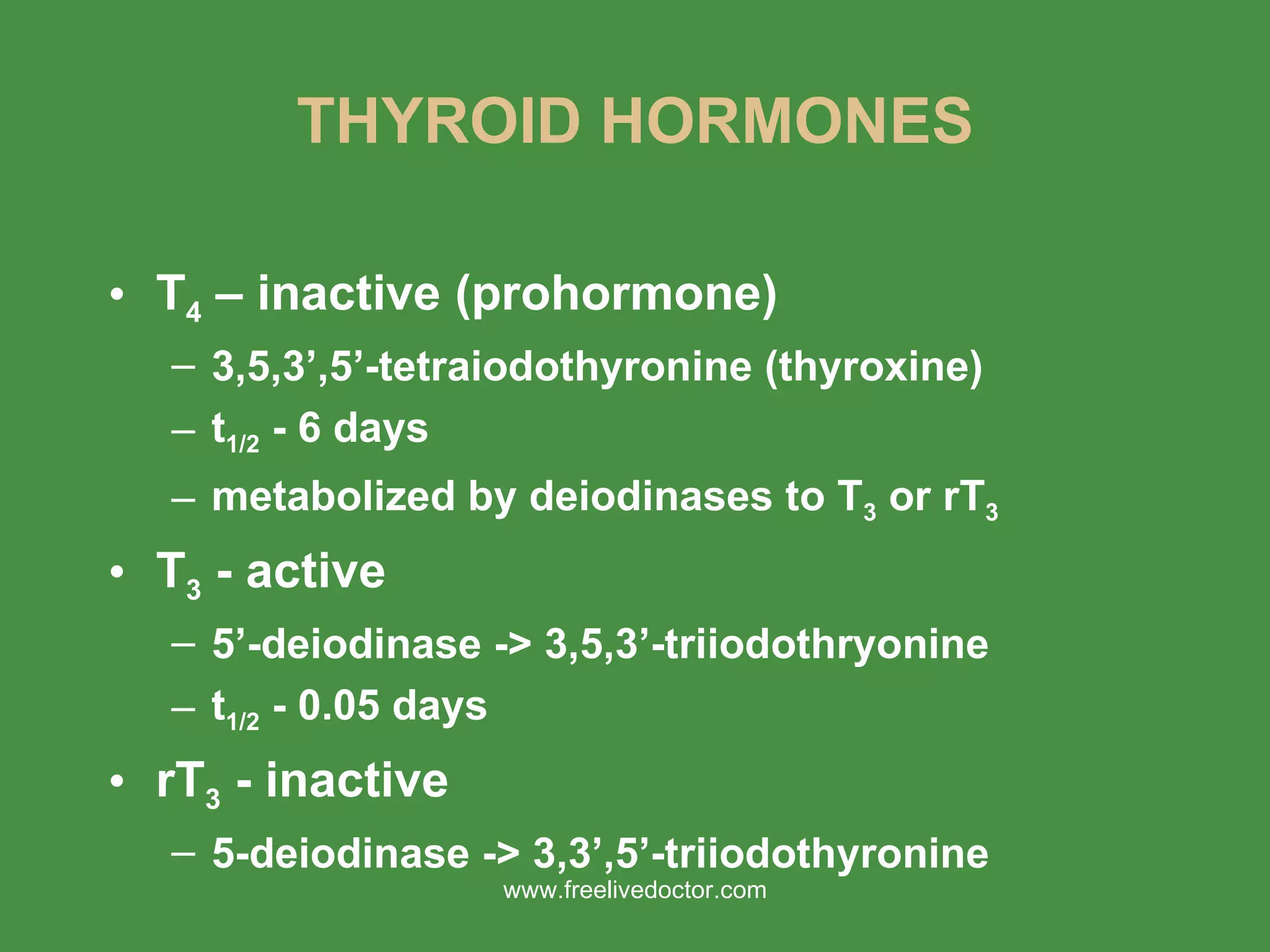
THYROID HORMONES T 4  – inactive (prohormone) 3,5,3’,5’-tetraiodothyronine (thyroxine) t 1/2  - 6 days metabolized by deiodinases to T 3  or rT 3 T 3  - active 5’-deiodinase -> 3,5,3’-triiodothryonine t 1/2  - 0.05 days rT 3  - inactive 5-deiodinase -> 3,3’,5’-triiodothyronine www.freelivedoctor.com
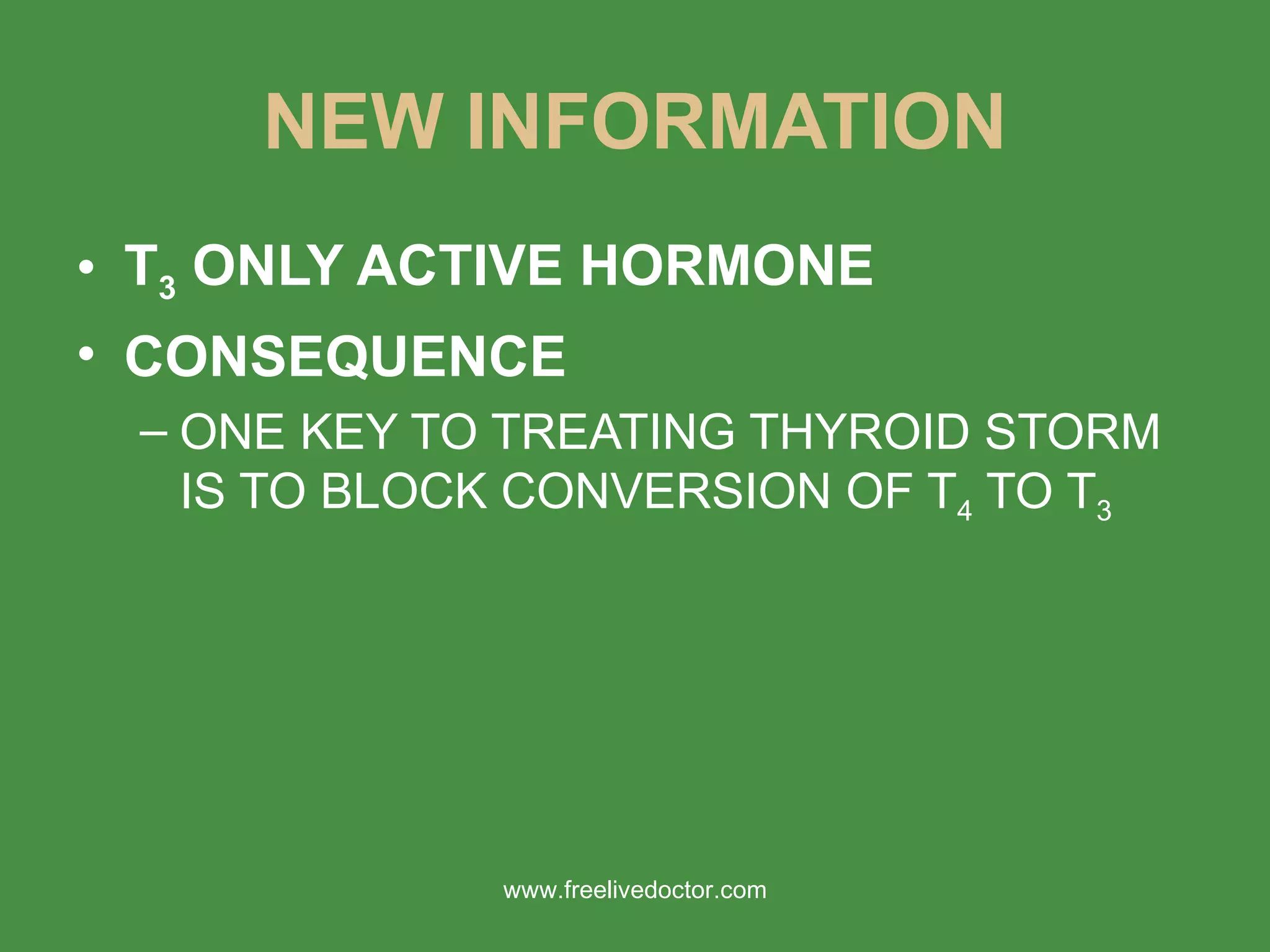
NEW INFORMATION T 3  ONLY ACTIVE HORMONE CONSEQUENCE ONE KEY TO TREATING THYROID STORM IS TO BLOCK CONVERSION OF T 4  TO T 3   www.freelivedoctor.com
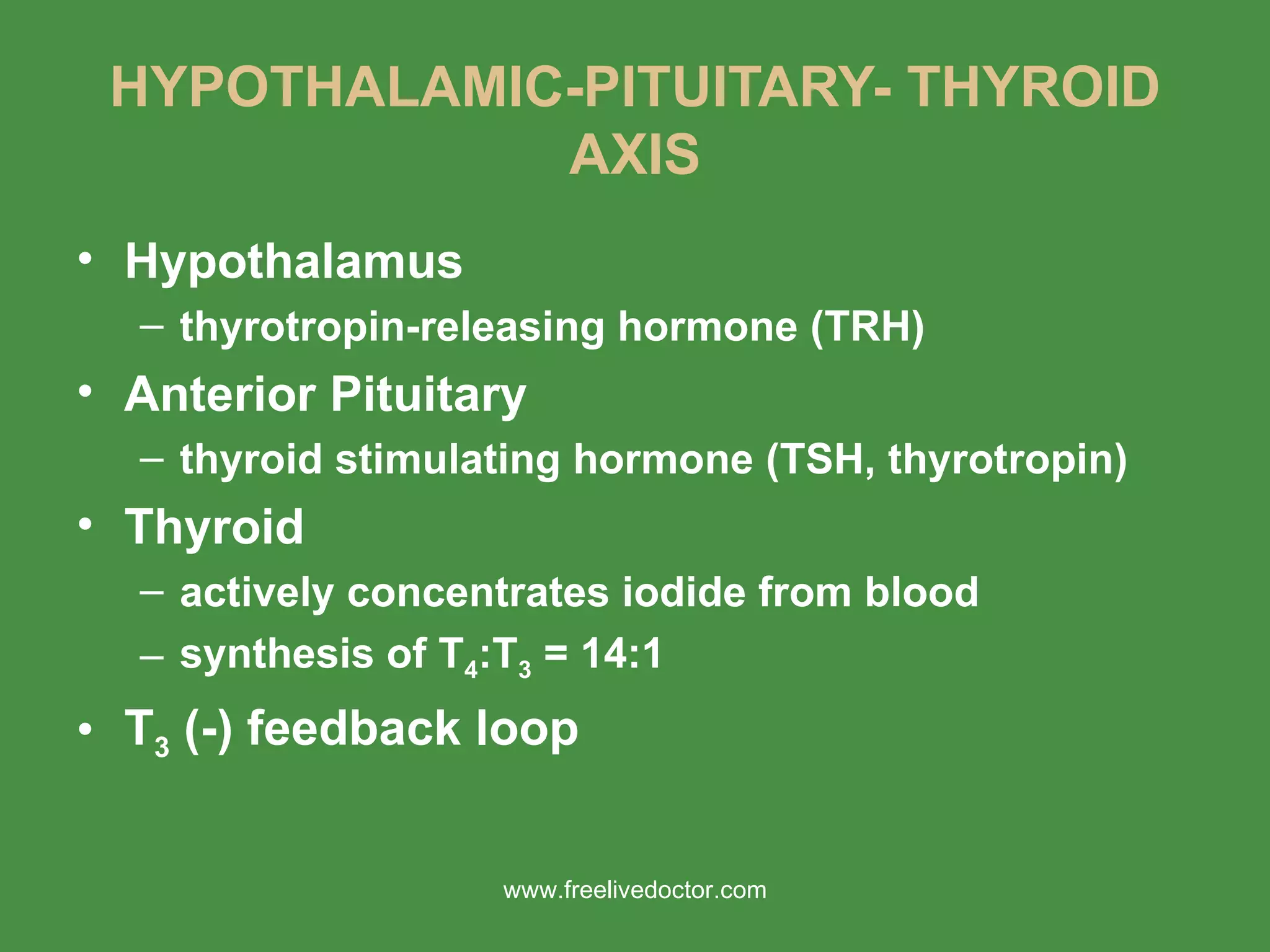
HYPOTHALAMIC-PITUITARY- THYROID AXIS Hypothalamus thyrotropin-releasing hormone (TRH) Anterior Pituitary thyroid stimulating hormone (TSH, thyrotropin)  Thyroid actively concentrates iodide from blood synthesis of T 4 :T 3  = 14:1 T 3  (-) feedback loop www.freelivedoctor.com
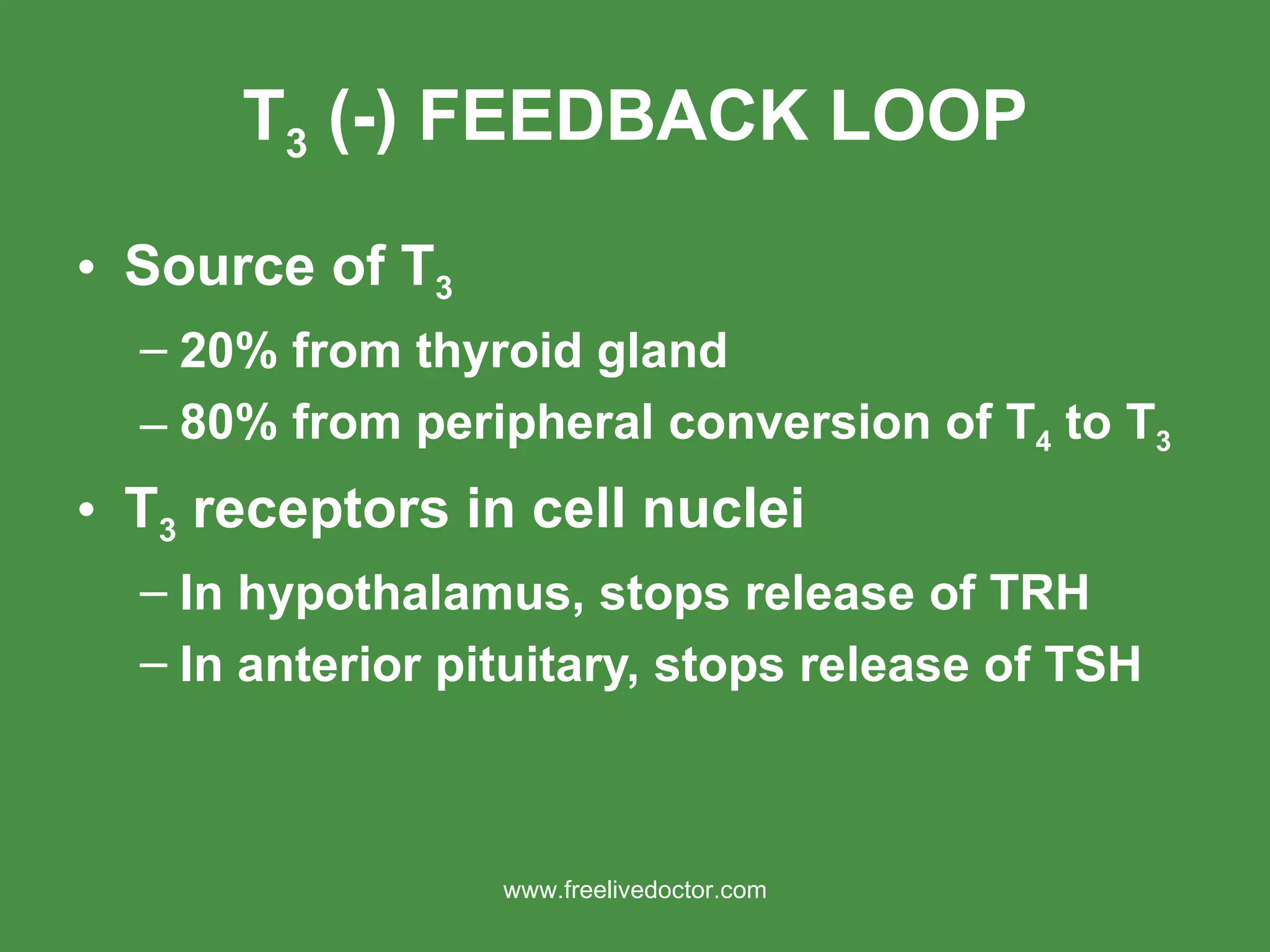
T 3  (-) FEEDBACK LOOP Source of T 3 20% from thyroid gland 80% from peripheral conversion of T 4  to T 3 T 3  receptors in cell nuclei In hypothalamus, stops release of TRH In anterior pituitary, stops release of TSH www.freelivedoctor.com
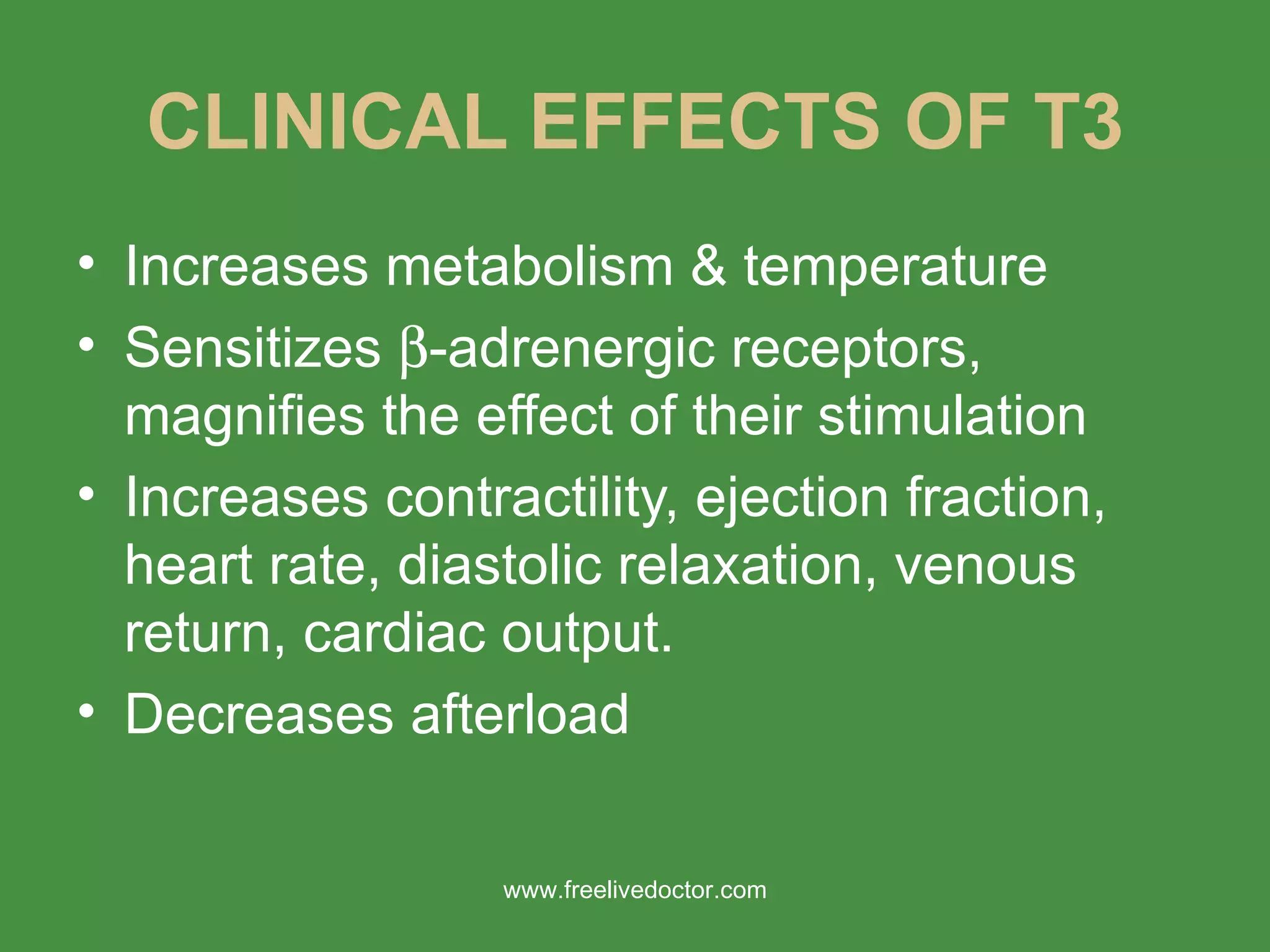
CLINICAL EFFECTS OF T3 Increases metabolism & temperature Sensitizes   -adrenergic receptors, magnifies the effect of their stimulation Increases contractility, ejection fraction, heart rate, diastolic relaxation, venous return, cardiac output. Decreases afterload www.freelivedoctor.com
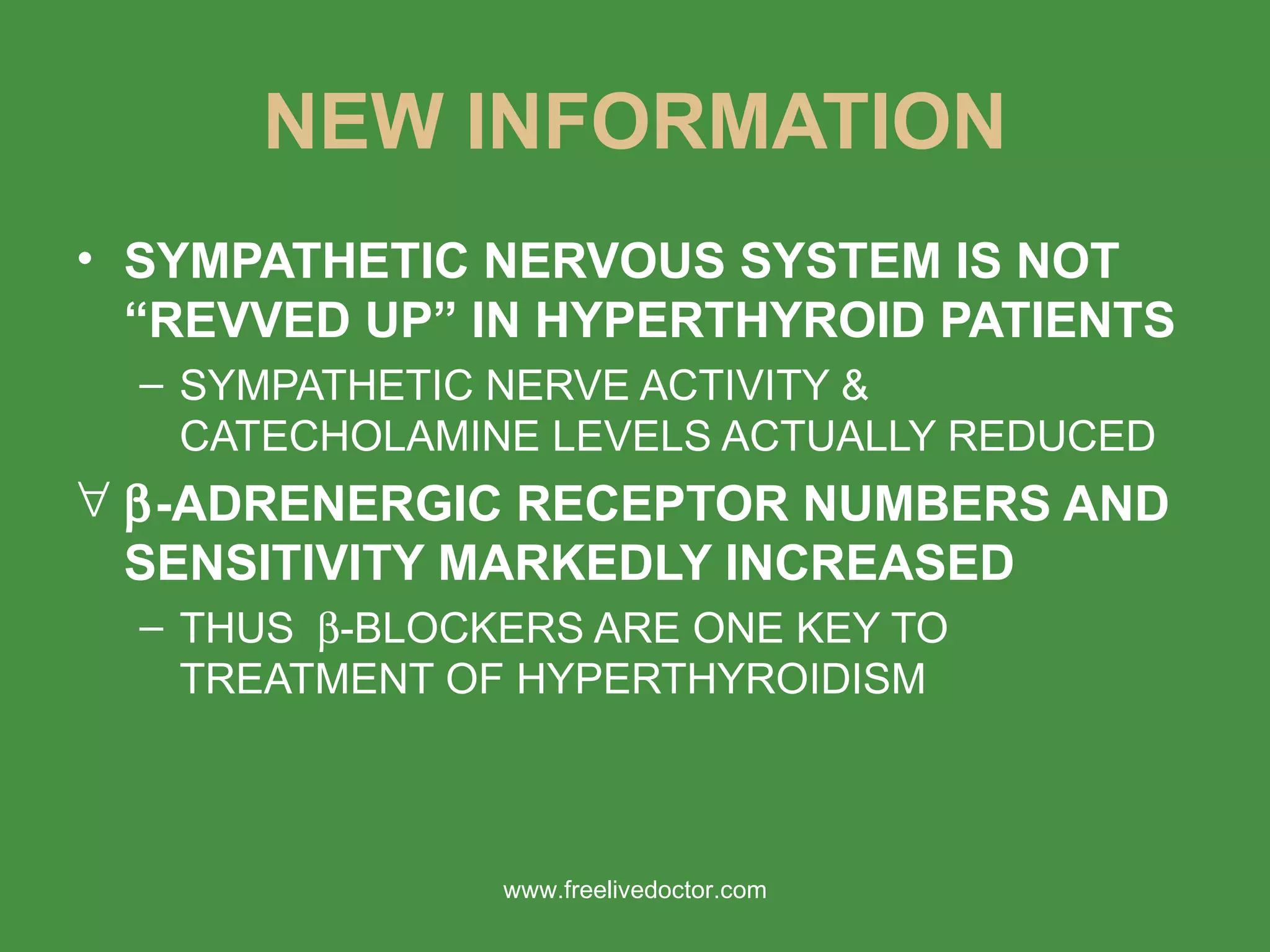
NEW INFORMATION SYMPATHETIC NERVOUS SYSTEM IS NOT “REVVED UP” IN HYPERTHYROID PATIENTS SYMPATHETIC NERVE ACTIVITY & CATECHOLAMINE LEVELS ACTUALLY REDUCED  -ADRENERGIC RECEPTOR NUMBERS AND SENSITIVITY MARKEDLY INCREASED THUS   -BLOCKERS ARE ONE KEY TO TREATMENT OF HYPERTHYROIDISM www.freelivedoctor.com
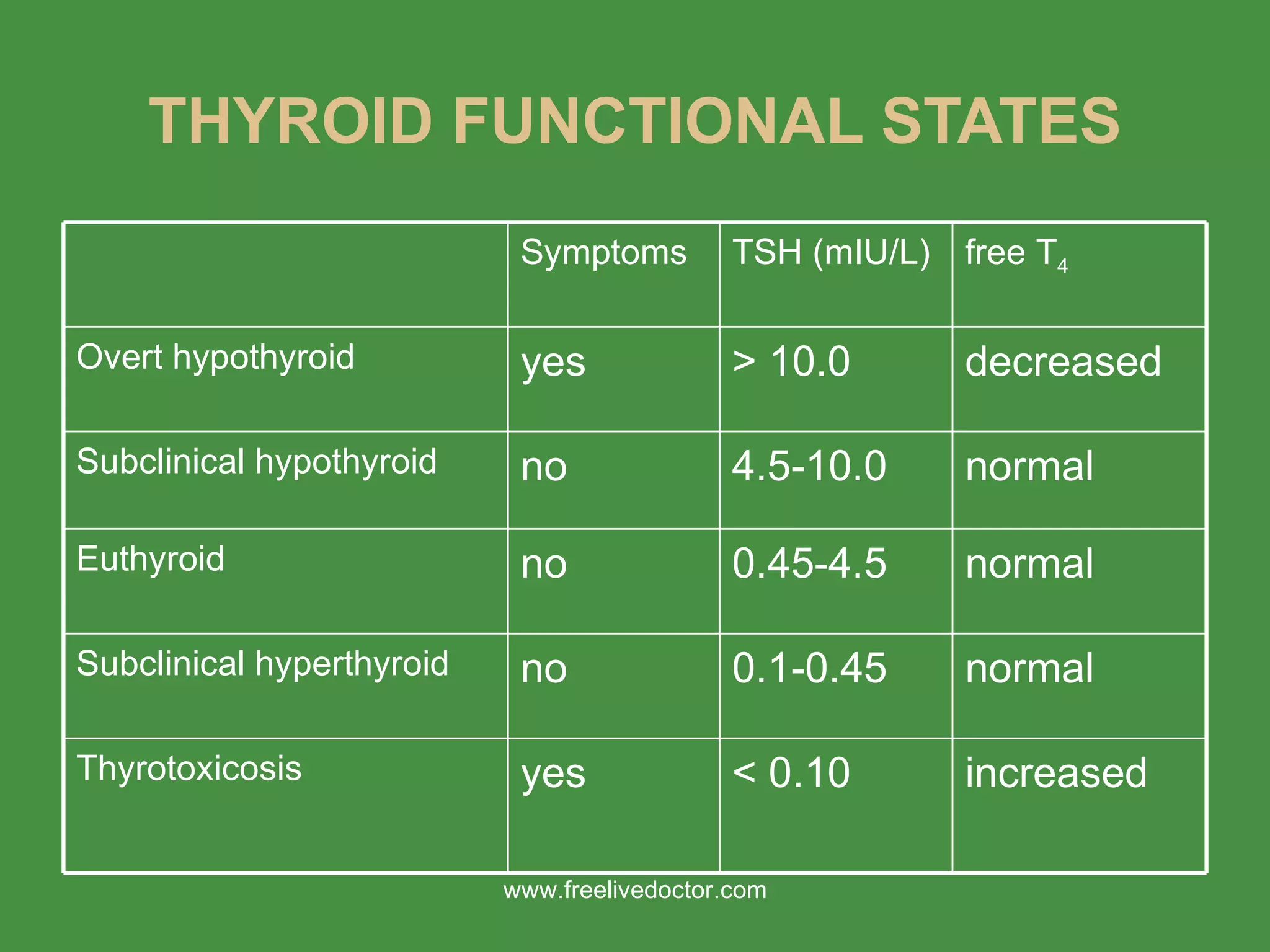
THYROID FUNCTIONAL STATES www.freelivedoctor.com Symptoms TSH (mIU/L) free T 4 Overt hypothyroid yes > 10.0 decreased Subclinical hypothyroid no 4.5-10.0 normal Euthyroid no 0.45-4.5 normal Subclinical hyperthyroid no 0.1-0.45 normal Thyrotoxicosis yes < 0.10 increased
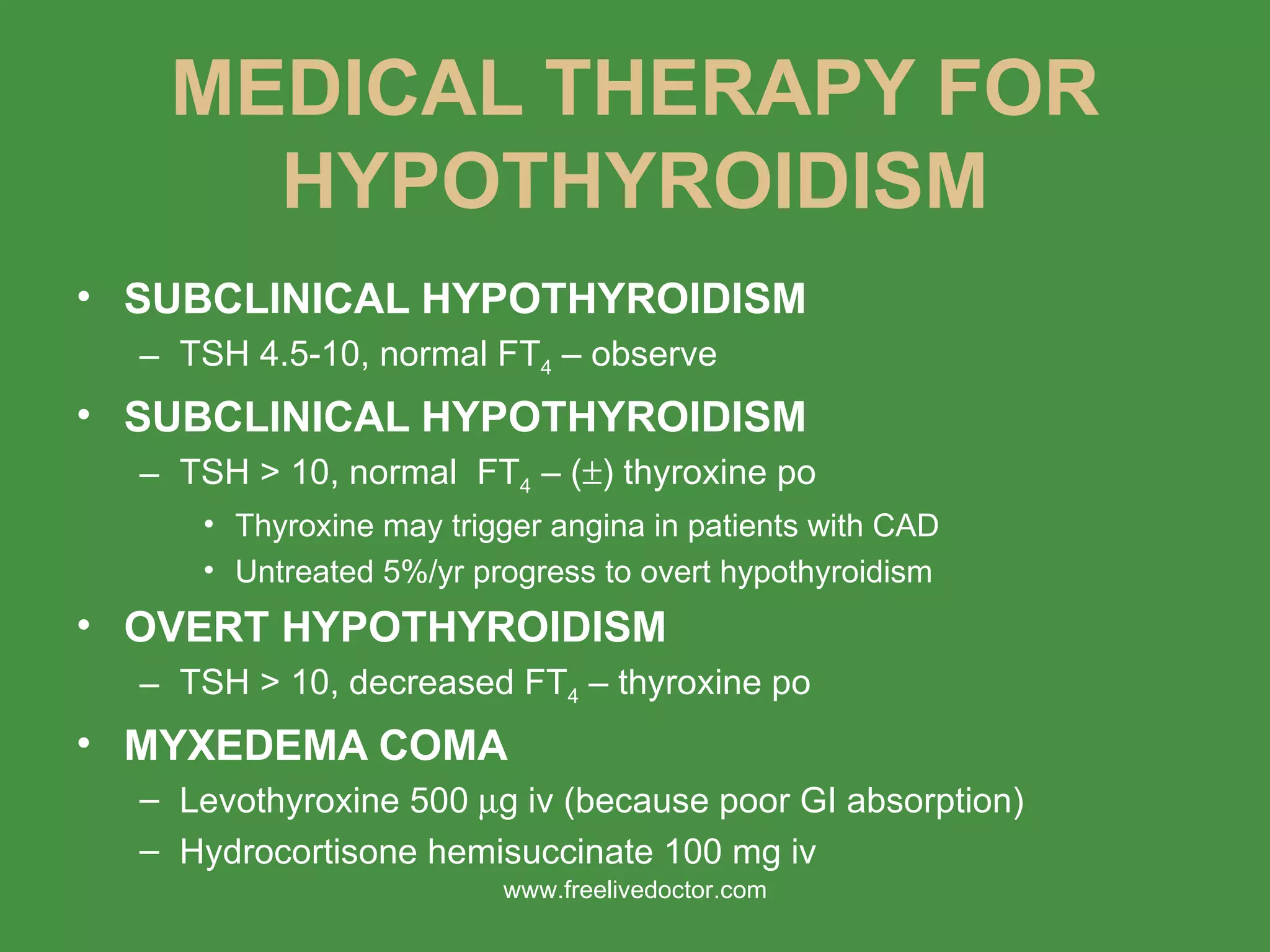
MEDICAL THERAPY FOR HYPOTHYROIDISM SUBCLINICAL HYPOTHYROIDISM TSH 4.5-10, normal FT 4  – observe SUBCLINICAL HYPOTHYROIDISM TSH > 10, normal  FT 4  – (  ) thyroxine po Thyroxine may trigger angina in patients with CAD Untreated 5%/yr progress to overt hypothyroidism OVERT HYPOTHYROIDISM TSH > 10, decreased FT 4  – thyroxine po MYXEDEMA COMA Levothyroxine 500   g iv (because poor GI absorption) Hydrocortisone hemisuccinate 100 mg iv www.freelivedoctor.com
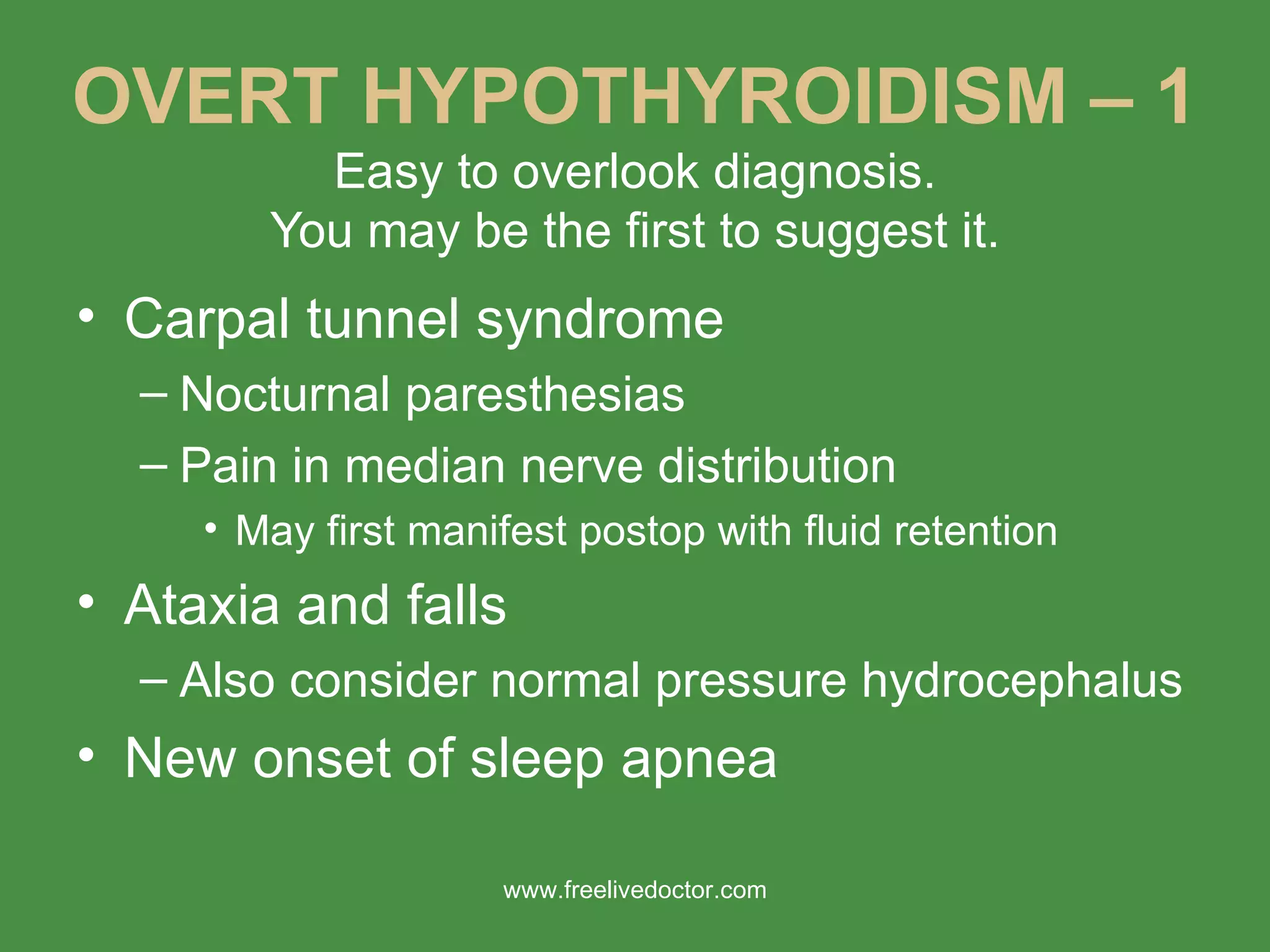
OVERT HYPOTHYROIDISM – 1 Easy to overlook diagnosis. You may be the first to suggest it. Carpal tunnel syndrome Nocturnal paresthesias Pain in median nerve distribution May first manifest postop with fluid retention Ataxia and falls Also consider normal pressure hydrocephalus New onset of sleep apnea www.freelivedoctor.com
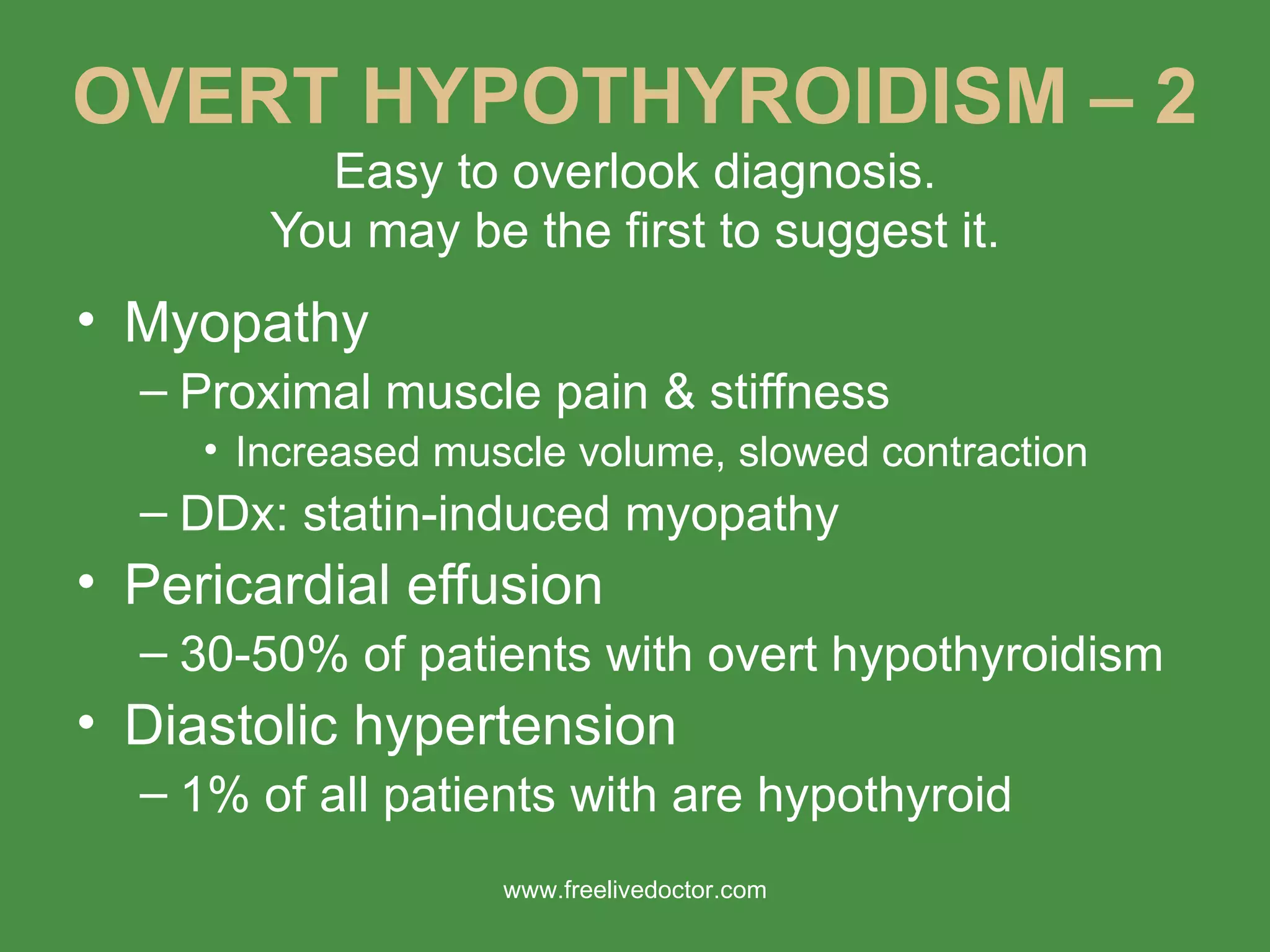
OVERT HYPOTHYROIDISM – 2 Easy to overlook diagnosis. You may be the first to suggest it. Myopathy Proximal muscle pain & stiffness Increased muscle volume, slowed contraction DDx: statin-induced myopathy Pericardial effusion 30-50% of patients with overt hypothyroidism Diastolic hypertension 1% of all patients with are hypothyroid www.freelivedoctor.com
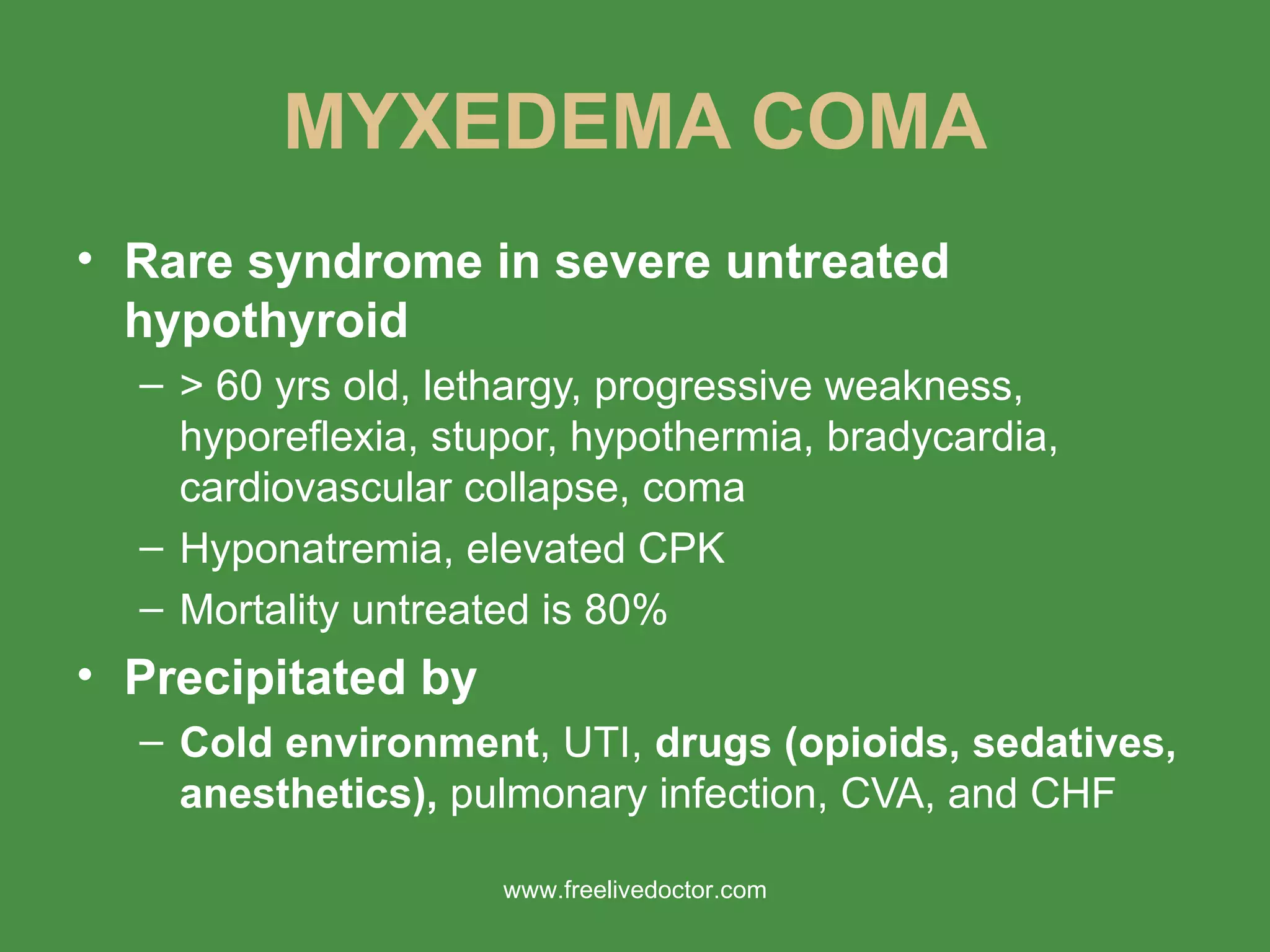
MYXEDEMA COMA Rare syndrome in severe untreated hypothyroid > 60 yrs old, lethargy, progressive weakness, hyporeflexia, stupor, hypothermia, bradycardia, cardiovascular collapse, coma Hyponatremia, elevated CPK Mortality untreated is 80% Precipitated by Cold environment , UTI,  drugs (opioids, sedatives, anesthetics),  pulmonary infection, CVA, and CHF www.freelivedoctor.com
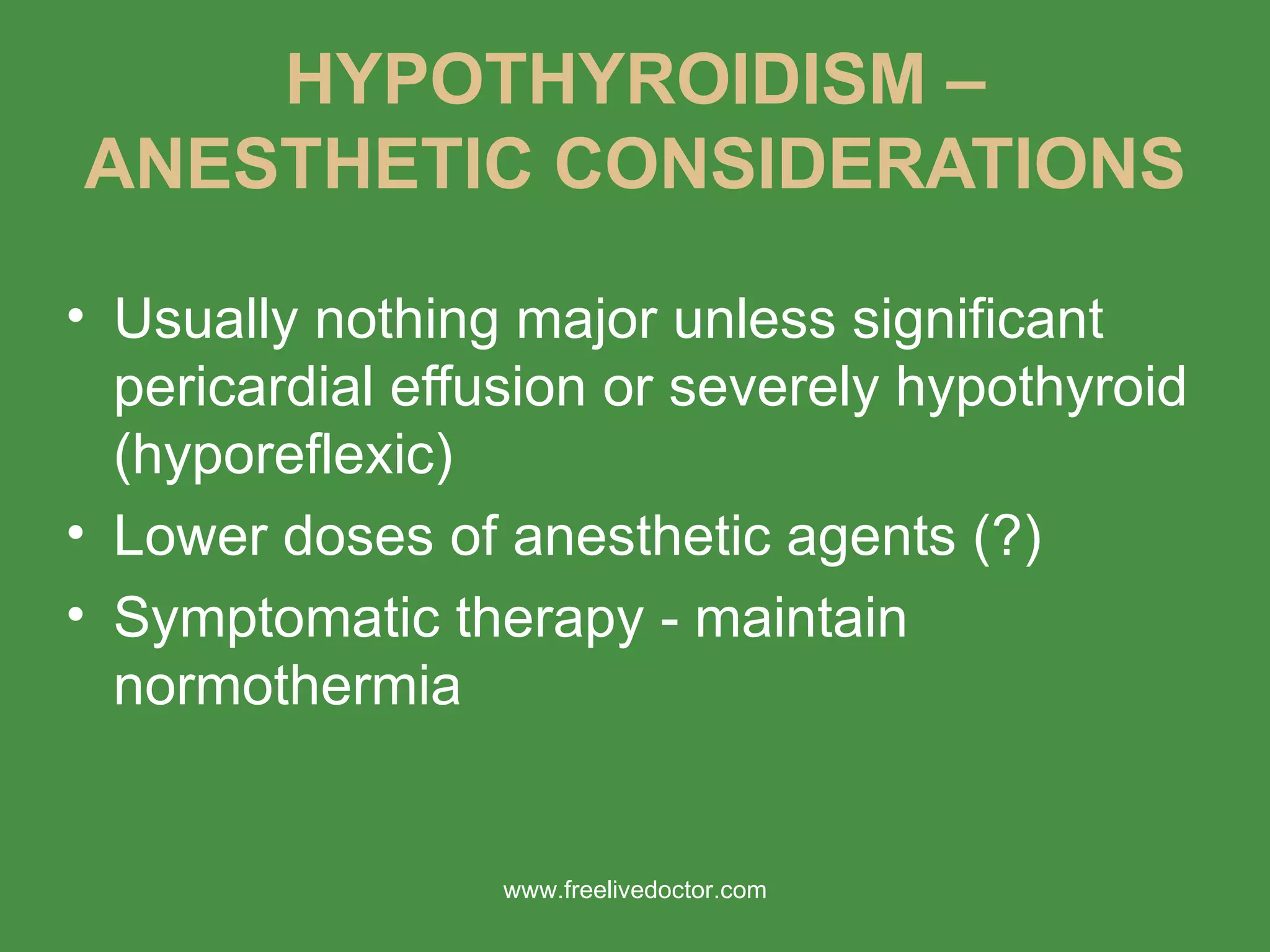
HYPOTHYROIDISM – ANESTHETIC CONSIDERATIONS Usually nothing major unless significant pericardial effusion or severely hypothyroid (hyporeflexic) Lower doses of anesthetic agents (?) Symptomatic therapy - maintain normothermia www.freelivedoctor.com
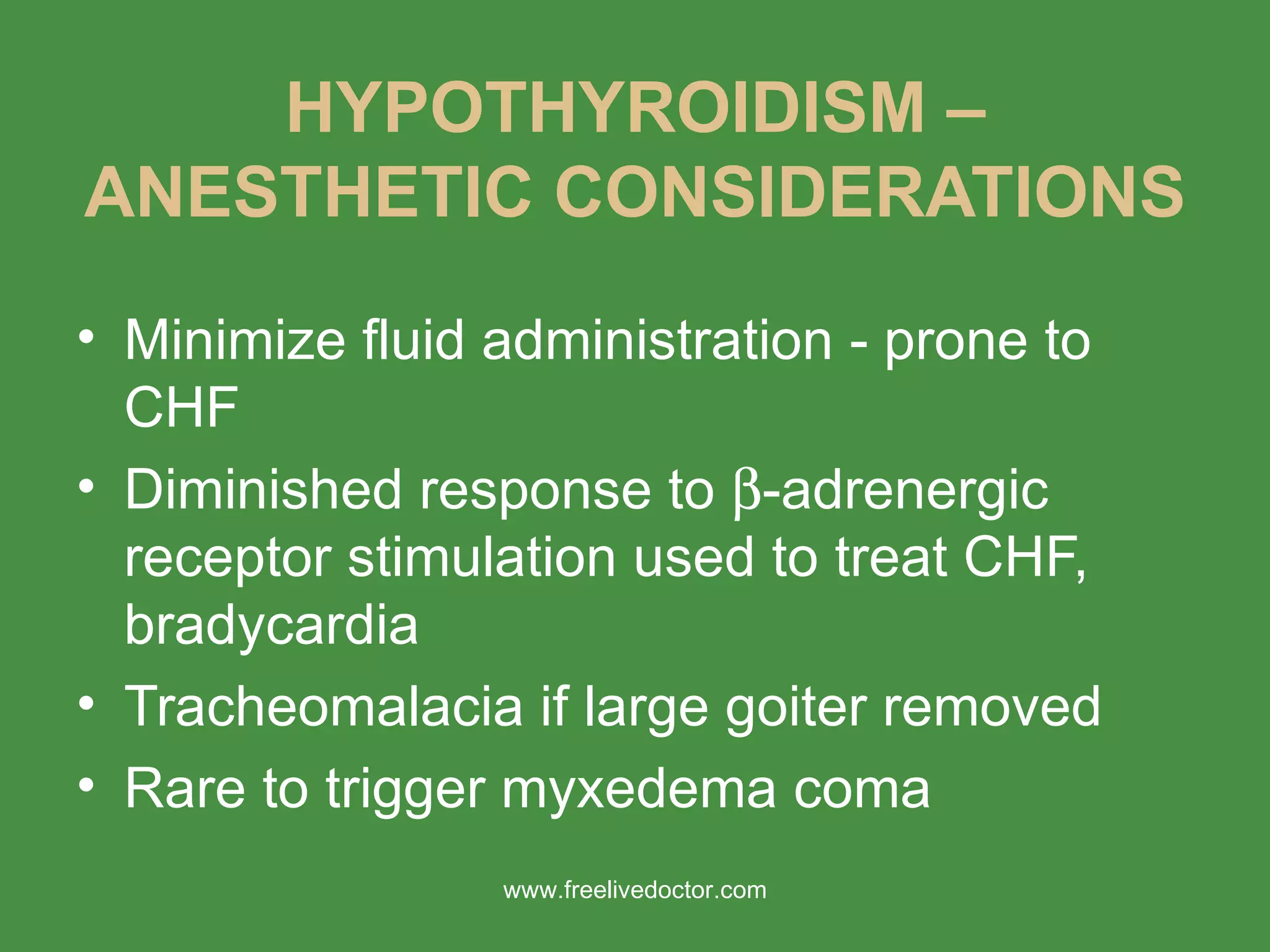
HYPOTHYROIDISM – ANESTHETIC CONSIDERATIONS Minimize fluid administration - prone to CHF Diminished response to   -adrenergic receptor stimulation used to treat CHF, bradycardia Tracheomalacia if large goiter removed Rare to trigger myxedema coma www.freelivedoctor.com
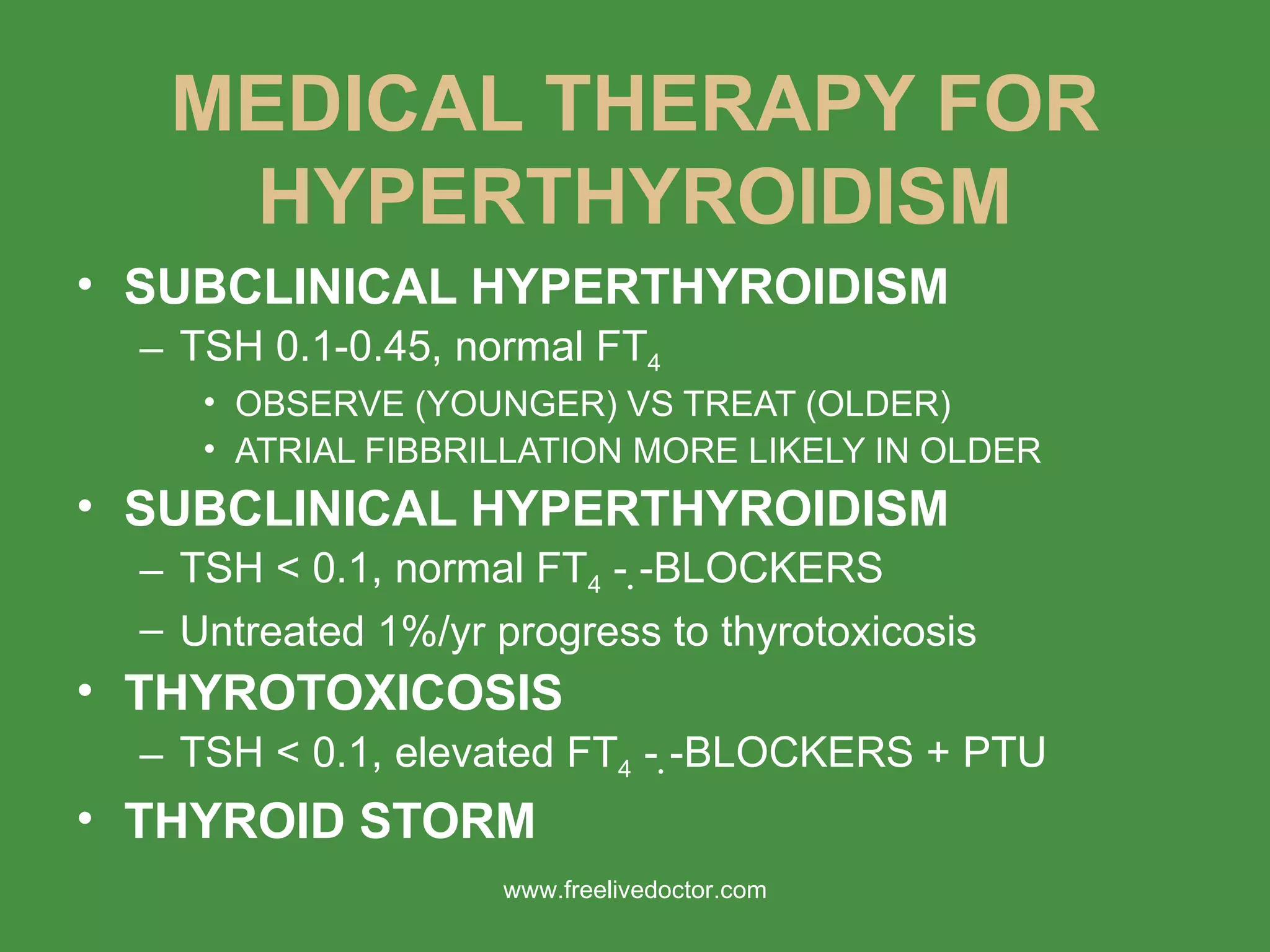
MEDICAL THERAPY FOR HYPERTHYROIDISM SUBCLINICAL HYPERTHYROIDISM TSH 0.1-0.45, normal FT 4 OBSERVE (YOUNGER) VS TREAT (OLDER) ATRIAL FIBBRILLATION MORE LIKELY IN OLDER SUBCLINICAL HYPERTHYROIDISM TSH < 0.1, normal FT 4  -   -BLOCKERS Untreated 1%/yr progress to thyrotoxicosis THYROTOXICOSIS TSH < 0.1, elevated FT 4  -   -BLOCKERS + PTU THYROID STORM www.freelivedoctor.com
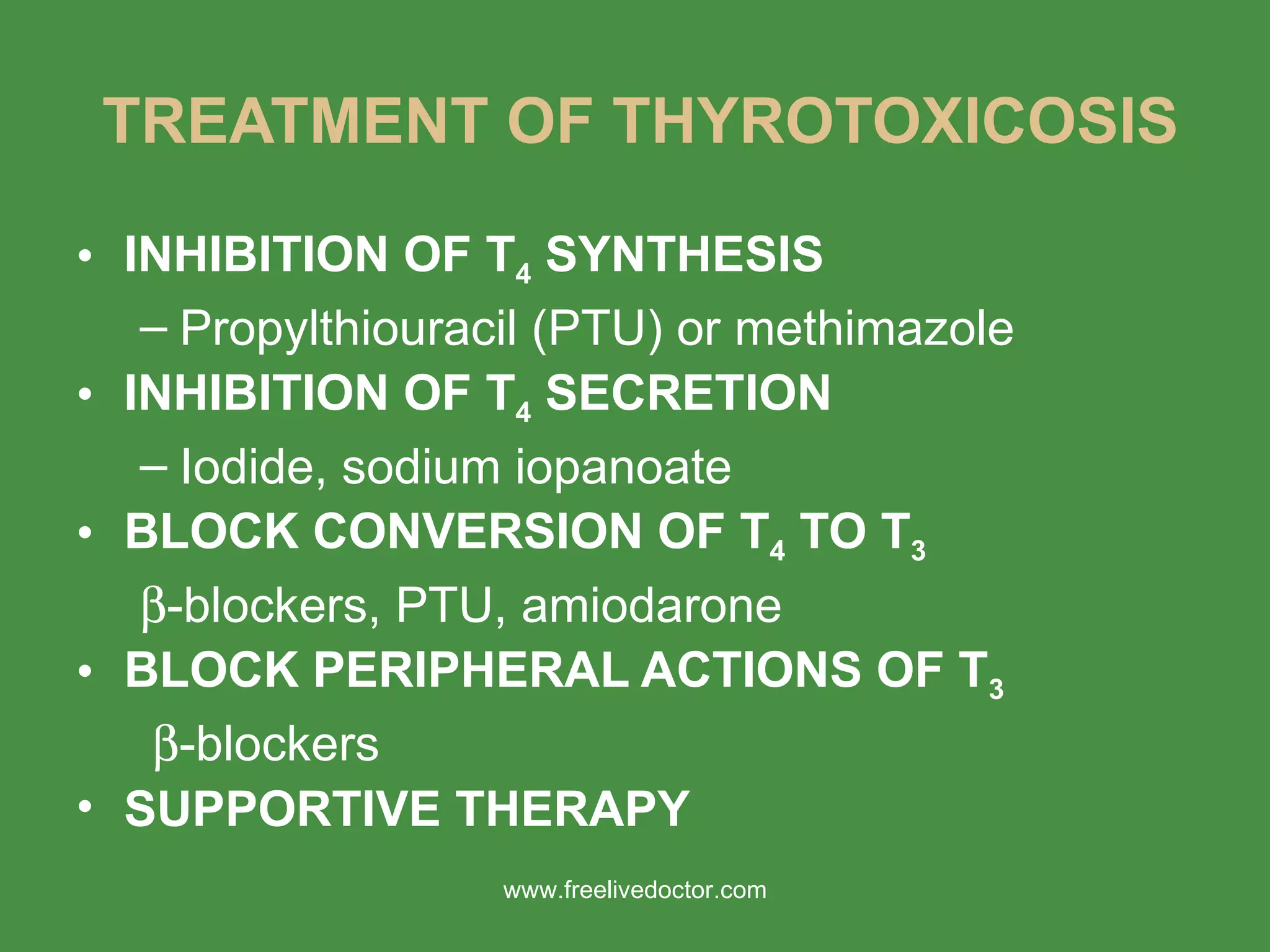
TREATMENT OF THYROTOXICOSIS INHIBITION OF T 4  SYNTHESIS Propylthiouracil (PTU) or methimazole INHIBITION OF T 4  SECRETION Iodide, sodium iopanoate  BLOCK CONVERSION OF T 4  TO T 3  -blockers, PTU, amiodarone BLOCK PERIPHERAL ACTIONS OF T 3  -blockers SUPPORTIVE THERAPY www.freelivedoctor.com
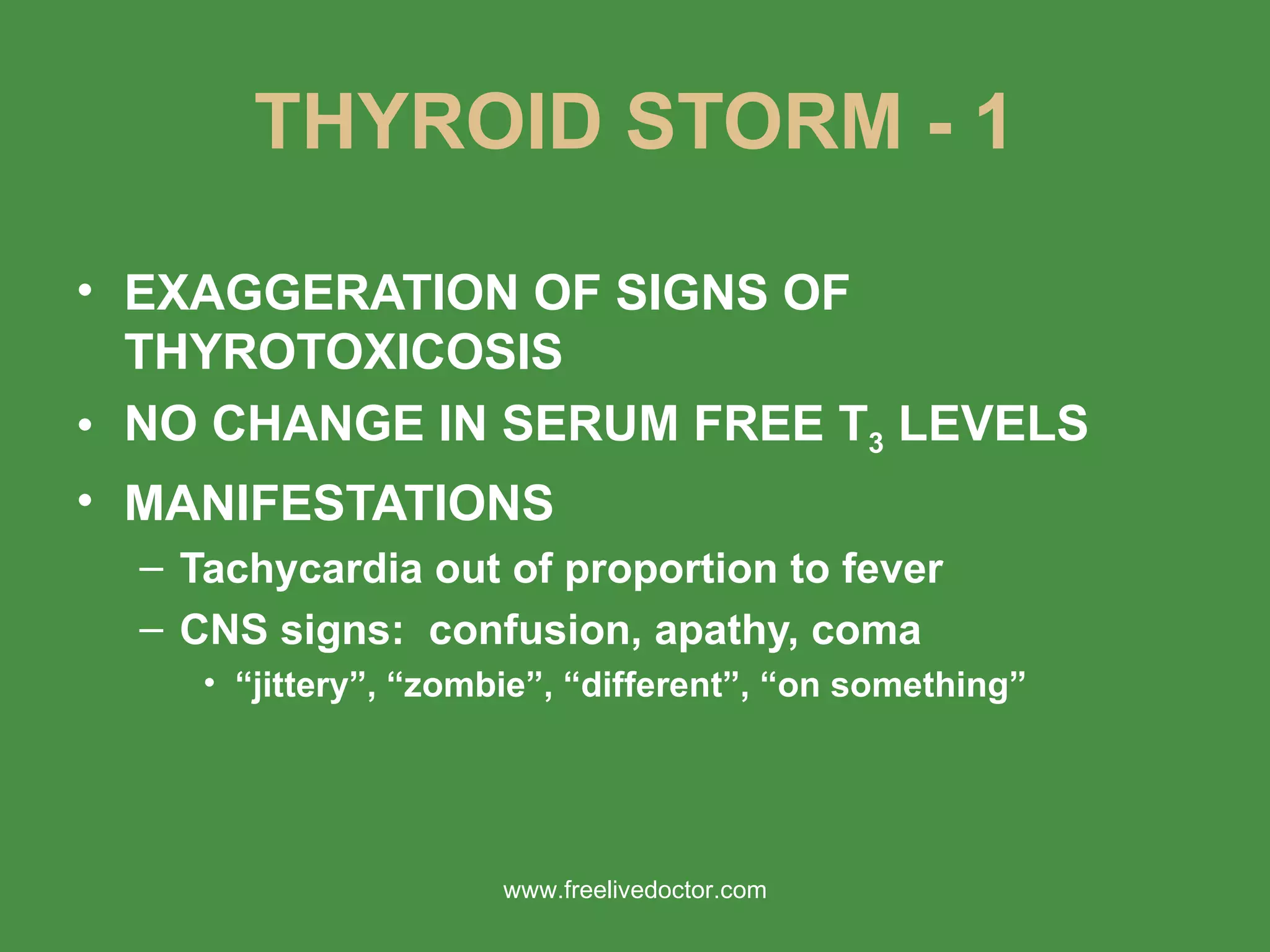
THYROID STORM - 1 EXAGGERATION OF SIGNS OF THYROTOXICOSIS NO CHANGE IN SERUM FREE T 3  LEVELS MANIFESTATIONS Tachycardia out of proportion to fever CNS signs:  confusion, apathy, coma “ jittery”, “zombie”, “different”, “on something” www.freelivedoctor.com
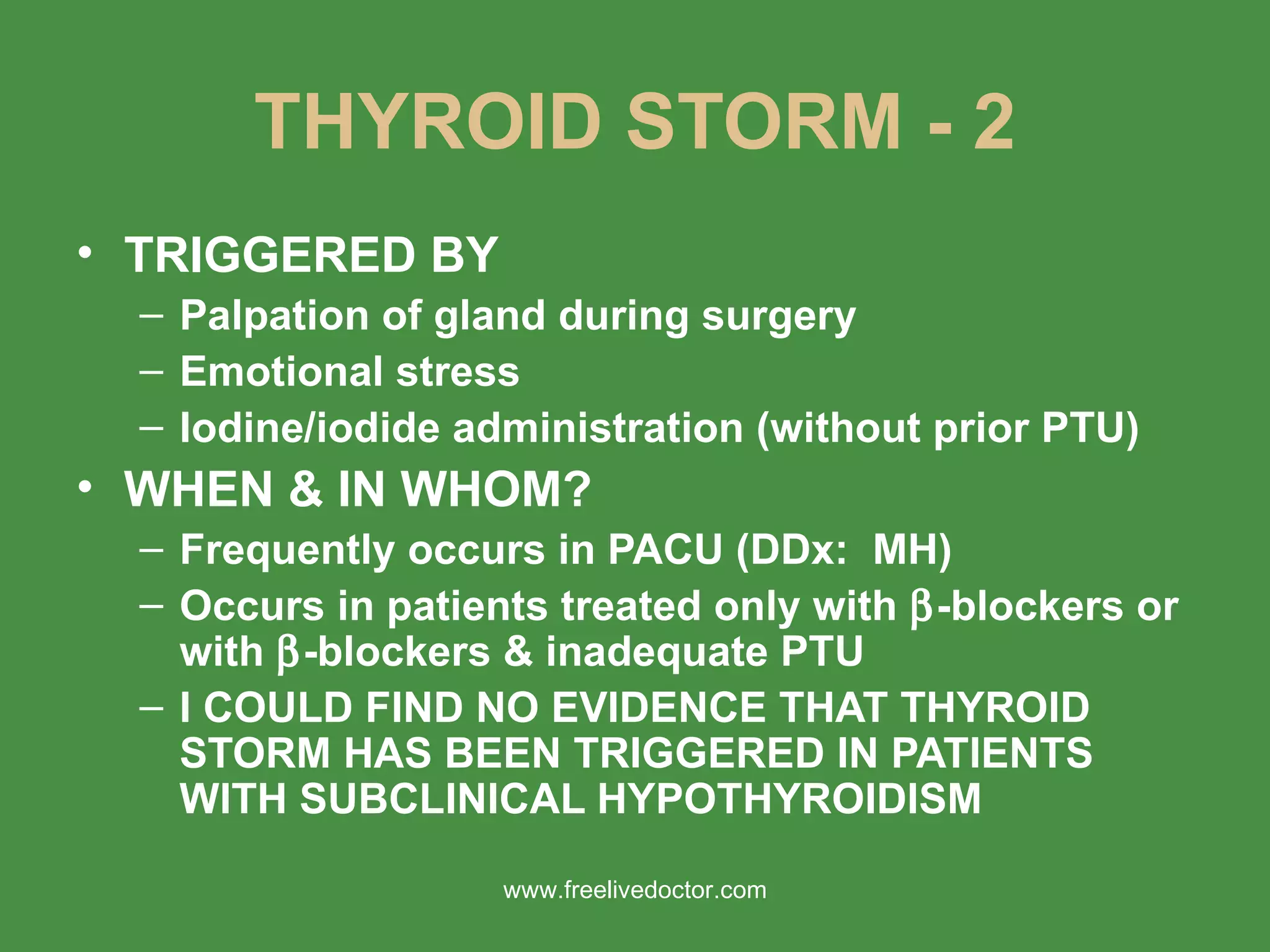
THYROID STORM - 2 TRIGGERED BY Palpation of gland during surgery Emotional stress Iodine/iodide administration (without prior PTU) WHEN & IN WHOM? Frequently occurs in PACU (DDx:  MH) Occurs in patients treated only with   -blockers or with   -blockers & inadequate PTU I COULD FIND NO EVIDENCE THAT THYROID STORM HAS BEEN TRIGGERED IN PATIENTS WITH SUBCLINICAL HYPOTHYROIDISM www.freelivedoctor.com
CASE PRESENTATION - 1 33-yr-old woman presents to PCP Headaches, palpitations, dizziness,diarrhea,severe mood swings Initial worry was substance abuse II-III/VI systolic pulmonic flow murmur ECG: 147 bpm (sinus tachycardia), APCs LVH (voltage criteria) TSH < 0.1, markedly elevated free T 4  & T 3   www.freelivedoctor.com
CASE PRESENTATION - 2 Initial Treatment PTU 200 mg po tid propanolol 60 mg po tid discharged on day 4 when HR < 100 bpm Plan was to stabilize and give radioactive iodine www.freelivedoctor.com
CASE PRESENTATION - 3 Readmitted <1 month later non-compliant (common if severe) emotionally labile (concern re storm) HR 142 bpm (sinus tachycardia) scheduled for surgery www.freelivedoctor.com
CASE PRESENTATION - 4 Pharmacologic preparation for surgery PTU & propranolol as before dexamethasone SSKI supersaturated solution of potassium iodide www.freelivedoctor.com
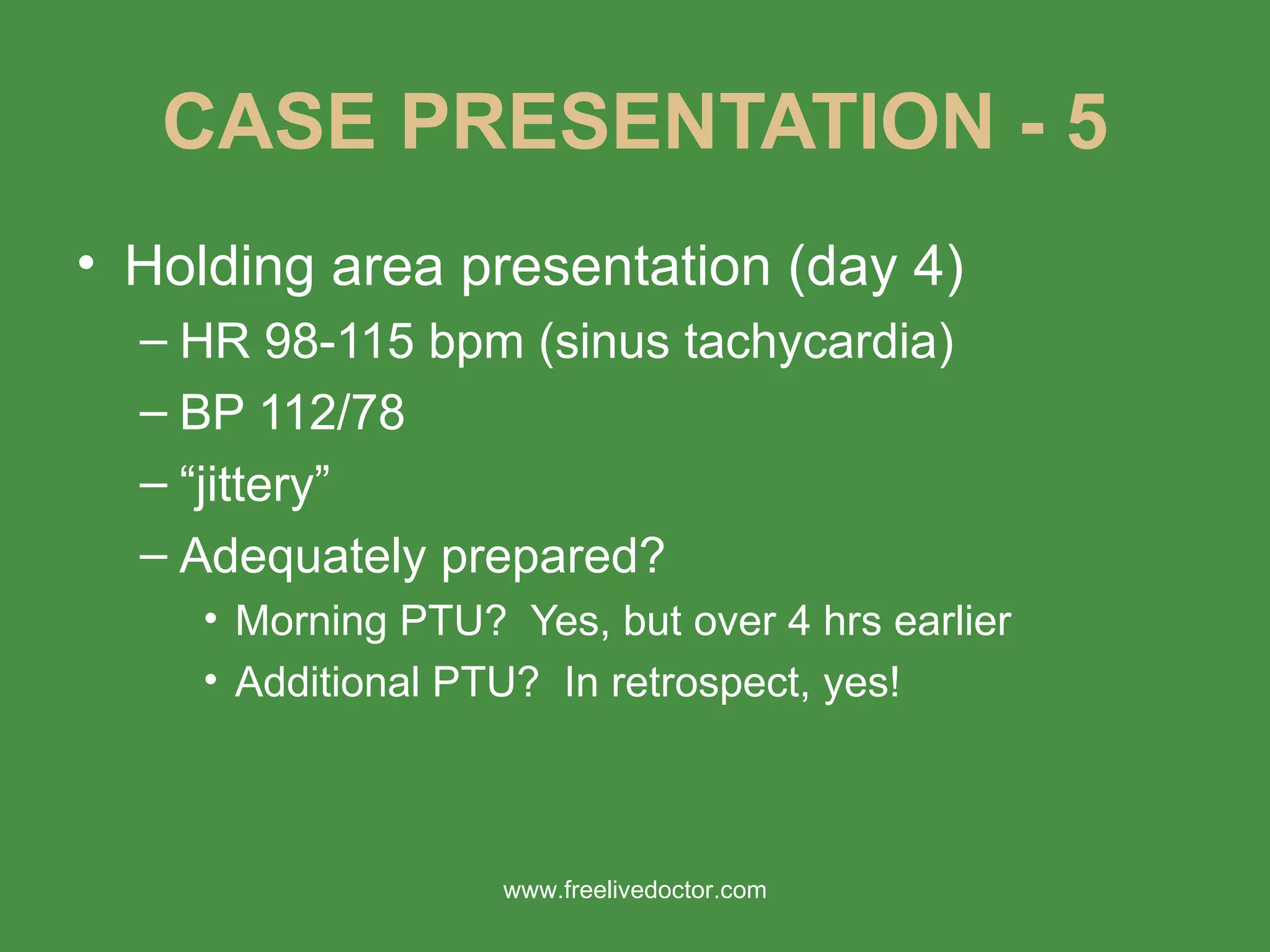
CASE PRESENTATION - 5 Holding area presentation (day 4) HR 98-115 bpm (sinus tachycardia) BP 112/78 “ jittery” Adequately prepared? Morning PTU?  Yes, but over 4 hrs earlier Additional PTU?  In retrospect, yes! www.freelivedoctor.com
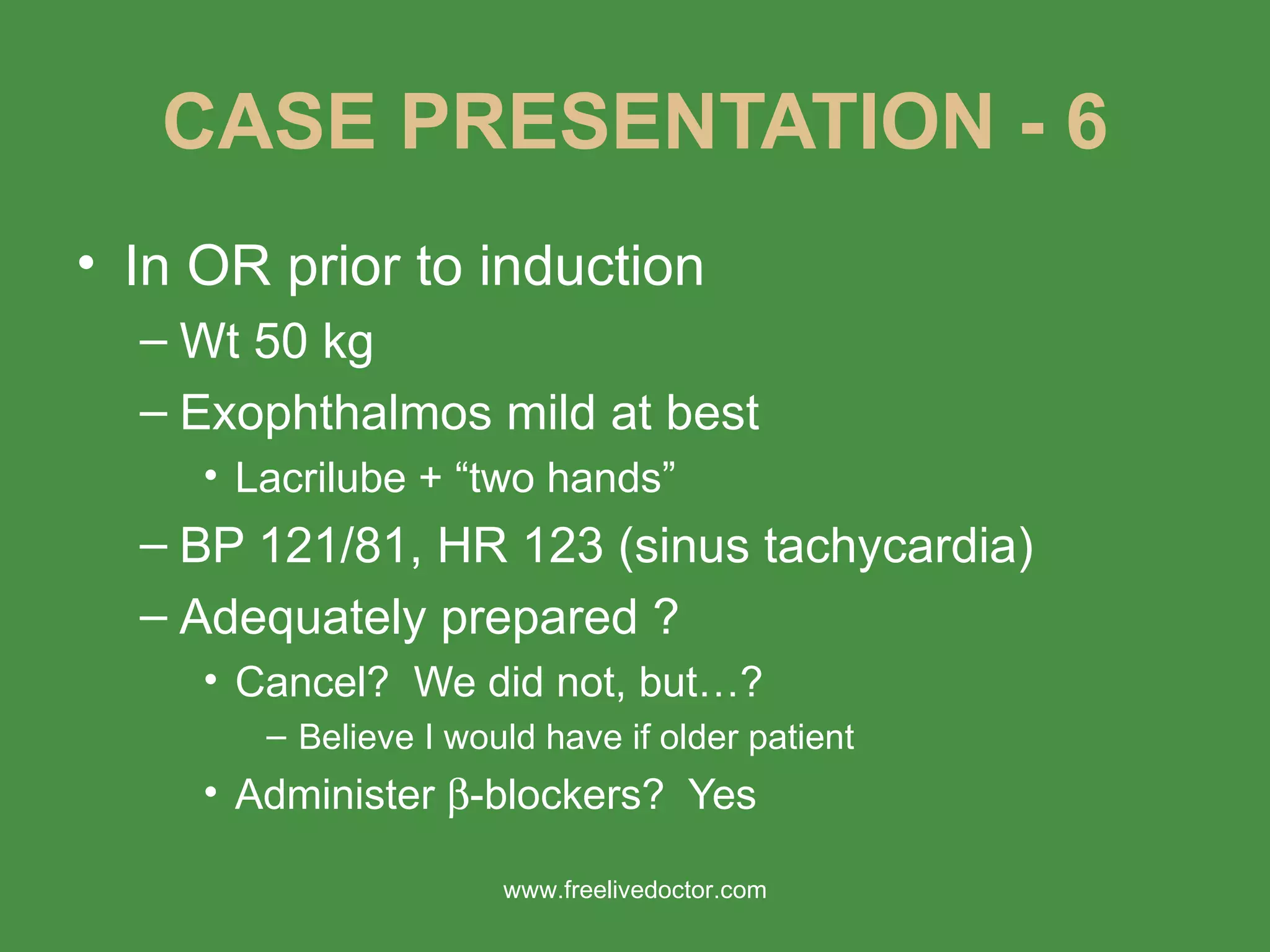
CASE PRESENTATION - 6 In OR prior to induction Wt 50 kg Exophthalmos mild at best Lacrilube + “two hands” BP 121/81, HR 123 (sinus tachycardia) Adequately prepared ? Cancel?  We did not, but…? Believe I would have if older patient Administer   -blockers?  Yes www.freelivedoctor.com
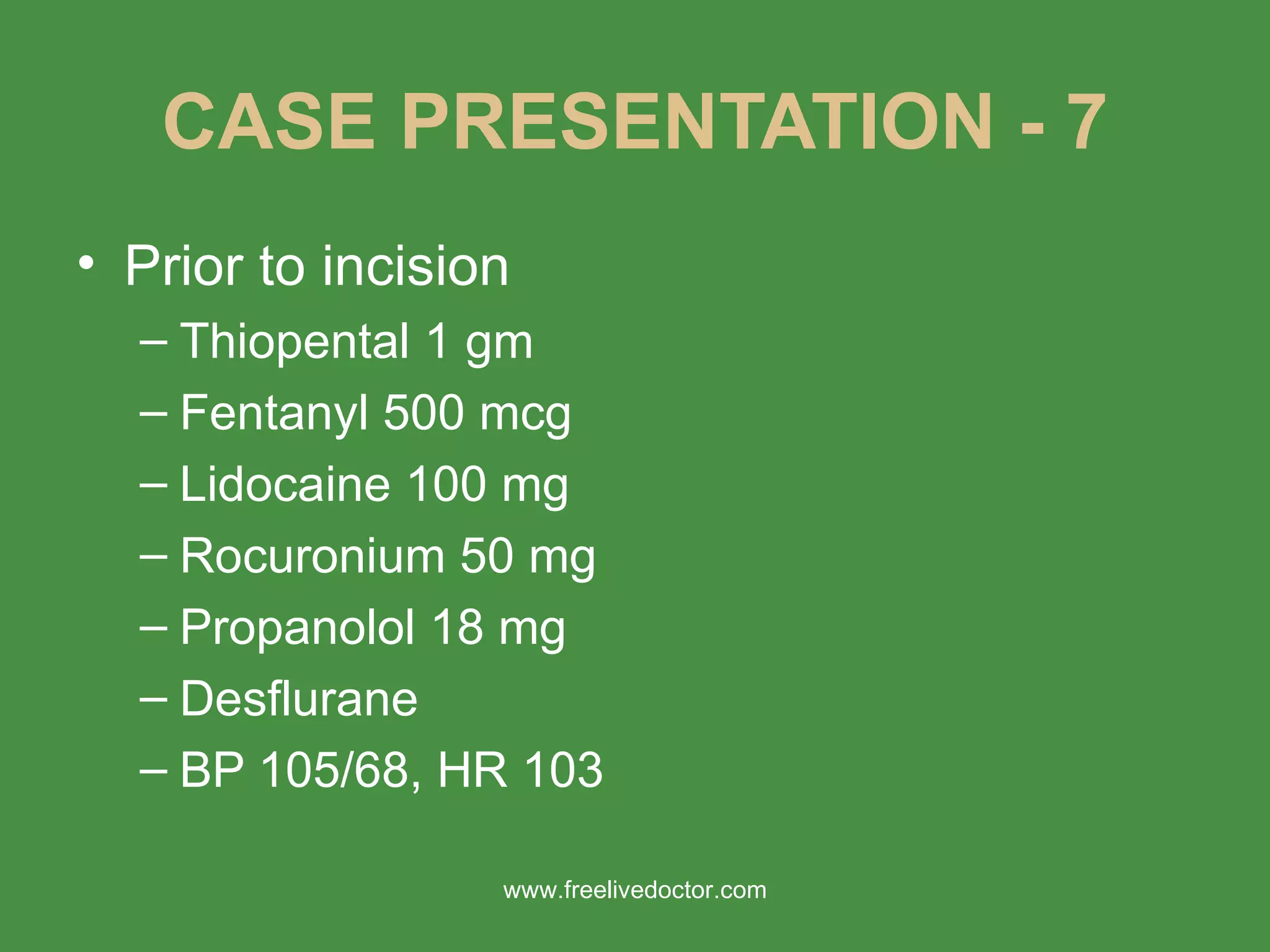
CASE PRESENTATION - 7 Prior to incision Thiopental 1 gm Fentanyl 500 mcg Lidocaine 100 mg Rocuronium 50 mg Propanolol 18 mg Desflurane BP 105/68, HR 103 www.freelivedoctor.com
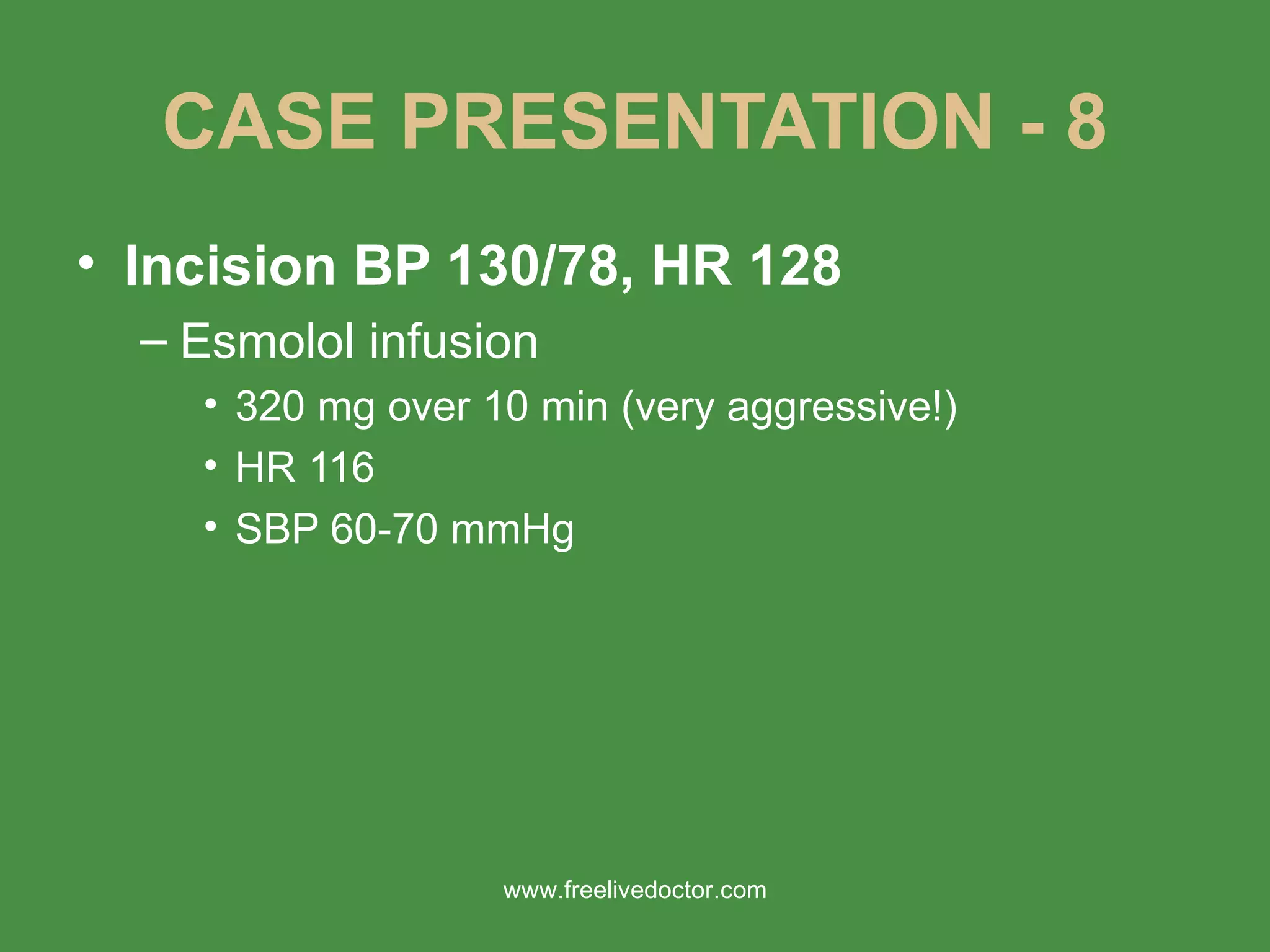
CASE PRESENTATION - 8 Incision BP 130/78, HR 128 Esmolol infusion 320 mg over 10 min (very aggressive!) HR 116 SBP 60-70 mmHg www.freelivedoctor.com
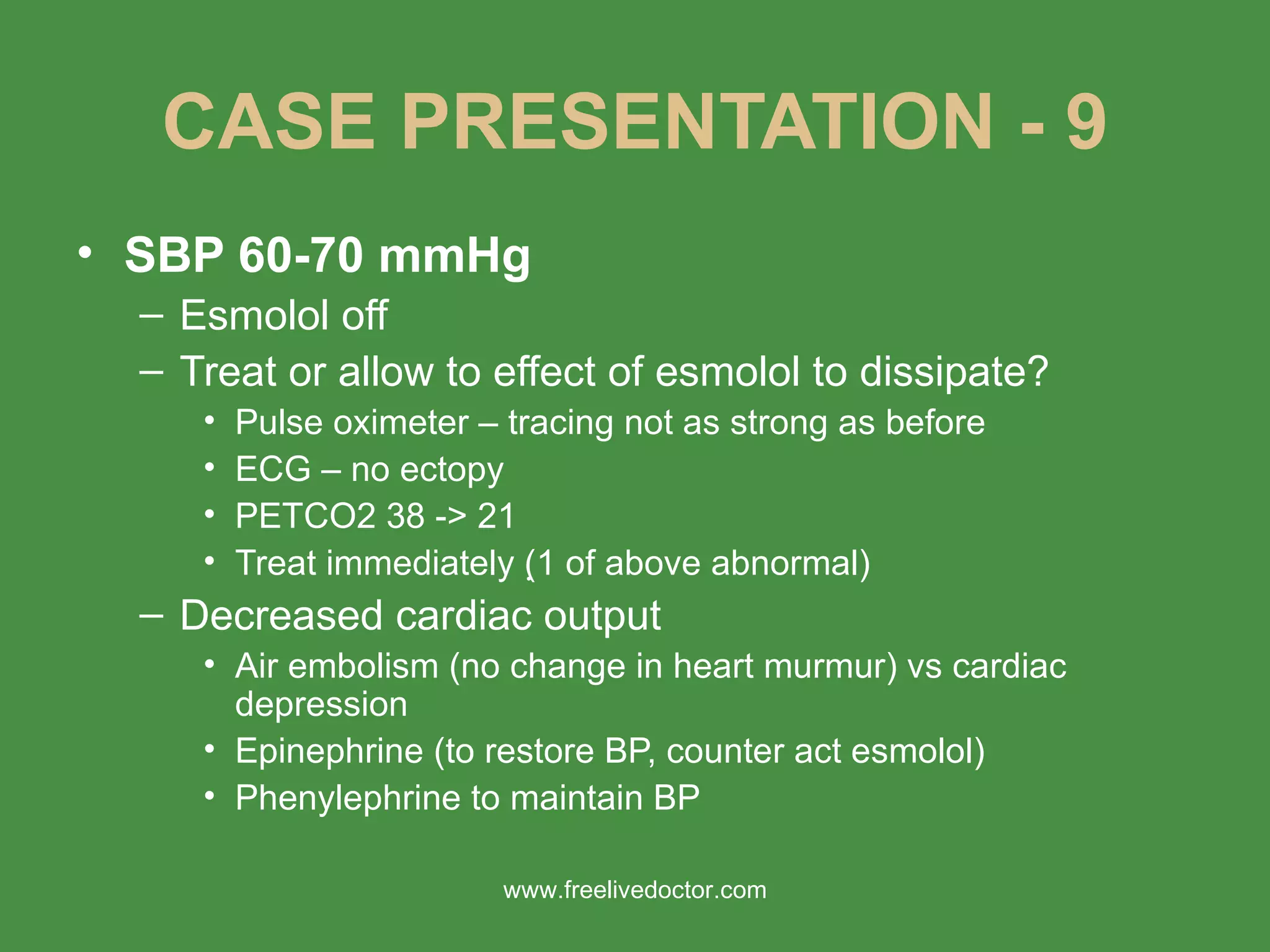
CASE PRESENTATION - 9 SBP 60-70 mmHg Esmolol off Treat or allow to effect of esmolol to dissipate? Pulse oximeter – tracing not as strong as before ECG – no ectopy PETCO2 38 -> 21 Treat immediately (  1 of above abnormal) Decreased cardiac output Air embolism (no change in heart murmur) vs cardiac depression Epinephrine (to restore BP, counter act esmolol) Phenylephrine to maintain BP www.freelivedoctor.com
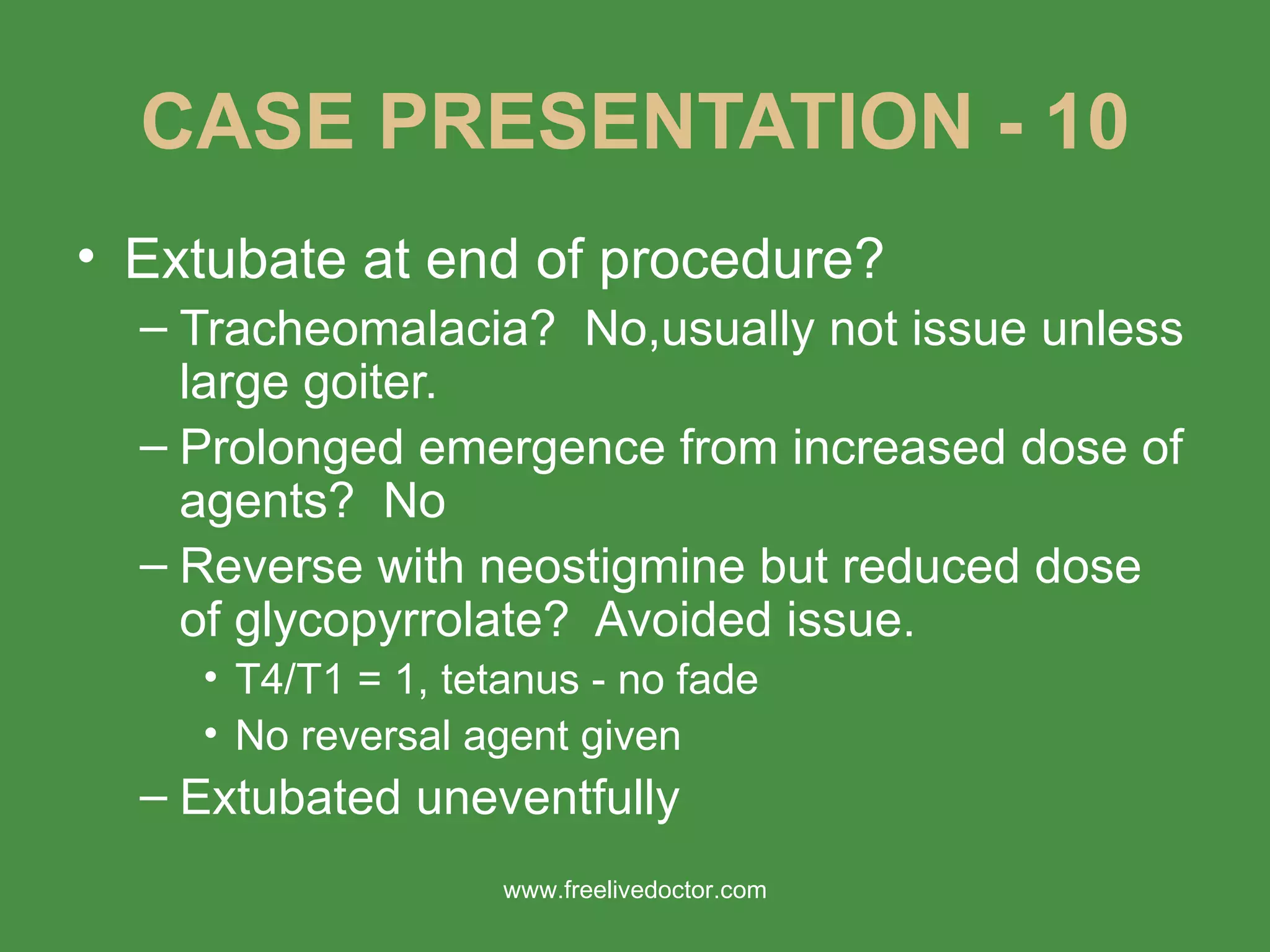
CASE PRESENTATION - 10 Extubate at end of procedure? Tracheomalacia?  No,usually not issue unless large goiter. Prolonged emergence from increased dose of agents?  No Reverse with neostigmine but reduced dose of glycopyrrolate?  Avoided issue. T4/T1 = 1, tetanus - no fade No reversal agent given Extubated uneventfully www.freelivedoctor.com
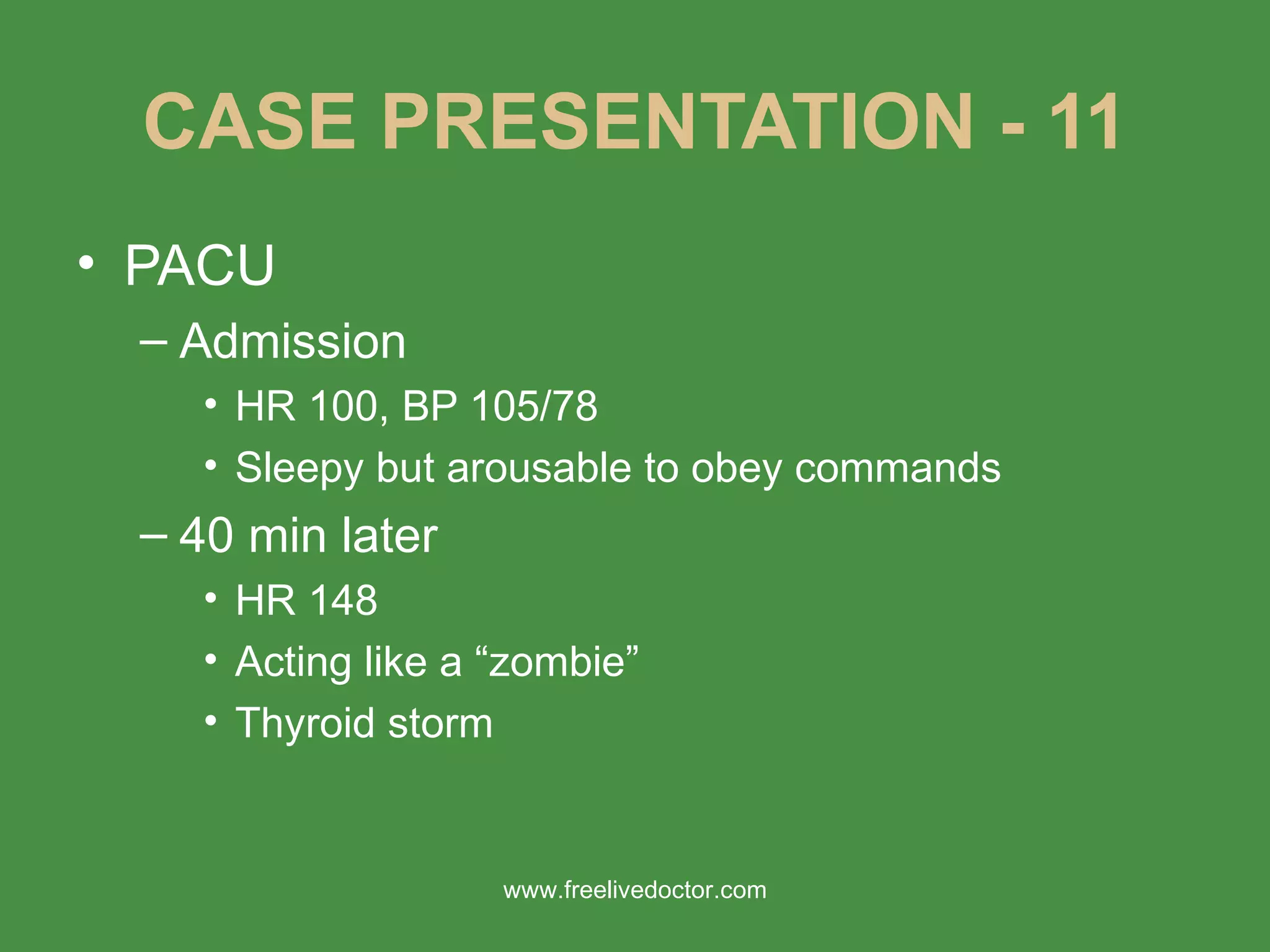
CASE PRESENTATION - 11 PACU Admission HR 100, BP 105/78 Sleepy but arousable to obey commands 40 min later HR 148 Acting like a “zombie” Thyroid storm www.freelivedoctor.com

Hypo & hyperthyriodism

  • 1.
    HYPER- & HYPOTHYROIDISMWHAT YOU NEED TO KNOW www.freelivedoctor.com
  • 2.
    BAD PUNS FORMARDI GRAS Practice safe eating – always use condiments. Remember that dancing cheek to cheek is really a form of floor play. Condoms should be used on every conceivable occasion. A hangover is the wrath of grapes. www.freelivedoctor.com
  • 3.
    OVERVIEW Review ofthyroid physiology Definition of thyroid functional states Hypothyroidism - anesthetic concerns Hyperthyroidism - anesthetic concerns Case presentation www.freelivedoctor.com
  • 4.
    THYROID HORMONES T4 – inactive (prohormone) 3,5,3’,5’-tetraiodothyronine (thyroxine) t 1/2 - 6 days metabolized by deiodinases to T 3 or rT 3 T 3 - active 5’-deiodinase -> 3,5,3’-triiodothryonine t 1/2 - 0.05 days rT 3 - inactive 5-deiodinase -> 3,3’,5’-triiodothyronine www.freelivedoctor.com
  • 5.
    NEW INFORMATION T3 ONLY ACTIVE HORMONE CONSEQUENCE ONE KEY TO TREATING THYROID STORM IS TO BLOCK CONVERSION OF T 4 TO T 3 www.freelivedoctor.com
  • 6.
    HYPOTHALAMIC-PITUITARY- THYROID AXISHypothalamus thyrotropin-releasing hormone (TRH) Anterior Pituitary thyroid stimulating hormone (TSH, thyrotropin) Thyroid actively concentrates iodide from blood synthesis of T 4 :T 3 = 14:1 T 3 (-) feedback loop www.freelivedoctor.com
  • 7.
    T 3 (-) FEEDBACK LOOP Source of T 3 20% from thyroid gland 80% from peripheral conversion of T 4 to T 3 T 3 receptors in cell nuclei In hypothalamus, stops release of TRH In anterior pituitary, stops release of TSH www.freelivedoctor.com
  • 8.
    CLINICAL EFFECTS OFT3 Increases metabolism & temperature Sensitizes  -adrenergic receptors, magnifies the effect of their stimulation Increases contractility, ejection fraction, heart rate, diastolic relaxation, venous return, cardiac output. Decreases afterload www.freelivedoctor.com
  • 9.
    NEW INFORMATION SYMPATHETICNERVOUS SYSTEM IS NOT “REVVED UP” IN HYPERTHYROID PATIENTS SYMPATHETIC NERVE ACTIVITY & CATECHOLAMINE LEVELS ACTUALLY REDUCED  -ADRENERGIC RECEPTOR NUMBERS AND SENSITIVITY MARKEDLY INCREASED THUS  -BLOCKERS ARE ONE KEY TO TREATMENT OF HYPERTHYROIDISM www.freelivedoctor.com
  • 10.
    THYROID FUNCTIONAL STATESwww.freelivedoctor.com Symptoms TSH (mIU/L) free T 4 Overt hypothyroid yes > 10.0 decreased Subclinical hypothyroid no 4.5-10.0 normal Euthyroid no 0.45-4.5 normal Subclinical hyperthyroid no 0.1-0.45 normal Thyrotoxicosis yes < 0.10 increased
  • 11.
    MEDICAL THERAPY FORHYPOTHYROIDISM SUBCLINICAL HYPOTHYROIDISM TSH 4.5-10, normal FT 4 – observe SUBCLINICAL HYPOTHYROIDISM TSH > 10, normal FT 4 – (  ) thyroxine po Thyroxine may trigger angina in patients with CAD Untreated 5%/yr progress to overt hypothyroidism OVERT HYPOTHYROIDISM TSH > 10, decreased FT 4 – thyroxine po MYXEDEMA COMA Levothyroxine 500  g iv (because poor GI absorption) Hydrocortisone hemisuccinate 100 mg iv www.freelivedoctor.com
  • 12.
    OVERT HYPOTHYROIDISM –1 Easy to overlook diagnosis. You may be the first to suggest it. Carpal tunnel syndrome Nocturnal paresthesias Pain in median nerve distribution May first manifest postop with fluid retention Ataxia and falls Also consider normal pressure hydrocephalus New onset of sleep apnea www.freelivedoctor.com
  • 13.
    OVERT HYPOTHYROIDISM –2 Easy to overlook diagnosis. You may be the first to suggest it. Myopathy Proximal muscle pain & stiffness Increased muscle volume, slowed contraction DDx: statin-induced myopathy Pericardial effusion 30-50% of patients with overt hypothyroidism Diastolic hypertension 1% of all patients with are hypothyroid www.freelivedoctor.com
  • 14.
    MYXEDEMA COMA Raresyndrome in severe untreated hypothyroid > 60 yrs old, lethargy, progressive weakness, hyporeflexia, stupor, hypothermia, bradycardia, cardiovascular collapse, coma Hyponatremia, elevated CPK Mortality untreated is 80% Precipitated by Cold environment , UTI, drugs (opioids, sedatives, anesthetics), pulmonary infection, CVA, and CHF www.freelivedoctor.com
  • 15.
    HYPOTHYROIDISM – ANESTHETICCONSIDERATIONS Usually nothing major unless significant pericardial effusion or severely hypothyroid (hyporeflexic) Lower doses of anesthetic agents (?) Symptomatic therapy - maintain normothermia www.freelivedoctor.com
  • 16.
    HYPOTHYROIDISM – ANESTHETICCONSIDERATIONS Minimize fluid administration - prone to CHF Diminished response to  -adrenergic receptor stimulation used to treat CHF, bradycardia Tracheomalacia if large goiter removed Rare to trigger myxedema coma www.freelivedoctor.com
  • 17.
    MEDICAL THERAPY FORHYPERTHYROIDISM SUBCLINICAL HYPERTHYROIDISM TSH 0.1-0.45, normal FT 4 OBSERVE (YOUNGER) VS TREAT (OLDER) ATRIAL FIBBRILLATION MORE LIKELY IN OLDER SUBCLINICAL HYPERTHYROIDISM TSH < 0.1, normal FT 4 -  -BLOCKERS Untreated 1%/yr progress to thyrotoxicosis THYROTOXICOSIS TSH < 0.1, elevated FT 4 -  -BLOCKERS + PTU THYROID STORM www.freelivedoctor.com
  • 18.
    TREATMENT OF THYROTOXICOSISINHIBITION OF T 4 SYNTHESIS Propylthiouracil (PTU) or methimazole INHIBITION OF T 4 SECRETION Iodide, sodium iopanoate BLOCK CONVERSION OF T 4 TO T 3  -blockers, PTU, amiodarone BLOCK PERIPHERAL ACTIONS OF T 3  -blockers SUPPORTIVE THERAPY www.freelivedoctor.com
  • 19.
    THYROID STORM -1 EXAGGERATION OF SIGNS OF THYROTOXICOSIS NO CHANGE IN SERUM FREE T 3 LEVELS MANIFESTATIONS Tachycardia out of proportion to fever CNS signs: confusion, apathy, coma “ jittery”, “zombie”, “different”, “on something” www.freelivedoctor.com
  • 20.
    THYROID STORM -2 TRIGGERED BY Palpation of gland during surgery Emotional stress Iodine/iodide administration (without prior PTU) WHEN & IN WHOM? Frequently occurs in PACU (DDx: MH) Occurs in patients treated only with  -blockers or with  -blockers & inadequate PTU I COULD FIND NO EVIDENCE THAT THYROID STORM HAS BEEN TRIGGERED IN PATIENTS WITH SUBCLINICAL HYPOTHYROIDISM www.freelivedoctor.com
  • 21.
    CASE PRESENTATION -1 33-yr-old woman presents to PCP Headaches, palpitations, dizziness,diarrhea,severe mood swings Initial worry was substance abuse II-III/VI systolic pulmonic flow murmur ECG: 147 bpm (sinus tachycardia), APCs LVH (voltage criteria) TSH < 0.1, markedly elevated free T 4 & T 3 www.freelivedoctor.com
  • 22.
    CASE PRESENTATION -2 Initial Treatment PTU 200 mg po tid propanolol 60 mg po tid discharged on day 4 when HR < 100 bpm Plan was to stabilize and give radioactive iodine www.freelivedoctor.com
  • 23.
    CASE PRESENTATION -3 Readmitted <1 month later non-compliant (common if severe) emotionally labile (concern re storm) HR 142 bpm (sinus tachycardia) scheduled for surgery www.freelivedoctor.com
  • 24.
    CASE PRESENTATION -4 Pharmacologic preparation for surgery PTU & propranolol as before dexamethasone SSKI supersaturated solution of potassium iodide www.freelivedoctor.com
  • 25.
    CASE PRESENTATION -5 Holding area presentation (day 4) HR 98-115 bpm (sinus tachycardia) BP 112/78 “ jittery” Adequately prepared? Morning PTU? Yes, but over 4 hrs earlier Additional PTU? In retrospect, yes! www.freelivedoctor.com
  • 26.
    CASE PRESENTATION -6 In OR prior to induction Wt 50 kg Exophthalmos mild at best Lacrilube + “two hands” BP 121/81, HR 123 (sinus tachycardia) Adequately prepared ? Cancel? We did not, but…? Believe I would have if older patient Administer  -blockers? Yes www.freelivedoctor.com
  • 27.
    CASE PRESENTATION -7 Prior to incision Thiopental 1 gm Fentanyl 500 mcg Lidocaine 100 mg Rocuronium 50 mg Propanolol 18 mg Desflurane BP 105/68, HR 103 www.freelivedoctor.com
  • 28.
    CASE PRESENTATION -8 Incision BP 130/78, HR 128 Esmolol infusion 320 mg over 10 min (very aggressive!) HR 116 SBP 60-70 mmHg www.freelivedoctor.com
  • 29.
    CASE PRESENTATION -9 SBP 60-70 mmHg Esmolol off Treat or allow to effect of esmolol to dissipate? Pulse oximeter – tracing not as strong as before ECG – no ectopy PETCO2 38 -> 21 Treat immediately (  1 of above abnormal) Decreased cardiac output Air embolism (no change in heart murmur) vs cardiac depression Epinephrine (to restore BP, counter act esmolol) Phenylephrine to maintain BP www.freelivedoctor.com
  • 30.
    CASE PRESENTATION -10 Extubate at end of procedure? Tracheomalacia? No,usually not issue unless large goiter. Prolonged emergence from increased dose of agents? No Reverse with neostigmine but reduced dose of glycopyrrolate? Avoided issue. T4/T1 = 1, tetanus - no fade No reversal agent given Extubated uneventfully www.freelivedoctor.com
  • 31.
    CASE PRESENTATION -11 PACU Admission HR 100, BP 105/78 Sleepy but arousable to obey commands 40 min later HR 148 Acting like a “zombie” Thyroid storm www.freelivedoctor.com