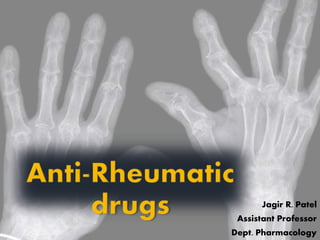
Jagir R. Patel
Assistant Professor
Dept. Pharmacology
What is RA?
• Rheumatoid arthritis (RA) is a chronic, systemic autoimmune disease
that involves inflammation in the membrane lining of the joints and often
affects internal organs.
• Most patients exhibit a chronic fluctuating course of disease that can result
in progressive joint destruction, deformity, and disability.
• RA affects between 1 and 2 million Americans.
• It occurs three times more oft en in women, and peaks at age 35 to 50 years.
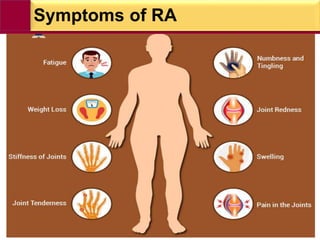
Symptoms of RA
Etiology and Pathophysiology
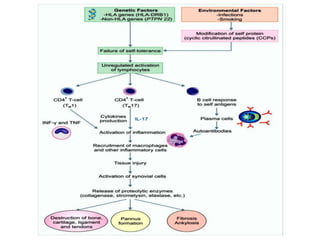
• Etiology and pathogenesis. The cause of RA is not fully understood but appears to be
multifactorial.
• It is considered an autoimmune disease in which the body loses its ability to
distinguish between synovial and foreign tissue. Other factors involved in RA are as
follows:
• 1. Environmental influences, such as infections or trauma, are thought to trigger the
development of RA.
• 2. Genetic markers, such as human leukocyte antigen DR4 (HLA-DR4), have been
associated with triggering the inflammatory process in RA.
• 3. Antigen-dependent activation of T lymphocytes leads to proliferation of the
synovial lining, activation of proinflammatory cells from the bone marrow, cytokine
and protease secretion, and autoantibody production.
Cont.…
• 4. Anticitrullinated proteins and peptides are high specific for RA.
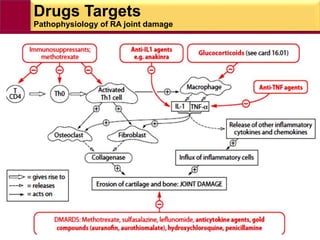
• 5. Tumor necrosis factor (TNF-), IL-1, IL-6, IL-8, and growth factors propagate
the inflammatory process, and agents found to alter these cytokines show promise
in reducing pain and deformity.
• 6. Inflamed synovium is a hallmark of the pathophysiology of RA. Synovium
proliferates abnormally, growing into the joint space and into the bone, forming a
pannus.
• The pannus migrates to the articular cartilage and into the subchondral bone leading
to destruction of cartilage, bone, tendons, and blood vessels.
Normal and Arthritic joints
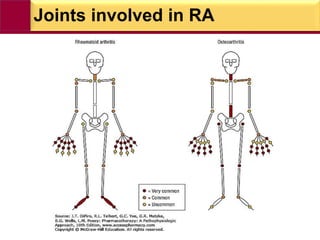
Joints involved in RA
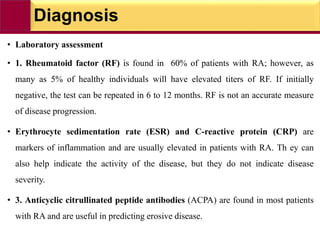
Diagnosis
• Laboratory assessment
• 1. Rheumatoid factor (RF) is found in 60% of patients with RA; however, as
many as 5% of healthy individuals will have elevated titers of RF. If initially
negative, the test can be repeated in 6 to 12 months. RF is not an accurate measure
of disease progression.
• Erythrocyte sedimentation rate (ESR) and C-reactive protein (CRP) are
markers of inflammation and are usually elevated in patients with RA. Th ey can
also help indicate the activity of the disease, but they do not indicate disease
severity.
• 3. Anticyclic citrullinated peptide antibodies (ACPA) are found in most patients
with RA and are useful in predicting erosive disease.
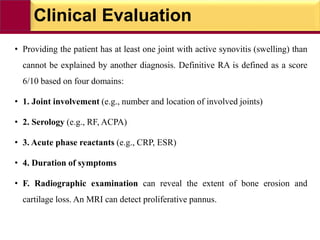
Clinical Evaluation
• Providing the patient has at least one joint with active synovitis (swelling) than
cannot be explained by another diagnosis. Definitive RA is defined as a score
6/10 based on four domains:
• 1. Joint involvement (e.g., number and location of involved joints)
• 2. Serology (e.g., RF, ACPA)
• 3. Acute phase reactants (e.g., CRP, ESR)
• 4. Duration of symptoms
• F. Radiographic examination can reveal the extent of bone erosion and
cartilage loss. An MRI can detect proliferative pannus.
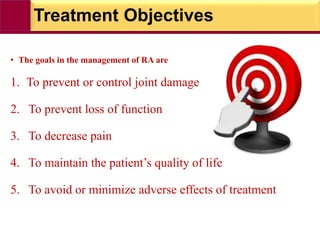
Treatment Objectives
• The goals in the management of RA are
1. To prevent or control joint damage
2. To prevent loss of function
3. To decrease pain
4. To maintain the patient’s quality of life
5. To avoid or minimize adverse effects of treatment
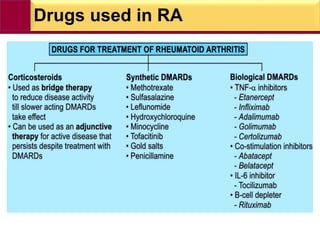
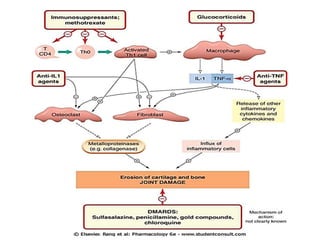
Drugs used in RA
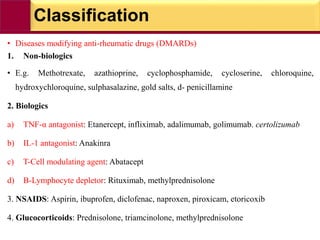
Classification
• Diseases modifying anti-rheumatic drugs (DMARDs)
1. Non-biologics
• E.g. Methotrexate, azathioprine, cyclophosphamide, cycloserine, chloroquine,
hydroxychloroquine, sulphasalazine, gold salts, d- penicillamine
2. Biologics
a) TNF-α antagonist: Etanercept, infliximab, adalimumab, golimumab. certolizumab
b) IL-1 antagonist: Anakinra
c) T-Cell modulating agent: Abatacept
d) B-Lymphocyte depletor: Rituximab, methylprednisolone
3. NSAIDS: Aspirin, ibuprofen, diclofenac, naproxen, piroxicam, etoricoxib
4. Glucocorticoids: Prednisolone, triamcinolone, methylprednisolone
Drugs Targets
Pathophysiology of RA joint damage
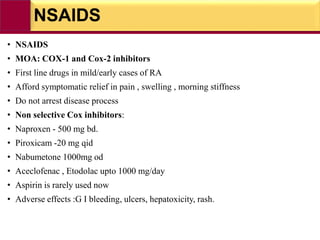
NSAIDS
• NSAIDS
• MOA: COX-1 and Cox-2 inhibitors
• First line drugs in mild/early cases of RA
• Afford symptomatic relief in pain , swelling , morning stiffness
• Do not arrest disease process
• Non selective Cox inhibitors:
• Naproxen - 500 mg bd.
• Piroxicam -20 mg qid
• Nabumetone 1000mg od
• Aceclofenac , Etodolac upto 1000 mg/day
• Aspirin is rarely used now
• Adverse effects :G I bleeding, ulcers, hepatoxicity, rash.
Cont.…
• Selective cox-2 inhibitors:
• Celecoxib100-200mg bd
• Etoricoxib 90 mg od has highest selectivity ratio for inhibition of cox 2. & has
superior efficacy compared with 500 mg naproxen bd over 12 weeks
• Rafecoxib valdecoxib are obsolete now because of their cardiotoxicity
Advantages Disadvantages
Controls inflammation and pain Does not effects progression of
bone and cartilage destruction
Reduces swelling GI toxicity is common
Improves range of motion Renal complications
Relatively low cost compared to
DMARDS
Hepatic dysfunction
Corticosteroids
• Low-dose systemic corticosteroids (e.g., prednisone, methylprednisolone)
have excellent anti-inflammatory activity and are immunosuppressant.
• The lowest effective dose should be used because of adverse effects (e.g.,
hyperglycemia, GI toxicity, osteoporosis). These agents have shown to slow
joint damage; however, they are oft en used as “bridge” therapy as patients
start on disease-modifying antirheumatic drugs (DMARDs) or during an
acute RA flare.
What are DMARDs?
• Disease-modifying antirheumatic drugs (DMARDs) are not analgesic and do not
inhibit COX, but they do suppress the inflammatory process in inflammatory
arthritis.
• Their mechanisms are generally poorly understood.
• They are used in patients with progressive disease. Response (though
unpredictable) is usually maximal in four to ten weeks.
• Unlike NSAIDs, DMARDs reduce inflammatory markers (historically, it was this
effect that led to them being referred to as ‘disease modifying’).
• It is difficult to prove that a drug influences the natural history of a
relapsing/remitting and unpredictably progressing disease, such as rheumatoid
arthritis, but immunosuppressants retard the radiological progression of bony
erosions.
Cont.…
• DMARDs are toxic, necessitating careful patient monitoring, and are best used by
physicians experienced in rheumatology.
• Rheumatologists use them earlier than in the past, with close monitoring for
toxicity, with the patient fully informed about toxic, as well as desired, effects.
• This is especially important since many of these drugs are licensed for quite
different indications to arthritis.
• They work to decrease pain and inflammation, to reduce or prevent joint
damage, and to preserve the structure and function of the joints.
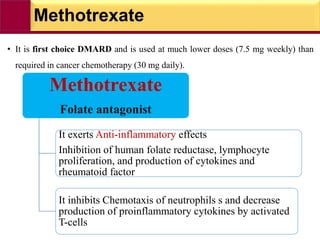
Methotrexate
• It is first choice DMARD and is used at much lower doses (7.5 mg weekly) than
required in cancer chemotherapy (30 mg daily).
Methotrexate
Folate antagonist
It exerts Anti-inflammatory effects
Inhibition of human folate reductase, lymphocyte
proliferation, and production of cytokines and
rheumatoid factor
It inhibits Chemotaxis of neutrophils s and decrease
production of proinflammatory cytokines by activated
T-cells
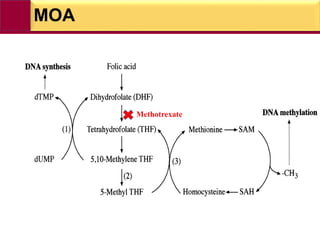
MOA
Methotrexate
Cont.…
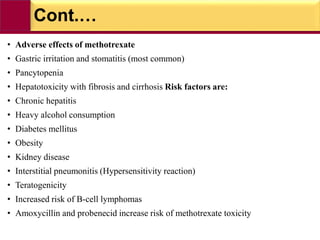
• Adverse effects of methotrexate
• Gastric irritation and stomatitis (most common)
• Pancytopenia
• Hepatotoxicity with fibrosis and cirrhosis Risk factors are:
• Chronic hepatitis
• Heavy alcohol consumption
• Diabetes mellitus
• Obesity
• Kidney disease
• Interstitial pneumonitis (Hypersensitivity reaction)
• Teratogenicity
• Increased risk of B-cell lymphomas
• Amoxycillin and probenecid increase risk of methotrexate toxicity
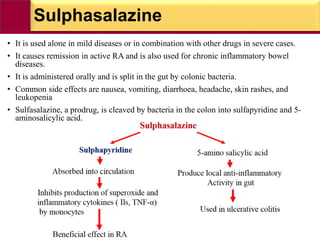
Sulphasalazine
• It is used alone in mild diseases or in combination with other drugs in severe cases.
• It causes remission in active RA and is also used for chronic inflammatory bowel
diseases.
• It is administered orally and is split in the gut by colonic bacteria.
• Common side effects are nausea, vomiting, diarrhoea, headache, skin rashes, and
leukopenia
• Sulfasalazine, a prodrug, is cleaved by bacteria in the colon into sulfapyridine and 5-
aminosalicylic acid.
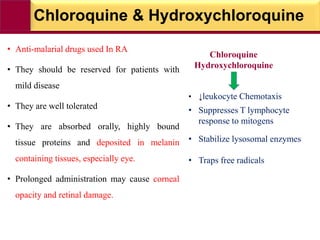
Chloroquine & Hydroxychloroquine
• Anti-malarial drugs used In RA
• They should be reserved for patients with
mild disease
• They are well tolerated
• They are absorbed orally, highly bound
tissue proteins and deposited in melanin
containing tissues, especially eye.
• Prolonged administration may cause corneal
opacity and retinal damage.
Chloroquine
Hydroxychloroquine
• ↓leukocyte Chemotaxis
• Suppresses T lymphocyte
response to mitogens
• Stabilize lysosomal enzymes
• Traps free radicals
Cont.…
• Hence ophthalmic examination should be done at least once a year in patients on
chloroquine and hydroxychloroquine.
• Nausea, vomiting and skin rashes and common
• The drugs are relatively safe in pregnancy.
• They are used alone or in combination with sulphasalazine or methotrexate
Why Hydroxychloroquine is preferred over chloroquine for RA ?
• Hydroxychloroquine is preferred over chloroquine due to less chances of retinal
damage by the former
Leflunomide
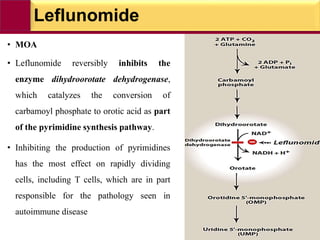
• MOA
• Leflunomide reversibly inhibits the
enzyme dihydroorotate dehydrogenase,
which catalyzes the conversion of
carbamoyl phosphate to orotic acid as part
of the pyrimidine synthesis pathway.
• Inhibiting the production of pyrimidines
has the most effect on rapidly dividing
cells, including T cells, which are in part
responsible for the pathology seen in
autoimmune disease
Cont.…
• Clinical Uses
• Rheumatoid arthritis; psoriatic arthritis; immunosuppression in transplant
patients.
• Side Effects: Diarrhea; hypertension; transaminitis.
• Other Leflunomide also has activity against several viruses, including CMV, and is
occasionally used to treat infection in transplant patients. It is thought that
leflunomide inhibits virion formation, and thus blocks viral propagation.
Pencillamine
Penicillamine is a breakdown product
of penicillin.
• Mechanism of action
• Penicillamine acts by several
mechanisms
• Including metal ion chelation and
dissociation of macroglobulins.
• It inhibits release of lysosomal
enzymes from cells in inflamed
connective tissue.
• Its effect in rheumatoid arthritis is similar to
gold.
• Clinical improvement is anticipated only
after 6–12 weeks.
• Treatment is discontinued if there is no
improvement within one year.
• If improvement occurs, the dose is gradually
reduced to the minimum effective
maintenance dose.
• Full blood count and urine protein
determination are performed regularly,
initially weekly and then monthly during
maintenance treatment.
Cont.…
• Adverse effects
• Penicillamine commonly causes taste disturbance, anorexia and weight loss.
• Bone marrow hypoplasia, thrombocytopenia and leukopenia can be fatal.
• They are indications to stop treatment.
• Immune-complex glomerulonephritis causes mild proteinuria in 30% of patients.
• The drug should be stopped until proteinuria resolves and treatment then resumed
at a lower dose.
• Heavy proteinuria is an indication to stop treatment permanently.
• Other symptoms include hypersensitivity reactions with urticaria.
• Systemic lupus erythematosus-like and myasthenia gravis-like syndromes can also
be involved
Gold salts
Aurothiomalate, aurothioglucose
• MOA: Gold act by altering the morphology and functions of macrophages,
suppress cell mediated immunity.
• Inhibiting monocyte chemotactic factor-1, IL-8, 1β & VEGF
• Additionally
• Alter lysosomal enzyme activity
• Reduce histamine release from mast cells
• These are administered orally as auranofin (29% elemental gold)
• Parentally as Aurothiomalate & aurothioglucose (50% elemental gold)
• It is useful for active RA and arrest progression of diseases.
• ADR: dermatitis, itching, stomatitis, mouth ulcers, proteinuria, blood dyscrasias,
hepatitis, peripheral neuropathy, aplastic anemia very rare, but fatal
Biologic therapies in RA
• Biologic agents are genetically engineered protein molecules that block
proinflammatory cytokines. These drugs may be effective when other
DMARDs fail to achieve adequate responses, but they are considerably more
expensive to use.
• IL-1 and TNF-α are proinflammatory cytokines involved in the pathogenesis
of RA.
• When secreted by synovial macrophages, IL-1 and TNF-α stimulate synovial
cells to proliferate and synthesize collagenase, thereby degrading cartilage,
stimulating bone resorption, and inhibiting proteoglycan synthesis.
Cont.…
• The TNF-α inhibitors have been shown to decrease signs and symptoms of
RA, reduce progression of structural damage, and improve physical function.
• As with DMARDs, the decision to continue or stop a biological agent can
often be made within 3 months after initiation of therapy.
• If a patient has failed therapy with one TNF-α inhibitor, a trial with a different
TNF-α inhibitor or a non-TNF biologic therapy (abatacept, rituximab,
tocilizumab, tofacitinib) is appropriate.
Risk Factors for Biologic DMARDS
• TNF-α inhibitors can be administered with any of the other drugs for RA, except
for the non-TNF biologic therapies (due to increased risk of infection).
• Patients receiving TNF-α inhibitors are at increased risk for infections (tuberculosis
and sepsis), fungal opportunistic infections, and pancytopenia.
• Live vaccinations should not be administered while on TNF-α inhibitor therapy.
These agents should be used very cautiously in those with heart failure, as they can
cause and/or worsen preexisting heart failure.
• An increased risk of lymphoma and other cancers has been observed with the use of
TNF-α inhibitors. Characteristics of the TNF-α inhibitors and other biologic
therapies are outlined below.
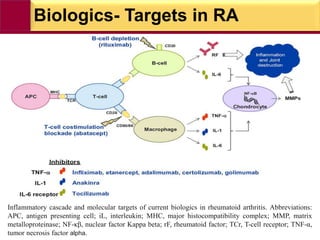
Biologics- Targets in RA
Inflammatory cascade and molecular targets of current biologics in rheumatoid arthritis. Abbreviations:
APC, antigen presenting cell; iL, interleukin; MHC, major histocompatibility complex; MMP, matrix
metalloproteinase; NF-κβ, nuclear factor Kappa beta; rF, rheumatoid factor; TCr, T-cell receptor; TNF-α,
tumor necrosis factor alpha.
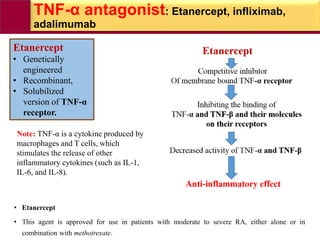
TNF-α antagonist: Etanercept, infliximab,
adalimumab
• Etanercept
• This agent is approved for use in patients with moderate to severe RA, either alone or in
combination with methotrexate.
Etanercept
• Genetically
engineered
• Recombinant,
• Solubilized
version of TNF-α
receptor.
Note: TNF-α is a cytokine produced by
macrophages and T cells, which
stimulates the release of other
inflammatory cytokines (such as IL-1,
IL-6, and IL-8).
Cont.…
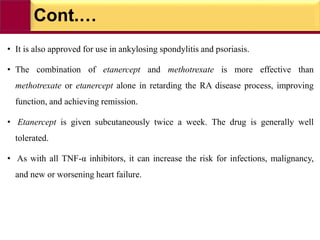
• It is also approved for use in ankylosing spondylitis and psoriasis.
• The combination of etanercept and methotrexate is more effective than
methotrexate or etanercept alone in retarding the RA disease process, improving
function, and achieving remission.
• Etanercept is given subcutaneously twice a week. The drug is generally well
tolerated.
• As with all TNF-α inhibitors, it can increase the risk for infections, malignancy,
and new or worsening heart failure.
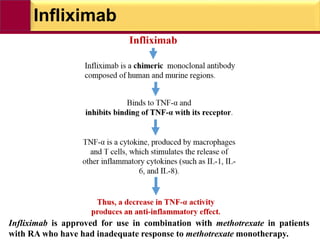
Infliximab
Infliximab is approved for use in combination with methotrexate in patients
with RA who have had inadequate response to methotrexate monotherapy.
Cont.…
• This agent is not indicated for monotherapy, as this leads to the development of
anti-infliximab antibodies, resulting in reduced efficacy.
• Additional indications include plaque psoriasis, psoriatic arthritis, ulcerative
colitis, ankylosing spondylitis, and Crohn disease.
• Infliximab is administered as an IV infusion every 8 weeks.
• Infusion site reactions, such as fever, chills, pruritus, and urticaria, may occur.
• Infections (for example, pneumonia, cellulitis, and activation of latent tuberculosis),
leukopenia, and neutropenia have also been reported.
Adalimumab
• MOA: Adalimumab is a recombinant monoclonal antibody that binds to TNF-α,
thereby interfering with endogenous TNF-α activity by blocking its interaction with
cell surface receptors.
• Used for treatment of moderate to severe RA
• Monotherapy or Adalimumab + Methotrexate.
• Indications: It is also indicated for psoriatic arthritis, ankylosing spondylitis,
and Crohn disease.
• Pharmacokinetics: Given Subcutaneously weekly or every other week.
• Side effects: It may cause headache, nausea, agranulocytosis, rash, reaction at the
injection site, or increased risk of infections, such as urinary tract infections, upper
respiratory tract infections, and sinusitis.
Golimumab
• It is administered in combination with methotrexate or other non-biologic
DMARDs.
• MOA: neutralizes the biological activity of TNF-α by binding to it and
blocking its interaction with cell surface receptors.
• Administration: subcutaneously once a month
• Adverse effects: may increase hepatic enzymes, reactivation of hepatitis B may
occur in chronic carriers, may increase the risk of malignancies and serious
infections.
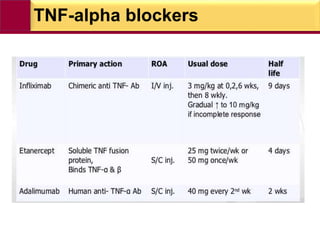
TNF-alpha blockers
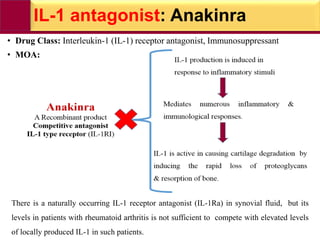
IL-1 antagonist: Anakinra
• Drug Class: Interleukin-1 (IL-1) receptor antagonist, Immunosuppressant
• MOA:
There is a naturally occurring IL-1 receptor antagonist (IL-1Ra) in synovial fluid, but its
levels in patients with rheumatoid arthritis is not sufficient to compete with elevated levels
of locally produced IL-1 in such patients.
Cont.…
• Indications:
• For the reduction in signs & symptoms of in patients with rheumatoid
arthritis (RA) who have failed one or more Disease Modifying
Antirheumatic Drugs (DMARDs).
• To slow the progression of structural damage in patients with moderate to
severe RA
• Side Effects:
• Serious infections (the most serious side effect)
• Neutropenia (especially when combined with TNF blocking agents)
• Pharmacokinetics:
• Given by subcutaneous injection, one dose per day.
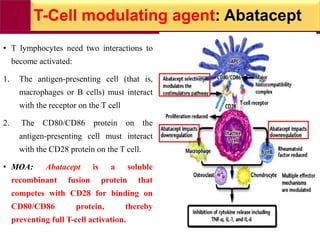
T-Cell modulating agent: Abatacept
• T lymphocytes need two interactions to
become activated:
1. The antigen-presenting cell (that is,
macrophages or B cells) must interact
with the receptor on the T cell
2. The CD80/CD86 protein on the
antigen-presenting cell must interact
with the CD28 protein on the T cell.
• MOA: Abatacept is a soluble
recombinant fusion protein that
competes with CD28 for binding on
CD80/CD86 protein, thereby
preventing full T-cell activation.
Cont.…
• This agent is indicated for patients with moderate to severe RA who have had an
inadequate response to DMARDs or TNF-α inhibitors.
• Pharmacokinetics: is administered as an IV infusion every 4 weeks.
• Side effects: Common adverse effects include headache, upper respiratory
infections, nasopharyngitis, and nausea.
• Concurrent use with TNF-α inhibitors is not recommended due to increased
risk of serious infections.
Role of B-lymphocytes in RA
• B lymphocytes are derived from the bone marrow and are necessary for
efficient immune response.
In RA, however, B cells can perpetuate the inflammatory process in the
synovium by:
1. Activating T lymphocytes.
2. Producing autoantibodies and rheumatoid factor
3. Producing proinflammatory cytokines, such as TNF-α and IL-1
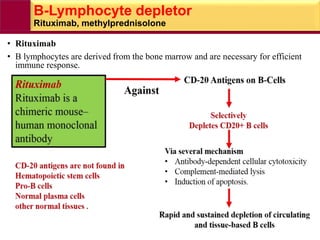
B-Lymphocyte depletor
Rituximab, methylprednisolone
• Rituximab
• B lymphocytes are derived from the bone marrow and are necessary for efficient
immune response.
Cont.…
• This agent is indicated for use in combination with methotrexate for patients
with moderate to severe RA who have had an inadequate response to TNF-α
inhibitors.
• Rituximab is administered as an intravenous infusion every 16 to 24 weeks.
• To reduce the severity of infusion reactions, methylprednisolone is administered
30 minutes prior to each infusion.
• Infusion reactions (urticaria, hypotension, and angioedema) are the most
common complaints with this agent and typically occur during the first
infusion.
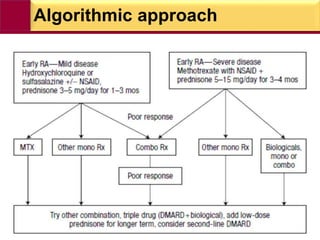
Algorithmic approach

Anti-Rheumatic drugs

  • 1.
    Jagir R. Patel AssistantProfessor Dept. Pharmacology
  • 2.
    What is RA? •Rheumatoid arthritis (RA) is a chronic, systemic autoimmune disease that involves inflammation in the membrane lining of the joints and often affects internal organs. • Most patients exhibit a chronic fluctuating course of disease that can result in progressive joint destruction, deformity, and disability. • RA affects between 1 and 2 million Americans. • It occurs three times more oft en in women, and peaks at age 35 to 50 years.
  • 3.
  • 4.
    Etiology and Pathophysiology •Etiology and pathogenesis. The cause of RA is not fully understood but appears to be multifactorial. • It is considered an autoimmune disease in which the body loses its ability to distinguish between synovial and foreign tissue. Other factors involved in RA are as follows: • 1. Environmental influences, such as infections or trauma, are thought to trigger the development of RA. • 2. Genetic markers, such as human leukocyte antigen DR4 (HLA-DR4), have been associated with triggering the inflammatory process in RA. • 3. Antigen-dependent activation of T lymphocytes leads to proliferation of the synovial lining, activation of proinflammatory cells from the bone marrow, cytokine and protease secretion, and autoantibody production.
  • 5.
    Cont.… • 4. Anticitrullinatedproteins and peptides are high specific for RA. • 5. Tumor necrosis factor (TNF-), IL-1, IL-6, IL-8, and growth factors propagate the inflammatory process, and agents found to alter these cytokines show promise in reducing pain and deformity. • 6. Inflamed synovium is a hallmark of the pathophysiology of RA. Synovium proliferates abnormally, growing into the joint space and into the bone, forming a pannus. • The pannus migrates to the articular cartilage and into the subchondral bone leading to destruction of cartilage, bone, tendons, and blood vessels.
  • 7.
  • 8.
  • 9.
    Diagnosis • Laboratory assessment •1. Rheumatoid factor (RF) is found in 60% of patients with RA; however, as many as 5% of healthy individuals will have elevated titers of RF. If initially negative, the test can be repeated in 6 to 12 months. RF is not an accurate measure of disease progression. • Erythrocyte sedimentation rate (ESR) and C-reactive protein (CRP) are markers of inflammation and are usually elevated in patients with RA. Th ey can also help indicate the activity of the disease, but they do not indicate disease severity. • 3. Anticyclic citrullinated peptide antibodies (ACPA) are found in most patients with RA and are useful in predicting erosive disease.
  • 10.
    Clinical Evaluation • Providingthe patient has at least one joint with active synovitis (swelling) than cannot be explained by another diagnosis. Definitive RA is defined as a score 6/10 based on four domains: • 1. Joint involvement (e.g., number and location of involved joints) • 2. Serology (e.g., RF, ACPA) • 3. Acute phase reactants (e.g., CRP, ESR) • 4. Duration of symptoms • F. Radiographic examination can reveal the extent of bone erosion and cartilage loss. An MRI can detect proliferative pannus.
  • 11.
    Treatment Objectives • Thegoals in the management of RA are 1. To prevent or control joint damage 2. To prevent loss of function 3. To decrease pain 4. To maintain the patient’s quality of life 5. To avoid or minimize adverse effects of treatment
  • 12.
  • 13.
    Classification • Diseases modifyinganti-rheumatic drugs (DMARDs) 1. Non-biologics • E.g. Methotrexate, azathioprine, cyclophosphamide, cycloserine, chloroquine, hydroxychloroquine, sulphasalazine, gold salts, d- penicillamine 2. Biologics a) TNF-α antagonist: Etanercept, infliximab, adalimumab, golimumab. certolizumab b) IL-1 antagonist: Anakinra c) T-Cell modulating agent: Abatacept d) B-Lymphocyte depletor: Rituximab, methylprednisolone 3. NSAIDS: Aspirin, ibuprofen, diclofenac, naproxen, piroxicam, etoricoxib 4. Glucocorticoids: Prednisolone, triamcinolone, methylprednisolone
  • 14.
  • 16.
    NSAIDS • NSAIDS • MOA:COX-1 and Cox-2 inhibitors • First line drugs in mild/early cases of RA • Afford symptomatic relief in pain , swelling , morning stiffness • Do not arrest disease process • Non selective Cox inhibitors: • Naproxen - 500 mg bd. • Piroxicam -20 mg qid • Nabumetone 1000mg od • Aceclofenac , Etodolac upto 1000 mg/day • Aspirin is rarely used now • Adverse effects :G I bleeding, ulcers, hepatoxicity, rash.
  • 17.
    Cont.… • Selective cox-2inhibitors: • Celecoxib100-200mg bd • Etoricoxib 90 mg od has highest selectivity ratio for inhibition of cox 2. & has superior efficacy compared with 500 mg naproxen bd over 12 weeks • Rafecoxib valdecoxib are obsolete now because of their cardiotoxicity Advantages Disadvantages Controls inflammation and pain Does not effects progression of bone and cartilage destruction Reduces swelling GI toxicity is common Improves range of motion Renal complications Relatively low cost compared to DMARDS Hepatic dysfunction
  • 18.
    Corticosteroids • Low-dose systemiccorticosteroids (e.g., prednisone, methylprednisolone) have excellent anti-inflammatory activity and are immunosuppressant. • The lowest effective dose should be used because of adverse effects (e.g., hyperglycemia, GI toxicity, osteoporosis). These agents have shown to slow joint damage; however, they are oft en used as “bridge” therapy as patients start on disease-modifying antirheumatic drugs (DMARDs) or during an acute RA flare.
  • 19.
    What are DMARDs? •Disease-modifying antirheumatic drugs (DMARDs) are not analgesic and do not inhibit COX, but they do suppress the inflammatory process in inflammatory arthritis. • Their mechanisms are generally poorly understood. • They are used in patients with progressive disease. Response (though unpredictable) is usually maximal in four to ten weeks. • Unlike NSAIDs, DMARDs reduce inflammatory markers (historically, it was this effect that led to them being referred to as ‘disease modifying’). • It is difficult to prove that a drug influences the natural history of a relapsing/remitting and unpredictably progressing disease, such as rheumatoid arthritis, but immunosuppressants retard the radiological progression of bony erosions.
  • 20.
    Cont.… • DMARDs aretoxic, necessitating careful patient monitoring, and are best used by physicians experienced in rheumatology. • Rheumatologists use them earlier than in the past, with close monitoring for toxicity, with the patient fully informed about toxic, as well as desired, effects. • This is especially important since many of these drugs are licensed for quite different indications to arthritis. • They work to decrease pain and inflammation, to reduce or prevent joint damage, and to preserve the structure and function of the joints.
  • 21.
    Methotrexate • It isfirst choice DMARD and is used at much lower doses (7.5 mg weekly) than required in cancer chemotherapy (30 mg daily). Methotrexate Folate antagonist It exerts Anti-inflammatory effects Inhibition of human folate reductase, lymphocyte proliferation, and production of cytokines and rheumatoid factor It inhibits Chemotaxis of neutrophils s and decrease production of proinflammatory cytokines by activated T-cells
  • 22.
  • 23.
    Cont.… • Adverse effectsof methotrexate • Gastric irritation and stomatitis (most common) • Pancytopenia • Hepatotoxicity with fibrosis and cirrhosis Risk factors are: • Chronic hepatitis • Heavy alcohol consumption • Diabetes mellitus • Obesity • Kidney disease • Interstitial pneumonitis (Hypersensitivity reaction) • Teratogenicity • Increased risk of B-cell lymphomas • Amoxycillin and probenecid increase risk of methotrexate toxicity
  • 24.
    Sulphasalazine • It isused alone in mild diseases or in combination with other drugs in severe cases. • It causes remission in active RA and is also used for chronic inflammatory bowel diseases. • It is administered orally and is split in the gut by colonic bacteria. • Common side effects are nausea, vomiting, diarrhoea, headache, skin rashes, and leukopenia • Sulfasalazine, a prodrug, is cleaved by bacteria in the colon into sulfapyridine and 5- aminosalicylic acid.
  • 25.
    Chloroquine & Hydroxychloroquine •Anti-malarial drugs used In RA • They should be reserved for patients with mild disease • They are well tolerated • They are absorbed orally, highly bound tissue proteins and deposited in melanin containing tissues, especially eye. • Prolonged administration may cause corneal opacity and retinal damage. Chloroquine Hydroxychloroquine • ↓leukocyte Chemotaxis • Suppresses T lymphocyte response to mitogens • Stabilize lysosomal enzymes • Traps free radicals
  • 26.
    Cont.… • Hence ophthalmicexamination should be done at least once a year in patients on chloroquine and hydroxychloroquine. • Nausea, vomiting and skin rashes and common • The drugs are relatively safe in pregnancy. • They are used alone or in combination with sulphasalazine or methotrexate Why Hydroxychloroquine is preferred over chloroquine for RA ? • Hydroxychloroquine is preferred over chloroquine due to less chances of retinal damage by the former
  • 27.
    Leflunomide • MOA • Leflunomidereversibly inhibits the enzyme dihydroorotate dehydrogenase, which catalyzes the conversion of carbamoyl phosphate to orotic acid as part of the pyrimidine synthesis pathway. • Inhibiting the production of pyrimidines has the most effect on rapidly dividing cells, including T cells, which are in part responsible for the pathology seen in autoimmune disease
  • 28.
    Cont.… • Clinical Uses •Rheumatoid arthritis; psoriatic arthritis; immunosuppression in transplant patients. • Side Effects: Diarrhea; hypertension; transaminitis. • Other Leflunomide also has activity against several viruses, including CMV, and is occasionally used to treat infection in transplant patients. It is thought that leflunomide inhibits virion formation, and thus blocks viral propagation.
  • 29.
    Pencillamine Penicillamine is abreakdown product of penicillin. • Mechanism of action • Penicillamine acts by several mechanisms • Including metal ion chelation and dissociation of macroglobulins. • It inhibits release of lysosomal enzymes from cells in inflamed connective tissue. • Its effect in rheumatoid arthritis is similar to gold. • Clinical improvement is anticipated only after 6–12 weeks. • Treatment is discontinued if there is no improvement within one year. • If improvement occurs, the dose is gradually reduced to the minimum effective maintenance dose. • Full blood count and urine protein determination are performed regularly, initially weekly and then monthly during maintenance treatment.
  • 30.
    Cont.… • Adverse effects •Penicillamine commonly causes taste disturbance, anorexia and weight loss. • Bone marrow hypoplasia, thrombocytopenia and leukopenia can be fatal. • They are indications to stop treatment. • Immune-complex glomerulonephritis causes mild proteinuria in 30% of patients. • The drug should be stopped until proteinuria resolves and treatment then resumed at a lower dose. • Heavy proteinuria is an indication to stop treatment permanently. • Other symptoms include hypersensitivity reactions with urticaria. • Systemic lupus erythematosus-like and myasthenia gravis-like syndromes can also be involved
  • 31.
    Gold salts Aurothiomalate, aurothioglucose •MOA: Gold act by altering the morphology and functions of macrophages, suppress cell mediated immunity. • Inhibiting monocyte chemotactic factor-1, IL-8, 1β & VEGF • Additionally • Alter lysosomal enzyme activity • Reduce histamine release from mast cells • These are administered orally as auranofin (29% elemental gold) • Parentally as Aurothiomalate & aurothioglucose (50% elemental gold) • It is useful for active RA and arrest progression of diseases. • ADR: dermatitis, itching, stomatitis, mouth ulcers, proteinuria, blood dyscrasias, hepatitis, peripheral neuropathy, aplastic anemia very rare, but fatal
  • 32.
    Biologic therapies inRA • Biologic agents are genetically engineered protein molecules that block proinflammatory cytokines. These drugs may be effective when other DMARDs fail to achieve adequate responses, but they are considerably more expensive to use. • IL-1 and TNF-α are proinflammatory cytokines involved in the pathogenesis of RA. • When secreted by synovial macrophages, IL-1 and TNF-α stimulate synovial cells to proliferate and synthesize collagenase, thereby degrading cartilage, stimulating bone resorption, and inhibiting proteoglycan synthesis.
  • 33.
    Cont.… • The TNF-αinhibitors have been shown to decrease signs and symptoms of RA, reduce progression of structural damage, and improve physical function. • As with DMARDs, the decision to continue or stop a biological agent can often be made within 3 months after initiation of therapy. • If a patient has failed therapy with one TNF-α inhibitor, a trial with a different TNF-α inhibitor or a non-TNF biologic therapy (abatacept, rituximab, tocilizumab, tofacitinib) is appropriate.
  • 34.
    Risk Factors forBiologic DMARDS • TNF-α inhibitors can be administered with any of the other drugs for RA, except for the non-TNF biologic therapies (due to increased risk of infection). • Patients receiving TNF-α inhibitors are at increased risk for infections (tuberculosis and sepsis), fungal opportunistic infections, and pancytopenia. • Live vaccinations should not be administered while on TNF-α inhibitor therapy. These agents should be used very cautiously in those with heart failure, as they can cause and/or worsen preexisting heart failure. • An increased risk of lymphoma and other cancers has been observed with the use of TNF-α inhibitors. Characteristics of the TNF-α inhibitors and other biologic therapies are outlined below.
  • 35.
    Biologics- Targets inRA Inflammatory cascade and molecular targets of current biologics in rheumatoid arthritis. Abbreviations: APC, antigen presenting cell; iL, interleukin; MHC, major histocompatibility complex; MMP, matrix metalloproteinase; NF-κβ, nuclear factor Kappa beta; rF, rheumatoid factor; TCr, T-cell receptor; TNF-α, tumor necrosis factor alpha.
  • 36.
    TNF-α antagonist: Etanercept,infliximab, adalimumab • Etanercept • This agent is approved for use in patients with moderate to severe RA, either alone or in combination with methotrexate. Etanercept • Genetically engineered • Recombinant, • Solubilized version of TNF-α receptor. Note: TNF-α is a cytokine produced by macrophages and T cells, which stimulates the release of other inflammatory cytokines (such as IL-1, IL-6, and IL-8).
  • 37.
    Cont.… • It isalso approved for use in ankylosing spondylitis and psoriasis. • The combination of etanercept and methotrexate is more effective than methotrexate or etanercept alone in retarding the RA disease process, improving function, and achieving remission. • Etanercept is given subcutaneously twice a week. The drug is generally well tolerated. • As with all TNF-α inhibitors, it can increase the risk for infections, malignancy, and new or worsening heart failure.
  • 38.
    Infliximab Infliximab is approvedfor use in combination with methotrexate in patients with RA who have had inadequate response to methotrexate monotherapy.
  • 39.
    Cont.… • This agentis not indicated for monotherapy, as this leads to the development of anti-infliximab antibodies, resulting in reduced efficacy. • Additional indications include plaque psoriasis, psoriatic arthritis, ulcerative colitis, ankylosing spondylitis, and Crohn disease. • Infliximab is administered as an IV infusion every 8 weeks. • Infusion site reactions, such as fever, chills, pruritus, and urticaria, may occur. • Infections (for example, pneumonia, cellulitis, and activation of latent tuberculosis), leukopenia, and neutropenia have also been reported.
  • 40.
    Adalimumab • MOA: Adalimumabis a recombinant monoclonal antibody that binds to TNF-α, thereby interfering with endogenous TNF-α activity by blocking its interaction with cell surface receptors. • Used for treatment of moderate to severe RA • Monotherapy or Adalimumab + Methotrexate. • Indications: It is also indicated for psoriatic arthritis, ankylosing spondylitis, and Crohn disease. • Pharmacokinetics: Given Subcutaneously weekly or every other week. • Side effects: It may cause headache, nausea, agranulocytosis, rash, reaction at the injection site, or increased risk of infections, such as urinary tract infections, upper respiratory tract infections, and sinusitis.
  • 41.
    Golimumab • It isadministered in combination with methotrexate or other non-biologic DMARDs. • MOA: neutralizes the biological activity of TNF-α by binding to it and blocking its interaction with cell surface receptors. • Administration: subcutaneously once a month • Adverse effects: may increase hepatic enzymes, reactivation of hepatitis B may occur in chronic carriers, may increase the risk of malignancies and serious infections.
  • 42.
  • 43.
    IL-1 antagonist: Anakinra •Drug Class: Interleukin-1 (IL-1) receptor antagonist, Immunosuppressant • MOA: There is a naturally occurring IL-1 receptor antagonist (IL-1Ra) in synovial fluid, but its levels in patients with rheumatoid arthritis is not sufficient to compete with elevated levels of locally produced IL-1 in such patients.
  • 44.
    Cont.… • Indications: • Forthe reduction in signs & symptoms of in patients with rheumatoid arthritis (RA) who have failed one or more Disease Modifying Antirheumatic Drugs (DMARDs). • To slow the progression of structural damage in patients with moderate to severe RA • Side Effects: • Serious infections (the most serious side effect) • Neutropenia (especially when combined with TNF blocking agents) • Pharmacokinetics: • Given by subcutaneous injection, one dose per day.
  • 45.
    T-Cell modulating agent:Abatacept • T lymphocytes need two interactions to become activated: 1. The antigen-presenting cell (that is, macrophages or B cells) must interact with the receptor on the T cell 2. The CD80/CD86 protein on the antigen-presenting cell must interact with the CD28 protein on the T cell. • MOA: Abatacept is a soluble recombinant fusion protein that competes with CD28 for binding on CD80/CD86 protein, thereby preventing full T-cell activation.
  • 46.
    Cont.… • This agentis indicated for patients with moderate to severe RA who have had an inadequate response to DMARDs or TNF-α inhibitors. • Pharmacokinetics: is administered as an IV infusion every 4 weeks. • Side effects: Common adverse effects include headache, upper respiratory infections, nasopharyngitis, and nausea. • Concurrent use with TNF-α inhibitors is not recommended due to increased risk of serious infections.
  • 47.
    Role of B-lymphocytesin RA • B lymphocytes are derived from the bone marrow and are necessary for efficient immune response. In RA, however, B cells can perpetuate the inflammatory process in the synovium by: 1. Activating T lymphocytes. 2. Producing autoantibodies and rheumatoid factor 3. Producing proinflammatory cytokines, such as TNF-α and IL-1
  • 48.
    B-Lymphocyte depletor Rituximab, methylprednisolone •Rituximab • B lymphocytes are derived from the bone marrow and are necessary for efficient immune response.
  • 49.
    Cont.… • This agentis indicated for use in combination with methotrexate for patients with moderate to severe RA who have had an inadequate response to TNF-α inhibitors. • Rituximab is administered as an intravenous infusion every 16 to 24 weeks. • To reduce the severity of infusion reactions, methylprednisolone is administered 30 minutes prior to each infusion. • Infusion reactions (urticaria, hypotension, and angioedema) are the most common complaints with this agent and typically occur during the first infusion.
  • 50.