Humanism
Lauren Fisher, Angelina Bernard, and Krystal Encarnacion


                                                           S
About Humanism


S Humanism is a belief system that began in the 1960s.

S It focuses on a person‟s dignity, freedom, and their potential.

S Humanists hold the belief that all people are inherently good and
   possess unlimited potential for their own personal growth and
   development.

S A main purpose of humanism is the development of people who
   become self-actualized.

S Learning is student centered and very personalized according to
   each individual.
Important Figures

S Carl Rogers
  -Known as the founder of person-centered psychotherapy.
  -Inventor of counseling.
  -Leader in development of humanistic approaches to education.

S Abraham Maslow
  -Father of Humanistic Psychology.
  -Placed emphasis on choice, creativity, values, self-realization, and believed
  that meaningfulness and subjectivity were more important than objectivity.
  -Famous for proposing “Hierarchy of Needs”

S John Holt
  -American author and educator.
  -Proponent of homeschooling.
  -Pioneer in youth rights movement.
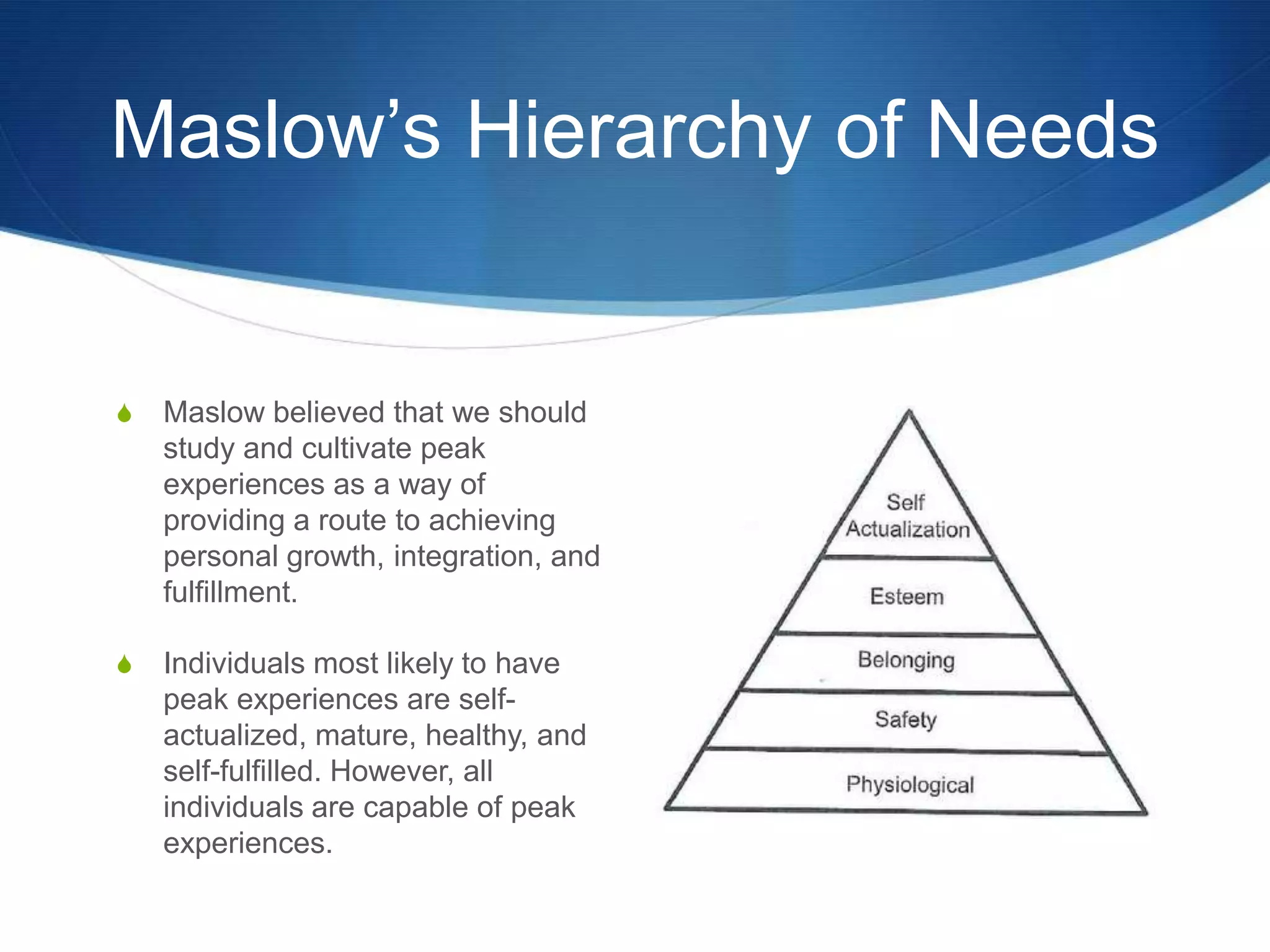
Maslow‟s Hierarchy of Needs


S   Maslow believed that we should
    study and cultivate peak
    experiences as a way of
    providing a route to achieving
    personal growth, integration, and
    fulfillment.

S   Individuals most likely to have
    peak experiences are self-
    actualized, mature, healthy, and
    self-fulfilled. However, all
    individuals are capable of peak
    experiences.
Approaches In Education

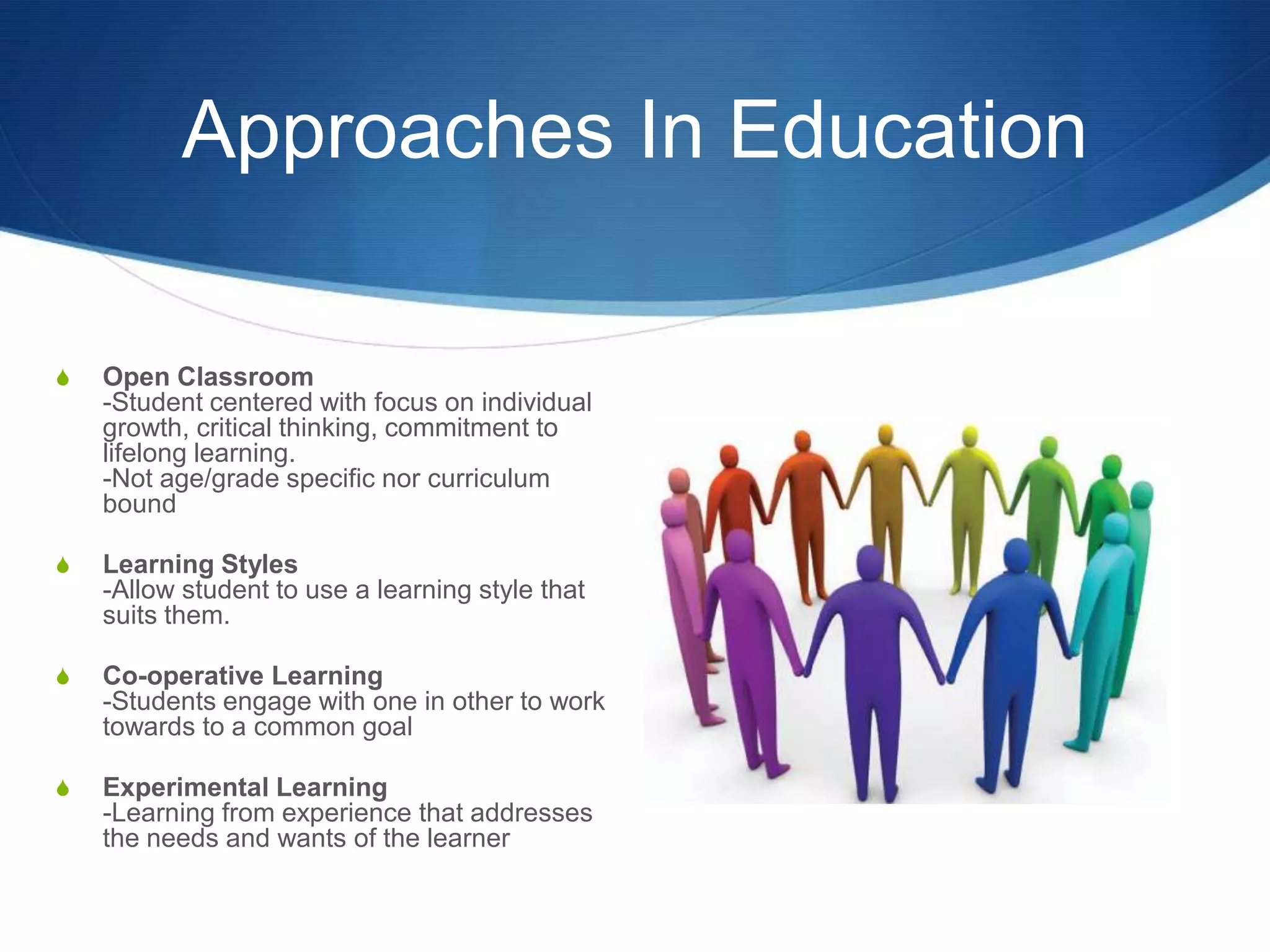
S   Open Classroom
    -Student centered with focus on individual
    growth, critical thinking, commitment to
    lifelong learning.
    -Not age/grade specific nor curriculum
    bound

S   Learning Styles
    -Allow student to use a learning style that
    suits them.

S   Co-operative Learning
    -Students engage with one in other to work
    towards to a common goal

S   Experimental Learning
    -Learning from experience that addresses
    the needs and wants of the learner
In The Classroom

S As a teacherto help encourage the children to feel good about
   themselves would involve an understanding of ones' strengths
   and weaknesses, and a belief in one's ability to improve.
S We are showing the learners how learning is not an end, but a
   means to progress towards the pinnacle of self-development,
   which Maslow terms 'Self-actualization„ where a child learns
   because he or she is inwardly driven, and derives his or her
   reward from the sense of achievement.
S These intrinsic rewards are rewards from within oneself, rather
   like a satisfaction of a need. This accords with the humanistic
   approach, where education is really about creating a need
   within the learner and instilling within the learners‟ self-
   motivation.
Teacher‟s Roles


S Without Technology:
  -Teacher serves more as a facilitator encouraging the
  student to learn and discover for themselves.

S With Technology:
  -Help incorporate various techniques in researching
  information and using the internet as a tool.
Student‟s Roles


S Without Technology:
  -Learning on a first hand basis how to find the answer
  and being accountable for the discovery of your own
  solutions.

S With Technology:
  -Helping to assist students in using cooperative teamwork
  strategies while learning different tools to take with them
  outside the classroom.
Humanism & Technology

S eLearning is a big proponent in individual learning
  because students can go at their own paces and openly
  discover for themselves.

S Florida Virtual School as a component in allowing for
  individual progress with their education.
  Also goes along well with the ideas John Holt upheld.

S Wikispaces and Blogs are a great tool for collaborative
  learning which sparks creativity and self discovery.
Information Credits


S Humanistic Approaches to Teaching

S Learning Theories

S Humanistic Learning Theories
Graphic Credits


S Florida Virtual School Image

S Team Building Image

S Maslow's Hierarchy

Humanisn Learning Theory

  • 1.
    Humanism Lauren Fisher, AngelinaBernard, and Krystal Encarnacion S
  • 2.
    About Humanism S Humanismis a belief system that began in the 1960s. S It focuses on a person‟s dignity, freedom, and their potential. S Humanists hold the belief that all people are inherently good and possess unlimited potential for their own personal growth and development. S A main purpose of humanism is the development of people who become self-actualized. S Learning is student centered and very personalized according to each individual.
  • 3.
    Important Figures S CarlRogers -Known as the founder of person-centered psychotherapy. -Inventor of counseling. -Leader in development of humanistic approaches to education. S Abraham Maslow -Father of Humanistic Psychology. -Placed emphasis on choice, creativity, values, self-realization, and believed that meaningfulness and subjectivity were more important than objectivity. -Famous for proposing “Hierarchy of Needs” S John Holt -American author and educator. -Proponent of homeschooling. -Pioneer in youth rights movement.
  • 4.
    Maslow‟s Hierarchy ofNeeds S Maslow believed that we should study and cultivate peak experiences as a way of providing a route to achieving personal growth, integration, and fulfillment. S Individuals most likely to have peak experiences are self- actualized, mature, healthy, and self-fulfilled. However, all individuals are capable of peak experiences.
  • 5.
    Approaches In Education S Open Classroom -Student centered with focus on individual growth, critical thinking, commitment to lifelong learning. -Not age/grade specific nor curriculum bound S Learning Styles -Allow student to use a learning style that suits them. S Co-operative Learning -Students engage with one in other to work towards to a common goal S Experimental Learning -Learning from experience that addresses the needs and wants of the learner
  • 6.
    In The Classroom SAs a teacherto help encourage the children to feel good about themselves would involve an understanding of ones' strengths and weaknesses, and a belief in one's ability to improve. S We are showing the learners how learning is not an end, but a means to progress towards the pinnacle of self-development, which Maslow terms 'Self-actualization„ where a child learns because he or she is inwardly driven, and derives his or her reward from the sense of achievement. S These intrinsic rewards are rewards from within oneself, rather like a satisfaction of a need. This accords with the humanistic approach, where education is really about creating a need within the learner and instilling within the learners‟ self- motivation.
  • 7.
    Teacher‟s Roles S WithoutTechnology: -Teacher serves more as a facilitator encouraging the student to learn and discover for themselves. S With Technology: -Help incorporate various techniques in researching information and using the internet as a tool.
  • 8.
    Student‟s Roles S WithoutTechnology: -Learning on a first hand basis how to find the answer and being accountable for the discovery of your own solutions. S With Technology: -Helping to assist students in using cooperative teamwork strategies while learning different tools to take with them outside the classroom.
  • 9.
    Humanism & Technology SeLearning is a big proponent in individual learning because students can go at their own paces and openly discover for themselves. S Florida Virtual School as a component in allowing for individual progress with their education. Also goes along well with the ideas John Holt upheld. S Wikispaces and Blogs are a great tool for collaborative learning which sparks creativity and self discovery.
  • 10.
    Information Credits S HumanisticApproaches to Teaching S Learning Theories S Humanistic Learning Theories
  • 11.
    Graphic Credits S FloridaVirtual School Image S Team Building Image S Maslow's Hierarchy