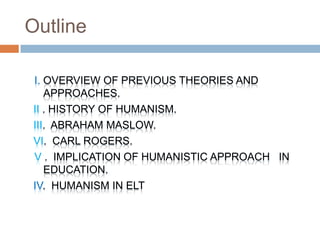
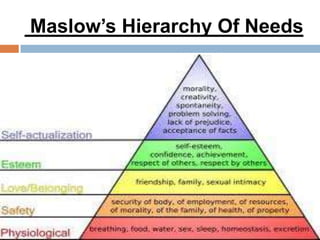
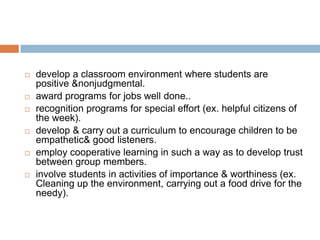
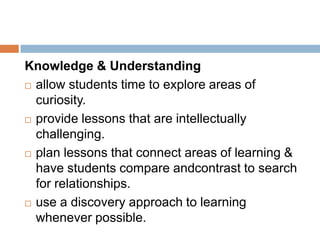
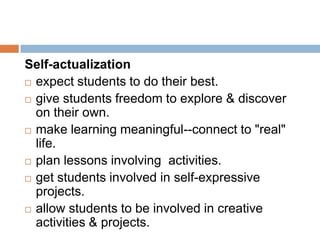
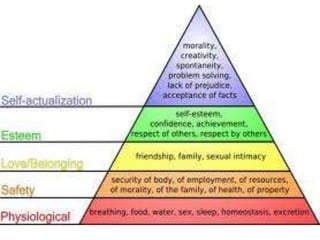
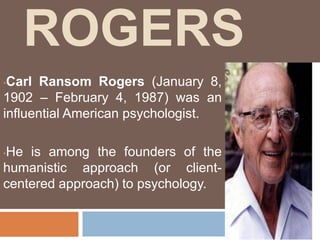
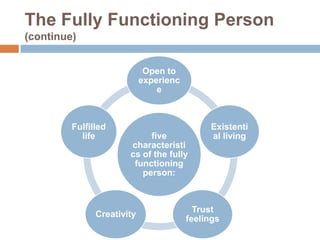
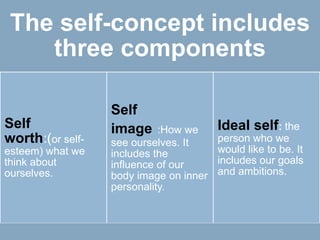
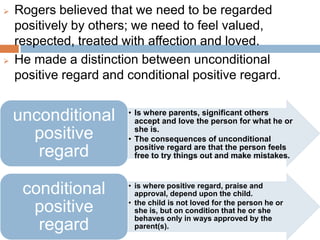
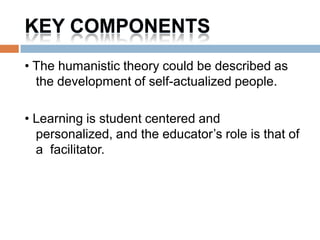
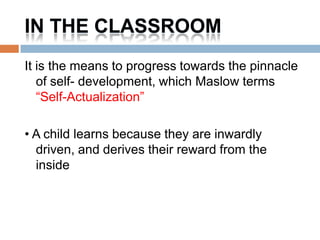
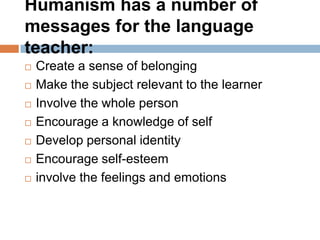
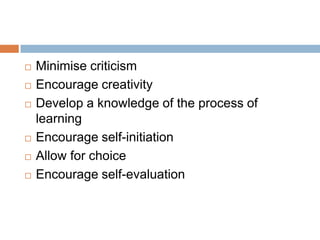
This document provides an overview of the humanistic approach in psychology, focusing on the theories of Abraham Maslow and Carl Rogers. Maslow proposed a hierarchy of needs consisting of physiological needs, safety needs, love and belonging needs, esteem needs, and self-actualization. Rogers believed that people have a natural tendency toward self-actualization if they experience genuineness, acceptance, and empathy. The humanistic approach emphasizes an individual's inherent drive toward self-actualization and achieving their full potential. It has implications for education, including fostering students' self-esteem, autonomy, and creativity.