Downloaded 94 times

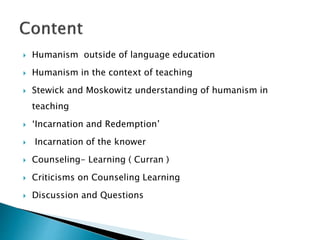

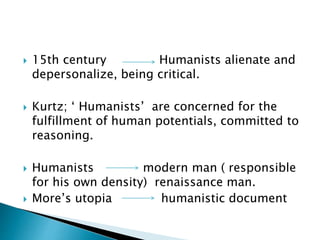
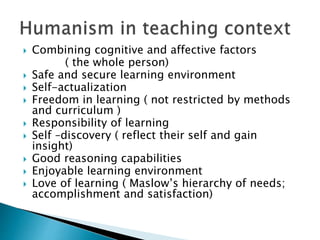
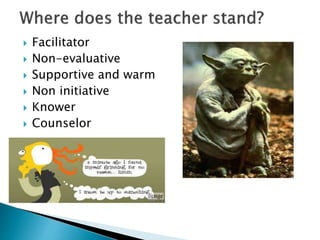
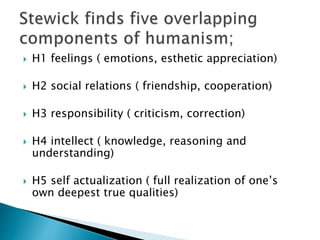
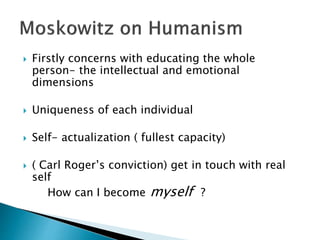
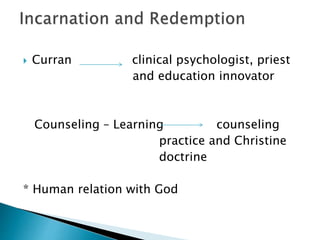
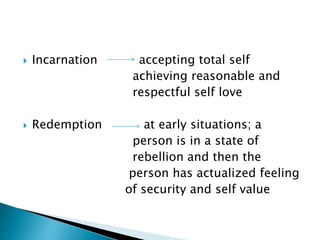
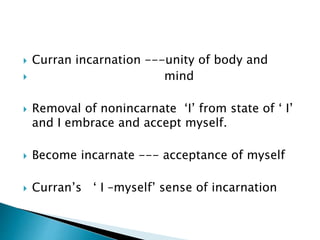
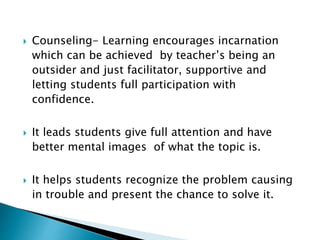
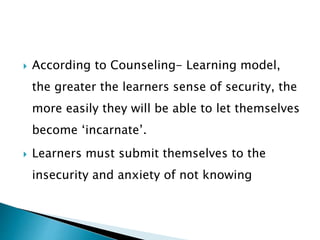
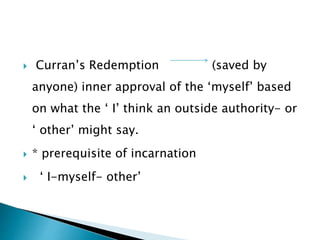
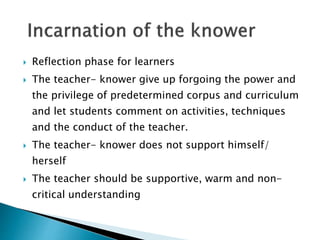
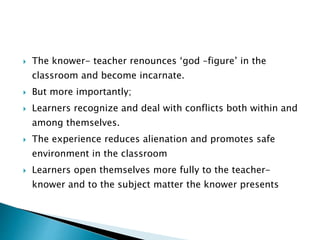
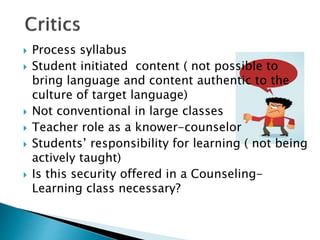



This document discusses humanism in the context of language teaching. It defines humanism as devotion to human interests and the fulfillment of human potential. A humanistic approach aims to educate the whole person intellectually and emotionally. It emphasizes self-actualization, freedom in learning, and creating a safe environment where students can discover themselves. The document examines Curran's view of humanism, which incorporates incarnation and redemption. It also discusses criticisms of the counseling-learning model, such as its lack of applicability to large classes or conventional subjects. Overall, the document analyzes how humanistic philosophy can inform language pedagogy.


![Humanism_Learning_Theory[1] [Read-Only].pptx](https://cdn.slidesharecdn.com/ss_thumbnails/humanismlearningtheory1read-only-241108191344-cb2baa7f-thumbnail.jpg?width=640&height=640&fit=bounds)


