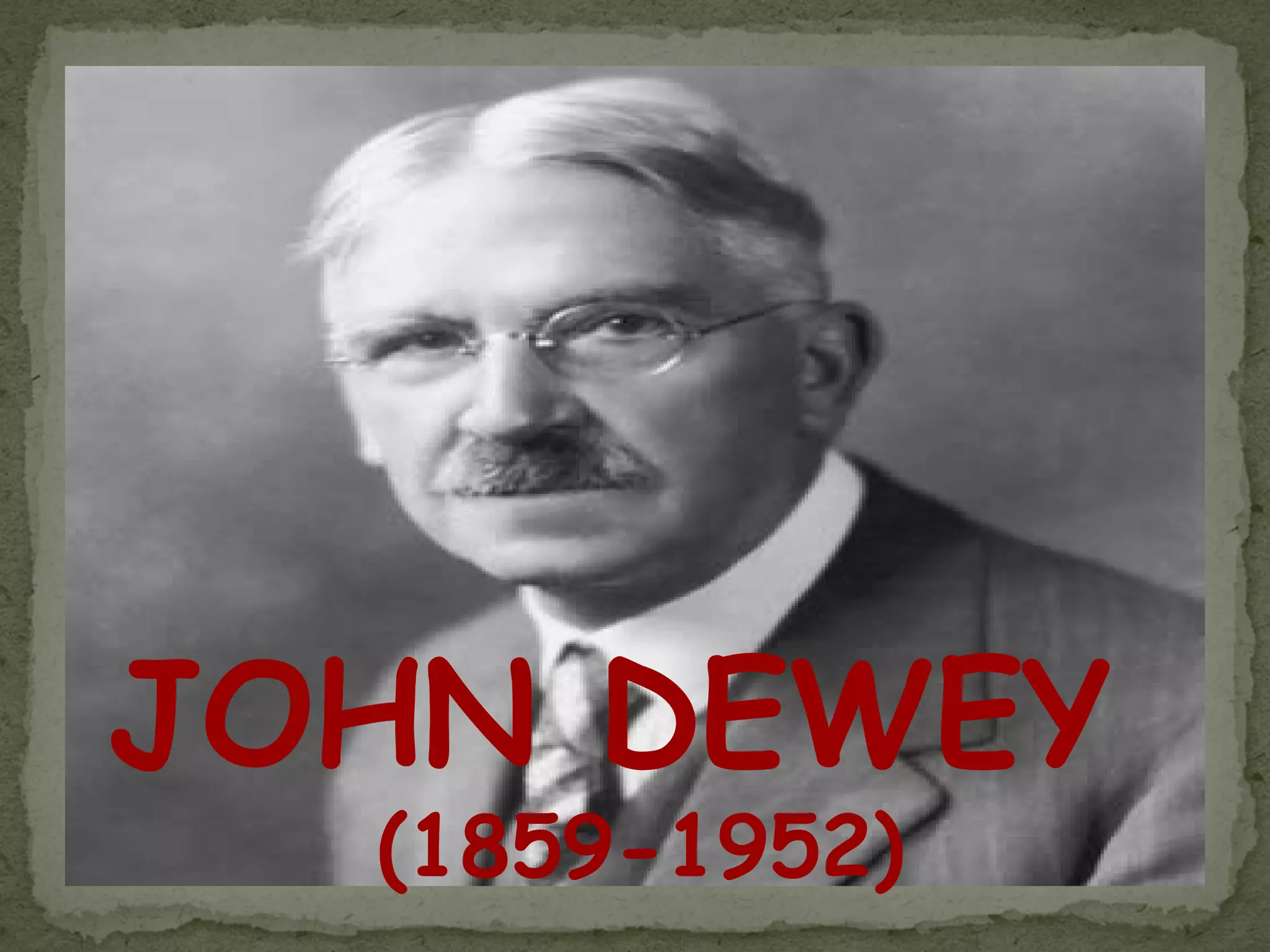
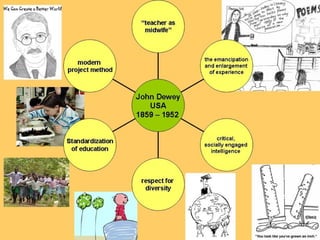
JOHN DEWEY
(1859-1952)
LIFE AND WORK
Biography
 Dewey was born in Burlington, Vermont in
1859.
 He lived in a period of immigration and
industrialization. That’s why ethnic, social
class, and religious diversity have influenced
his views on education.
 He obtained a PhD in 1884.
 He married Alice Chipman, which was one of
his students.
 In 1896 he opened the Laboratory School.
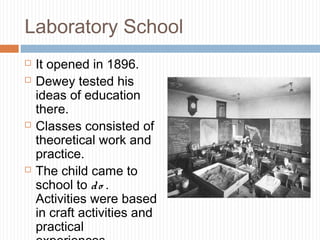
Laboratory School
 It opened in 1896.
 Dewey tested his
ideas of education
there.
 Classes consisted of
theoretical work and
practice.
 The child came to
school to do .
Activities were based
in craft activities and
practical
VIEW OF EDUCATION
His own view of Education
 Dewey rejected curriculum-centred view of
education and proposed a student-centred
view.
 His idea of education consisted in the
interaction of students with the curriculum in
order to make them part of their own
knowledge. The teacher’s role should be that
of facilitator or guide.
 He wanted to “reinstate into experience” the
subject-matter of the curriculum.
 He wanted to “psychologize” the curriculum by
constructing an environment in which the
Teaching-learning process
 The learning experience begins with the
stimulus that is a coordinated act involving the
sensory and motor actions of the child, and
the content in which the situation occurs.
 Learner’s past experiences are taken into
account in the teaching-learning process, as
well as the environment in which the event
takes place, and the level of engagement or
how involved the child is in the experience.
Theory of Experience
 His theory was based on:
 Continuity:
 the Past and Future Matter to the Present;
 past experiences influence the present situation and
the experience of the present moment will impact on
the experience of future moments.
 Interaction:
 education is living;
 present experience arises from interaction between
past experience and present situation.
Emancipation and Enlargement of
experience
 “Emancipation of experience” means to set
free experience.
 “Enlargement of experience” means to make
experience bigger, to extend its limits.
Educator’s task is to work with people so that
they have a greater understanding or
appreciation of their experiences.
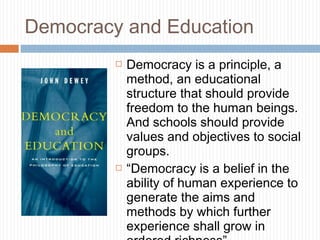
Democracy and Education
 Democracy is a principle, a
method, an educational
structure that should provide
freedom to the human beings.
And schools should provide
values and objectives to social
groups.
 “Democracy is a belief in the
ability of human experience to
generate the aims and
methods by which further
experience shall grow in
PEDAGOGIC CREED
Aim of Education
 The aim of education should be the realization
of one’s full potential and the ability to use
those skills for the greater good.
 School should teach students how to be
problem-solvers by helping them learn how to
think rather than what to think, and to improve
our minds, so as to enable them to think for
themselves.
 Schools should help students learn to live and
to work cooperatively with others.
John Dewey and Progressivism

John Dewey and Progressivism

  • 1.
  • 2.
  • 3.
    Biography  Dewey wasborn in Burlington, Vermont in 1859.  He lived in a period of immigration and industrialization. That’s why ethnic, social class, and religious diversity have influenced his views on education.  He obtained a PhD in 1884.  He married Alice Chipman, which was one of his students.  In 1896 he opened the Laboratory School.
  • 4.
    Laboratory School  Itopened in 1896.  Dewey tested his ideas of education there.  Classes consisted of theoretical work and practice.  The child came to school to do . Activities were based in craft activities and practical
  • 5.
  • 6.
    His own viewof Education  Dewey rejected curriculum-centred view of education and proposed a student-centred view.  His idea of education consisted in the interaction of students with the curriculum in order to make them part of their own knowledge. The teacher’s role should be that of facilitator or guide.  He wanted to “reinstate into experience” the subject-matter of the curriculum.  He wanted to “psychologize” the curriculum by constructing an environment in which the
  • 7.
    Teaching-learning process  Thelearning experience begins with the stimulus that is a coordinated act involving the sensory and motor actions of the child, and the content in which the situation occurs.  Learner’s past experiences are taken into account in the teaching-learning process, as well as the environment in which the event takes place, and the level of engagement or how involved the child is in the experience.
  • 8.
    Theory of Experience His theory was based on:  Continuity:  the Past and Future Matter to the Present;  past experiences influence the present situation and the experience of the present moment will impact on the experience of future moments.  Interaction:  education is living;  present experience arises from interaction between past experience and present situation.
  • 9.
    Emancipation and Enlargementof experience  “Emancipation of experience” means to set free experience.  “Enlargement of experience” means to make experience bigger, to extend its limits. Educator’s task is to work with people so that they have a greater understanding or appreciation of their experiences.
  • 10.
    Democracy and Education Democracy is a principle, a method, an educational structure that should provide freedom to the human beings. And schools should provide values and objectives to social groups.  “Democracy is a belief in the ability of human experience to generate the aims and methods by which further experience shall grow in
  • 11.
  • 12.
    Aim of Education The aim of education should be the realization of one’s full potential and the ability to use those skills for the greater good.  School should teach students how to be problem-solvers by helping them learn how to think rather than what to think, and to improve our minds, so as to enable them to think for themselves.  Schools should help students learn to live and to work cooperatively with others.