Downloaded 580 times
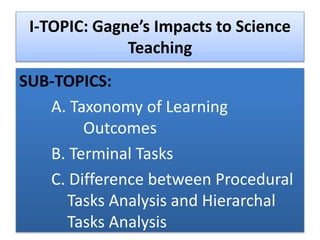
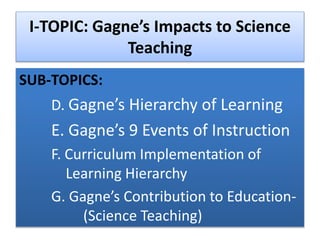
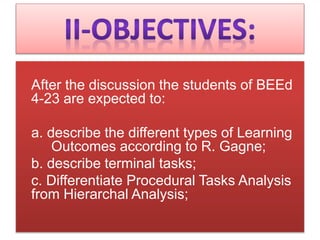
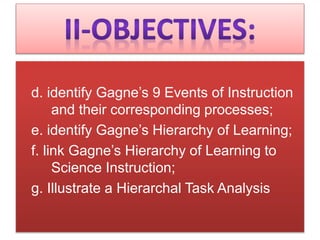
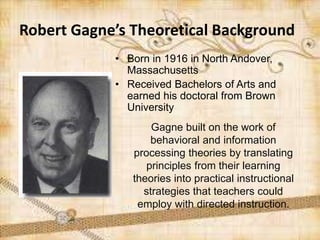
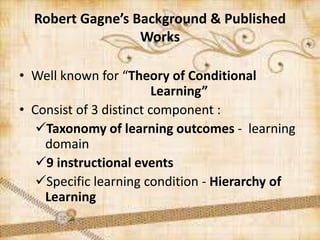
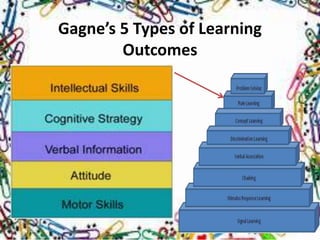
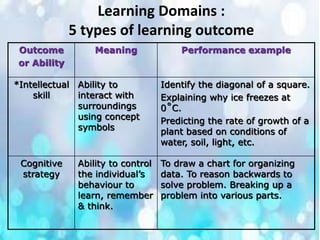
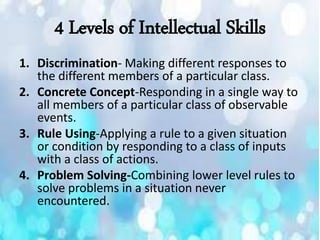
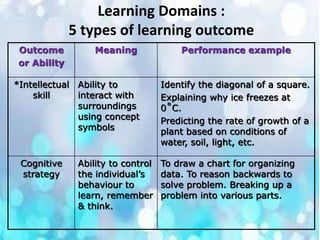
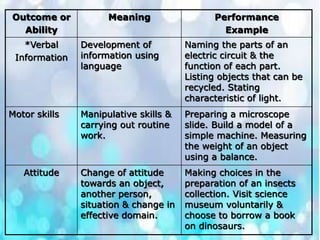
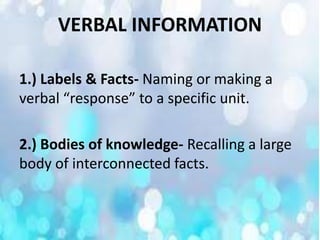
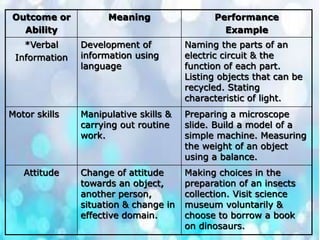
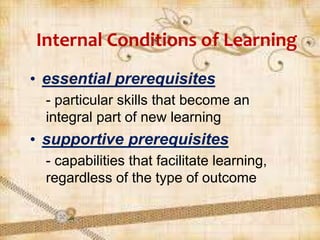
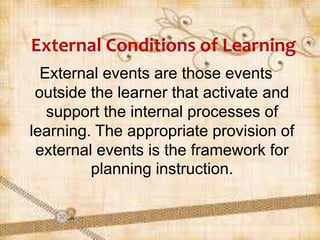
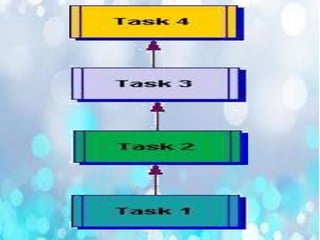
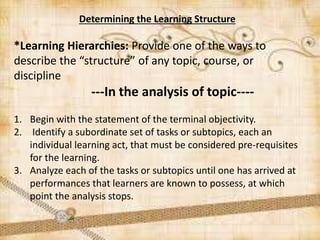
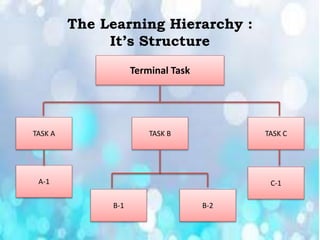
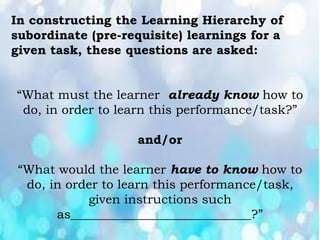
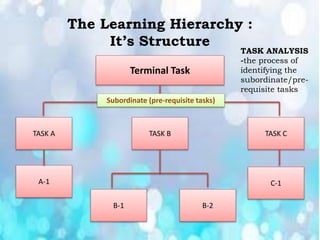
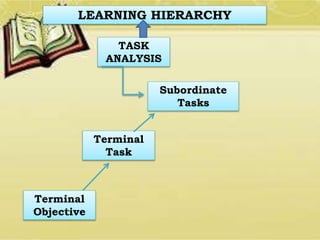
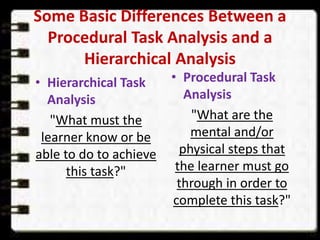
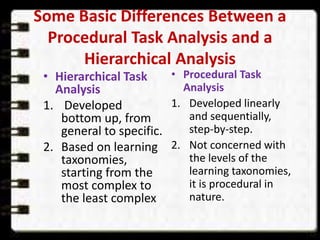
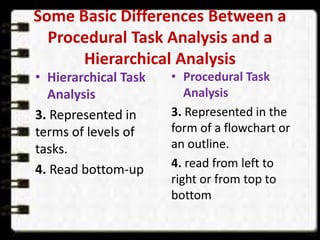
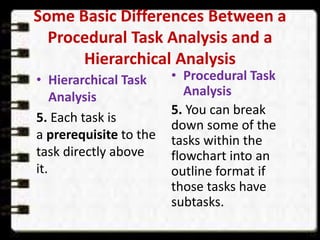
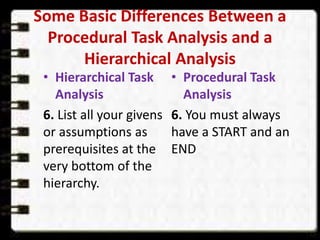
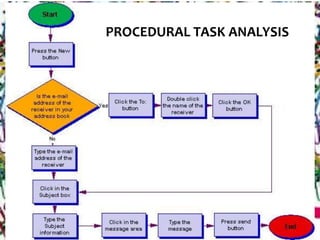
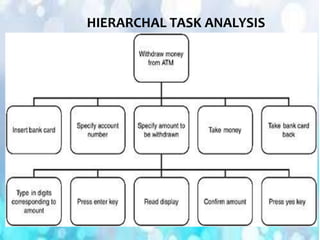
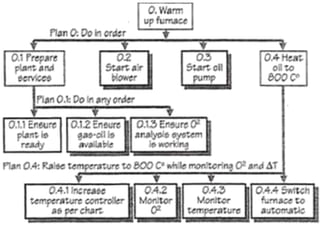
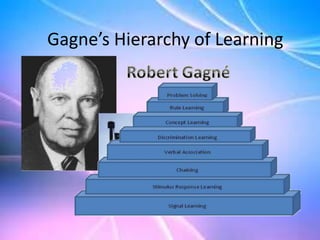
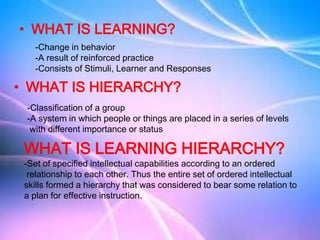
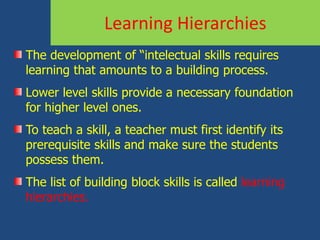
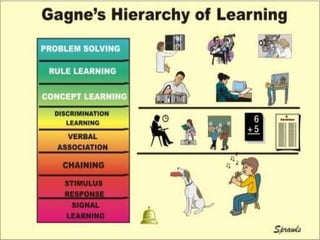
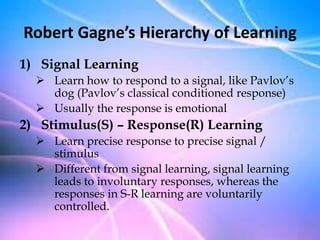
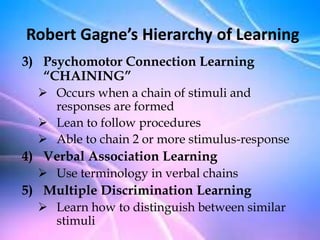
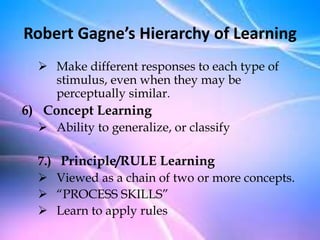
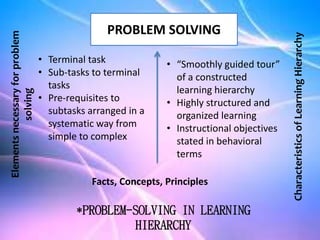
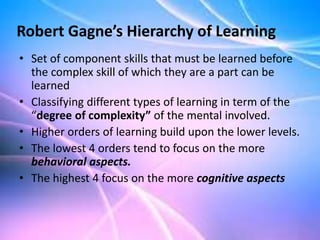
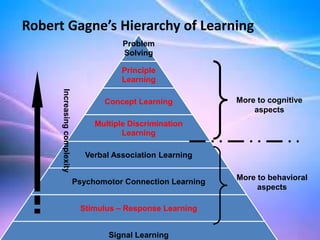
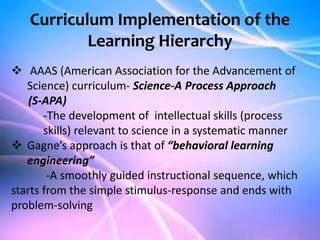
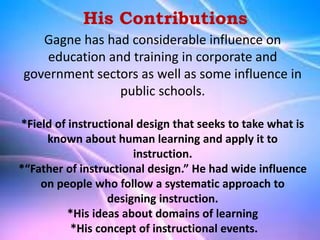
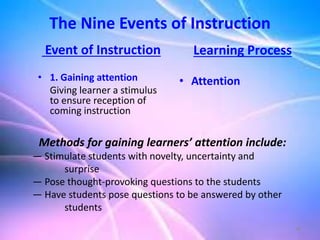
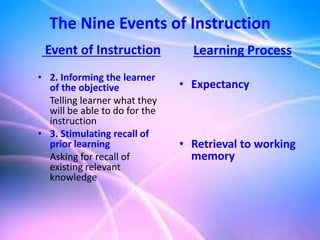
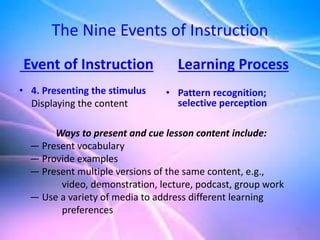
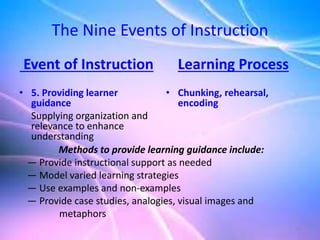
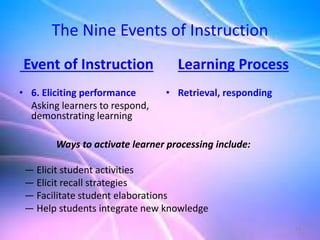
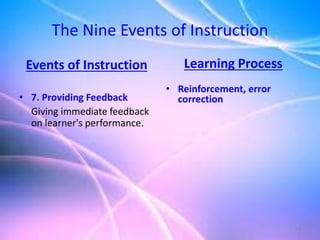
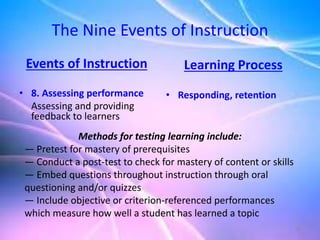
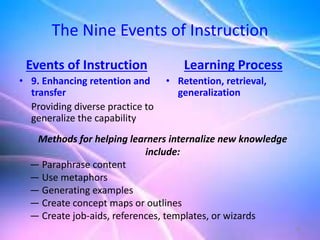


This document discusses Robert Gagne and his contributions to instructional design and science education. It specifically focuses on Gagne's taxonomy of learning outcomes, which includes five major categories: verbal information, intellectual skills, cognitive strategies, motor skills, and attitudes. The document also discusses Gagne's learning hierarchy, which proposes that learners must master lower-level prerequisites before moving to higher-level learning. Finally, the document compares procedural task analysis to hierarchical task analysis and outlines Gagne's nine events of instruction. The overall purpose is to introduce students to Gagne's influential instructional theories and how they can be applied to science teaching.


