Human Locomotion
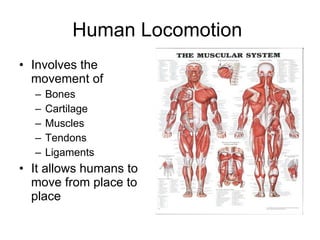
Human Locomotion  Involves the movement of  Bones  Cartilage  Muscles  Tendons  Ligaments  It allows humans to move from place to place
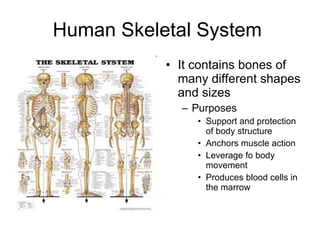
Human Skeletal System  It contains bones of many different shapes and sizes  Purposes  Support and protection of body structure  Anchors muscle action  Leverage fo body movement  Produces blood cells in the marrow
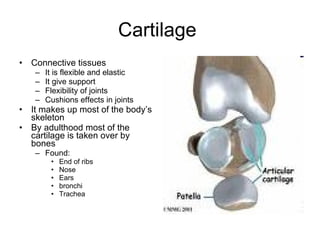
Cartilage  Connective tissues  It is flexible and elastic It give support  Flexibility of joints  Cushions effects in joints  It makes up most of the body’s skeleton  By adulthood most of the cartilage is taken over by bones  Found: End of ribs Nose  Ears bronchi  Trachea
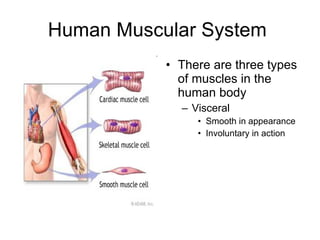
Human Muscular System  There are three types of muscles in the human body  Visceral  Smooth in appearance  Involuntary in action
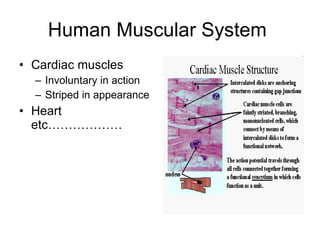
Human Muscular System  Cardiac muscles  Involuntary in action  Striped in appearance  Heart etc………………
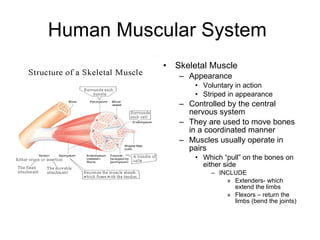
Human Muscular System  Skeletal Muscle Appearance  Voluntary in action  Striped in appearance  Controlled by the central nervous system They are used to move bones in a coordinated manner  Muscles usually operate in pairs  Which “pull” on the bones on either side INCLUDE  Extenders- which extend the limbs  Flexors – return the limbs (bend the joints)
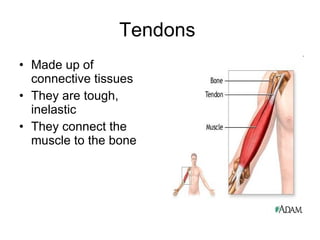
Tendons  Made up of connective tissues  They are tough, inelastic  They connect the muscle to the bone
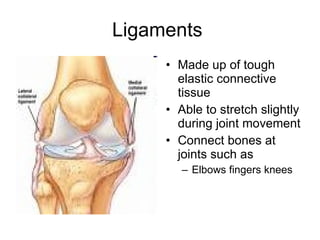
Ligaments  Made up of tough elastic connective tissue  Able to stretch slightly during joint movement Connect bones at joints such as  Elbows fingers knees
Problems that effect the Skeletal System  Arthritis  Tendonitis
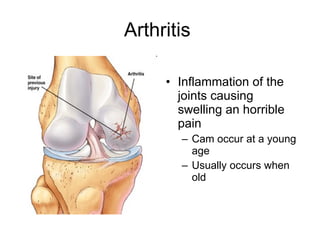
Arthritis  Inflammation of the joints causing swelling an horrible pain  Cam occur at a young age  Usually occurs when old
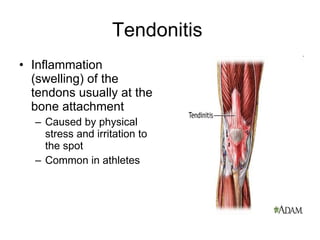
Tendonitis  Inflammation (swelling) of the tendons usually at the bone attachment  Caused by physical stress and irritation to the spot  Common in athletes

Human locomotion

  • 1.
  • 2.
    Human Locomotion Involves the movement of Bones Cartilage Muscles Tendons Ligaments It allows humans to move from place to place
  • 3.
    Human Skeletal System It contains bones of many different shapes and sizes Purposes Support and protection of body structure Anchors muscle action Leverage fo body movement Produces blood cells in the marrow
  • 4.
    Cartilage Connectivetissues It is flexible and elastic It give support Flexibility of joints Cushions effects in joints It makes up most of the body’s skeleton By adulthood most of the cartilage is taken over by bones Found: End of ribs Nose Ears bronchi Trachea
  • 5.
    Human Muscular System There are three types of muscles in the human body Visceral Smooth in appearance Involuntary in action
  • 6.
    Human Muscular System Cardiac muscles Involuntary in action Striped in appearance Heart etc………………
  • 7.
    Human Muscular System Skeletal Muscle Appearance Voluntary in action Striped in appearance Controlled by the central nervous system They are used to move bones in a coordinated manner Muscles usually operate in pairs Which “pull” on the bones on either side INCLUDE Extenders- which extend the limbs Flexors – return the limbs (bend the joints)
  • 8.
    Tendons Madeup of connective tissues They are tough, inelastic They connect the muscle to the bone
  • 9.
    Ligaments Madeup of tough elastic connective tissue Able to stretch slightly during joint movement Connect bones at joints such as Elbows fingers knees
  • 10.
    Problems that effectthe Skeletal System Arthritis Tendonitis
  • 11.
    Arthritis Inflammationof the joints causing swelling an horrible pain Cam occur at a young age Usually occurs when old
  • 12.
    Tendonitis Inflammation(swelling) of the tendons usually at the bone attachment Caused by physical stress and irritation to the spot Common in athletes