Name:___________________                                    Date:________
Living Environment                                          Rabbi Goldberg

                           Human Digestive System
Vocabulary
•__________ - life function by which humans use for energy, growth, and repair
•___________- mouth
•___________- wave of muscular contractions
•__________- microscopic parts that help with absorption in the small intestine
•____________- bile movements (semi solid stored in rectum)
•_____________ - splitting by adding water (break down od big pieces into
smaller ones)

  I.     Let’s Review
         a. One of the Life Process that is ________________________
            _________________________________________________
         b. Nutrition is needed for
                  i. _________________
                 ii. _________________
                iii. _________________
         c. In order for us to get nutrition we need to break down
            _________________________________________________
            __________________________________________________
  II.    Digestive System Overview
         a. There are four parts to digestion
                  i. __________- taking in food
                 ii. ___________- mechanical and chemical breakdown of food
                     so that it can be absorbed by the cells
               iii. ______________: cells lining the digestive tract take up
                     (absorb) small nutrient molecules
               iv. ________________: undigested material passes out of the
                     digestive tract
  III.   There are two ways digestion breaks up the food
         a. Mechanical digestion –
            ______________________________________________________
            ____________________________________________________
         b. Chemical digestion –
                  i. hydrolysis –
                     ________________________________________________
                     ________________________________________________
                     ( in other words; breaking complex molecules into simple
                     ones)
                 ii. The process of chemical digestion ( hydrolysis) is controlled
                     by _______________________
c. Examples of Chemical Digestion:
              i. Carbohydrates+ water -> simple sugars (glucose for
                 instance)
             ii. Proteins+ water -> amino acids
           iii. Lipids+ water -> 3 fatty acids +glycerol
IV.   HUMAN DIGESTIVE SYSTEM
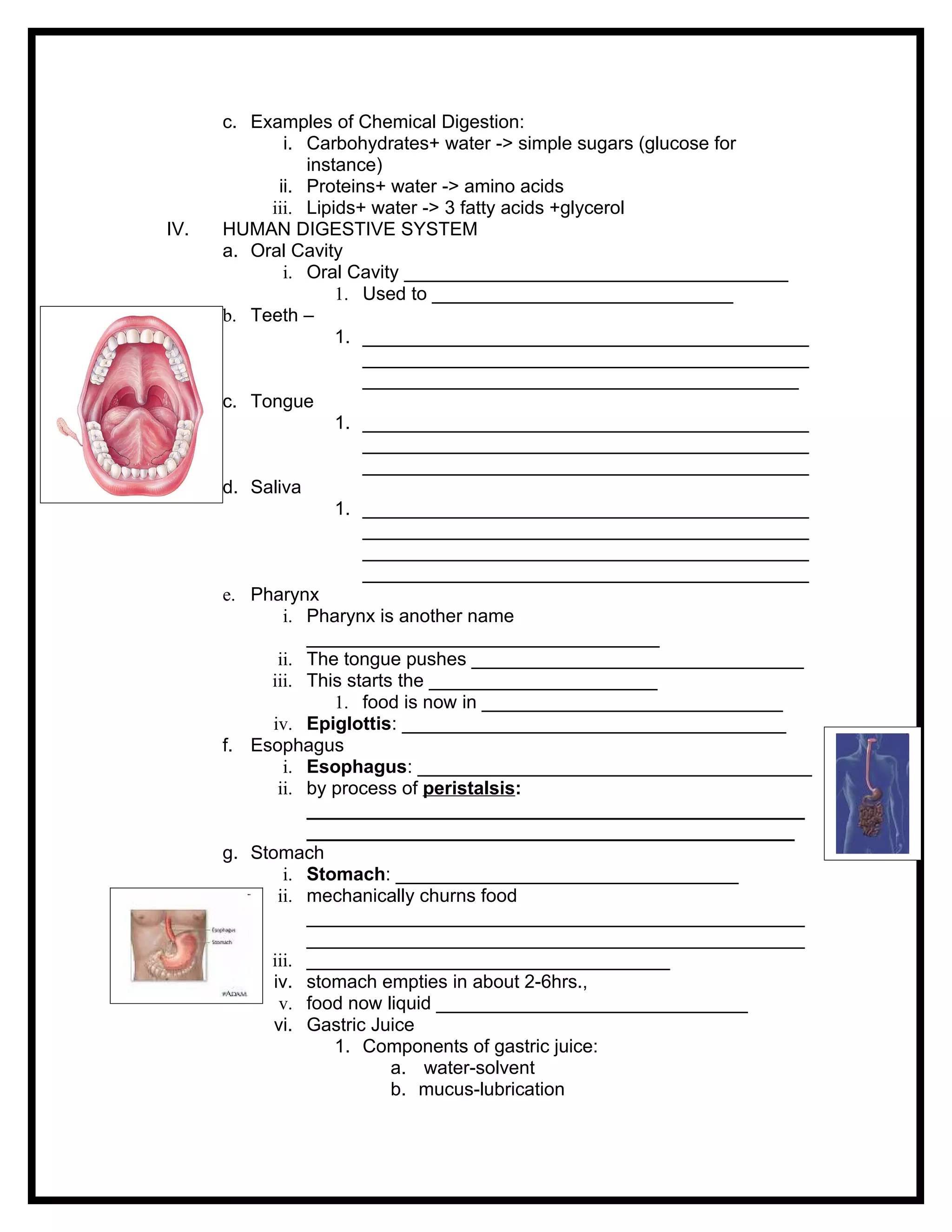
      a. Oral Cavity
              i. Oral Cavity _____________________________________
                     1. Used to _____________________________
      b. Teeth –
                     1. ___________________________________________
                        ___________________________________________
                        __________________________________________
      c. Tongue
                     1. ___________________________________________
                        ___________________________________________
                        ___________________________________________
      d. Saliva
                     1. ___________________________________________
                        ___________________________________________
                        ___________________________________________
                        ___________________________________________
      e. Pharynx
              i. Pharynx is another name
                 __________________________________
             ii. The tongue pushes ________________________________
           iii. This starts the ______________________
                     1. food is now in _____________________________
            iv. Epiglottis: _____________________________________
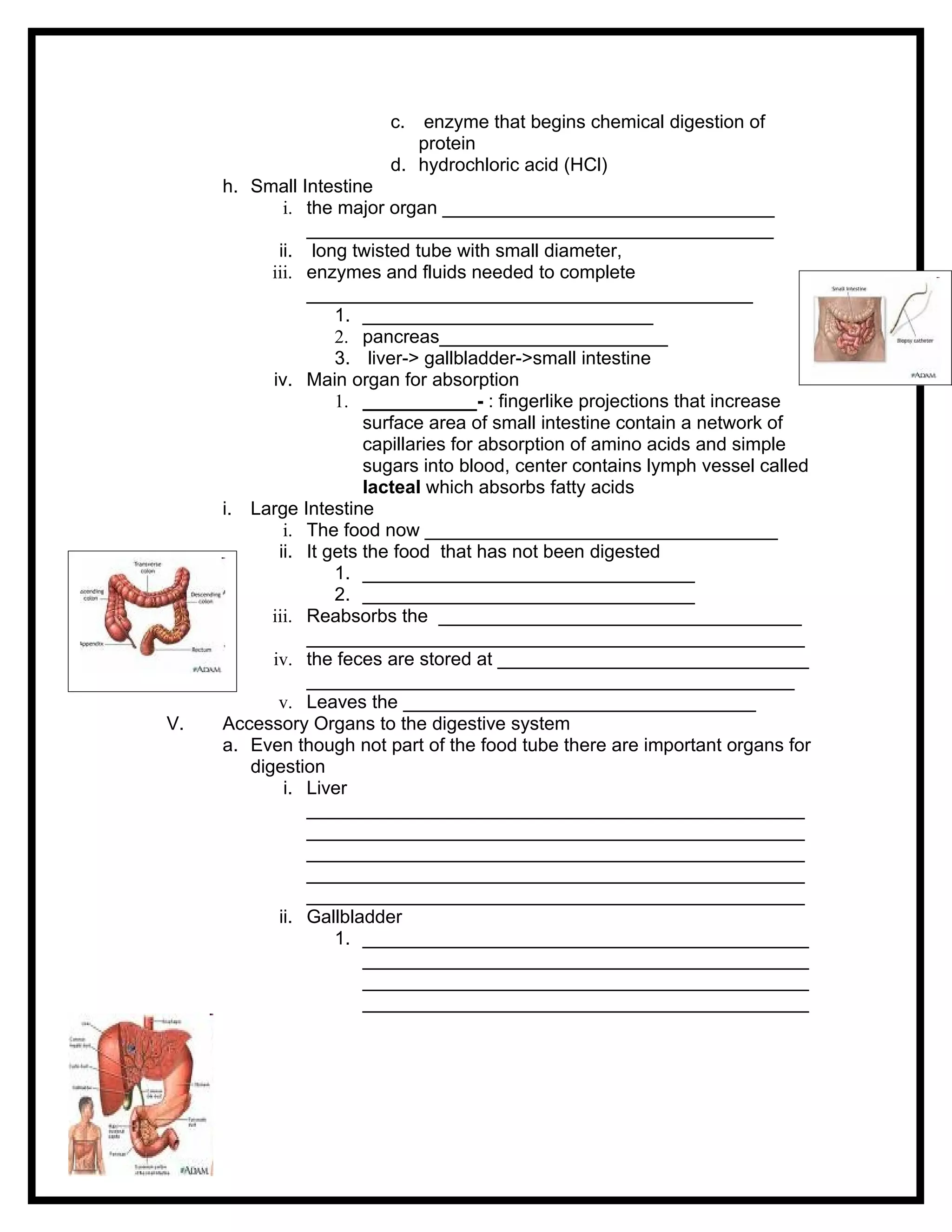
      f. Esophagus
              i. Esophagus: ______________________________________
             ii. by process of peristalsis:
                 ________________________________________________
                 _______________________________________________
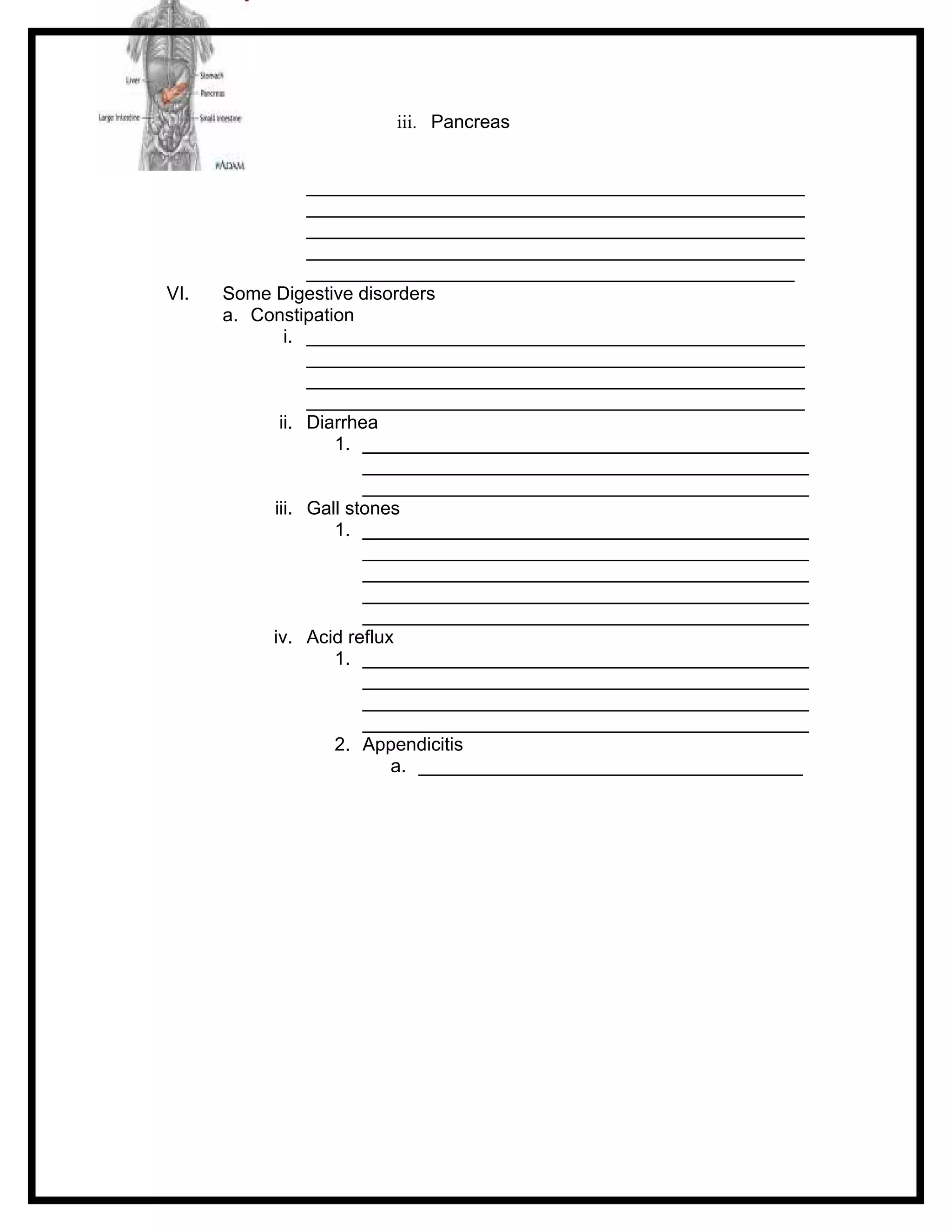
      g. Stomach
              i. Stomach: _________________________________
             ii. mechanically churns food
                 ________________________________________________
                 ________________________________________________
           iii. ___________________________________
            iv. stomach empties in about 2-6hrs.,
             v. food now liquid ______________________________
            vi. Gastric Juice
                     1. Components of gastric juice:
                           a. water-solvent
                           b. mucus-lubrication
c.  enzyme that begins chemical digestion of
                            protein
                         d. hydrochloric acid (HCl)
     h. Small Intestine
             i. the major organ ________________________________
                _____________________________________________
            ii. long twisted tube with small diameter,
           iii. enzymes and fluids needed to complete
                ___________________________________________
                    1. ____________________________
                    2. pancreas______________________
                    3. liver-> gallbladder->small intestine
           iv. Main organ for absorption
                    1. ___________- : fingerlike projections that increase
                        surface area of small intestine contain a network of
                        capillaries for absorption of amino acids and simple
                        sugars into blood, center contains lymph vessel called
                        lacteal which absorbs fatty acids
     i. Large Intestine
             i. The food now __________________________________
            ii. It gets the food that has not been digested
                    1. ________________________________
                    2. ________________________________
           iii. Reabsorbs the ___________________________________
                ________________________________________________
           iv. the feces are stored at ______________________________
                _______________________________________________
            v. Leaves the __________________________________
V.   Accessory Organs to the digestive system
     a. Even though not part of the food tube there are important organs for
        digestion
             i. Liver
                ________________________________________________
                ________________________________________________
                ________________________________________________
                ________________________________________________
                ________________________________________________
            ii. Gallbladder
                    1. ___________________________________________
                        ___________________________________________
                        ___________________________________________
                        ___________________________________________
iii. Pancreas


                ________________________________________________
                ________________________________________________
                ________________________________________________
                ________________________________________________
                _______________________________________________
VI.   Some Digestive disorders
      a. Constipation
             i. ________________________________________________
                ________________________________________________
                ________________________________________________
                ________________________________________________
            ii. Diarrhea
                   1. ___________________________________________
                       ___________________________________________
                       ___________________________________________
           iii. Gall stones
                   1. ___________________________________________
                       ___________________________________________
                       ___________________________________________
                       ___________________________________________
                       ___________________________________________
           iv. Acid reflux
                   1. ___________________________________________
                       ___________________________________________
                       ___________________________________________
                       ___________________________________________
                   2. Appendicitis
                          a. _____________________________________

Notes digestive system

  • 1.
    Name:___________________ Date:________ Living Environment Rabbi Goldberg Human Digestive System Vocabulary •__________ - life function by which humans use for energy, growth, and repair •___________- mouth •___________- wave of muscular contractions •__________- microscopic parts that help with absorption in the small intestine •____________- bile movements (semi solid stored in rectum) •_____________ - splitting by adding water (break down od big pieces into smaller ones) I. Let’s Review a. One of the Life Process that is ________________________ _________________________________________________ b. Nutrition is needed for i. _________________ ii. _________________ iii. _________________ c. In order for us to get nutrition we need to break down _________________________________________________ __________________________________________________ II. Digestive System Overview a. There are four parts to digestion i. __________- taking in food ii. ___________- mechanical and chemical breakdown of food so that it can be absorbed by the cells iii. ______________: cells lining the digestive tract take up (absorb) small nutrient molecules iv. ________________: undigested material passes out of the digestive tract III. There are two ways digestion breaks up the food a. Mechanical digestion – ______________________________________________________ ____________________________________________________ b. Chemical digestion – i. hydrolysis – ________________________________________________ ________________________________________________ ( in other words; breaking complex molecules into simple ones) ii. The process of chemical digestion ( hydrolysis) is controlled by _______________________
  • 2.
    c. Examples ofChemical Digestion: i. Carbohydrates+ water -> simple sugars (glucose for instance) ii. Proteins+ water -> amino acids iii. Lipids+ water -> 3 fatty acids +glycerol IV. HUMAN DIGESTIVE SYSTEM a. Oral Cavity i. Oral Cavity _____________________________________ 1. Used to _____________________________ b. Teeth – 1. ___________________________________________ ___________________________________________ __________________________________________ c. Tongue 1. ___________________________________________ ___________________________________________ ___________________________________________ d. Saliva 1. ___________________________________________ ___________________________________________ ___________________________________________ ___________________________________________ e. Pharynx i. Pharynx is another name __________________________________ ii. The tongue pushes ________________________________ iii. This starts the ______________________ 1. food is now in _____________________________ iv. Epiglottis: _____________________________________ f. Esophagus i. Esophagus: ______________________________________ ii. by process of peristalsis: ________________________________________________ _______________________________________________ g. Stomach i. Stomach: _________________________________ ii. mechanically churns food ________________________________________________ ________________________________________________ iii. ___________________________________ iv. stomach empties in about 2-6hrs., v. food now liquid ______________________________ vi. Gastric Juice 1. Components of gastric juice: a. water-solvent b. mucus-lubrication
  • 3.
    c. enzymethat begins chemical digestion of protein d. hydrochloric acid (HCl) h. Small Intestine i. the major organ ________________________________ _____________________________________________ ii. long twisted tube with small diameter, iii. enzymes and fluids needed to complete ___________________________________________ 1. ____________________________ 2. pancreas______________________ 3. liver-> gallbladder->small intestine iv. Main organ for absorption 1. ___________- : fingerlike projections that increase surface area of small intestine contain a network of capillaries for absorption of amino acids and simple sugars into blood, center contains lymph vessel called lacteal which absorbs fatty acids i. Large Intestine i. The food now __________________________________ ii. It gets the food that has not been digested 1. ________________________________ 2. ________________________________ iii. Reabsorbs the ___________________________________ ________________________________________________ iv. the feces are stored at ______________________________ _______________________________________________ v. Leaves the __________________________________ V. Accessory Organs to the digestive system a. Even though not part of the food tube there are important organs for digestion i. Liver ________________________________________________ ________________________________________________ ________________________________________________ ________________________________________________ ________________________________________________ ii. Gallbladder 1. ___________________________________________ ___________________________________________ ___________________________________________ ___________________________________________
  • 4.
    iii. Pancreas ________________________________________________ ________________________________________________ ________________________________________________ ________________________________________________ _______________________________________________ VI. Some Digestive disorders a. Constipation i. ________________________________________________ ________________________________________________ ________________________________________________ ________________________________________________ ii. Diarrhea 1. ___________________________________________ ___________________________________________ ___________________________________________ iii. Gall stones 1. ___________________________________________ ___________________________________________ ___________________________________________ ___________________________________________ ___________________________________________ iv. Acid reflux 1. ___________________________________________ ___________________________________________ ___________________________________________ ___________________________________________ 2. Appendicitis a. _____________________________________