HRIS-Human Resource Information
               System


1
Data vs Information
     Data - “Just the facts” >>raw facts


     Information - data that has been transformed into a more
      useful or meaningful form


2
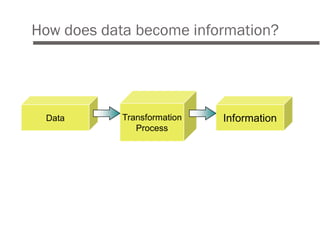
How does data become information?


 Data       Transformation   Information
               Process
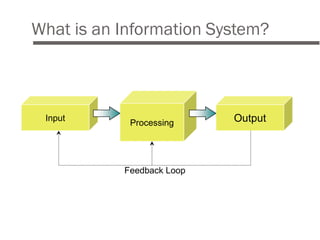
What is an Information System?


 Input
            Processing     Output


           Feedback Loop
What is a “Human Resource
    Information System”
     The application of computers to employee-related record keeping
      and reporting, and management decision making
     any organized approach for obtaining relevant and timely
      information as a base for human resource decisions
     HRIS is a set of inter related components working together to
      collect, process and store information to support HR decision
      making, coordination and
      control in an organization.


5
History of HRIS
     1950‟s - virtually non-existent
     1960‟s - only a select few
     1970‟s - greater need
     1980‟s - HRIS a reality in many orgs
     1990‟s - Numerous vendors, specialties


6
Typical HRIS Record Keeping
    Requirements
     Employee information
     Wage and salary data
     Review dates
     Benefits
     Education and training
     Attendance
     Performance data/appraisal results


7
Typical HRIS Reporting Reqs.
     Employee profiles/lists
     Summary reports on employee groups
     Historical trends in work-related info
     Person-position comparisons


8
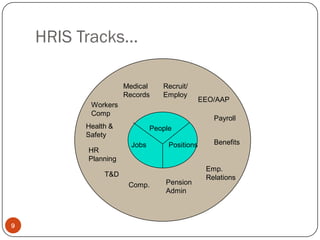
HRIS Tracks...

                      Medical     Recruit/
                      Records     Employ
                                                EEO/AAP
           Workers
           Comp
                                                   Payroll
          Health &             People
          Safety
                        Jobs        Positions      Benefits
           HR
           Planning
                                                 Emp.
               T&D                               Relations
                       Comp.       Pension
                                   Admin


9
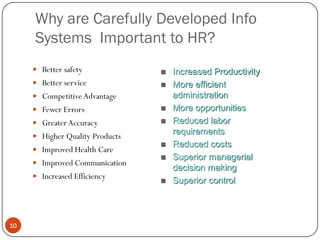
Why are Carefully Developed Info
     Systems Important to HR?
      Better safety                Increased Productivity
      Better service               More efficient
      Competitive Advantage         administration
      Fewer Errors                 More opportunities
      Greater Accuracy             Reduced labor
                                     requirements
      Higher Quality Products
                                    Reduced costs
      Improved Health Care
                                    Superior managerial
      Improved Communication
                                     decision making
      Increased Efficiency
                                    Superior control


10
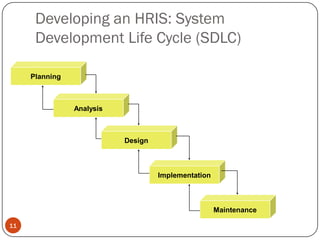
Developing an HRIS: System
      Development Life Cycle (SDLC)

     Planning


                Analysis


                           Design


                                    Implementation


                                                     Maintenance

11
How HRIS helps HR????
      HRIS can assist human resources in
       numerous ways, but particularly in their day-
       to-day duties by streamlining workflow
       processes through control processes, system
       interfaces and database validation.
      HRIS has can help a company primarily
       through the organisation of its people data,
       with far more accurate demographics around
       the business and cost allocations or cost
       centres.

12
 HRIS will add value is by pushing the management of
       employees back onto managers within the business
       and away from HR thus allowing people to self
       manage more importantly.
      Two other areas HRIS can assist HR in include
       gaining greater control of payroll processing at a
       fraction of the cost of outsourcing, and ensuring
       government and payroll tax compliance with
       automatic updates that keep you up-to-date on the
       latest regulations.


13
HRIS: The Strategic value
      Efficiency – cost & time
      Effectiveness – orientation on the most valuable
      asset of the organization – PEOPLE
           => Adding the strategic value to the
                       organization


14
HRIS: the way to gain
     competitive advantage
      PEOPLE, most valuable asset – competitive
       advantage
      • HRIS – manages PEOPLE efficiently and
       effectively

     HRIS – gaining competitive advantage


15
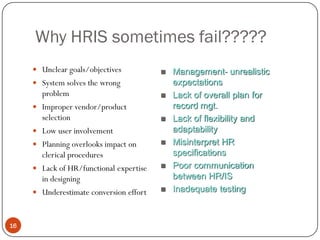
Why HRIS sometimes fail?????
      Unclear goals/objectives             Management- unrealistic
      System solves the wrong               expectations
       problem                              Lack of overall plan for
      Improper vendor/product               record mgt.
       selection                            Lack of flexibility and
      Low user involvement                  adaptability
      Planning overlooks impact on         Misinterpret HR
       clerical procedures                   specifications
      Lack of HR/functional expertise      Poor communication
       in designing                          between HR/IS
      Underestimate conversion effort      Inadequate testing


16
BENEFITS
     • Saving time
     • Saving costs
     • Work re-allocation


17
Saving time [efficiency]
      Easy data maintenance
      Administrative processes automated
      Employee „self-service‟
      Adequate information base that leads to timely and just
       decision making
      Responding faster to employee inquiries to enhance
       efficiency and productivity


18
Saving costs
      Less time spent on tasks = less money
      Minimum paperwork
      Timely and accurate decision making includes
      less cost


19
Work re-allocation
      Helping the employees perform better through effective
       career planning and performance management
      Integrating the human resource function with other business
       functions in the enterprise, to serve personnel better


20
HRIS – the latest and greatest
      core HRIS functions is intranet HR self-service
      online appraisals, career management, training
       registrations and publishing people related company
       information.
      HRIS can also integrate with desktop applications
       including e-mail, word document merges and
       schedules via triggered actions within the HRIS
      latest and greatest HRIS include time-clock systems,
       OLAP(online analytical processing databases), real
       time systems, web GUI’s and scanned data.


21
HRIS pitfalls
      HRIS is lack of buy-in from important parties
      Another common issue is that HR and payroll
       go forward and purchase software that’s not
       compatible with the mainstream organisation
       or is not compatible with a broader IT strategy
      Reduction in HR’s involvement in the
       everyday processing of paper flow.


22
HRIS: Key message
      “By automating Human Resource practices,HRIS
       saves time and money, effectively reallocates
       work processes and thus provides competitive
         advantage and adds strategic value to the
                      organization.”


23

Hris

  • 1.
  • 2.
    Data vs Information  Data - “Just the facts” >>raw facts  Information - data that has been transformed into a more useful or meaningful form 2
  • 3.
    How does databecome information? Data Transformation Information Process
  • 4.
    What is anInformation System? Input Processing Output Feedback Loop
  • 5.
    What is a“Human Resource Information System”  The application of computers to employee-related record keeping and reporting, and management decision making  any organized approach for obtaining relevant and timely information as a base for human resource decisions  HRIS is a set of inter related components working together to collect, process and store information to support HR decision making, coordination and control in an organization. 5
  • 6.
    History of HRIS  1950‟s - virtually non-existent  1960‟s - only a select few  1970‟s - greater need  1980‟s - HRIS a reality in many orgs  1990‟s - Numerous vendors, specialties 6
  • 7.
    Typical HRIS RecordKeeping Requirements  Employee information  Wage and salary data  Review dates  Benefits  Education and training  Attendance  Performance data/appraisal results 7
  • 8.
    Typical HRIS ReportingReqs.  Employee profiles/lists  Summary reports on employee groups  Historical trends in work-related info  Person-position comparisons 8
  • 9.
    HRIS Tracks... Medical Recruit/ Records Employ EEO/AAP Workers Comp Payroll Health & People Safety Jobs Positions Benefits HR Planning Emp. T&D Relations Comp. Pension Admin 9
  • 10.
    Why are CarefullyDeveloped Info Systems Important to HR?  Better safety  Increased Productivity  Better service  More efficient  Competitive Advantage administration  Fewer Errors  More opportunities  Greater Accuracy  Reduced labor requirements  Higher Quality Products  Reduced costs  Improved Health Care  Superior managerial  Improved Communication decision making  Increased Efficiency  Superior control 10
  • 11.
    Developing an HRIS:System Development Life Cycle (SDLC) Planning Analysis Design Implementation Maintenance 11
  • 12.
    How HRIS helpsHR????  HRIS can assist human resources in numerous ways, but particularly in their day- to-day duties by streamlining workflow processes through control processes, system interfaces and database validation.  HRIS has can help a company primarily through the organisation of its people data, with far more accurate demographics around the business and cost allocations or cost centres. 12
  • 13.
     HRIS willadd value is by pushing the management of employees back onto managers within the business and away from HR thus allowing people to self manage more importantly.  Two other areas HRIS can assist HR in include gaining greater control of payroll processing at a fraction of the cost of outsourcing, and ensuring government and payroll tax compliance with automatic updates that keep you up-to-date on the latest regulations. 13
  • 14.
    HRIS: The Strategicvalue  Efficiency – cost & time  Effectiveness – orientation on the most valuable asset of the organization – PEOPLE => Adding the strategic value to the organization 14
  • 15.
    HRIS: the wayto gain competitive advantage  PEOPLE, most valuable asset – competitive advantage  • HRIS – manages PEOPLE efficiently and effectively HRIS – gaining competitive advantage 15
  • 16.
    Why HRIS sometimesfail?????  Unclear goals/objectives  Management- unrealistic  System solves the wrong expectations problem  Lack of overall plan for  Improper vendor/product record mgt. selection  Lack of flexibility and  Low user involvement adaptability  Planning overlooks impact on  Misinterpret HR clerical procedures specifications  Lack of HR/functional expertise  Poor communication in designing between HR/IS  Underestimate conversion effort  Inadequate testing 16
  • 17.
    BENEFITS • Saving time • Saving costs • Work re-allocation 17
  • 18.
    Saving time [efficiency]  Easy data maintenance  Administrative processes automated  Employee „self-service‟  Adequate information base that leads to timely and just decision making  Responding faster to employee inquiries to enhance efficiency and productivity 18
  • 19.
    Saving costs  Less time spent on tasks = less money  Minimum paperwork  Timely and accurate decision making includes less cost 19
  • 20.
    Work re-allocation  Helping the employees perform better through effective career planning and performance management  Integrating the human resource function with other business functions in the enterprise, to serve personnel better 20
  • 21.
    HRIS – thelatest and greatest  core HRIS functions is intranet HR self-service  online appraisals, career management, training registrations and publishing people related company information.  HRIS can also integrate with desktop applications including e-mail, word document merges and schedules via triggered actions within the HRIS  latest and greatest HRIS include time-clock systems, OLAP(online analytical processing databases), real time systems, web GUI’s and scanned data. 21
  • 22.
    HRIS pitfalls  HRIS is lack of buy-in from important parties  Another common issue is that HR and payroll go forward and purchase software that’s not compatible with the mainstream organisation or is not compatible with a broader IT strategy  Reduction in HR’s involvement in the everyday processing of paper flow. 22
  • 23.
    HRIS: Key message  “By automating Human Resource practices,HRIS saves time and money, effectively reallocates work processes and thus provides competitive advantage and adds strategic value to the organization.” 23