Jyotiba Phule
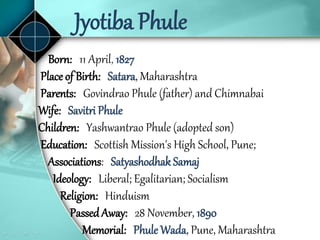
Born: 11 April, 1827
Place of Birth: Satara, Maharashtra
Parents: Govindrao Phule (father) and Chimnabai
Wife: Savitri Phule
Children: Yashwantrao Phule (adopted son)
Education: Scottish Mission's High School, Pune;
Associations: Satyashodhak Samaj
Ideology: Liberal; Egalitarian; Socialism
Religion: Hinduism
PassedAway: 28 November, 1890
Memorial: Phule Wada, Pune, Maharashtra
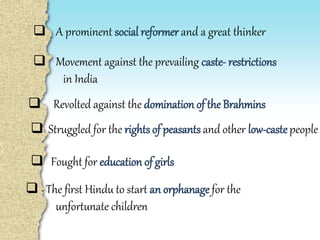
 A prominent social reformer and a great thinker
 Movement against the prevailing caste- restrictions
in India
 Revolted against the domination of the Brahmins
 Fought for education of girls
 Struggled for the rights of peasants and other low-caste people
 The first Hindu to start an orphanage for the
unfortunate children
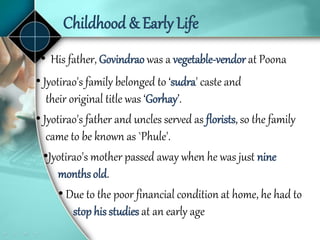
Childhood & Early Life
• His father, Govindrao was a vegetable-vendor at Poona
• Due to the poor financial condition at home, he had to
stop his studies at an early age
• Jyotirao's family belonged to ‘sudra' caste and
their original title was ‘Gorhay’.
• Jyotirao's father and uncles served as florists, so the family
came to be known as `Phule'.
•Jyotirao's mother passed away when he was just nine
months old.
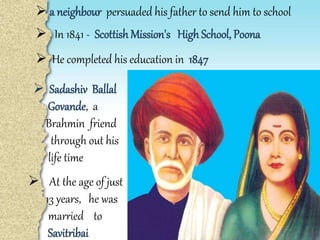
 a neighbour persuaded his father to send him to school
 In 1841 - Scottish Mission's High School, Poona
 He completed his education in 1847
 Sadashiv Ballal
Govande, a
Brahmin friend
through out his
life time
 At the age of just
13 years, he was
married to
Savitribai
Social Movements
•In 1848 Jyotirao was invited to attend the wedding of his
friend, who belonged to Brahmin family.
•But at the wedding the relatives of the bridegroom insulted
and abused Jyotirao when they came to know about his origins.
• Jyotirao left the ceremony and made up his mind to challenge
the prevailing caste-system and social restrictions.
• He made it his life’s work to hammer away the social
majoritarian domination and aimed at emancipation of all
human beings who were subjected to this social
deprivation.
After reading Thomas
Paine's famous book 'The
Rights of Man', Jyotirao was
greatly influenced by his
ideas.
He believed that
enlightenment of the women
and lower castepeoplewas
the only solution to combat
the social evils.
Efforts for Women Education
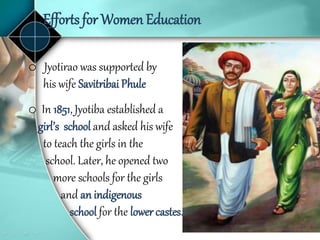
o Jyotirao was supported by
his wife Savitribai Phule
o In 1851, Jyotiba established a
girl’s school and asked his wife
to teach the girls in the
school. Later, he opened two
more schools for the girls
and an indigenous
school for the lower castes.
 Jyotiba realised the pathetic conditions of widows and
established an ashramfor young widows and eventually
became advocate of the idea of WidowRemarriage.
 Jyotiba was pained by their plight and established an
orphanage in 1854 to shelter these unfortunate souls from
perishing at the society’s cruel hands
 At that time Some girls often became widows before they even
hit puberty and were left without any family support
Elimination of Caste Discrimination
o Jyotirao attacked the orthodox Brahmins and other upper
castes and termed them as "hypocrites"
o He urged the "peasants" and "proletariat" to refuse to obey
the restrictions imposed upon them.
o Jyotirao also supported by some Brahmin friends who
extended their support to make the movement
successful.
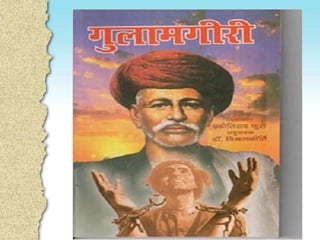
o He also wrote the “GULAMGIRI” by describing about the
domination and oppression of Brahmins
Satya Shodhak Samaj
 The purpose of the Satya Shodhak Samaj was to decontaminate
the society from caste discrimination
 On 24 September 1873, Phule formed (Society of the seekers of
truth) to focus on the rights of lower class
 Savitribai became the head of the women's section, which
included ninety femalemembers
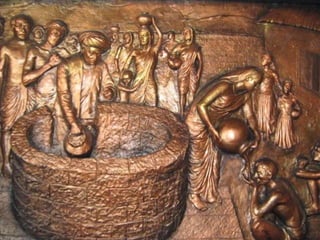
 In 1868, he decided to construct a common bathing tank
outside his house to exhibit that all human beings are
equal, regardless their caste
• Jyotiba had penned a number of literary articles and books
in his lifetime and most were based on his ideology of social
reforms . “Shetkarayacha Aasud”.
• He also penned some stories like “Tritiya Ratna”,
“Brahmananche Kasab”, “Ishara”.
• He wrote dramas like “Satsar” Ank 1 and 2, which were
enacted under his directives to spread awareness
against social injustice.
Published Works
Death
 He was also a cultivator and contractor for the Municipal
Corporation.
 He served as Commissioner of the Poona Municipality between
1876 and 1883.
 Jyotiba suffered a stroke in 1888 and was rendered paralyzed.
 On 28 November, 1890 the great social reformer, Mahatma
Jyotirao Phule, passed away
An early biography of Phule was the “Mahatma Jotirao Phule
yanche charitra” by P. S. Patil, Chikali.
And “Mahatma Jyotibha Phule: Father of Our Social
Revolution” by Dananjay Keer in 1974
•The full-lengthstatue at the premises of
Vidhan Bhavan
•Mahatma Phule Museum-Pune
•Mahatma Jyotiba Phule Mandai
•M.J.P.Rohilkhanduniversity
•Mahatma phule Krishi Vidyapeeth in Rahuri,
Ahmednagar District, Maharastra
Commemoration

Jyotiba phule

  • 2.
    Jyotiba Phule Born: 11April, 1827 Place of Birth: Satara, Maharashtra Parents: Govindrao Phule (father) and Chimnabai Wife: Savitri Phule Children: Yashwantrao Phule (adopted son) Education: Scottish Mission's High School, Pune; Associations: Satyashodhak Samaj Ideology: Liberal; Egalitarian; Socialism Religion: Hinduism PassedAway: 28 November, 1890 Memorial: Phule Wada, Pune, Maharashtra
  • 4.
     A prominentsocial reformer and a great thinker  Movement against the prevailing caste- restrictions in India  Revolted against the domination of the Brahmins  Fought for education of girls  Struggled for the rights of peasants and other low-caste people  The first Hindu to start an orphanage for the unfortunate children
  • 5.
    Childhood & EarlyLife • His father, Govindrao was a vegetable-vendor at Poona • Due to the poor financial condition at home, he had to stop his studies at an early age • Jyotirao's family belonged to ‘sudra' caste and their original title was ‘Gorhay’. • Jyotirao's father and uncles served as florists, so the family came to be known as `Phule'. •Jyotirao's mother passed away when he was just nine months old.
  • 6.
     a neighbourpersuaded his father to send him to school  In 1841 - Scottish Mission's High School, Poona  He completed his education in 1847  Sadashiv Ballal Govande, a Brahmin friend through out his life time  At the age of just 13 years, he was married to Savitribai
  • 7.
    Social Movements •In 1848Jyotirao was invited to attend the wedding of his friend, who belonged to Brahmin family. •But at the wedding the relatives of the bridegroom insulted and abused Jyotirao when they came to know about his origins. • Jyotirao left the ceremony and made up his mind to challenge the prevailing caste-system and social restrictions. • He made it his life’s work to hammer away the social majoritarian domination and aimed at emancipation of all human beings who were subjected to this social deprivation.
  • 8.
    After reading Thomas Paine'sfamous book 'The Rights of Man', Jyotirao was greatly influenced by his ideas. He believed that enlightenment of the women and lower castepeoplewas the only solution to combat the social evils.
  • 9.
    Efforts for WomenEducation o Jyotirao was supported by his wife Savitribai Phule o In 1851, Jyotiba established a girl’s school and asked his wife to teach the girls in the school. Later, he opened two more schools for the girls and an indigenous school for the lower castes.
  • 10.
     Jyotiba realisedthe pathetic conditions of widows and established an ashramfor young widows and eventually became advocate of the idea of WidowRemarriage.  Jyotiba was pained by their plight and established an orphanage in 1854 to shelter these unfortunate souls from perishing at the society’s cruel hands  At that time Some girls often became widows before they even hit puberty and were left without any family support
  • 11.
    Elimination of CasteDiscrimination o Jyotirao attacked the orthodox Brahmins and other upper castes and termed them as "hypocrites" o He urged the "peasants" and "proletariat" to refuse to obey the restrictions imposed upon them. o Jyotirao also supported by some Brahmin friends who extended their support to make the movement successful. o He also wrote the “GULAMGIRI” by describing about the domination and oppression of Brahmins
  • 13.
    Satya Shodhak Samaj The purpose of the Satya Shodhak Samaj was to decontaminate the society from caste discrimination  On 24 September 1873, Phule formed (Society of the seekers of truth) to focus on the rights of lower class  Savitribai became the head of the women's section, which included ninety femalemembers  In 1868, he decided to construct a common bathing tank outside his house to exhibit that all human beings are equal, regardless their caste
  • 15.
    • Jyotiba hadpenned a number of literary articles and books in his lifetime and most were based on his ideology of social reforms . “Shetkarayacha Aasud”. • He also penned some stories like “Tritiya Ratna”, “Brahmananche Kasab”, “Ishara”. • He wrote dramas like “Satsar” Ank 1 and 2, which were enacted under his directives to spread awareness against social injustice. Published Works
  • 16.
    Death  He wasalso a cultivator and contractor for the Municipal Corporation.  He served as Commissioner of the Poona Municipality between 1876 and 1883.  Jyotiba suffered a stroke in 1888 and was rendered paralyzed.  On 28 November, 1890 the great social reformer, Mahatma Jyotirao Phule, passed away
  • 17.
    An early biographyof Phule was the “Mahatma Jotirao Phule yanche charitra” by P. S. Patil, Chikali. And “Mahatma Jyotibha Phule: Father of Our Social Revolution” by Dananjay Keer in 1974 •The full-lengthstatue at the premises of Vidhan Bhavan •Mahatma Phule Museum-Pune •Mahatma Jyotiba Phule Mandai •M.J.P.Rohilkhanduniversity •Mahatma phule Krishi Vidyapeeth in Rahuri, Ahmednagar District, Maharastra Commemoration