
H R I S 
HUMAN RESOURCE 
INFORMATION SYSTEM 
Rohit Raina 
613-MBA-2013
Introduction 
 System used to acquire, store, 
manipulate, analyse, retrieve, and 
distribute information regarding an 
organization’s human resources. An HRIS is 
not simply computer hardware and 
associated HR-related software. Although 
an HRIS includes hardware and software, 
it also includes people, forms, policies and 
procedures, and data.
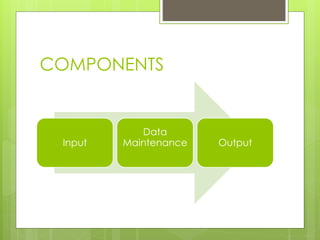
COMPONENTS 
Input 
Data 
Maintenance Output
Success Factors For HRIS 
 Senior Management Support 
 Involvement of Stakeholders 
 Risk Assessment 
 Job Analysis 
 Implementing Methodology 
 Business process overview
Types of HRIS 
 Electronic Data Processing (EDP) 
 Management Information Systems (MIS), 
and 
 Decision Support Systems (DSS)
Electronic Data Processing 
 Basic characteristics include: 
• A focus on data, storage, 
processing, and flows at the 
operational level 
• Efficient transaction processing 
• Scheduled and optimised computer 
runs 
• Integrated files for related jobs 
• Summary reports for management
Management Information 
System 
 An information focus, aimed at middle 
managers 
 Structured information flows 
 Integration of EDP jobs by business 
function (production MIS, marketing MIS) 
 Inquiry and report generation (usually 
with a data base)
Decision Support System 
 Decision focused, aimed at top managers 
and executive decision makers 
 Emphasis on flexibility, adaptability, and 
quick response 
 User initiated and controlled 
 Support for the personal decision-making 
styles of individual managers
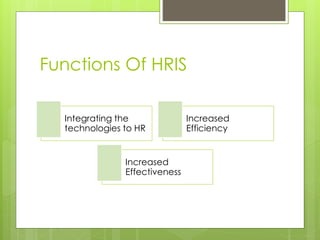
Functions Of HRIS 
Integrating the 
technologies to HR 
Increased 
Efficiency 
Increased 
Effectiveness
INTEGRATING THE 
TECHNOLOGY WITH HR 
 The developments in Information 
Technology have dramatically affected 
traditional HR functions with nearly every 
HR function (example, compensation, 
staffing, and training) experiencing some 
sort of reengineering of its processes. 
However, this process of change has 
created significant challenges for HR 
professionals resulting in the 
transformation of traditional processes 
into on-line processes.
INCREASED EFFICIENCY 
 Rapid computing technology has allowed 
more transactions to occur with fewer 
fixed resources. Typical examples are 
payroll, flexible benefits administration, 
and health benefits processing.
INCREASED EFFECTIVENESS 
 Most often, as with processes, computer 
technology is designed to improve 
effectiveness either by in terms of the 
accuracy of information or by using the 
technology to simplify the process. This is 
especially the case where large data sets 
require reconciliation.
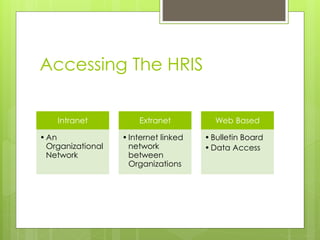
Accessing The HRIS 
Intranet 
•An 
Organizational 
Network 
Extranet 
• Internet linked 
network 
between 
Organizations 
Web Based 
• Bulletin Board 
•Data Access
Warehousing 
 An HRDM has to look at the volume of 
information to be stored. 
 The HRIS must factor the kind of 
information and its volume required for 
warehousing.
Applications Of HRIS 
 HR Planning 
 Personal administration. 
 Salary administration. 
 Leave/absence recording. 
 Skill inventory. 
 Medical history. 
 Performance appraisal. 
 Compensation and benefits 
 Training and Development 
 Analysis and Records 
 Employee Relations
Limitations 
 It can be expensive. 
 It can be inconvenient to those who are 
uncomfortable with computers. 
 User managers does not get exactly the 
reports what they want. 
 Computers cannot substitute human 
being.
SUMMARY 
 HRIS is an effective and efficient catalyst 
for integrating human resource 
management and Information 
Technology. This was common with all the 
various definitions of HRIS. HRIS as a system 
support HR functional applications such as 
employee selection and placement, 
payroll, pension and benefits 
management, intake and training 
projections just to mention but a few.
Thank You.

Hr-hris

  • 1.
    H R IS HUMAN RESOURCE INFORMATION SYSTEM Rohit Raina 613-MBA-2013
  • 2.
    Introduction  Systemused to acquire, store, manipulate, analyse, retrieve, and distribute information regarding an organization’s human resources. An HRIS is not simply computer hardware and associated HR-related software. Although an HRIS includes hardware and software, it also includes people, forms, policies and procedures, and data.
  • 3.
    COMPONENTS Input Data Maintenance Output
  • 4.
    Success Factors ForHRIS  Senior Management Support  Involvement of Stakeholders  Risk Assessment  Job Analysis  Implementing Methodology  Business process overview
  • 5.
    Types of HRIS  Electronic Data Processing (EDP)  Management Information Systems (MIS), and  Decision Support Systems (DSS)
  • 6.
    Electronic Data Processing  Basic characteristics include: • A focus on data, storage, processing, and flows at the operational level • Efficient transaction processing • Scheduled and optimised computer runs • Integrated files for related jobs • Summary reports for management
  • 7.
    Management Information System  An information focus, aimed at middle managers  Structured information flows  Integration of EDP jobs by business function (production MIS, marketing MIS)  Inquiry and report generation (usually with a data base)
  • 8.
    Decision Support System  Decision focused, aimed at top managers and executive decision makers  Emphasis on flexibility, adaptability, and quick response  User initiated and controlled  Support for the personal decision-making styles of individual managers
  • 9.
    Functions Of HRIS Integrating the technologies to HR Increased Efficiency Increased Effectiveness
  • 10.
    INTEGRATING THE TECHNOLOGYWITH HR  The developments in Information Technology have dramatically affected traditional HR functions with nearly every HR function (example, compensation, staffing, and training) experiencing some sort of reengineering of its processes. However, this process of change has created significant challenges for HR professionals resulting in the transformation of traditional processes into on-line processes.
  • 11.
    INCREASED EFFICIENCY Rapid computing technology has allowed more transactions to occur with fewer fixed resources. Typical examples are payroll, flexible benefits administration, and health benefits processing.
  • 12.
    INCREASED EFFECTIVENESS Most often, as with processes, computer technology is designed to improve effectiveness either by in terms of the accuracy of information or by using the technology to simplify the process. This is especially the case where large data sets require reconciliation.
  • 13.
    Accessing The HRIS Intranet •An Organizational Network Extranet • Internet linked network between Organizations Web Based • Bulletin Board •Data Access
  • 14.
    Warehousing  AnHRDM has to look at the volume of information to be stored.  The HRIS must factor the kind of information and its volume required for warehousing.
  • 15.
    Applications Of HRIS  HR Planning  Personal administration.  Salary administration.  Leave/absence recording.  Skill inventory.  Medical history.  Performance appraisal.  Compensation and benefits  Training and Development  Analysis and Records  Employee Relations
  • 16.
    Limitations  Itcan be expensive.  It can be inconvenient to those who are uncomfortable with computers.  User managers does not get exactly the reports what they want.  Computers cannot substitute human being.
  • 17.
    SUMMARY  HRISis an effective and efficient catalyst for integrating human resource management and Information Technology. This was common with all the various definitions of HRIS. HRIS as a system support HR functional applications such as employee selection and placement, payroll, pension and benefits management, intake and training projections just to mention but a few.
  • 18.