Social and Emotional
        Development
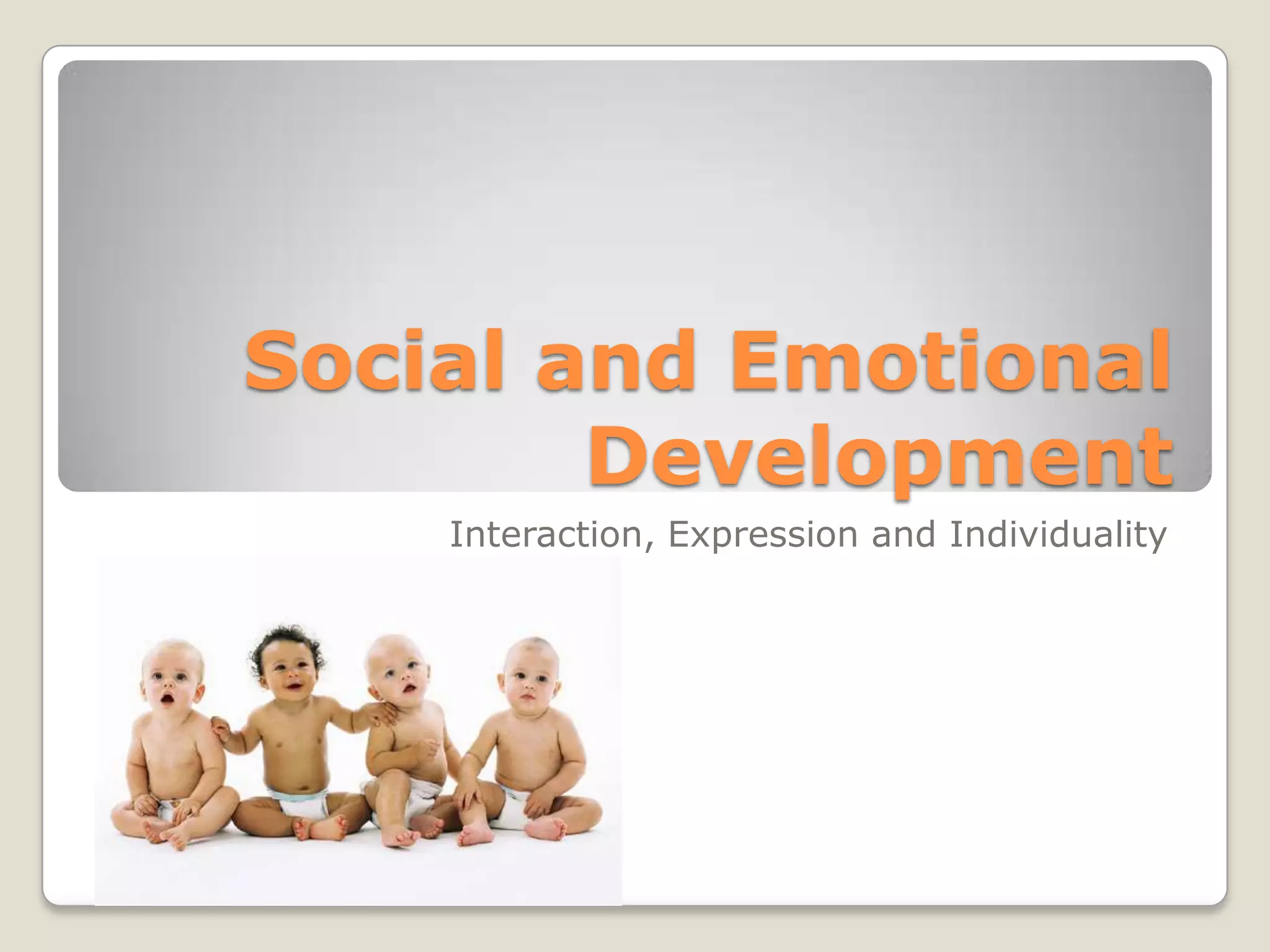
    Interaction, Expression and Individuality
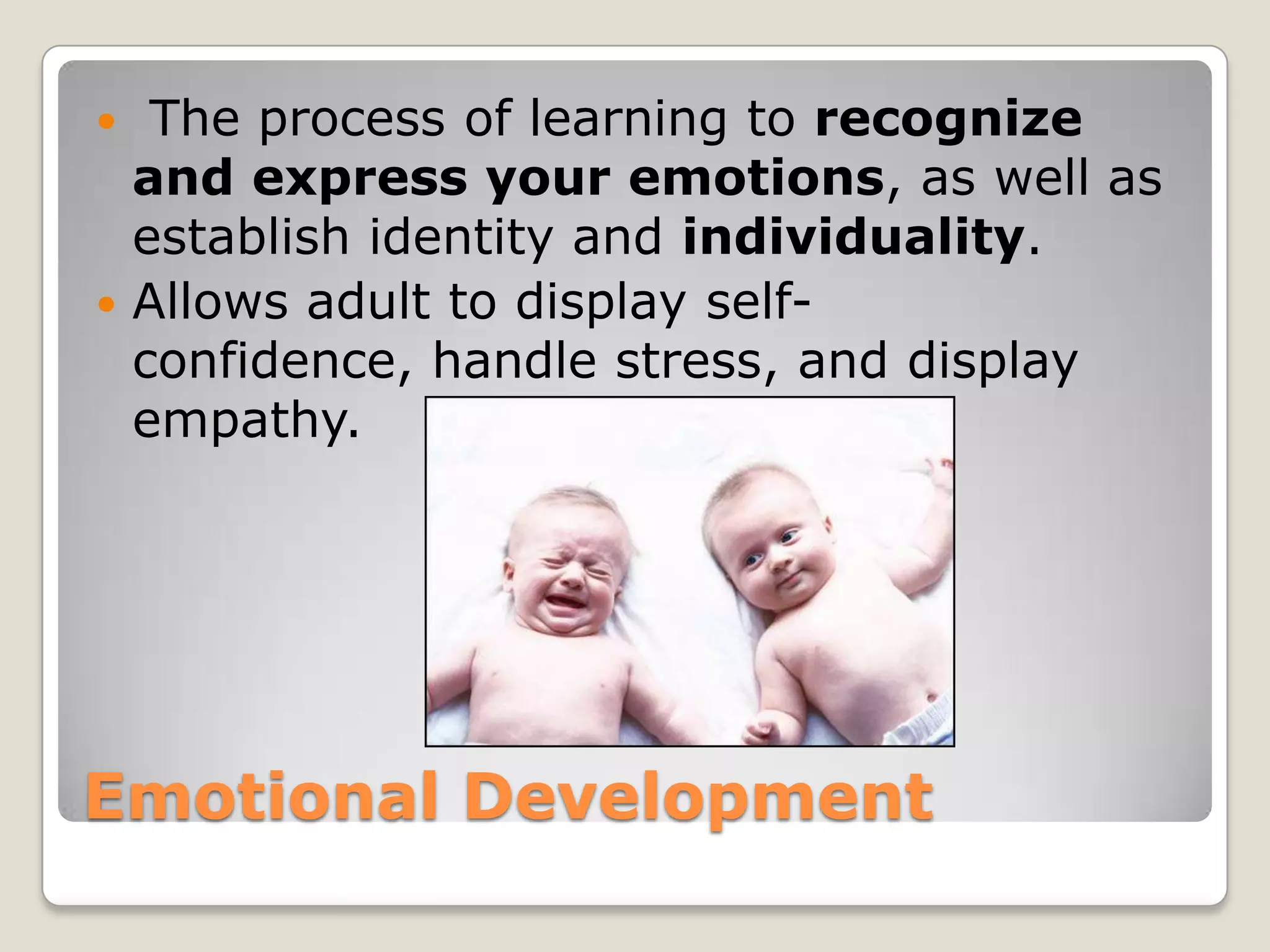
  The process of learning to recognize
  and express your emotions, as well as
  establish identity and individuality.
 Allows adult to display self-
  confidence, handle stress, and display
  empathy.


Emotional Development
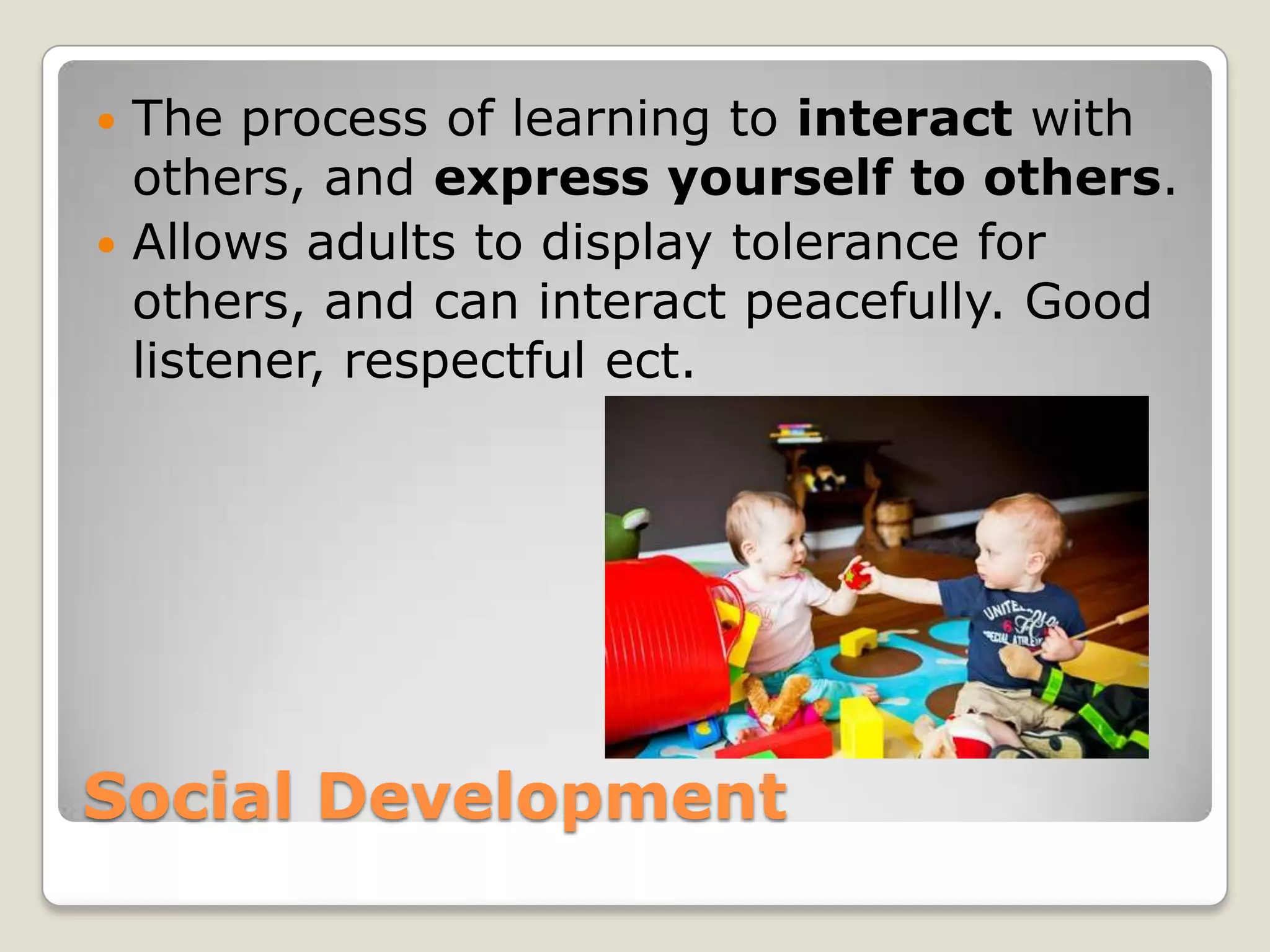
 The process of learning to interact with
  others, and express yourself to others.
 Allows adults to display tolerance for
  others, and can interact peacefully. Good
  listener, respectful ect.


Social Development
   Signs of emotional development in babies

   How a baby’s care affects emotional
    development

   How emotions change during infancy


What We Need to Know:
   A child’s behaviour and actions towards
    others is closely tied to their emotions
    and self-concept.

   Babies bring their own experiences and
    individuality to any situations which
    dictates how they act/react.

   Maturity dictates how they will react
    emotionally.


Key Concepts:
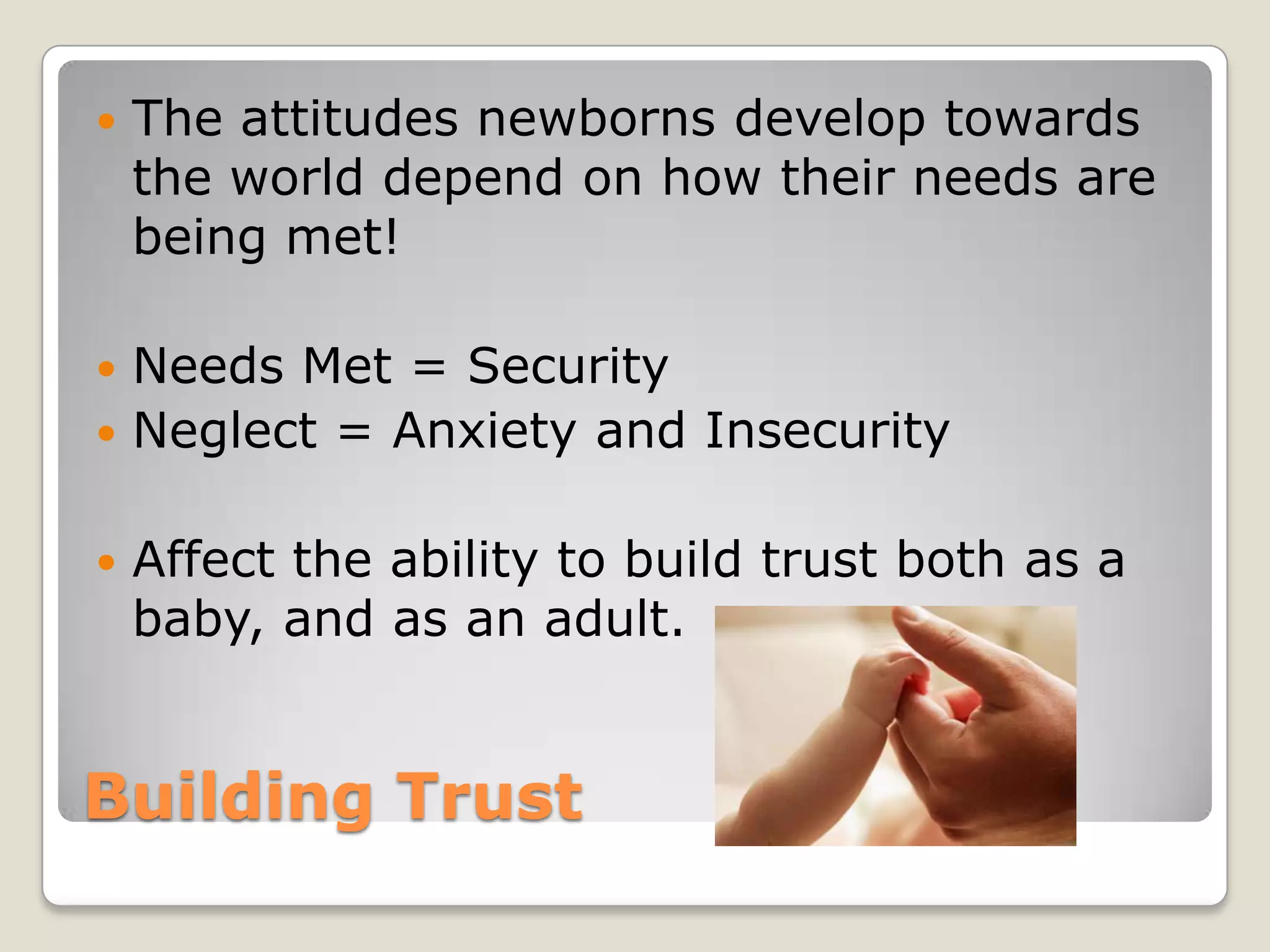
   The attitudes newborns develop towards
    the world depend on how their needs are
    being met!

 Needs Met = Security
 Neglect = Anxiety and Insecurity


   Affect the ability to build trust both as a
    baby, and as an adult.


Building Trust
   The atmosphere of the home and type of
    care are key in emotional stability.

   Harmony, security, affection.

   Feelings are contagious, and babies
    can pick up on this

   Distrust, if continual, can interfere with
    development.


Emotional Climate
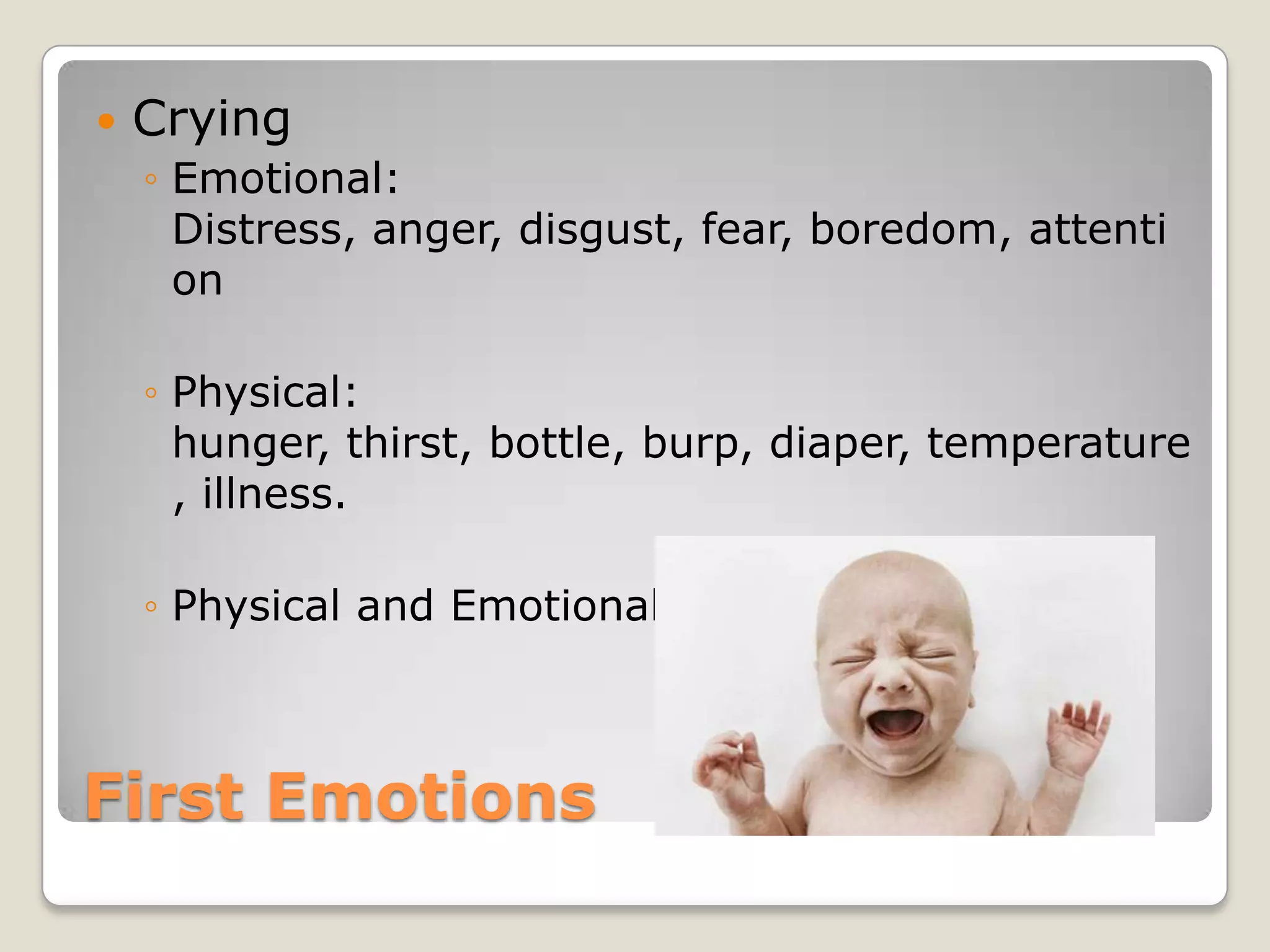
   Crying
    ◦ Emotional:
      Distress, anger, disgust, fear, boredom, attenti
      on

    ◦ Physical:
      hunger, thirst, bottle, burp, diaper, temperature
      , illness.

    ◦ Physical and Emotional are equally important.


First Emotions
Comforting
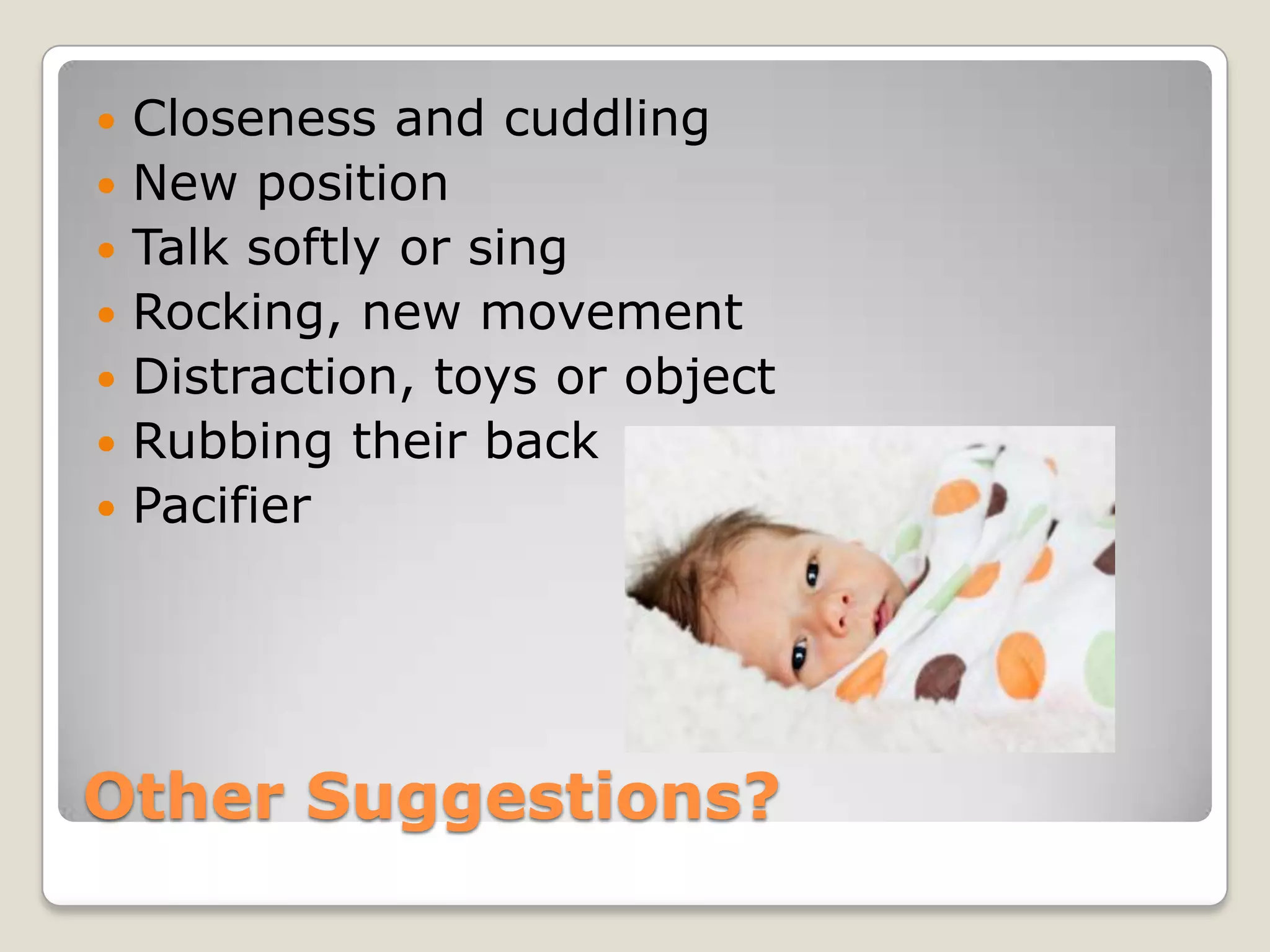
   Closeness and cuddling
   New position
   Talk softly or sing
   Rocking, new movement
   Distraction, toys or object
   Rubbing their back
   Pacifier


Other Suggestions?
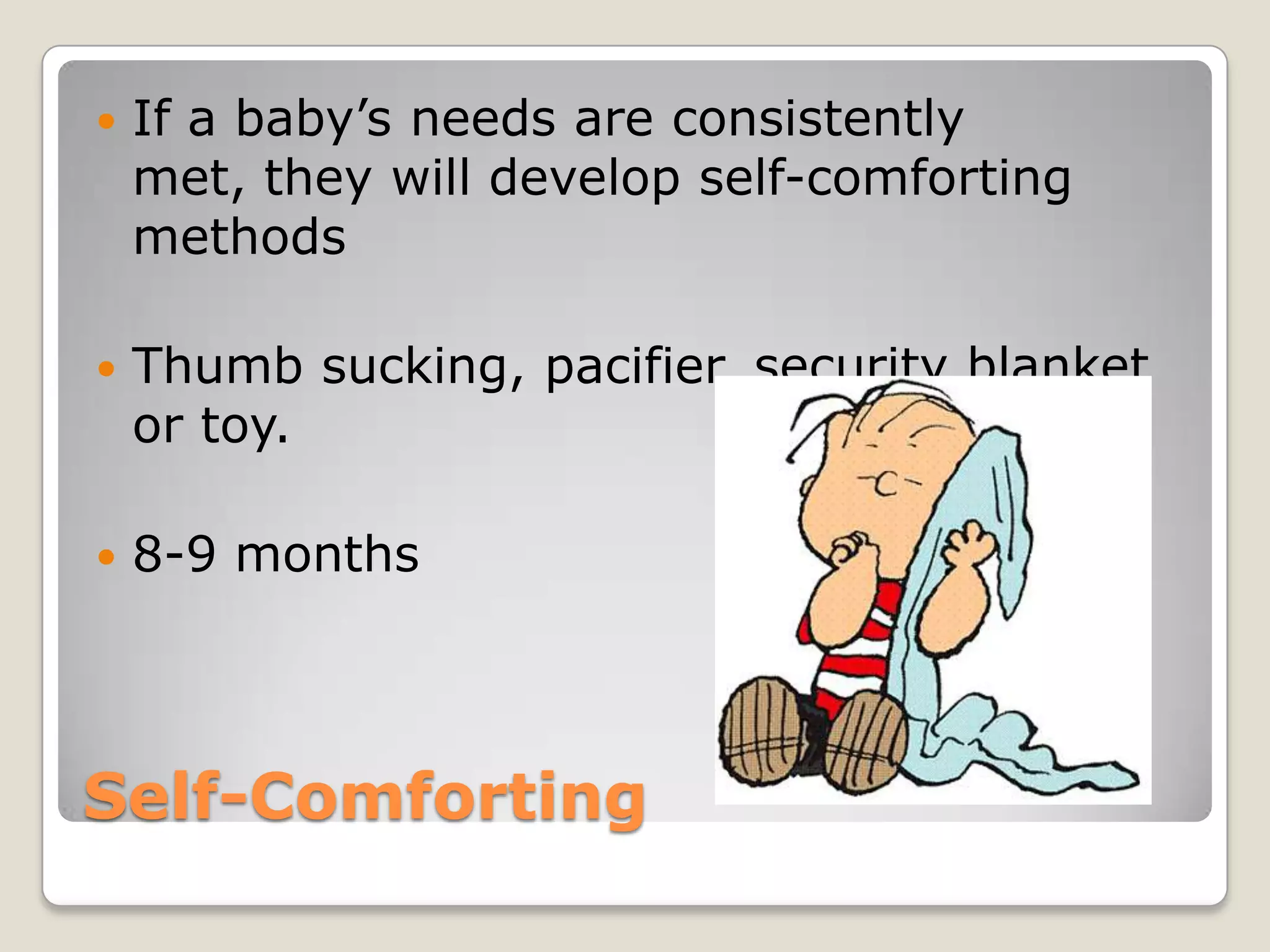
   If a baby’s needs are consistently
    met, they will develop self-comforting
    methods

   Thumb sucking, pacifier, security blanket
    or toy.

   8-9 months


Self-Comforting
   Babies will gradually develop
    emotions, just as adults continue to
    experience more complex ones.

   2 Months – smiling and delight
   4-5 Months – anger, disagree, disgust
   6 Months - fear
   7-8 Months – elation or high spirits
   9 Months – affection (for caregivers)


Emotional Complexity
   First Days – response to voices. Tone of voice
    affect emotional response.

   1 – Stops crying when lifted or touched.
    Takes delight in familiar faces.

   2 – Smiling, eyes follow objects, enjoy
    watching people.

   3 – Turning head, seek companionship and
    care.


Stages of Social Development
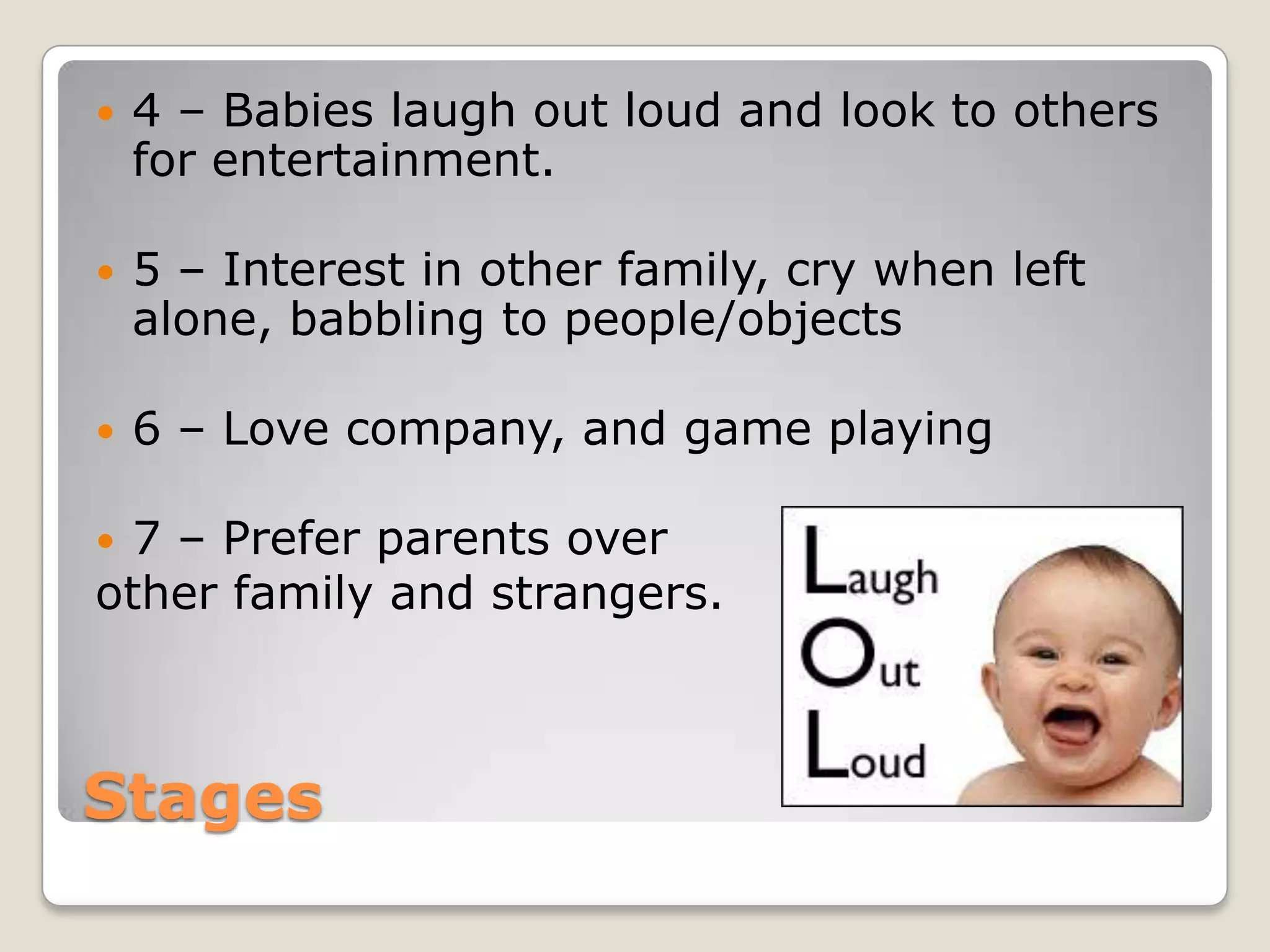
   4 – Babies laugh out loud and look to others
    for entertainment.

   5 – Interest in other family, cry when left
    alone, babbling to people/objects

   6 – Love company, and game playing

7 – Prefer parents over
other family and strangers.


Stages
   8 – Prefer to be around others, can move
    from room to room on their own.

   9/10 – Socially involved, following
    people, and getting in the way. Often want to
    be chased and play the “dropping game”

   11 - Friendly, and sensitive to others’
    emotions. Know how to influence
    emotions, and be centre of attention.

   12 – Tolerant of strangers, playful.


Stages
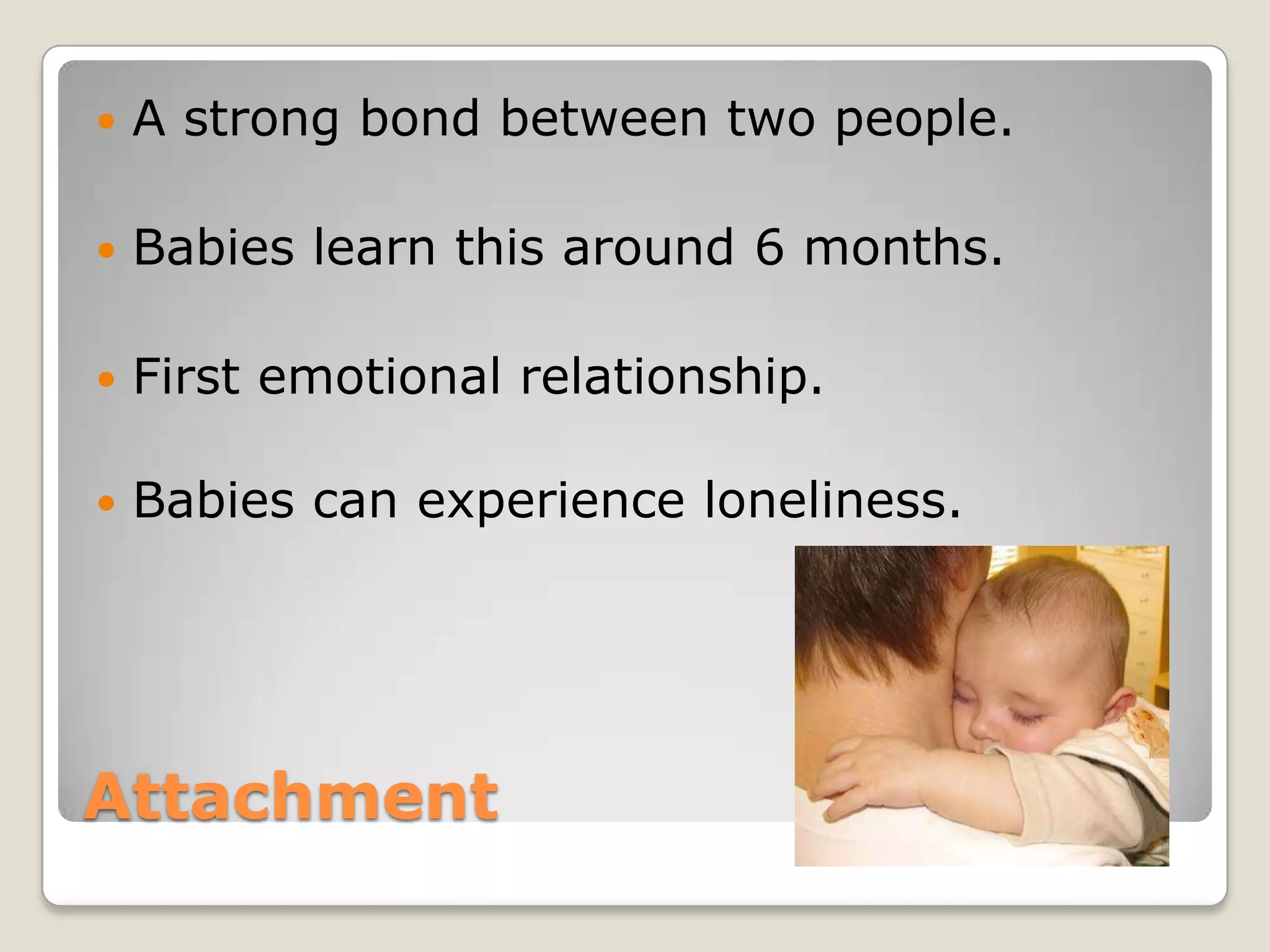
   A strong bond between two people.

   Babies learn this around 6 months.

   First emotional relationship.

   Babies can experience loneliness.


Attachment
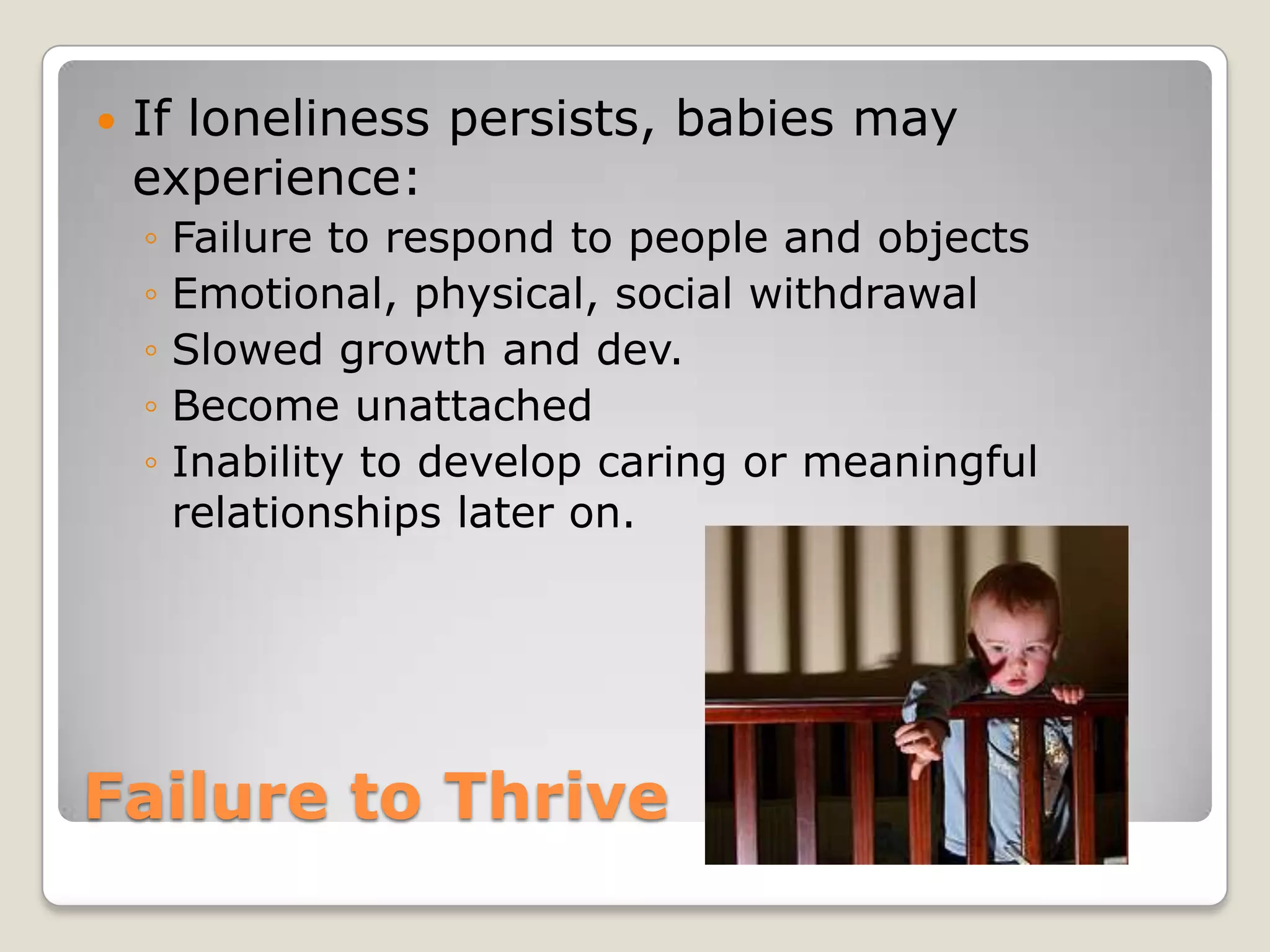
   If loneliness persists, babies may
    experience:
    ◦   Failure to respond to people and objects
    ◦   Emotional, physical, social withdrawal
    ◦   Slowed growth and dev.
    ◦   Become unattached
    ◦   Inability to develop caring or meaningful
        relationships later on.


Failure to Thrive
   Babies learn social behaviours through
    interaction and consistency

   Caregivers must act and react consistently to
    baby’s needs

   Daily routine and clues.

   Promoting positive and discouraging negative
    behaviour.


Learned Behaviour
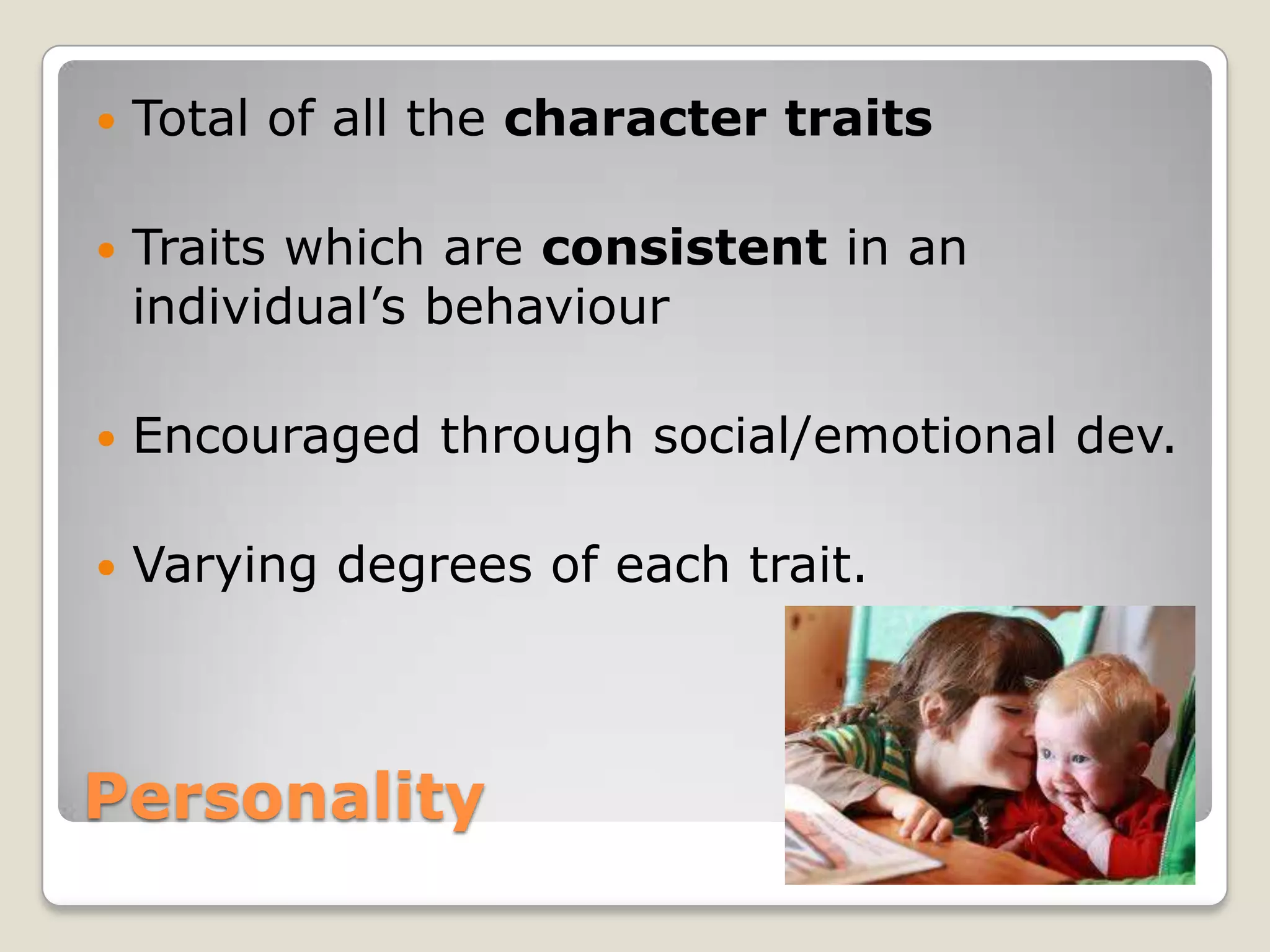
   Total of all the character traits

   Traits which are consistent in an
    individual’s behaviour

   Encouraged through social/emotional dev.

   Varying degrees of each trait.


Personality
   Sensitive – unusually aware of their
    surroundings and changes.
    (fussy, irritable, need reassurance)

   Aggressive – strong willed and
    determined. (eat lots, cry loudly, physical)

   Placid – very accepting of surroundings.
    (“easy” personality, calm, cheerful)


Traits

HPC 3O1 - Social and Emotional Development

  • 1.
    Social and Emotional Development Interaction, Expression and Individuality
  • 2.
     Theprocess of learning to recognize and express your emotions, as well as establish identity and individuality.  Allows adult to display self- confidence, handle stress, and display empathy. Emotional Development
  • 3.
     The processof learning to interact with others, and express yourself to others.  Allows adults to display tolerance for others, and can interact peacefully. Good listener, respectful ect. Social Development
  • 4.
    Signs of emotional development in babies  How a baby’s care affects emotional development  How emotions change during infancy What We Need to Know:
  • 5.
    A child’s behaviour and actions towards others is closely tied to their emotions and self-concept.  Babies bring their own experiences and individuality to any situations which dictates how they act/react.  Maturity dictates how they will react emotionally. Key Concepts:
  • 6.
    The attitudes newborns develop towards the world depend on how their needs are being met!  Needs Met = Security  Neglect = Anxiety and Insecurity  Affect the ability to build trust both as a baby, and as an adult. Building Trust
  • 7.
    The atmosphere of the home and type of care are key in emotional stability.  Harmony, security, affection.  Feelings are contagious, and babies can pick up on this  Distrust, if continual, can interfere with development. Emotional Climate
  • 8.
    Crying ◦ Emotional: Distress, anger, disgust, fear, boredom, attenti on ◦ Physical: hunger, thirst, bottle, burp, diaper, temperature , illness. ◦ Physical and Emotional are equally important. First Emotions
  • 9.
  • 10.
    Closeness and cuddling  New position  Talk softly or sing  Rocking, new movement  Distraction, toys or object  Rubbing their back  Pacifier Other Suggestions?
  • 11.
    If a baby’s needs are consistently met, they will develop self-comforting methods  Thumb sucking, pacifier, security blanket or toy.  8-9 months Self-Comforting
  • 12.
    Babies will gradually develop emotions, just as adults continue to experience more complex ones.  2 Months – smiling and delight  4-5 Months – anger, disagree, disgust  6 Months - fear  7-8 Months – elation or high spirits  9 Months – affection (for caregivers) Emotional Complexity
  • 13.
    First Days – response to voices. Tone of voice affect emotional response.  1 – Stops crying when lifted or touched. Takes delight in familiar faces.  2 – Smiling, eyes follow objects, enjoy watching people.  3 – Turning head, seek companionship and care. Stages of Social Development
  • 14.
    4 – Babies laugh out loud and look to others for entertainment.  5 – Interest in other family, cry when left alone, babbling to people/objects  6 – Love company, and game playing 7 – Prefer parents over other family and strangers. Stages
  • 15.
    8 – Prefer to be around others, can move from room to room on their own.  9/10 – Socially involved, following people, and getting in the way. Often want to be chased and play the “dropping game”  11 - Friendly, and sensitive to others’ emotions. Know how to influence emotions, and be centre of attention.  12 – Tolerant of strangers, playful. Stages
  • 17.
    A strong bond between two people.  Babies learn this around 6 months.  First emotional relationship.  Babies can experience loneliness. Attachment
  • 18.
    If loneliness persists, babies may experience: ◦ Failure to respond to people and objects ◦ Emotional, physical, social withdrawal ◦ Slowed growth and dev. ◦ Become unattached ◦ Inability to develop caring or meaningful relationships later on. Failure to Thrive
  • 19.
    Babies learn social behaviours through interaction and consistency  Caregivers must act and react consistently to baby’s needs  Daily routine and clues.  Promoting positive and discouraging negative behaviour. Learned Behaviour
  • 20.
    Total of all the character traits  Traits which are consistent in an individual’s behaviour  Encouraged through social/emotional dev.  Varying degrees of each trait. Personality
  • 21.
    Sensitive – unusually aware of their surroundings and changes. (fussy, irritable, need reassurance)  Aggressive – strong willed and determined. (eat lots, cry loudly, physical)  Placid – very accepting of surroundings. (“easy” personality, calm, cheerful) Traits