CHILDREN’S STORIES
The importance of reading and being read to.
This Week:
   Monday: What makes a good children’s story?

   Tues-Wed: Making Your Children’s Story

   Thursday: The History of Children’s Stories ft.
    “Little Red Riding Hood”.

   Friday: Who knows!?!?!
Piaget and Reading
   Sensorimotor - 0-2
     Egocentric,   the 5 senses, exploring surroundings
   Preoperational – 2-7
     Egocentric,   learning to classify, categorize and count.
   Concrete Operations – 7-11
     More   social, less egocentric, some symbolic learning
   Formal Operations – 11- adulthood
     Abstract/complex thinking, logic and
     reason, predicting consequences, symbolic learning.
Question:

   How does reading and being read
    to help encourage learning at
    each stage?
Benefits of Reading

   Intellectual Development
     Vocabulary and language
     Gathering information
     New ideas and concepts


   Social Development
     Listening and asking questions
     Reading together
     Reading to someone
What Does Reading Encourage?
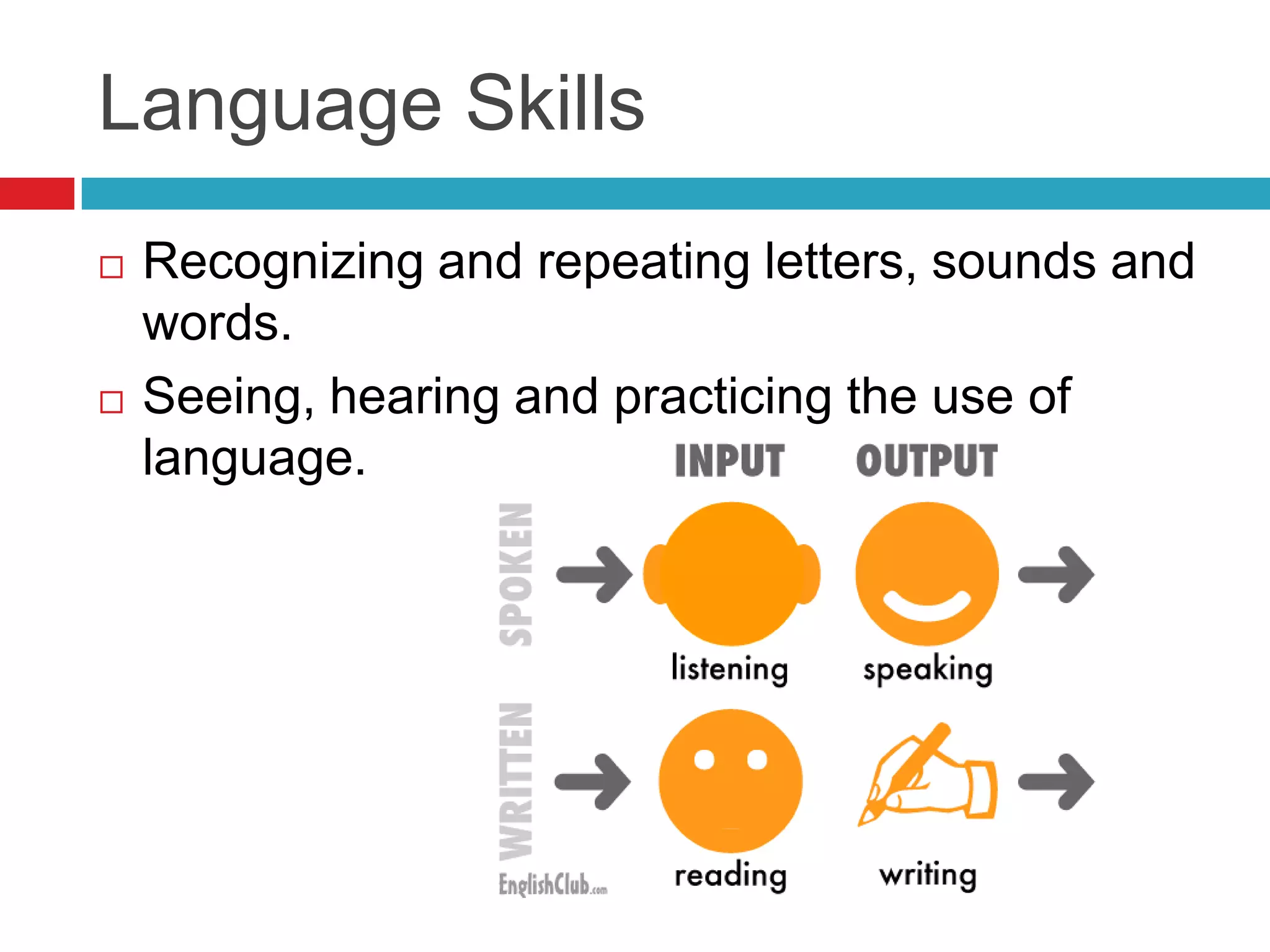
Language Skills
   Recognizing and repeating letters, sounds and
    words.
   Seeing, hearing and practicing the use of
    language.
Memory
   Remembering
    letters/words, details, characters, plot, and
    situations.
   Connecting stories to own experiences.
Symbolic Thought
   Reading words, understanding meaning and
    visualizing.
   Making word-image connections.
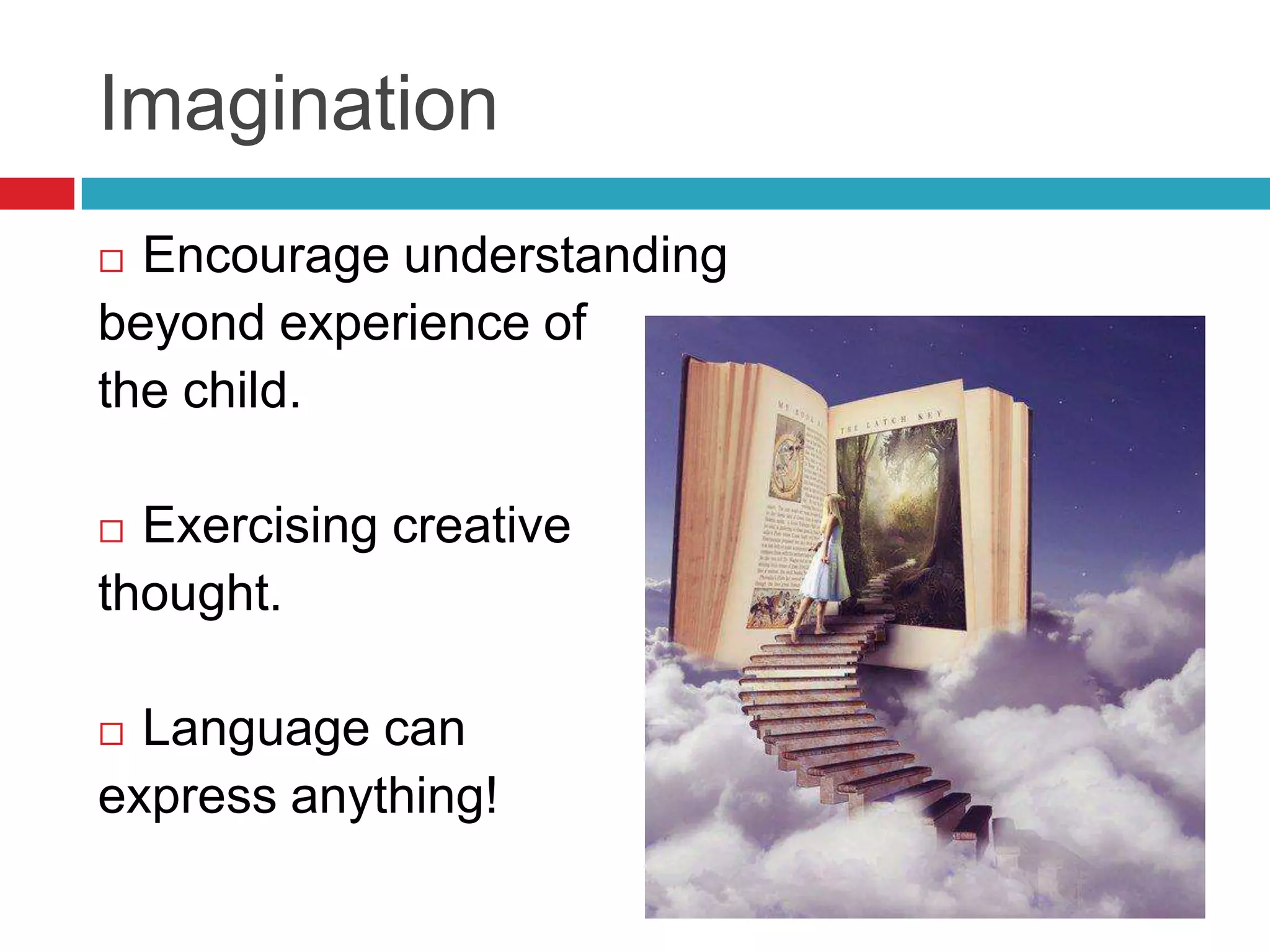
Imagination
 Encourage understanding
beyond experience of
the child.

 Exercising creative
thought.

 Language can
express anything!
Curiosity

 Listening   and
Observing

 Show and tell

 Asking Questions


Who, what, where, w
hen, why and how?

 Inspire new
interests
Preparing Kids for Reading
   Caring about reading

   Having books available

   Reading to your child

   Bring your child’s attention to writing/language

   Library visits
Reading to a child is the single most important
factor in their reading success!
Your Favourite!

   What was your favourite book from
    your childhood?

   What made it so fantastic?
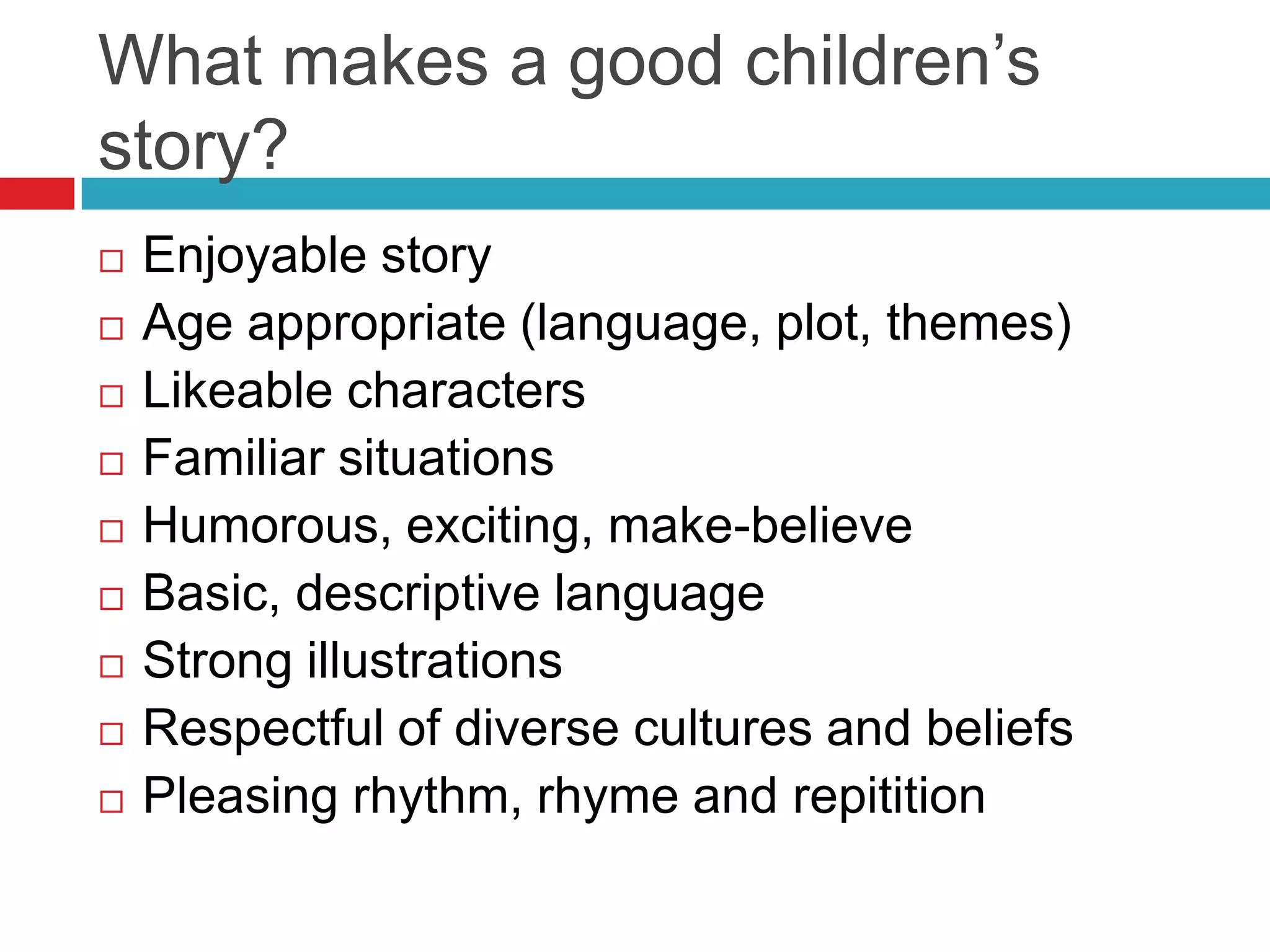
What makes a good children’s
story?
   Enjoyable story
   Age appropriate (language, plot, themes)
   Likeable characters
   Familiar situations
   Humorous, exciting, make-believe
   Basic, descriptive language
   Strong illustrations
   Respectful of diverse cultures and beliefs
   Pleasing rhythm, rhyme and repitition
Before You Start
   Age Appropriateness

   Language Level

   Plot and Characters (Be original!)

   Illustrations

   Themes, “lessons”, and learning opportunities
Your Assignment
   Your Job: Create your own children’s story

   Where: the computer lab

   When: Tuesday and Thursday

   Why: To illustrate your knowledge of:
    1. the importance of reading for kids
    2. the characteristics of a good children’s story
Online: Storybird
   http://storybird.com/

   Online reading, story creating and sharing.

Children’s Stories

  • 1.
    CHILDREN’S STORIES The importanceof reading and being read to.
  • 2.
    This Week:  Monday: What makes a good children’s story?  Tues-Wed: Making Your Children’s Story  Thursday: The History of Children’s Stories ft. “Little Red Riding Hood”.  Friday: Who knows!?!?!
  • 3.
    Piaget and Reading  Sensorimotor - 0-2  Egocentric, the 5 senses, exploring surroundings  Preoperational – 2-7  Egocentric, learning to classify, categorize and count.  Concrete Operations – 7-11  More social, less egocentric, some symbolic learning  Formal Operations – 11- adulthood  Abstract/complex thinking, logic and reason, predicting consequences, symbolic learning.
  • 4.
    Question:  How does reading and being read to help encourage learning at each stage?
  • 5.
    Benefits of Reading  Intellectual Development  Vocabulary and language  Gathering information  New ideas and concepts  Social Development  Listening and asking questions  Reading together  Reading to someone
  • 6.
  • 7.
    Language Skills  Recognizing and repeating letters, sounds and words.  Seeing, hearing and practicing the use of language.
  • 8.
    Memory  Remembering letters/words, details, characters, plot, and situations.  Connecting stories to own experiences.
  • 9.
    Symbolic Thought  Reading words, understanding meaning and visualizing.  Making word-image connections.
  • 10.
    Imagination  Encourage understanding beyondexperience of the child.  Exercising creative thought.  Language can express anything!
  • 12.
    Curiosity  Listening and Observing  Show and tell  Asking Questions  Who, what, where, w hen, why and how?  Inspire new interests
  • 13.
    Preparing Kids forReading  Caring about reading  Having books available  Reading to your child  Bring your child’s attention to writing/language  Library visits
  • 14.
    Reading to achild is the single most important factor in their reading success!
  • 15.
    Your Favourite!  What was your favourite book from your childhood?  What made it so fantastic?
  • 16.
    What makes agood children’s story?  Enjoyable story  Age appropriate (language, plot, themes)  Likeable characters  Familiar situations  Humorous, exciting, make-believe  Basic, descriptive language  Strong illustrations  Respectful of diverse cultures and beliefs  Pleasing rhythm, rhyme and repitition
  • 17.
    Before You Start  Age Appropriateness  Language Level  Plot and Characters (Be original!)  Illustrations  Themes, “lessons”, and learning opportunities
  • 18.
    Your Assignment  Your Job: Create your own children’s story  Where: the computer lab  When: Tuesday and Thursday  Why: To illustrate your knowledge of: 1. the importance of reading for kids 2. the characteristics of a good children’s story
  • 19.
    Online: Storybird  http://storybird.com/  Online reading, story creating and sharing.