Sociological Trends and Legal Changes
   Nearly 30% of new couples are meeting
    online. (TIME Magazine, 2010)

   Facebook cited in 33% of divorce petitions
    (applications). (UK study, 2011)

   What is it about social media/online dating
    that creates such positive and negative
    circumstances for couples?
   Why you think social media poses such a
    threat to married couples, specifically those
    having marital problems?

   Do you think this “online” problem will persist
    for married couples in the future? Why?
   When marriage does not meet the
    expectations of 1 or both partners.

   Lack of marital satisfaction

   Rates fluctuate as a result of Social and Moral
    values

   Today: controlled by religion and government
   Ancient Romans – purely family
    concern, rather than state governed.
    ◦ Very attainable, happened frequently

   Early Christians (11th-12th cent)
    ◦ First consideration from a religious standpoint.


   Catholic Church – Marriage as a Sacrament
    ◦ Marriage as a sacred rite, spiritual importance.
    ◦ Divorce was the breaking of something sacred.
   Functionalist perspective (stability created by
    roles and division of labour)

   Traditional (economic, childrearing basis)

   Divorce meant suing for “matrimonial offence”
    (adultery and cruelty)
   Romance as the basis for marriage.

   Assessment of satisfaction = how happy are
    you?

   Divorce treated as “marriage breakdown”

   Divorce law reflects love and companionate
    purposes of marriage.
   Divorce is increasingly common

   Divorce law decreases the time required to
    get a divorce.
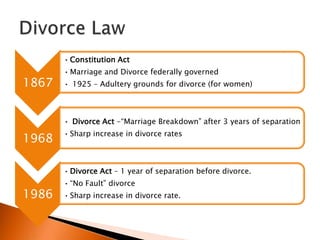
• Constitution Act
       • Marriage and Divorce federally governed
1867   • 1925 – Adultery grounds for divorce (for women)


       • Divorce Act -“Marriage Breakdown” after 3 years of separation
       • Sharp increase in divorce rates
1968

       • Divorce Act – 1 year of separation before divorce.
       • “No Fault” divorce
1986   • Sharp increase in divorce rate.
Awareness, Separation,
Reorganization
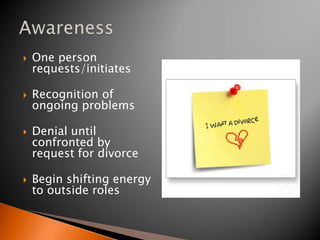
   One person
    requests/initiates

   Recognition of
    ongoing problems

   Denial until
    confronted by
    request for divorce

   Begin shifting energy
    to outside roles
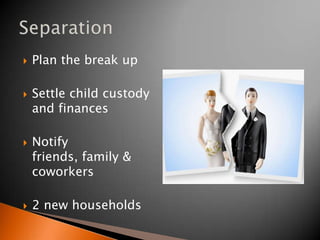
   Plan the break up

   Settle child custody
    and finances

   Notify
    friends, family &
    coworkers

   2 new households
   Establish 2 separate
    lives
    (social, financial)

   Form new social life
    as a single person

   Negotiate new
    parental roles
   In 1985 what changes were made to the Divorce Act?

   What is the “single ground” for divorce? What three
    conditions can give reason for divorce?

   Define separation. Outline the conditions surrounding the
    process of separation.

   Adultery and cruelty are still considered to be “matrimonial
    offences”. Outline how these offences can and cannot be
    used as grounds for divorce.

   What kind of evidence is needed to prove the presence of
    adultery or cruelty? Why are these “offences” treated
    differently?
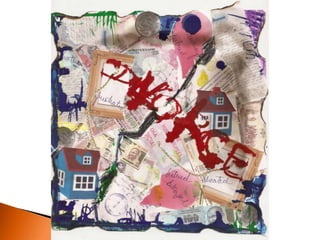
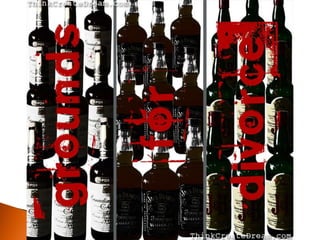
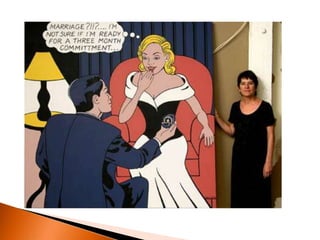
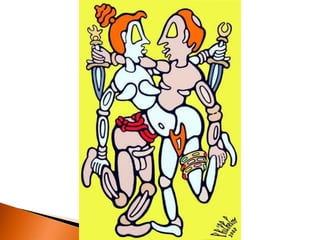
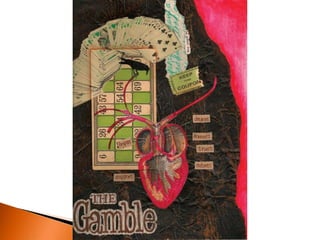
What can these artworks tell us
about divorce as a
legal, emotional and physical
process?
The Legal and the Real
   Divorce doesn’t end on paper or in court

   After legal divorce there are emotional and
    practical issues to cover

   Consequences are complex, and so are they
    emotions

   New individual developmental tasks
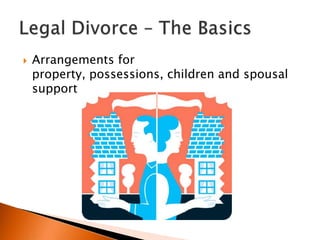
   Arrangements for
    property, possessions, children and spousal
    support
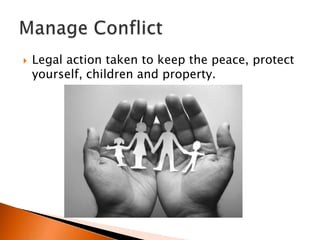
   Legal action taken to keep the peace, protect
    yourself, children and property.
   Only when disagreements cannot be resolved.
    Law imposes a decision on the situation.
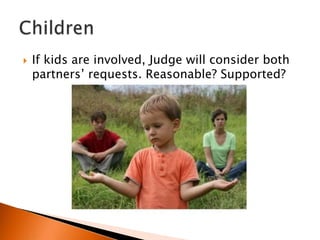
   If kids are involved, Judge will consider both
    partners’ requests. Reasonable? Supported?
   Don’t expect too much from legal divorce

   Finalization won’t solve all problems

   Setting themselves up for frustration or
    disappointment
   The reality and feelings that hit post-divorce

   Dealing with:
    ◦ Feelings
    ◦ Finances
    ◦ Friends and Family
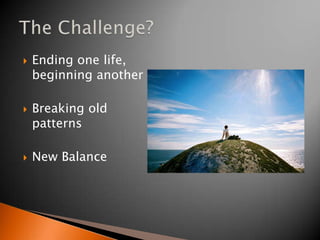
   Ending one life,
    beginning another

   Breaking old
    patterns

   New Balance
   Breaking emotional bonds

   Habits and dependencies that connect you to
    your spouse.

   Letting Go:
    anger, guilt, blame, fear, resentment, tension.

   Achieve neutral view of ex-spouse

   Self-confidence and new openness.
   Mind and body cannot be separated!

   Internalized stress and feelings cause
    physical symptoms

   Tension, stress, anxiety lead to illness

   Rates of suicide, accident victims & physical
    illness
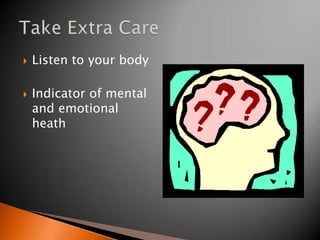
   Listen to your body

   Indicator of mental
    and emotional
    heath
   “taking care of business”, making ends meet.

   Safety, security, stability for you & children

   Financial realities for men and women
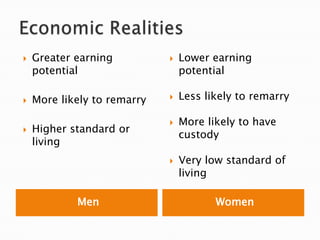
   Greater earning             Lower earning
    potential                    potential

   More likely to remarry      Less likely to remarry

                                More likely to have
   Higher standard or
                                 custody
    living
                                Very low standard of
                                 living

            Men                         Women
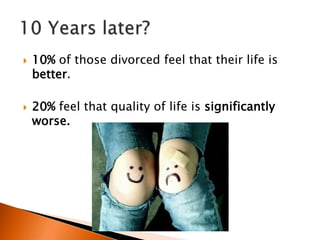
   10% of those divorced feel that their life is
    better.

   20% feel that quality of life is significantly
    worse.
   A legal contract

   Summarizes obligations to one another

   Finances, property, children

   Can be made before of after marriage

   Promises to each other.

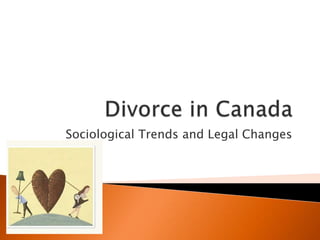
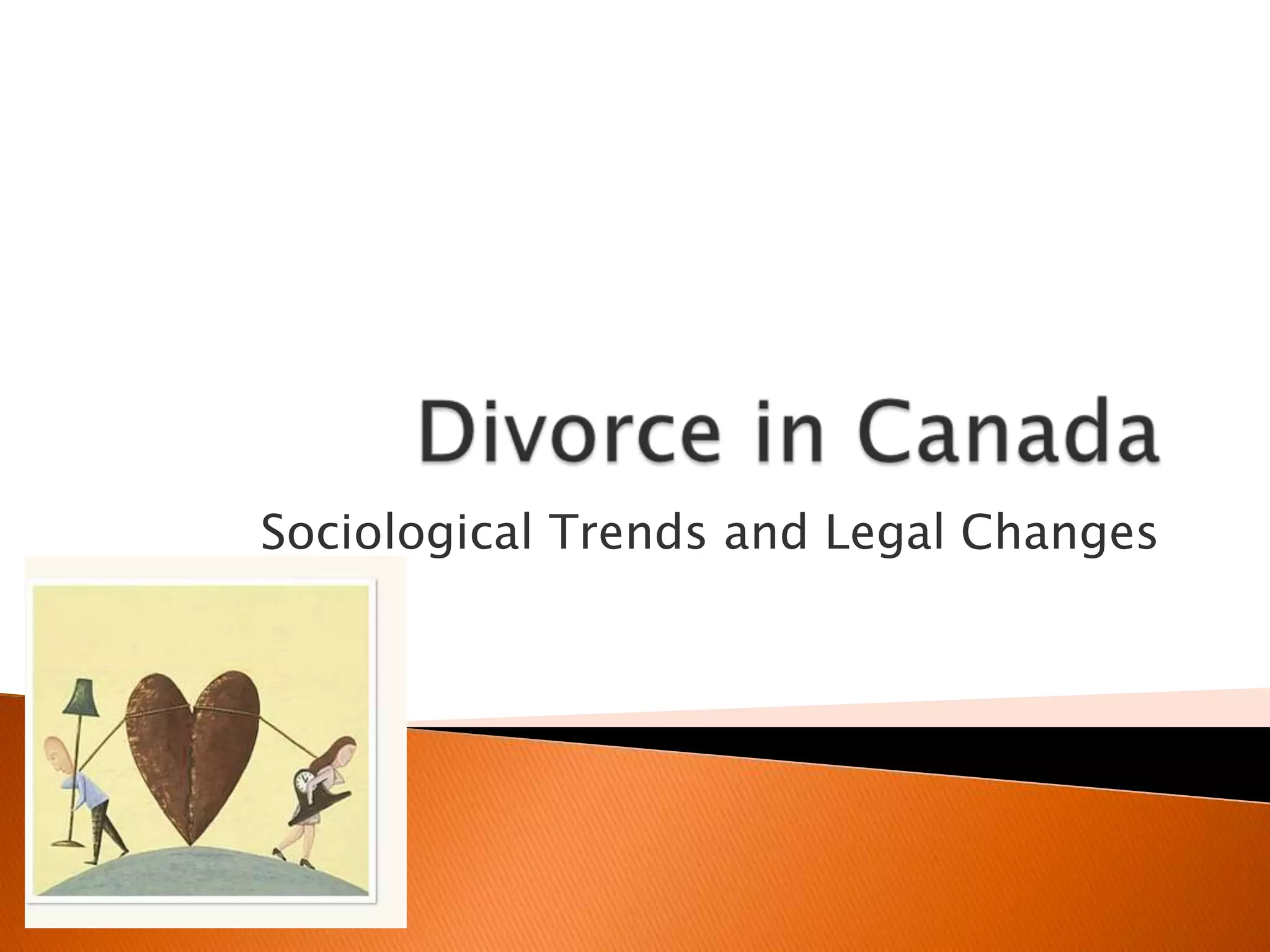
Divorce in Canada

  • 1.
  • 3.
    Nearly 30% of new couples are meeting online. (TIME Magazine, 2010)  Facebook cited in 33% of divorce petitions (applications). (UK study, 2011)  What is it about social media/online dating that creates such positive and negative circumstances for couples?
  • 4.
    Why you think social media poses such a threat to married couples, specifically those having marital problems?  Do you think this “online” problem will persist for married couples in the future? Why?
  • 5.
    When marriage does not meet the expectations of 1 or both partners.  Lack of marital satisfaction  Rates fluctuate as a result of Social and Moral values  Today: controlled by religion and government
  • 6.
    Ancient Romans – purely family concern, rather than state governed. ◦ Very attainable, happened frequently  Early Christians (11th-12th cent) ◦ First consideration from a religious standpoint.  Catholic Church – Marriage as a Sacrament ◦ Marriage as a sacred rite, spiritual importance. ◦ Divorce was the breaking of something sacred.
  • 7.
    Functionalist perspective (stability created by roles and division of labour)  Traditional (economic, childrearing basis)  Divorce meant suing for “matrimonial offence” (adultery and cruelty)
  • 8.
    Romance as the basis for marriage.  Assessment of satisfaction = how happy are you?  Divorce treated as “marriage breakdown”  Divorce law reflects love and companionate purposes of marriage.
  • 9.
    Divorce is increasingly common  Divorce law decreases the time required to get a divorce.
  • 10.
    • Constitution Act • Marriage and Divorce federally governed 1867 • 1925 – Adultery grounds for divorce (for women) • Divorce Act -“Marriage Breakdown” after 3 years of separation • Sharp increase in divorce rates 1968 • Divorce Act – 1 year of separation before divorce. • “No Fault” divorce 1986 • Sharp increase in divorce rate.
  • 11.
  • 12.
    One person requests/initiates  Recognition of ongoing problems  Denial until confronted by request for divorce  Begin shifting energy to outside roles
  • 13.
    Plan the break up  Settle child custody and finances  Notify friends, family & coworkers  2 new households
  • 14.
    Establish 2 separate lives (social, financial)  Form new social life as a single person  Negotiate new parental roles
  • 15.
    In 1985 what changes were made to the Divorce Act?  What is the “single ground” for divorce? What three conditions can give reason for divorce?  Define separation. Outline the conditions surrounding the process of separation.  Adultery and cruelty are still considered to be “matrimonial offences”. Outline how these offences can and cannot be used as grounds for divorce.  What kind of evidence is needed to prove the presence of adultery or cruelty? Why are these “offences” treated differently?
  • 16.
    What can theseartworks tell us about divorce as a legal, emotional and physical process?
  • 23.
    The Legal andthe Real
  • 24.
    Divorce doesn’t end on paper or in court  After legal divorce there are emotional and practical issues to cover  Consequences are complex, and so are they emotions  New individual developmental tasks
  • 25.
    Arrangements for property, possessions, children and spousal support
  • 26.
    Legal action taken to keep the peace, protect yourself, children and property.
  • 27.
    Only when disagreements cannot be resolved. Law imposes a decision on the situation.
  • 28.
    If kids are involved, Judge will consider both partners’ requests. Reasonable? Supported?
  • 29.
    Don’t expect too much from legal divorce  Finalization won’t solve all problems  Setting themselves up for frustration or disappointment
  • 30.
    The reality and feelings that hit post-divorce  Dealing with: ◦ Feelings ◦ Finances ◦ Friends and Family
  • 31.
    Ending one life, beginning another  Breaking old patterns  New Balance
  • 32.
    Breaking emotional bonds  Habits and dependencies that connect you to your spouse.  Letting Go: anger, guilt, blame, fear, resentment, tension.  Achieve neutral view of ex-spouse  Self-confidence and new openness.
  • 33.
    Mind and body cannot be separated!  Internalized stress and feelings cause physical symptoms  Tension, stress, anxiety lead to illness  Rates of suicide, accident victims & physical illness
  • 34.
    Listen to your body  Indicator of mental and emotional heath
  • 35.
    “taking care of business”, making ends meet.  Safety, security, stability for you & children  Financial realities for men and women
  • 36.
    Greater earning  Lower earning potential potential  More likely to remarry  Less likely to remarry  More likely to have  Higher standard or custody living  Very low standard of living Men Women
  • 37.
    10% of those divorced feel that their life is better.  20% feel that quality of life is significantly worse.
  • 39.
    A legal contract  Summarizes obligations to one another  Finances, property, children  Can be made before of after marriage  Promises to each other.