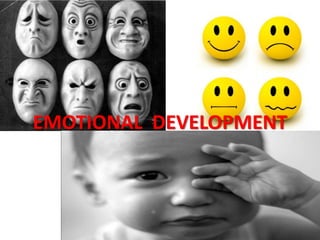
EMOTIONAL DEVELOPMENT
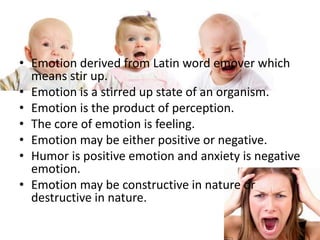
• Emotion derived from Latin word emover which
means stir up.
• Emotion is a stirred up state of an organism.
• Emotion is the product of perception.
• The core of emotion is feeling.
• Emotion may be either positive or negative.
• Humor is positive emotion and anxiety is negative
emotion.
• Emotion may be constructive in nature or
destructive in nature.
Characteristics of Emotional Development
Early Childhood
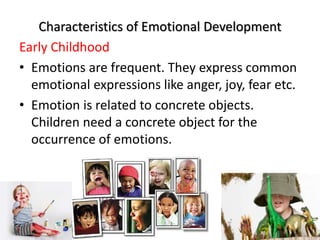
• Emotions are frequent. They express common
emotional expressions like anger, joy, fear etc.
• Emotion is related to concrete objects.
Children need a concrete object for the
occurrence of emotions.
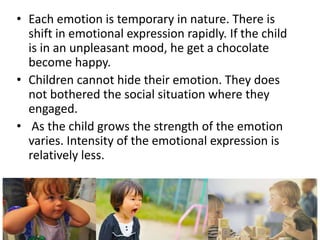
• Each emotion is temporary in nature. There is
shift in emotional expression rapidly. If the child
is in an unpleasant mood, he get a chocolate
become happy.
• Children cannot hide their emotion. They does
not bothered the social situation where they
engaged.
• As the child grows the strength of the emotion
varies. Intensity of the emotional expression is
relatively less.
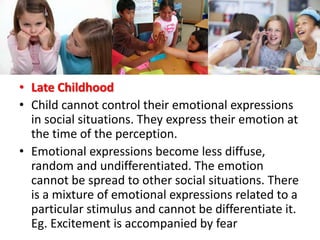
• Late Childhood
• Child cannot control their emotional expressions
in social situations. They express their emotion at
the time of the perception.
• Emotional expressions become less diffuse,
random and undifferentiated. The emotion
cannot be spread to other social situations. There
is a mixture of emotional expressions related to a
particular stimulus and cannot be differentiate it.
Eg. Excitement is accompanied by fear
• Emotions are expressed in the absence of
concrete objects. In this stage the child
needn,t any physical object to express his
emotions.
• Emotions are most contagious. Because
children are most suggestible and dependence
on others. The emotional expressions he share
to elders.
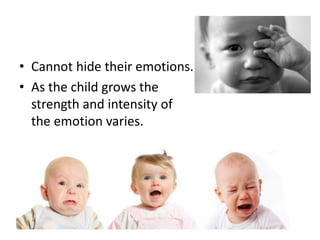
• Cannot hide their emotions.
• As the child grows the
strength and intensity of
the emotion varies.
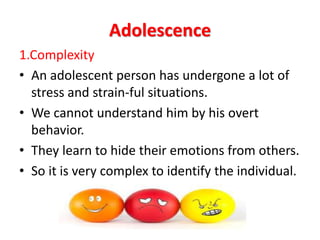
Adolescence
1.Complexity
• An adolescent person has undergone a lot of
stress and strain-ful situations.
• We cannot understand him by his overt
behavior.
• They learn to hide their emotions from others.
• So it is very complex to identify the individual.
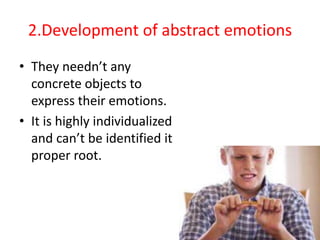
2.Development of abstract emotions
• They needn’t any
concrete objects to
express their emotions.
• It is highly individualized
and can’t be identified it
proper root.
3.Emotional feelings are
widened
• The social contacts of an individual are more
widen.
• He is related to classmates, elders and young
people, emotionally attached heros etc. the
influence of all these which sharpen their
emotions.
• They develops an integrity about their past
experiences and future expectations.
• So they become more patient and tolerate any
delay in their life circumstances.
4. Bearing of emotions
• They can tolerate stress
and tensions in various life
situations.
• So they develop a sense of
self control.
5. Capacity of sharing emotions
• They have a tendency to consider others
feelings and share their emotions to others.
• Sharing of emotions reaches its peak at this
stage.
• Satisfication of others is important.
• So they engaged in the activities of others and
take role for others.
6. Loyalty expands
• Their social contact expands to neighbors and
other social organizations.
• So they maintain a loyalty towards others.
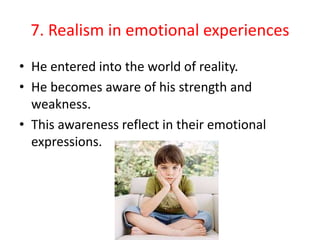
7. Realism in emotional experiences
• He entered into the world of reality.
• He becomes aware of his strength and
weakness.
• This awareness reflect in their emotional
expressions.
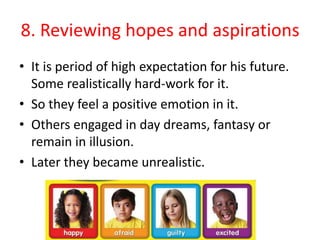
8. Reviewing hopes and aspirations
• It is period of high expectation for his future.
Some realistically hard-work for it.
• So they feel a positive emotion in it.
• Others engaged in day dreams, fantasy or
remain in illusion.
• Later they became unrealistic.
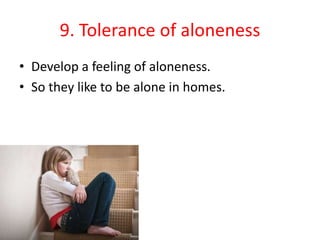
9. Tolerance of aloneness
• Develop a feeling of aloneness.
• So they like to be alone in homes.
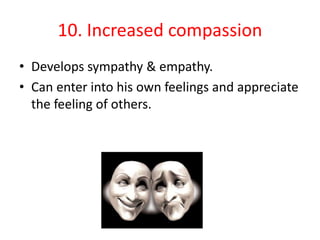
10. Increased compassion
• Develops sympathy & empathy.
• Can enter into his own feelings and appreciate
the feeling of others.

Emotional development

  • 1.
  • 2.
    • Emotion derivedfrom Latin word emover which means stir up. • Emotion is a stirred up state of an organism. • Emotion is the product of perception. • The core of emotion is feeling. • Emotion may be either positive or negative. • Humor is positive emotion and anxiety is negative emotion. • Emotion may be constructive in nature or destructive in nature.
  • 3.
    Characteristics of EmotionalDevelopment Early Childhood • Emotions are frequent. They express common emotional expressions like anger, joy, fear etc. • Emotion is related to concrete objects. Children need a concrete object for the occurrence of emotions.
  • 4.
    • Each emotionis temporary in nature. There is shift in emotional expression rapidly. If the child is in an unpleasant mood, he get a chocolate become happy. • Children cannot hide their emotion. They does not bothered the social situation where they engaged. • As the child grows the strength of the emotion varies. Intensity of the emotional expression is relatively less.
  • 5.
    • Late Childhood •Child cannot control their emotional expressions in social situations. They express their emotion at the time of the perception. • Emotional expressions become less diffuse, random and undifferentiated. The emotion cannot be spread to other social situations. There is a mixture of emotional expressions related to a particular stimulus and cannot be differentiate it. Eg. Excitement is accompanied by fear
  • 6.
    • Emotions areexpressed in the absence of concrete objects. In this stage the child needn,t any physical object to express his emotions. • Emotions are most contagious. Because children are most suggestible and dependence on others. The emotional expressions he share to elders.
  • 7.
    • Cannot hidetheir emotions. • As the child grows the strength and intensity of the emotion varies.
  • 8.
    Adolescence 1.Complexity • An adolescentperson has undergone a lot of stress and strain-ful situations. • We cannot understand him by his overt behavior. • They learn to hide their emotions from others. • So it is very complex to identify the individual.
  • 9.
    2.Development of abstractemotions • They needn’t any concrete objects to express their emotions. • It is highly individualized and can’t be identified it proper root.
  • 10.
    3.Emotional feelings are widened •The social contacts of an individual are more widen. • He is related to classmates, elders and young people, emotionally attached heros etc. the influence of all these which sharpen their emotions. • They develops an integrity about their past experiences and future expectations. • So they become more patient and tolerate any delay in their life circumstances.
  • 11.
    4. Bearing ofemotions • They can tolerate stress and tensions in various life situations. • So they develop a sense of self control.
  • 12.
    5. Capacity ofsharing emotions • They have a tendency to consider others feelings and share their emotions to others. • Sharing of emotions reaches its peak at this stage. • Satisfication of others is important. • So they engaged in the activities of others and take role for others.
  • 13.
    6. Loyalty expands •Their social contact expands to neighbors and other social organizations. • So they maintain a loyalty towards others.
  • 14.
    7. Realism inemotional experiences • He entered into the world of reality. • He becomes aware of his strength and weakness. • This awareness reflect in their emotional expressions.
  • 15.
    8. Reviewing hopesand aspirations • It is period of high expectation for his future. Some realistically hard-work for it. • So they feel a positive emotion in it. • Others engaged in day dreams, fantasy or remain in illusion. • Later they became unrealistic.
  • 16.
    9. Tolerance ofaloneness • Develop a feeling of aloneness. • So they like to be alone in homes.
  • 17.
    10. Increased compassion •Develops sympathy & empathy. • Can enter into his own feelings and appreciate the feeling of others.