CHENNAKESAVA temple at BELUR.
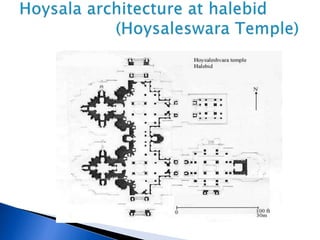
HOYSALESWARA temple at HALIBEDU
 Hoysala architecture is the
building style followed under the rule of
HOYSALA EMPIRE.
 This architecture was followed in
the period of 11-14th century and this
architecture dominated during the 13th
century.
 Many large and small temples
were during this style of Architecture.
 The rulers were from Malnad ,Karnataka.An
elevated region of western ghats.
 The Hoysala empire was prominent from
Southern indian Kannadiga empire.
 The Hoysala era wan important period in
the development of art in the kingdom.
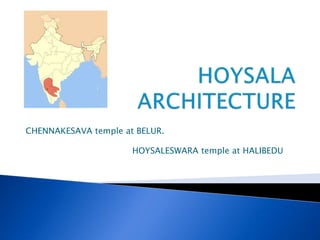
 The capital of hoysala empire was first at
belur and later it was moved to halebidu.
 The exact period of hoysala empire was
from 1026-1343.
 This empire is popularly known for its
Temple Architecture.
 The emperors encouraged the fine arts
and literature in Sanskrit and kannada.
 Chennakesava temple is originally known as
Vijayanarayana temple.
 It was built on the banks of river Yagachi in
Belur.
 It was built under the king
Vishnuvardana.(1117AD)
 Chennakesava literally means Handsome god.
 The main entrance Royagopura was built during
the vijayanagar empire.
 There were almost three shrines in the same
temple complex.
 The chennakesava shrine at the centre.
 The kappe channigraya temple to its right.
 A small somyanayagi temple at its left.
 There are two sthambhas exist here.One is
Garuda sthambha and another one is deepa
sthambha.
 Though this is the first great temple under
hoysala architecture.they followed the style of
western chaulkyan.
 The material used to construct the temple is
chloritic schist.
 Chloritic schist is known as soapstone.
 Shrine is at the back of the mandappa.
 Around every shrine there was a 10.5m gap.
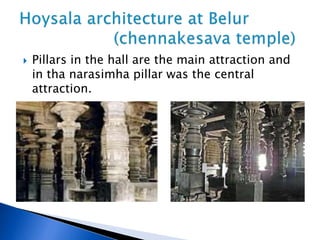
 Pillars in the hall are the main attraction and
in tha narasimha pillar was the central
attraction.
 Location: Halebid, Karnataka
 Built in: 12th century
 Dedicated to: Lord Shiva
 Attraction: Exquisite architecture
 Significance: One of the largest temples
dedicated to Lord Shiva in South India
 Hoysaleswara Temple – History
 The Shiva and Parvathi temple was built by
King Vishnuvardhana.
 It was the Shaivas who contributed money
and wealth for building this beautiful temple.
 During this time, the Chennakesava temple
which was a Vaishnava temple was being
built.
 The building of the Hoysaleshwara temple
was carried out as a competition to the
Chennakesava temple.
 The temple has a very big tank which was
built during the 11th century.
 The water to this tank is supplied from the
Yagachi River.
 Hoysaleswara Temple – Architecture
 he beautiful Hoysaleswara temple is a stunning
masterpiece with exclusive carvings.
 There are more than a thousand figures all along the
walls of the temple.
 You can see scenes from the Mahabharata and
Ramayana on the walls of these temples.
 The Hoysaleswara temple was built as a mark of
respect to Shantaleshwara, (the queen of
Vishnuvardhana) and Hoysaleswara.
 The temple has been built in soapstone.
 The architecture reflects the beautiful paintings
during the Hoysalas’ rule.
 The shrines face eastwards.
 The temple walls have intricate stone sculptures
which give the temple a different look.
 The Hoysala architecture is fine and this is clearly
visible in the paintings spread around the
temple.
 The two shrined Hoysaleswara temple has a Shiva linga.
 Nandi, the attendant of Shiva is worshipped here.
 At the entrance, you can find the dancing Ganesha.
 There are close to 240 sculpturally articulate images.
 The doorways of the temple (both the eastern doorway
and the southern doorway) have these exclusive
sculptures.
 The sculptures also depict charging elephants which are
symbolic of stability and strength.
 There are lions that are depicted in the
sculptures that symbolise courage and strength.
 The Hindu epics have been beautifully depicted
in the stone sculptures and are worth seeing.
 The Hoysaleswara temple has been listed by
UNESCO as a heritage site.
 Other Hoysala temples of Somnathpur and Belur
have also been awarded this honour.
 GarudaPillar
 Garuda Stambha (Pillar) is an attention-
grabbing structure of Hoysaleswara Temple.
 Garudas were known to be the selected
bodyguards of the kings and queens.
 They used to live and move with the Royalty
with the sole aim to defend their master.
 At the death of their master, they committed
suicide.
 In the southern side, the pillar demonstrates
heroes flanking knives and cutting their own
heads.
 The inscription on the pillar commemorates
Kuruva Lakshma (bodyguard of Veera Ballala
II).
Hoysala  architecture

Hoysala architecture

  • 1.
    CHENNAKESAVA temple atBELUR. HOYSALESWARA temple at HALIBEDU
  • 2.
     Hoysala architectureis the building style followed under the rule of HOYSALA EMPIRE.  This architecture was followed in the period of 11-14th century and this architecture dominated during the 13th century.  Many large and small temples were during this style of Architecture.
  • 3.
     The rulerswere from Malnad ,Karnataka.An elevated region of western ghats.  The Hoysala empire was prominent from Southern indian Kannadiga empire.  The Hoysala era wan important period in the development of art in the kingdom.  The capital of hoysala empire was first at belur and later it was moved to halebidu.  The exact period of hoysala empire was from 1026-1343.  This empire is popularly known for its Temple Architecture.  The emperors encouraged the fine arts and literature in Sanskrit and kannada.
  • 4.
     Chennakesava templeis originally known as Vijayanarayana temple.  It was built on the banks of river Yagachi in Belur.  It was built under the king Vishnuvardana.(1117AD)  Chennakesava literally means Handsome god.  The main entrance Royagopura was built during the vijayanagar empire.  There were almost three shrines in the same temple complex.  The chennakesava shrine at the centre.  The kappe channigraya temple to its right.  A small somyanayagi temple at its left.
  • 5.
     There aretwo sthambhas exist here.One is Garuda sthambha and another one is deepa sthambha.  Though this is the first great temple under hoysala architecture.they followed the style of western chaulkyan.  The material used to construct the temple is chloritic schist.  Chloritic schist is known as soapstone.  Shrine is at the back of the mandappa.  Around every shrine there was a 10.5m gap.
  • 7.
     Pillars inthe hall are the main attraction and in tha narasimha pillar was the central attraction.
  • 9.
     Location: Halebid,Karnataka  Built in: 12th century  Dedicated to: Lord Shiva  Attraction: Exquisite architecture  Significance: One of the largest temples dedicated to Lord Shiva in South India
  • 10.
     Hoysaleswara Temple– History  The Shiva and Parvathi temple was built by King Vishnuvardhana.  It was the Shaivas who contributed money and wealth for building this beautiful temple.  During this time, the Chennakesava temple which was a Vaishnava temple was being built.
  • 11.
     The buildingof the Hoysaleshwara temple was carried out as a competition to the Chennakesava temple.  The temple has a very big tank which was built during the 11th century.  The water to this tank is supplied from the Yagachi River.
  • 12.
     Hoysaleswara Temple– Architecture  he beautiful Hoysaleswara temple is a stunning masterpiece with exclusive carvings.  There are more than a thousand figures all along the walls of the temple.  You can see scenes from the Mahabharata and Ramayana on the walls of these temples.  The Hoysaleswara temple was built as a mark of respect to Shantaleshwara, (the queen of Vishnuvardhana) and Hoysaleswara.
  • 13.
     The templehas been built in soapstone.  The architecture reflects the beautiful paintings during the Hoysalas’ rule.  The shrines face eastwards.  The temple walls have intricate stone sculptures which give the temple a different look.  The Hoysala architecture is fine and this is clearly visible in the paintings spread around the temple.
  • 14.
     The twoshrined Hoysaleswara temple has a Shiva linga.  Nandi, the attendant of Shiva is worshipped here.  At the entrance, you can find the dancing Ganesha.  There are close to 240 sculpturally articulate images.  The doorways of the temple (both the eastern doorway and the southern doorway) have these exclusive sculptures.  The sculptures also depict charging elephants which are symbolic of stability and strength.
  • 15.
     There arelions that are depicted in the sculptures that symbolise courage and strength.  The Hindu epics have been beautifully depicted in the stone sculptures and are worth seeing.  The Hoysaleswara temple has been listed by UNESCO as a heritage site.  Other Hoysala temples of Somnathpur and Belur have also been awarded this honour.
  • 16.
     GarudaPillar  GarudaStambha (Pillar) is an attention- grabbing structure of Hoysaleswara Temple.  Garudas were known to be the selected bodyguards of the kings and queens.  They used to live and move with the Royalty with the sole aim to defend their master.
  • 17.
     At thedeath of their master, they committed suicide.  In the southern side, the pillar demonstrates heroes flanking knives and cutting their own heads.  The inscription on the pillar commemorates Kuruva Lakshma (bodyguard of Veera Ballala II).