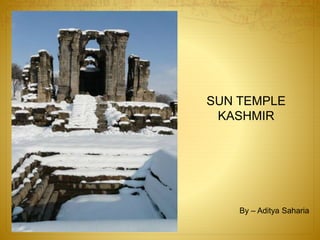

SUN TEMPLE
KASHMIR
By – Aditya Saharia
About Sun Temple
The Martand Sun Temple was a Kashmiri Hindu temple
dedicated to Surya (the chief solar deity in Hinduism) and built
during the 8th century C.E. Martand is another Sanskrit name
for the Hindu Sun-god. Now in ruins, the temple is located five
miles from Anantnag in the Indian state of Jammu and
Kashmir.
History
The Martand Sun Temple is highly revered as one of the most
inspiring and memorable masterpiece that was erected during
the reign of King Lalit Aditya who ruled this region during the
ancient era. He ordered the construction of this spacious and
spectacular Martand Sun Temple in Kashmir in honor and
dedication to the Sun God, also referred to as Surya.
The King belonged to the Surya dynasty period, and was a
Kshatriya, considered to be a highly authoritative figure, yet
considerate and gentle leader to his people, during those
times. It was during his era when the Sun, Moon and Holy
entities were greatly worshipped and believed to possess
spiritual and supernatural powers. Built to represent this Solar
or Surya Dynasty, King had the Martand Temple built to
commemorate Bhaskar, known then as the Sun God.
Vision of Sun Temple
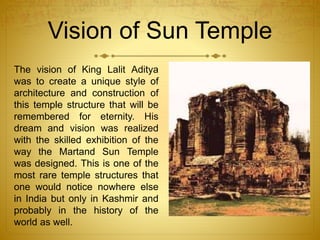
The vision of King Lalit Aditya
was to create a unique style of
architecture and construction of
this temple structure that will be
remembered for eternity. His
dream and vision was realized
with the skilled exhibition of the
way the Martand Sun Temple
was designed. This is one of the
most rare temple structures that
one would notice nowhere else
in India but only in Kashmir and
probably in the history of the
world as well.
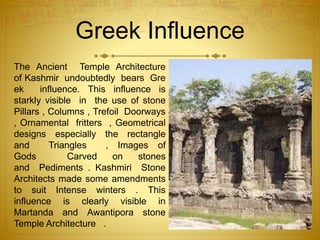
Greek Influence
The Ancient Temple Architecture
of Kashmir undoubtedly bears Gre
ek influence. This influence is
starkly visible in the use of stone
Pillars , Columns , Trefoil Doorways
, Ornamental fritters , Geometrical
designs especially the rectangle
and Triangles , Images of
Gods Carved on stones
and Pediments . Kashmiri Stone
Architects made some amendments
to suit Intense winters . This
influence is clearly visible in
Martanda and Awantipora stone
Temple Architecture .
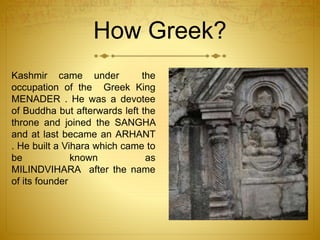
How Greek?
Kashmir came under the
occupation of the Greek King
MENADER . He was a devotee
of Buddha but afterwards left the
throne and joined the SANGHA
and at last became an ARHANT
. He built a Vihara which came to
be known as
MILINDVIHARA after the name
of its founder
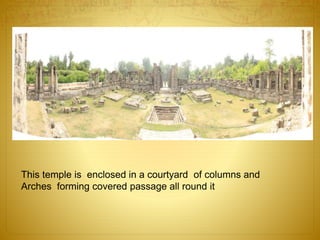
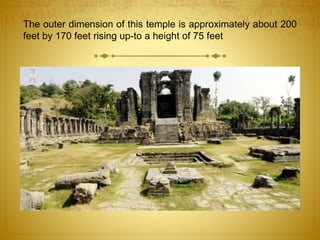
This temple is enclosed in a courtyard of columns and
Arches forming covered passage all round it
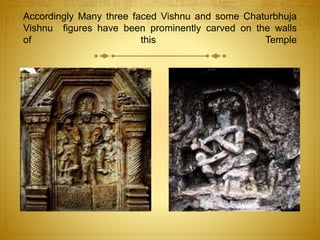
Accordingly Many three faced Vishnu and some Chaturbhuja
Vishnu figures have been prominently carved on the walls
of this Temple
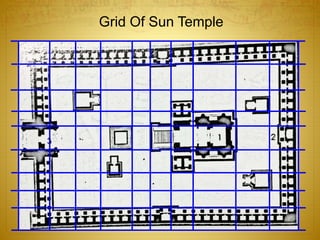
The outer dimension of this temple is approximately about 200
feet by 170 feet rising up-to a height of 75 feet
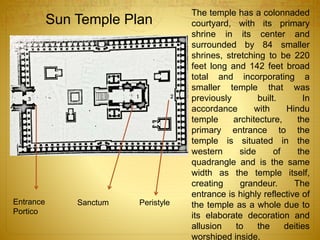
The temple has a colonnaded
courtyard, with its primary
shrine in its center and
surrounded by 84 smaller
shrines, stretching to be 220
feet long and 142 feet broad
total and incorporating a
smaller temple that was
previously built. In
accordance with Hindu
temple architecture, the
primary entrance to the
temple is situated in the
western side of the
quadrangle and is the same
width as the temple itself,
creating grandeur. The
entrance is highly reflective of
the temple as a whole due to
its elaborate decoration and
allusion to the deities
worshiped inside.
Sanctum PeristyleEntrance
Portico
Sun Temple Plan
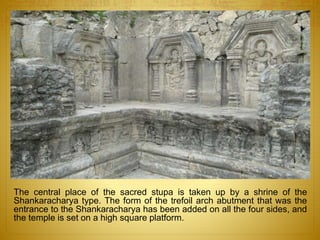
The central place of the sacred stupa is taken up by a shrine of the
Shankaracharya type. The form of the trefoil arch abutment that was the
entrance to the Shankaracharya has been added on all the four sides, and
the temple is set on a high square platform.
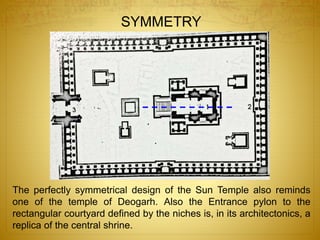
The perfectly symmetrical design of the Sun Temple also reminds
one of the temple of Deogarh. Also the Entrance pylon to the
rectangular courtyard defined by the niches is, in its architectonics, a
replica of the central shrine.
SYMMETRY
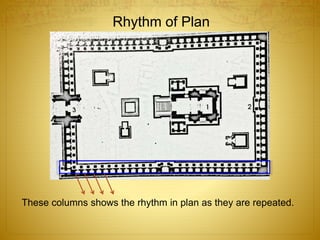
These columns shows the rhythm in plan as they are repeated.
Rhythm of Plan
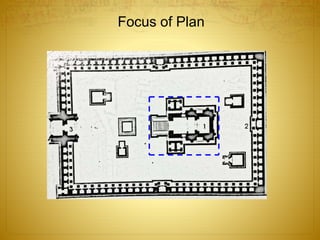
Focus of Plan
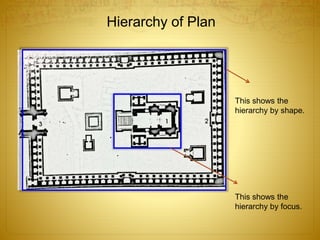
Hierarchy of Plan
This shows the
hierarchy by shape.
This shows the
hierarchy by focus.
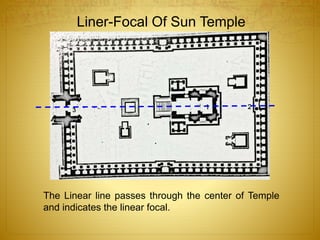
The Linear line passes through the center of Temple
and indicates the linear focal.
Liner-Focal Of Sun Temple
Grid Of Sun Temple
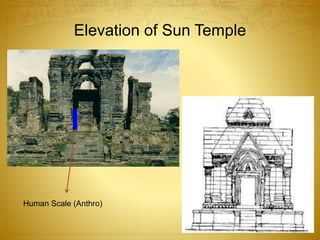
Elevation of Sun Temple
Human Scale (Anthro)
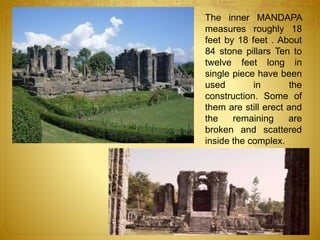
The inner MANDAPA
measures roughly 18
feet by 18 feet . About
84 stone pillars Ten to
twelve feet long in
single piece have been
used in the
construction. Some of
them are still erect and
the remaining are
broken and scattered
inside the complex.
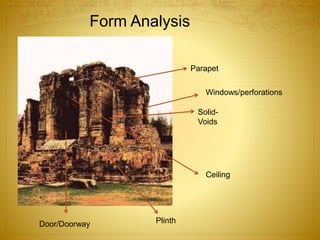
Form Analysis
Solid-
Voids
Parapet
Ceiling
PlinthDoor/Doorway
Windows/perforations
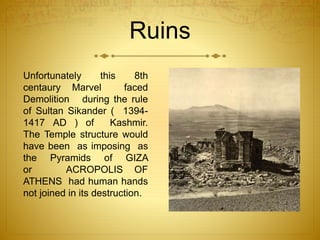
Ruins
Unfortunately this 8th
centaury Marvel faced
Demolition during the rule
of Sultan Sikander ( 1394-
1417 AD ) of Kashmir.
The Temple structure would
have been as imposing as
the Pyramids of GIZA
or ACROPOLIS OF
ATHENS had human hands
not joined in its destruction.
Thank You

architectural case study, sun temple, kashmir

  • 1.
  • 2.
    About Sun Temple TheMartand Sun Temple was a Kashmiri Hindu temple dedicated to Surya (the chief solar deity in Hinduism) and built during the 8th century C.E. Martand is another Sanskrit name for the Hindu Sun-god. Now in ruins, the temple is located five miles from Anantnag in the Indian state of Jammu and Kashmir.
  • 3.
    History The Martand SunTemple is highly revered as one of the most inspiring and memorable masterpiece that was erected during the reign of King Lalit Aditya who ruled this region during the ancient era. He ordered the construction of this spacious and spectacular Martand Sun Temple in Kashmir in honor and dedication to the Sun God, also referred to as Surya. The King belonged to the Surya dynasty period, and was a Kshatriya, considered to be a highly authoritative figure, yet considerate and gentle leader to his people, during those times. It was during his era when the Sun, Moon and Holy entities were greatly worshipped and believed to possess spiritual and supernatural powers. Built to represent this Solar or Surya Dynasty, King had the Martand Temple built to commemorate Bhaskar, known then as the Sun God.
  • 4.
    Vision of SunTemple The vision of King Lalit Aditya was to create a unique style of architecture and construction of this temple structure that will be remembered for eternity. His dream and vision was realized with the skilled exhibition of the way the Martand Sun Temple was designed. This is one of the most rare temple structures that one would notice nowhere else in India but only in Kashmir and probably in the history of the world as well.
  • 5.
    Greek Influence The AncientTemple Architecture of Kashmir undoubtedly bears Gre ek influence. This influence is starkly visible in the use of stone Pillars , Columns , Trefoil Doorways , Ornamental fritters , Geometrical designs especially the rectangle and Triangles , Images of Gods Carved on stones and Pediments . Kashmiri Stone Architects made some amendments to suit Intense winters . This influence is clearly visible in Martanda and Awantipora stone Temple Architecture .
  • 6.
    How Greek? Kashmir cameunder the occupation of the Greek King MENADER . He was a devotee of Buddha but afterwards left the throne and joined the SANGHA and at last became an ARHANT . He built a Vihara which came to be known as MILINDVIHARA after the name of its founder
  • 7.
    This temple isenclosed in a courtyard of columns and Arches forming covered passage all round it
  • 8.
    Accordingly Many threefaced Vishnu and some Chaturbhuja Vishnu figures have been prominently carved on the walls of this Temple
  • 9.
    The outer dimensionof this temple is approximately about 200 feet by 170 feet rising up-to a height of 75 feet
  • 10.
    The temple hasa colonnaded courtyard, with its primary shrine in its center and surrounded by 84 smaller shrines, stretching to be 220 feet long and 142 feet broad total and incorporating a smaller temple that was previously built. In accordance with Hindu temple architecture, the primary entrance to the temple is situated in the western side of the quadrangle and is the same width as the temple itself, creating grandeur. The entrance is highly reflective of the temple as a whole due to its elaborate decoration and allusion to the deities worshiped inside. Sanctum PeristyleEntrance Portico Sun Temple Plan
  • 11.
    The central placeof the sacred stupa is taken up by a shrine of the Shankaracharya type. The form of the trefoil arch abutment that was the entrance to the Shankaracharya has been added on all the four sides, and the temple is set on a high square platform.
  • 12.
    The perfectly symmetricaldesign of the Sun Temple also reminds one of the temple of Deogarh. Also the Entrance pylon to the rectangular courtyard defined by the niches is, in its architectonics, a replica of the central shrine. SYMMETRY
  • 13.
    These columns showsthe rhythm in plan as they are repeated. Rhythm of Plan
  • 14.
  • 15.
    Hierarchy of Plan Thisshows the hierarchy by shape. This shows the hierarchy by focus.
  • 16.
    The Linear linepasses through the center of Temple and indicates the linear focal. Liner-Focal Of Sun Temple
  • 17.
  • 18.
    Elevation of SunTemple Human Scale (Anthro)
  • 19.
    The inner MANDAPA measuresroughly 18 feet by 18 feet . About 84 stone pillars Ten to twelve feet long in single piece have been used in the construction. Some of them are still erect and the remaining are broken and scattered inside the complex.
  • 20.
  • 21.
    Ruins Unfortunately this 8th centauryMarvel faced Demolition during the rule of Sultan Sikander ( 1394- 1417 AD ) of Kashmir. The Temple structure would have been as imposing as the Pyramids of GIZA or ACROPOLIS OF ATHENS had human hands not joined in its destruction.
  • 22.