KESHAV TEMPLE
SOMANATAPURA
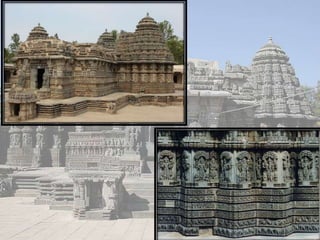
ABOUT TEMPLE
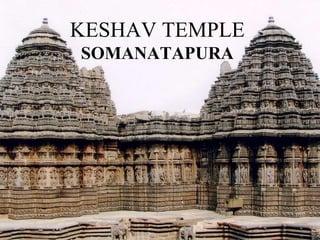
 KESHAV TEMPLE is the famous temple built by Architect
Jakanachari in year 1268 A.D at somanathpur, lies on left bank of
cauvery.
 It is said to be finest example of Hoysala Architecture.
 The material used for the temple is soapstone (Green schist)
 The Architect/Sculptor was Ruvari Malithamma.
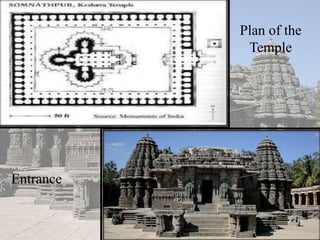
 It is also symmetrical in its design, it has 3 shrine, triple celled
temple.
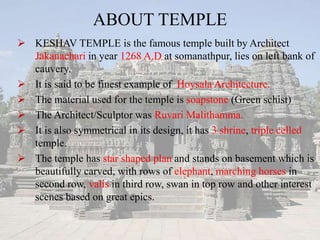
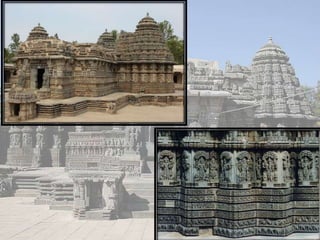
 The temple has star shaped plan and stands on basement which is
beautifully carved, with rows of elephant, marching horses in
second row, valis in third row, swan in top row and other interest
scenes based on great epics.
ARCHITECTURAL FEATURES
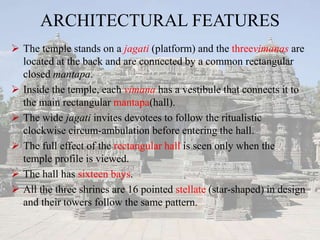
 The temple stands on a jagati (platform) and the threevimanas are
located at the back and are connected by a common rectangular
closed mantapa.
 Inside the temple, each vimana has a vestibule that connects it to
the main rectangular mantapa(hall).
 The wide jagati invites devotees to follow the ritualistic
clockwise circum-ambulation before entering the hall.
 The full effect of the rectangular hall is seen only when the
temple profile is viewed.
 The hall has sixteen bays.
 All the three shrines are 16 pointed stellate (star-shaped) in design
and their towers follow the same pattern.
 The whole structure looks like a rhythmic progression of well
decorated projections and recesses (called architectural
articulation).
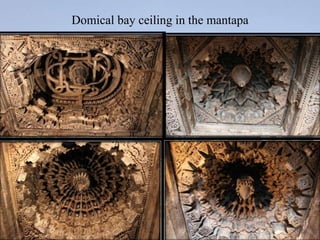
 The ceilings are carved with intricate geometric figure.
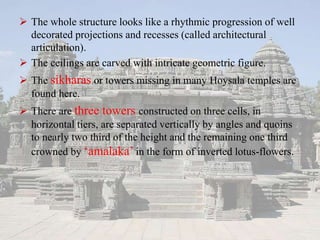
 The sikharas or towers missing in many Hoysala temples are
found here.
 There are three towers constructed on three cells, in
horizontal tiers, are separated vertically by angles and quoins
to nearly two third of the height and the remaining one third
crowned by ‘amalaka’ in the form of inverted lotus-flowers.
Plan of the
Temple
Entrance
Domical bay ceiling in the mantapa
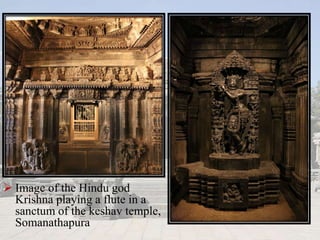
 Image of the Hindu god
Krishna playing a flute in a
sanctum of the keshav temple,
Somanathapura
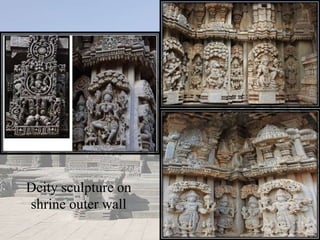
Deity sculpture on
shrine outer wall
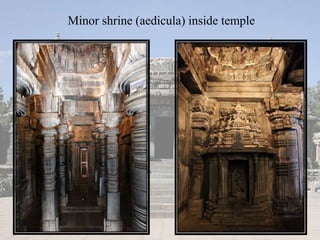
Minor shrine (aedicula) inside temple
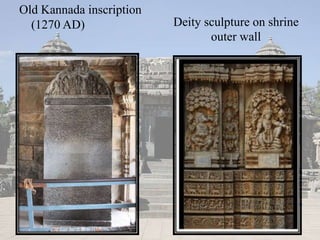
Deity sculpture on shrine
outer wall
Old Kannada inscription
(1270 AD)
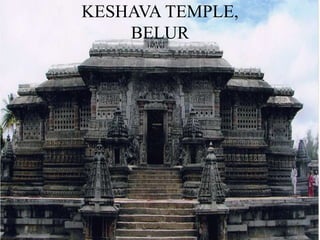
KESHAVA TEMPLE,
BELUR
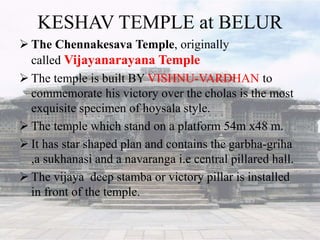
KESHAV TEMPLE at BELUR
 The Chennakesava Temple, originally
called Vijayanarayana Temple
 The temple is built BY VISHNU-VARDHAN to
commemorate his victory over the cholas is the most
exquisite specimen of hoysala style.
 The temple which stand on a platform 54m x48 m.
 It has star shaped plan and contains the garbha-griha
,a sukhanasi and a navaranga i.e central pillared hall.
 The vijaya deep stamba or victory pillar is installed
in front of the temple.
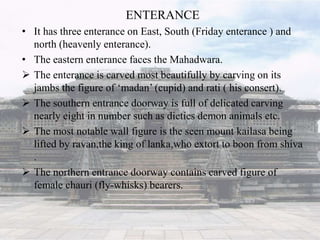
ENTERANCE
• It has three enterance on East, South (Friday enterance ) and
north (heavenly enterance).
• The eastern enterance faces the Mahadwara.
 The enterance is carved most beautifully by carving on its
jambs the figure of ‘madan’ (cupid) and rati ( his consert).
 The southern entrance doorway is full of delicated carving
nearly eight in number such as dieties demon animals etc.
 The most notable wall figure is the seen mount kailasa being
lifted by ravan,the king of lanka,who extort to boon from shiva
.
 The northern entrance doorway contains carved figure of
female chauri (fly-whisks) bearers.
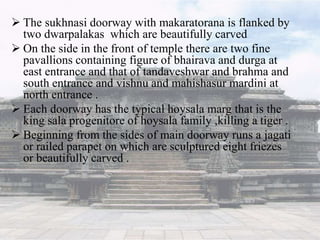
 The sukhnasi doorway with makaratorana is flanked by
two dwarpalakas which are beautifully carved
 On the side in the front of temple there are two fine
pavallions containing figure of bhairava and durga at
east entrance and that of tandaveshwar and brahma and
south entrance and vishnu and mahishasur mardini at
north entrance .
 Each doorway has the typical hoysala marg that is the
king sala progenitore of hoysala family ,killing a tiger .
 Beginning from the sides of main doorway runs a jagati
or railed parapet on which are sculptured eight friezes
or beautifully carved .
PILLARS
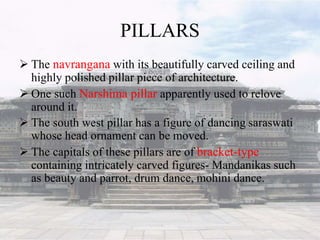
 The navrangana with its beautifully carved ceiling and
highly polished pillar piece of architecture.
 One such Narshima pillar apparently used to relove
around it.
 The south west pillar has a figure of dancing saraswati
whose head ornament can be moved.
 The capitals of these pillars are of bracket-type
containing intricately carved figures- Mandanikas such
as beauty and parrot, drum dance, mohini dance.
SHRINE
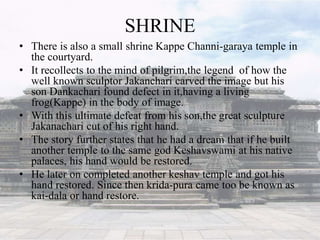
• There is also a small shrine Kappe Channi-garaya temple in
the courtyard.
• It recollects to the mind of pilgrim,the legend of how the
well known sculptor Jakanchari carved the image but his
son Dankachari found defect in it,having a living
frog(Kappe) in the body of image.
• With this ultimate defeat from his son,the great sculpture
Jakanachari cut of his right hand.
• The story further states that he had a dream that if he built
another temple to the same god Keshavswami at his native
palaces, his hand would be restored.
• He later on completed another keshav temple and got his
hand restored. Since then krida-pura came too be known as
kai-dala or hand restore.
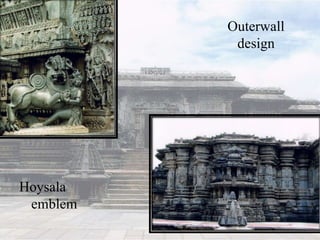
Outerwall
design
Hoysala
emblem
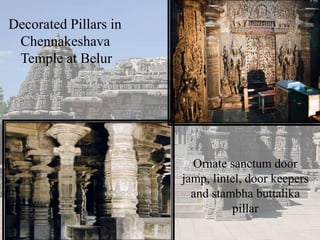
Ornate sanctum door
jamp, lintel, door keepers
and stambha buttalika
pillar
Decorated Pillars in
Chennakeshava
Temple at Belur
THANK YOU..
SUBMMITED TO-
AR.PRAGYA MISHRA
SUBMMITED BY-
SIMRAN BHUGRA
SANPREET KAUR

Keshav temple

  • 1.
  • 2.
    ABOUT TEMPLE  KESHAVTEMPLE is the famous temple built by Architect Jakanachari in year 1268 A.D at somanathpur, lies on left bank of cauvery.  It is said to be finest example of Hoysala Architecture.  The material used for the temple is soapstone (Green schist)  The Architect/Sculptor was Ruvari Malithamma.  It is also symmetrical in its design, it has 3 shrine, triple celled temple.  The temple has star shaped plan and stands on basement which is beautifully carved, with rows of elephant, marching horses in second row, valis in third row, swan in top row and other interest scenes based on great epics.
  • 3.
    ARCHITECTURAL FEATURES  Thetemple stands on a jagati (platform) and the threevimanas are located at the back and are connected by a common rectangular closed mantapa.  Inside the temple, each vimana has a vestibule that connects it to the main rectangular mantapa(hall).  The wide jagati invites devotees to follow the ritualistic clockwise circum-ambulation before entering the hall.  The full effect of the rectangular hall is seen only when the temple profile is viewed.  The hall has sixteen bays.  All the three shrines are 16 pointed stellate (star-shaped) in design and their towers follow the same pattern.
  • 4.
     The wholestructure looks like a rhythmic progression of well decorated projections and recesses (called architectural articulation).  The ceilings are carved with intricate geometric figure.  The sikharas or towers missing in many Hoysala temples are found here.  There are three towers constructed on three cells, in horizontal tiers, are separated vertically by angles and quoins to nearly two third of the height and the remaining one third crowned by ‘amalaka’ in the form of inverted lotus-flowers.
  • 5.
  • 7.
    Domical bay ceilingin the mantapa
  • 8.
     Image ofthe Hindu god Krishna playing a flute in a sanctum of the keshav temple, Somanathapura
  • 9.
  • 11.
  • 12.
    Deity sculpture onshrine outer wall Old Kannada inscription (1270 AD)
  • 13.
  • 14.
    KESHAV TEMPLE atBELUR  The Chennakesava Temple, originally called Vijayanarayana Temple  The temple is built BY VISHNU-VARDHAN to commemorate his victory over the cholas is the most exquisite specimen of hoysala style.  The temple which stand on a platform 54m x48 m.  It has star shaped plan and contains the garbha-griha ,a sukhanasi and a navaranga i.e central pillared hall.  The vijaya deep stamba or victory pillar is installed in front of the temple.
  • 15.
    ENTERANCE • It hasthree enterance on East, South (Friday enterance ) and north (heavenly enterance). • The eastern enterance faces the Mahadwara.  The enterance is carved most beautifully by carving on its jambs the figure of ‘madan’ (cupid) and rati ( his consert).  The southern entrance doorway is full of delicated carving nearly eight in number such as dieties demon animals etc.  The most notable wall figure is the seen mount kailasa being lifted by ravan,the king of lanka,who extort to boon from shiva .  The northern entrance doorway contains carved figure of female chauri (fly-whisks) bearers.
  • 16.
     The sukhnasidoorway with makaratorana is flanked by two dwarpalakas which are beautifully carved  On the side in the front of temple there are two fine pavallions containing figure of bhairava and durga at east entrance and that of tandaveshwar and brahma and south entrance and vishnu and mahishasur mardini at north entrance .  Each doorway has the typical hoysala marg that is the king sala progenitore of hoysala family ,killing a tiger .  Beginning from the sides of main doorway runs a jagati or railed parapet on which are sculptured eight friezes or beautifully carved .
  • 17.
    PILLARS  The navranganawith its beautifully carved ceiling and highly polished pillar piece of architecture.  One such Narshima pillar apparently used to relove around it.  The south west pillar has a figure of dancing saraswati whose head ornament can be moved.  The capitals of these pillars are of bracket-type containing intricately carved figures- Mandanikas such as beauty and parrot, drum dance, mohini dance.
  • 18.
    SHRINE • There isalso a small shrine Kappe Channi-garaya temple in the courtyard. • It recollects to the mind of pilgrim,the legend of how the well known sculptor Jakanchari carved the image but his son Dankachari found defect in it,having a living frog(Kappe) in the body of image. • With this ultimate defeat from his son,the great sculpture Jakanachari cut of his right hand. • The story further states that he had a dream that if he built another temple to the same god Keshavswami at his native palaces, his hand would be restored. • He later on completed another keshav temple and got his hand restored. Since then krida-pura came too be known as kai-dala or hand restore.
  • 19.
  • 20.
    Ornate sanctum door jamp,lintel, door keepers and stambha buttalika pillar Decorated Pillars in Chennakeshava Temple at Belur
  • 21.
    THANK YOU.. SUBMMITED TO- AR.PRAGYAMISHRA SUBMMITED BY- SIMRAN BHUGRA SANPREET KAUR