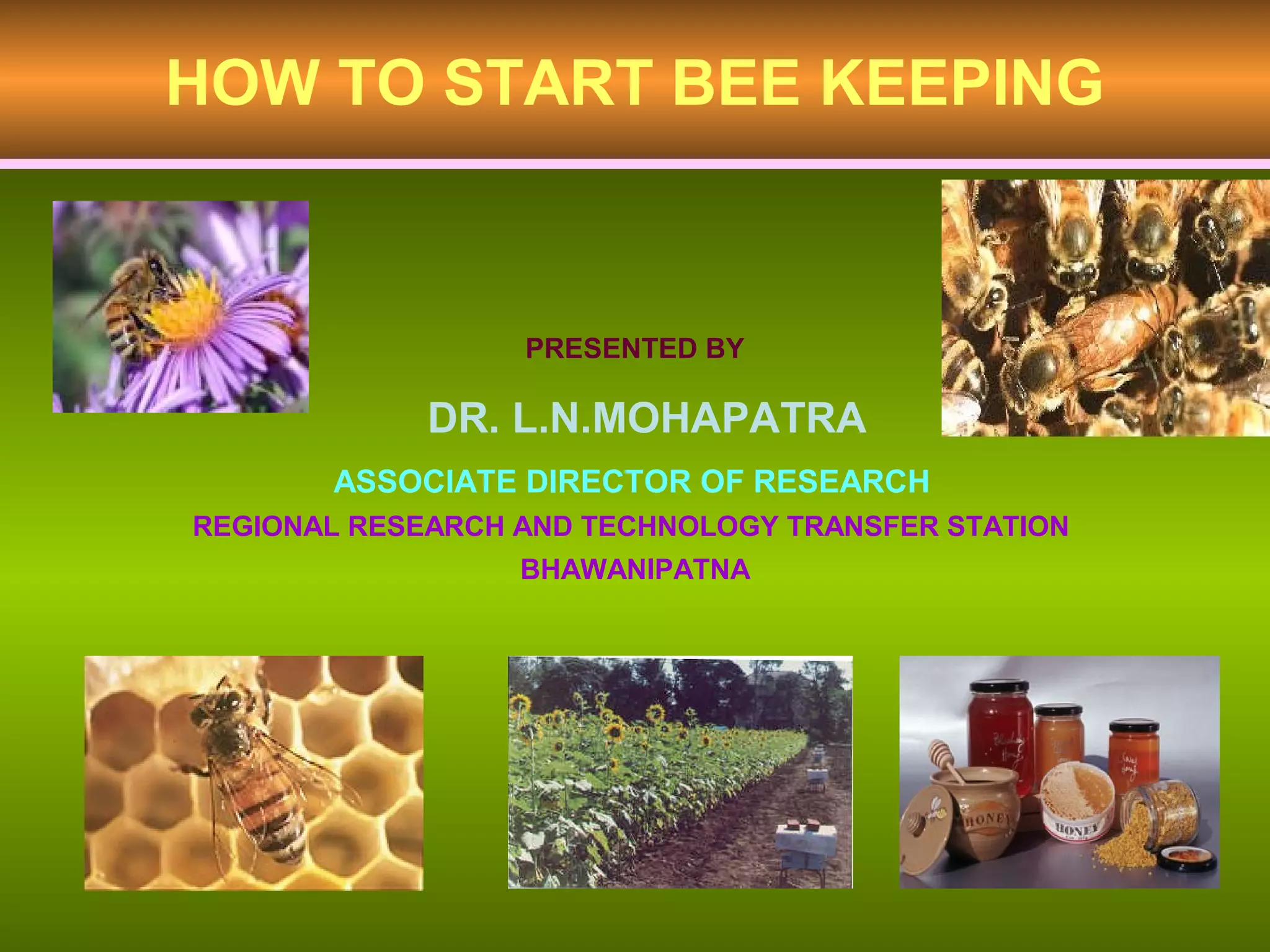
HOW TO START BEE KEEPING
PRESENTED BY
DR. L.N.MOHAPATRA
ASSOCIATE DIRECTOR OF RESEARCH
REGIONAL RESEARCH AND TECHNOLOGY TRANSFER STATION
BHAWANIPATNA
PRESENTED BY
DR. L.N.MOHAPATRA
ASSOCIATE DIRECTOR OF RESEARCH
REGIONAL RESEARCH AND TECHNOLOGY TRANSFER STATION
BHAWANIPATNA
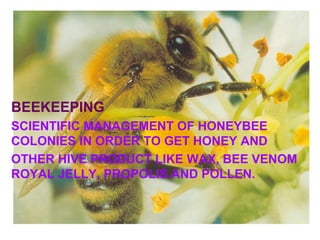
BEEKEEPING
SCIENTIFIC MANAGEMENT OF HONEYBEE
COLONIES IN ORDER TO GET HONEY AND
OTHER HIVE PRODUCT LIKE WAX, BEE VENOM
ROYAL JELLY, PROPOLIS AND POLLEN.
PRACTICE OF BEE KEEPING
• Honey hunting is an age old practice
documented and known from time
immemorial.
• Bee keeping is a century old practice.
• Scientific bee keeping in India
is a practice of only a few decades old
Importance of Honey bees
and bee keeping
• After independence bee keeping was taken as
an avocation in small scale cottage industry
providing income and employment to rural
poor.
• Bee keeping was meant for production of
honey and other hive products.
BUT
• Importance of Bees as POLLINATORS was
hardly realized.
BEE KEEPING IN ORISSA WAS
INITIATED AS A COTTAGE
INDUSTRY DURING 1936
IN 1956-57, KVIB SHOULDERED THE
RESPONSIBILITY OF SPREADING BEE
KEEPING IN THE STATE BUT IT REMAINED
CONFINED TO A VERY RESTRICTED AREA FOR
ABOUT ONE AND HALF DECADE.
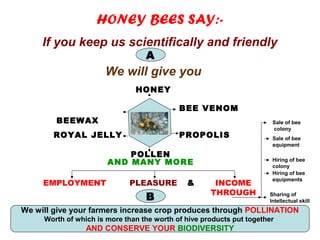
HONEY BEES SAY:-
If you keep us scientifically and friendly
A
We will give you
HONEY
BEEWAX
BEE VENOM
PROPOLISROYAL JELLY
POLLEN
AND MANY MORE
EMPLOYMENT PLEASURE & INCOME
THROUGH
Sale of bee
colony
Sale of bee
equipment
Hiring of bee
colony
Sharing of
Intellectual skill
Hiring of bee
equipments
B
We will give your farmers increase crop produces through POLLINATION
Worth of which is more than the worth of hive products put together
AND CONSERVE YOUR BIODIVERSITY
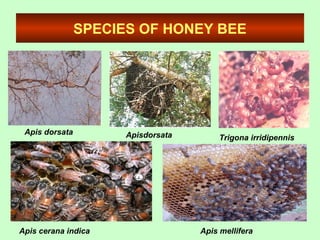
SPECIES OF HONEY BEE
Apis dorsata Apisdorsata Trigona irridipennis
Apis cerana indica Apis mellifera
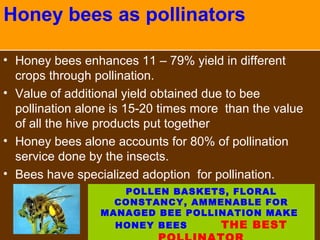
Honey bees as pollinators
• Honey bees enhances 11 – 79% yield in different
crops through pollination.
• Value of additional yield obtained due to bee
pollination alone is 15-20 times more than the value
of all the hive products put together
• Honey bees alone accounts for 80% of pollination
service done by the insects.
• Bees have specialized adoption for pollination.
POLLEN BASKETS, FLORAL
CONSTANCY, AMMENABLE FOR
MANAGED BEE POLLINATION MAKE
HONEY BEES THE BEST
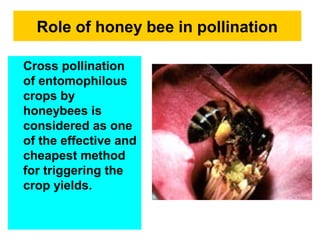
Role of honey bee in pollination
Cross pollination
of entomophilous
crops by
honeybees is
considered as one
of the effective and
cheapest method
for triggering the
crop yields.
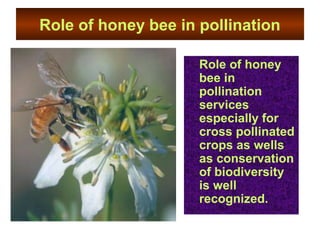
Role of honey bee in pollination
Role of honey
bee in
pollination
services
especially for
cross pollinated
crops as wells
as conservation
of biodiversity
is well
recognized.
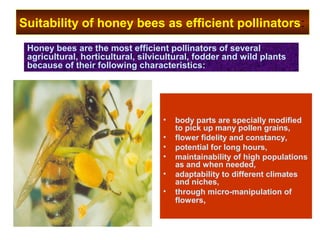
Suitability of honey bees as efficient pollinators:
• body parts are specially modified
to pick up many pollen grains,
• flower fidelity and constancy,
• potential for long hours,
• maintainability of high populations
as and when needed,
• adaptability to different climates
and niches,
• through micro-manipulation of
flowers,
Honey bees are the most efficient pollinators of several
agricultural, horticultural, silvicultural, fodder and wild plants
because of their following characteristics:
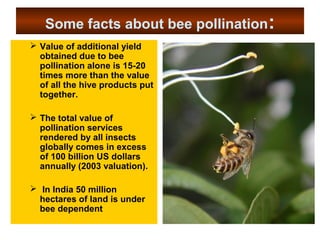
Some facts about bee pollination:
 Value of additional yield
obtained due to bee
pollination alone is 15-20
times more than the value
of all the hive products put
together.
 The total value of
pollination services
rendered by all insects
globally comes in excess
of 100 billion US dollars
annually (2003 valuation).
 In India 50 million
hectares of land is under
bee dependent
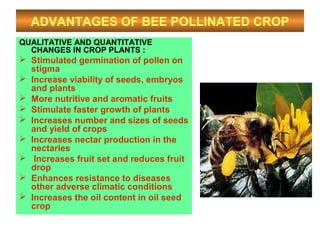
ADVANTAGES OF BEE POLLINATED CROP
QUALITATIVE AND QUANTITATIVE
CHANGES IN CROP PLANTS :
 Stimulated germination of pollen on
stigma
 Increase viability of seeds, embryos
and plants
 More nutritive and aromatic fruits
 Stimulate faster growth of plants
 Increases number and sizes of seeds
and yield of crops
 Increases nectar production in the
nectaries
 Increases fruit set and reduces fruit
drop
 Enhances resistance to diseases
other adverse climatic conditions
 Increases the oil content in oil seed
crop
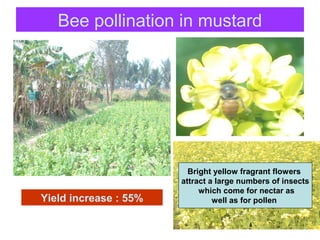
Bee pollination in mustard
Yield increase : 55%
Bright yellow fragrant flowers
attract a large numbers of insects
which come for nectar as
well as for pollen
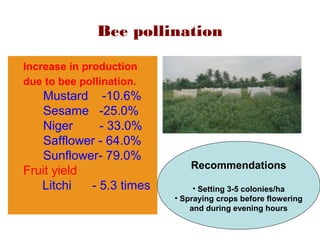
Bee pollination
Increase in production
due to bee pollination.
Mustard -10.6%
Sesame -25.0%
Niger - 33.0%
Safflower - 64.0%
Sunflower- 79.0%
Fruit yield
Litchi - 5.3 times
Recommendations
• Setting 3-5 colonies/ha
• Spraying crops before flowering
and during evening hours
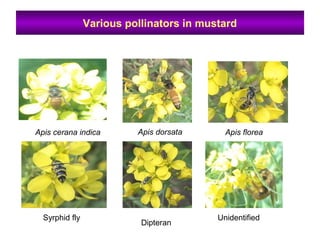
Various pollinators in mustard
•
Apis cerana indica Apis dorsata Apis florea
Syrphid fly
Dipteran
Unidentified
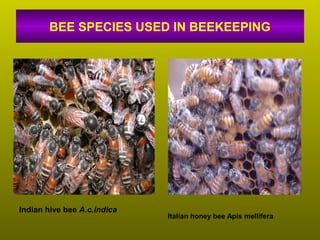
BEE SPECIES USED IN BEEKEEPING
Italian honey bee Apis mellifera
Indian hive bee A.c.indica
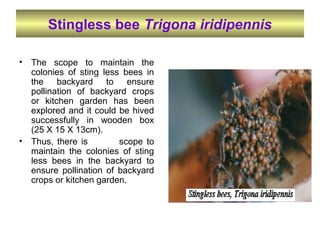
Stingless bee Trigona iridipennis
• The scope to maintain the
colonies of sting less bees in
the backyard to ensure
pollination of backyard crops
or kitchen garden has been
explored and it could be hived
successfully in wooden box
(25 X 15 X 13cm).
• Thus, there is scope to
maintain the colonies of sting
less bees in the backyard to
ensure pollination of backyard
crops or kitchen garden.
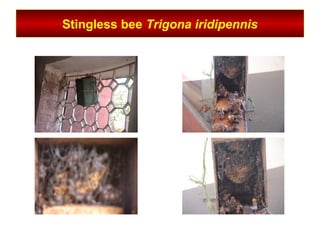
Stingless bee Trigona iridipennis
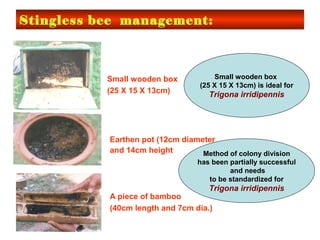
Stingless bee management:
Small wooden box
(25 X 15 X 13cm)
Earthen pot (12cm diameter
and 14cm height)
A piece of bamboo
(40cm length and 7cm dia.)
Small wooden box
(25 X 15 X 13cm) is ideal for
Trigona irridipennis
Method of colony division
has been partially successful
and needs
to be standardized for
Trigona irridipennis
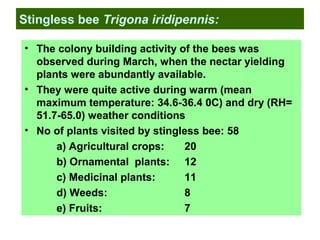
Stingless bee Trigona iridipennis:
• The colony building activity of the bees was
observed during March, when the nectar yielding
plants were abundantly available.
• They were quite active during warm (mean
maximum temperature: 34.6-36.4 0C) and dry (RH=
51.7-65.0) weather conditions
• No of plants visited by stingless bee: 58
a) Agricultural crops: 20
b) Ornamental plants: 12
c) Medicinal plants: 11
d) Weeds: 8
e) Fruits: 7
BEE KEEPING AS AN ENTERPRISE
 Most suited to land less rural poor or with small land
holding
 Require no land
 Does not compete with any branch of agriculture
 Does not require continuous labour or require light
physical work
 Does not require heavy investment
 No sophisticated instruments are required
 Provide multi source income, provide employment
 Improves crop yield through cross pollination
- Both production and productivity increases
- Improves quality of produce
- Maintain stability of ecosystem
- Conserve biodiversity
THE INCOME FROM BEEKEEPING
 Through the sale of honey
 Through the sale of bee products like bees wax, bee
venom, royal jelly, propolis and pollen
 Preparing and selling the comb foundation sheets
 Renting the bee colonies to farmers for effecting the
cross pollination in the field as well as horticultural
crops
 Renting the honey extractor
 Sale of pedigree queen bee through mass queen bee
rearing
 Trading bee equipments, bee packages for transport
in potential areas
 Establishing apiculture based floriculture (calendula,
cosmos, marigold, gladioli, aster, chrysanthemum,
rose, dahalia,zinnia etc.)
HONEY A USEFUL HIVE PRODUCT
• Use of honey is known to mankind since vedic times
• Rock painting of 7000 BC evidences honey collection as an ancient
practices
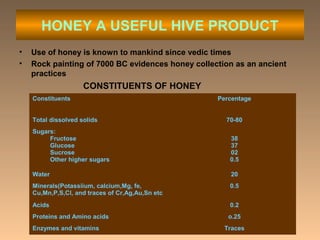
CONSTITUENTS OF HONEY
Constituents Percentage
Total dissolved solids 70-80
Sugars:
Fructose
Glucose
Sucrose
Other higher sugars
38
37
02
0.5
Water 20
Minerals(Potassiium, calcium,Mg, fe,
Cu,Mn,P,S,Cl, and traces of Cr,Ag,Au,Sn etc
0.5
Acids 0.2
Proteins and Amino acids o.25
Enzymes and vitamins Traces
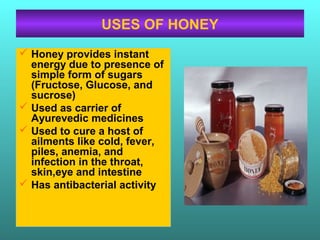
USES OF HONEY
 Honey provides instant
energy due to presence of
simple form of sugars
(Fructose, Glucose, and
sucrose)
 Used as carrier of
Ayurevedic medicines
 Used to cure a host of
ailments like cold, fever,
piles, anemia, and
infection in the throat,
skin,eye and intestine
 Has antibacterial activity
BEES WAX
 Bees wax is synthesized by 14 -18 days old
worker bees secreted through four pairs of
wax secreting epidermal wax glands,
present on the ventral side of fourth to
seventh abdominal segment of the worker
bee’s body.
 Wax glands results from digestion of
carbohydrates.
 In India major proportion of wax comes from
the combs of Apis dorsata.
 Annual production of bees wax in India is
29.1 metric tonnes.
USES OF BEES WAX
The bees wax is used extensively in pharmaceutical and cosmetics
industries which consume 75% of world production of bees wax.
 Its main uses are for church candles, cosmetics, shoe polish, and by
cobblers, car /mason polish, carbon paper, electric and textile
industry, in metal castings and mouldings, for water proofing, crayon
colour industry, for scientific decorative models (batik), for polishing
optical lenses, in certain adhesives and inks, in candy and chewing
gums, for musical instruments, for bow strings, electric insulation
etc.
 In beekeeping industry, bees wax is mostly used to prepare comb
foundation sheets.
 The pharmaceutical use of beeswax are coating of drugs and pills,
ointment and capsule.
 Bees wax is also used in food processing for coating metal containers
internally against the effects of acids from fruit juices and honey.
BEE VENOM
• It is called as apitoxin, which is produced in the venom gland and
stored in venom sac attached at the base of the sting of worker bees..
• The main venom producer is USA. The price of bee venom on the U.S.
open market varied form $ 100-200 /g ( Rs 4700-9400/g).
 The normal recovery is 0.5-1.0 µl per bee and about one million stings
are required to make one gram dry venom.
PROPERTIES
 Bee venom is a clear watery material having somewhat sharp and
bitter taste, hydrolytic blend of proteins with basic pH,an aromatic
odour on acid reaction having a specific gravity 1.313.
 It dries out at room temperature. It is mostly used by the worker bees
for their defense. Venom proteins exhibit various degrees of allergic
reaction to the victim of stinging.
 It is composed of many active substances like Histamine, Apamine ,
Acithinase, Minimine, tryptophan, phospholipase, lecithinase,
HCl,Formic acid, Orthophosphoric acid ,S, Ca, Cu and magnesium
sulphate.
USES OF BEE VENOM
 Apitherapy which is carried out either by natural bee
sting or through extracted bee venom in the form of
injection , ointment inhalation of venom vapour and
tablets.
 It is used for curing rheumatoid arthritis, many
diseases of nervous disorders, suppressing oedema
(swelling), as anti-inflammatory agent, lowers the
blood pressure, decreases the cholesterol levels
and for treatment of individuals hypersensitive to bee
stings.
 Ointments made by mixing apitoxin, vasaline and
salicylic acid (1: 10 : 1) can be applied to the affected
areas.
ROYAL JELLY
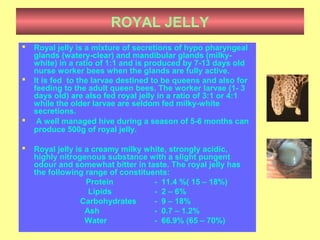
 Royal jelly is a mixture of secretions of hypo pharyngeal
glands (watery-clear) and mandibular glands (milky-
white) in a ratio of 1:1 and is produced by 7-13 days old
nurse worker bees when the glands are fully active.
 It is fed to the larvae destined to be queens and also for
feeding to the adult queen bees. The worker larvae (1- 3
days old) are also fed royal jelly in a ratio of 3:1 or 4:1
while the older larvae are seldom fed milky-white
secretions.
 A well managed hive during a season of 5-6 months can
produce 500g of royal jelly.
 Royal jelly is a creamy milky white, strongly acidic,
highly nitrogenous substance with a slight pungent
odour and somewhat bitter in taste. The royal jelly has
the following range of constituents:
Protein - 11.4 %( 15 – 18%)
Lipids - 2 – 6%
Carbohydrates - 9 – 18%
Ash - 0.7 – 1.2%
Water - 66.9% (65 – 70%)
USES OF ROYAL JELLY
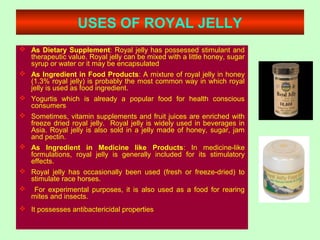
 As Dietary Supplement: Royal jelly has possessed stimulant and
therapeutic value. Royal jelly can be mixed with a little honey, sugar
syrup or water or it may be encapsulated
 As Ingredient in Food Products: A mixture of royal jelly in honey
(1.3% royal jelly) is probably the most common way in which royal
jelly is used as food ingredient.
 Yogurtis which is already a popular food for health conscious
consumers
 Sometimes, vitamin supplements and fruit juices are enriched with
freeze dried royal jelly. Royal jelly is widely used in beverages in
Asia. Royal jelly is also sold in a jelly made of honey, sugar, jam
and pectin.
 As Ingredient in Medicine like Products: In medicine-like
formulations, royal jelly is generally included for its stimulatory
effects.
 Royal jelly has occasionally been used (fresh or freeze-dried) to
stimulate race horses.
 For experimental purposes, it is also used as a food for rearing
mites and insects.
 It possesses antibactericidal properties
PROPOLIS
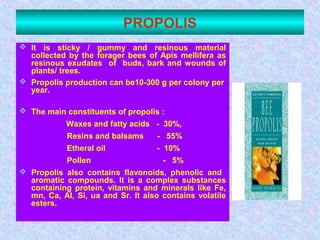
 It is sticky / gummy and resinous material
collected by the forager bees of Apis mellifera as
resinous exudates of buds, bark and wounds of
plants/ trees.
 Propolis production can be10-300 g per colony per
year.
 The main constituents of propolis :
Waxes and fatty acids - 30%,
Resins and balsams - 55%
Etheral oil - 10%
Pollen - 5%
 Propolis also contains flavonoids, phenolic and
aromatic compounds. It is a complex substances
containing protein, vitamins and minerals like Fe,
mn, Ca, Al, Si, ua and Sr. It also contains volatile
esters.
USES OF PROPOLIS
 Propolis is antimicrobial, antiviral, anti-inflammatory; acts as
topical anesthesia and has spasmolytic activity. It is
considered as a curative agent in human health in ailments like
cold, sore throat, skin problems, stomach ulcers, burns,
hemorrhoids, gum diseases, and wounds.
 In food technology it is used as oxidant, antimicrobial and
antifungal. Propolis has antibacterial properties.
 It is used as animal growth stimulant and in human and
veterinary medicines especially for burns and wounds.
 Its use in gum paints and toothpaste is increasing. It is also
used in various ointments and paints. Its traditional use is as
wood preservative and in varnishes.
 Propolis coated layer inside the hive also serve as a moisture
barrier to maintain the inside humidity and also checks the
excessive moisture following heavy rains and a barrier against
microbial growth.
POLLEN
 Pollen, the male reproductive cells, produced by
anthers of flowering plants is another important
product collected by forager bees from the stamens
of flowers.
 It is the chief source of protein, lipids, amino acids,
minerals, vitamins etc. in the honey bee diet.
 Properties and composition of pollen
Carbohydrates - 24 %
Crude fat - 5 %
Minerals - 3 %
(K, Ca, Mg, Fe, Zn, Mn and Cu).
 It is rich in vit B (thiamine, niacin, riboflavin,
pyridoxine, pantothenic acid, folic acid and bioin )
and variable levels of vitamin C. It does not contain
lipid soluble vitamin D, K and E.
USES OF POLLEN
 Pollen has a potential as an excellent food and can become a
competitive food item in the human diets
 Potential of pollen in human health / well being : Pollen is
undoubtedly beneficial for the treatment of chronic prostatitis,
probably because pollen contains high concentration of Zn which is
the key element in prostrate gland functioning.
 Pollen consumption helps protecting against the adverse effect of
x- rays, reduces symptoms of hay fever.
 Use of pollen for animals : Pollen is useful for race horse care, poultry
birds, piglets
 Aas an ingredient of artificial diets of experimental insects including
honeybees, birds and mammals like bats in captivity, in aquaculture
and of course
.
 Use in bee keeping industry : Pollen can be used for stimulating the
brood rearing during dearth period .
HOW TO START BEEKEEPING
 Judge the area for suitability
 Acquire knowledge of bee behaviour and
management
 Attend beekeeping training course or gain
experience by working with successful beekeepers
 Start beekeeping at the onset of bee flora
availability season
 Choose bee species / race with highly desirable
traits
 Keep colonies at appropriate location
BASIC TIPS IN ACHIEVING SUCCESSFUL
BEEKEEPING
 Ensure the availability of pollen and nectar(food of
honey bee)
 Maintain strong colonies and regular inspection of
bee colonies
 Replace the queen bee every year
 Take timely remedial measures against the bee
enemies(wax moth, wasp, Thai sac brood disease,
mite etc.)
 Avoid toxic insecticides particularly dust
formulations and plan accordingly
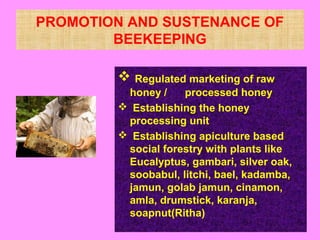
PROMOTION AND SUSTENANCE OF
BEEKEEPING
 Regulated marketing of raw
honey / processed honey
 Establishing the honey
processing unit
 Establishing apiculture based
social forestry with plants like
Eucalyptus, gambari, silver oak,
soobabul, litchi, bael, kadamba,
jamun, golab jamun, cinamon,
amla, drumstick, karanja,
soapnut(Ritha)
ECONOMICS OF BEEKEEPING
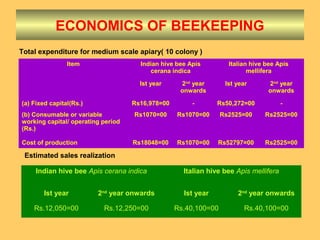
Total expenditure for medium scale apiary( 10 colony )
Item Indian hive bee Apis
cerana indica
Italian hive bee Apis
mellifera
Ist year 2nd
year
onwards
Ist year 2nd
year
onwards
(a) Fixed capital(Rs.) Rs16,978=00 - Rs50,272=00 -
(b) Consumable or variable
working capital/ operating period
(Rs.)
Rs1070=00 Rs1070=00 Rs2525=00 Rs2525=00
Cost of production Rs18048=00 Rs1070=00 Rs52797=00 Rs2525=00
Estimated sales realization
Indian hive bee Apis cerana indica Italian hive bee Apis mellifera
Ist year 2nd
year onwards Ist year 2nd
year onwards
Rs.12,050=00 Rs.12,250=00 Rs.40,100=00 Rs.40,100=00
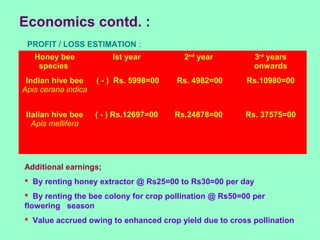
Economics contd. :
Honey bee
species
Ist year 2nd
year 3rd
years
onwards
Indian hive bee
Apis cerana indica
( - ) Rs. 5998=00 Rs. 4982=00 Rs.10980=00
Italian hive bee
Apis mellifera
( - ) Rs.12697=00 Rs.24878=00 Rs. 37575=00
PROFIT / LOSS ESTIMATION :
Additional earnings;
 By renting honey extractor @ Rs25=00 to Rs30=00 per day
 By renting the bee colony for crop pollination @ Rs50=00 per
flowering season
 Value accrued owing to enhanced crop yield due to cross pollination
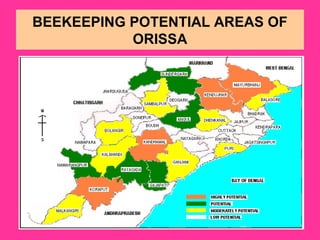
BEEKEEPING POTENTIAL AREAS OF
ORISSA
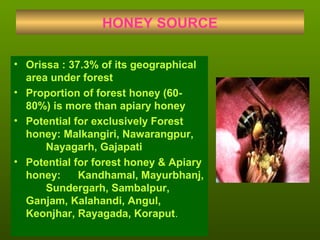
HONEY SOURCE
• Orissa : 37.3% of its geographical
area under forest
• Proportion of forest honey (60-
80%) is more than apiary honey
• Potential for exclusively Forest
honey: Malkangiri, Nawarangpur,
Nayagarh, Gajapati
• Potential for forest honey & Apiary
honey: Kandhamal, Mayurbhanj,
Sundergarh, Sambalpur,
Ganjam, Kalahandi, Angul,
Keonjhar, Rayagada, Koraput.
MAJOR BEE FLORA OF ORISSA
• Agricultural crops: Niger, Sunflower, Mustard,
Arhar, Sesame.
• Horticultural crops: Litchi, Coconut, Guava,
Ber, Drumstick, Citrus,
Coriander
• Agro-forestry: Eucalyptus, Cashew, Bael, Silk
cotton, Sesbania sp. Acacia,
Cassia sp. Siris (Albizia lebbeck),
Arjun(Terminalia arjuna),
• Forestry: Teak, Tamarind, Mahua, Amla, Sal,
Gravillea pteridifolia, Karanj, Palas,
Sisoo(Dalbergia sissoo
SELECTION OF SITE FOR BEEKEEPING
 Availability of sufficient be flora
 The land should be dry all round the year and easily
accessible
 The site should be near open field where there
should be isolated trees for shade- preferably the
orchard an ideal apiary site
 The selected site should contain natural sources of
water
 The hives should be kept behind a natural or
artificial wind break and should face in the east
direction
DESIRABLE CHARACTERISTICS OF COLONIES
 Capable of adopting to floral resources
 Higher reproductive efficiency
 Calm and easily manageable bees
 Good honey gatherer
 No or little swarming and absconding
instinct
 Less prone to attack of diseases
How to start beekeeping

How to start beekeeping

  • 1.
    HOW TO STARTBEE KEEPING PRESENTED BY DR. L.N.MOHAPATRA ASSOCIATE DIRECTOR OF RESEARCH REGIONAL RESEARCH AND TECHNOLOGY TRANSFER STATION BHAWANIPATNA PRESENTED BY DR. L.N.MOHAPATRA ASSOCIATE DIRECTOR OF RESEARCH REGIONAL RESEARCH AND TECHNOLOGY TRANSFER STATION BHAWANIPATNA
  • 2.
    BEEKEEPING SCIENTIFIC MANAGEMENT OFHONEYBEE COLONIES IN ORDER TO GET HONEY AND OTHER HIVE PRODUCT LIKE WAX, BEE VENOM ROYAL JELLY, PROPOLIS AND POLLEN.
  • 3.
    PRACTICE OF BEEKEEPING • Honey hunting is an age old practice documented and known from time immemorial. • Bee keeping is a century old practice. • Scientific bee keeping in India is a practice of only a few decades old
  • 4.
    Importance of Honeybees and bee keeping • After independence bee keeping was taken as an avocation in small scale cottage industry providing income and employment to rural poor. • Bee keeping was meant for production of honey and other hive products. BUT • Importance of Bees as POLLINATORS was hardly realized.
  • 5.
    BEE KEEPING INORISSA WAS INITIATED AS A COTTAGE INDUSTRY DURING 1936 IN 1956-57, KVIB SHOULDERED THE RESPONSIBILITY OF SPREADING BEE KEEPING IN THE STATE BUT IT REMAINED CONFINED TO A VERY RESTRICTED AREA FOR ABOUT ONE AND HALF DECADE.
  • 6.
    HONEY BEES SAY:- Ifyou keep us scientifically and friendly A We will give you HONEY BEEWAX BEE VENOM PROPOLISROYAL JELLY POLLEN AND MANY MORE EMPLOYMENT PLEASURE & INCOME THROUGH Sale of bee colony Sale of bee equipment Hiring of bee colony Sharing of Intellectual skill Hiring of bee equipments B We will give your farmers increase crop produces through POLLINATION Worth of which is more than the worth of hive products put together AND CONSERVE YOUR BIODIVERSITY
  • 7.
    SPECIES OF HONEYBEE Apis dorsata Apisdorsata Trigona irridipennis Apis cerana indica Apis mellifera
  • 8.
    Honey bees aspollinators • Honey bees enhances 11 – 79% yield in different crops through pollination. • Value of additional yield obtained due to bee pollination alone is 15-20 times more than the value of all the hive products put together • Honey bees alone accounts for 80% of pollination service done by the insects. • Bees have specialized adoption for pollination. POLLEN BASKETS, FLORAL CONSTANCY, AMMENABLE FOR MANAGED BEE POLLINATION MAKE HONEY BEES THE BEST
  • 9.
    Role of honeybee in pollination Cross pollination of entomophilous crops by honeybees is considered as one of the effective and cheapest method for triggering the crop yields.
  • 10.
    Role of honeybee in pollination Role of honey bee in pollination services especially for cross pollinated crops as wells as conservation of biodiversity is well recognized.
  • 11.
    Suitability of honeybees as efficient pollinators: • body parts are specially modified to pick up many pollen grains, • flower fidelity and constancy, • potential for long hours, • maintainability of high populations as and when needed, • adaptability to different climates and niches, • through micro-manipulation of flowers, Honey bees are the most efficient pollinators of several agricultural, horticultural, silvicultural, fodder and wild plants because of their following characteristics:
  • 12.
    Some facts aboutbee pollination:  Value of additional yield obtained due to bee pollination alone is 15-20 times more than the value of all the hive products put together.  The total value of pollination services rendered by all insects globally comes in excess of 100 billion US dollars annually (2003 valuation).  In India 50 million hectares of land is under bee dependent
  • 13.
    ADVANTAGES OF BEEPOLLINATED CROP QUALITATIVE AND QUANTITATIVE CHANGES IN CROP PLANTS :  Stimulated germination of pollen on stigma  Increase viability of seeds, embryos and plants  More nutritive and aromatic fruits  Stimulate faster growth of plants  Increases number and sizes of seeds and yield of crops  Increases nectar production in the nectaries  Increases fruit set and reduces fruit drop  Enhances resistance to diseases other adverse climatic conditions  Increases the oil content in oil seed crop
  • 14.
    Bee pollination inmustard Yield increase : 55% Bright yellow fragrant flowers attract a large numbers of insects which come for nectar as well as for pollen
  • 15.
    Bee pollination Increase inproduction due to bee pollination. Mustard -10.6% Sesame -25.0% Niger - 33.0% Safflower - 64.0% Sunflower- 79.0% Fruit yield Litchi - 5.3 times Recommendations • Setting 3-5 colonies/ha • Spraying crops before flowering and during evening hours
  • 16.
    Various pollinators inmustard • Apis cerana indica Apis dorsata Apis florea Syrphid fly Dipteran Unidentified
  • 17.
    BEE SPECIES USEDIN BEEKEEPING Italian honey bee Apis mellifera Indian hive bee A.c.indica
  • 18.
    Stingless bee Trigonairidipennis • The scope to maintain the colonies of sting less bees in the backyard to ensure pollination of backyard crops or kitchen garden has been explored and it could be hived successfully in wooden box (25 X 15 X 13cm). • Thus, there is scope to maintain the colonies of sting less bees in the backyard to ensure pollination of backyard crops or kitchen garden.
  • 19.
  • 20.
    Stingless bee management: Smallwooden box (25 X 15 X 13cm) Earthen pot (12cm diameter and 14cm height) A piece of bamboo (40cm length and 7cm dia.) Small wooden box (25 X 15 X 13cm) is ideal for Trigona irridipennis Method of colony division has been partially successful and needs to be standardized for Trigona irridipennis
  • 21.
    Stingless bee Trigonairidipennis: • The colony building activity of the bees was observed during March, when the nectar yielding plants were abundantly available. • They were quite active during warm (mean maximum temperature: 34.6-36.4 0C) and dry (RH= 51.7-65.0) weather conditions • No of plants visited by stingless bee: 58 a) Agricultural crops: 20 b) Ornamental plants: 12 c) Medicinal plants: 11 d) Weeds: 8 e) Fruits: 7
  • 22.
    BEE KEEPING ASAN ENTERPRISE  Most suited to land less rural poor or with small land holding  Require no land  Does not compete with any branch of agriculture  Does not require continuous labour or require light physical work  Does not require heavy investment  No sophisticated instruments are required  Provide multi source income, provide employment  Improves crop yield through cross pollination - Both production and productivity increases - Improves quality of produce - Maintain stability of ecosystem - Conserve biodiversity
  • 23.
    THE INCOME FROMBEEKEEPING  Through the sale of honey  Through the sale of bee products like bees wax, bee venom, royal jelly, propolis and pollen  Preparing and selling the comb foundation sheets  Renting the bee colonies to farmers for effecting the cross pollination in the field as well as horticultural crops  Renting the honey extractor  Sale of pedigree queen bee through mass queen bee rearing  Trading bee equipments, bee packages for transport in potential areas  Establishing apiculture based floriculture (calendula, cosmos, marigold, gladioli, aster, chrysanthemum, rose, dahalia,zinnia etc.)
  • 24.
    HONEY A USEFULHIVE PRODUCT • Use of honey is known to mankind since vedic times • Rock painting of 7000 BC evidences honey collection as an ancient practices CONSTITUENTS OF HONEY Constituents Percentage Total dissolved solids 70-80 Sugars: Fructose Glucose Sucrose Other higher sugars 38 37 02 0.5 Water 20 Minerals(Potassiium, calcium,Mg, fe, Cu,Mn,P,S,Cl, and traces of Cr,Ag,Au,Sn etc 0.5 Acids 0.2 Proteins and Amino acids o.25 Enzymes and vitamins Traces
  • 25.
    USES OF HONEY Honey provides instant energy due to presence of simple form of sugars (Fructose, Glucose, and sucrose)  Used as carrier of Ayurevedic medicines  Used to cure a host of ailments like cold, fever, piles, anemia, and infection in the throat, skin,eye and intestine  Has antibacterial activity
  • 26.
    BEES WAX  Beeswax is synthesized by 14 -18 days old worker bees secreted through four pairs of wax secreting epidermal wax glands, present on the ventral side of fourth to seventh abdominal segment of the worker bee’s body.  Wax glands results from digestion of carbohydrates.  In India major proportion of wax comes from the combs of Apis dorsata.  Annual production of bees wax in India is 29.1 metric tonnes.
  • 27.
    USES OF BEESWAX The bees wax is used extensively in pharmaceutical and cosmetics industries which consume 75% of world production of bees wax.  Its main uses are for church candles, cosmetics, shoe polish, and by cobblers, car /mason polish, carbon paper, electric and textile industry, in metal castings and mouldings, for water proofing, crayon colour industry, for scientific decorative models (batik), for polishing optical lenses, in certain adhesives and inks, in candy and chewing gums, for musical instruments, for bow strings, electric insulation etc.  In beekeeping industry, bees wax is mostly used to prepare comb foundation sheets.  The pharmaceutical use of beeswax are coating of drugs and pills, ointment and capsule.  Bees wax is also used in food processing for coating metal containers internally against the effects of acids from fruit juices and honey.
  • 28.
    BEE VENOM • Itis called as apitoxin, which is produced in the venom gland and stored in venom sac attached at the base of the sting of worker bees.. • The main venom producer is USA. The price of bee venom on the U.S. open market varied form $ 100-200 /g ( Rs 4700-9400/g).  The normal recovery is 0.5-1.0 µl per bee and about one million stings are required to make one gram dry venom. PROPERTIES  Bee venom is a clear watery material having somewhat sharp and bitter taste, hydrolytic blend of proteins with basic pH,an aromatic odour on acid reaction having a specific gravity 1.313.  It dries out at room temperature. It is mostly used by the worker bees for their defense. Venom proteins exhibit various degrees of allergic reaction to the victim of stinging.  It is composed of many active substances like Histamine, Apamine , Acithinase, Minimine, tryptophan, phospholipase, lecithinase, HCl,Formic acid, Orthophosphoric acid ,S, Ca, Cu and magnesium sulphate.
  • 29.
    USES OF BEEVENOM  Apitherapy which is carried out either by natural bee sting or through extracted bee venom in the form of injection , ointment inhalation of venom vapour and tablets.  It is used for curing rheumatoid arthritis, many diseases of nervous disorders, suppressing oedema (swelling), as anti-inflammatory agent, lowers the blood pressure, decreases the cholesterol levels and for treatment of individuals hypersensitive to bee stings.  Ointments made by mixing apitoxin, vasaline and salicylic acid (1: 10 : 1) can be applied to the affected areas.
  • 30.
    ROYAL JELLY  Royaljelly is a mixture of secretions of hypo pharyngeal glands (watery-clear) and mandibular glands (milky- white) in a ratio of 1:1 and is produced by 7-13 days old nurse worker bees when the glands are fully active.  It is fed to the larvae destined to be queens and also for feeding to the adult queen bees. The worker larvae (1- 3 days old) are also fed royal jelly in a ratio of 3:1 or 4:1 while the older larvae are seldom fed milky-white secretions.  A well managed hive during a season of 5-6 months can produce 500g of royal jelly.  Royal jelly is a creamy milky white, strongly acidic, highly nitrogenous substance with a slight pungent odour and somewhat bitter in taste. The royal jelly has the following range of constituents: Protein - 11.4 %( 15 – 18%) Lipids - 2 – 6% Carbohydrates - 9 – 18% Ash - 0.7 – 1.2% Water - 66.9% (65 – 70%)
  • 31.
    USES OF ROYALJELLY  As Dietary Supplement: Royal jelly has possessed stimulant and therapeutic value. Royal jelly can be mixed with a little honey, sugar syrup or water or it may be encapsulated  As Ingredient in Food Products: A mixture of royal jelly in honey (1.3% royal jelly) is probably the most common way in which royal jelly is used as food ingredient.  Yogurtis which is already a popular food for health conscious consumers  Sometimes, vitamin supplements and fruit juices are enriched with freeze dried royal jelly. Royal jelly is widely used in beverages in Asia. Royal jelly is also sold in a jelly made of honey, sugar, jam and pectin.  As Ingredient in Medicine like Products: In medicine-like formulations, royal jelly is generally included for its stimulatory effects.  Royal jelly has occasionally been used (fresh or freeze-dried) to stimulate race horses.  For experimental purposes, it is also used as a food for rearing mites and insects.  It possesses antibactericidal properties
  • 32.
    PROPOLIS  It issticky / gummy and resinous material collected by the forager bees of Apis mellifera as resinous exudates of buds, bark and wounds of plants/ trees.  Propolis production can be10-300 g per colony per year.  The main constituents of propolis : Waxes and fatty acids - 30%, Resins and balsams - 55% Etheral oil - 10% Pollen - 5%  Propolis also contains flavonoids, phenolic and aromatic compounds. It is a complex substances containing protein, vitamins and minerals like Fe, mn, Ca, Al, Si, ua and Sr. It also contains volatile esters.
  • 33.
    USES OF PROPOLIS Propolis is antimicrobial, antiviral, anti-inflammatory; acts as topical anesthesia and has spasmolytic activity. It is considered as a curative agent in human health in ailments like cold, sore throat, skin problems, stomach ulcers, burns, hemorrhoids, gum diseases, and wounds.  In food technology it is used as oxidant, antimicrobial and antifungal. Propolis has antibacterial properties.  It is used as animal growth stimulant and in human and veterinary medicines especially for burns and wounds.  Its use in gum paints and toothpaste is increasing. It is also used in various ointments and paints. Its traditional use is as wood preservative and in varnishes.  Propolis coated layer inside the hive also serve as a moisture barrier to maintain the inside humidity and also checks the excessive moisture following heavy rains and a barrier against microbial growth.
  • 34.
    POLLEN  Pollen, themale reproductive cells, produced by anthers of flowering plants is another important product collected by forager bees from the stamens of flowers.  It is the chief source of protein, lipids, amino acids, minerals, vitamins etc. in the honey bee diet.  Properties and composition of pollen Carbohydrates - 24 % Crude fat - 5 % Minerals - 3 % (K, Ca, Mg, Fe, Zn, Mn and Cu).  It is rich in vit B (thiamine, niacin, riboflavin, pyridoxine, pantothenic acid, folic acid and bioin ) and variable levels of vitamin C. It does not contain lipid soluble vitamin D, K and E.
  • 35.
    USES OF POLLEN Pollen has a potential as an excellent food and can become a competitive food item in the human diets  Potential of pollen in human health / well being : Pollen is undoubtedly beneficial for the treatment of chronic prostatitis, probably because pollen contains high concentration of Zn which is the key element in prostrate gland functioning.  Pollen consumption helps protecting against the adverse effect of x- rays, reduces symptoms of hay fever.  Use of pollen for animals : Pollen is useful for race horse care, poultry birds, piglets  Aas an ingredient of artificial diets of experimental insects including honeybees, birds and mammals like bats in captivity, in aquaculture and of course .  Use in bee keeping industry : Pollen can be used for stimulating the brood rearing during dearth period .
  • 36.
    HOW TO STARTBEEKEEPING  Judge the area for suitability  Acquire knowledge of bee behaviour and management  Attend beekeeping training course or gain experience by working with successful beekeepers  Start beekeeping at the onset of bee flora availability season  Choose bee species / race with highly desirable traits  Keep colonies at appropriate location
  • 37.
    BASIC TIPS INACHIEVING SUCCESSFUL BEEKEEPING  Ensure the availability of pollen and nectar(food of honey bee)  Maintain strong colonies and regular inspection of bee colonies  Replace the queen bee every year  Take timely remedial measures against the bee enemies(wax moth, wasp, Thai sac brood disease, mite etc.)  Avoid toxic insecticides particularly dust formulations and plan accordingly
  • 38.
    PROMOTION AND SUSTENANCEOF BEEKEEPING  Regulated marketing of raw honey / processed honey  Establishing the honey processing unit  Establishing apiculture based social forestry with plants like Eucalyptus, gambari, silver oak, soobabul, litchi, bael, kadamba, jamun, golab jamun, cinamon, amla, drumstick, karanja, soapnut(Ritha)
  • 39.
    ECONOMICS OF BEEKEEPING Totalexpenditure for medium scale apiary( 10 colony ) Item Indian hive bee Apis cerana indica Italian hive bee Apis mellifera Ist year 2nd year onwards Ist year 2nd year onwards (a) Fixed capital(Rs.) Rs16,978=00 - Rs50,272=00 - (b) Consumable or variable working capital/ operating period (Rs.) Rs1070=00 Rs1070=00 Rs2525=00 Rs2525=00 Cost of production Rs18048=00 Rs1070=00 Rs52797=00 Rs2525=00 Estimated sales realization Indian hive bee Apis cerana indica Italian hive bee Apis mellifera Ist year 2nd year onwards Ist year 2nd year onwards Rs.12,050=00 Rs.12,250=00 Rs.40,100=00 Rs.40,100=00
  • 40.
    Economics contd. : Honeybee species Ist year 2nd year 3rd years onwards Indian hive bee Apis cerana indica ( - ) Rs. 5998=00 Rs. 4982=00 Rs.10980=00 Italian hive bee Apis mellifera ( - ) Rs.12697=00 Rs.24878=00 Rs. 37575=00 PROFIT / LOSS ESTIMATION : Additional earnings;  By renting honey extractor @ Rs25=00 to Rs30=00 per day  By renting the bee colony for crop pollination @ Rs50=00 per flowering season  Value accrued owing to enhanced crop yield due to cross pollination
  • 41.
  • 42.
    HONEY SOURCE • Orissa: 37.3% of its geographical area under forest • Proportion of forest honey (60- 80%) is more than apiary honey • Potential for exclusively Forest honey: Malkangiri, Nawarangpur, Nayagarh, Gajapati • Potential for forest honey & Apiary honey: Kandhamal, Mayurbhanj, Sundergarh, Sambalpur, Ganjam, Kalahandi, Angul, Keonjhar, Rayagada, Koraput.
  • 43.
    MAJOR BEE FLORAOF ORISSA • Agricultural crops: Niger, Sunflower, Mustard, Arhar, Sesame. • Horticultural crops: Litchi, Coconut, Guava, Ber, Drumstick, Citrus, Coriander • Agro-forestry: Eucalyptus, Cashew, Bael, Silk cotton, Sesbania sp. Acacia, Cassia sp. Siris (Albizia lebbeck), Arjun(Terminalia arjuna), • Forestry: Teak, Tamarind, Mahua, Amla, Sal, Gravillea pteridifolia, Karanj, Palas, Sisoo(Dalbergia sissoo
  • 44.
    SELECTION OF SITEFOR BEEKEEPING  Availability of sufficient be flora  The land should be dry all round the year and easily accessible  The site should be near open field where there should be isolated trees for shade- preferably the orchard an ideal apiary site  The selected site should contain natural sources of water  The hives should be kept behind a natural or artificial wind break and should face in the east direction
  • 45.
    DESIRABLE CHARACTERISTICS OFCOLONIES  Capable of adopting to floral resources  Higher reproductive efficiency  Calm and easily manageable bees  Good honey gatherer  No or little swarming and absconding instinct  Less prone to attack of diseases