Colony organization
BEE COLONY
A HONEY BEE
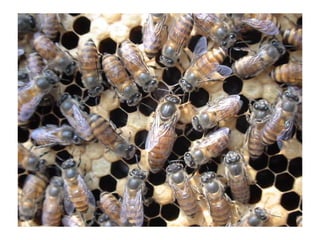
COLONY CONSISTS
OF
A QUEEN
THOUSANDS OF WORKERS
HUNDREDS OF DRONES
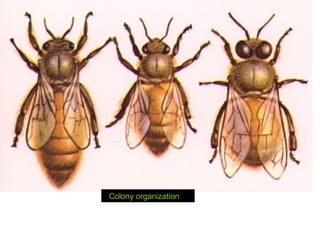
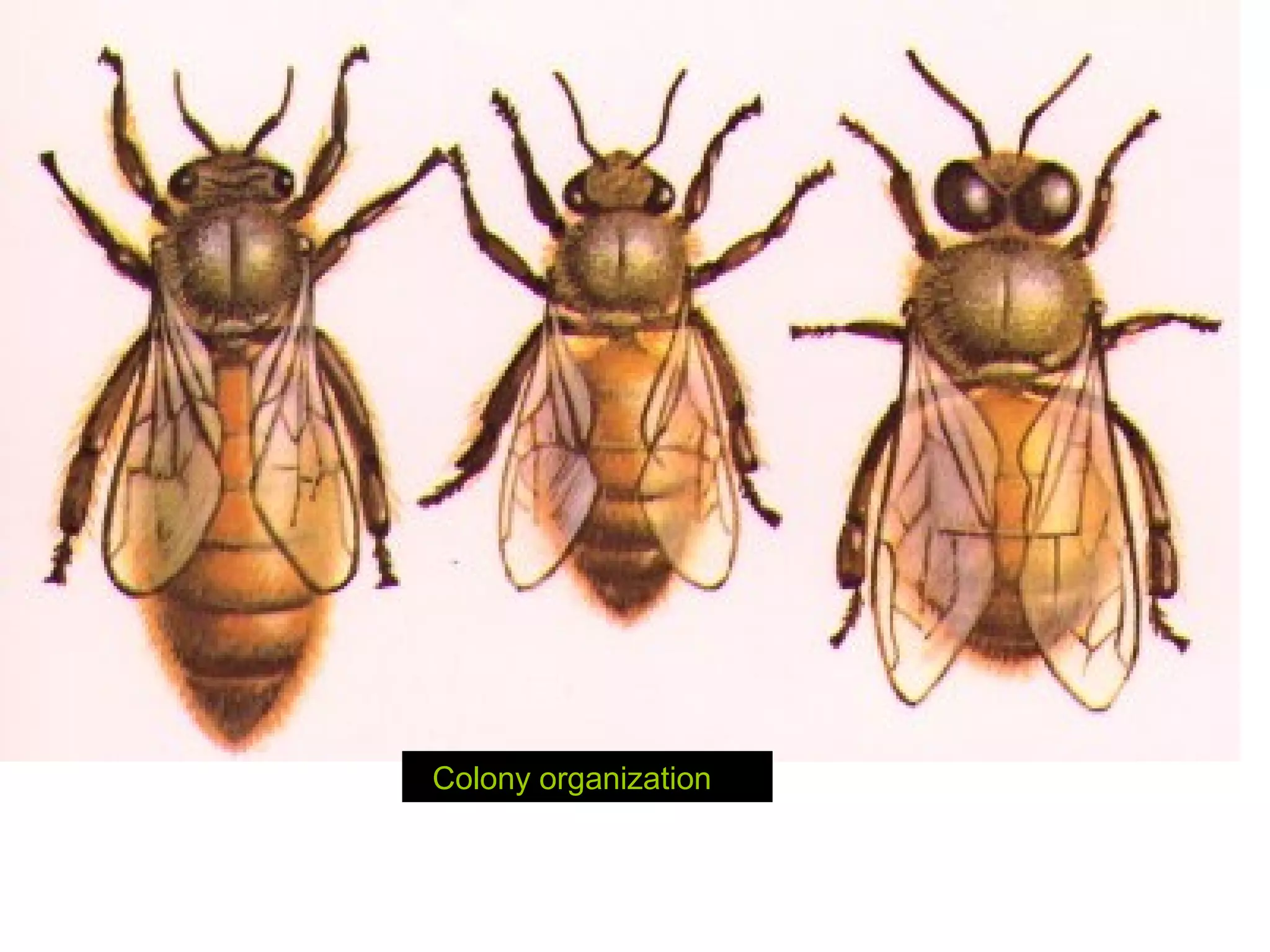
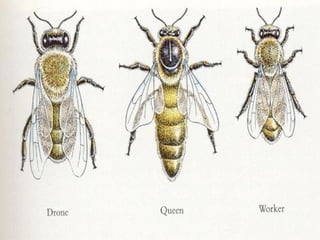
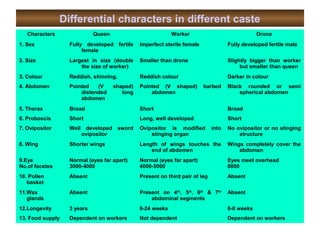
Differential characters in different caste
Characters Queen Worker Drone
1. Sex Fully developed fertile
female
Imperfect sterile female Fully developed fertile male
2. Size Largest in size (double
the size of worker)
Smaller than drone Slightly bigger than worker
but smaller than queen
3. Colour Reddish, shinning, Reddish colour Darker in colour
4. Abdomen Pointed (V shaped)
distended long
abdomen
Pointed (V shaped) barbed
abdomen
Black rounded or semi
spherical abdomen
5. Thorax Broad Short Broad
6. Proboscis Short Long, well developed Short
7. Ovipositor Well developed sword
ovipositor
Ovipositor is modified into
stinging organ
No ovipositor or no stinging
structure
8. Wing Shorter wings Length of wings touches the
end of abdomen
Wings completely cover the
abdomen
9.Eye
No.of facetes
Normal (eyes far apart)
3000-4000
Normal (eyes far apart)
4000-5000
Eyes meet overhead
8000
10. Pollen
basket
Absent Present on third pair of leg Absent
11.Wax
glands
Absent Present on 4th
, 5th
, 6th
& 7th
abdominal segments
Absent
12.Longevity 3 years 6-24 weeks 6-8 weeks
13. Food supply Dependent on workers Not dependent Dependent on workers
ROLE OF QUEEN
 Regulates life in the hive and acts as the
leader of the colony
 Young queens are preferred over old
ones
 Lays 700-1000 eggs per day as per the
requirement
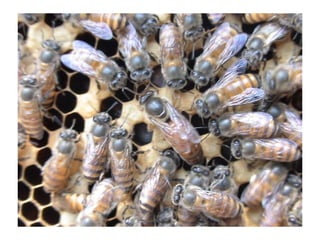
 It is fed royal jelly and is guarded by a
few worker bee
 Longevity : Three years
 Nuptial flight takes place within 5-9
days after emergence
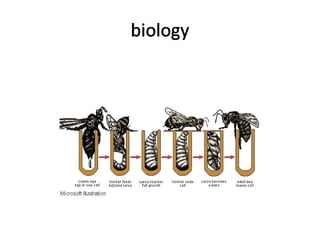
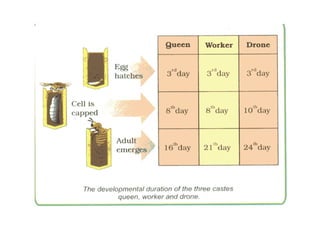
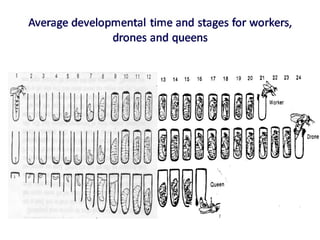
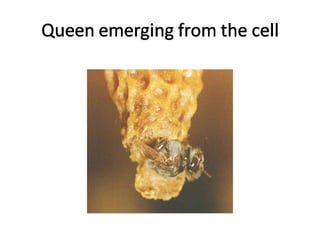
 Development takes place within
queen cell within 16days
• Queen mandibular substance :- It inhibit the ovary development in
workers. (9 0 DA): 9-keto-(E)-2-decenoic acid
• (9 0DA): 9-hydrons-(E)-2-decenoic acid. Probably the queen
enhance work on the hormonal system of worker and suppress the
development of ovaries.
Fertilization of eggs takes place in the vagina, as the egg passes the
opening of spermathecal duct. The muscle in the spermathecal
duct regulates the release of spermatozoa stored in it.
The egg laying capacity of the queen varies from 500 eggs/day is
South India plain to 1000 in Indian Hill area.
The queen will start egg laying little above the centre of a comb and
eggs are land in concentric ring.
ROLE OF WORKER BEE
Worker bees
• During first three days after emergence the worker bees remain
busy in brood area where they regulate the temperature up to
33.5oC.
• These bees are responsible for maintaining the hygiene of the
colony.
• They act as nurse bees and feed honey and pollen to older larvae
when they are about 4 days old.
• These nurse bees when 6 to 12 days old, secrete royal jelly from
their mandibular glands which is used to feed the larvae destined to
become queens.
• Again the duties change with age when the worker bees are of 14
days age, the wax glands develop and they start secreting wax to
build combs. During this period, the bees may do any other activity
as per the requirement of the colony.
• The worker bees start taking orientation flights during second week
of their life to acquaint themselves with vicinity of hive. T
• he worker bees become foragers at the age of about 21 days after
emergence.
• In general, first three weeks of workers life involve indoor duties
and last three weeks outdoor duties.
Drone
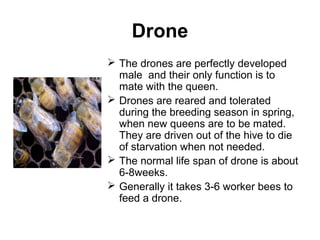
 The drones are perfectly developed
male and their only function is to
mate with the queen.
 Drones are reared and tolerated
during the breeding season in spring,
when new queens are to be mated.
They are driven out of the hive to die
of starvation when not needed.
 The normal life span of drone is about
6-8weeks.
 Generally it takes 3-6 worker bees to
feed a drone.
Colony organization in honey bee

Colony organization in honey bee

  • 1.
  • 2.
    BEE COLONY A HONEYBEE COLONY CONSISTS OF A QUEEN THOUSANDS OF WORKERS HUNDREDS OF DRONES
  • 4.
    Differential characters indifferent caste Characters Queen Worker Drone 1. Sex Fully developed fertile female Imperfect sterile female Fully developed fertile male 2. Size Largest in size (double the size of worker) Smaller than drone Slightly bigger than worker but smaller than queen 3. Colour Reddish, shinning, Reddish colour Darker in colour 4. Abdomen Pointed (V shaped) distended long abdomen Pointed (V shaped) barbed abdomen Black rounded or semi spherical abdomen 5. Thorax Broad Short Broad 6. Proboscis Short Long, well developed Short 7. Ovipositor Well developed sword ovipositor Ovipositor is modified into stinging organ No ovipositor or no stinging structure 8. Wing Shorter wings Length of wings touches the end of abdomen Wings completely cover the abdomen 9.Eye No.of facetes Normal (eyes far apart) 3000-4000 Normal (eyes far apart) 4000-5000 Eyes meet overhead 8000 10. Pollen basket Absent Present on third pair of leg Absent 11.Wax glands Absent Present on 4th , 5th , 6th & 7th abdominal segments Absent 12.Longevity 3 years 6-24 weeks 6-8 weeks 13. Food supply Dependent on workers Not dependent Dependent on workers
  • 13.
    ROLE OF QUEEN Regulates life in the hive and acts as the leader of the colony  Young queens are preferred over old ones  Lays 700-1000 eggs per day as per the requirement  It is fed royal jelly and is guarded by a few worker bee  Longevity : Three years  Nuptial flight takes place within 5-9 days after emergence  Development takes place within queen cell within 16days
  • 14.
    • Queen mandibularsubstance :- It inhibit the ovary development in workers. (9 0 DA): 9-keto-(E)-2-decenoic acid • (9 0DA): 9-hydrons-(E)-2-decenoic acid. Probably the queen enhance work on the hormonal system of worker and suppress the development of ovaries. Fertilization of eggs takes place in the vagina, as the egg passes the opening of spermathecal duct. The muscle in the spermathecal duct regulates the release of spermatozoa stored in it. The egg laying capacity of the queen varies from 500 eggs/day is South India plain to 1000 in Indian Hill area. The queen will start egg laying little above the centre of a comb and eggs are land in concentric ring.
  • 17.
  • 18.
    Worker bees • Duringfirst three days after emergence the worker bees remain busy in brood area where they regulate the temperature up to 33.5oC. • These bees are responsible for maintaining the hygiene of the colony. • They act as nurse bees and feed honey and pollen to older larvae when they are about 4 days old. • These nurse bees when 6 to 12 days old, secrete royal jelly from their mandibular glands which is used to feed the larvae destined to become queens. • Again the duties change with age when the worker bees are of 14 days age, the wax glands develop and they start secreting wax to build combs. During this period, the bees may do any other activity as per the requirement of the colony. • The worker bees start taking orientation flights during second week of their life to acquaint themselves with vicinity of hive. T • he worker bees become foragers at the age of about 21 days after emergence. • In general, first three weeks of workers life involve indoor duties and last three weeks outdoor duties.
  • 19.
    Drone  The dronesare perfectly developed male and their only function is to mate with the queen.  Drones are reared and tolerated during the breeding season in spring, when new queens are to be mated. They are driven out of the hive to die of starvation when not needed.  The normal life span of drone is about 6-8weeks.  Generally it takes 3-6 worker bees to feed a drone.