POST HARVEST DISEASES
 Post harvest diseases destroy 10-30 per cent of the
total crop yield
 In some perishable crops ›30 per cent
 Post harvest diseases develop on plant produce
 during harvesting, grading and packing
 During transportation to market/ consumer
 While in possession of the consumer until the actual
consumption
SYMPTOMS
 Great losses are usually caused to
 Fresh fruits and vegetables
 Grains and legumes
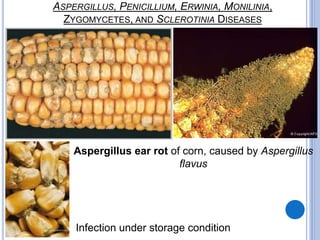
ASPERGILLUS, PENICILLIUM, ERWINIA, MONILINIA,
ZYGOMYCETES, AND SCLEROTINIA DISEASES
Aspergillus ear rot of corn, caused by Aspergillus
flavus
Infection under storage condition
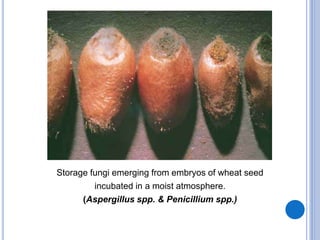
Storage fungi emerging from embryos of wheat seed
incubated in a moist atmosphere.
(Aspergillus spp. & Penicillium spp.)
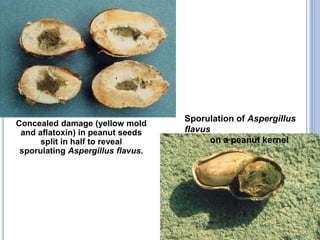
Concealed damage (yellow mold
and aflatoxin) in peanut seeds
split in half to reveal
sporulating Aspergillus flavus.
Sporulation of Aspergillus
flavus
on a peanut kernel
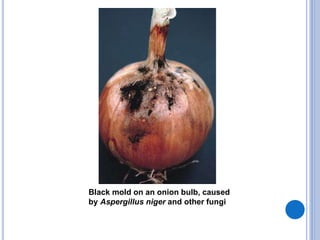
Black mold on an onion bulb, caused
by Aspergillus niger and other fungi
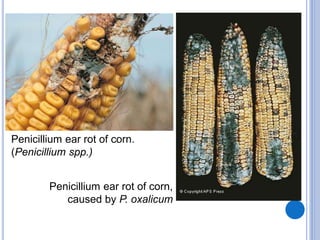
Penicillium ear rot of corn.
(Penicillium spp.)
Penicillium ear rot of corn,
caused by P. oxalicum
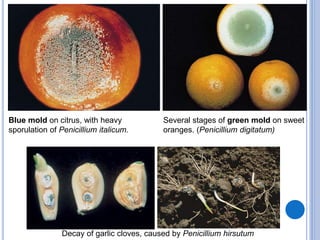
Blue mold on citrus, with heavy
sporulation of Penicillium italicum.
Several stages of green mold on sweet
oranges. (Penicillium digitatum)
Decay of garlic cloves, caused by Penicillium hirsutum
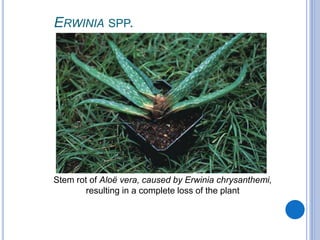
ERWINIA SPP.
Stem rot of Aloë vera, caused by Erwinia chrysanthemi,
resulting in a complete loss of the plant
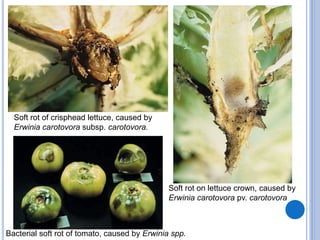
Soft rot of crisphead lettuce, caused by
Erwinia carotovora subsp. carotovora.
Soft rot on lettuce crown, caused by
Erwinia carotovora pv. carotovora
Bacterial soft rot of tomato, caused by Erwinia spp.
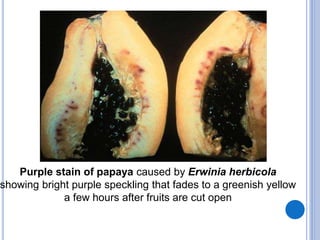
Purple stain of papaya caused by Erwinia herbicola
showing bright purple speckling that fades to a greenish yellow
a few hours after fruits are cut open
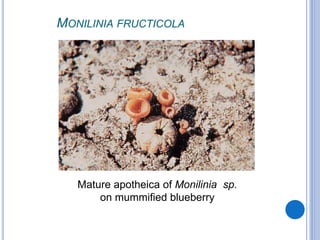
MONILINIA FRUCTICOLA
Mature apotheica of Monilinia sp.
on mummified blueberry
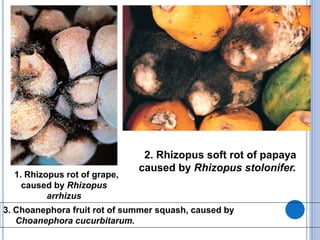
1. Rhizopus rot of grape,
caused by Rhizopus
arrhizus
2. Rhizopus soft rot of papaya
caused by Rhizopus stolonifer.
3. Choanephora fruit rot of summer squash, caused by
Choanephora cucurbitarum.
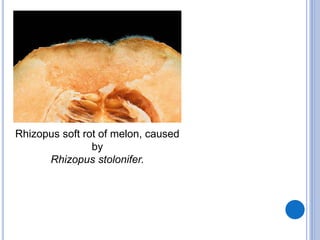
Rhizopus soft rot of melon, caused
by
Rhizopus stolonifer.
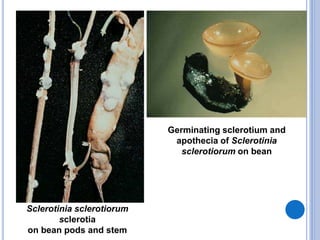
Sclerotinia sclerotiorum
sclerotia
on bean pods and stem
Germinating sclerotium and
apothecia of Sclerotinia
sclerotiorum on bean
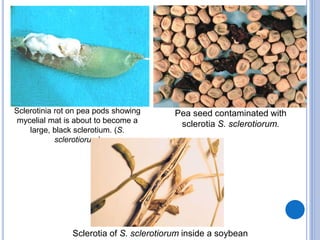
Sclerotinia rot on pea pods showing
mycelial mat is about to become a
large, black sclerotium. (S.
sclerotiorum)
Pea seed contaminated with
sclerotia S. sclerotiorum.
Sclerotia of S. sclerotiorum inside a soybean
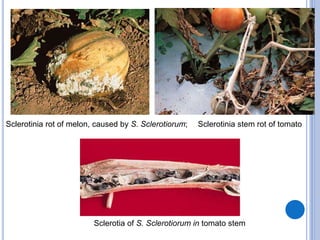
Sclerotinia rot of melon, caused by S. Sclerotiorum; Sclerotinia stem rot of tomato
Sclerotia of S. Sclerotiorum in tomato stem
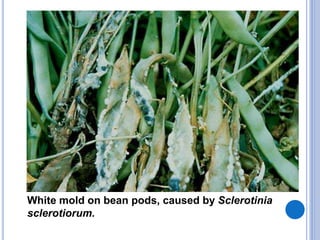
White mold on bean pods, caused by Sclerotinia
sclerotiorum.
Post Harvest disease  symptoms

Post Harvest disease symptoms

  • 1.
  • 2.
     Post harvestdiseases destroy 10-30 per cent of the total crop yield  In some perishable crops ›30 per cent
  • 3.
     Post harvestdiseases develop on plant produce  during harvesting, grading and packing  During transportation to market/ consumer  While in possession of the consumer until the actual consumption
  • 4.
    SYMPTOMS  Great lossesare usually caused to  Fresh fruits and vegetables  Grains and legumes
  • 5.
    ASPERGILLUS, PENICILLIUM, ERWINIA,MONILINIA, ZYGOMYCETES, AND SCLEROTINIA DISEASES Aspergillus ear rot of corn, caused by Aspergillus flavus Infection under storage condition
  • 6.
    Storage fungi emergingfrom embryos of wheat seed incubated in a moist atmosphere. (Aspergillus spp. & Penicillium spp.)
  • 7.
    Concealed damage (yellowmold and aflatoxin) in peanut seeds split in half to reveal sporulating Aspergillus flavus. Sporulation of Aspergillus flavus on a peanut kernel
  • 8.
    Black mold onan onion bulb, caused by Aspergillus niger and other fungi
  • 9.
    Penicillium ear rotof corn. (Penicillium spp.) Penicillium ear rot of corn, caused by P. oxalicum
  • 10.
    Blue mold oncitrus, with heavy sporulation of Penicillium italicum. Several stages of green mold on sweet oranges. (Penicillium digitatum) Decay of garlic cloves, caused by Penicillium hirsutum
  • 11.
    ERWINIA SPP. Stem rotof Aloë vera, caused by Erwinia chrysanthemi, resulting in a complete loss of the plant
  • 12.
    Soft rot ofcrisphead lettuce, caused by Erwinia carotovora subsp. carotovora. Soft rot on lettuce crown, caused by Erwinia carotovora pv. carotovora Bacterial soft rot of tomato, caused by Erwinia spp.
  • 13.
    Purple stain ofpapaya caused by Erwinia herbicola showing bright purple speckling that fades to a greenish yellow a few hours after fruits are cut open
  • 14.
    MONILINIA FRUCTICOLA Mature apotheicaof Monilinia sp. on mummified blueberry
  • 15.
    1. Rhizopus rotof grape, caused by Rhizopus arrhizus 2. Rhizopus soft rot of papaya caused by Rhizopus stolonifer. 3. Choanephora fruit rot of summer squash, caused by Choanephora cucurbitarum.
  • 16.
    Rhizopus soft rotof melon, caused by Rhizopus stolonifer.
  • 17.
    Sclerotinia sclerotiorum sclerotia on beanpods and stem Germinating sclerotium and apothecia of Sclerotinia sclerotiorum on bean
  • 18.
    Sclerotinia rot onpea pods showing mycelial mat is about to become a large, black sclerotium. (S. sclerotiorum) Pea seed contaminated with sclerotia S. sclerotiorum. Sclerotia of S. sclerotiorum inside a soybean
  • 19.
    Sclerotinia rot ofmelon, caused by S. Sclerotiorum; Sclerotinia stem rot of tomato Sclerotia of S. Sclerotiorum in tomato stem
  • 20.
    White mold onbean pods, caused by Sclerotinia sclerotiorum.