Poll Question:
What is the single biggest
obstacle you face proving the
business value of your soft
skills training program?
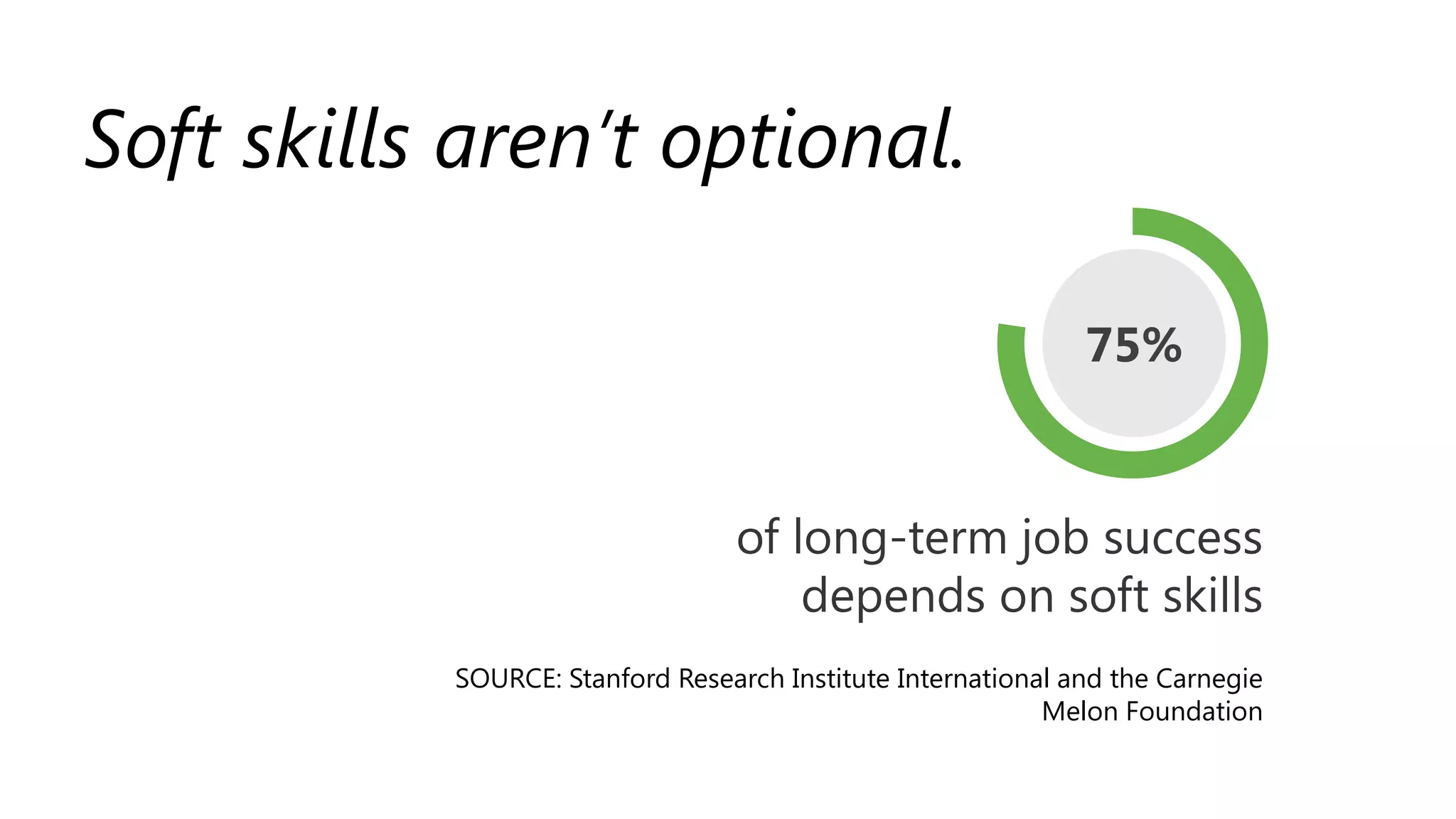
Soft skills aren’t optional.
75%
of long-term job success
depends on soft skills
SOURCE: Stanford Research Institute International and the Carnegie
Melon Foundation
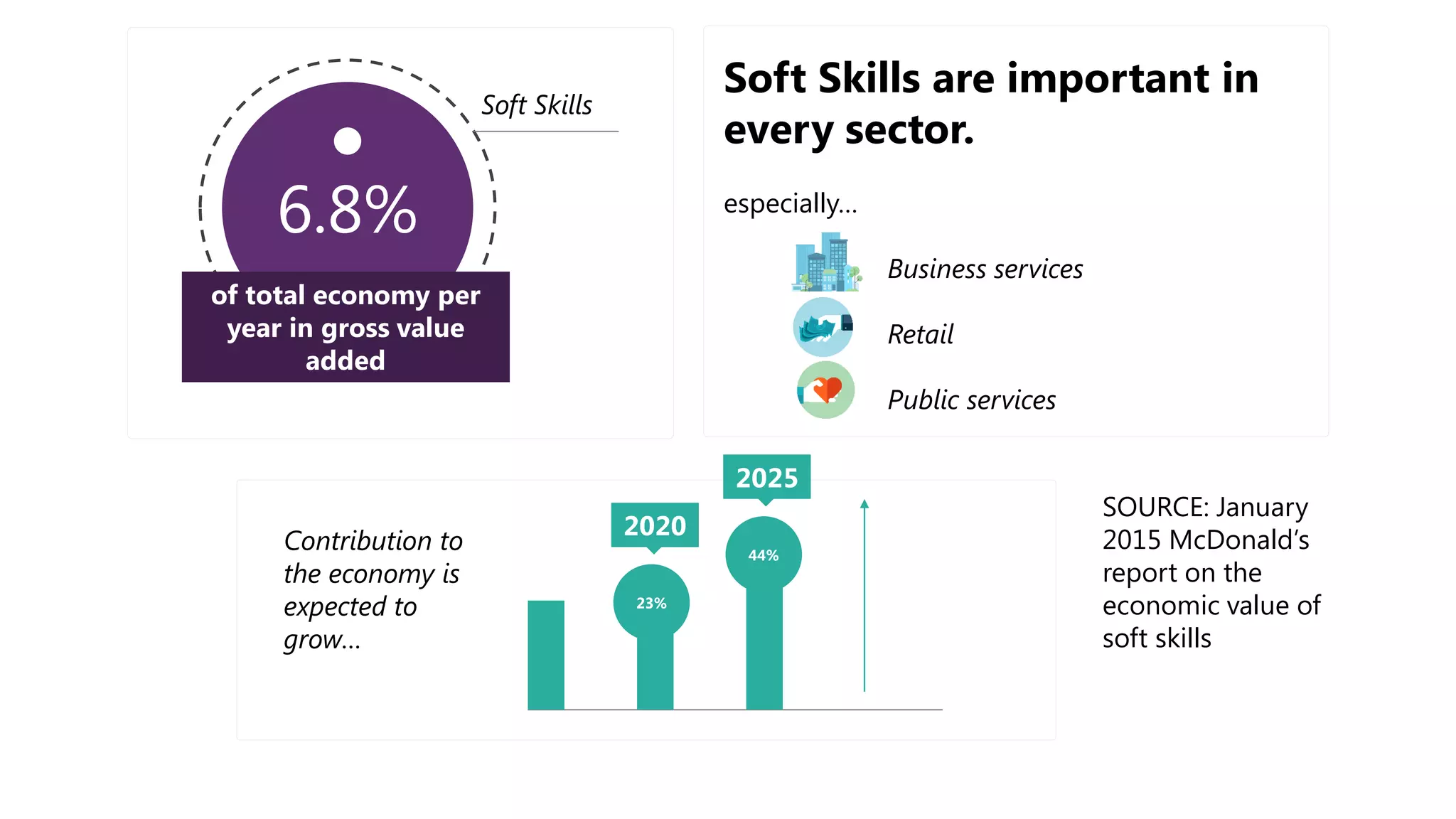
6.8%
of total economy per
year in gross value
added
Soft Skills
Soft Skills are important in
every sector.
especially…
Business services
Retail
Public services
23%
2020
44%
2025
Contribution to
the economy is
expected to
grow…
SOURCE: January
2015 McDonald’s
report on the
economic value of
soft skills
5
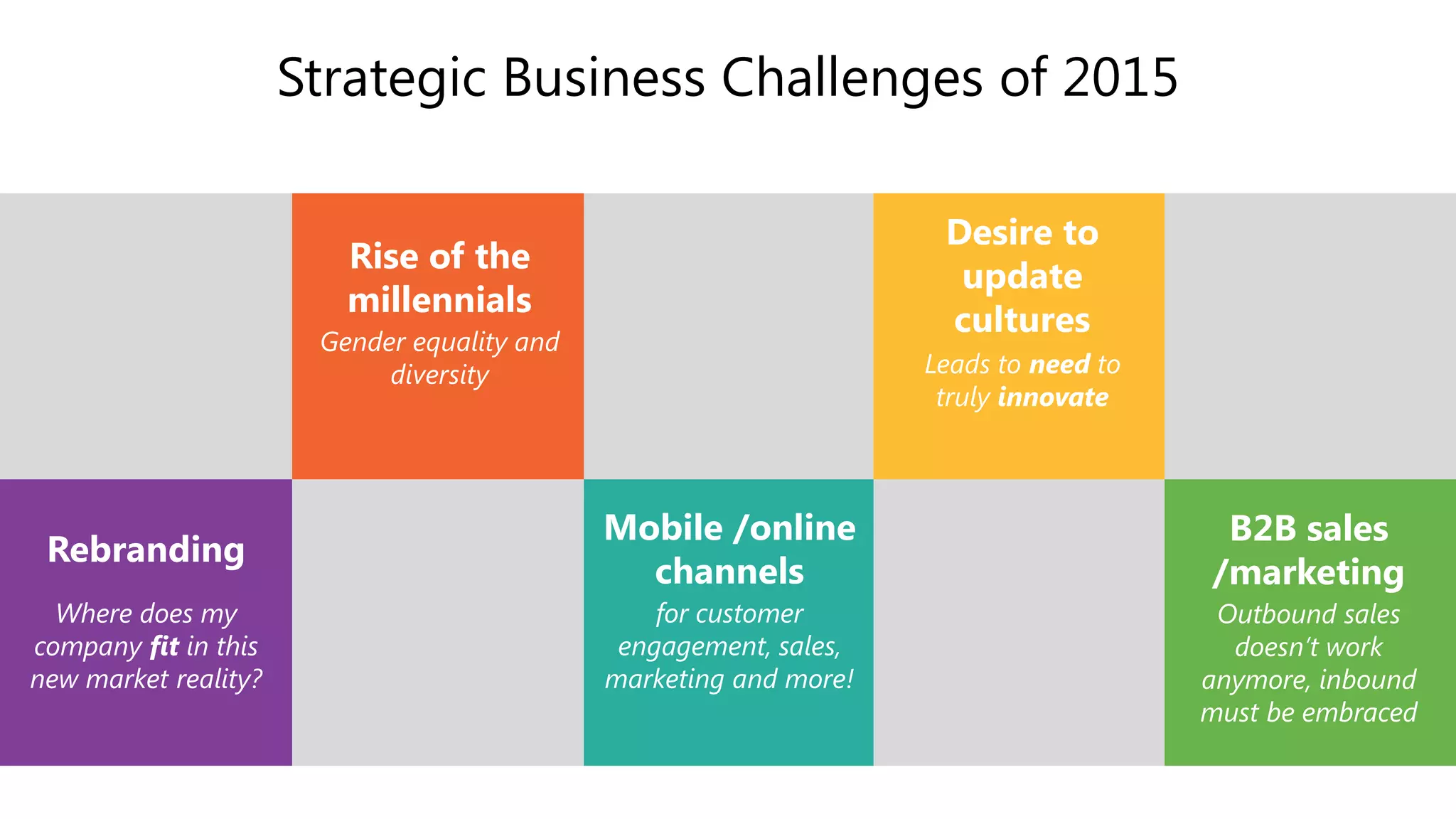
Gender equality and
diversity
Rise of the
millennials
Strategic Business Challenges of 2015
Leads to need to
truly innovate
Desire to
update
cultures
Where does my
company fit in this
new market reality?
Rebranding
for customer
engagement, sales,
marketing and more!
Mobile /online
channels
Outbound sales
doesn’t work
anymore, inbound
must be embraced
B2B sales
/marketing
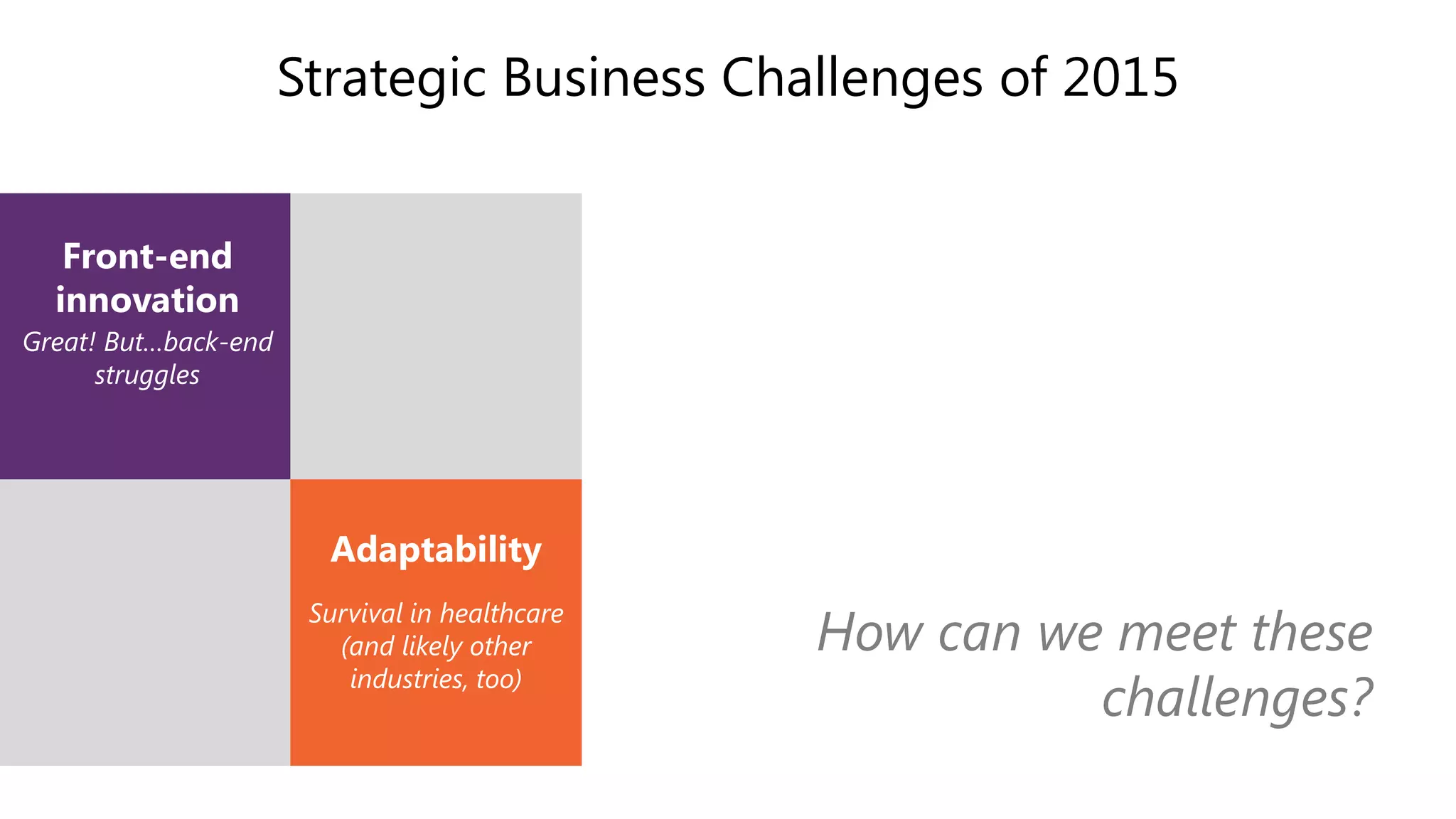
Great! But…back-end
struggles
Front-end
innovation
Strategic Business Challenges of 2015
Leads to need to
truly innovate
Desire to
update
cultures
Survival in healthcare
(and likely other
industries, too)
Adaptability
Outbound sales
doesn’t work
anymore, inbound
must be embraced
B2B sales
/marketing
How can we meet these
challenges?
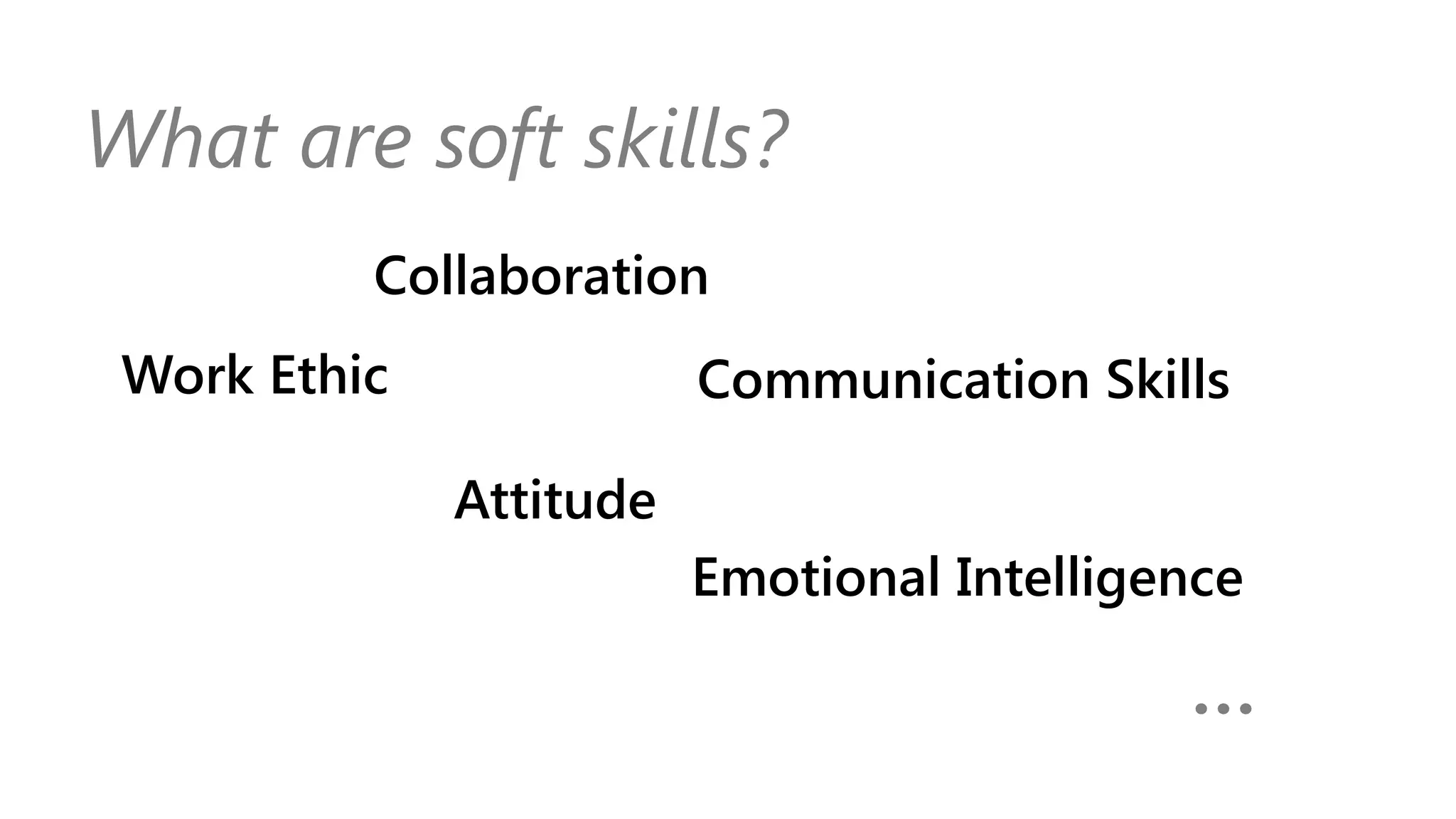
What are soft skills?
Sometimes, easier to say what they are not . . . .
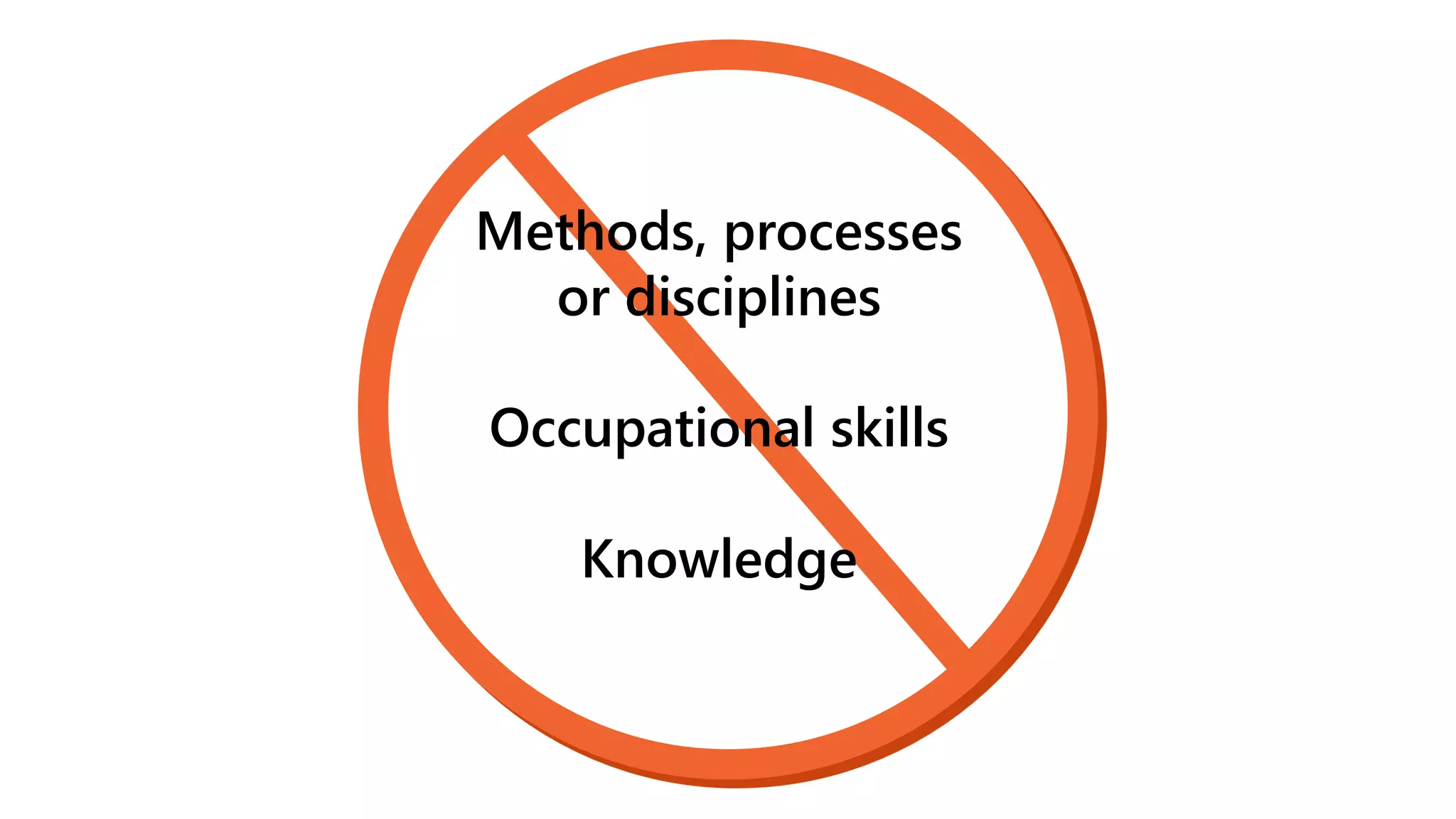
Methods, processes
or disciplines
Occupational skills
Knowledge
What are soft skills?
Work Ethic
Attitude
Communication Skills
Emotional Intelligence
Collaboration
…
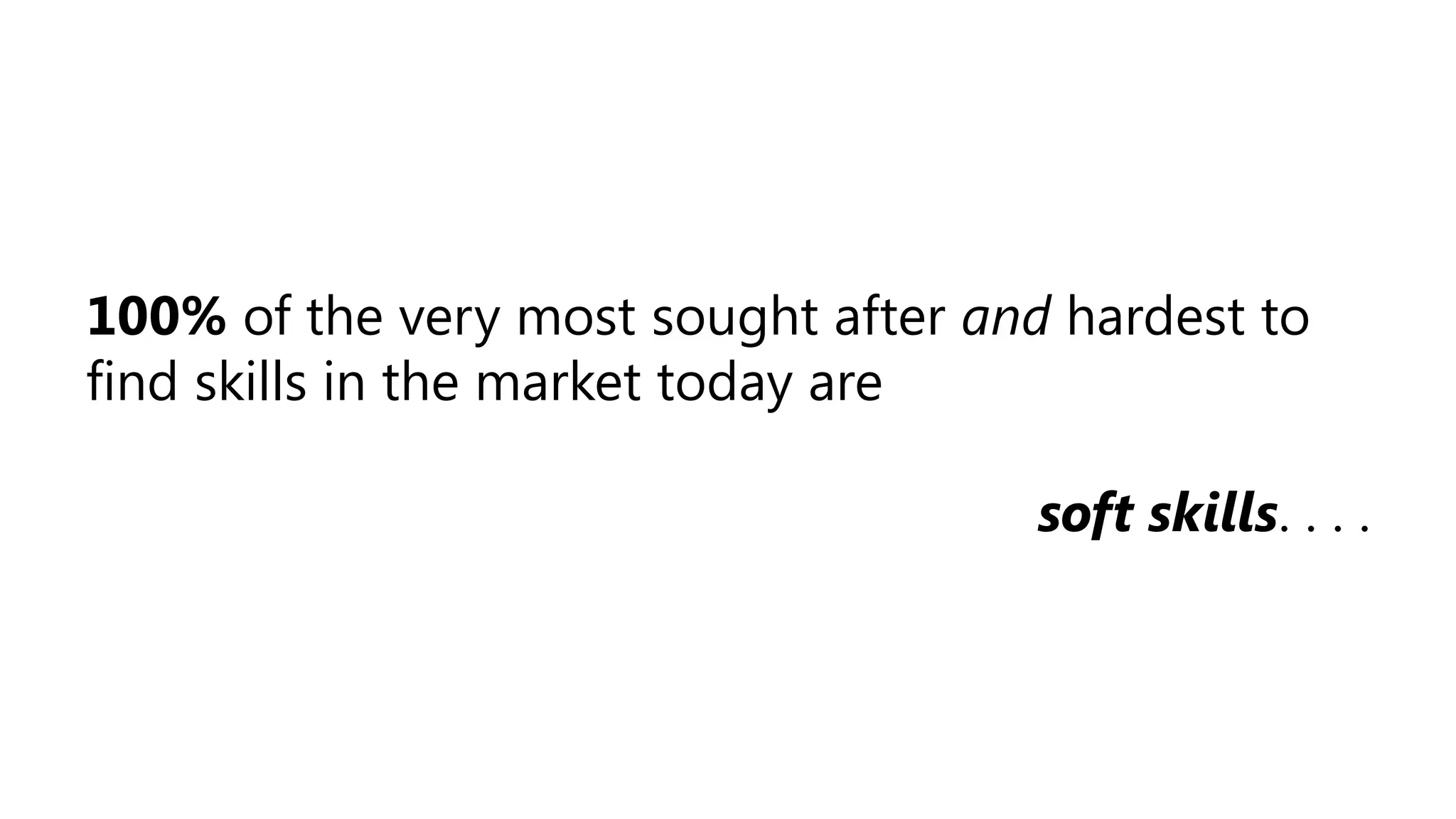
100% of the very most sought after and hardest to
find skills in the market today are
soft skills. . . .
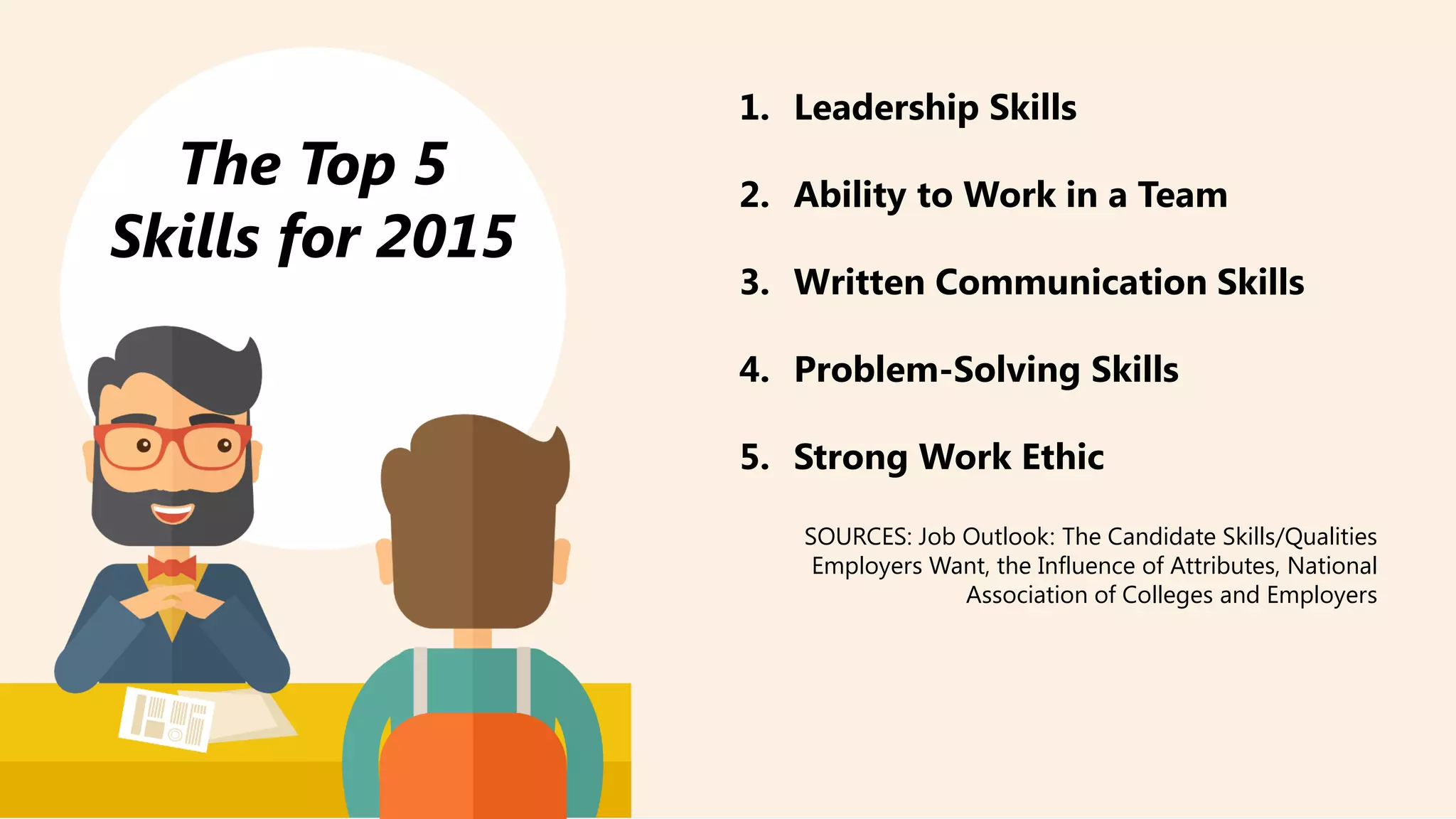
The Top 5
Skills for 2015
1. Leadership Skills
2. Ability to Work in a Team
3. Written Communication Skills
4. Problem-Solving Skills
5. Strong Work Ethic
SOURCES: Job Outlook: The Candidate Skills/Qualities
Employers Want, the Influence of Attributes, National
Association of Colleges and Employers
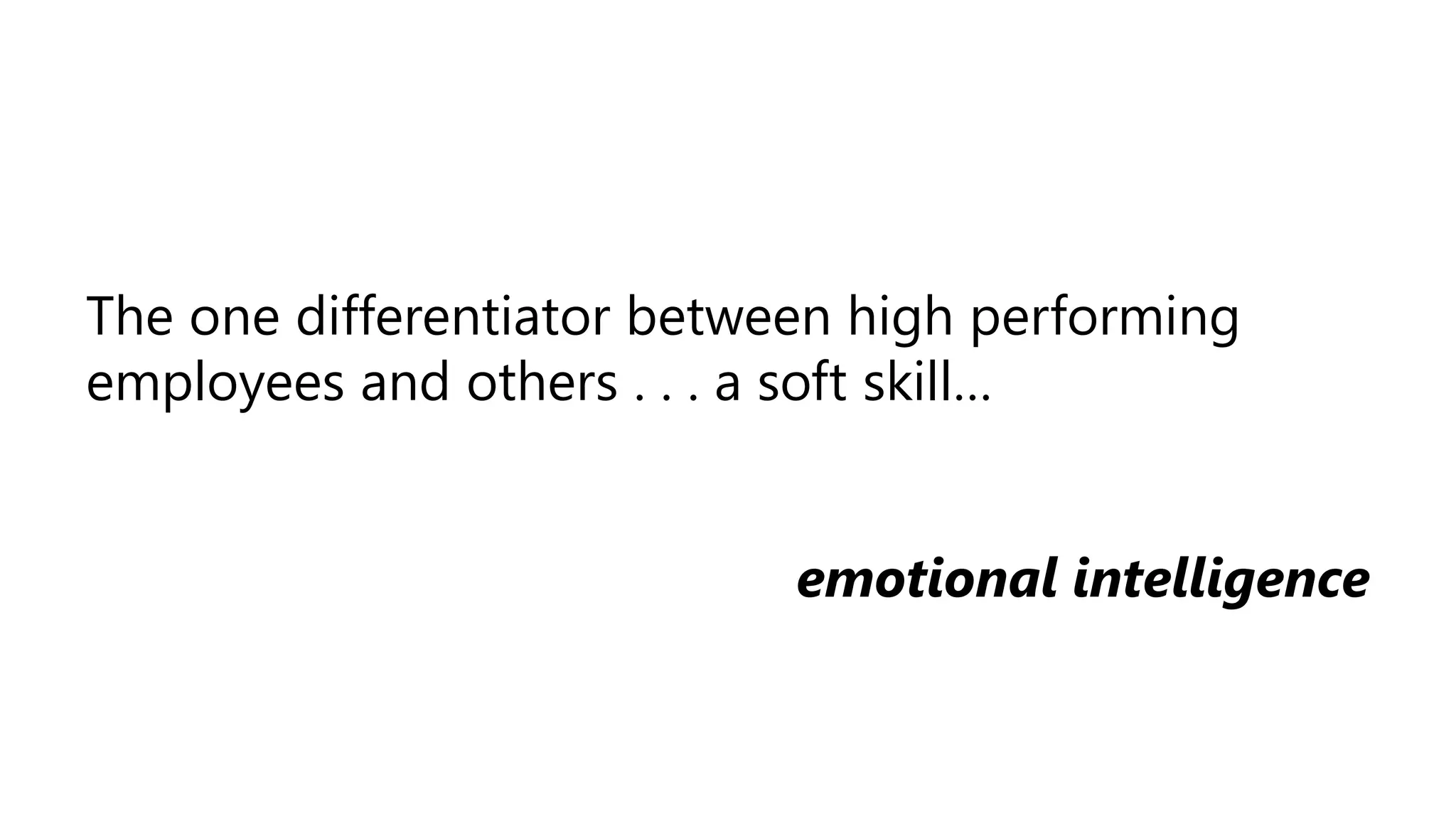
The one differentiator between high performing
employees and others . . . a soft skill…
emotional intelligence
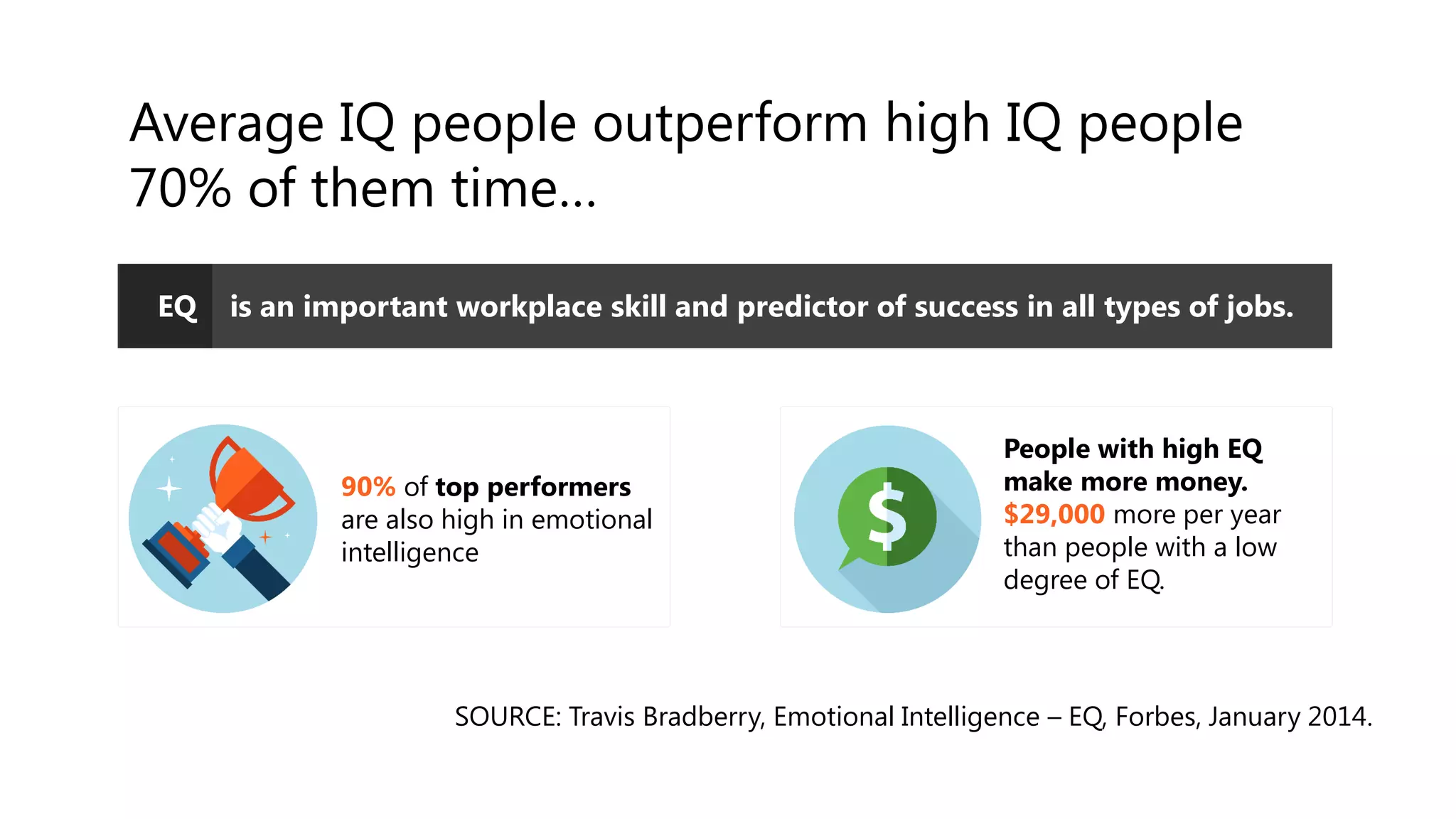
Average IQ people outperform high IQ people
70% of them time…
90% of top performers
are also high in emotional
intelligence
People with high EQ
make more money.
$29,000 more per year
than people with a low
degree of EQ.
EQ is an important workplace skill and predictor of success in all types of jobs.
SOURCE: Travis Bradberry, Emotional Intelligence – EQ, Forbes, January 2014.
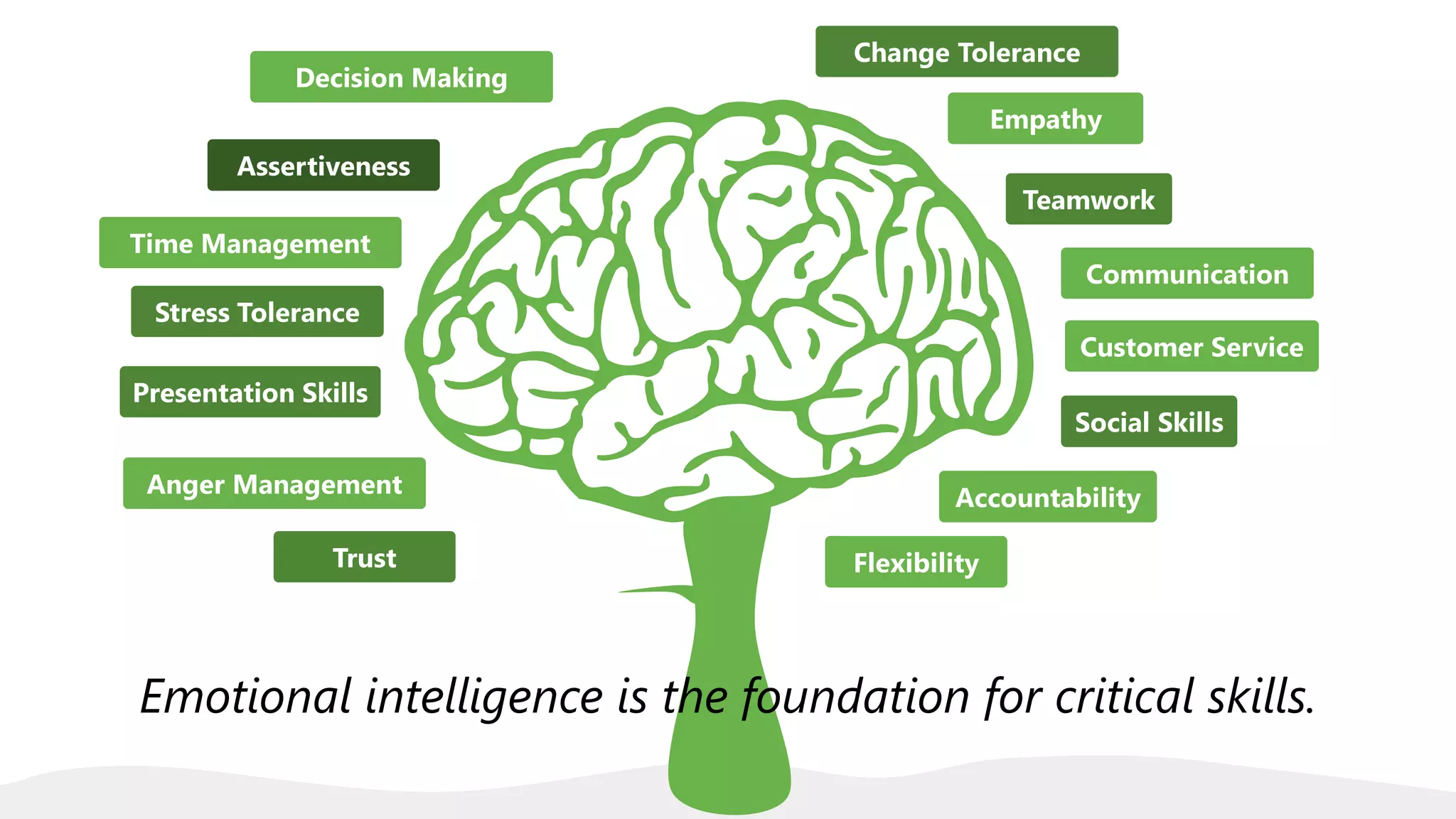
Trust
Anger Management
Stress Tolerance
Time Management
Empathy
Decision Making
Change Tolerance
Communication
Customer Service
Flexibility
Assertiveness
Teamwork
Accountability
Social Skills
Presentation Skills
Emotional intelligence is the foundation for critical skills.
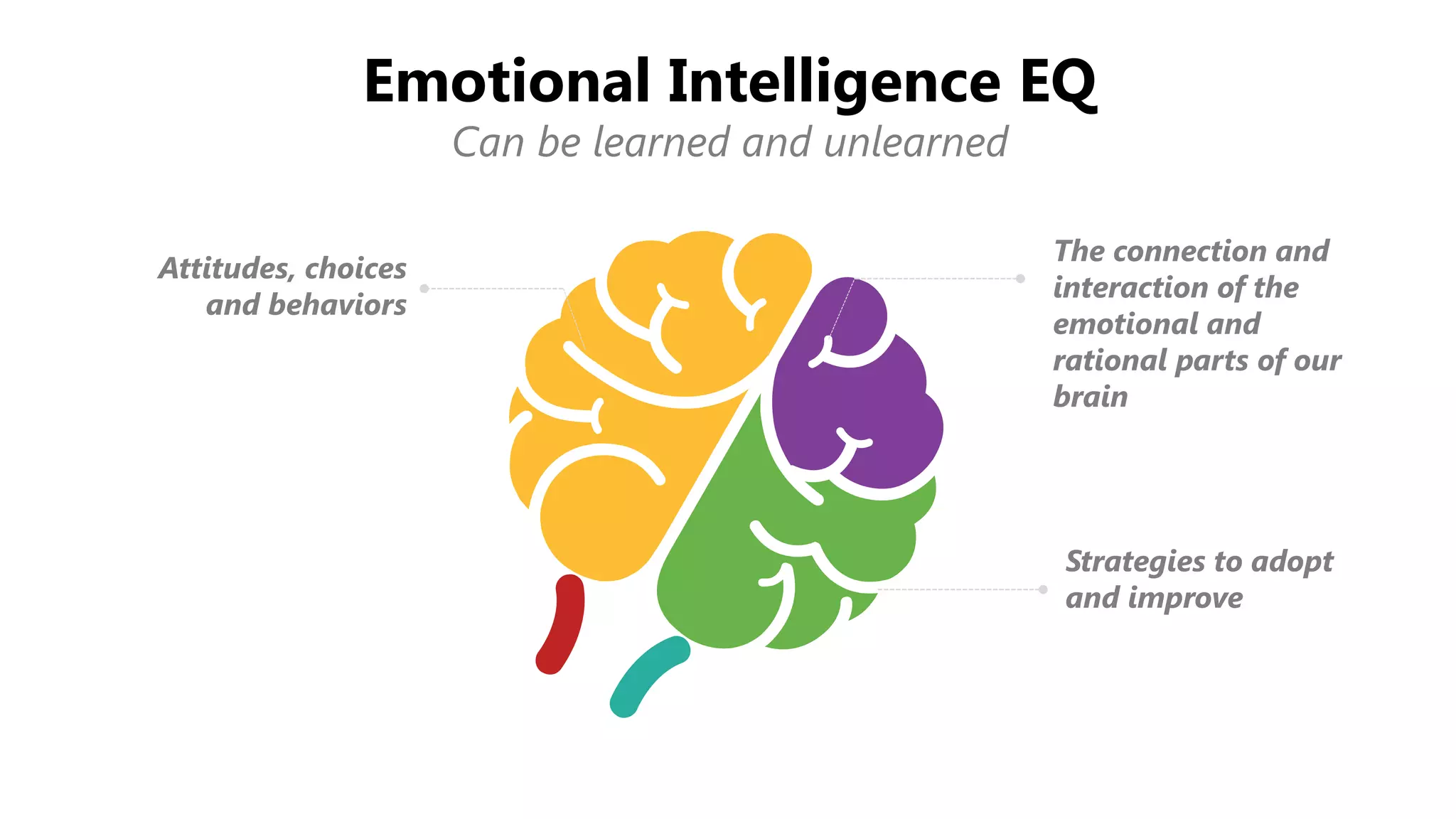
Emotional Intelligence EQ
Can be learned and unlearned
The connection and
interaction of the
emotional and
rational parts of our
brain
Strategies to adopt
and improve
Attitudes, choices
and behaviors
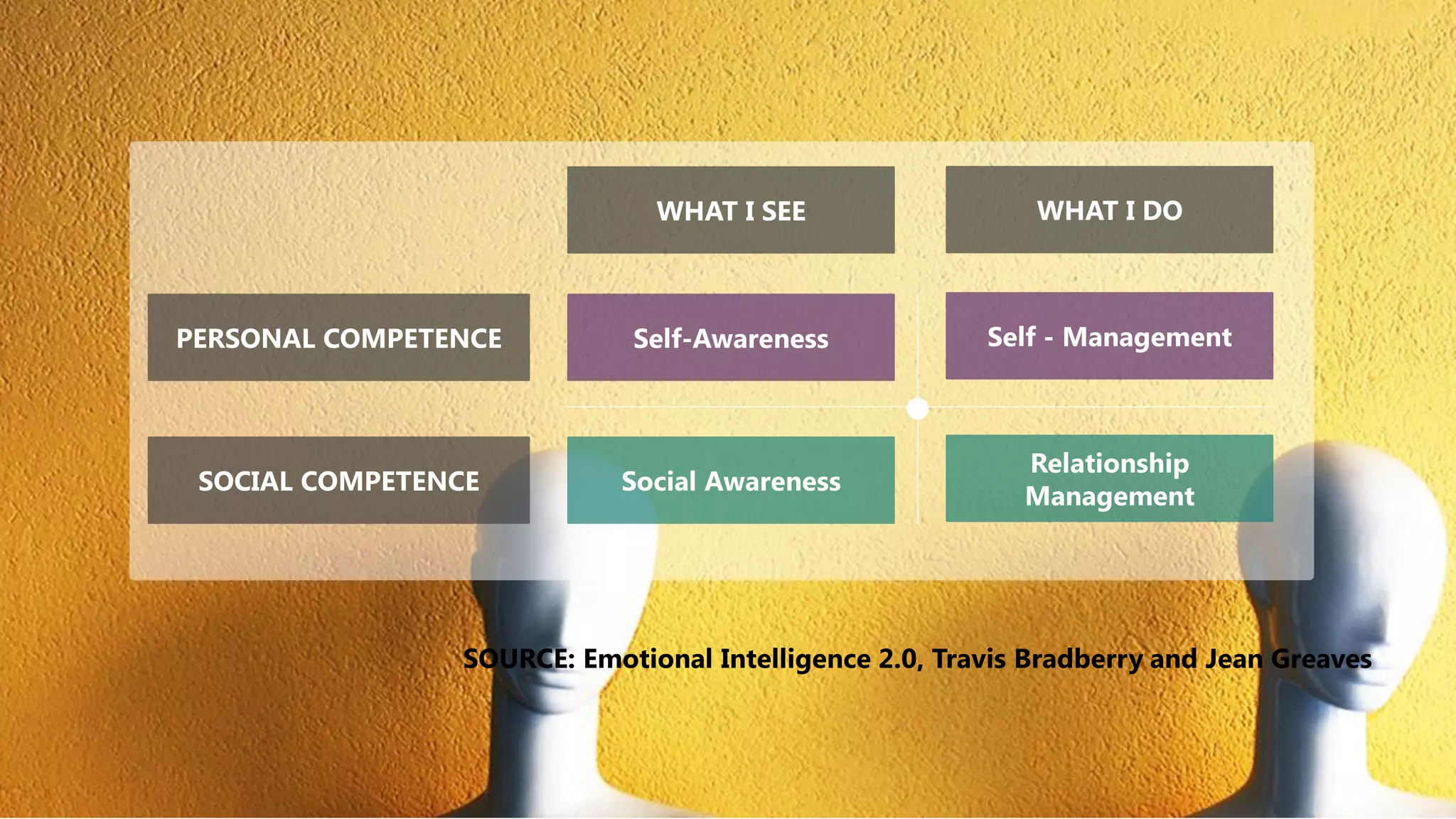
WHAT I SEE WHAT I DO
PERSONAL COMPETENCE
SOCIAL COMPETENCE
Self-Awareness
Social Awareness
Self - Management
Relationship
Management
SOURCE: Emotional Intelligence 2.0, Travis Bradberry and Jean Greaves
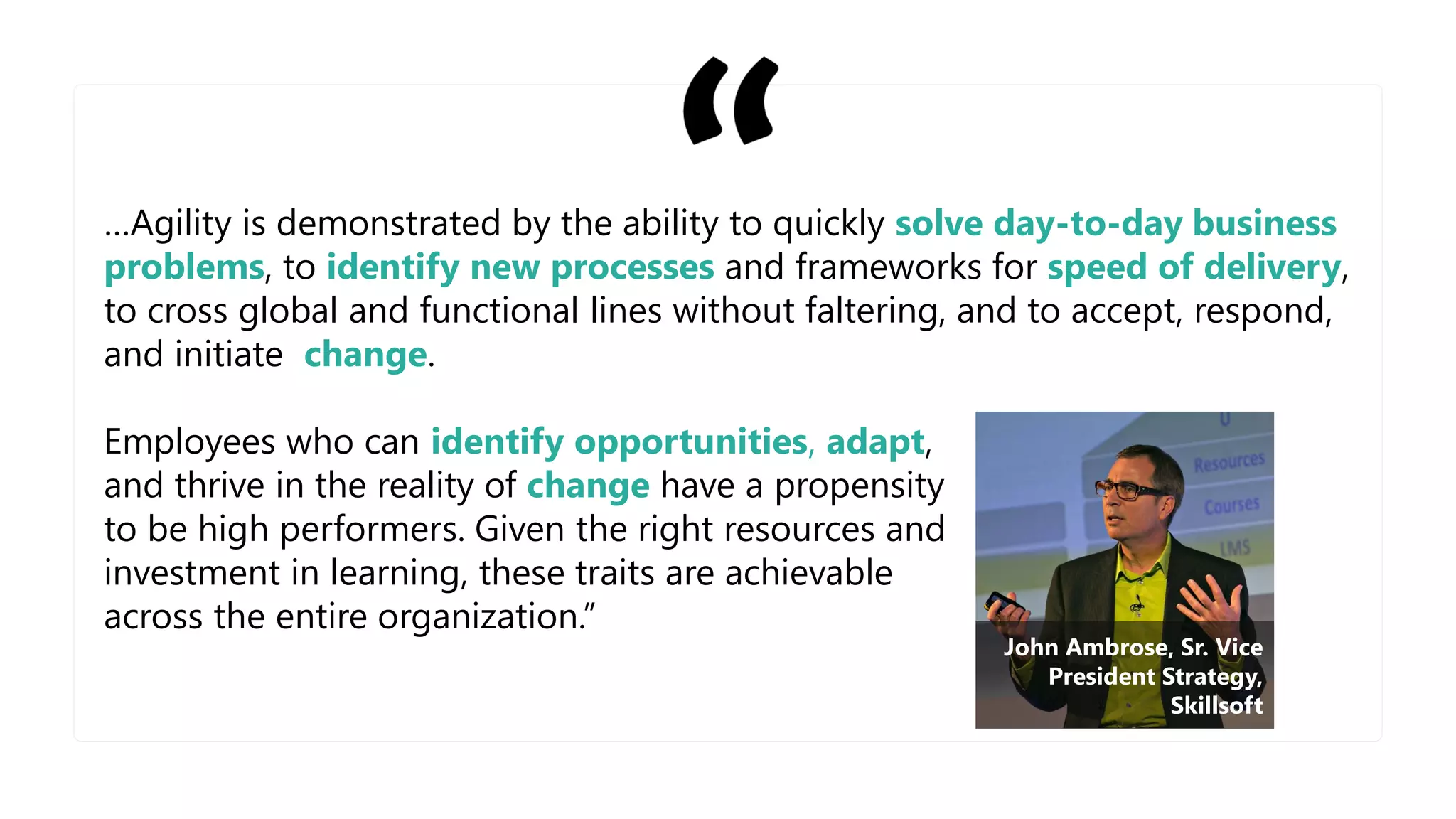
…Agility is demonstrated by the ability to quickly solve day-to-day business
problems, to identify new processes and frameworks for speed of delivery,
to cross global and functional lines without faltering, and to accept, respond,
and initiate change.
Employees who can identify opportunities, adapt,
and thrive in the reality of change have a propensity
to be high performers. Given the right resources and
investment in learning, these traits are achievable
across the entire organization.”
John Ambrose, Sr. Vice
President Strategy,
Skillsoft
11
minutes
Why short video…
actually works?
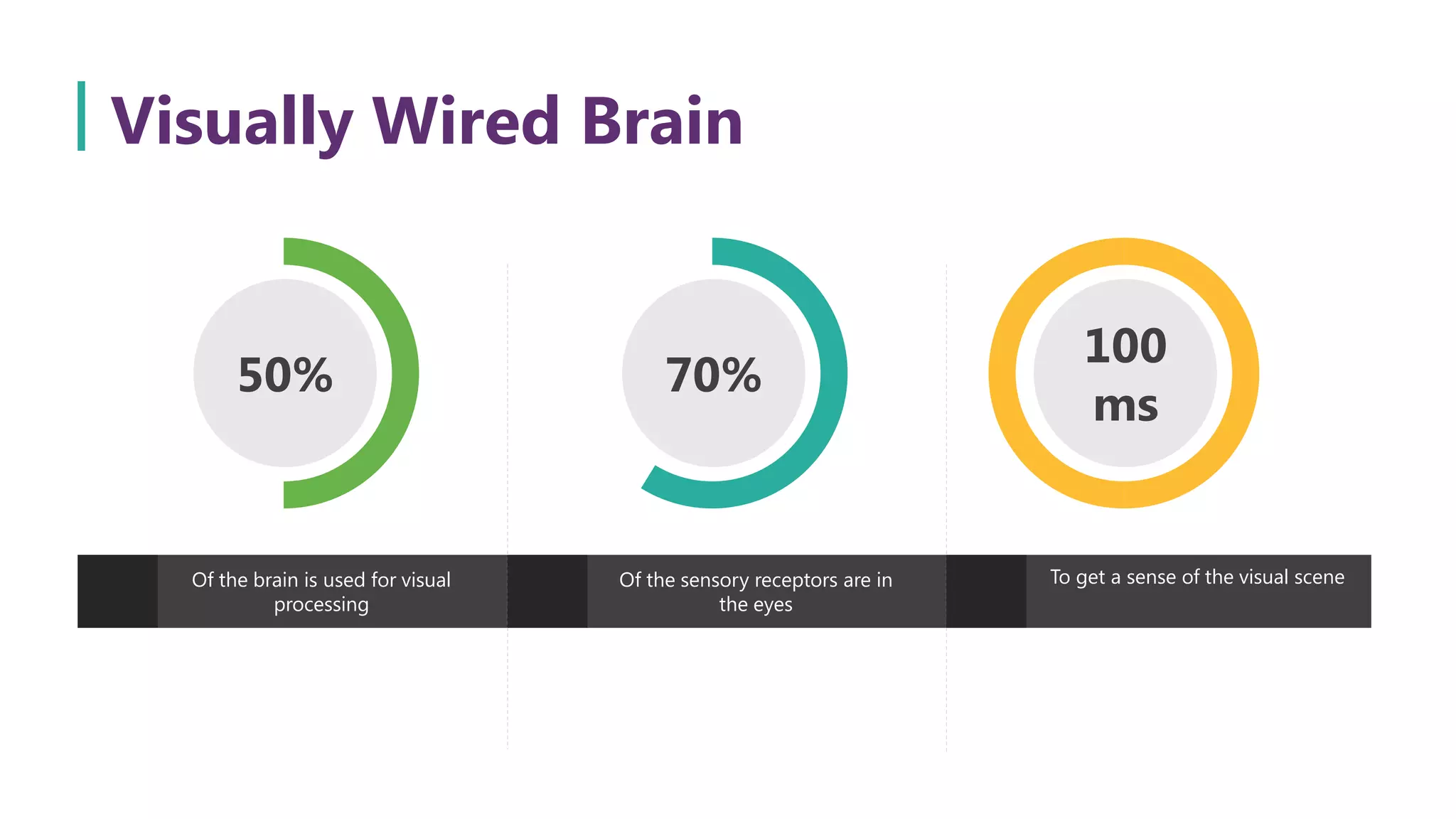
50% 70%
100
ms
Of the brain is used for visual
processing
Of the sensory receptors are in
the eyes
To get a sense of the visual scene
Visually Wired Brain
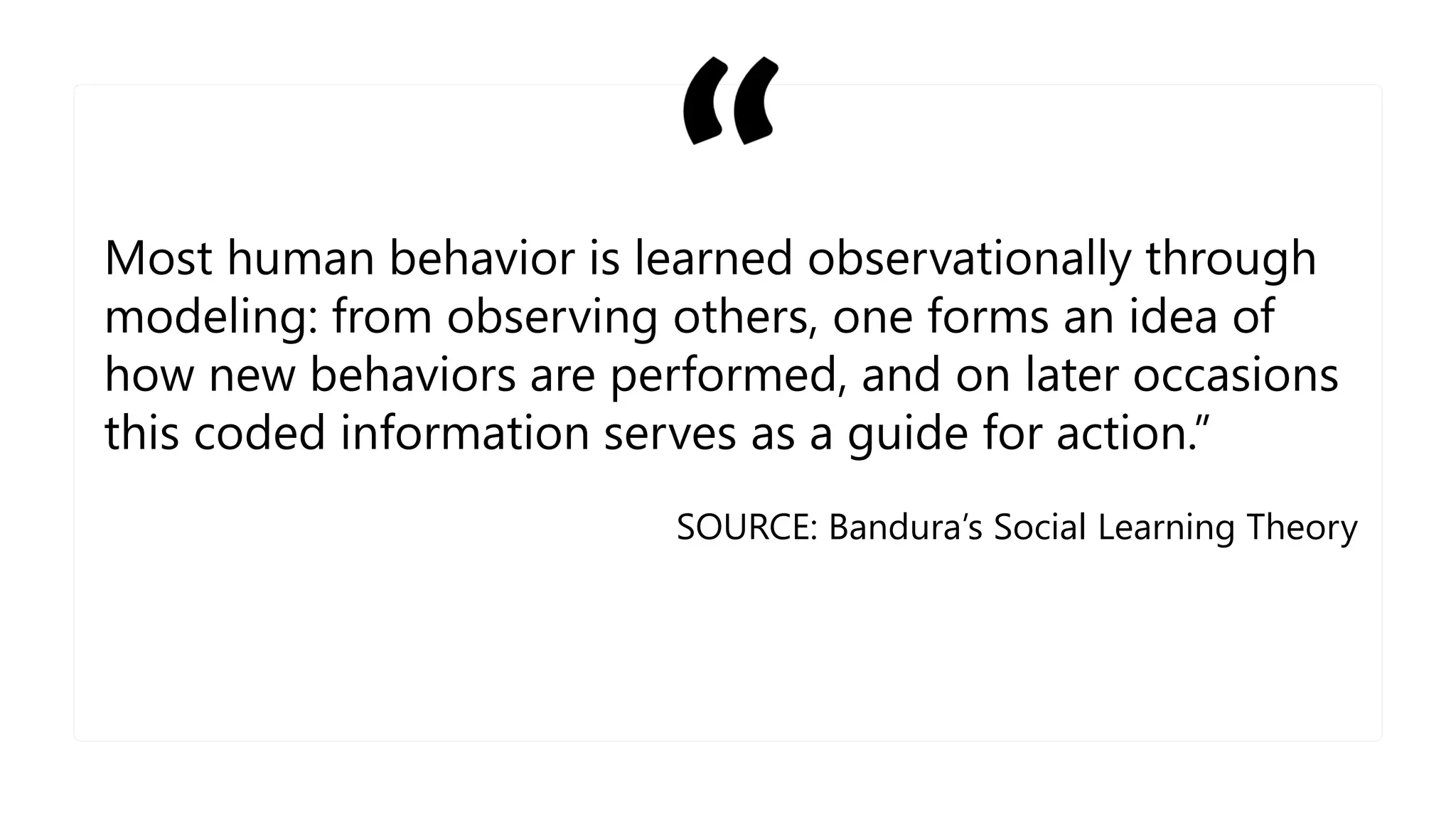
Most human behavior is learned observationally through
modeling: from observing others, one forms an idea of
how new behaviors are performed, and on later occasions
this coded information serves as a guide for action.”
SOURCE: Bandura’s Social Learning Theory
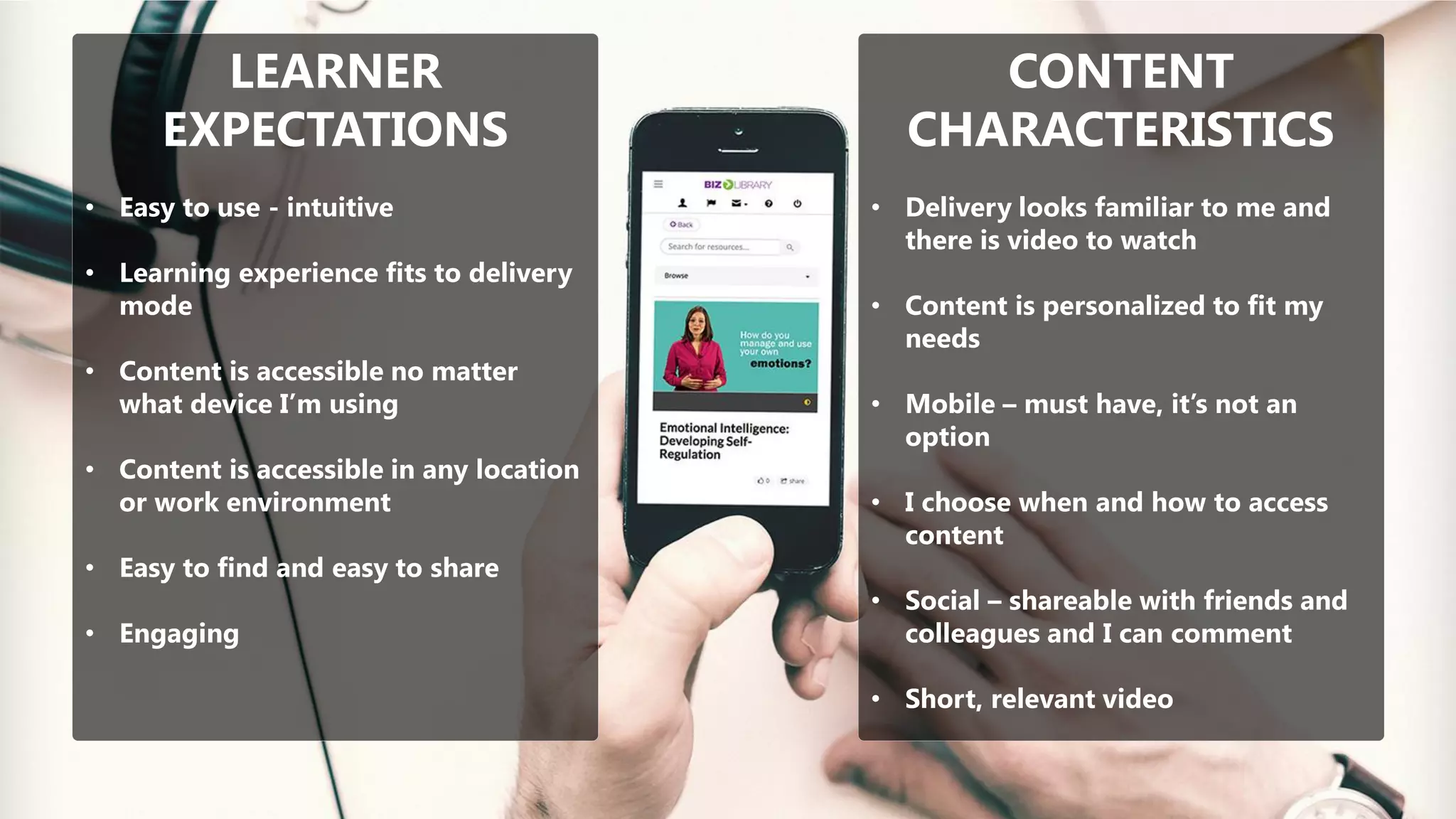
LEARNER
EXPECTATIONS
• Easy to use - intuitive
• Learning experience fits to delivery
mode
• Content is accessible no matter
what device I’m using
• Content is accessible in any location
or work environment
• Easy to find and easy to share
• Engaging
CONTENT
CHARACTERISTICS
• Delivery looks familiar to me and
there is video to watch
• Content is personalized to fit my
needs
• Mobile – must have, it’s not an
option
• I choose when and how to access
content
• Social – shareable with friends and
colleagues and I can comment
• Short, relevant video
How do I measure the impact
of soft skills?
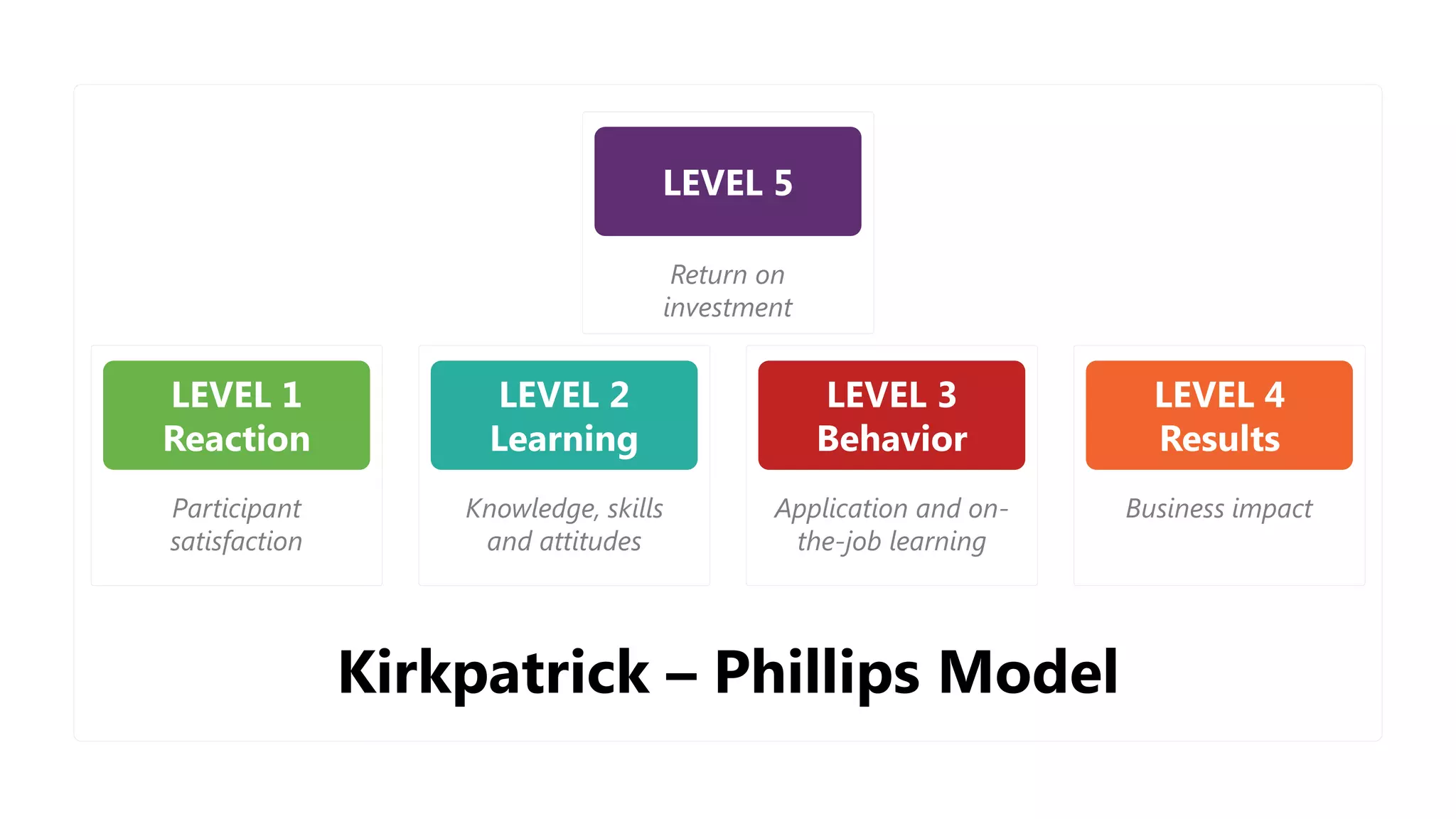
LEVEL 1
Reaction
LEVEL 2
Learning
LEVEL 3
Behavior
LEVEL 4
Results
Participant
satisfaction
Knowledge, skills
and attitudes
Application and on-
the-job learning
Business impact
LEVEL 5
Return on
investment
Kirkpatrick – Phillips Model
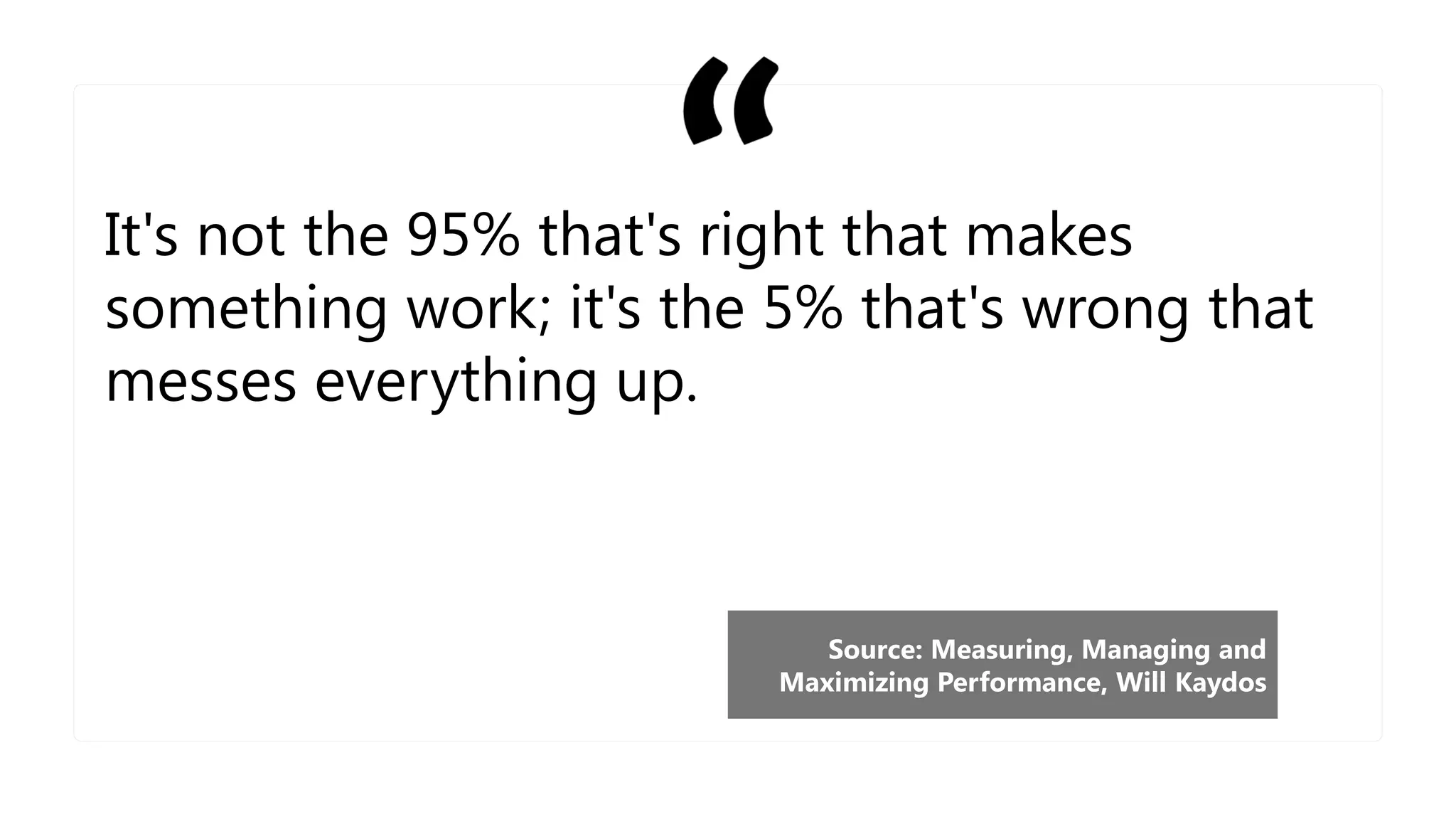
It's not the 95% that's right that makes
something work; it's the 5% that's wrong that
messes everything up.
Source: Measuring, Managing and
Maximizing Performance, Will Kaydos
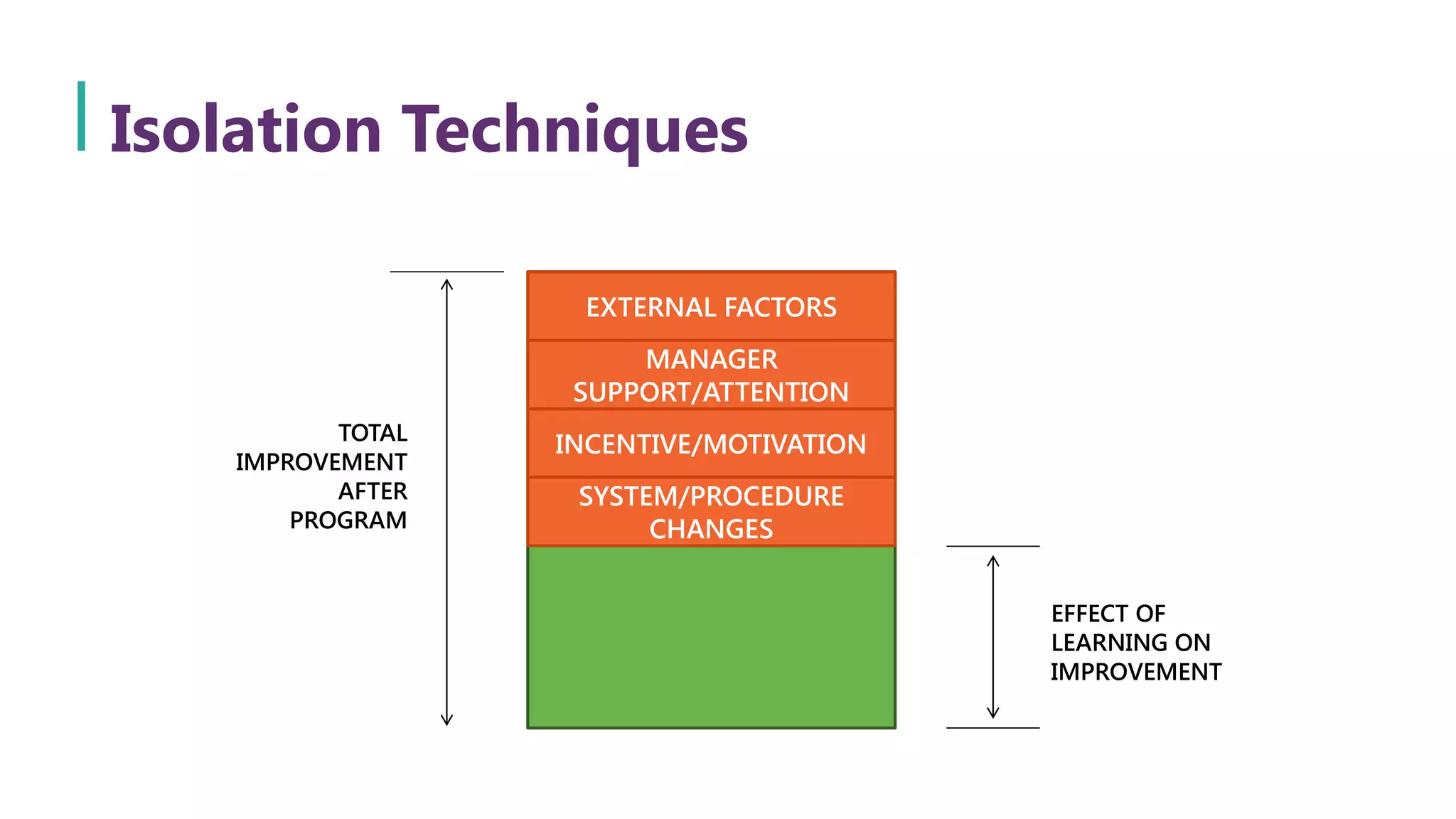
SYSTEM/PROCEDURE
CHANGES
INCENTIVE/MOTIVATION
MANAGER
SUPPORT/ATTENTION
EXTERNAL FACTORS
EFFECT OF
LEARNING ON
IMPROVEMENT
TOTAL
IMPROVEMENT
AFTER
PROGRAM
Isolation Techniques
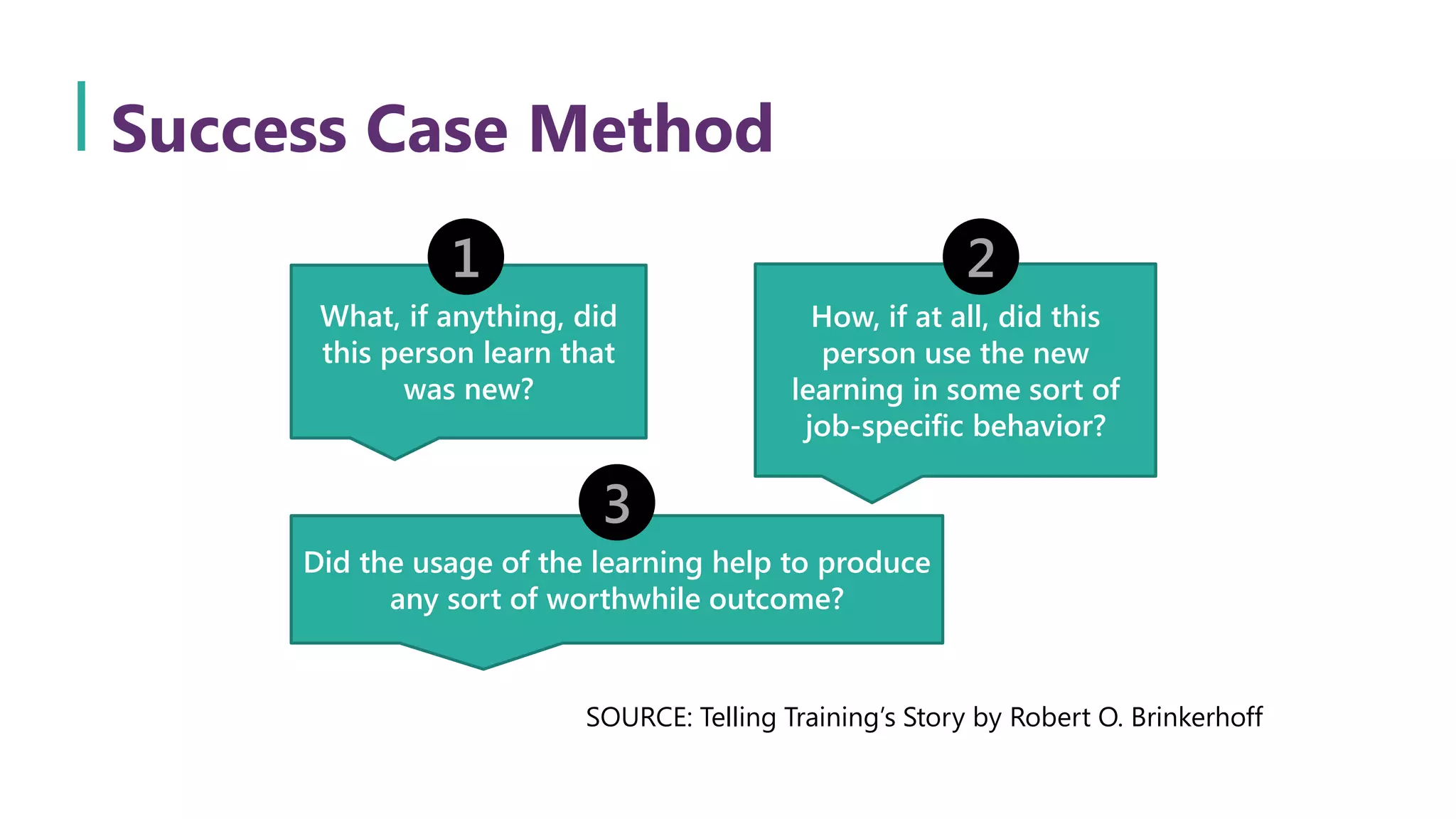
What, if anything, did
this person learn that
was new?
How, if at all, did this
person use the new
learning in some sort of
job-specific behavior?
Did the usage of the learning help to produce
any sort of worthwhile outcome?
1 2
3
SOURCE: Telling Training’s Story by Robert O. Brinkerhoff
Success Case Method
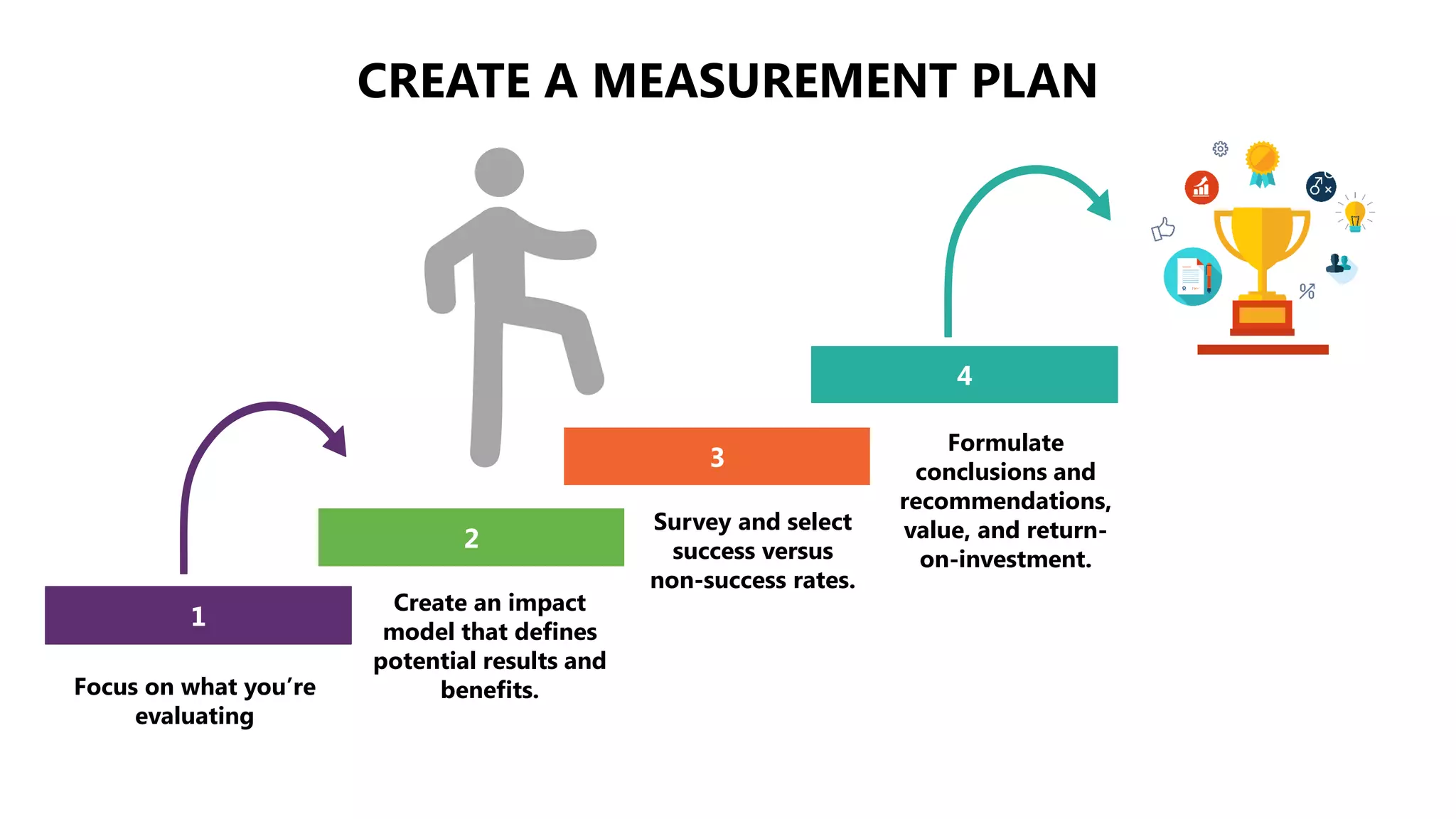
1
2
4
3
Focus on what you’re
evaluating
Create an impact
model that defines
potential results and
benefits.
Survey and select
success versus
non-success rates.
Formulate
conclusions and
recommendations,
value, and return-
on-investment.
CREATE A MEASUREMENT PLAN
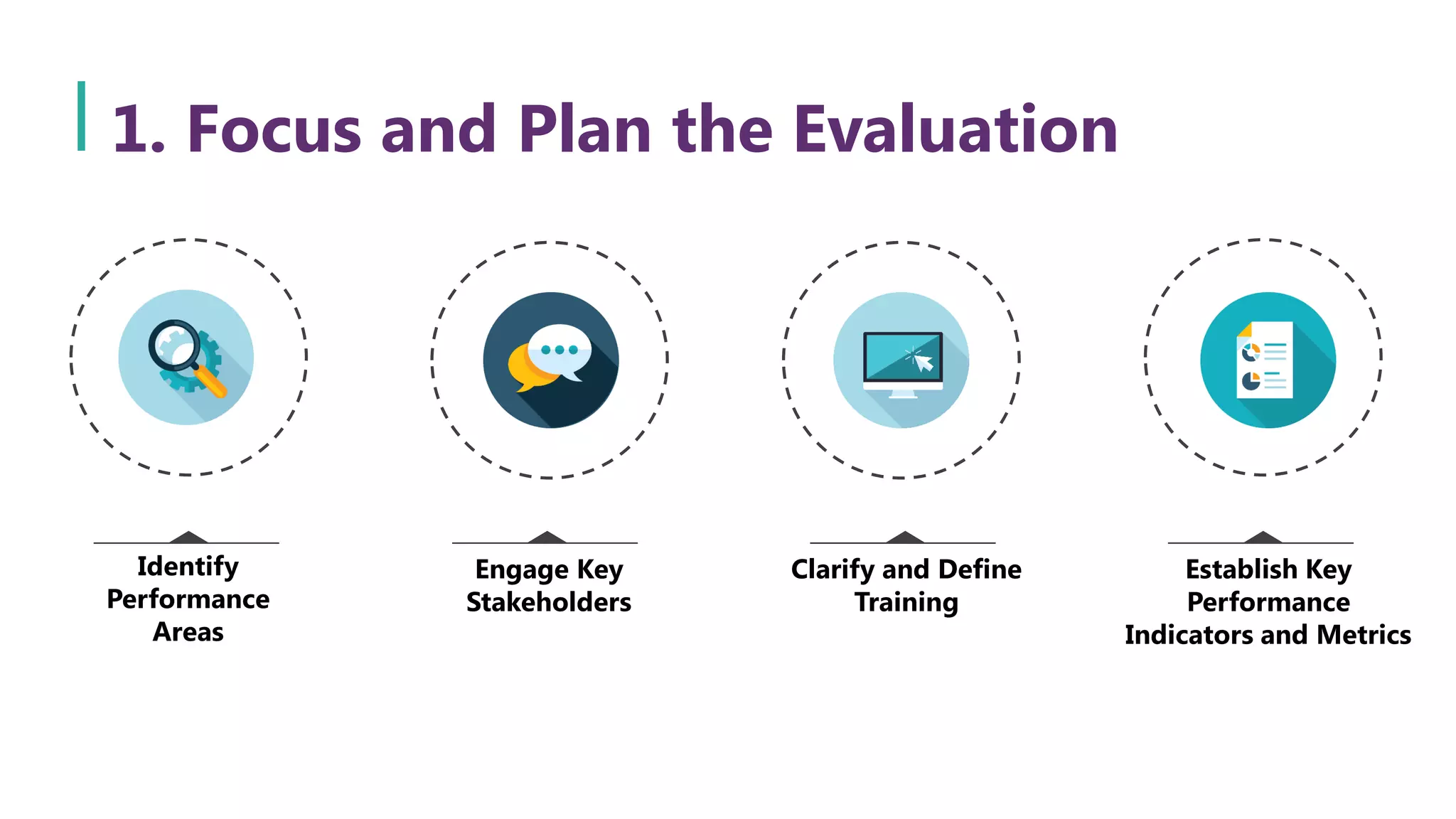
Identify
Performance
Areas
Engage Key
Stakeholders
Clarify and Define
Training
Establish Key
Performance
Indicators and Metrics
1. Focus and Plan the Evaluation
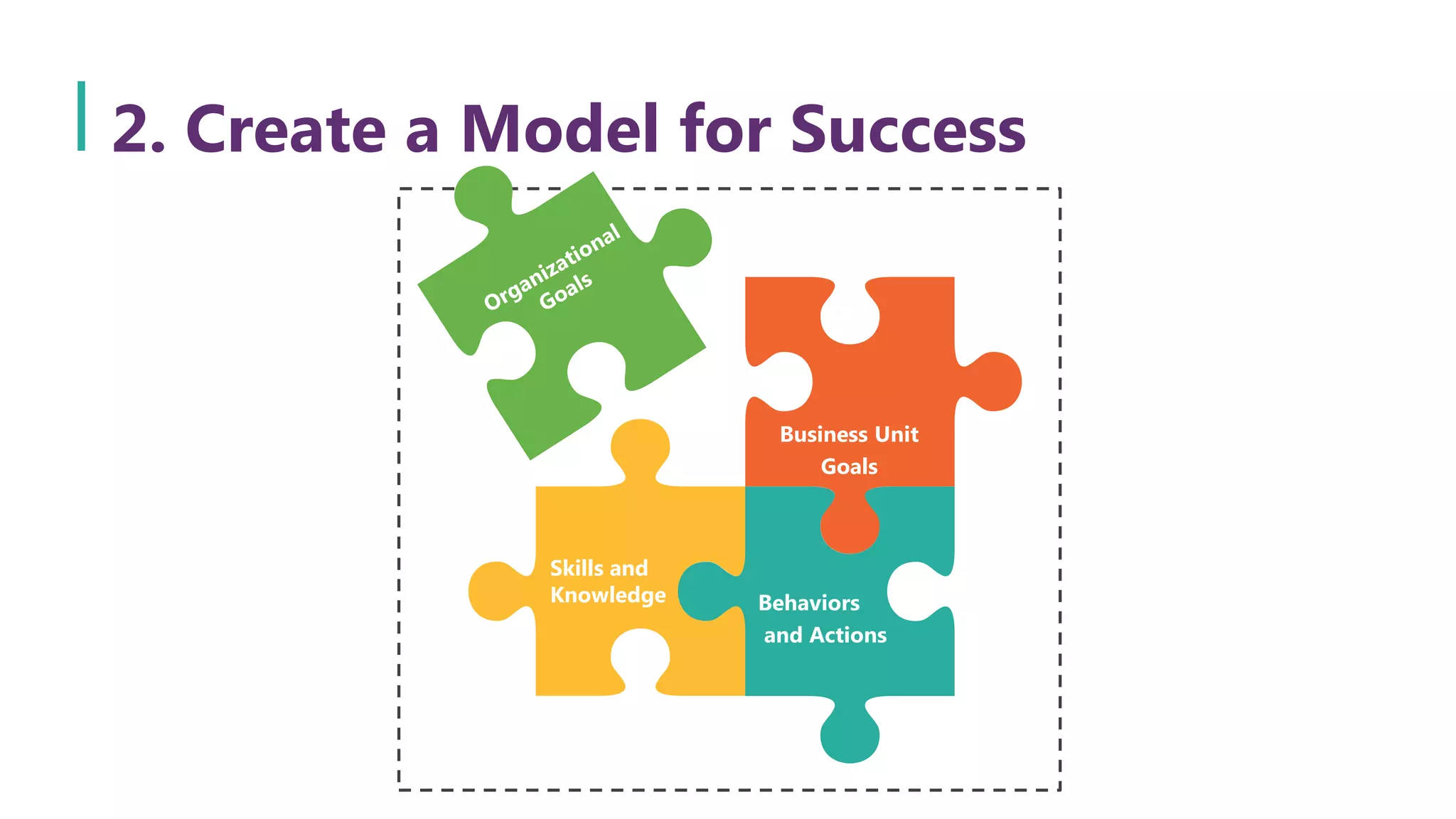
2. Create a Model for Success
Business Unit
Goals
Skills and
Knowledge Behaviors
and Actions
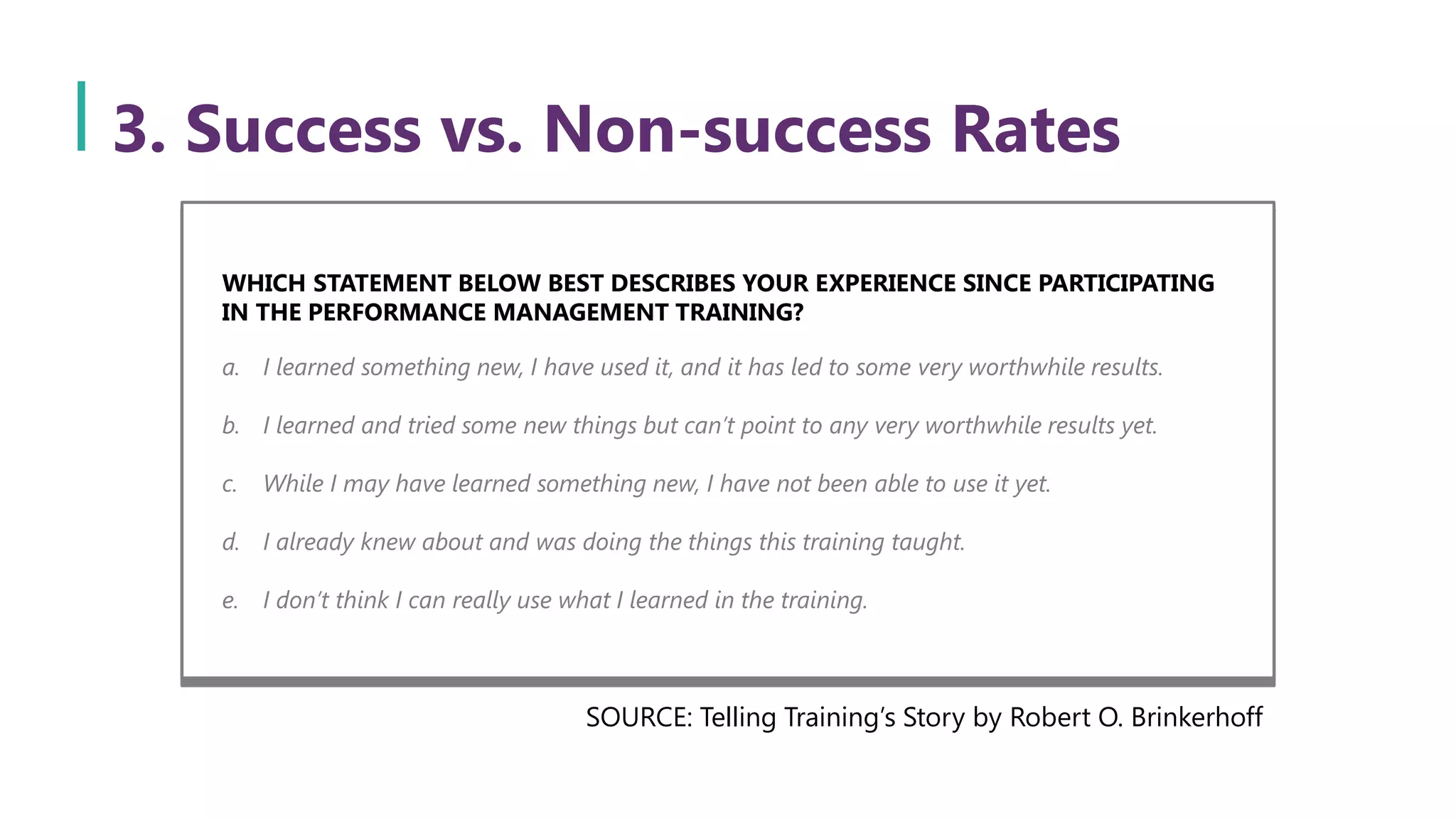
WHICH STATEMENT BELOW BEST DESCRIBES YOUR EXPERIENCE SINCE PARTICIPATING
IN THE PERFORMANCE MANAGEMENT TRAINING?
a. I learned something new, I have used it, and it has led to some very worthwhile results.
b. I learned and tried some new things but can’t point to any very worthwhile results yet.
c. While I may have learned something new, I have not been able to use it yet.
d. I already knew about and was doing the things this training taught.
e. I don’t think I can really use what I learned in the training.
3. Success vs. Non-success Rates
SOURCE: Telling Training’s Story by Robert O. Brinkerhoff
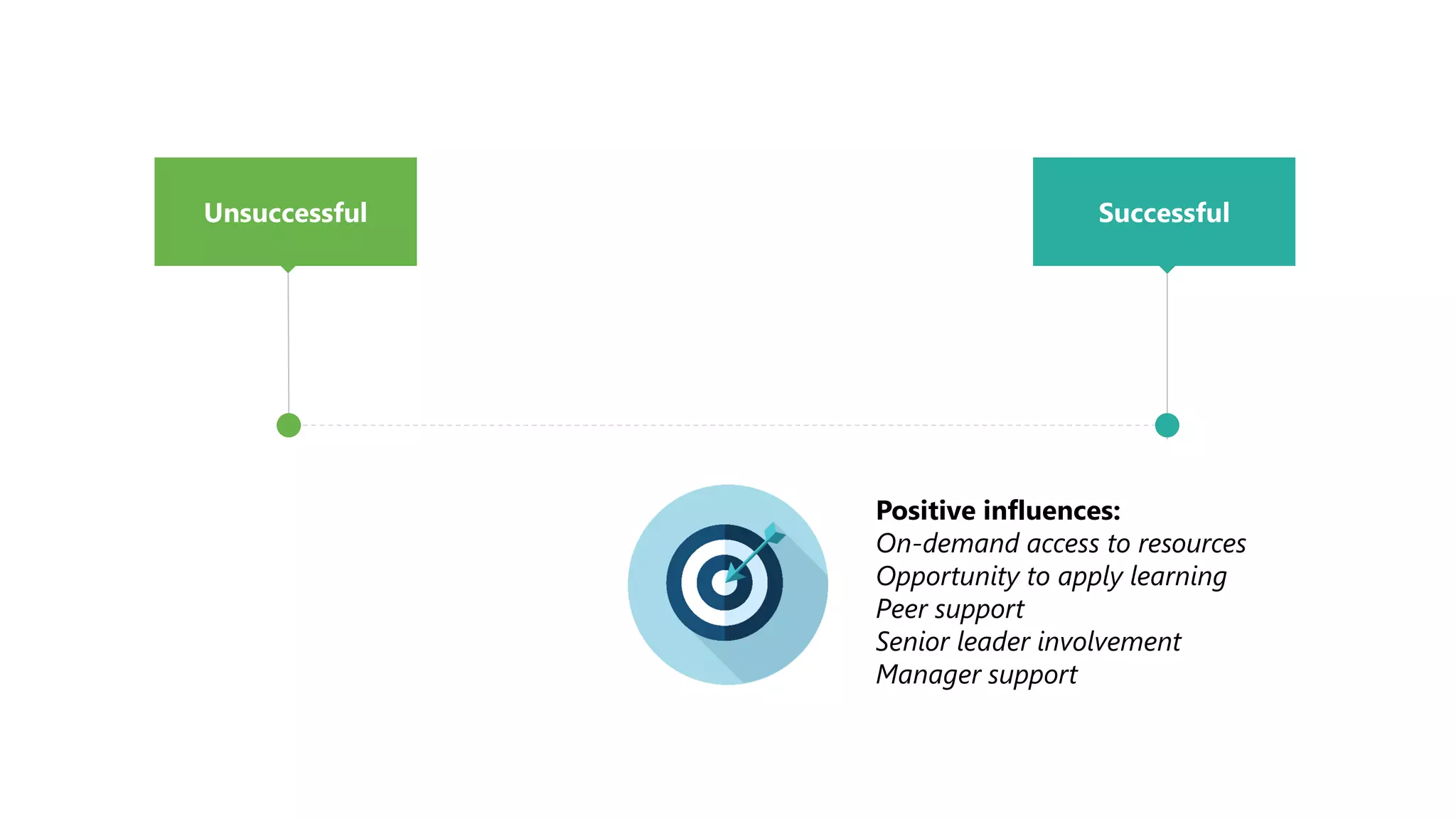
Unsuccessful Successful
Positive influences:
On-demand access to resources
Opportunity to apply learning
Peer support
Senior leader involvement
Manager support
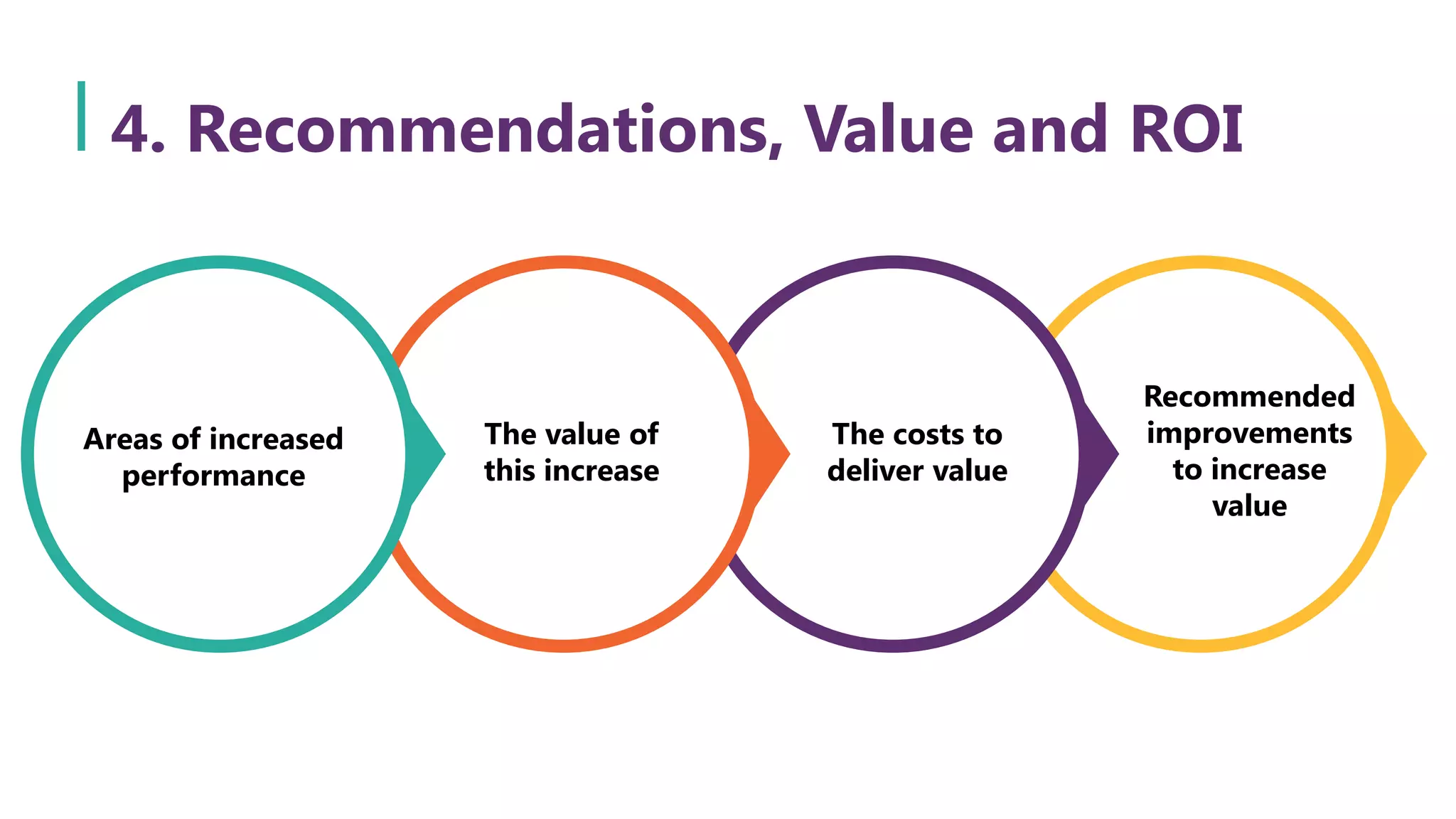
Areas of increased
performance
The value of
this increase
The costs to
deliver value
Recommended
improvements
to increase
value
4. Recommendations, Value and ROI
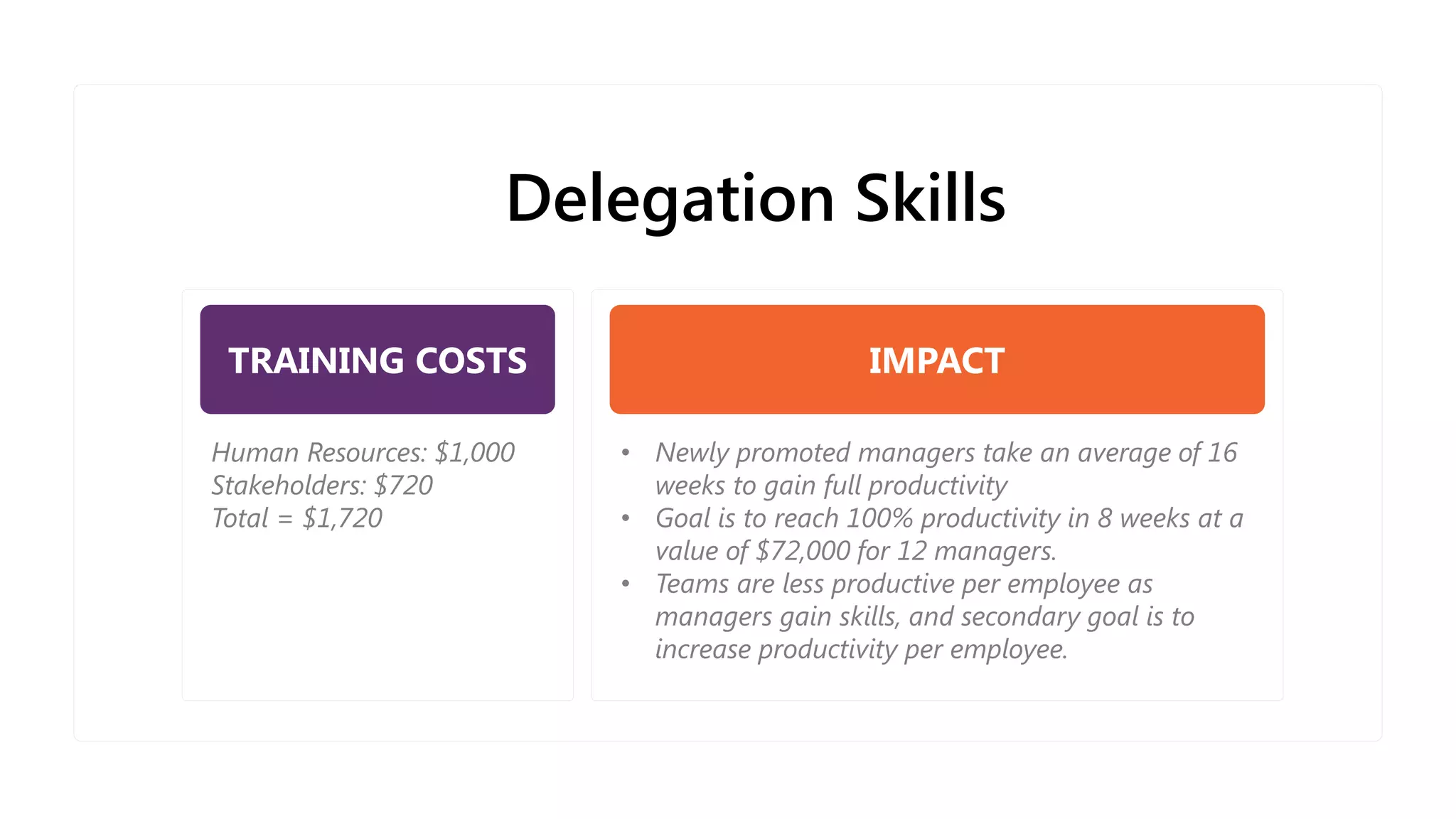
Delegation Skills
TRAINING COSTS IMPACT
Human Resources: $1,000
Stakeholders: $720
Total = $1,720
• Newly promoted managers take an average of 16
weeks to gain full productivity
• Goal is to reach 100% productivity in 8 weeks at a
value of $72,000 for 12 managers.
• Teams are less productive per employee as
managers gain skills, and secondary goal is to
increase productivity per employee.
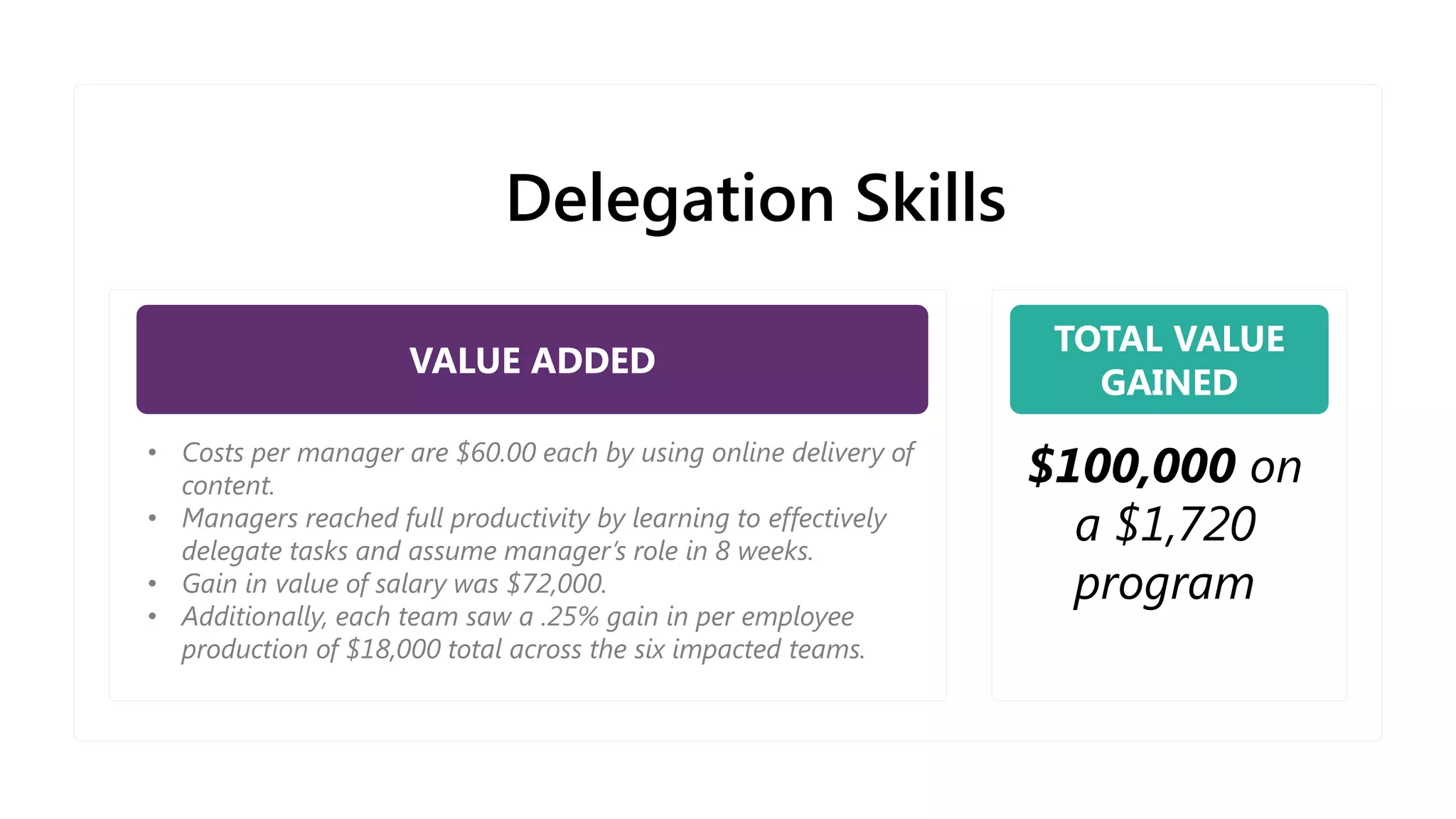
Delegation Skills
VALUE ADDED
TOTAL VALUE
GAINED
• Costs per manager are $60.00 each by using online delivery of
content.
• Managers reached full productivity by learning to effectively
delegate tasks and assume manager’s role in 8 weeks.
• Gain in value of salary was $72,000.
• Additionally, each team saw a .25% gain in per employee
production of $18,000 total across the six impacted teams.
$100,000 on
a $1,720
program
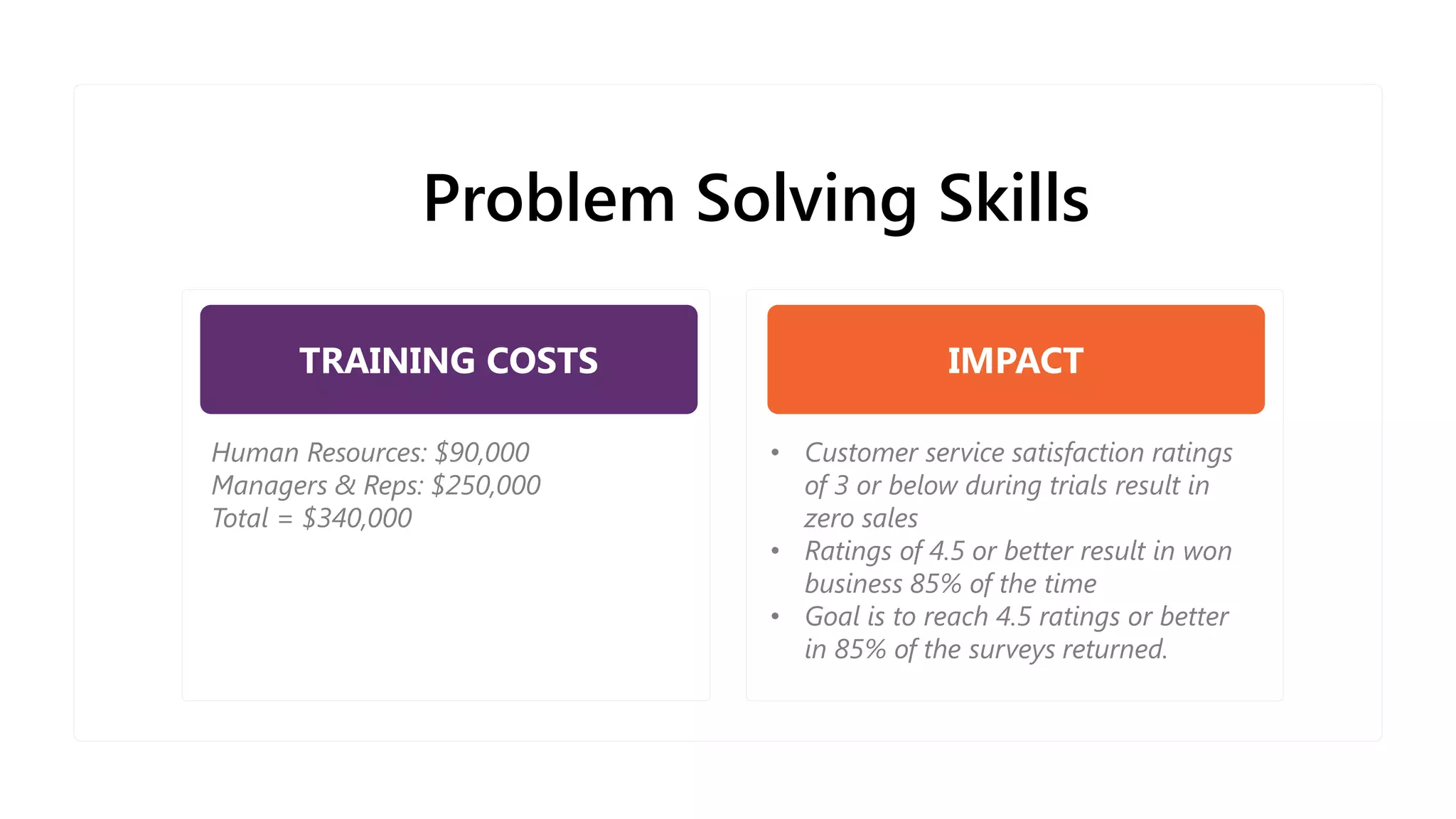
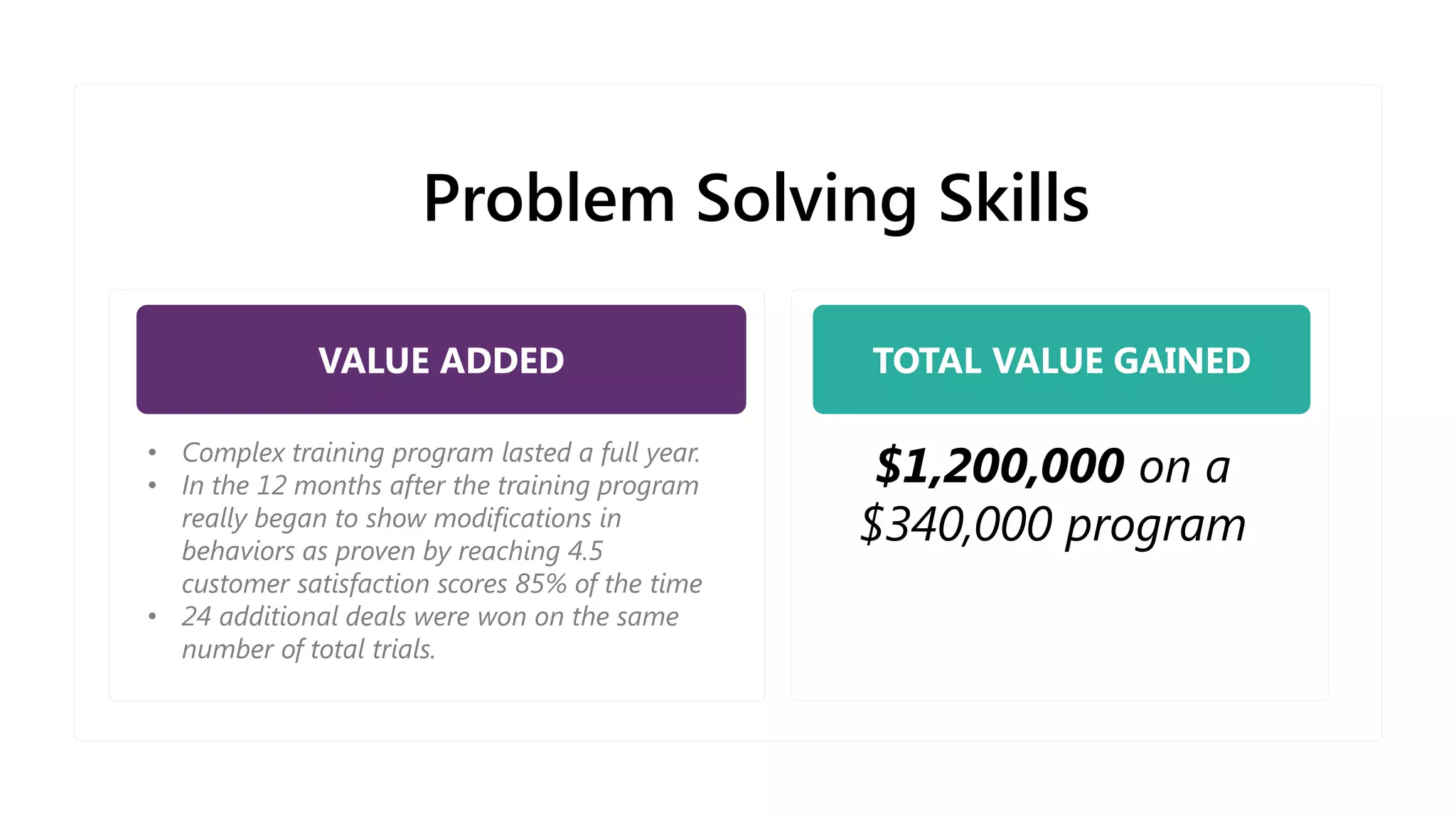
Problem Solving Skills
TRAINING COSTS IMPACT
Human Resources: $90,000
Managers & Reps: $250,000
Total = $340,000
• Customer service satisfaction ratings
of 3 or below during trials result in
zero sales
• Ratings of 4.5 or better result in won
business 85% of the time
• Goal is to reach 4.5 ratings or better
in 85% of the surveys returned.
Problem Solving Skills
VALUE ADDED TOTAL VALUE GAINED
• Complex training program lasted a full year.
• In the 12 months after the training program
really began to show modifications in
behaviors as proven by reaching 4.5
customer satisfaction scores 85% of the time
• 24 additional deals were won on the same
number of total trials.
$1,200,000 on a
$340,000 program
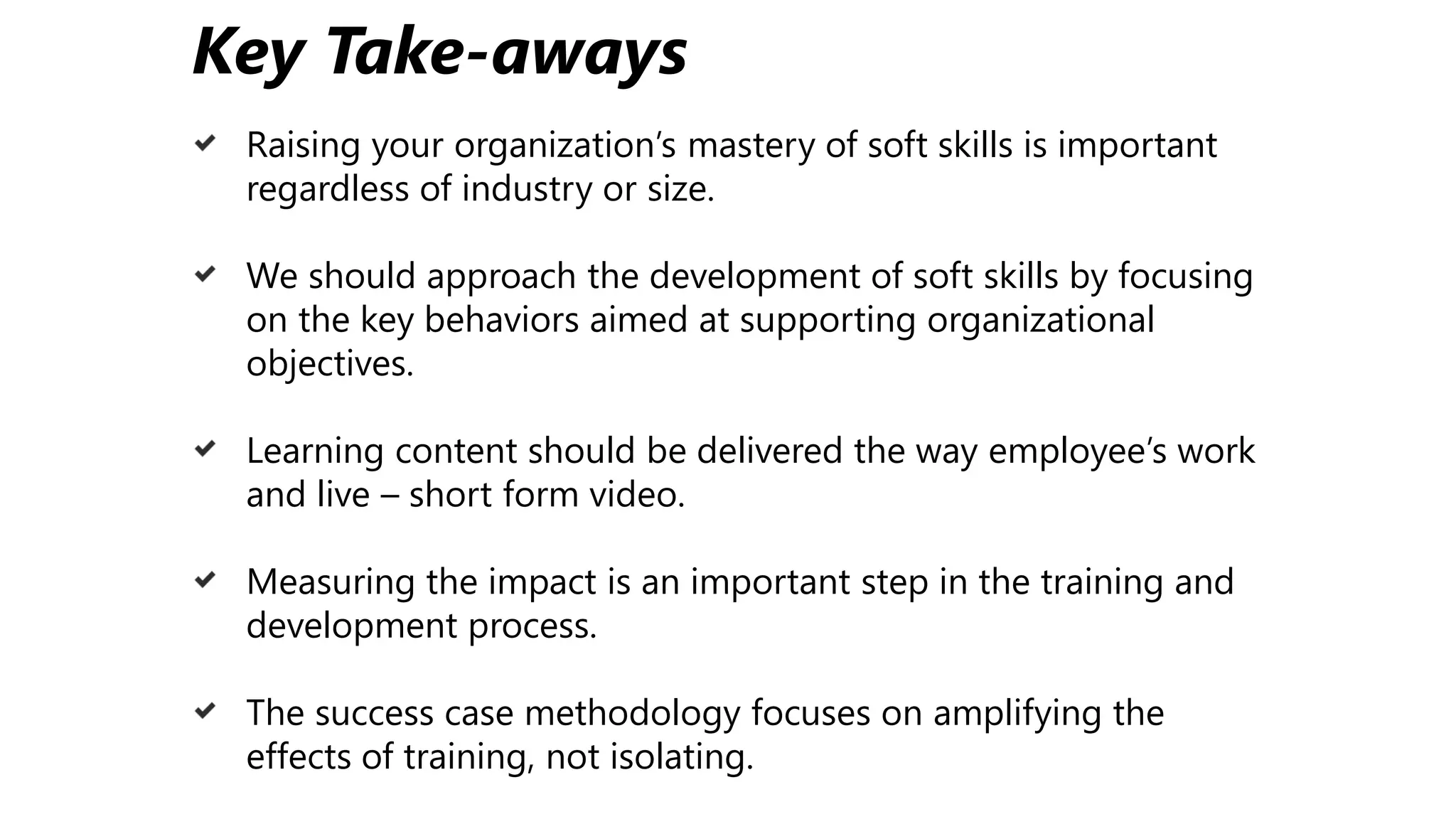
Key Take-aways
Raising your organization’s mastery of soft skills is important
regardless of industry or size.
We should approach the development of soft skills by focusing
on the key behaviors aimed at supporting organizational
objectives.
Learning content should be delivered the way employee’s work
and live – short form video.
Measuring the impact is an important step in the training and
development process.
The success case methodology focuses on amplifying the
effects of training, not isolating.
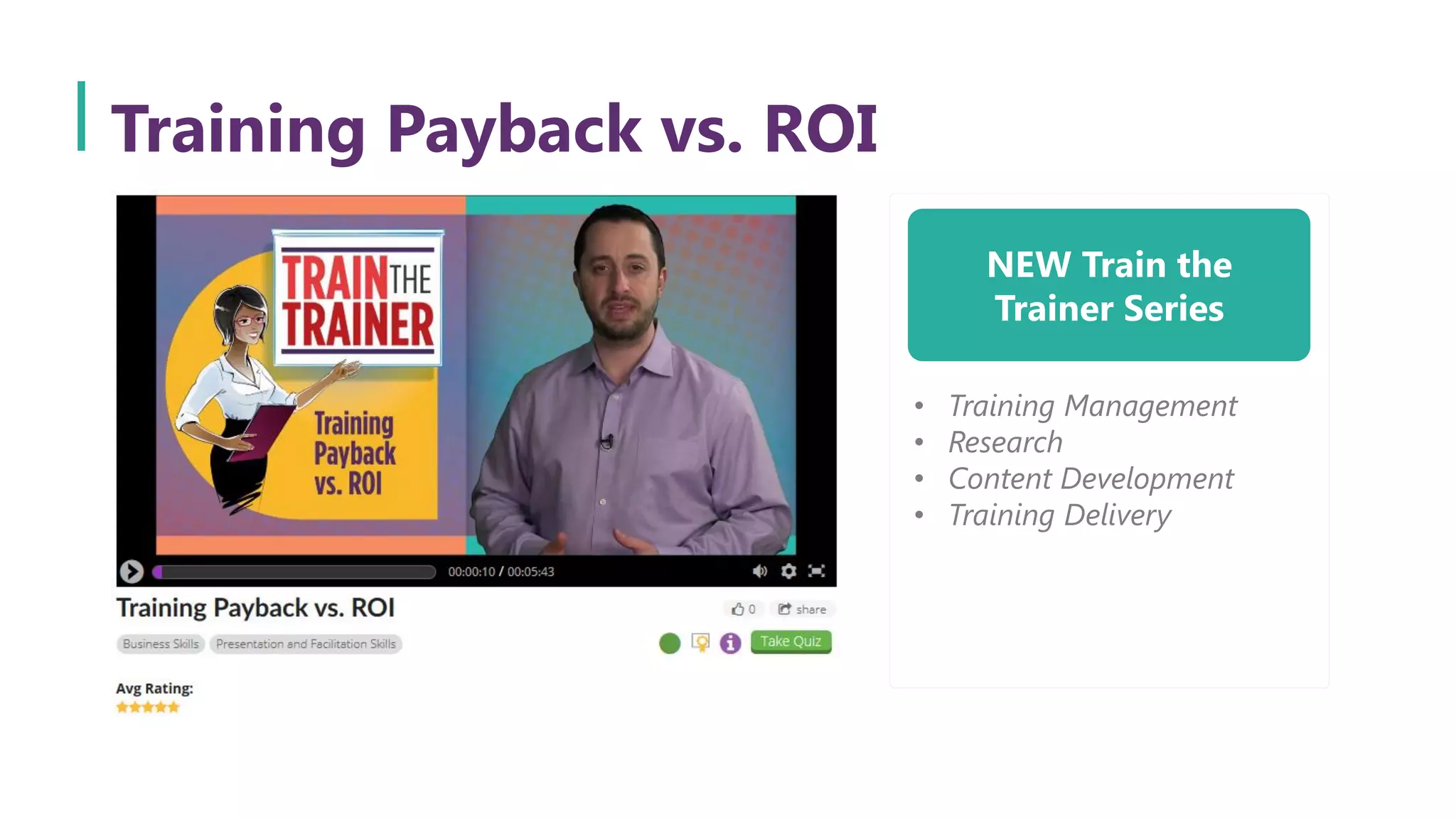
Training Payback vs. ROI
NEW Train the
Trainer Series
• Training Management
• Research
• Content Development
• Training Delivery
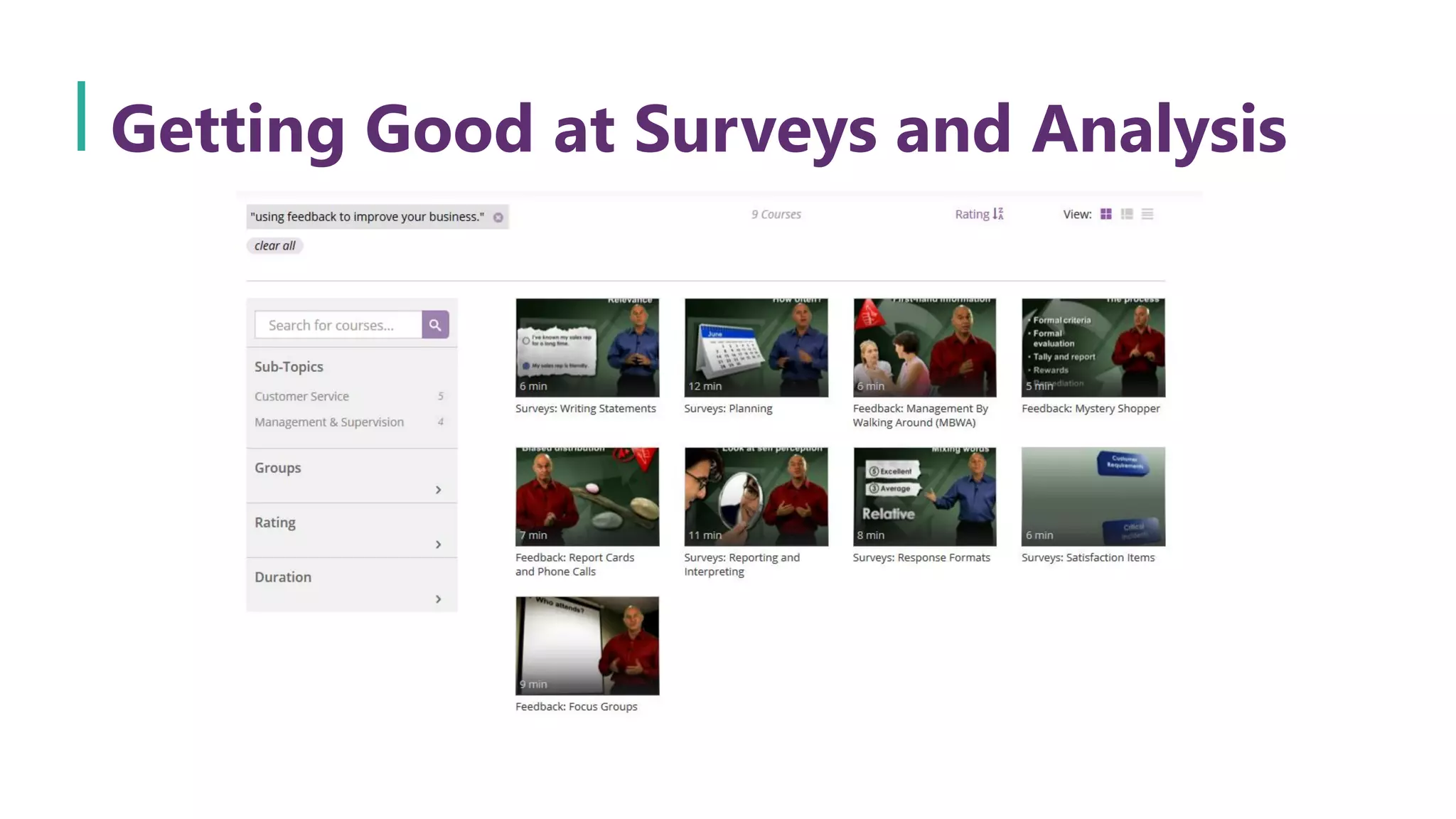
Getting Good at Surveys and Analysis
Improve employee performance with the largest
and fastest-growing library of training videos.
Let us know through the poll or
click the “free trial” button.
Presenter:
Chris Osborn
Vice President of Marketing
cosborn@bizlibrary.com
@chrisosbornstl
.
Host:
Erin Boettge
Product Manager
eboettge@bizlibrary.com
@ErinMBoettge

How to Measure the Impact of Soft Skills Training | Webinar 10.21.15

  • 2.
    Poll Question: What isthe single biggest obstacle you face proving the business value of your soft skills training program?
  • 3.
    Soft skills aren’toptional. 75% of long-term job success depends on soft skills SOURCE: Stanford Research Institute International and the Carnegie Melon Foundation
  • 4.
    6.8% of total economyper year in gross value added Soft Skills Soft Skills are important in every sector. especially… Business services Retail Public services 23% 2020 44% 2025 Contribution to the economy is expected to grow… SOURCE: January 2015 McDonald’s report on the economic value of soft skills
  • 5.
    5 Gender equality and diversity Riseof the millennials Strategic Business Challenges of 2015 Leads to need to truly innovate Desire to update cultures Where does my company fit in this new market reality? Rebranding for customer engagement, sales, marketing and more! Mobile /online channels Outbound sales doesn’t work anymore, inbound must be embraced B2B sales /marketing
  • 6.
    Great! But…back-end struggles Front-end innovation Strategic BusinessChallenges of 2015 Leads to need to truly innovate Desire to update cultures Survival in healthcare (and likely other industries, too) Adaptability Outbound sales doesn’t work anymore, inbound must be embraced B2B sales /marketing How can we meet these challenges?
  • 7.
    What are softskills? Sometimes, easier to say what they are not . . . .
  • 8.
  • 9.
    What are softskills? Work Ethic Attitude Communication Skills Emotional Intelligence Collaboration …
  • 10.
    100% of thevery most sought after and hardest to find skills in the market today are soft skills. . . .
  • 11.
    The Top 5 Skillsfor 2015 1. Leadership Skills 2. Ability to Work in a Team 3. Written Communication Skills 4. Problem-Solving Skills 5. Strong Work Ethic SOURCES: Job Outlook: The Candidate Skills/Qualities Employers Want, the Influence of Attributes, National Association of Colleges and Employers
  • 12.
    The one differentiatorbetween high performing employees and others . . . a soft skill… emotional intelligence
  • 13.
    Average IQ peopleoutperform high IQ people 70% of them time… 90% of top performers are also high in emotional intelligence People with high EQ make more money. $29,000 more per year than people with a low degree of EQ. EQ is an important workplace skill and predictor of success in all types of jobs. SOURCE: Travis Bradberry, Emotional Intelligence – EQ, Forbes, January 2014.
  • 14.
    Trust Anger Management Stress Tolerance TimeManagement Empathy Decision Making Change Tolerance Communication Customer Service Flexibility Assertiveness Teamwork Accountability Social Skills Presentation Skills Emotional intelligence is the foundation for critical skills.
  • 15.
    Emotional Intelligence EQ Canbe learned and unlearned The connection and interaction of the emotional and rational parts of our brain Strategies to adopt and improve Attitudes, choices and behaviors
  • 16.
    WHAT I SEEWHAT I DO PERSONAL COMPETENCE SOCIAL COMPETENCE Self-Awareness Social Awareness Self - Management Relationship Management SOURCE: Emotional Intelligence 2.0, Travis Bradberry and Jean Greaves
  • 17.
    …Agility is demonstratedby the ability to quickly solve day-to-day business problems, to identify new processes and frameworks for speed of delivery, to cross global and functional lines without faltering, and to accept, respond, and initiate change. Employees who can identify opportunities, adapt, and thrive in the reality of change have a propensity to be high performers. Given the right resources and investment in learning, these traits are achievable across the entire organization.” John Ambrose, Sr. Vice President Strategy, Skillsoft
  • 18.
  • 19.
  • 20.
    50% 70% 100 ms Of thebrain is used for visual processing Of the sensory receptors are in the eyes To get a sense of the visual scene Visually Wired Brain
  • 21.
    Most human behavioris learned observationally through modeling: from observing others, one forms an idea of how new behaviors are performed, and on later occasions this coded information serves as a guide for action.” SOURCE: Bandura’s Social Learning Theory
  • 22.
    LEARNER EXPECTATIONS • Easy touse - intuitive • Learning experience fits to delivery mode • Content is accessible no matter what device I’m using • Content is accessible in any location or work environment • Easy to find and easy to share • Engaging CONTENT CHARACTERISTICS • Delivery looks familiar to me and there is video to watch • Content is personalized to fit my needs • Mobile – must have, it’s not an option • I choose when and how to access content • Social – shareable with friends and colleagues and I can comment • Short, relevant video
  • 23.
    How do Imeasure the impact of soft skills?
  • 24.
    LEVEL 1 Reaction LEVEL 2 Learning LEVEL3 Behavior LEVEL 4 Results Participant satisfaction Knowledge, skills and attitudes Application and on- the-job learning Business impact LEVEL 5 Return on investment Kirkpatrick – Phillips Model
  • 25.
    It's not the95% that's right that makes something work; it's the 5% that's wrong that messes everything up. Source: Measuring, Managing and Maximizing Performance, Will Kaydos
  • 26.
  • 27.
    What, if anything,did this person learn that was new? How, if at all, did this person use the new learning in some sort of job-specific behavior? Did the usage of the learning help to produce any sort of worthwhile outcome? 1 2 3 SOURCE: Telling Training’s Story by Robert O. Brinkerhoff Success Case Method
  • 28.
    1 2 4 3 Focus on whatyou’re evaluating Create an impact model that defines potential results and benefits. Survey and select success versus non-success rates. Formulate conclusions and recommendations, value, and return- on-investment. CREATE A MEASUREMENT PLAN
  • 29.
    Identify Performance Areas Engage Key Stakeholders Clarify andDefine Training Establish Key Performance Indicators and Metrics 1. Focus and Plan the Evaluation
  • 30.
    2. Create aModel for Success Business Unit Goals Skills and Knowledge Behaviors and Actions
  • 31.
    WHICH STATEMENT BELOWBEST DESCRIBES YOUR EXPERIENCE SINCE PARTICIPATING IN THE PERFORMANCE MANAGEMENT TRAINING? a. I learned something new, I have used it, and it has led to some very worthwhile results. b. I learned and tried some new things but can’t point to any very worthwhile results yet. c. While I may have learned something new, I have not been able to use it yet. d. I already knew about and was doing the things this training taught. e. I don’t think I can really use what I learned in the training. 3. Success vs. Non-success Rates SOURCE: Telling Training’s Story by Robert O. Brinkerhoff
  • 32.
    Unsuccessful Successful Positive influences: On-demandaccess to resources Opportunity to apply learning Peer support Senior leader involvement Manager support
  • 33.
    Areas of increased performance Thevalue of this increase The costs to deliver value Recommended improvements to increase value 4. Recommendations, Value and ROI
  • 34.
    Delegation Skills TRAINING COSTSIMPACT Human Resources: $1,000 Stakeholders: $720 Total = $1,720 • Newly promoted managers take an average of 16 weeks to gain full productivity • Goal is to reach 100% productivity in 8 weeks at a value of $72,000 for 12 managers. • Teams are less productive per employee as managers gain skills, and secondary goal is to increase productivity per employee.
  • 35.
    Delegation Skills VALUE ADDED TOTALVALUE GAINED • Costs per manager are $60.00 each by using online delivery of content. • Managers reached full productivity by learning to effectively delegate tasks and assume manager’s role in 8 weeks. • Gain in value of salary was $72,000. • Additionally, each team saw a .25% gain in per employee production of $18,000 total across the six impacted teams. $100,000 on a $1,720 program
  • 36.
    Problem Solving Skills TRAININGCOSTS IMPACT Human Resources: $90,000 Managers & Reps: $250,000 Total = $340,000 • Customer service satisfaction ratings of 3 or below during trials result in zero sales • Ratings of 4.5 or better result in won business 85% of the time • Goal is to reach 4.5 ratings or better in 85% of the surveys returned.
  • 37.
    Problem Solving Skills VALUEADDED TOTAL VALUE GAINED • Complex training program lasted a full year. • In the 12 months after the training program really began to show modifications in behaviors as proven by reaching 4.5 customer satisfaction scores 85% of the time • 24 additional deals were won on the same number of total trials. $1,200,000 on a $340,000 program
  • 38.
    Key Take-aways Raising yourorganization’s mastery of soft skills is important regardless of industry or size. We should approach the development of soft skills by focusing on the key behaviors aimed at supporting organizational objectives. Learning content should be delivered the way employee’s work and live – short form video. Measuring the impact is an important step in the training and development process. The success case methodology focuses on amplifying the effects of training, not isolating.
  • 39.
    Training Payback vs.ROI NEW Train the Trainer Series • Training Management • Research • Content Development • Training Delivery
  • 40.
    Getting Good atSurveys and Analysis
  • 41.
    Improve employee performancewith the largest and fastest-growing library of training videos. Let us know through the poll or click the “free trial” button.
  • 42.
    Presenter: Chris Osborn Vice Presidentof Marketing cosborn@bizlibrary.com @chrisosbornstl . Host: Erin Boettge Product Manager eboettge@bizlibrary.com @ErinMBoettge