HOW TO MAKE PASSIVE VOICE 
By Cristian Frieros Recio
What’s the passive voice? 
It is used to give more emphasis to the action itself 
than to the one who does it.
When do we use it? 
• When we want to change the focus of the sentence. 
• When who or what causes the action is unknown or 
unimportant or obvious or 'people in general‘. 
• In factual or scientific writing. 
• In formal writing instead of using someone/ people/ 
they (these can be used in speaking or informal 
writing). 
• In order to put the new information at the end of the 
sentence to improve style. 
• When the subject is very long.
How do we use it? 
• Present: 
– Present Simple: Subject + am/is/are + Past 
Participle. 
– Present Continuous: Subject + am/is/are being + 
Past Participle. 
– Present Perfect: Subject + has/have been + Past 
Participle. 
– Present Perfect Continuous: Subject + has/have 
being + Past Participle.
How do we use it? 
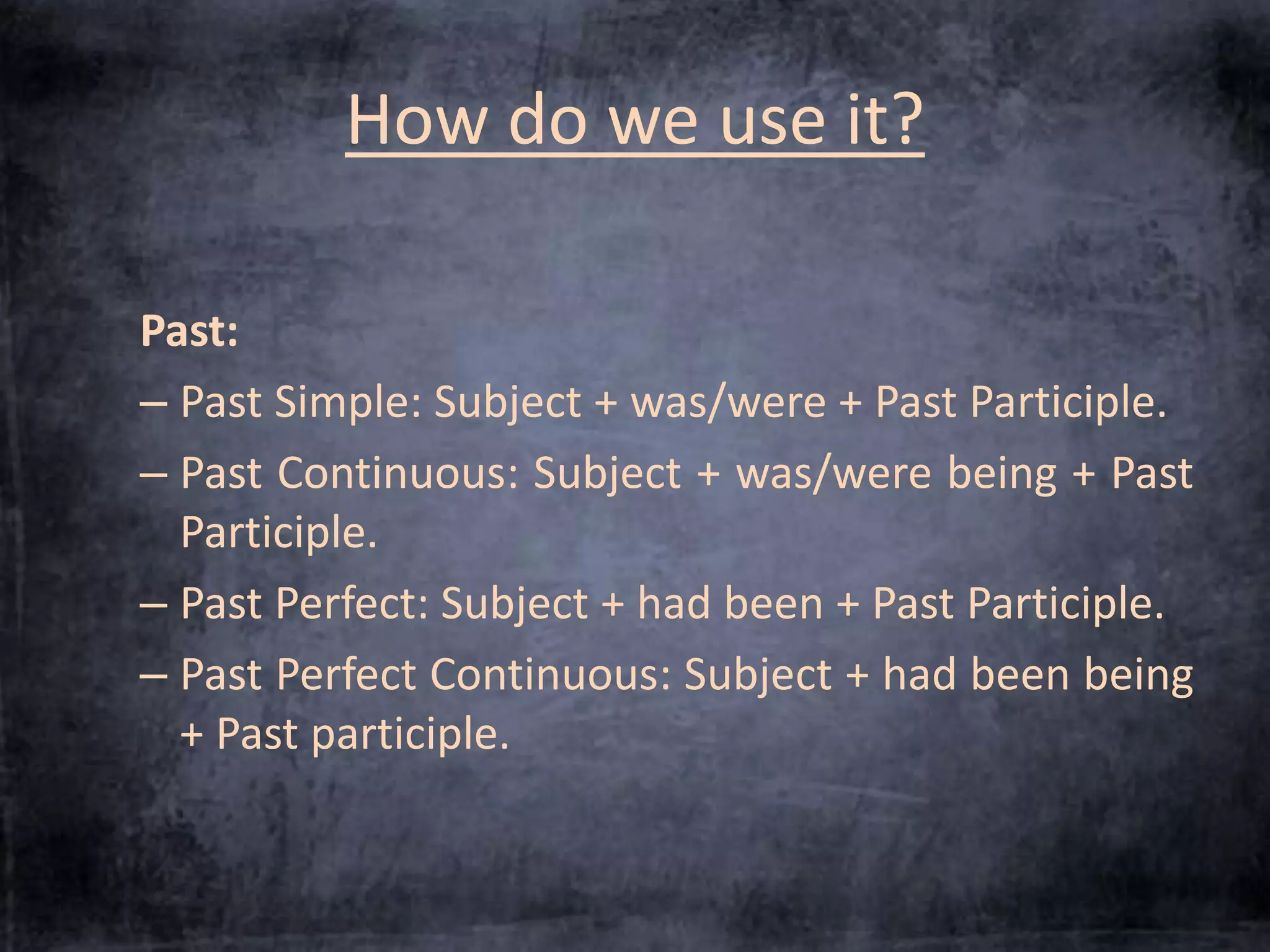
Past: 
– Past Simple: Subject + was/were + Past Participle. 
– Past Continuous: Subject + was/were being + Past 
Participle. 
– Past Perfect: Subject + had been + Past Participle. 
– Past Perfect Continuous: Subject + had been being 
+ Past participle.
How do we use it? 
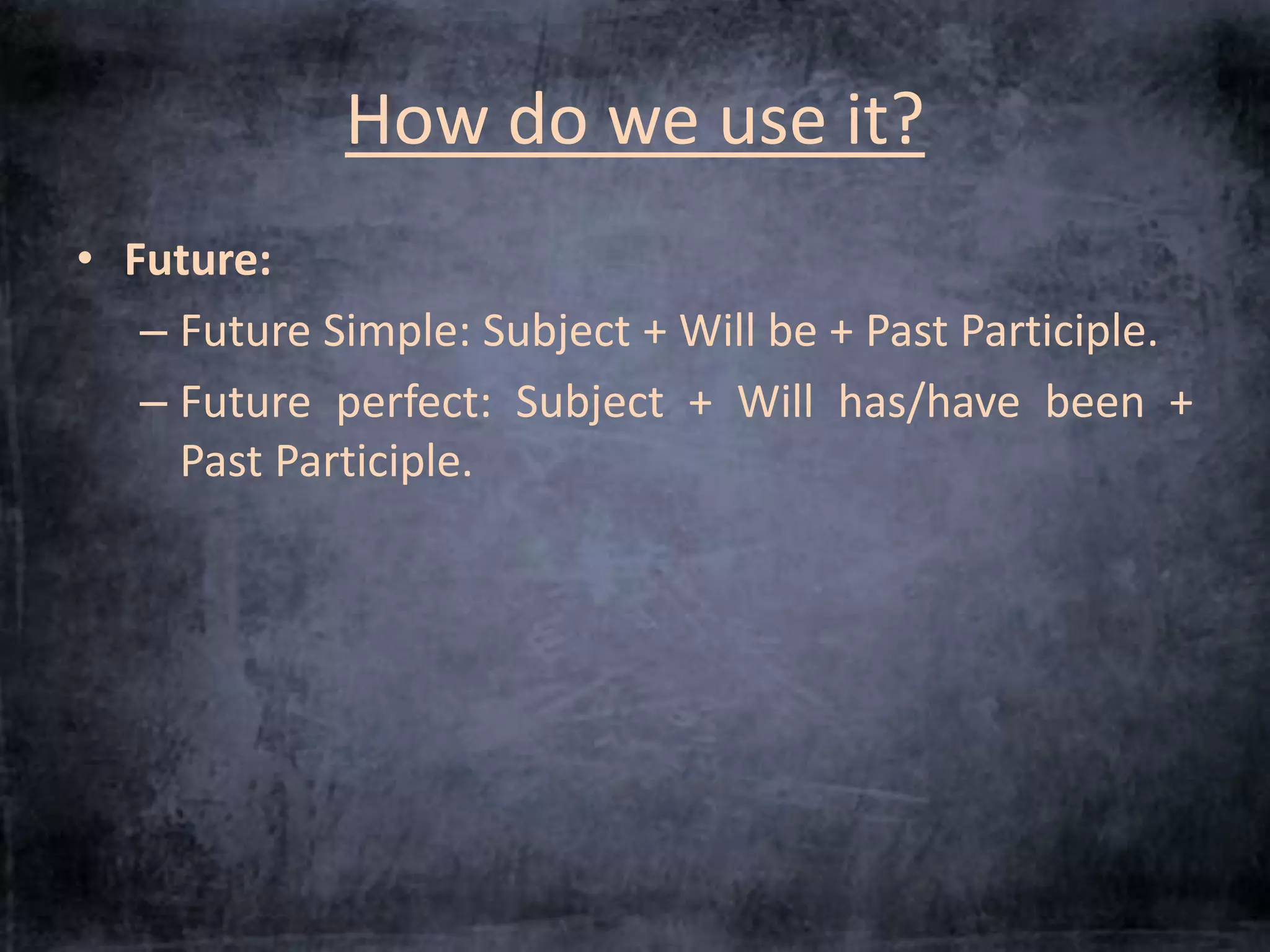
• Future: 
– Future Simple: Subject + Will be + Past Participle. 
– Future perfect: Subject + Will has/have been + 
Past Participle.
How do we use it? 
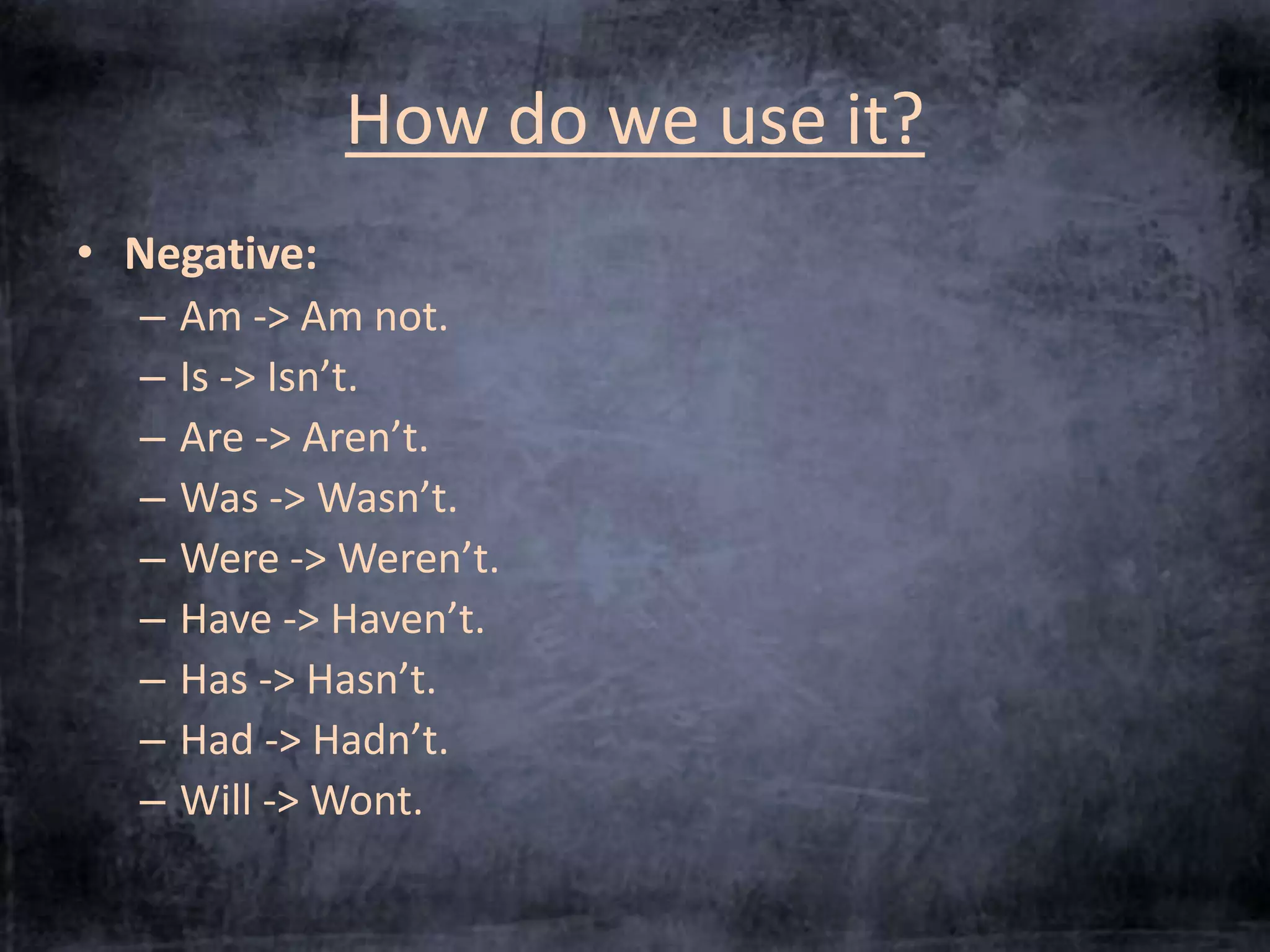
• Negative: 
– Am -> Am not. 
– Is -> Isn’t. 
– Are -> Aren’t. 
– Was -> Wasn’t. 
– Were -> Weren’t. 
– Have -> Haven’t. 
– Has -> Hasn’t. 
– Had -> Hadn’t. 
– Will -> Wont.
How do we use it? 
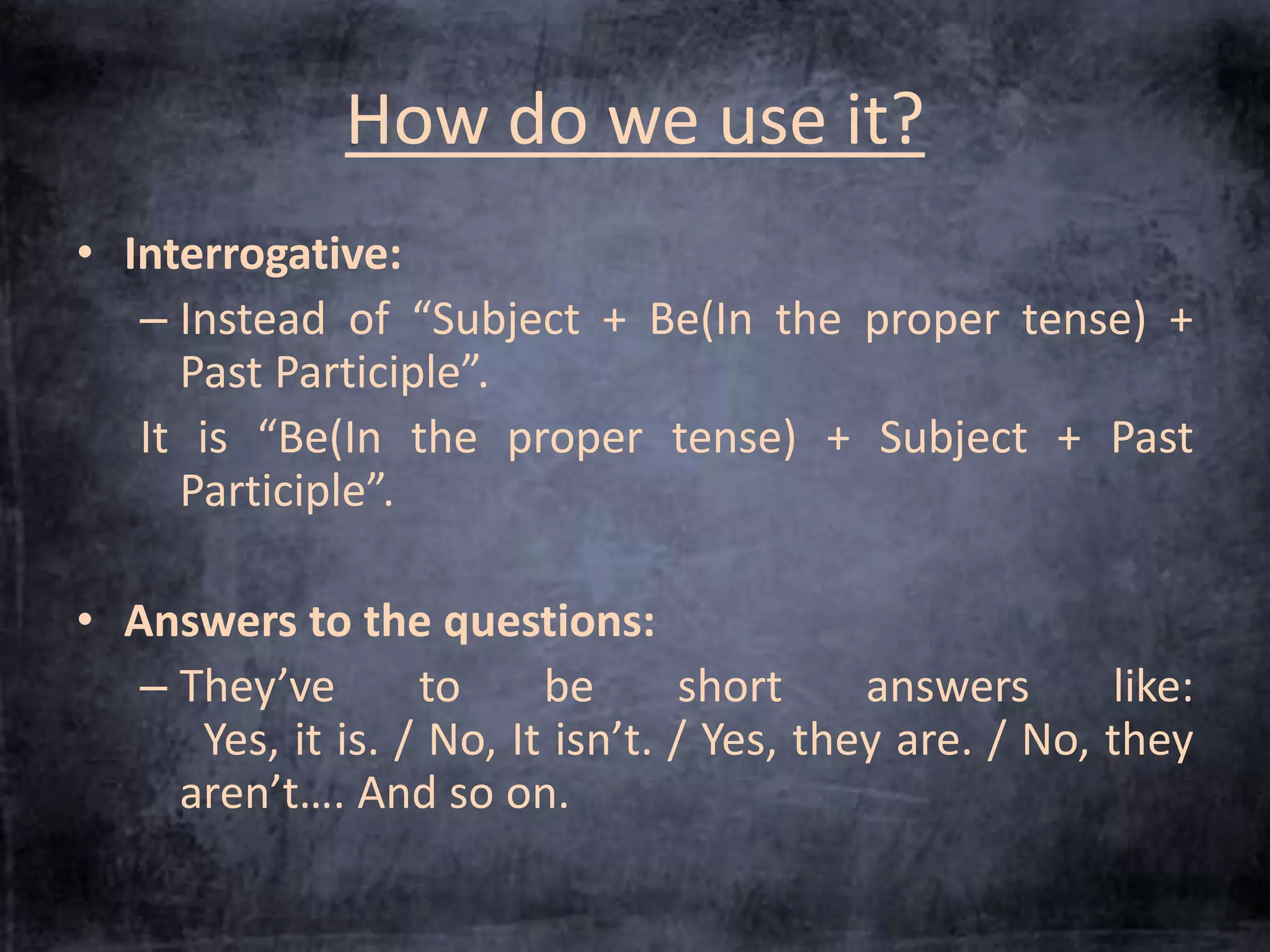
• Interrogative: 
– Instead of “Subject + Be(In the proper tense) + 
Past Participle”. 
It is “Be(In the proper tense) + Subject + Past 
Participle”. 
• Answers to the questions: 
– They’ve to be short answers like: 
Yes, it is. / No, It isn’t. / Yes, they are. / No, they 
aren’t…. And so on.
How do we use it? 
• Past Participle is made using the termination “–ed” 
with the regular verbs and the “third column” with 
the irregular verbs. 
– Play – Played. 
– Begin – Began – Begun(This one).
How do we use it? 
• Verbs with two objects: 
Some verbs that have two objects can make two 
different active sentences, and so two different 
passive sentences too. 
Active: 
– He gave me the book. / He gave the book to me. 
You can choose either of the two objects to be 
the subject of the passive sentence. 
• Passive: 
– I was given the book (by him)./ The book was 
given to me (by him).
Active to Passive 
To make a properly passive form, you need to 
“reverse” the object and the subject of the active 
form. I mean, The object of the active becomes 
Subject in the passive.
Examples 
• The lunch is made everyday by my mother. 
• The homework was made by myself. 
• Extraterrestrial life hasn’t been discovered yet. 
• The dishes had been done by my brother. 
• The course will be cured by the scientists. 
• This PowerPoint is going to be sent any soon.
Credits. 
Thank you all for watching it and I really hope you 
enjoy reading this as much as I’ve done it making it. 
Regards.

How to make passive voice

  • 1.
    HOW TO MAKEPASSIVE VOICE By Cristian Frieros Recio
  • 2.
    What’s the passivevoice? It is used to give more emphasis to the action itself than to the one who does it.
  • 3.
    When do weuse it? • When we want to change the focus of the sentence. • When who or what causes the action is unknown or unimportant or obvious or 'people in general‘. • In factual or scientific writing. • In formal writing instead of using someone/ people/ they (these can be used in speaking or informal writing). • In order to put the new information at the end of the sentence to improve style. • When the subject is very long.
  • 4.
    How do weuse it? • Present: – Present Simple: Subject + am/is/are + Past Participle. – Present Continuous: Subject + am/is/are being + Past Participle. – Present Perfect: Subject + has/have been + Past Participle. – Present Perfect Continuous: Subject + has/have being + Past Participle.
  • 5.
    How do weuse it? Past: – Past Simple: Subject + was/were + Past Participle. – Past Continuous: Subject + was/were being + Past Participle. – Past Perfect: Subject + had been + Past Participle. – Past Perfect Continuous: Subject + had been being + Past participle.
  • 6.
    How do weuse it? • Future: – Future Simple: Subject + Will be + Past Participle. – Future perfect: Subject + Will has/have been + Past Participle.
  • 7.
    How do weuse it? • Negative: – Am -> Am not. – Is -> Isn’t. – Are -> Aren’t. – Was -> Wasn’t. – Were -> Weren’t. – Have -> Haven’t. – Has -> Hasn’t. – Had -> Hadn’t. – Will -> Wont.
  • 8.
    How do weuse it? • Interrogative: – Instead of “Subject + Be(In the proper tense) + Past Participle”. It is “Be(In the proper tense) + Subject + Past Participle”. • Answers to the questions: – They’ve to be short answers like: Yes, it is. / No, It isn’t. / Yes, they are. / No, they aren’t…. And so on.
  • 9.
    How do weuse it? • Past Participle is made using the termination “–ed” with the regular verbs and the “third column” with the irregular verbs. – Play – Played. – Begin – Began – Begun(This one).
  • 10.
    How do weuse it? • Verbs with two objects: Some verbs that have two objects can make two different active sentences, and so two different passive sentences too. Active: – He gave me the book. / He gave the book to me. You can choose either of the two objects to be the subject of the passive sentence. • Passive: – I was given the book (by him)./ The book was given to me (by him).
  • 11.
    Active to Passive To make a properly passive form, you need to “reverse” the object and the subject of the active form. I mean, The object of the active becomes Subject in the passive.
  • 12.
    Examples • Thelunch is made everyday by my mother. • The homework was made by myself. • Extraterrestrial life hasn’t been discovered yet. • The dishes had been done by my brother. • The course will be cured by the scientists. • This PowerPoint is going to be sent any soon.
  • 13.
    Credits. Thank youall for watching it and I really hope you enjoy reading this as much as I’ve done it making it. Regards.