University of the humanities

Anglo-american
language and culture
Topic: verb tenses(active and passive voices)

Compiled by:……..….
10/17/2013

Checked by…………....
Introduction
Verb:
in a sentences, word used to be describe
An action, state or occurrence is acalled a verb
Voice:
it is the form a vebs takes indicate whether the
subject of the verb performs or receives the
action
There are mainly two types of voices: active
and passive
Glossary

• Active
• In an active clause or active sentences,
the grammatical subject is the person or
thing that performs the action given in
the verb ( e.g. Geoff wrote the book)
• Passive
• In an passive clause or passive sentences,
the grammatical subject is the person or
thing that experiences the ffect of the
action given in the verb (e.g. The book
was written by Geoff)
Active voice and passive voice of verbs
• There are two ways to express an action of a subject
in relation to its object
• • Active voice
• • Passive voice
• The active voice is the "normal" voice. In active voice
object acted upon subject “active voice” subject
does a work on object, while in “passive voice”
object is worked on by subject . The normal
structure of an active voice sentence is
subject+verb+object but in passive the normal
structure of sentence is reversed according to
certain rules and becomes like object+verb+subject.
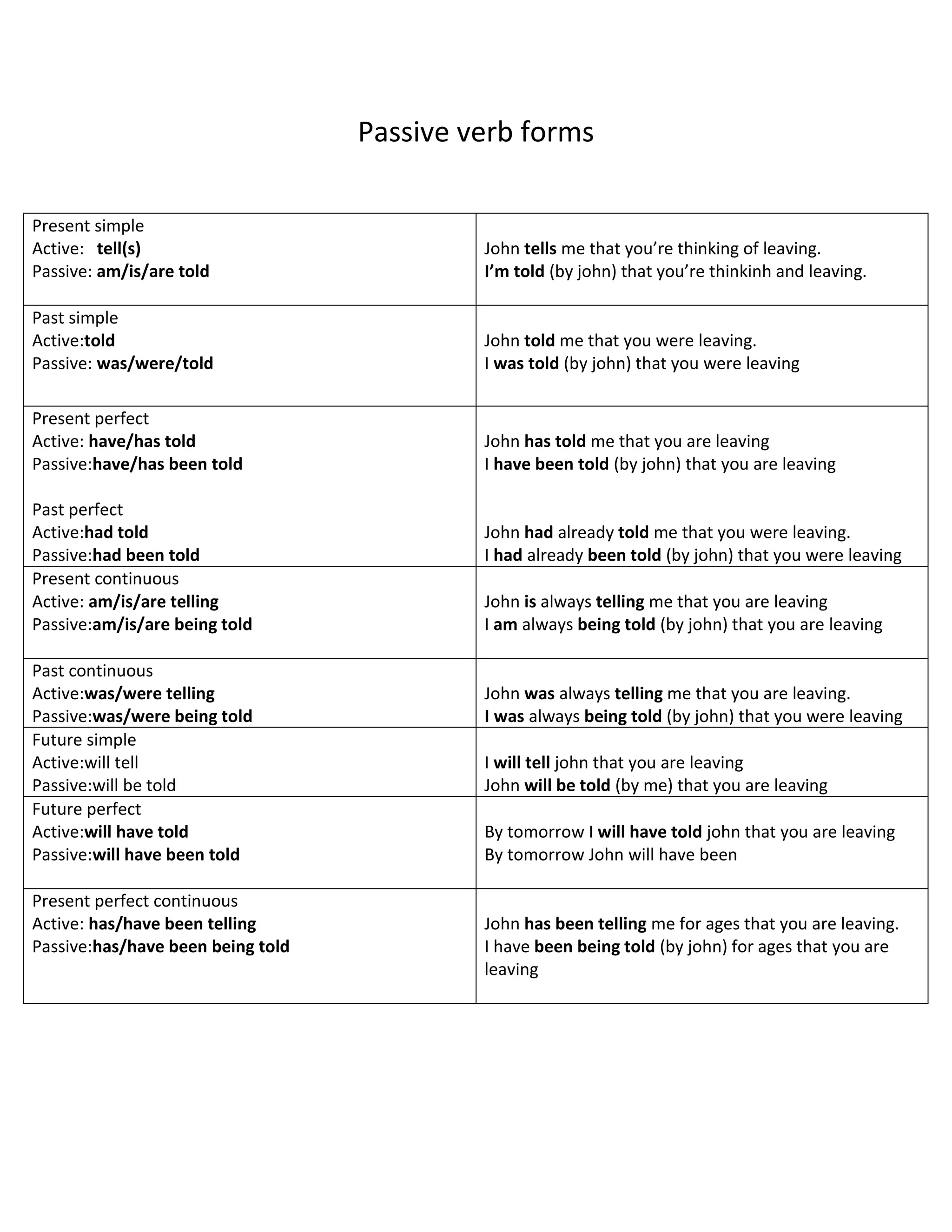
Passive verb forms
Present simple
Active: tell(s)
Passive: am/is/are told

John tells me that you’re thinking of leaving.
I’m told (by john) that you’re thinkinh and leaving.

Past simple
Active:told
Passive: was/were/told

John told me that you were leaving.
I was told (by john) that you were leaving

Present perfect
Active: have/has told
Passive:have/has been told

John has told me that you are leaving
I have been told (by john) that you are leaving

Past perfect
Active:had told
Passive:had been told
Present continuous
Active: am/is/are telling
Passive:am/is/are being told
Past continuous
Active:was/were telling
Passive:was/were being told
Future simple
Active:will tell
Passive:will be told
Future perfect
Active:will have told
Passive:will have been told
Present perfect continuous
Active: has/have been telling
Passive:has/have been being told

John had already told me that you were leaving.
I had already been told (by john) that you were leaving
John is always telling me that you are leaving
I am always being told (by john) that you are leaving

John was always telling me that you are leaving.
I was always being told (by john) that you were leaving
I will tell john that you are leaving
John will be told (by me) that you are leaving
By tomorrow I will have told john that you are leaving
By tomorrow John will have been

John has been telling me for ages that you are leaving.
I have been being told (by john) for ages that you are
leaving
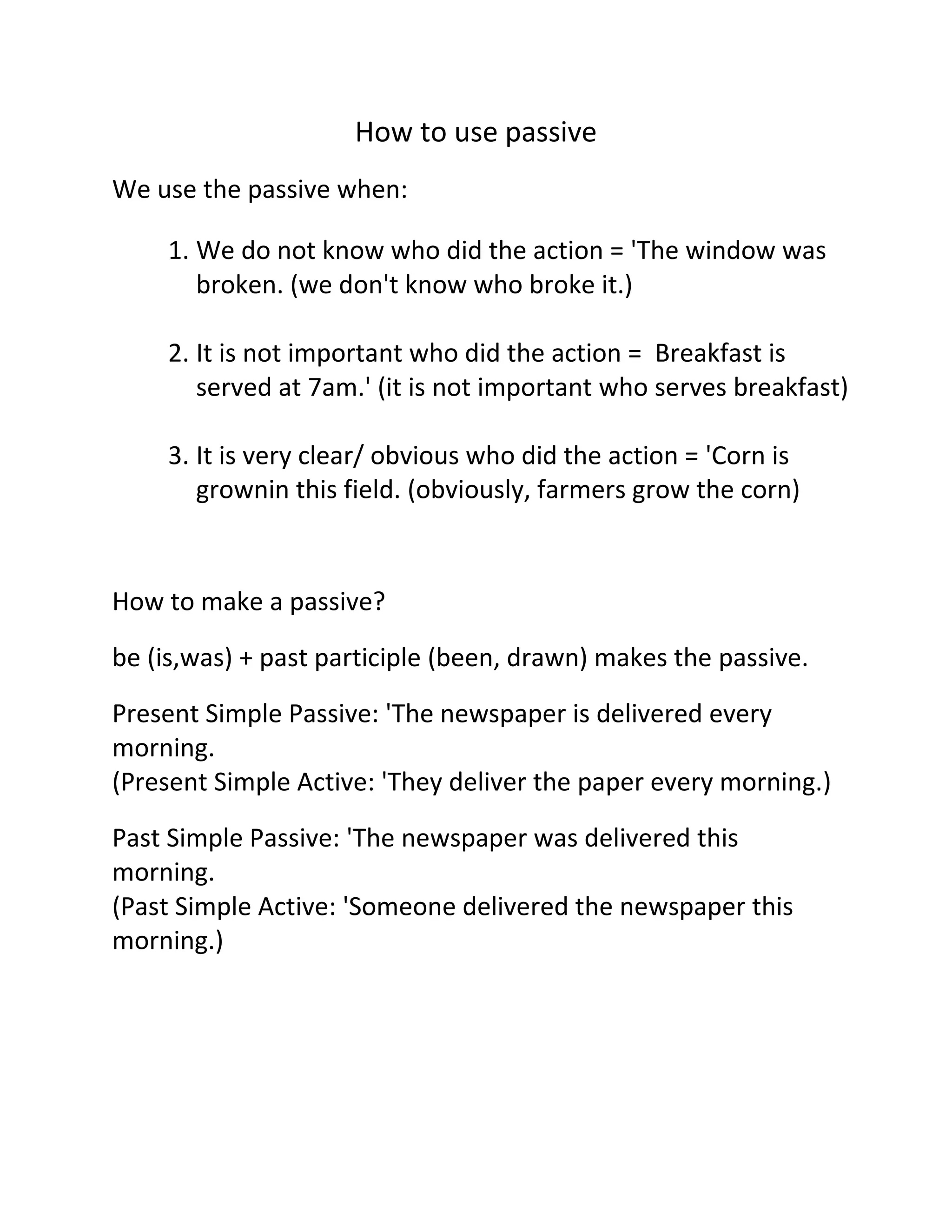
How to use passive
We use the passive when:
1. We do not know who did the action = 'The window was
broken. (we don't know who broke it.)
2. It is not important who did the action = Breakfast is
served at 7am.' (it is not important who serves breakfast)
3. It is very clear/ obvious who did the action = 'Corn is
grownin this field. (obviously, farmers grow the corn)

How to make a passive?
be (is,was) + past participle (been, drawn) makes the passive.
Present Simple Passive: 'The newspaper is delivered every
morning.
(Present Simple Active: 'They deliver the paper every morning.)
Past Simple Passive: 'The newspaper was delivered this
morning.
(Past Simple Active: 'Someone delivered the newspaper this
morning.)
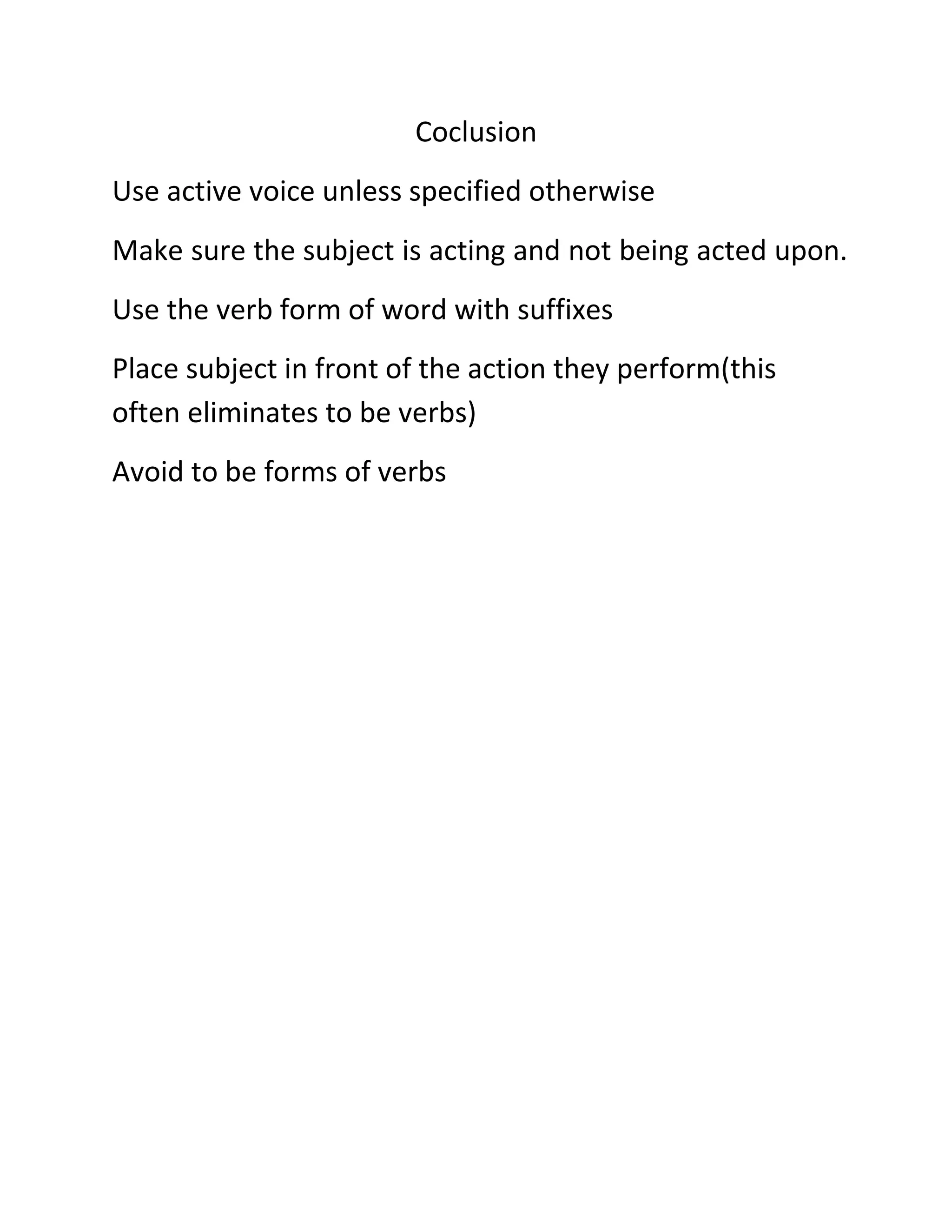
Coclusion
Use active voice unless specified otherwise
Make sure the subject is acting and not being acted upon.
Use the verb form of word with suffixes
Place subject in front of the action they perform(this
often eliminates to be verbs)
Avoid to be forms of verbs
Reference
1. Cambiridge:advanced grammar in use
2. Longman:advanced learner’s grammar
3. Longman:Focus on grammar
4. http://www.ecenglish.com/learnenglish/
5. http://www.studyandexam.com

University of the humanities

  • 1.
    University of thehumanities Anglo-american language and culture Topic: verb tenses(active and passive voices) Compiled by:……..…. 10/17/2013 Checked by…………....
  • 2.
    Introduction Verb: in a sentences,word used to be describe An action, state or occurrence is acalled a verb Voice: it is the form a vebs takes indicate whether the subject of the verb performs or receives the action There are mainly two types of voices: active and passive
  • 3.
    Glossary • Active • Inan active clause or active sentences, the grammatical subject is the person or thing that performs the action given in the verb ( e.g. Geoff wrote the book) • Passive • In an passive clause or passive sentences, the grammatical subject is the person or thing that experiences the ffect of the action given in the verb (e.g. The book was written by Geoff)
  • 4.
    Active voice andpassive voice of verbs • There are two ways to express an action of a subject in relation to its object • • Active voice • • Passive voice • The active voice is the "normal" voice. In active voice object acted upon subject “active voice” subject does a work on object, while in “passive voice” object is worked on by subject . The normal structure of an active voice sentence is subject+verb+object but in passive the normal structure of sentence is reversed according to certain rules and becomes like object+verb+subject.
  • 5.
    Passive verb forms Presentsimple Active: tell(s) Passive: am/is/are told John tells me that you’re thinking of leaving. I’m told (by john) that you’re thinkinh and leaving. Past simple Active:told Passive: was/were/told John told me that you were leaving. I was told (by john) that you were leaving Present perfect Active: have/has told Passive:have/has been told John has told me that you are leaving I have been told (by john) that you are leaving Past perfect Active:had told Passive:had been told Present continuous Active: am/is/are telling Passive:am/is/are being told Past continuous Active:was/were telling Passive:was/were being told Future simple Active:will tell Passive:will be told Future perfect Active:will have told Passive:will have been told Present perfect continuous Active: has/have been telling Passive:has/have been being told John had already told me that you were leaving. I had already been told (by john) that you were leaving John is always telling me that you are leaving I am always being told (by john) that you are leaving John was always telling me that you are leaving. I was always being told (by john) that you were leaving I will tell john that you are leaving John will be told (by me) that you are leaving By tomorrow I will have told john that you are leaving By tomorrow John will have been John has been telling me for ages that you are leaving. I have been being told (by john) for ages that you are leaving
  • 6.
    How to usepassive We use the passive when: 1. We do not know who did the action = 'The window was broken. (we don't know who broke it.) 2. It is not important who did the action = Breakfast is served at 7am.' (it is not important who serves breakfast) 3. It is very clear/ obvious who did the action = 'Corn is grownin this field. (obviously, farmers grow the corn) How to make a passive? be (is,was) + past participle (been, drawn) makes the passive. Present Simple Passive: 'The newspaper is delivered every morning. (Present Simple Active: 'They deliver the paper every morning.) Past Simple Passive: 'The newspaper was delivered this morning. (Past Simple Active: 'Someone delivered the newspaper this morning.)
  • 7.
    Coclusion Use active voiceunless specified otherwise Make sure the subject is acting and not being acted upon. Use the verb form of word with suffixes Place subject in front of the action they perform(this often eliminates to be verbs) Avoid to be forms of verbs
  • 8.
    Reference 1. Cambiridge:advanced grammarin use 2. Longman:advanced learner’s grammar 3. Longman:Focus on grammar 4. http://www.ecenglish.com/learnenglish/ 5. http://www.studyandexam.com