
How to deliver

a catching
presentation?
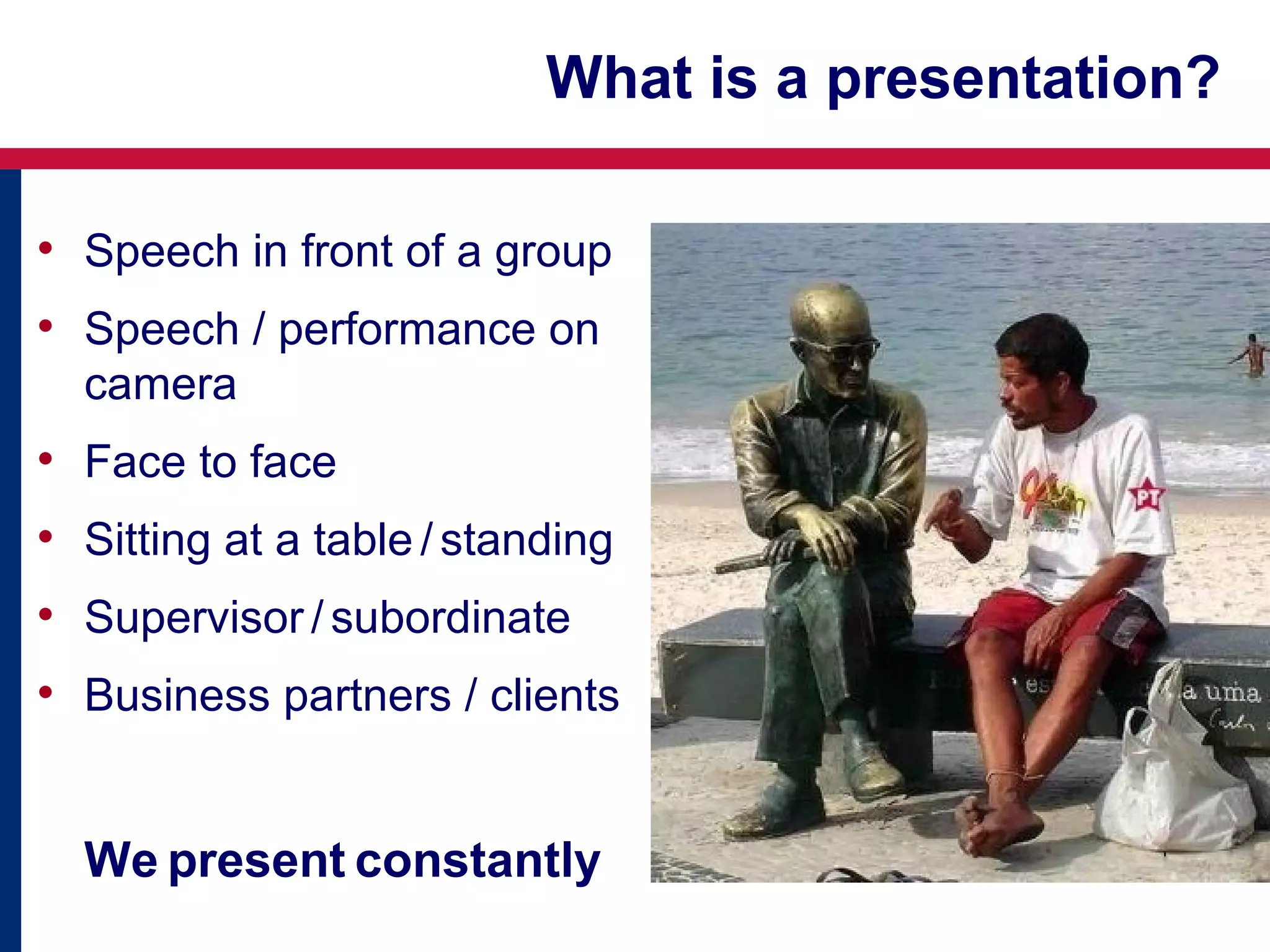
What is a presentation?
• Speech in front of a group
• Speech / performance on
camera

• Face to face
• Sitting at a table / standing
• Supervisor / subordinate
• Business partners / clients
We present constantly
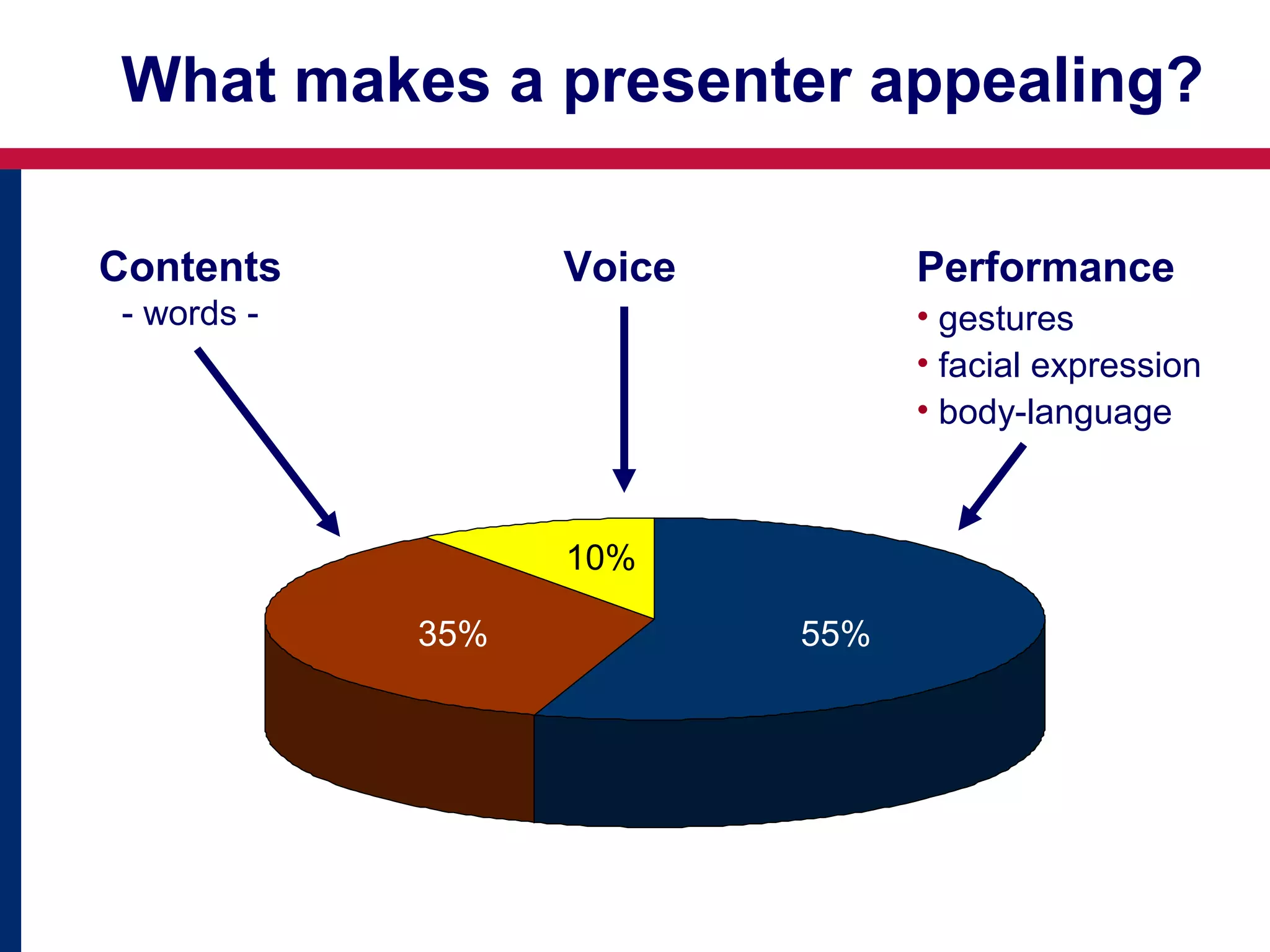
What makes a presenter appealing?
Contents

Voice

Performance

- words -

• gestures
• facial expression
• body-language

10%
35%

55%
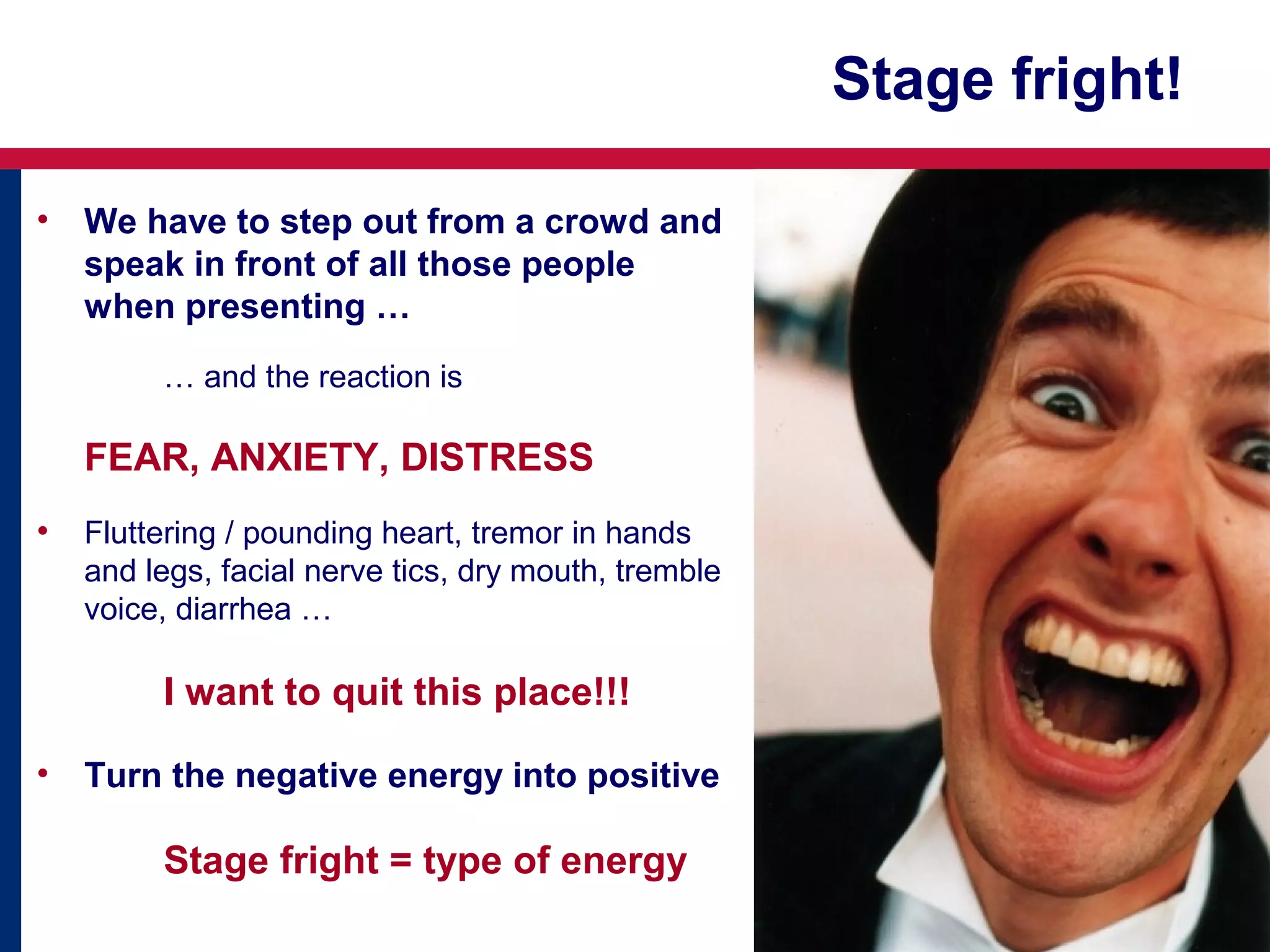
Stage fright!
•

We have to step out from a crowd and
speak in front of all those people
when presenting …
… and the reaction is

FEAR, ANXIETY, DISTRESS
•

Fluttering / pounding heart, tremor in hands
and legs, facial nerve tics, dry mouth, tremble
voice, diarrhea …

I want to quit this place!!!
•

Turn the negative energy into positive

Stage fright = type of energy
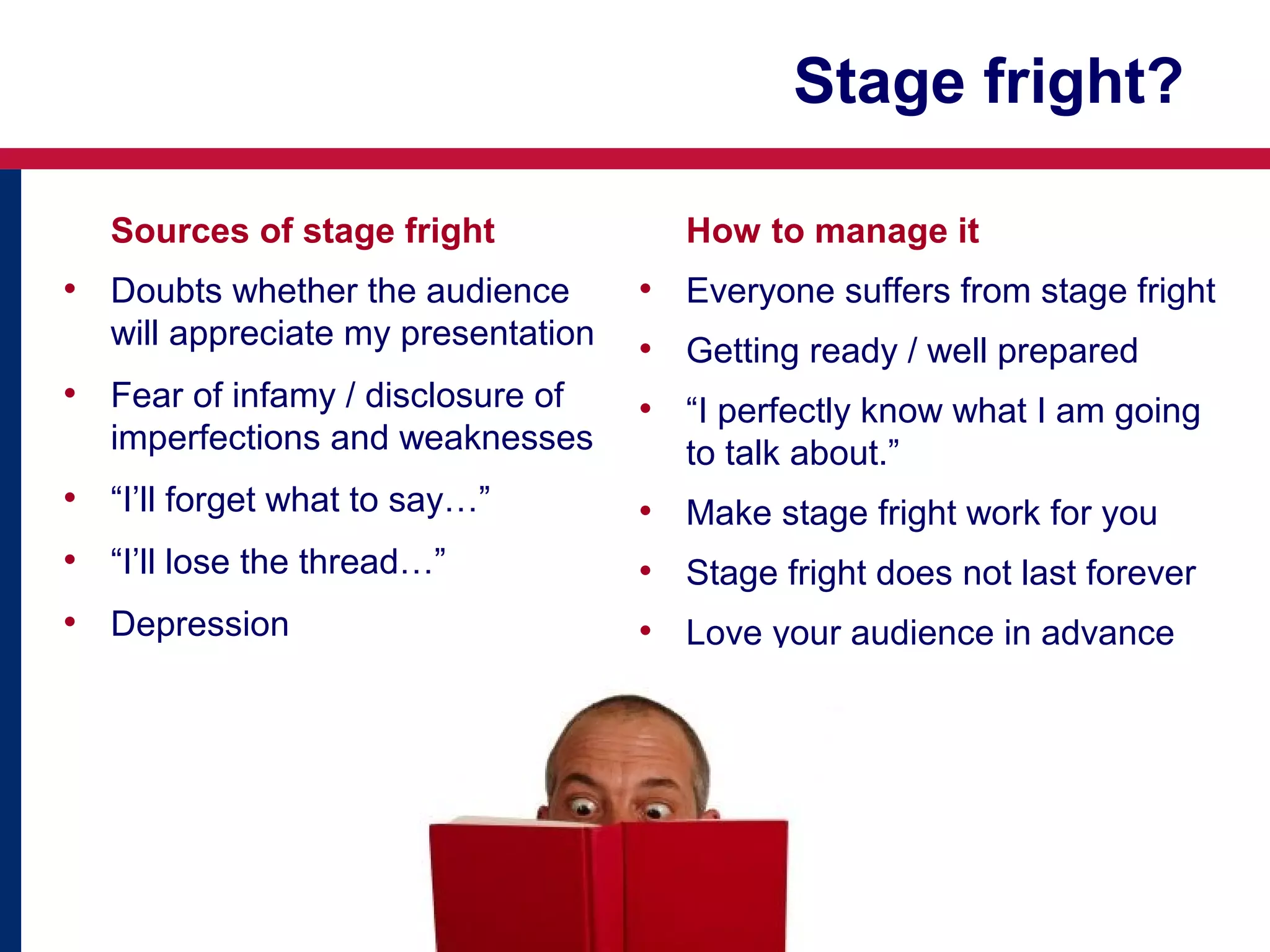
Stage fright?
Sources of stage fright

• Doubts whether the audience
will appreciate my presentation

• Fear of infamy / disclosure of
imperfections and weaknesses

How to manage it

• Everyone suffers from stage fright
• Getting ready / well prepared
• “I perfectly know what I am going
to talk about.”

• “I’ll forget what to say…”

• Make stage fright work for you

• “I’ll lose the thread…”

• Stage fright does not last forever

• Depression

• Love your audience in advance
Verbal communication
Speech and voice
 Pace and speed
 Intelligibility
 Clear articulation
 Pauses, interludes
 Speak (sufficiently) loudly
 Change the volume
 Repeat the most important

messages
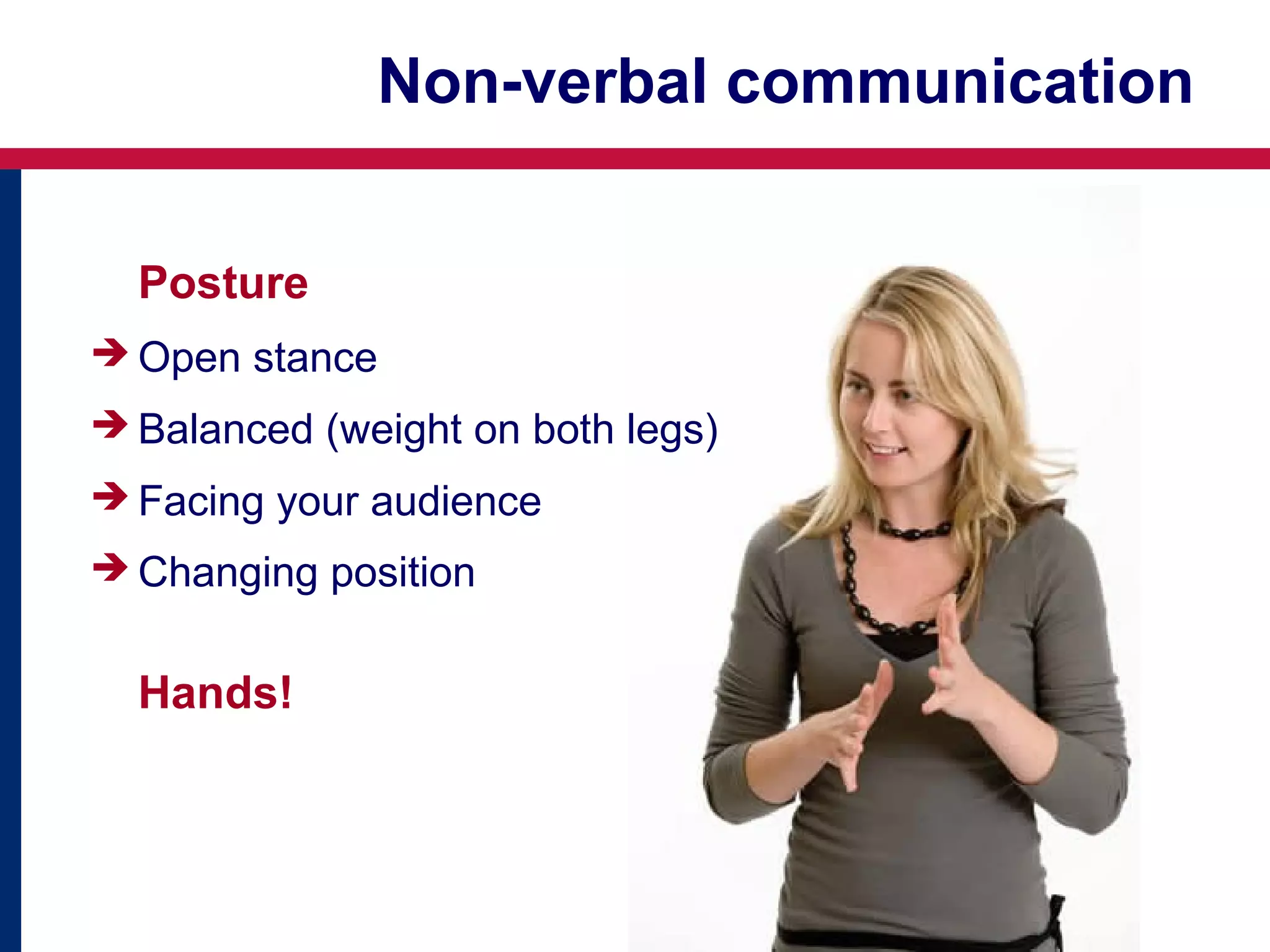
Non-verbal communication
Posture
 Open stance
 Balanced (weight on both legs)
 Facing your audience
 Changing position

Hands!
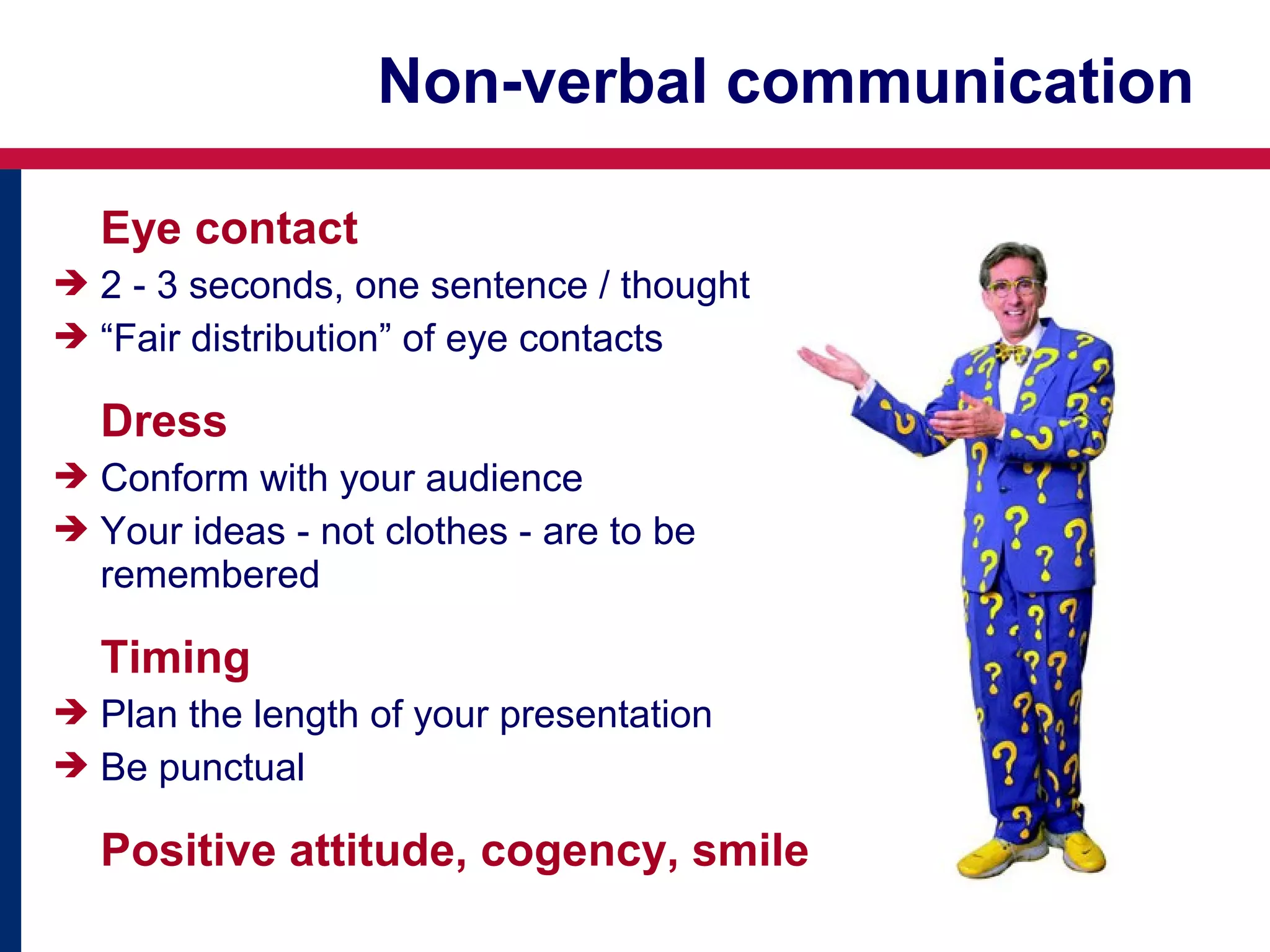
Non-verbal communication
Eye contact
 2 - 3 seconds, one sentence / thought
 “Fair distribution” of eye contacts

Dress
 Conform with your audience
 Your ideas - not clothes - are to be

remembered

Timing
 Plan the length of your presentation
 Be punctual

Positive attitude, cogency, smile
Entering the stage
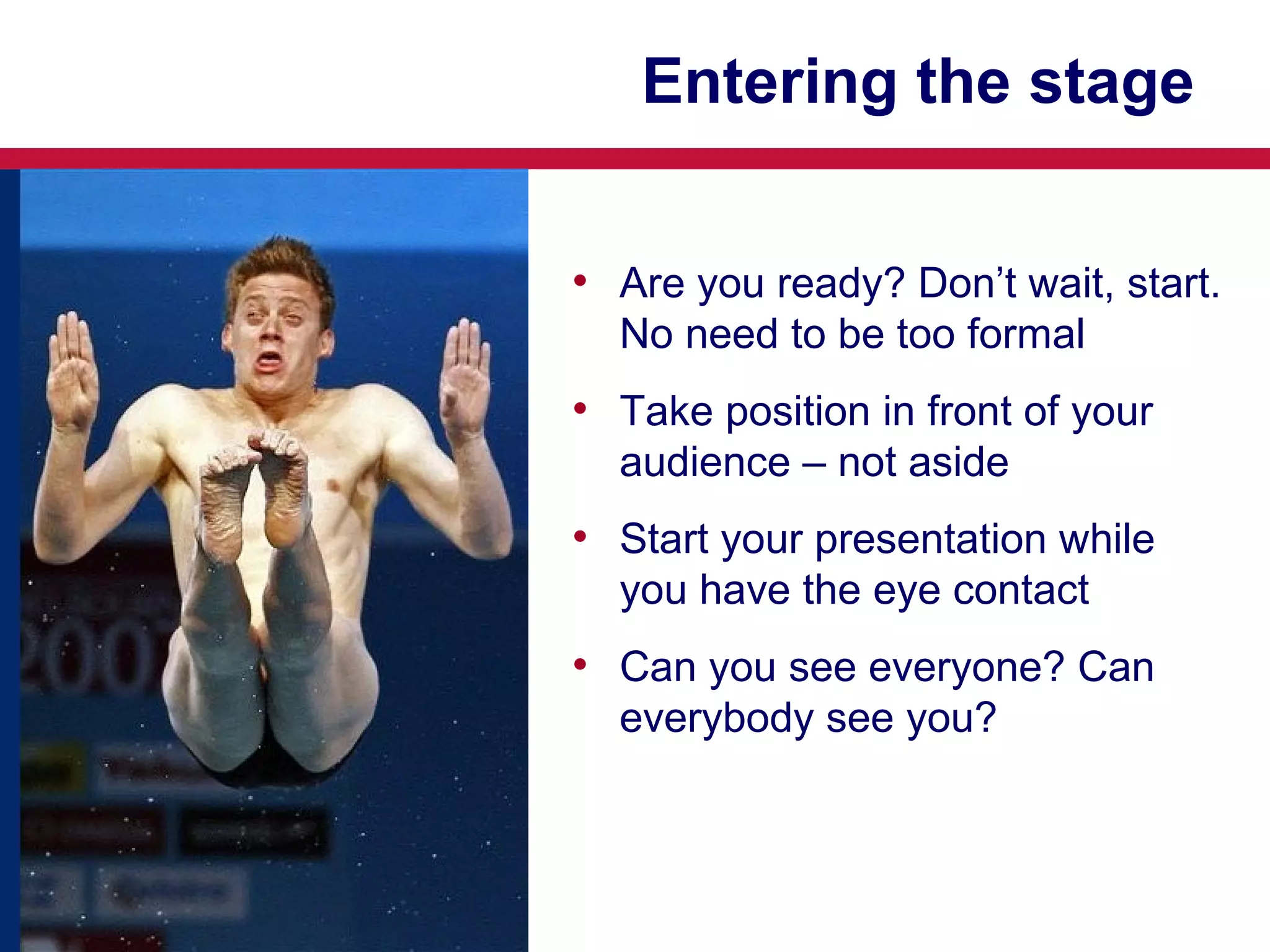
• Are you ready? Don’t wait, start.
No need to be too formal

• Take position in front of your
audience – not aside

• Start your presentation while
you have the eye contact

• Can you see everyone? Can
everybody see you?
Entering the stage
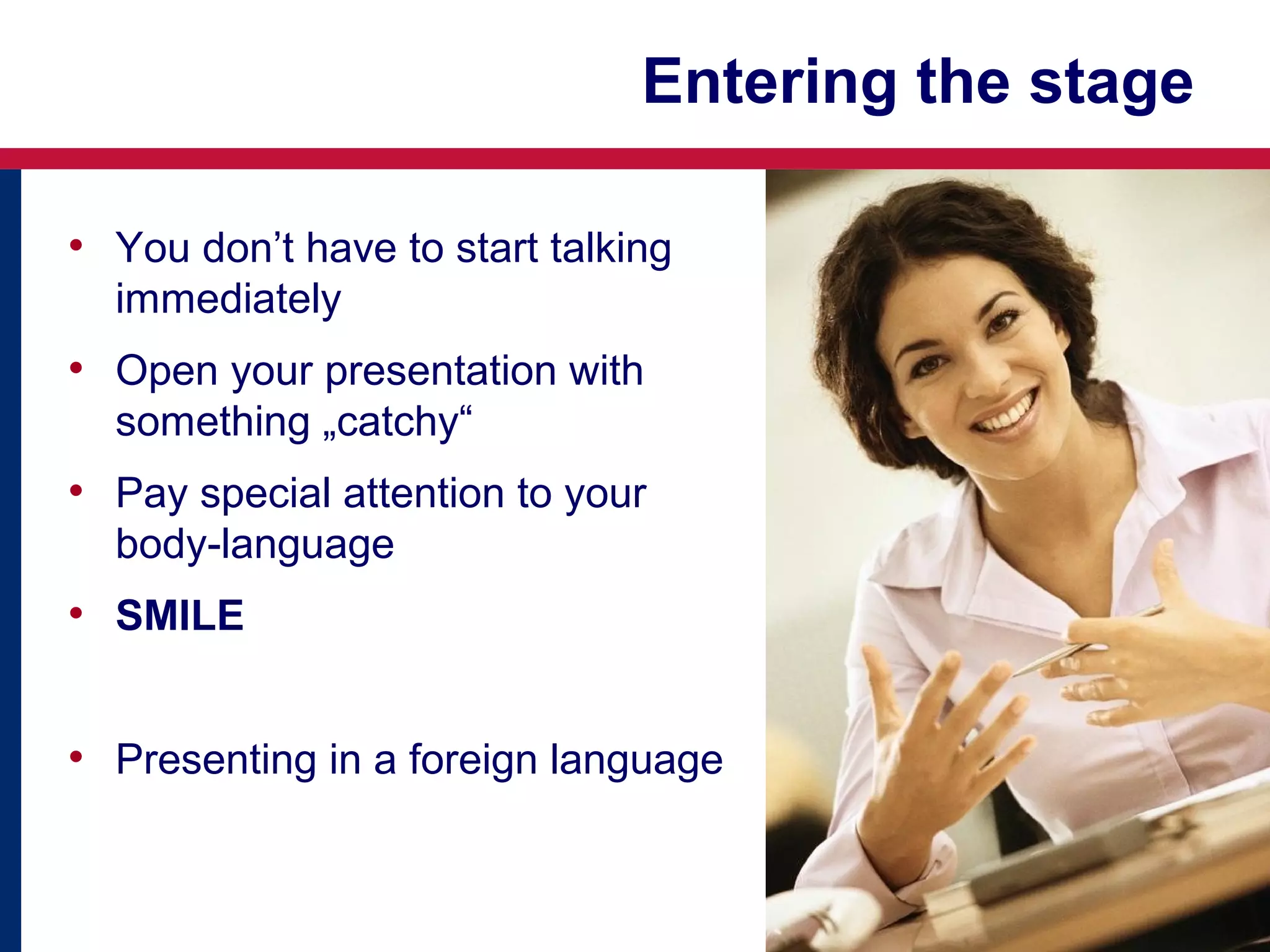
• You don’t have to start talking
immediately

• Open your presentation with
something „catchy“

• Pay special attention to your
body-language

• SMILE
• Presenting in a foreign language
Closing remarks
• Sum up main messages
• Stress advantages that your solution brings to
your clients

• Provide contact info and encourage the
audience to get in touch with you

• Never forget to thank
Thank you for your attention!

Dušan Kulka

Managing Partner
Na Květnici 25, 140 00 Praha 4, Czech Republic
Tel. +420261226666, +420602358800, fax +420261221753
e-mail: kulka@bermangroup.cz, http://www.bermangroup.cz

How to deliver a catching presentation?

  • 1.
    How to deliver acatching presentation?
  • 2.
    What is apresentation? • Speech in front of a group • Speech / performance on camera • Face to face • Sitting at a table / standing • Supervisor / subordinate • Business partners / clients We present constantly
  • 3.
    What makes apresenter appealing? Contents Voice Performance - words - • gestures • facial expression • body-language 10% 35% 55%
  • 4.
    Stage fright! • We haveto step out from a crowd and speak in front of all those people when presenting … … and the reaction is FEAR, ANXIETY, DISTRESS • Fluttering / pounding heart, tremor in hands and legs, facial nerve tics, dry mouth, tremble voice, diarrhea … I want to quit this place!!! • Turn the negative energy into positive Stage fright = type of energy
  • 5.
    Stage fright? Sources ofstage fright • Doubts whether the audience will appreciate my presentation • Fear of infamy / disclosure of imperfections and weaknesses How to manage it • Everyone suffers from stage fright • Getting ready / well prepared • “I perfectly know what I am going to talk about.” • “I’ll forget what to say…” • Make stage fright work for you • “I’ll lose the thread…” • Stage fright does not last forever • Depression • Love your audience in advance
  • 6.
    Verbal communication Speech andvoice  Pace and speed  Intelligibility  Clear articulation  Pauses, interludes  Speak (sufficiently) loudly  Change the volume  Repeat the most important messages
  • 7.
    Non-verbal communication Posture  Openstance  Balanced (weight on both legs)  Facing your audience  Changing position Hands!
  • 8.
    Non-verbal communication Eye contact 2 - 3 seconds, one sentence / thought  “Fair distribution” of eye contacts Dress  Conform with your audience  Your ideas - not clothes - are to be remembered Timing  Plan the length of your presentation  Be punctual Positive attitude, cogency, smile
  • 9.
    Entering the stage •Are you ready? Don’t wait, start. No need to be too formal • Take position in front of your audience – not aside • Start your presentation while you have the eye contact • Can you see everyone? Can everybody see you?
  • 10.
    Entering the stage •You don’t have to start talking immediately • Open your presentation with something „catchy“ • Pay special attention to your body-language • SMILE • Presenting in a foreign language
  • 11.
    Closing remarks • Sumup main messages • Stress advantages that your solution brings to your clients • Provide contact info and encourage the audience to get in touch with you • Never forget to thank
  • 12.
    Thank you foryour attention! Dušan Kulka Managing Partner Na Květnici 25, 140 00 Praha 4, Czech Republic Tel. +420261226666, +420602358800, fax +420261221753 e-mail: kulka@bermangroup.cz, http://www.bermangroup.cz