Presentation Skills 
By Samir Aly
Agenda 
 Introduction 
 What is Presentation? 
 Planning Your Presentation 
 Preparing the Presentation 
 Structuring the Presentation 
 Effective Delivery 
 Effective Visual Aids 
 Conclusion
What is presentation? 
 Ideas, concepts or issues talked about or spoken to a group 
or audience 
 Effective 
“…producing a desired result” 
Skills required to give a good presentation can be developed 
Preparation is the Key
Fear of Public Speaking 
 Public speaking is one of the most feared things 
“I could make such a fool of myself” 
“Feared More Than Death!” 
 “Great speakers aren’t born , they are trained” 
 Presenting is a Skill… Developed through experience and 
training.
Preparation/ Planning 
Preparation/ Planning is the first step on the ladder to 
success 
Aspects in the development of a good presentation 
 Subject Centered (Material) 
 Audience Centered (Audience) 
 Self Centered (Self)
The 4 Ws 
 “I want (who) to (what) (where, when and how) because (why)” 
 Helpers 
Who is your audience? (target audience) 
What do you want to present? (content) 
Why do you want to present? (purpose) 
Where will you be presenting? (place) 
How do you want to present? (words to be used or not, slides to be used)
Preparation: Audience Analysis 
 What is the audience interested in 
 What does the audience want 
 What does the audience already know and needs to 
know 
 What are their needs, expectations from this 
presentation 
 How will the audience benefit from this presentation
Get Ready … 
 Structure the content in line with the audience’s 
needs 
 What do you want to tell the audience? 
 What is your objective? 
 Prepare keeping in mind the time assigned 
 Anticipate the questions and prepare 
 Collect material from a variety of sources 
 Arrange points logically and sequentially
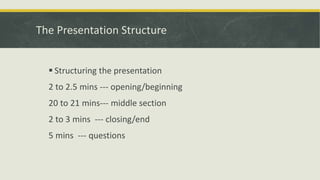
The Presentation Structure 
 Structuring the presentation 
2 to 2.5 mins --- opening/beginning 
20 to 21 mins--- middle section 
2 to 3 mins --- closing/end 
5 mins --- questions
The Beginning 
 Should be carefully designed 
 Get attention 
- shock, question, story, facts and figures 
- well rehearsed yet natural 
 Motivate audience to listen 
- listen to their needs
Preparation – Structure 
 Sequence should be logical & understandable 
 Interim summaries/Recaps 
 Value of visual aids-flip charts, handouts etc. 
 Use the 4 Ps 
Position Possibilities 
Problem Proposals
Prepare Closing 
 Last 2 to 2.5 minutes are as critical as the first five 
minutes for a successful presentation 
 Summarize- highlight important points 
 Suggest action- what to do and when, where and how to 
do it
Effective Delivery 
 Be active - move 
 Be purposeful - controlled gestures 
 Variations – vocal (pitch, volume, rate) 
 Be natural 
 Be direct – don’t just talk in front of the audience talk 
to them
Verbal Communication- barriers 
 Speaking too fast 
 Using jargon 
 Tone and content 
 Complicated or ambiguous language 
 Not questioning 
 Physical State of the audience
Sensitivity to the audience 
 “see” the audience 
 Take non-verbal feedback 
- congruent and incongruent body language 
 Modify to meet audience needs 
 Don’t just make it as a presentation
Handling Questions 
 Do not get confused 
 You are not supposed to know everything 
 Anticipate and keep answers ready 
 Sometime questions themselves give you a lead to 
highlight your point of view
Visual Aids 
 While using a over head projector face the audience 
while talking 
 Point with a pen 
 Appropriate lighting 
Watch the colors 
 Ensure clear visibility 
 10 lines, 10 words per line
Conclusion 
 Always prepare 
 Channelize you fear 
 Interact with your audience
Thank You 
• Cell Number: 0111 294 7785 
• Email: samir.aly@outlook.com 
• LinkedIn: www.linkedin.com/in/samiraly 
• Facebook: www.facebook.com/samir158 
• Twitter: @Samir_Aly

Presentation skills ppt

  • 1.
  • 2.
    Agenda  Introduction  What is Presentation?  Planning Your Presentation  Preparing the Presentation  Structuring the Presentation  Effective Delivery  Effective Visual Aids  Conclusion
  • 3.
    What is presentation?  Ideas, concepts or issues talked about or spoken to a group or audience  Effective “…producing a desired result” Skills required to give a good presentation can be developed Preparation is the Key
  • 4.
    Fear of PublicSpeaking  Public speaking is one of the most feared things “I could make such a fool of myself” “Feared More Than Death!”  “Great speakers aren’t born , they are trained”  Presenting is a Skill… Developed through experience and training.
  • 5.
    Preparation/ Planning Preparation/Planning is the first step on the ladder to success Aspects in the development of a good presentation  Subject Centered (Material)  Audience Centered (Audience)  Self Centered (Self)
  • 6.
    The 4 Ws  “I want (who) to (what) (where, when and how) because (why)”  Helpers Who is your audience? (target audience) What do you want to present? (content) Why do you want to present? (purpose) Where will you be presenting? (place) How do you want to present? (words to be used or not, slides to be used)
  • 7.
    Preparation: Audience Analysis  What is the audience interested in  What does the audience want  What does the audience already know and needs to know  What are their needs, expectations from this presentation  How will the audience benefit from this presentation
  • 8.
    Get Ready …  Structure the content in line with the audience’s needs  What do you want to tell the audience?  What is your objective?  Prepare keeping in mind the time assigned  Anticipate the questions and prepare  Collect material from a variety of sources  Arrange points logically and sequentially
  • 9.
    The Presentation Structure  Structuring the presentation 2 to 2.5 mins --- opening/beginning 20 to 21 mins--- middle section 2 to 3 mins --- closing/end 5 mins --- questions
  • 10.
    The Beginning Should be carefully designed  Get attention - shock, question, story, facts and figures - well rehearsed yet natural  Motivate audience to listen - listen to their needs
  • 11.
    Preparation – Structure  Sequence should be logical & understandable  Interim summaries/Recaps  Value of visual aids-flip charts, handouts etc.  Use the 4 Ps Position Possibilities Problem Proposals
  • 12.
    Prepare Closing Last 2 to 2.5 minutes are as critical as the first five minutes for a successful presentation  Summarize- highlight important points  Suggest action- what to do and when, where and how to do it
  • 13.
    Effective Delivery Be active - move  Be purposeful - controlled gestures  Variations – vocal (pitch, volume, rate)  Be natural  Be direct – don’t just talk in front of the audience talk to them
  • 14.
    Verbal Communication- barriers  Speaking too fast  Using jargon  Tone and content  Complicated or ambiguous language  Not questioning  Physical State of the audience
  • 15.
    Sensitivity to theaudience  “see” the audience  Take non-verbal feedback - congruent and incongruent body language  Modify to meet audience needs  Don’t just make it as a presentation
  • 16.
    Handling Questions Do not get confused  You are not supposed to know everything  Anticipate and keep answers ready  Sometime questions themselves give you a lead to highlight your point of view
  • 17.
    Visual Aids While using a over head projector face the audience while talking  Point with a pen  Appropriate lighting Watch the colors  Ensure clear visibility  10 lines, 10 words per line
  • 18.
    Conclusion  Alwaysprepare  Channelize you fear  Interact with your audience
  • 19.
    Thank You •Cell Number: 0111 294 7785 • Email: samir.aly@outlook.com • LinkedIn: www.linkedin.com/in/samiraly • Facebook: www.facebook.com/samir158 • Twitter: @Samir_Aly