Professional and Appealing Presentation
Prepared and Presented by: Dr. Muna Oqal
MSc Pharmacology
“I always think a great
speaker convinces us not
by force of reasoning
but because he is visibly
enjoying the beliefs he
wants us to accept.”
-W.B. Yeats
Objectives of the Lecture Today
By the end of the session, you will be able to
know how to be a good speaker through…
• Utilizing eye contact, body language and voice
(Tone) to their advantage in a presentation
• Preparation and Practice
• Dealing with questions
and interruptions
• Facing your fears
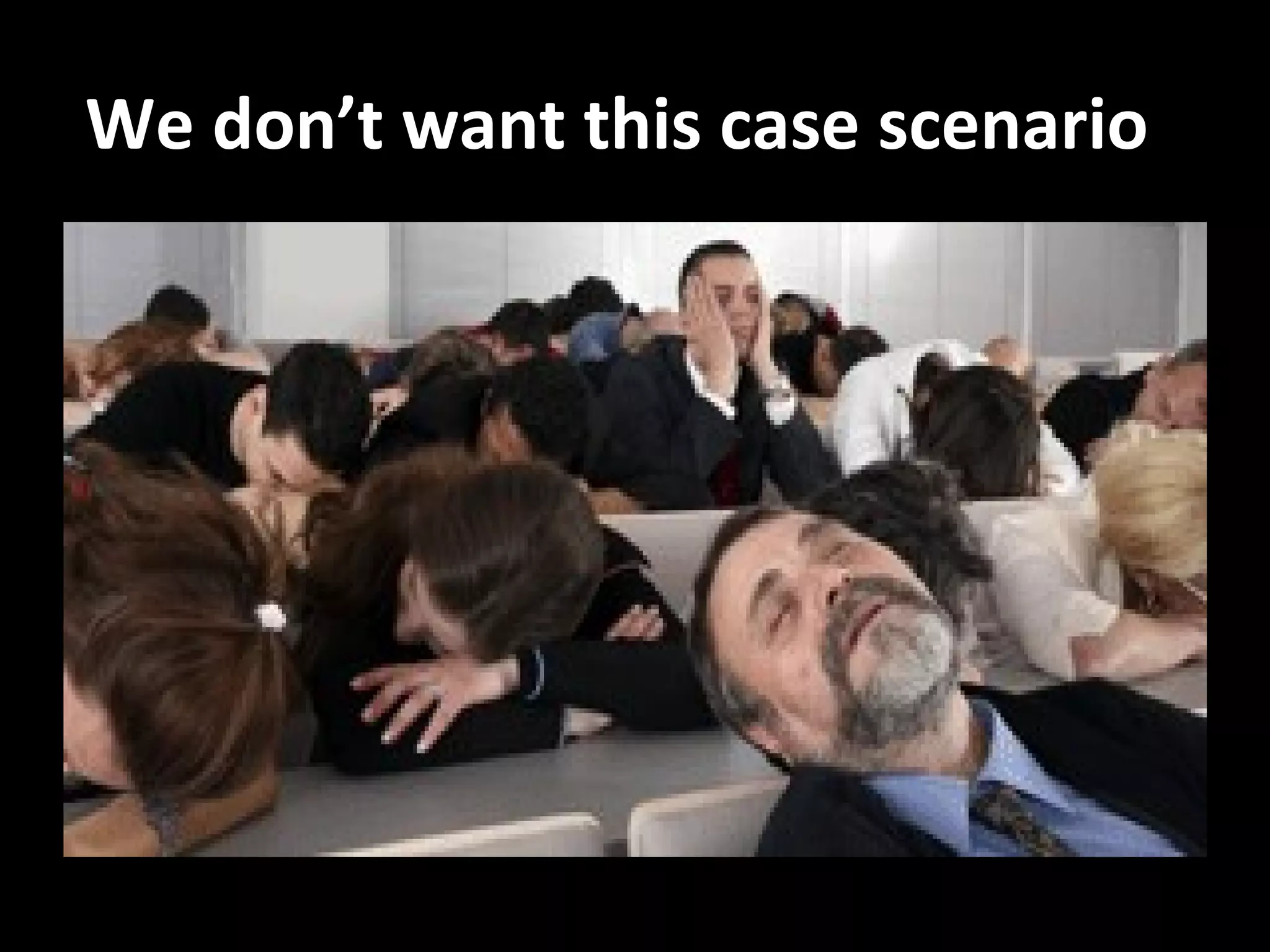
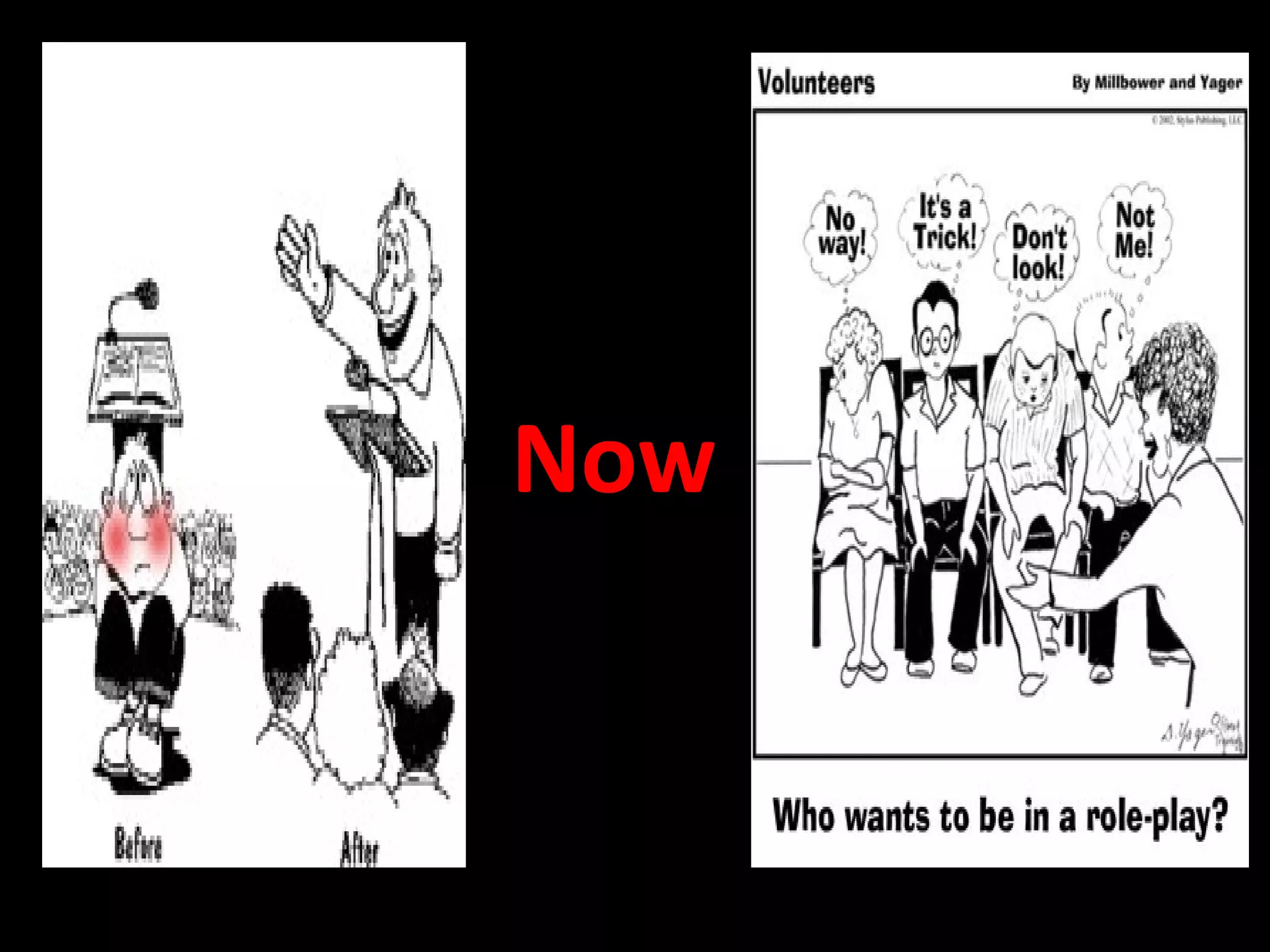
We don’t want this case scenario
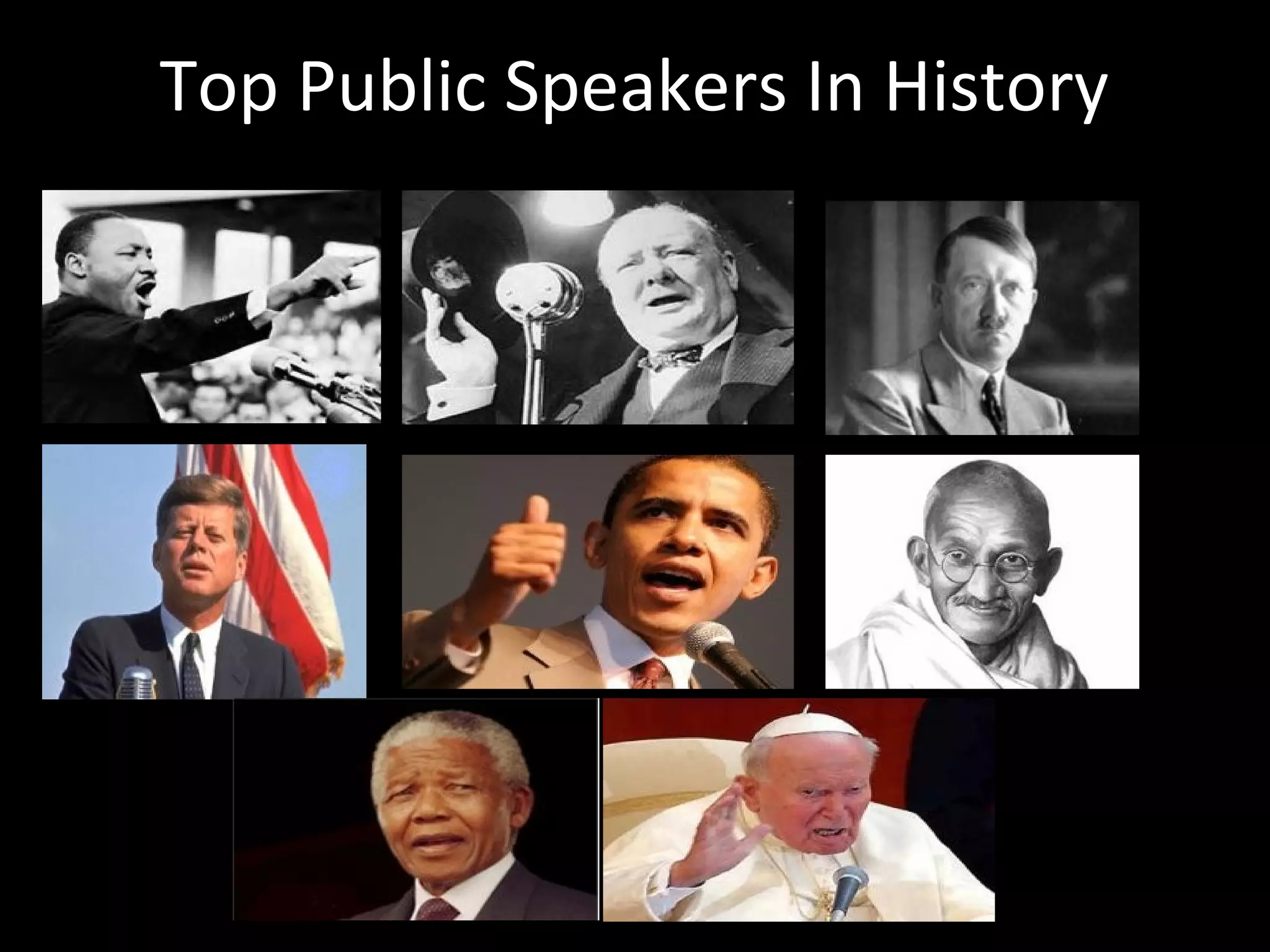
Top Public Speakers In History
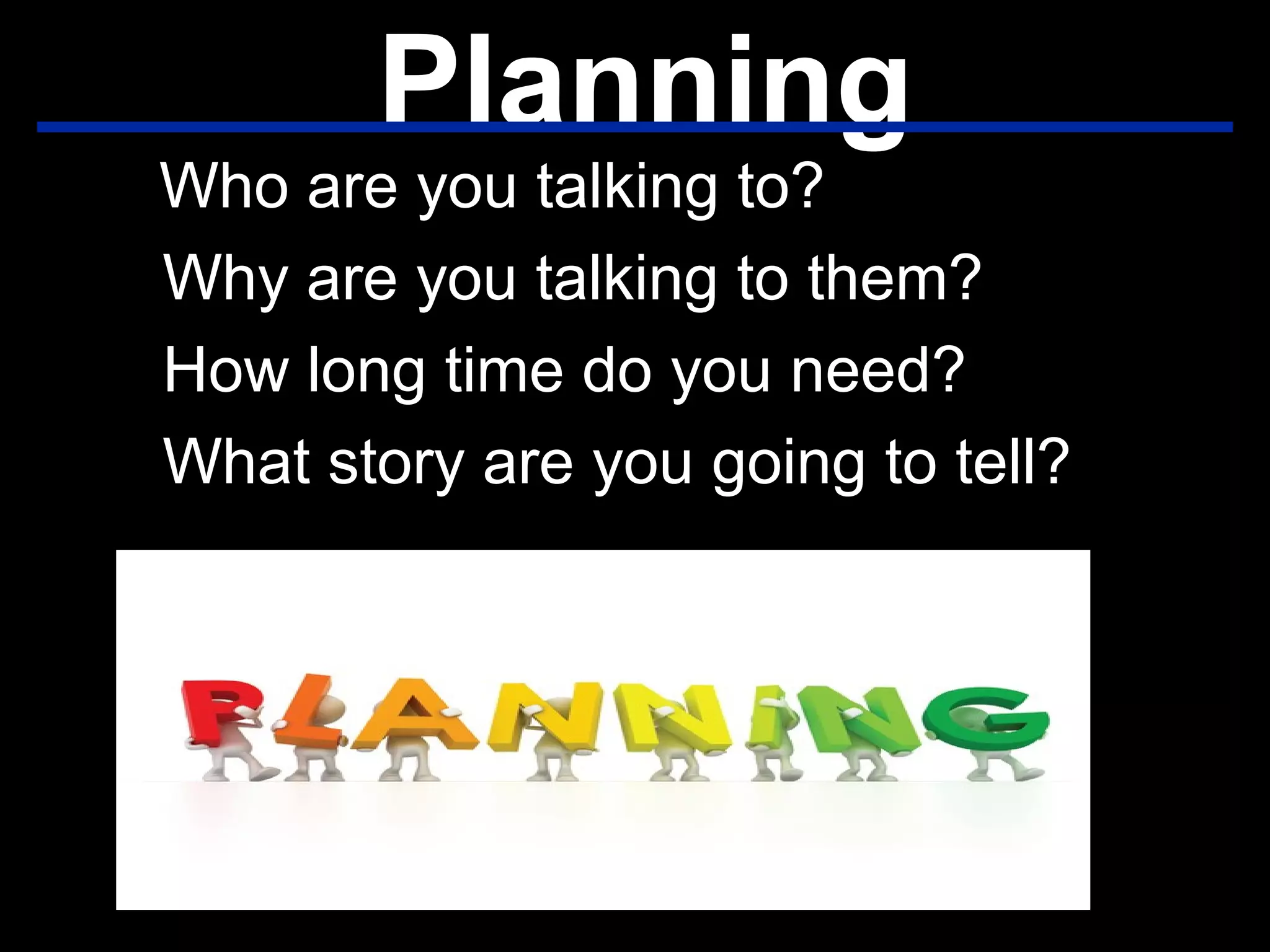
Planning
Who are you talking to?
Why are you talking to them?
How long time do you need?
What story are you going to tell?
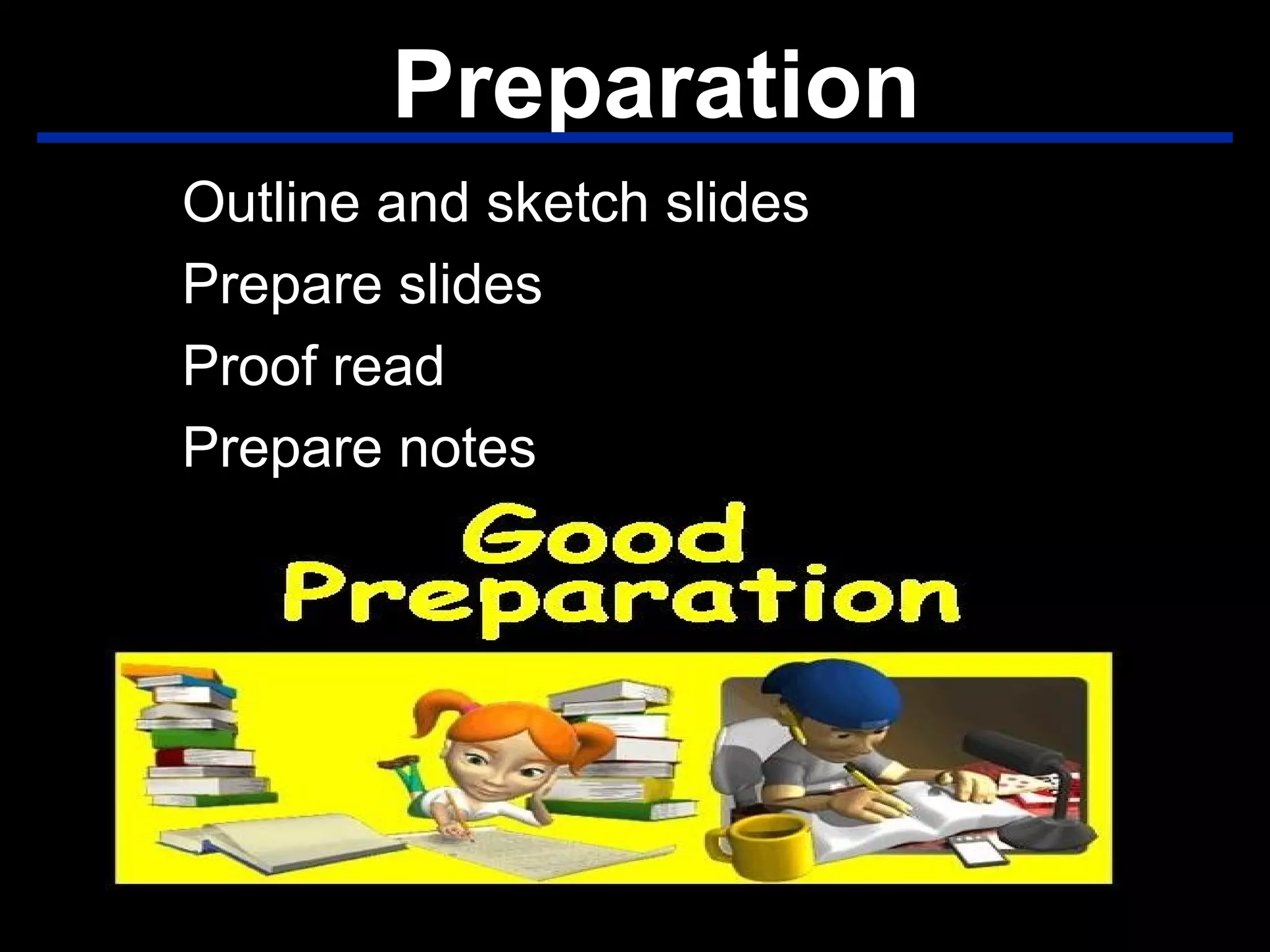
Preparation
Outline and sketch slides
Prepare slides
Proof read
Prepare notes
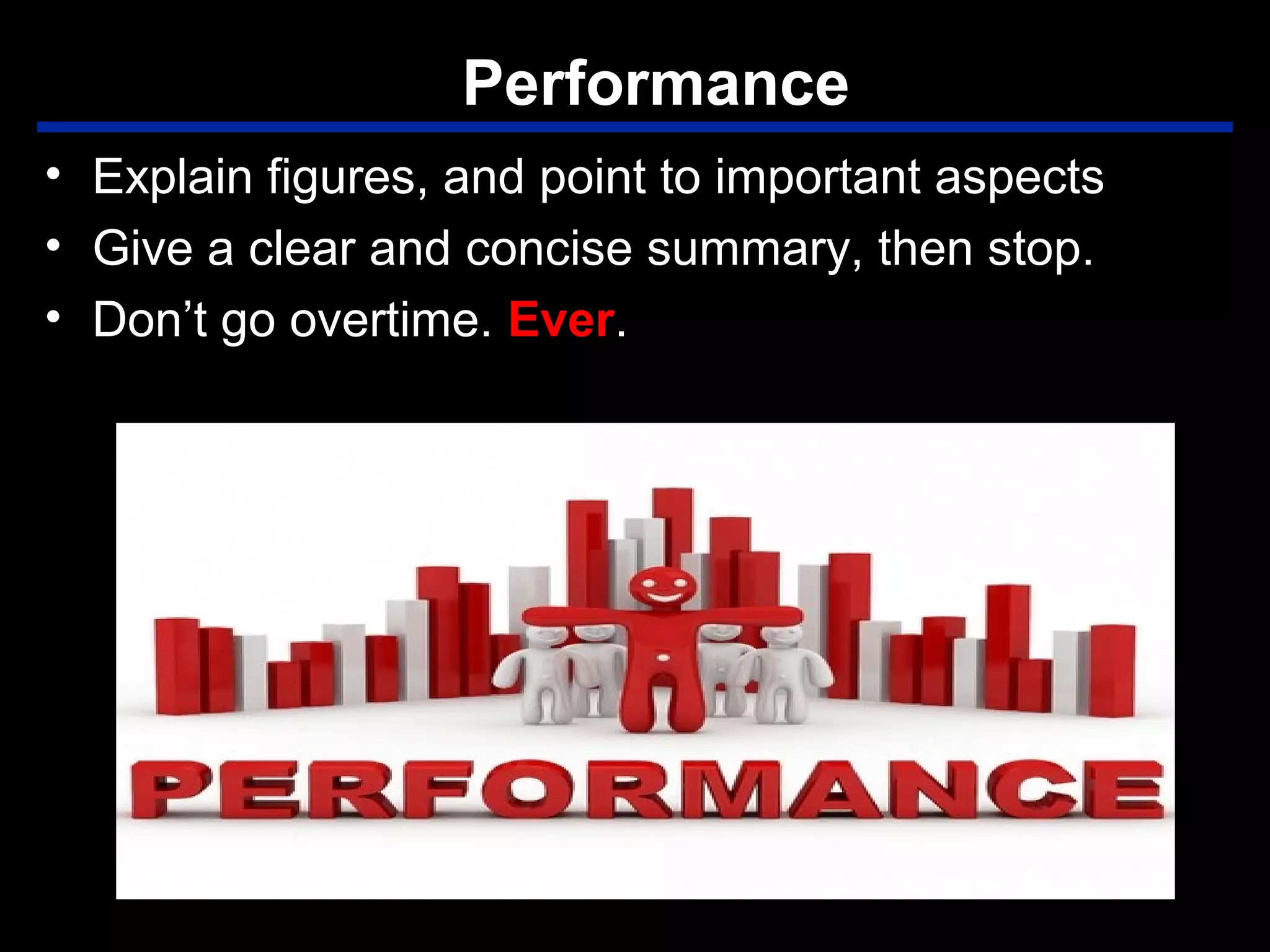
Performance
• Explain figures, and point to important aspects
• Give a clear and concise summary, then stop.
• Don’t go overtime. Ever.
Practice
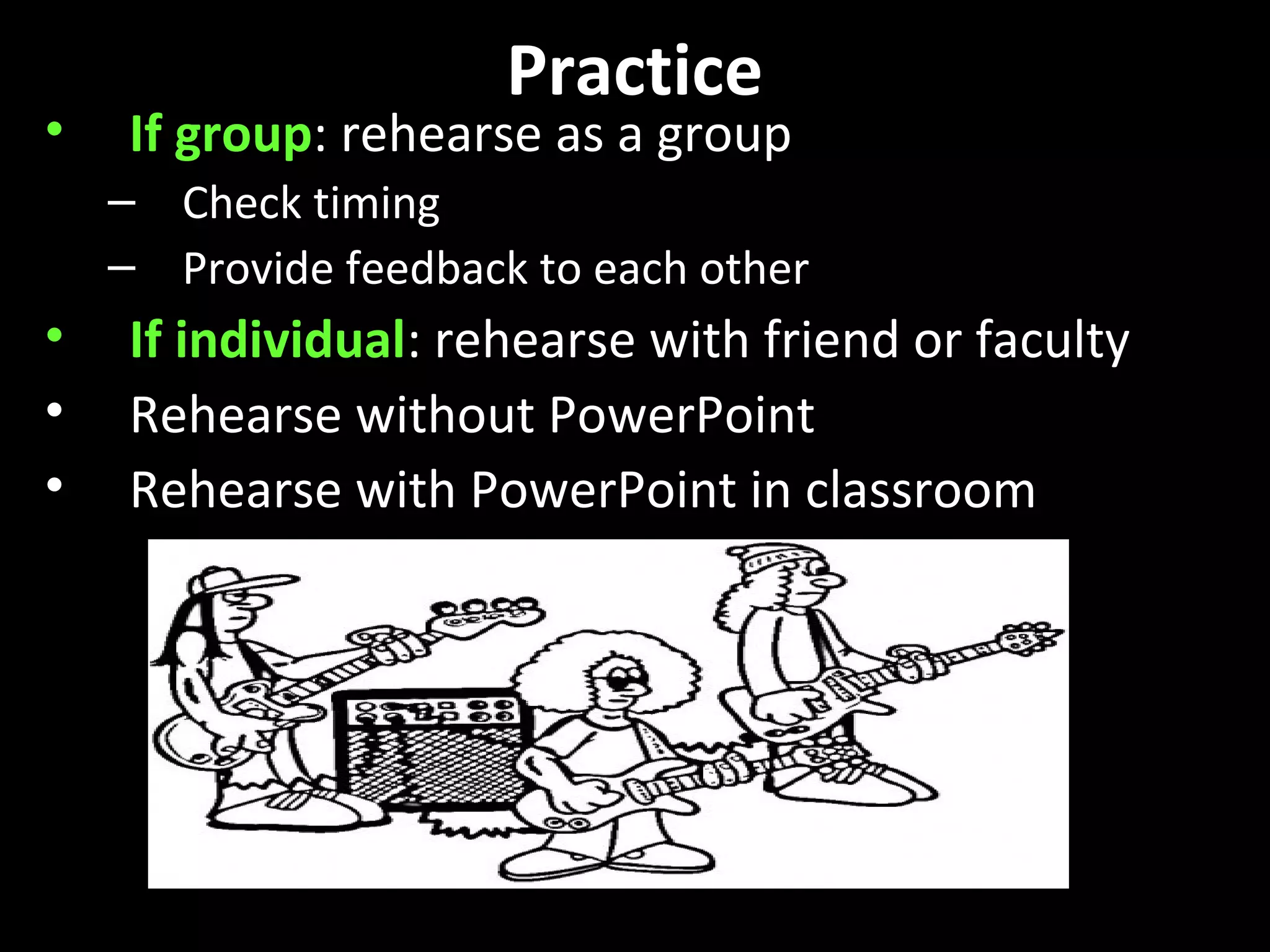
• If group: rehearse as a group
– Check timing
– Provide feedback to each other
• If individual: rehearse with friend or faculty
• Rehearse without PowerPoint
• Rehearse with PowerPoint in classroom
Some things to avoid….
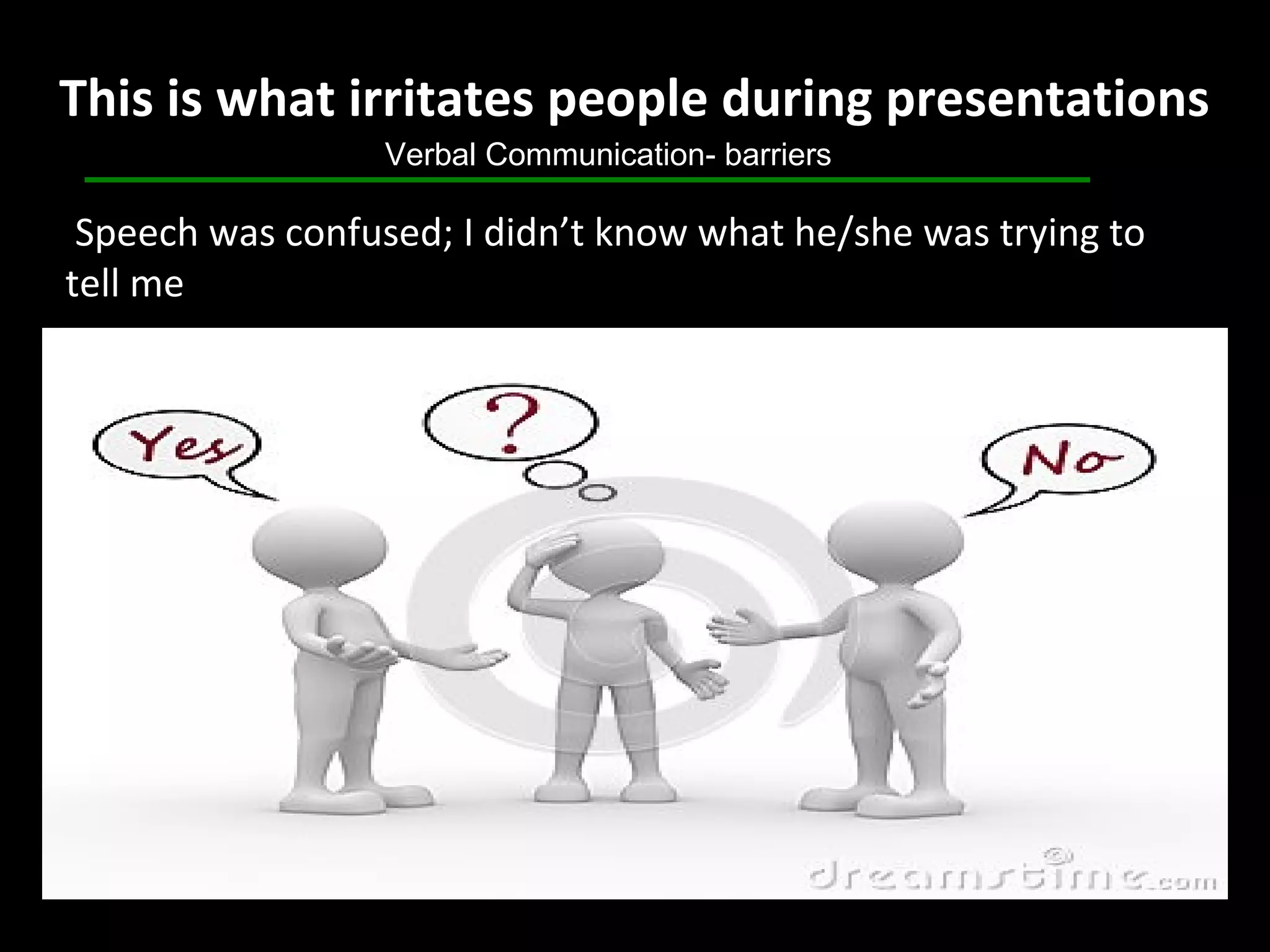
Speech was confused; I didn’t know what he/she was trying to
tell me
This is what irritates people during presentations
Verbal Communication- barriers
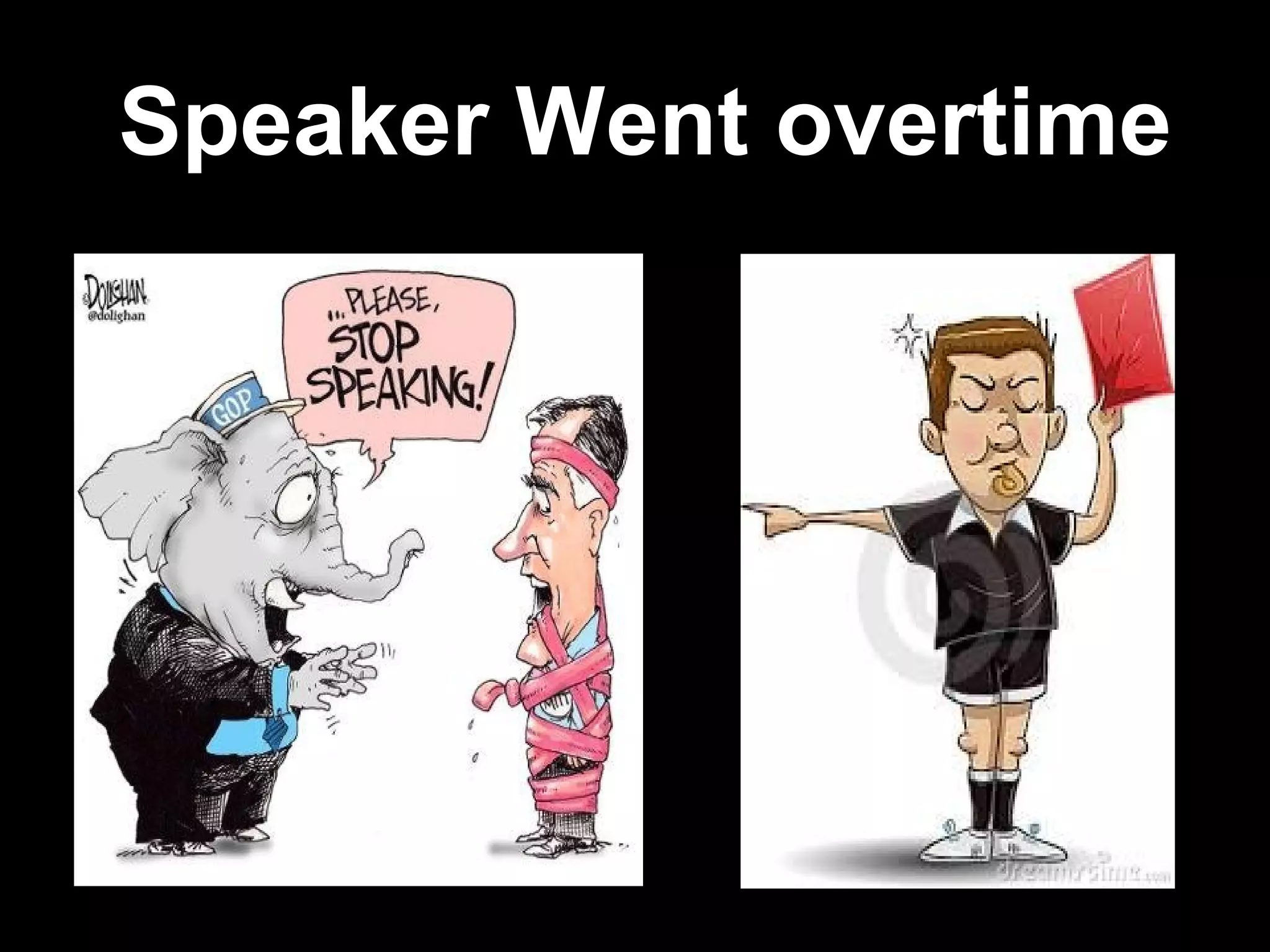
Speaker Went overtime
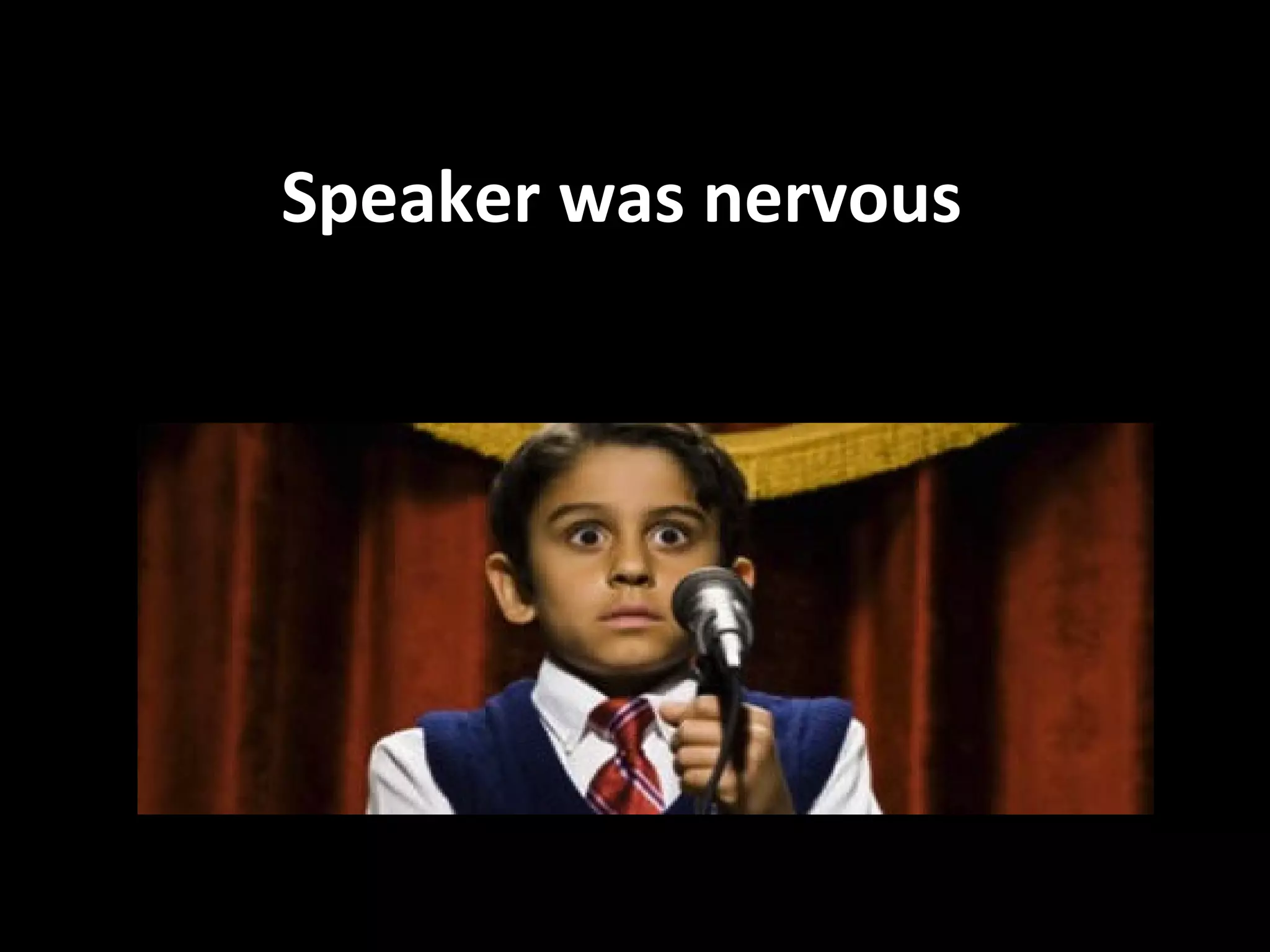
Speaker was nervous
Speaker was disorganised
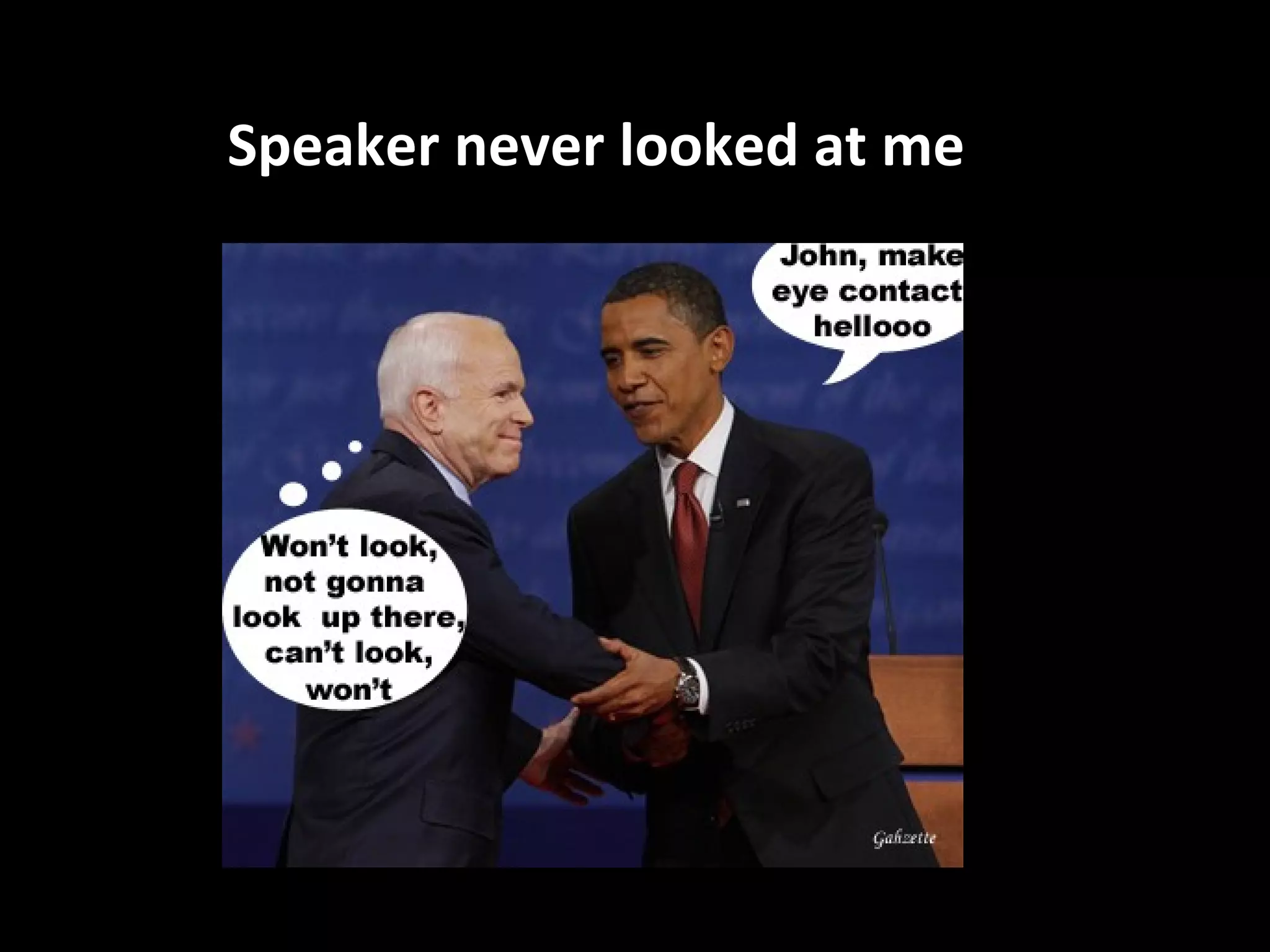
Speaker never looked at me
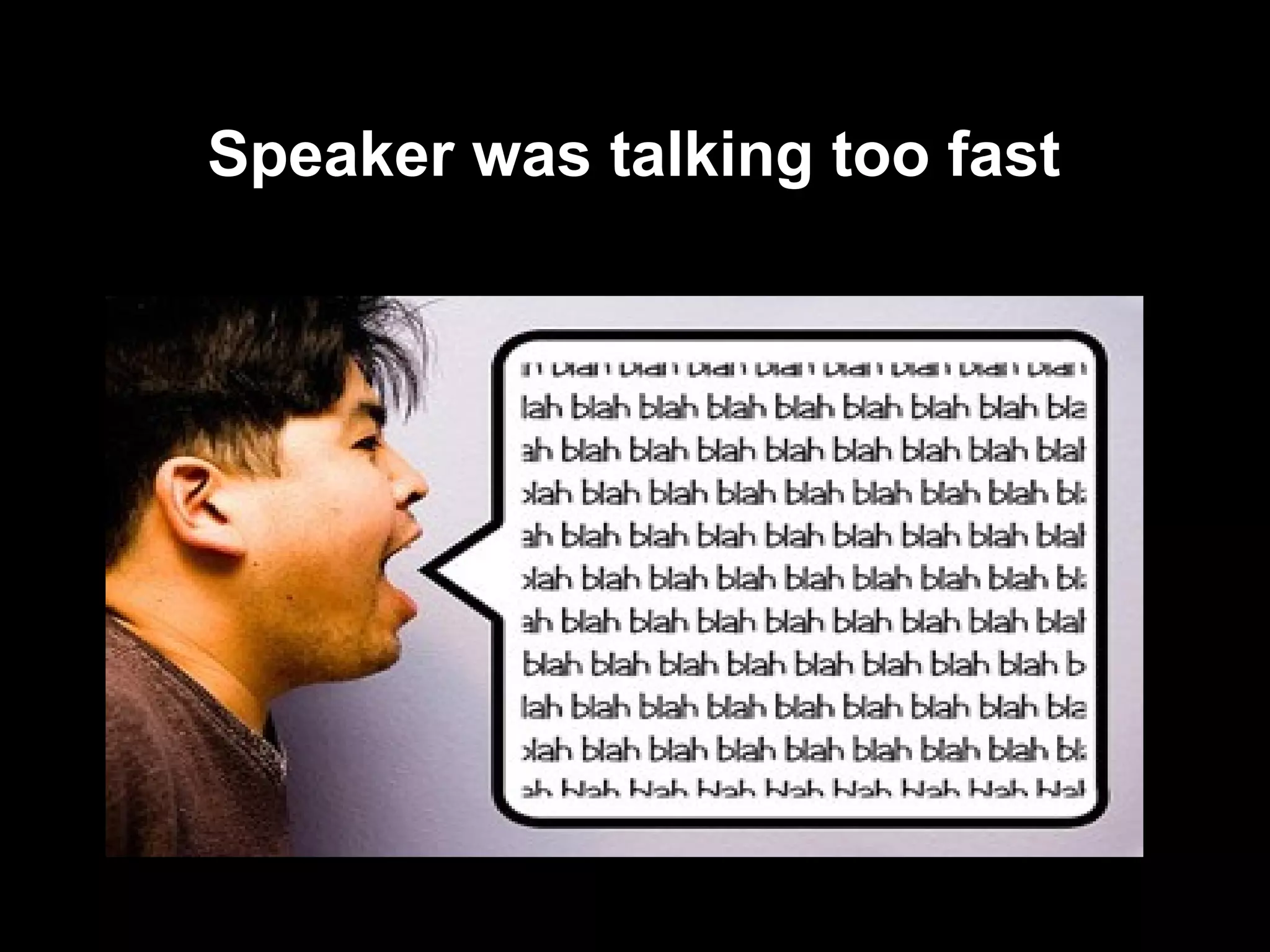
Speaker was talking too fast
Speaker had bad accent
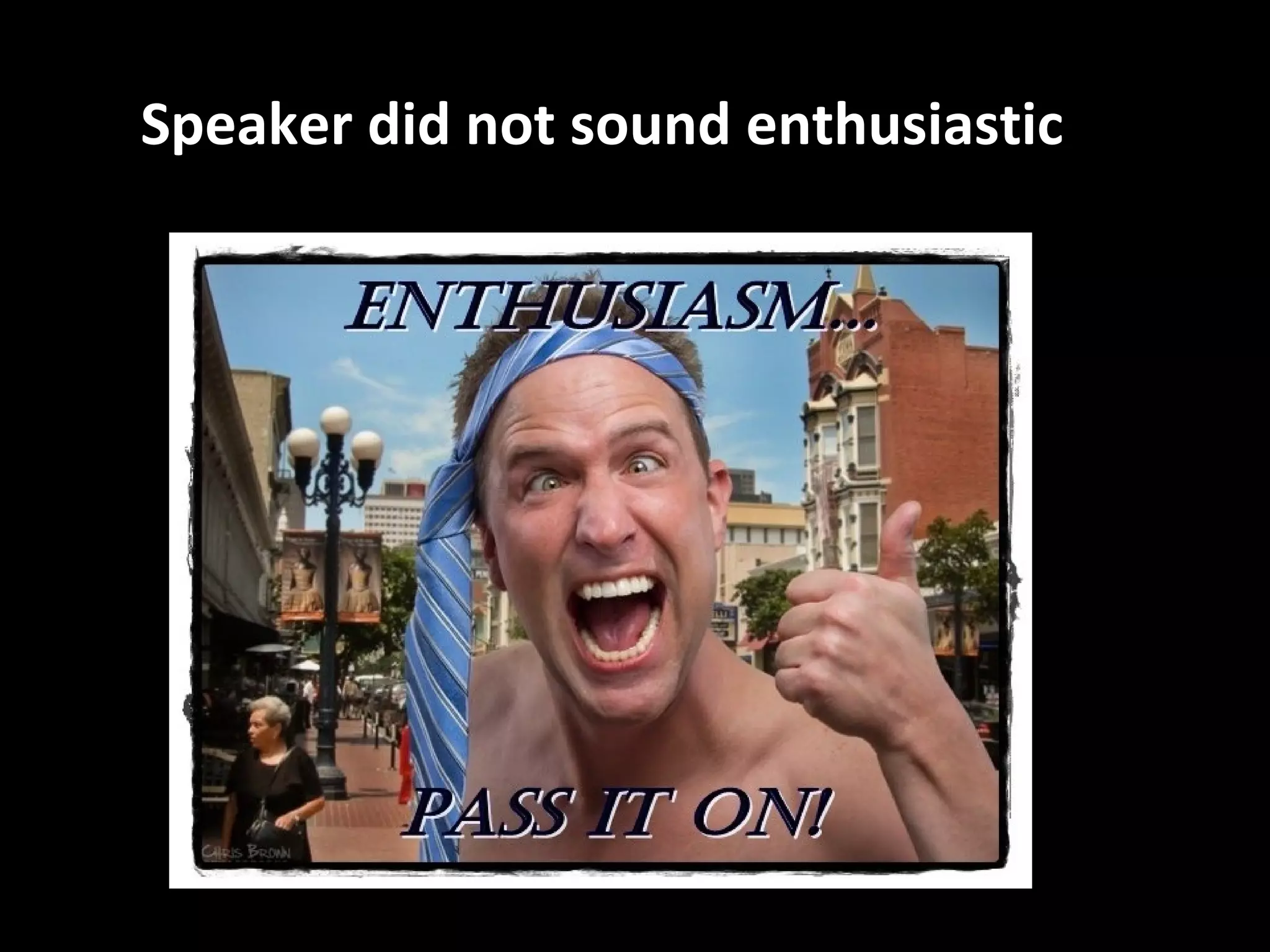
Speaker did not sound enthusiastic
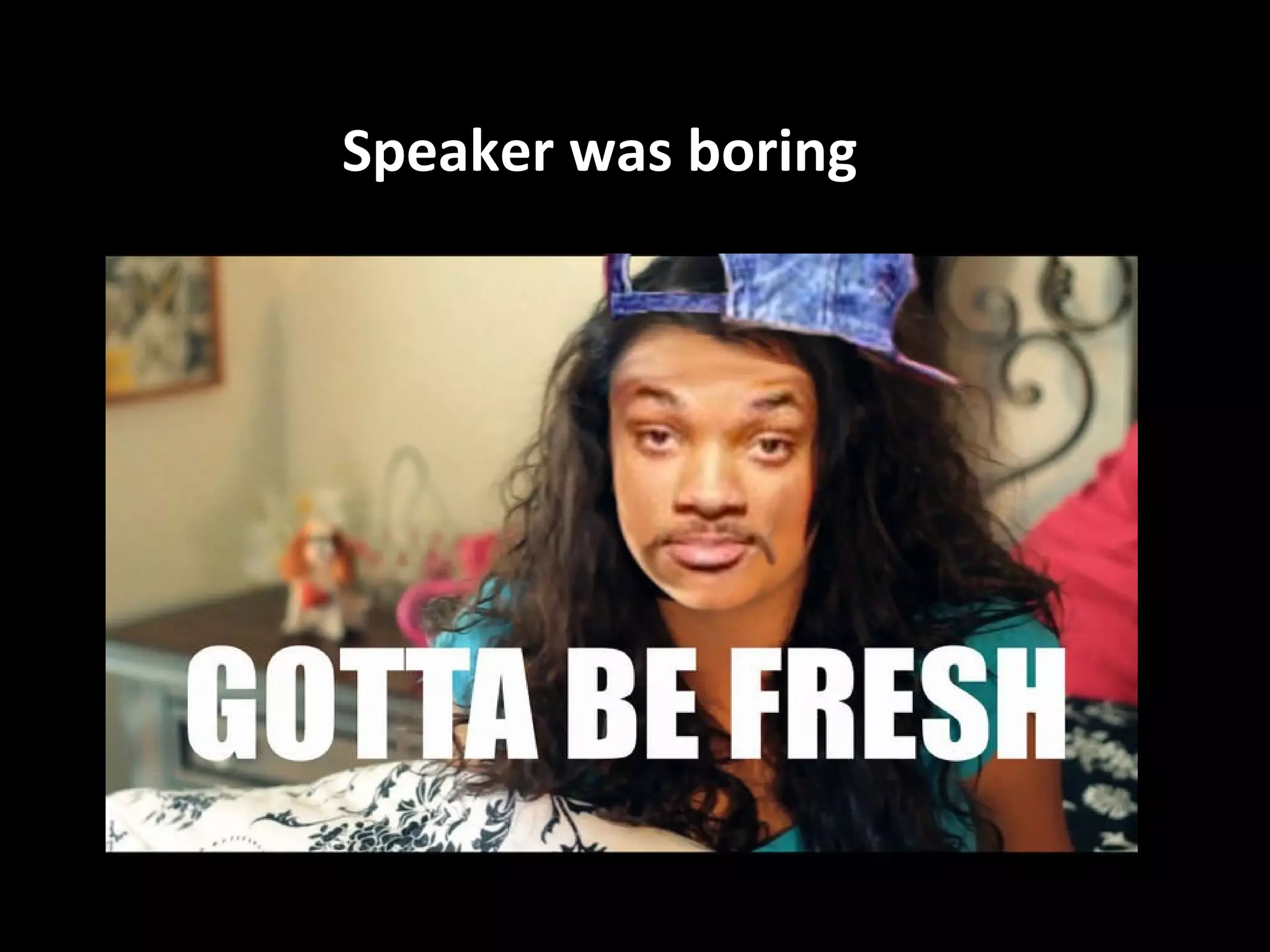
Speaker was boring
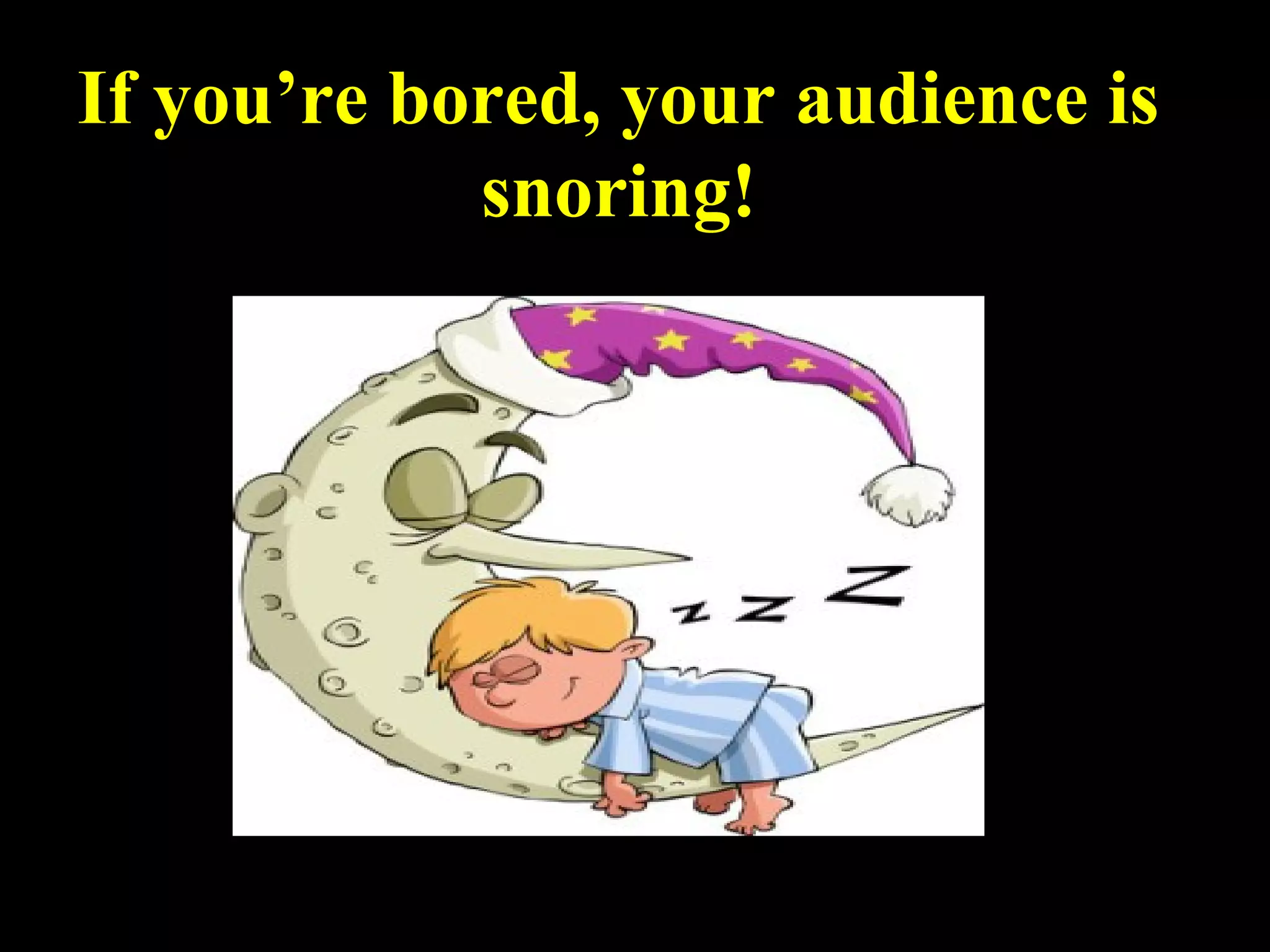
If you’re bored, your audience is
snoring!
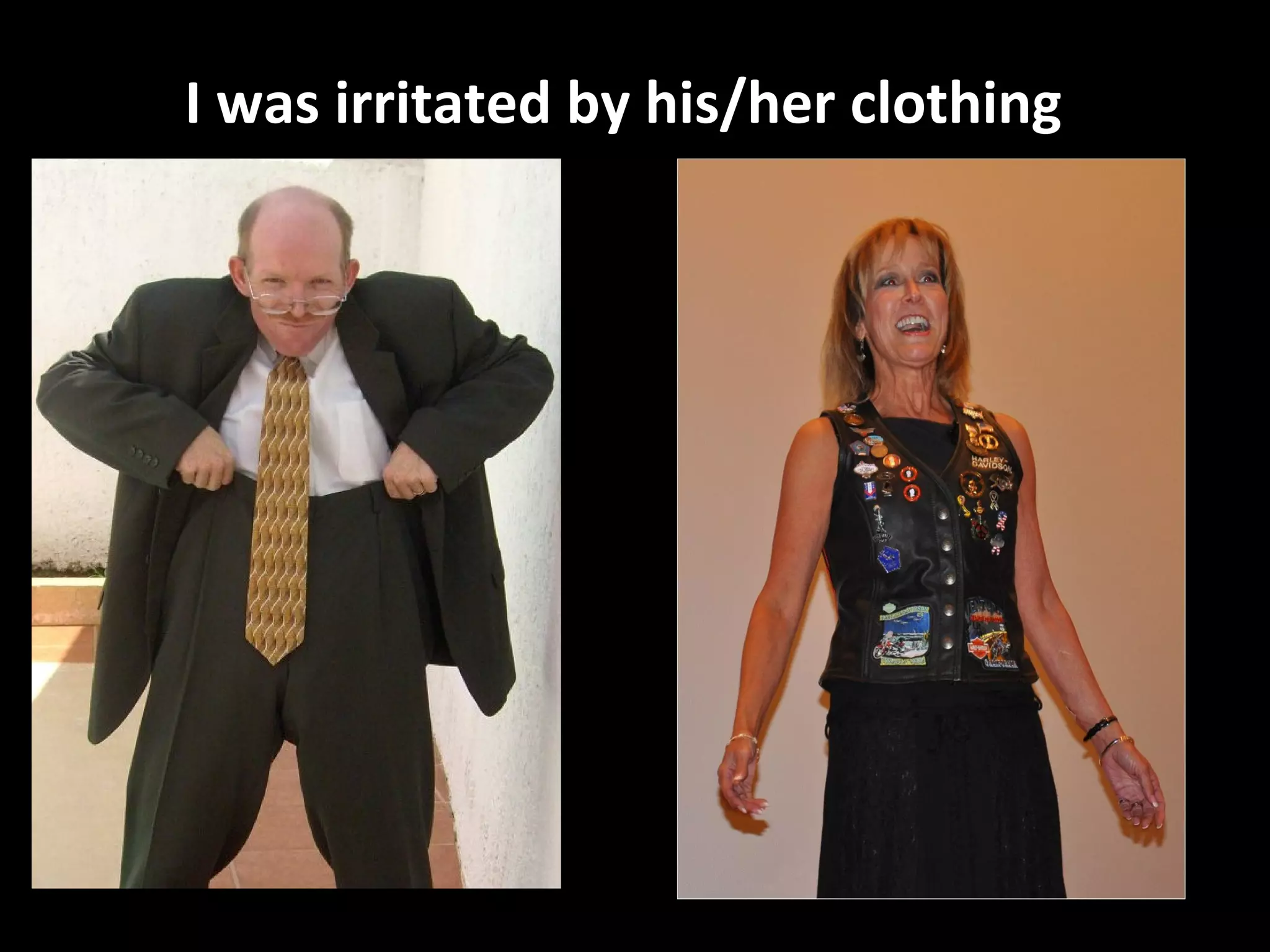
I was irritated by his/her clothing
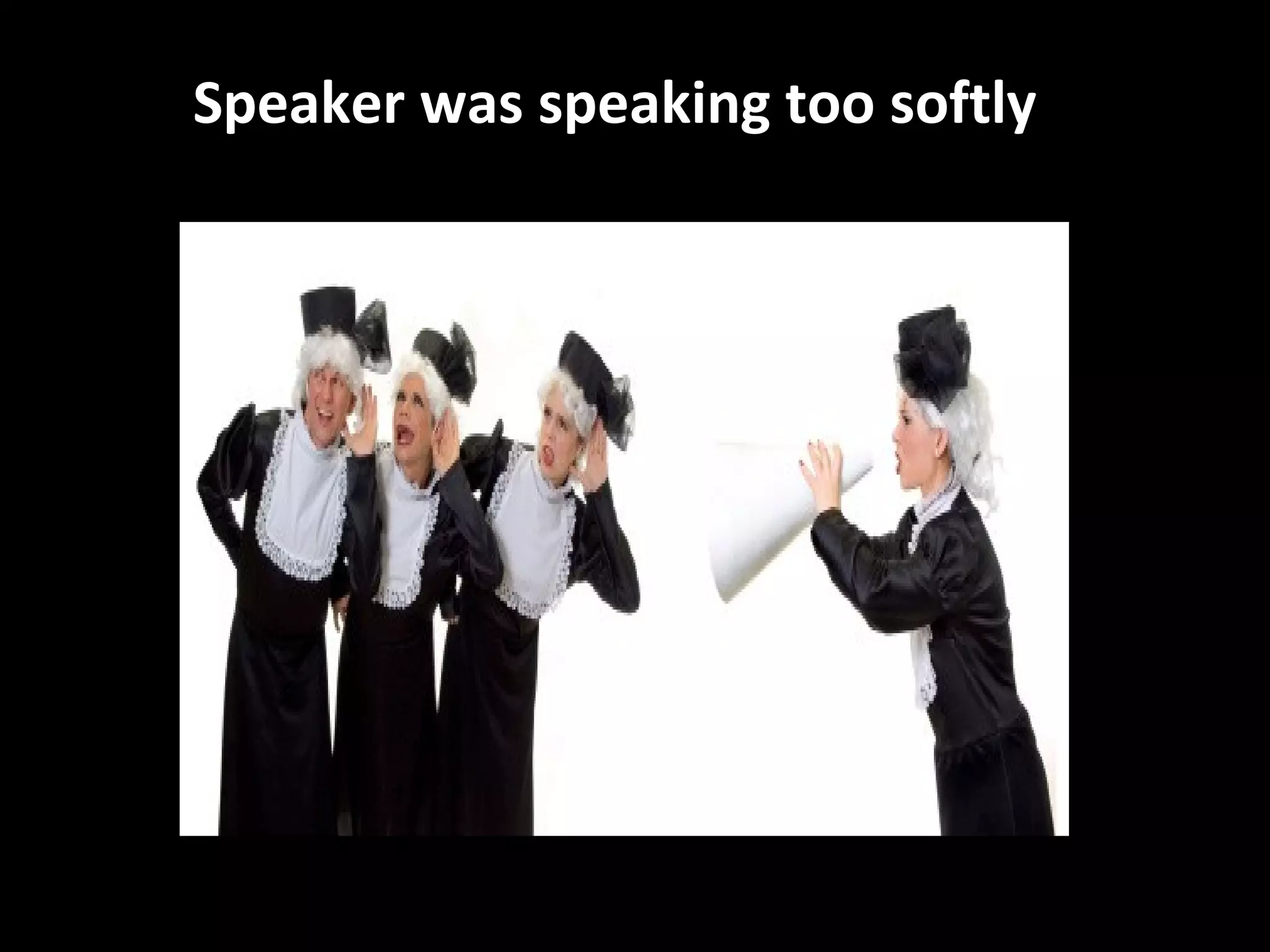
Speaker was speaking too softly
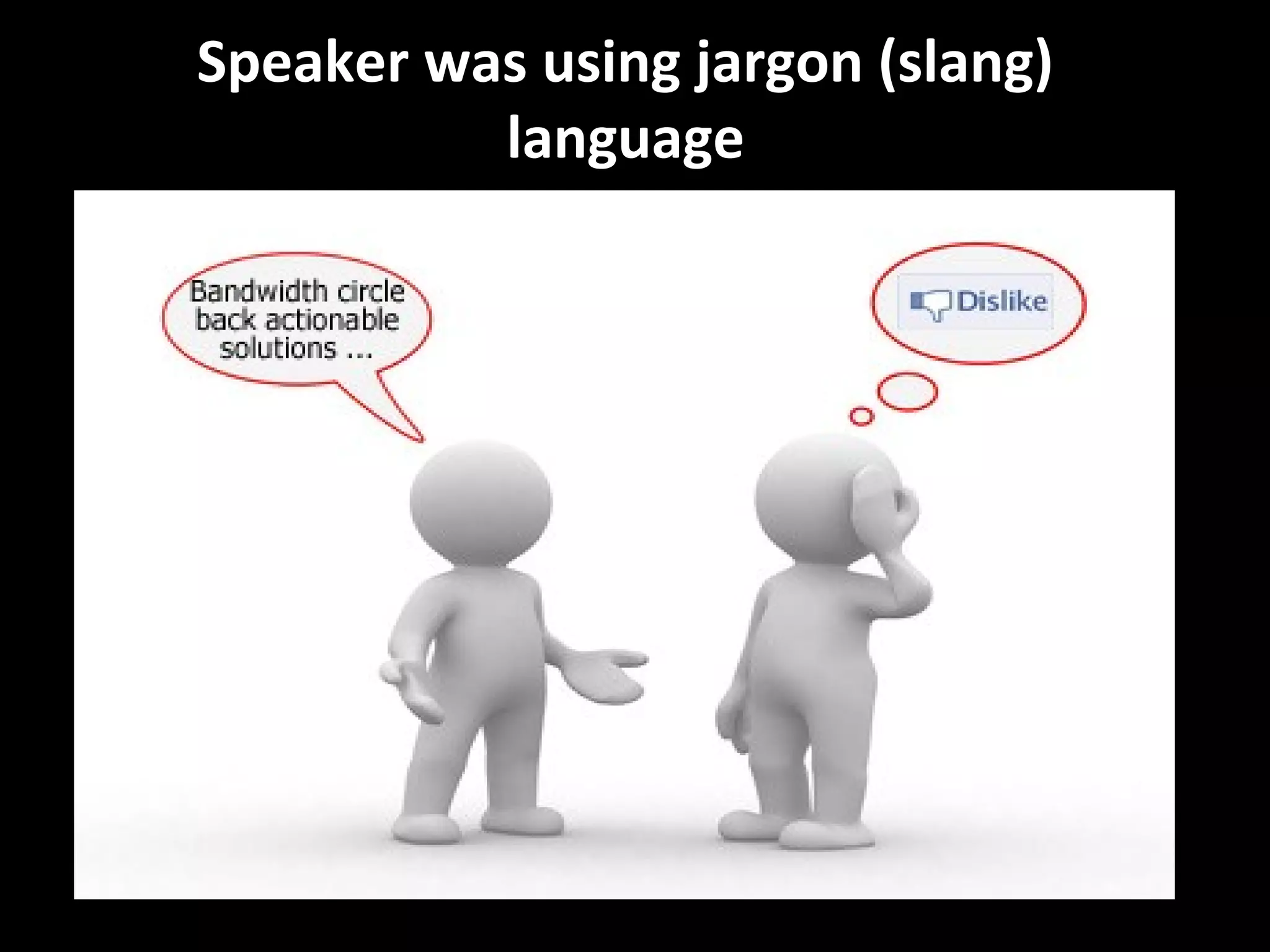
Speaker was using jargon (slang)
language
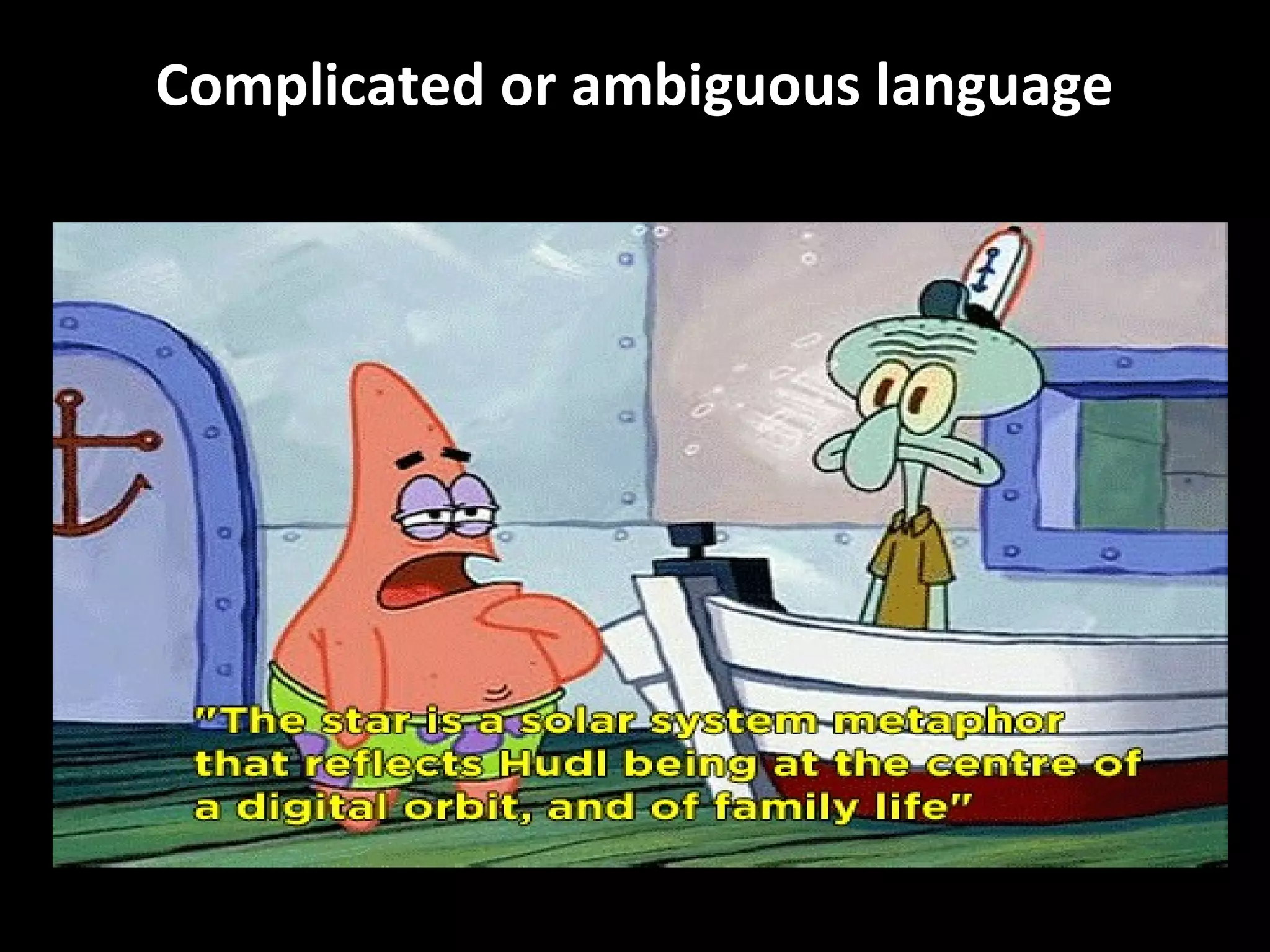
Complicated or ambiguous language
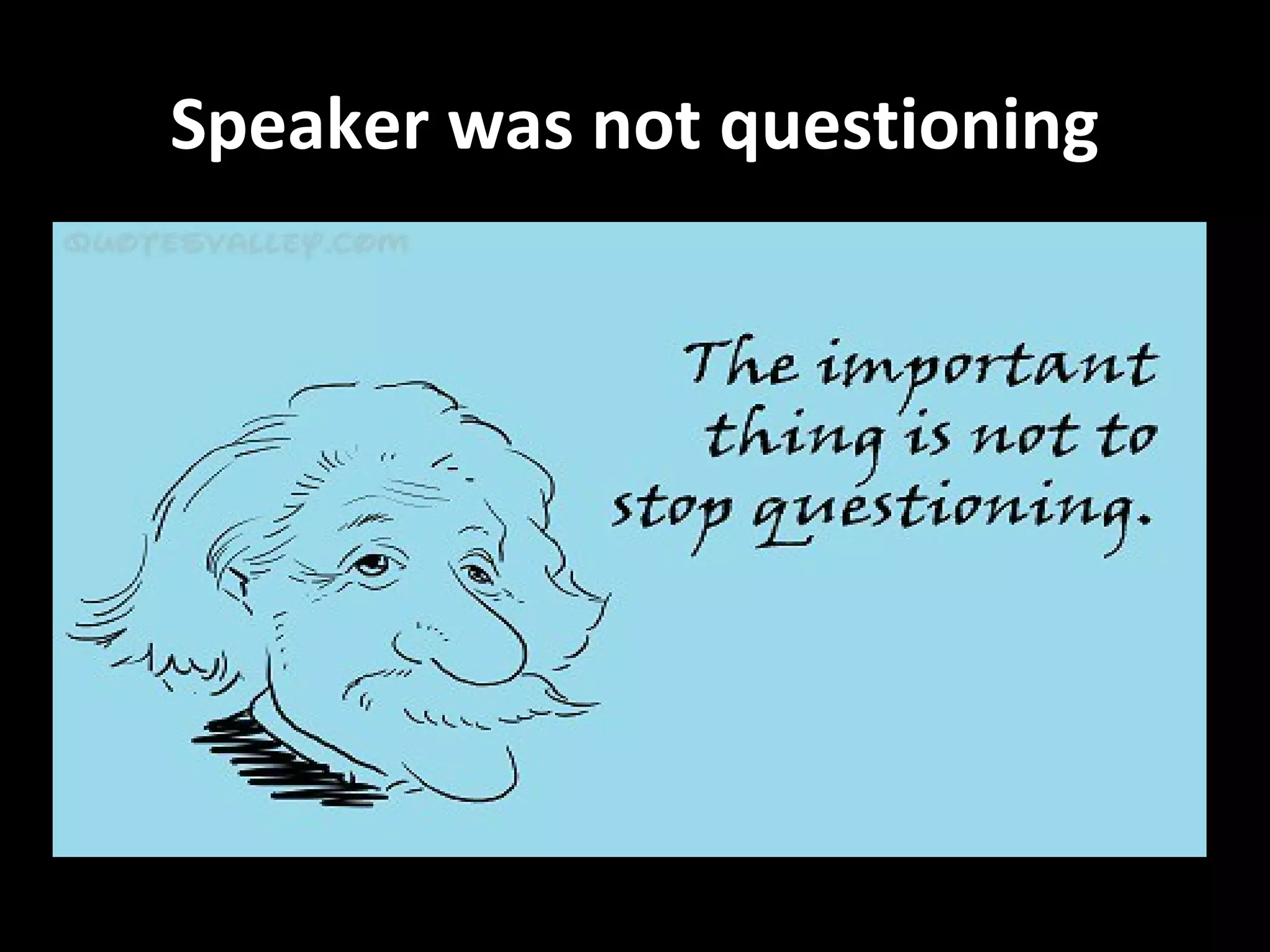
Speaker was not questioning
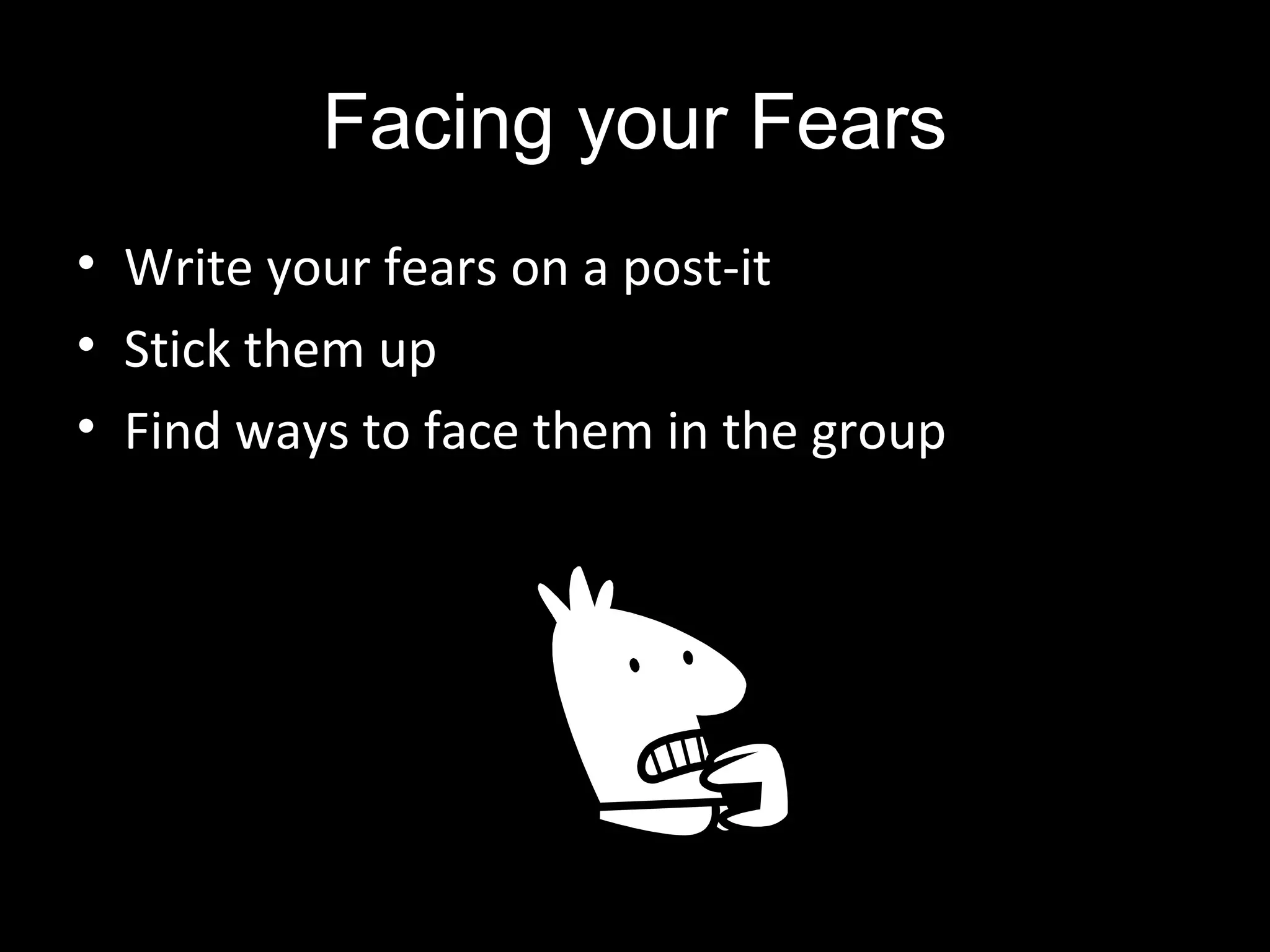
Facing your Fears
• Write your fears on a post-it
• Stick them up
• Find ways to face them in the group
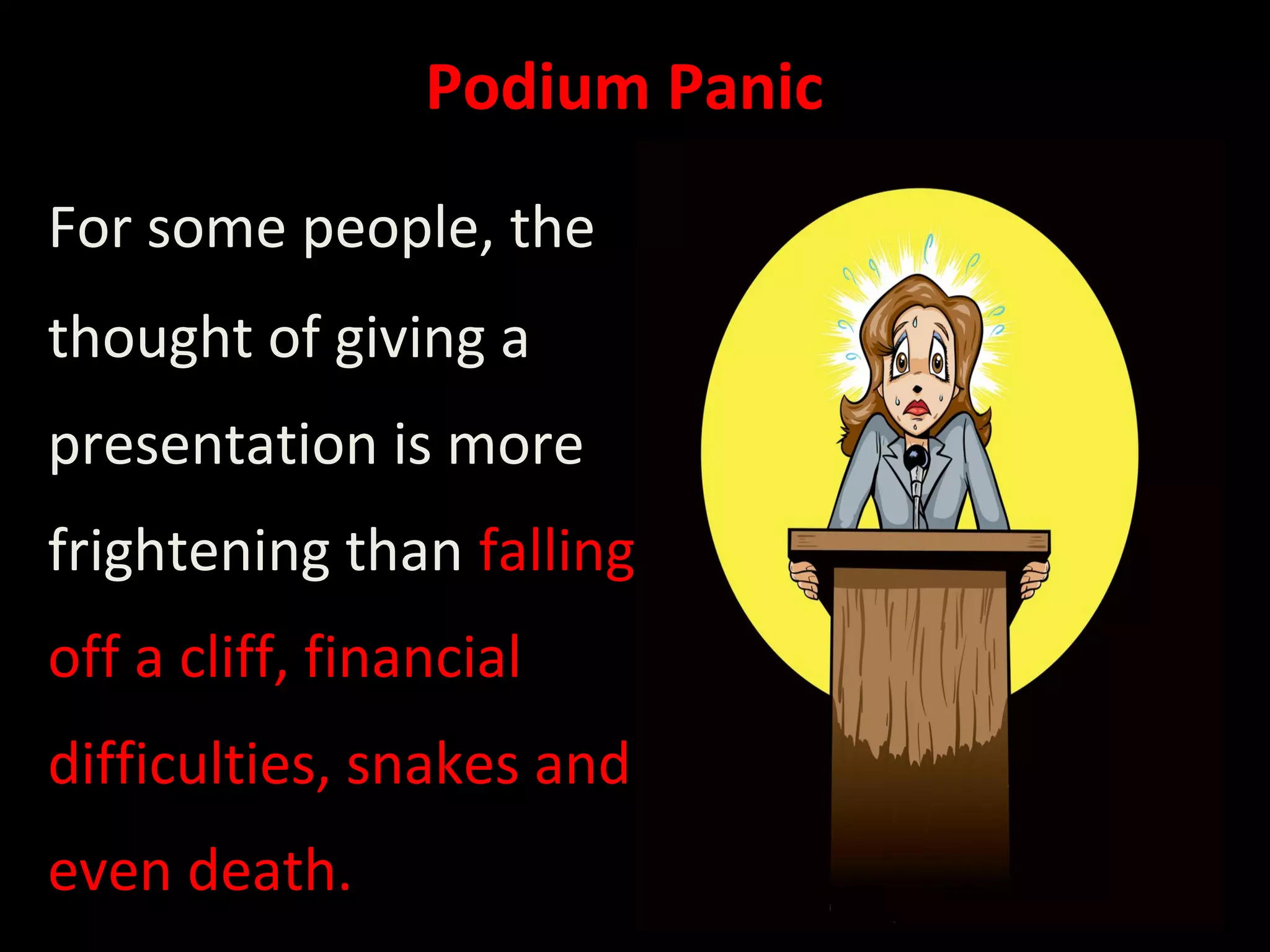
Podium Panic
For some people, the
thought of giving a
presentation is more
frightening than falling
off a cliff, financial
difficulties, snakes and
even death.
Dealing with Podium Panic
• Audiences are forgiving
• Nervousness is usually invisible
• Be yourself
• Practice deep breathing/ visualization
techniques
• Begin in your comfort zone
• Check out the room in advance
• Concentrate on the message
• Begin with a slow, well prepared
introduction; have a confident and
clear conclusion
• Be prepared and practice
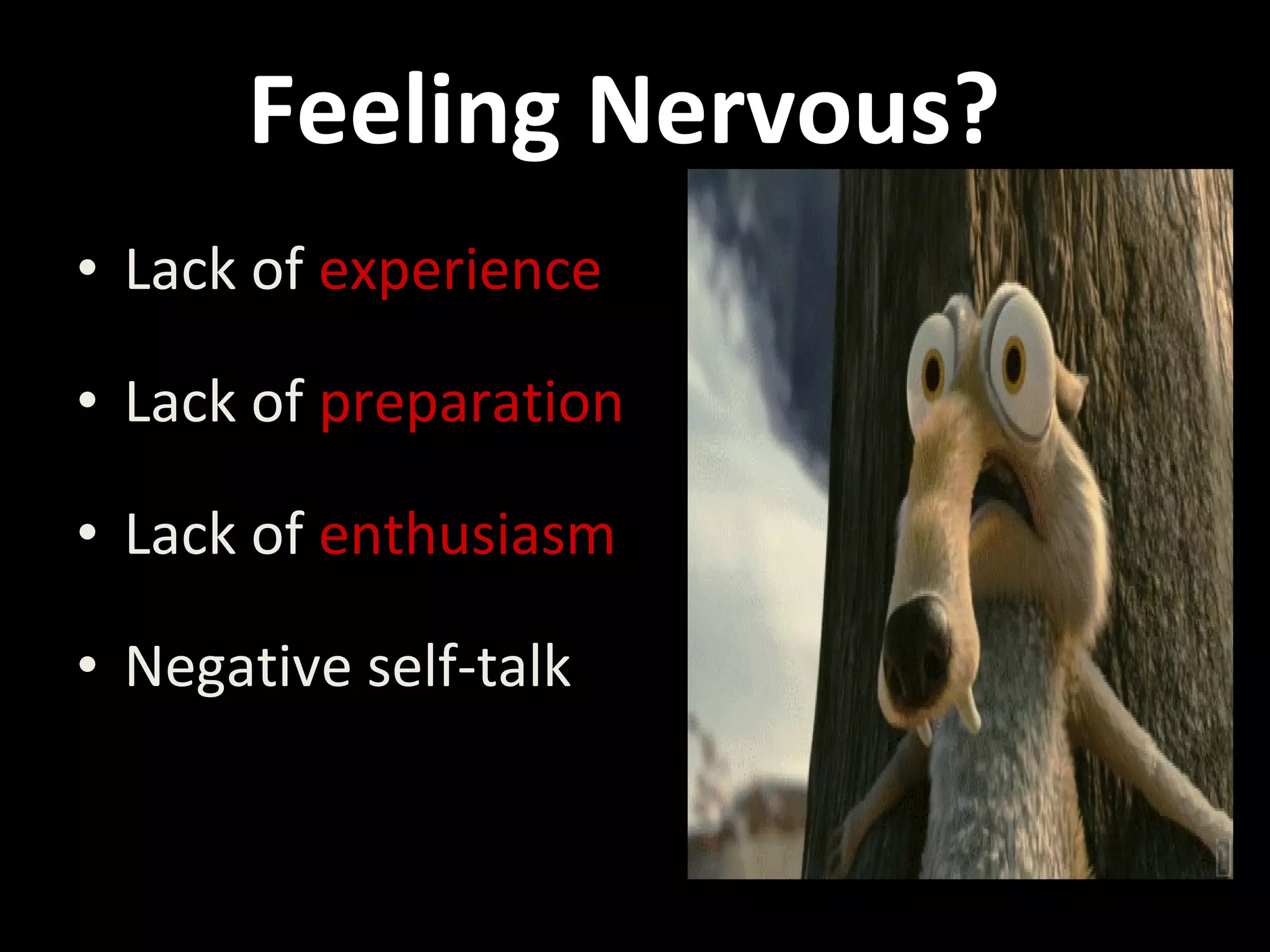
• Lack of experience
• Lack of preparation
• Lack of enthusiasm
• Negative self-talk
Feeling Nervous?
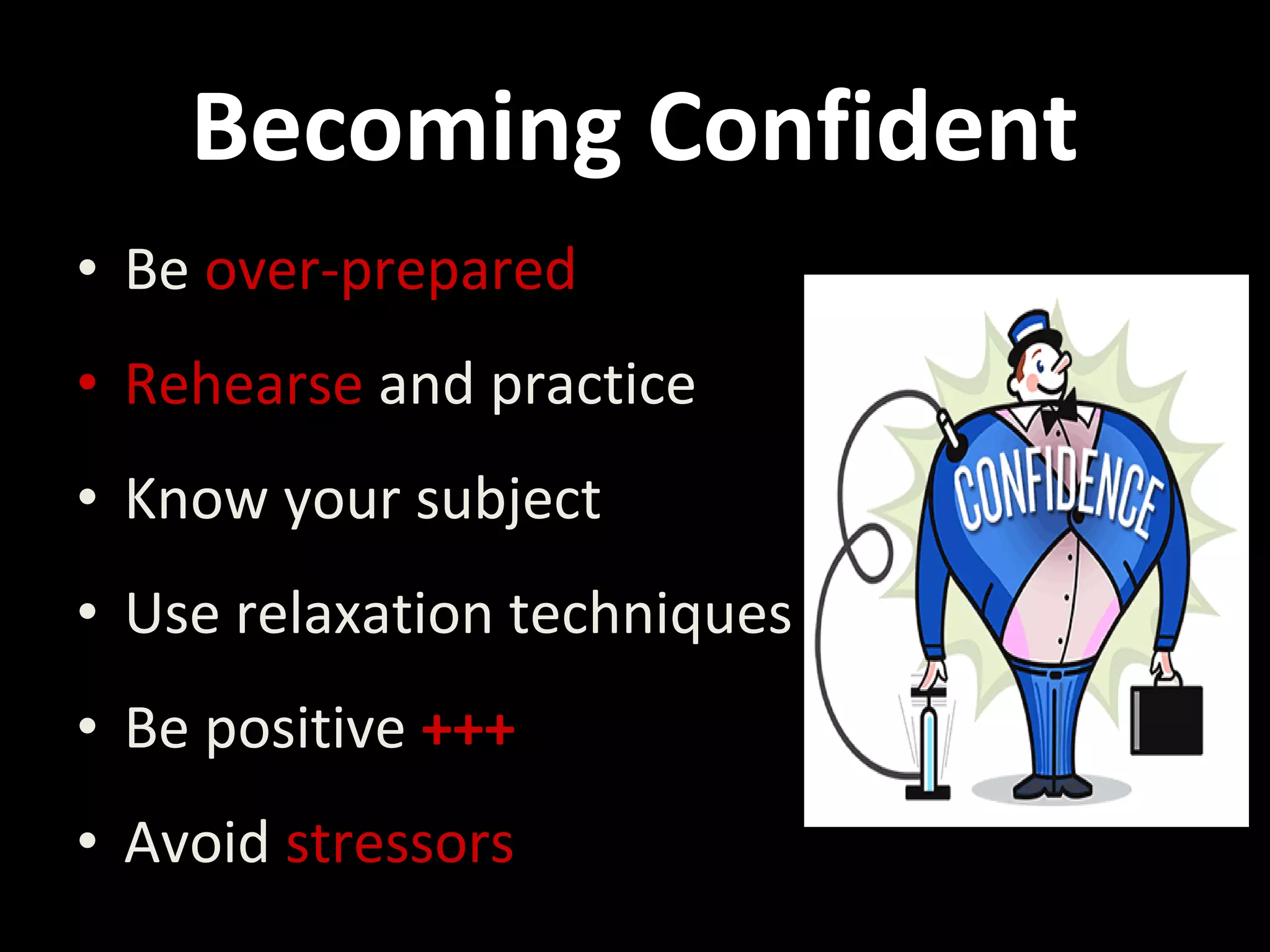
• Be over-prepared
• Rehearse and practice
• Know your subject
• Use relaxation techniques
• Be positive +++
• Avoid stressors
Becoming Confident
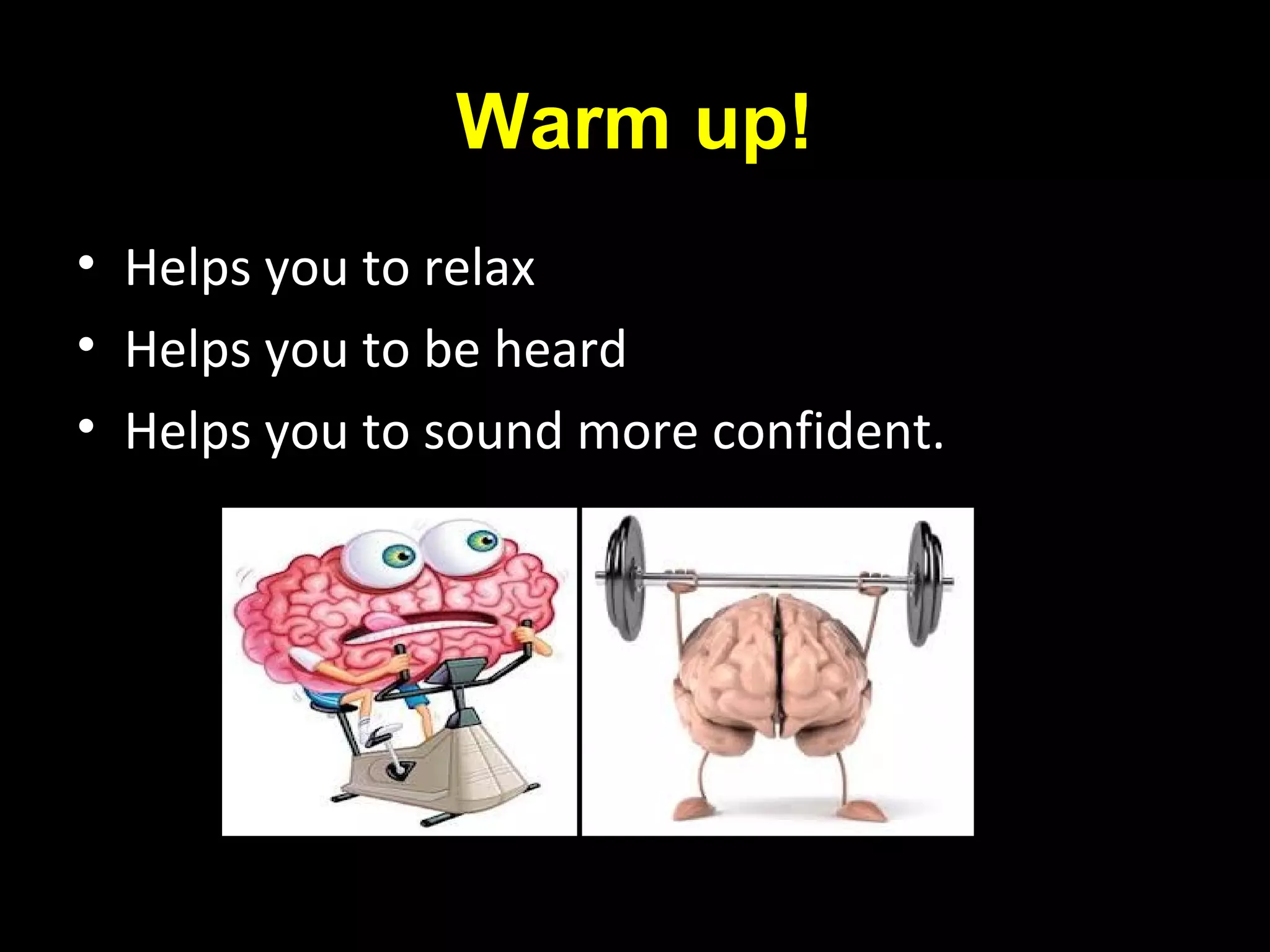
Warm up!
• Helps you to relax
• Helps you to be heard
• Helps you to sound more confident.
Tongue Twisters!
• Unique New York
• She sells sea shells by the sea shore. The
shells that she sells are sea shells I’m sure
• Red Lorry, Yellow Lorry
• Peter Piper picked a peck of picked peppers
• Rubber buggy baby bumpers
Body Language
Body Language
• Dress professionally
• Face your audience
• Audience focus: maintain eye contact
with audience
• Point and re-orient
• Be enthusiastic
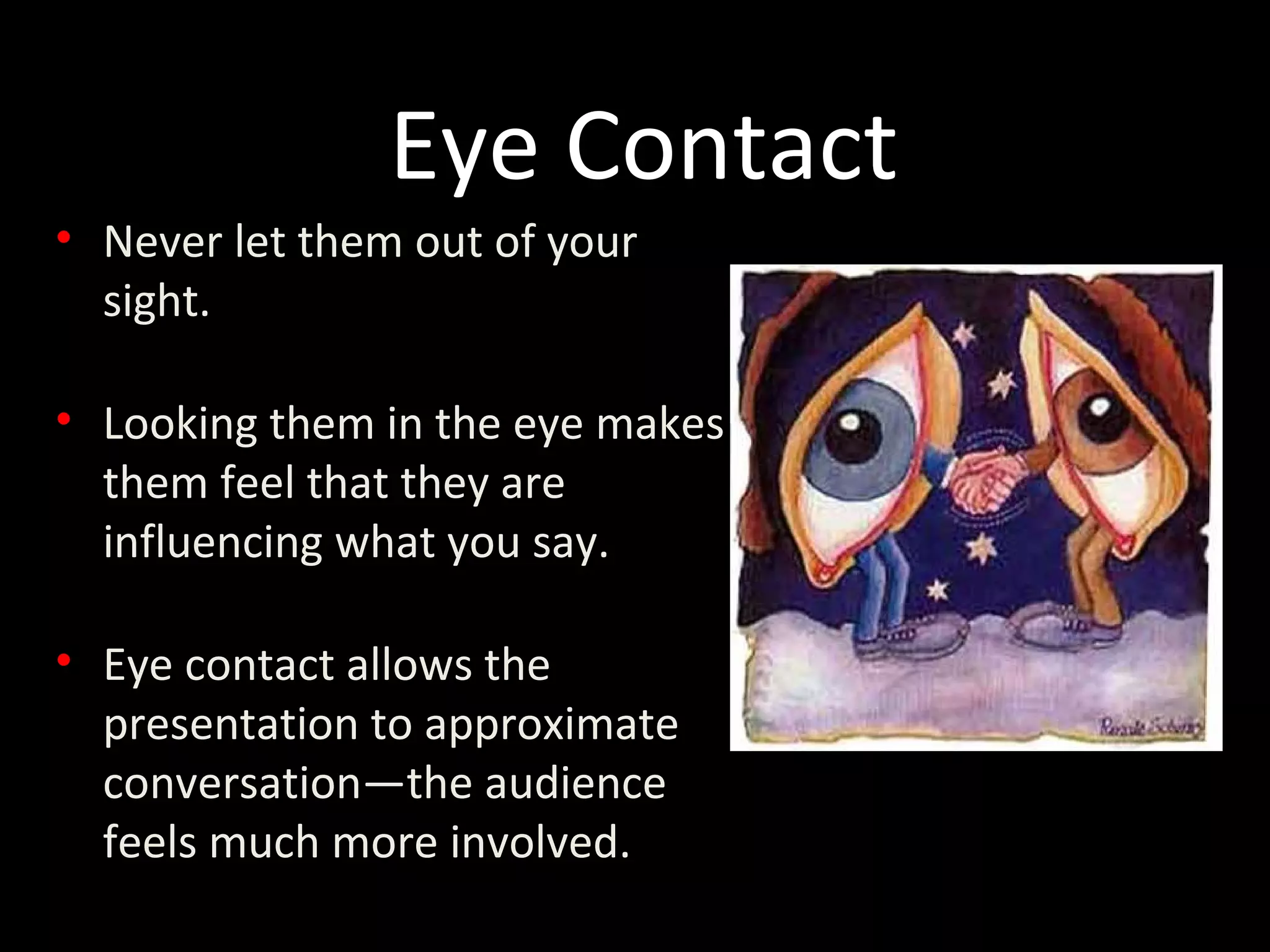
• Never let them out of your
sight.
• Looking them in the eye makes
them feel that they are
influencing what you say.
• Eye contact allows the
presentation to approximate
conversation—the audience
feels much more involved.
Eye Contact
Body Language
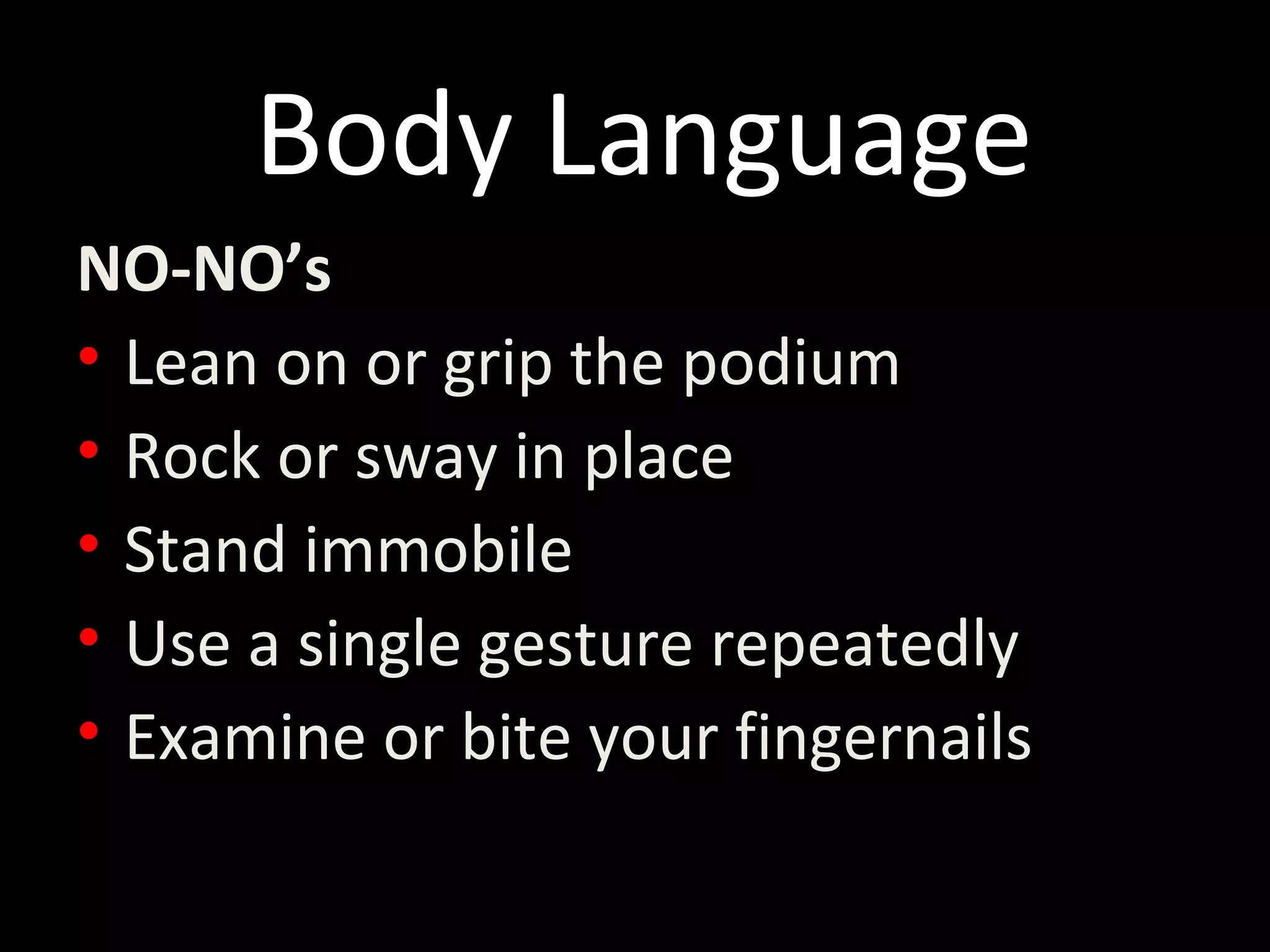
NO-NO’s
• Lean on or grip the podium
• Rock or sway in place
• Stand immobile
• Use a single gesture repeatedly
• Examine or bite your fingernails
Body Language
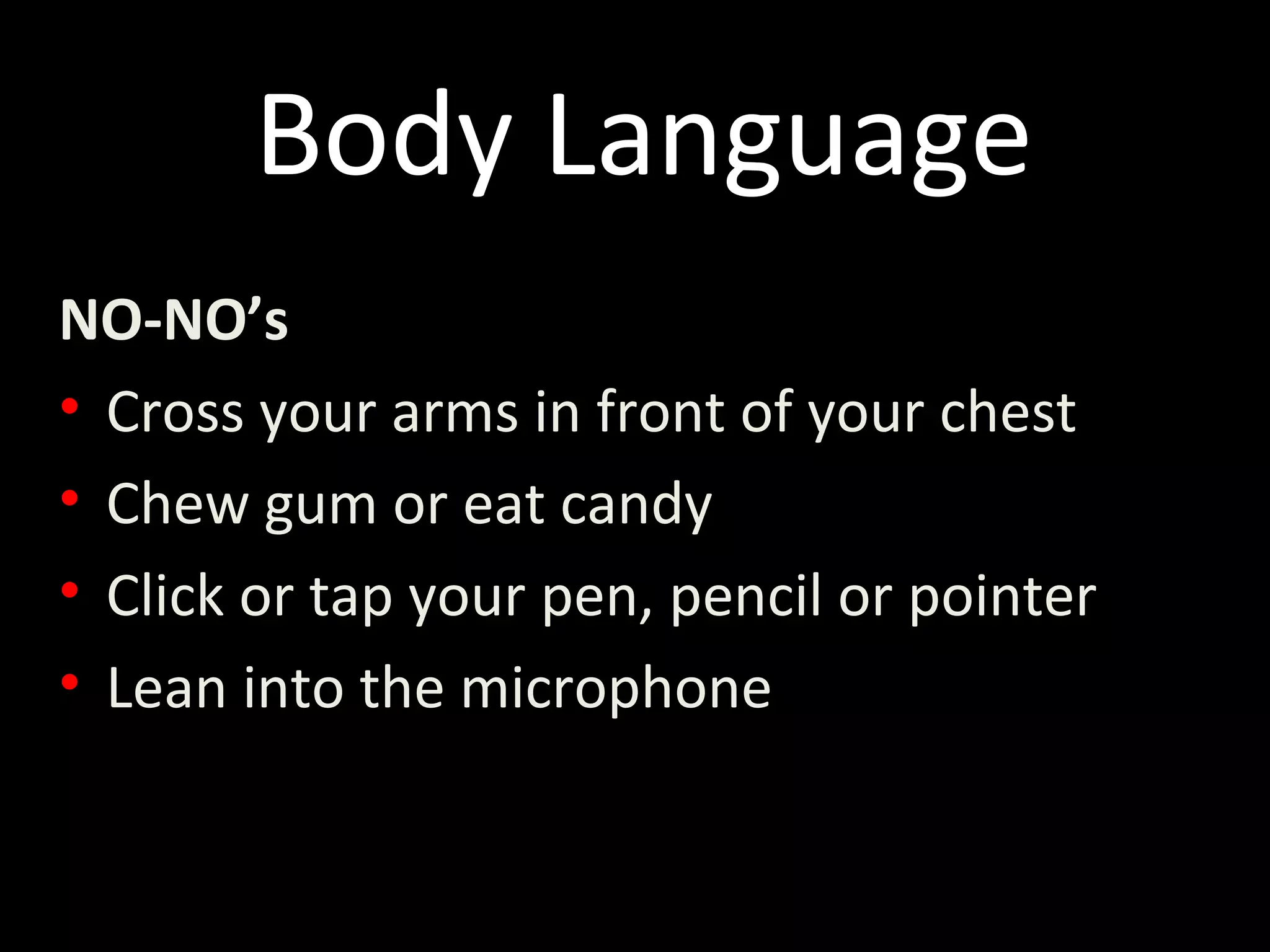
NO-NO’s
• Cross your arms in front of your chest
• Chew gum or eat candy
• Click or tap your pen, pencil or pointer
• Lean into the microphone
Body Language
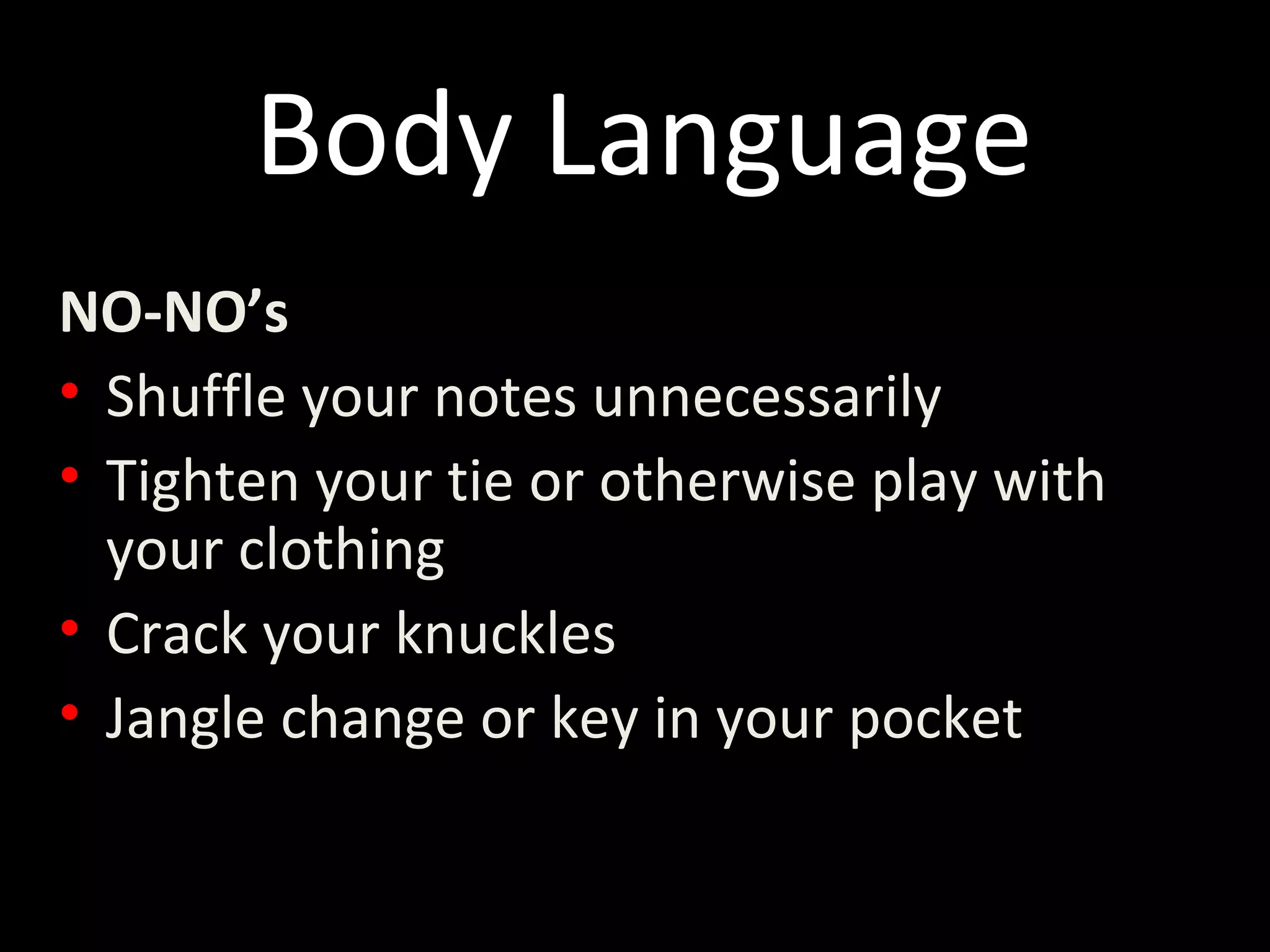
NO-NO’s
• Shuffle your notes unnecessarily
• Tighten your tie or otherwise play with
your clothing
• Crack your knuckles
• Jangle change or key in your pocket
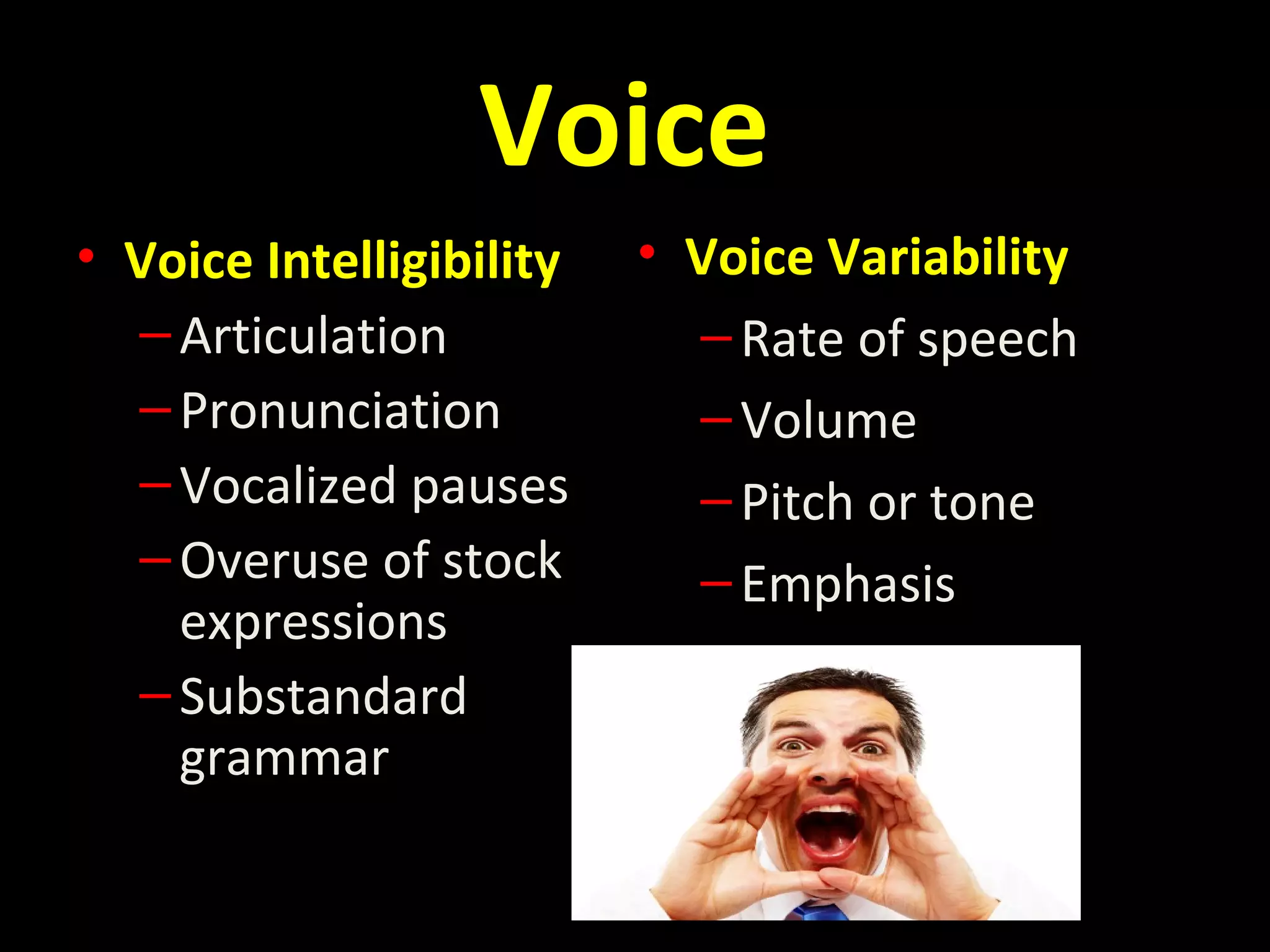
Voice
• Voice Intelligibility
–Articulation
–Pronunciation
–Vocalized pauses
–Overuse of stock
expressions
–Substandard
grammar
• Voice Variability
–Rate of speech
–Volume
–Pitch or tone
–Emphasis
Combine
VERBAL SKILLS
• Slow down!
• Don’t read your slides
• Vary voice tone
• Real enthusiasm
• SPEAK-UP
BODY LANGUAGE
• Eye contact
• Stand straight -
breathe
• Don’t over gesture
with pointer, etc.
• Face your
audience
Public Speaking Tips
• Breathe deeply
• Take your time
• Test the microphone
• Smile!
• Hydrate your voice
Make a strong start
Move
Smile
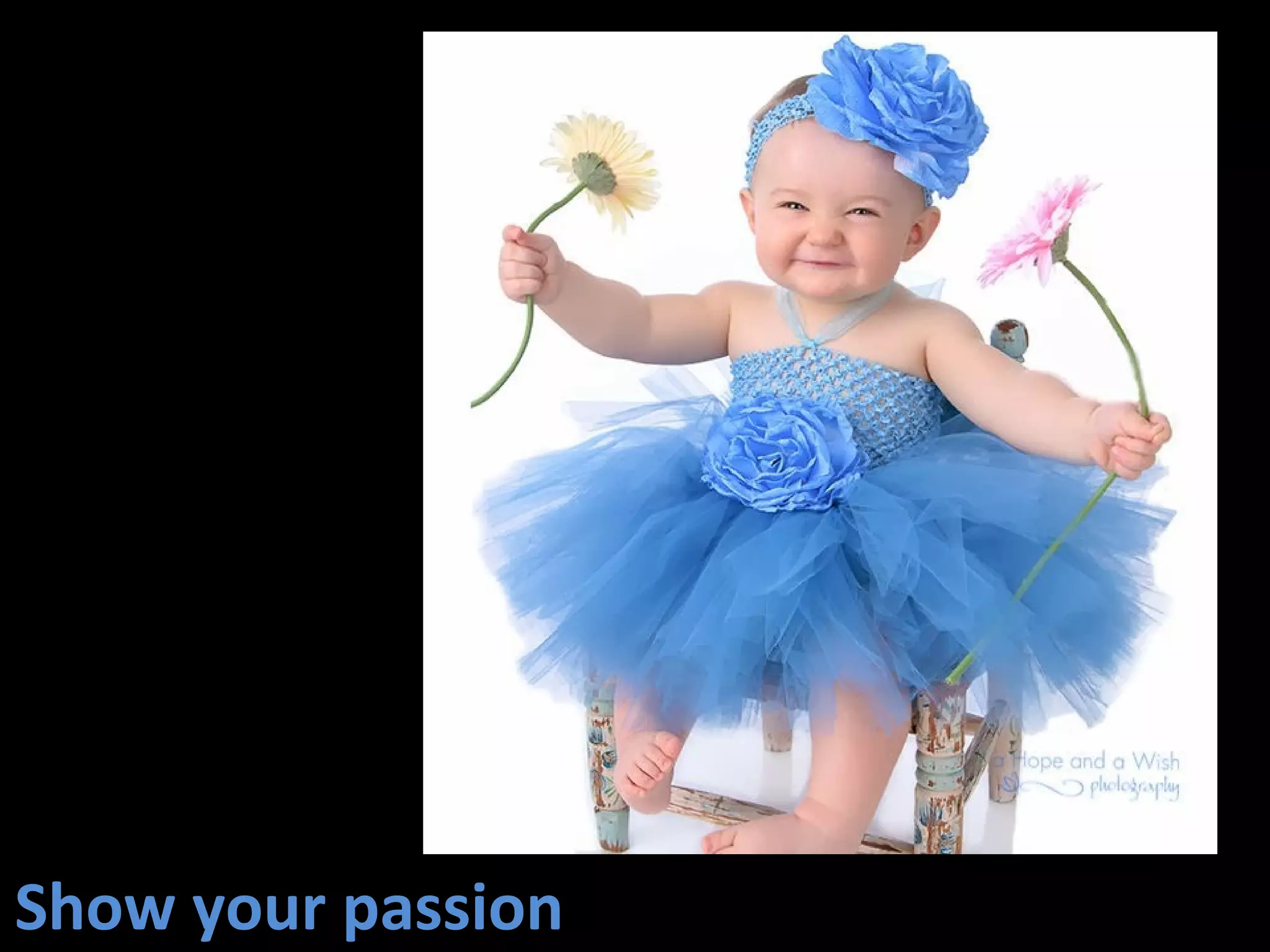
Show your passion
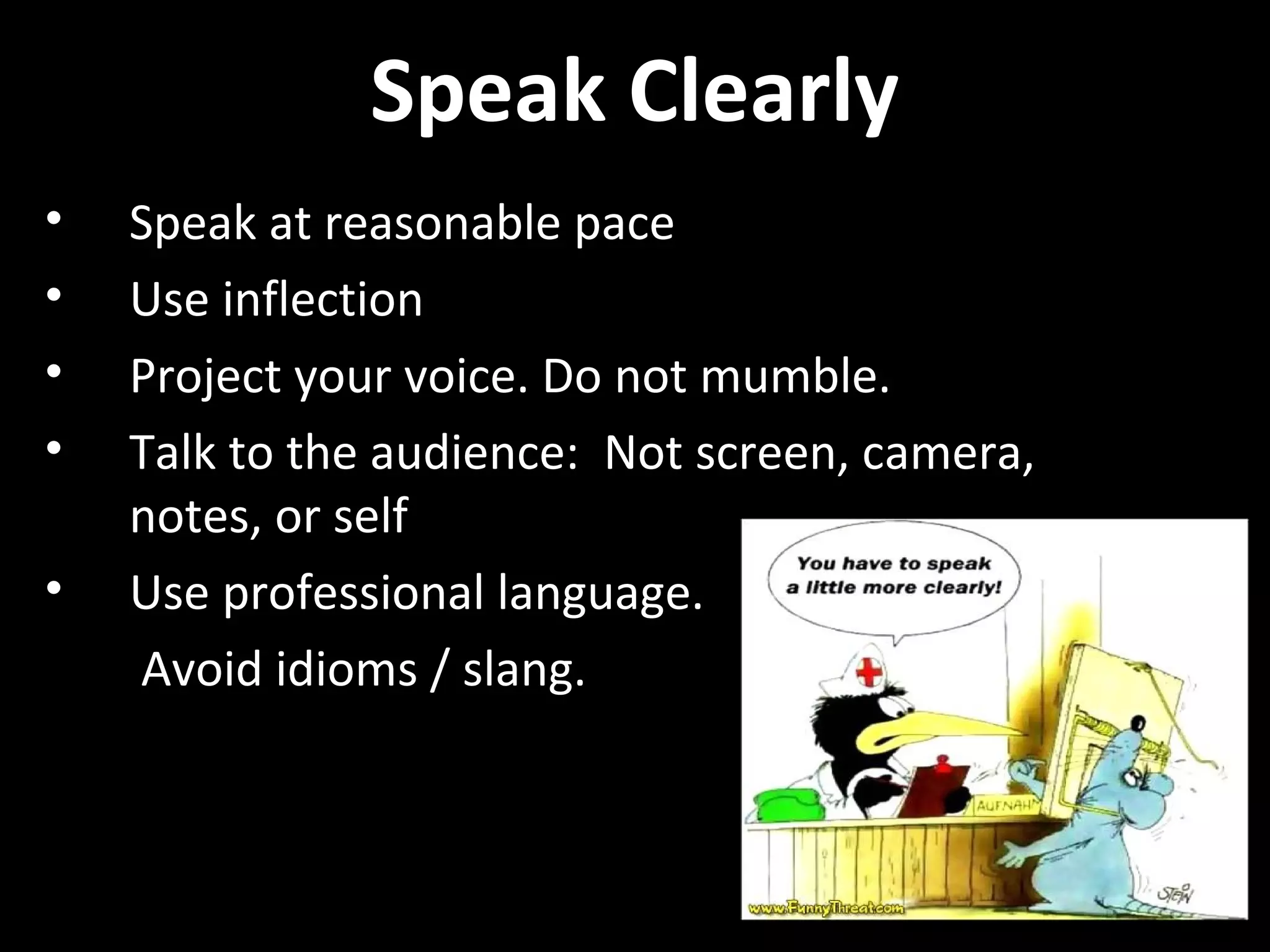
Speak Clearly
• Speak at reasonable pace
• Use inflection
• Project your voice. Do not mumble.
• Talk to the audience: Not screen, camera,
notes, or self
• Use professional language.
Avoid idioms / slang.
Getting started - greeting the audience
• Good morning, ladies and gentlemen.
• Welcome to my presentation.
• It’s very nice to see you all here today.
• Can we get started?
• Let me say just a few words about my background...
What you need to do first is to greet your audience. Here are some useful phrases:
Then you proceed to the introduction to your topic
Making an effective opening
• Give them a problem to think about (Suppose you... Why is it that...)
• Give them some amazing facts.(Did you know that ...)
• Give them a story or a personal anecdote (stories always atract attention)
• Make a funny remark (but be careful with humour, not all jokes work well)
• Record a music piece perhaps (if appropriate for the topic)
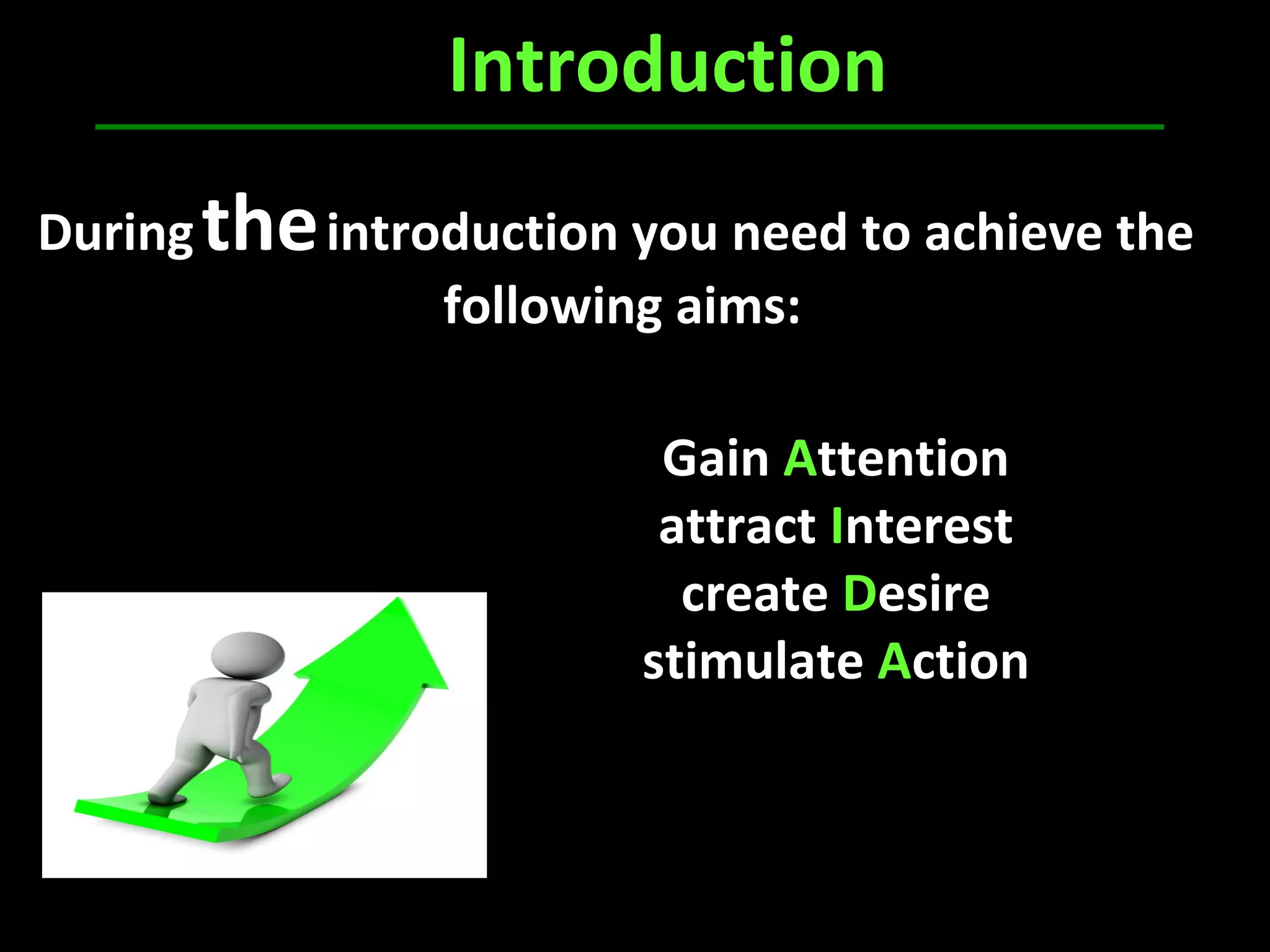
Introduction
Duringtheintroduction you need to achieve the
following aims:
Gain Attention
attract Interest
create Desire
stimulate Action
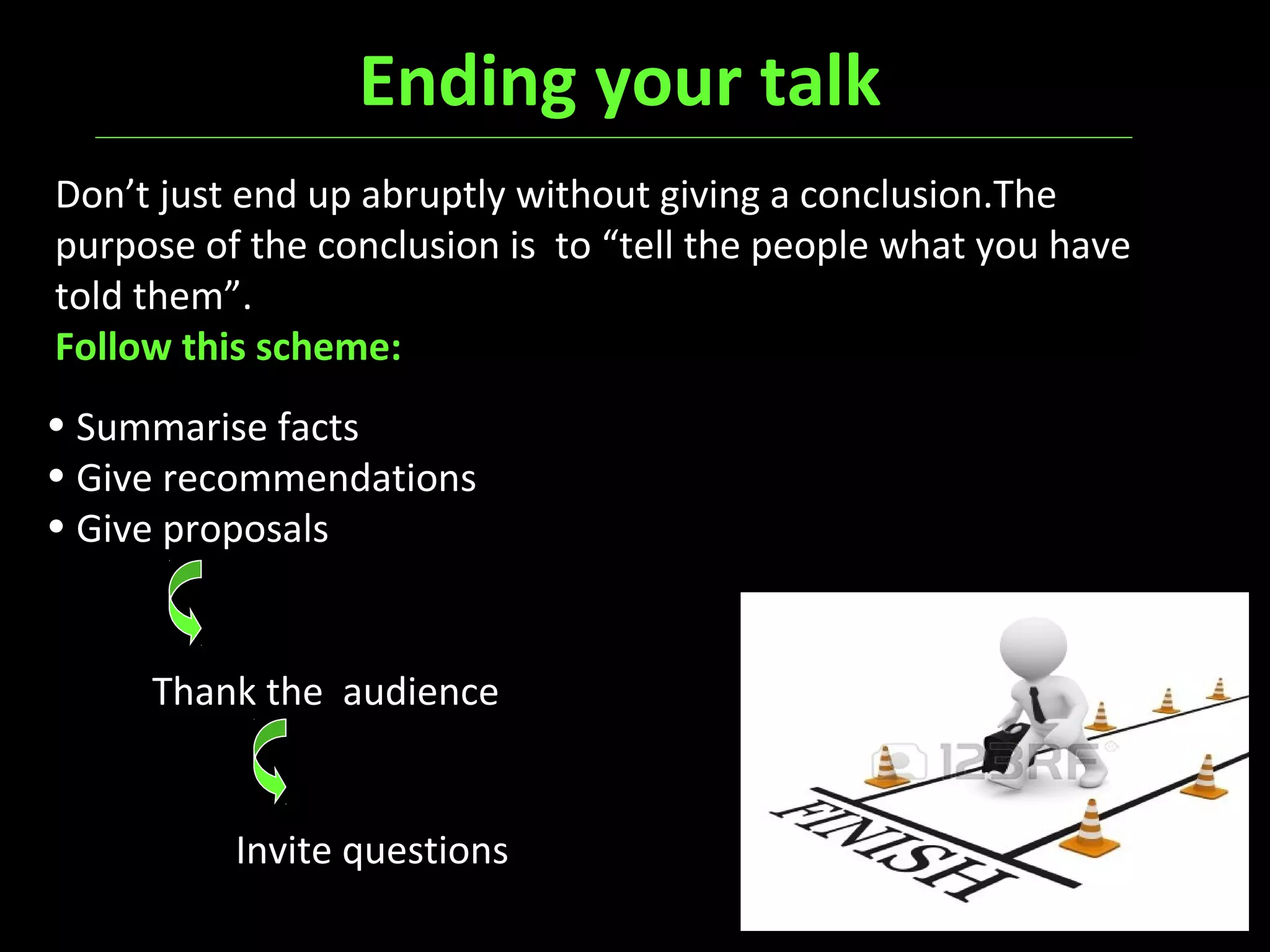
Ending your talk
Don’t just end up abruptly without giving a conclusion.The
purpose of the conclusion is to “tell the people what you have
told them”.
Follow this scheme:
• Summarise facts
• Give recommendations
• Give proposals
Thank the audience
Invite questions
“Make sure you have finished
speaking before your
audience has finished
listening.”
-Dorothy Sarnoff
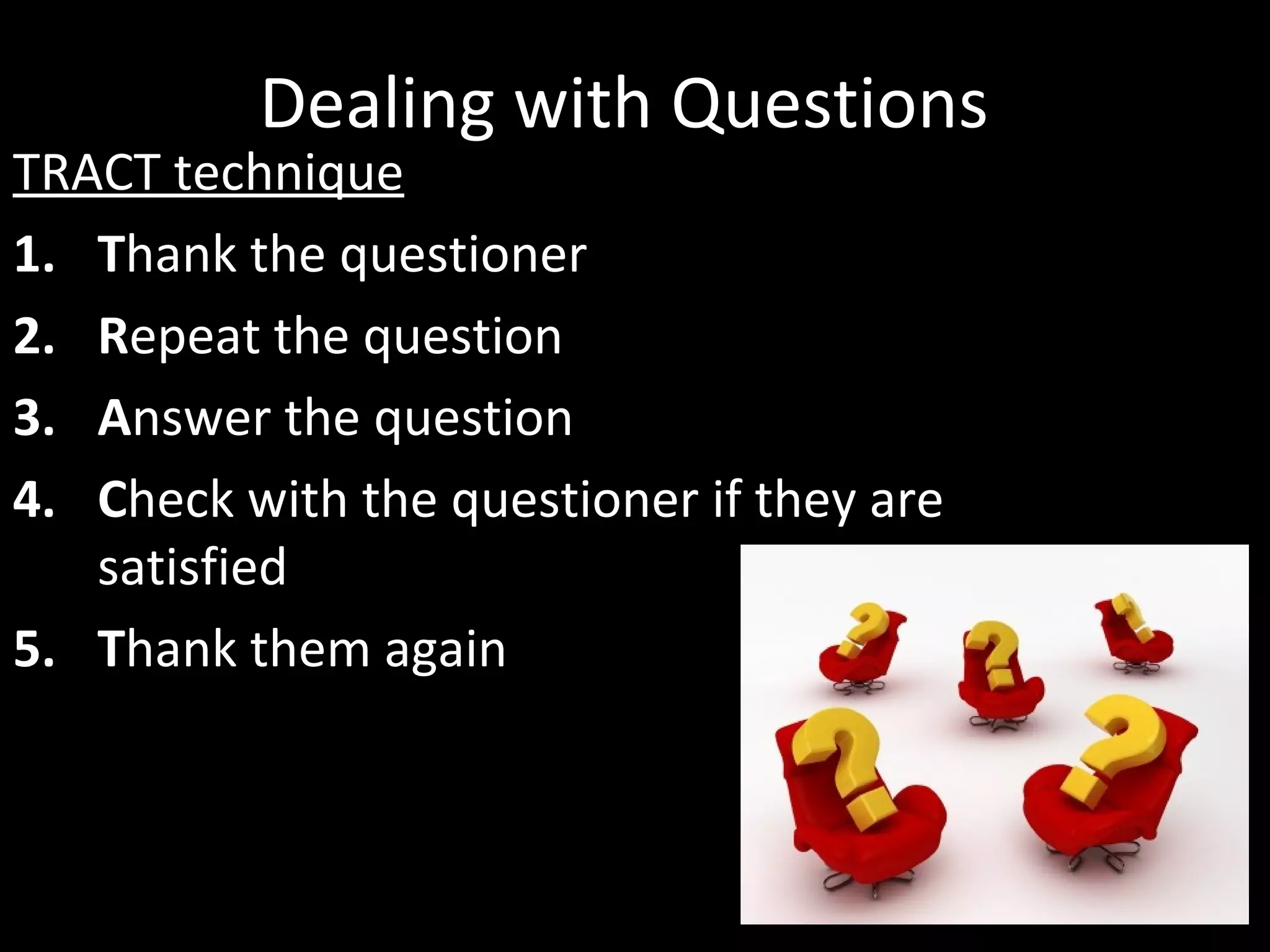
Dealing with Questions
TRACT technique
1. Thank the questioner
2. Repeat the question
3. Answer the question
4. Check with the questioner if they are
satisfied
5. Thank them again
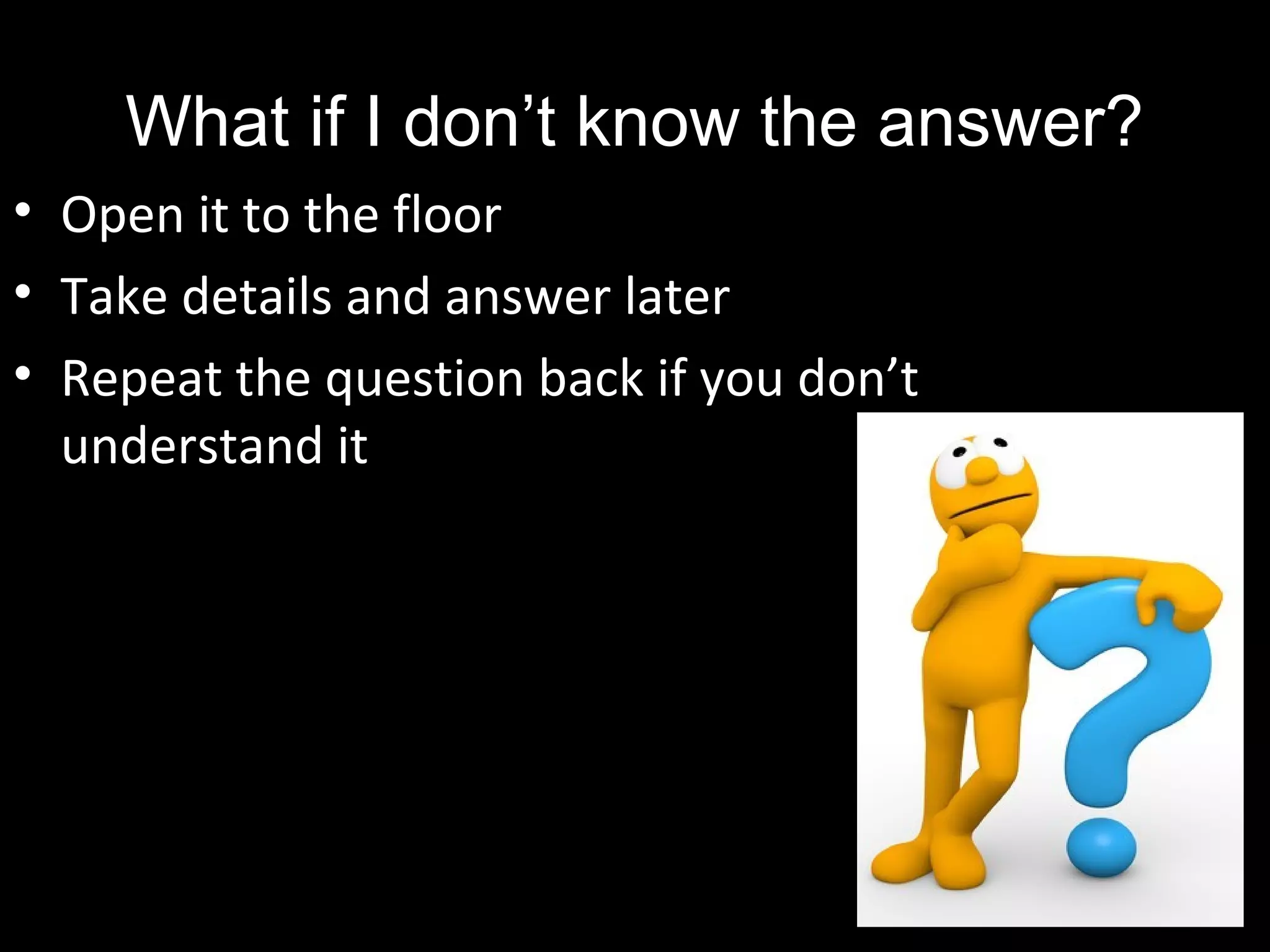
What if I don’t know the answer?
• Open it to the floor
• Take details and answer later
• Repeat the question back if you don’t
understand it
Easy as A B C
“I can’t Answer that
question Because …, but
I Can tell you…”
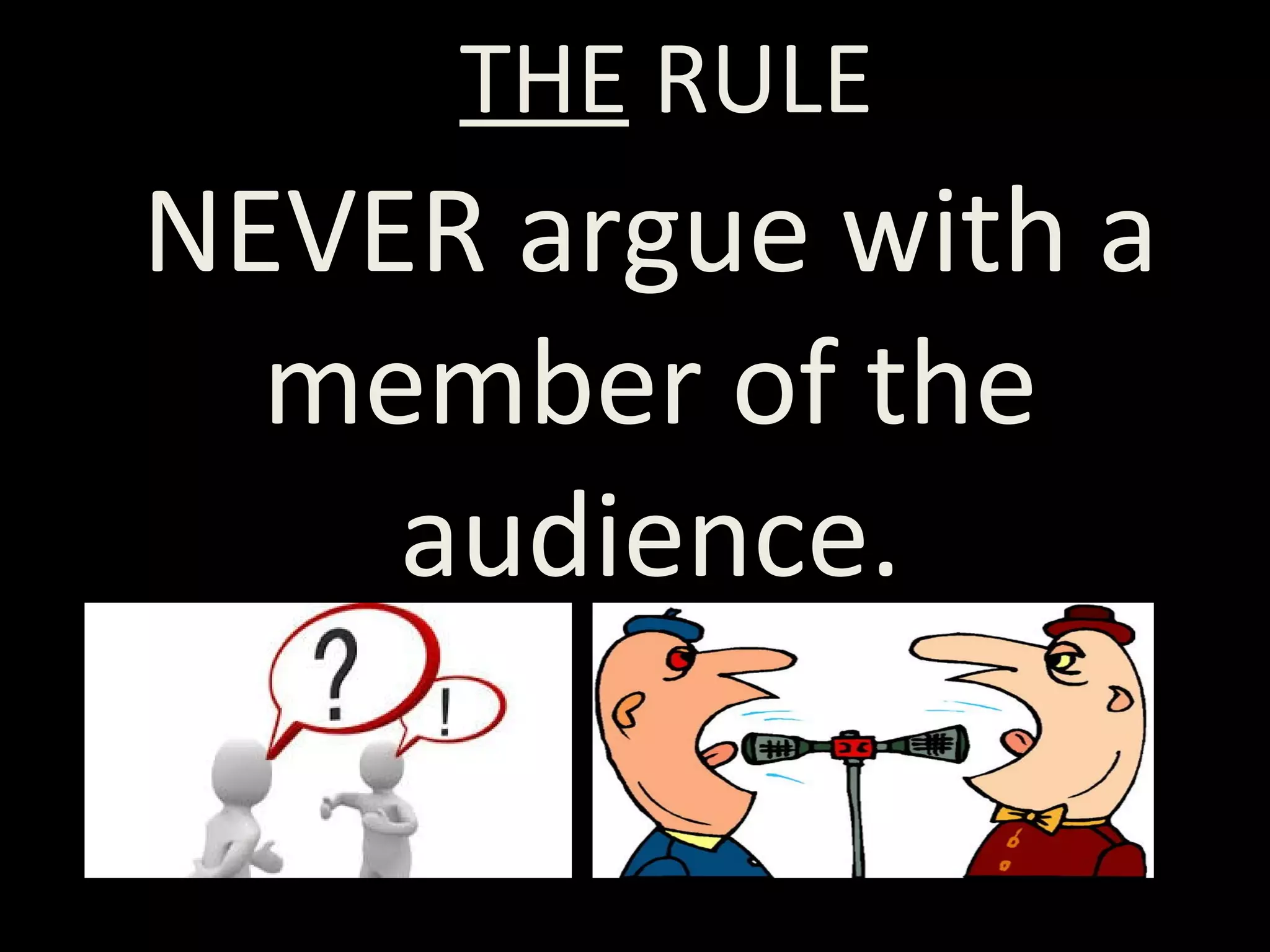
NEVER argue with a
member of the
audience.
THE RULE
Remember
During Handling Questions
Do not get confused
You are not supposed to know everything
Anticipate and keep answers ready
Sometime questions themselves give you a lead
to highlight your point of view
Questions show people are listening!
Summary
• Preparation is key!
• Practice!
• Watch out for tone and body language
• Questions are good, but prepare for
them.
• Fears can be tempered with good
preparation
Now
Any questions
Thank you

Professional and Appealing Presentation Skills

  • 1.
    Professional and AppealingPresentation Prepared and Presented by: Dr. Muna Oqal MSc Pharmacology
  • 2.
    “I always thinka great speaker convinces us not by force of reasoning but because he is visibly enjoying the beliefs he wants us to accept.” -W.B. Yeats
  • 3.
    Objectives of theLecture Today By the end of the session, you will be able to know how to be a good speaker through… • Utilizing eye contact, body language and voice (Tone) to their advantage in a presentation • Preparation and Practice • Dealing with questions and interruptions • Facing your fears
  • 4.
    We don’t wantthis case scenario
  • 5.
  • 6.
    Planning Who are youtalking to? Why are you talking to them? How long time do you need? What story are you going to tell?
  • 7.
    Preparation Outline and sketchslides Prepare slides Proof read Prepare notes
  • 8.
    Performance • Explain figures,and point to important aspects • Give a clear and concise summary, then stop. • Don’t go overtime. Ever.
  • 9.
    Practice • If group:rehearse as a group – Check timing – Provide feedback to each other • If individual: rehearse with friend or faculty • Rehearse without PowerPoint • Rehearse with PowerPoint in classroom
  • 10.
    Some things toavoid….
  • 11.
    Speech was confused;I didn’t know what he/she was trying to tell me This is what irritates people during presentations Verbal Communication- barriers
  • 12.
  • 13.
  • 14.
  • 15.
  • 16.
  • 17.
  • 18.
    Speaker did notsound enthusiastic
  • 19.
  • 20.
    If you’re bored,your audience is snoring!
  • 21.
    I was irritatedby his/her clothing
  • 22.
  • 23.
    Speaker was usingjargon (slang) language
  • 24.
  • 25.
    Speaker was notquestioning
  • 26.
    Facing your Fears •Write your fears on a post-it • Stick them up • Find ways to face them in the group
  • 27.
    Podium Panic For somepeople, the thought of giving a presentation is more frightening than falling off a cliff, financial difficulties, snakes and even death.
  • 28.
    Dealing with PodiumPanic • Audiences are forgiving • Nervousness is usually invisible • Be yourself • Practice deep breathing/ visualization techniques • Begin in your comfort zone
  • 29.
    • Check outthe room in advance • Concentrate on the message • Begin with a slow, well prepared introduction; have a confident and clear conclusion • Be prepared and practice
  • 30.
    • Lack ofexperience • Lack of preparation • Lack of enthusiasm • Negative self-talk Feeling Nervous?
  • 31.
    • Be over-prepared •Rehearse and practice • Know your subject • Use relaxation techniques • Be positive +++ • Avoid stressors Becoming Confident
  • 32.
    Warm up! • Helpsyou to relax • Helps you to be heard • Helps you to sound more confident.
  • 33.
    Tongue Twisters! • UniqueNew York • She sells sea shells by the sea shore. The shells that she sells are sea shells I’m sure • Red Lorry, Yellow Lorry • Peter Piper picked a peck of picked peppers • Rubber buggy baby bumpers
  • 34.
  • 35.
    Body Language • Dressprofessionally • Face your audience • Audience focus: maintain eye contact with audience • Point and re-orient • Be enthusiastic
  • 36.
    • Never letthem out of your sight. • Looking them in the eye makes them feel that they are influencing what you say. • Eye contact allows the presentation to approximate conversation—the audience feels much more involved. Eye Contact
  • 37.
    Body Language NO-NO’s • Leanon or grip the podium • Rock or sway in place • Stand immobile • Use a single gesture repeatedly • Examine or bite your fingernails
  • 38.
    Body Language NO-NO’s • Crossyour arms in front of your chest • Chew gum or eat candy • Click or tap your pen, pencil or pointer • Lean into the microphone
  • 39.
    Body Language NO-NO’s • Shuffleyour notes unnecessarily • Tighten your tie or otherwise play with your clothing • Crack your knuckles • Jangle change or key in your pocket
  • 40.
    Voice • Voice Intelligibility –Articulation –Pronunciation –Vocalizedpauses –Overuse of stock expressions –Substandard grammar • Voice Variability –Rate of speech –Volume –Pitch or tone –Emphasis
  • 41.
    Combine VERBAL SKILLS • Slowdown! • Don’t read your slides • Vary voice tone • Real enthusiasm • SPEAK-UP BODY LANGUAGE • Eye contact • Stand straight - breathe • Don’t over gesture with pointer, etc. • Face your audience
  • 42.
    Public Speaking Tips •Breathe deeply • Take your time • Test the microphone • Smile! • Hydrate your voice
  • 43.
  • 44.
  • 45.
  • 46.
  • 47.
    Speak Clearly • Speakat reasonable pace • Use inflection • Project your voice. Do not mumble. • Talk to the audience: Not screen, camera, notes, or self • Use professional language. Avoid idioms / slang.
  • 48.
    Getting started -greeting the audience • Good morning, ladies and gentlemen. • Welcome to my presentation. • It’s very nice to see you all here today. • Can we get started? • Let me say just a few words about my background... What you need to do first is to greet your audience. Here are some useful phrases: Then you proceed to the introduction to your topic
  • 49.
    Making an effectiveopening • Give them a problem to think about (Suppose you... Why is it that...) • Give them some amazing facts.(Did you know that ...) • Give them a story or a personal anecdote (stories always atract attention) • Make a funny remark (but be careful with humour, not all jokes work well) • Record a music piece perhaps (if appropriate for the topic)
  • 50.
    Introduction Duringtheintroduction you needto achieve the following aims: Gain Attention attract Interest create Desire stimulate Action
  • 51.
    Ending your talk Don’tjust end up abruptly without giving a conclusion.The purpose of the conclusion is to “tell the people what you have told them”. Follow this scheme: • Summarise facts • Give recommendations • Give proposals Thank the audience Invite questions
  • 52.
    “Make sure youhave finished speaking before your audience has finished listening.” -Dorothy Sarnoff
  • 53.
    Dealing with Questions TRACTtechnique 1. Thank the questioner 2. Repeat the question 3. Answer the question 4. Check with the questioner if they are satisfied 5. Thank them again
  • 54.
    What if Idon’t know the answer? • Open it to the floor • Take details and answer later • Repeat the question back if you don’t understand it
  • 55.
    Easy as AB C “I can’t Answer that question Because …, but I Can tell you…”
  • 56.
    NEVER argue witha member of the audience. THE RULE
  • 57.
    Remember During Handling Questions Donot get confused You are not supposed to know everything Anticipate and keep answers ready Sometime questions themselves give you a lead to highlight your point of view Questions show people are listening!
  • 58.
    Summary • Preparation iskey! • Practice! • Watch out for tone and body language • Questions are good, but prepare for them. • Fears can be tempered with good preparation
  • 59.
  • 60.

Editor's Notes

  • #3 William Butler Yeats, was an Irish poet and one of the foremost figures of 20th century literature, he was awarded the Nobel Prize in Literature as the first Irishman so honoured
  • #6 Martin Luther Occupation : Clergyman, activist Winston Churchill:Officeholder Hitler John Kennedy Mohandas Karamchand Gandhi: Nationality : Indian Claim for fame : Leadership of Indian independence movement,, philosophy of Satyagraha, Ahimsa or non-violence., pacifism Nilson Mandella Pope John Paul II:Christian Leader
  • #8 NEED MORE ILLUSTRATION
  • #10 If giving a group presentation, rehearse as a group to do the following: Check timing of presentation Provide feedback to each other on things like: Looking at the projection screen too much Talking too fast Mumbling Reading from their notes or the projection screen If doing an individual presentation, rehearse the presentation with a friend or faculty member who can give you feedback. Rehearse without your PowerPoint until you are not dependent on it to prompt you as to what you say next. The slide show is not the center of this presentation; you are. Rehearse with your PowerPoint in the classroom. If possible, project your slide presentation in the room where you are giving the presentation and check it out for readability from the back of the room, color contrast, clarity of images, and so forth.
  • #21 Talk to your audience (eye contact, conversational style) Engage your audience by asking questions Keep it interesting: - share interesting tidbits - give unique examples/analogies - humor disturbs slumber
  • #24 Jargon language: language that public don’t understand what we talking about My bad - If a teen has made a mistake, the phrase “my bad” is frequently employed as a cover. It means what it appears to mean: “I was bad!” Frenemy - This term is a combination of the words "friend" and "enemy." It is a person who appears on one hand to be your friend but, at the same time is antagonistic towards you.
  • #31 Like fitness
  • #32 Practice in actual room – full simulation Ask questions Organise visual aids, notes and handouts Prepare for audience questions Mindfulness
  • #36 Dress professionally. Dress like you are giving this presentation at a national conference of international experts, or assume your mother will see the video of this presentation. Face your audience. Position your body so you can see the whole audience without moving your head significantly. You can move around, and use your hands to emphasize points, but focus on your audience. Audience focus: maintain eye contact with audience for the majority of the presentation, not with computer screen, not with the projection screen or speaker notes. You can see if people are nodding off, looking confused, or want to ask a question and take action. If someone nods off, ask them a question. Ignore the camera. Just pretend it isn’t there. When you do need to point to something on the screen, do so quickly and re-orient yourself back to facing the audience. Display high energy. Be enthusiastic. Don’t lean on the podium or other furniture. Stand up straight. Holding on to the podium to keep your knees from knocking is allowed. Especially, don’t prop your chin on your hand.
  • #41 Intelligibility=understandability Variability=expresses differences in meaning Articulation (enunciation)= the precision and clarity with which you utter the sounds of speech. Chiefly the job of the jaw, tongue, and lips. Most articulation problems come from laziness on the parts of these organs. Pronunciation=traditional or customary utterance of words. Common faults are the misplacement of accent, omitting sounds, adding sounds,and verbalizing silent letters. Vocalized pauses=uh, um, ah. Know your subject. Overuse of stock expressions=OK, like, you know. Conveys a lack of originality. Substandard grammar Force=variability of volume Pitch=highness or lowness Emphasis=stressing certain phrases or sections
  • #44 Most people give you 2/3 minutes You've heard it before: First impressions are powerful. Believe it. The first 2-3 minutes of the presentation are the most important. The audience wants to like you and they will give you a few minutes at the beginning to engage them -- don't miss the opportunity. Most presenters fail here because they ramble on too long about superfluous background information or their personal/professional history, etc.
  • #45 Get closer to your audience by moving away from or in front of the podium. The podium is a barrier between you and the audience, but the goal of our presentation is to connect with the audience. Removing physical barriers between you and the audience will help you build rapport and make a connection. Don’t talk & move Don’t talk over a video
  • #46 Try looking at individuals rather than scanning the group. Since you are using a computer, you never need to look at the screen behind you — just glance down at the computer screen briefly. One sure way to lose an audience is to turn your back on them. And while you're maintaining great eye contact, don't forget to smile as well. Unless your topic is very grim, a smile can be a very powerful thing.
  • #47 Let your enthusiasm come out Biggest element that separates mediocre presenters from world class ones is the ability to connect with audience in honest and exciting way. Movement – hand gestures, intonation
  • #48 Clear and understandable speaking. Speak at a reasonable pace, not too fast or slow. Use inflection to maintain interest. Project your voice. Volume needs to be adequate for the entire room to hear you. If voice is soft, use a microphone. Do not mumble. Talk to the audience. Not the screen, the camera, your notes, or yourself. Use professional language. Avoid idioms and slang.
  • #50 There are several ways how to attract the audience right from the beginning. Think of one of the following techniques to introduce your talk: Some useful phrases What I want to do this morning is to ….. My talk will take about 30 minutes. During my presentation, I’m going to be focusing on four main areas. I’ll be giving out copies of my transparencies at the end. If you have any questions, or comments you’d like to make, please don’t hesitate to stop me.
  • #51 Introduction is probably the most important part. The Purpose of the introduction is “to tell the audience what you are going to tell them”. You should remember that there is no second chance for a first bad impression. If you start off badly you will spoil everything.
  • #52 When you come to the end of your presentation you need to indicate this to the people. Ending your talk : useful phrases Wrapping up This brings me to the end of my presentation. Let me just run over the key points again… To sum up briefly… To conclude … As we’ve seen… So, my recommendation is …. I would welcome any suggestions. Thanking the audience & Inviting questions Thank you for your attention and if you have any questions I’ll be pleased to answer them. I’ll be happy to answer any questions. Are there any questions you’d like to ask?
  • #54 Make sure you tell the audience that you will be taking questions at the end of your presentation. When you finish your presentation, instead of asking ‘Does anyone have questions’, ask something like ‘What questions do people have?’ or a specific question related to your presentation like ‘Do you agree with (part of your presentation’. Look at the questioner. Remain neutral and attentive. Listen to the whole question. Pause before you respond. Address the questioner, then move your eyes to others.