LET TED DO THE TALKING:
8 TED TALKS THAT
TEACH PUBLIC SPEAKING
PRESENTED BY
Click this button to Tweet the
information on each slide.
Tweet This
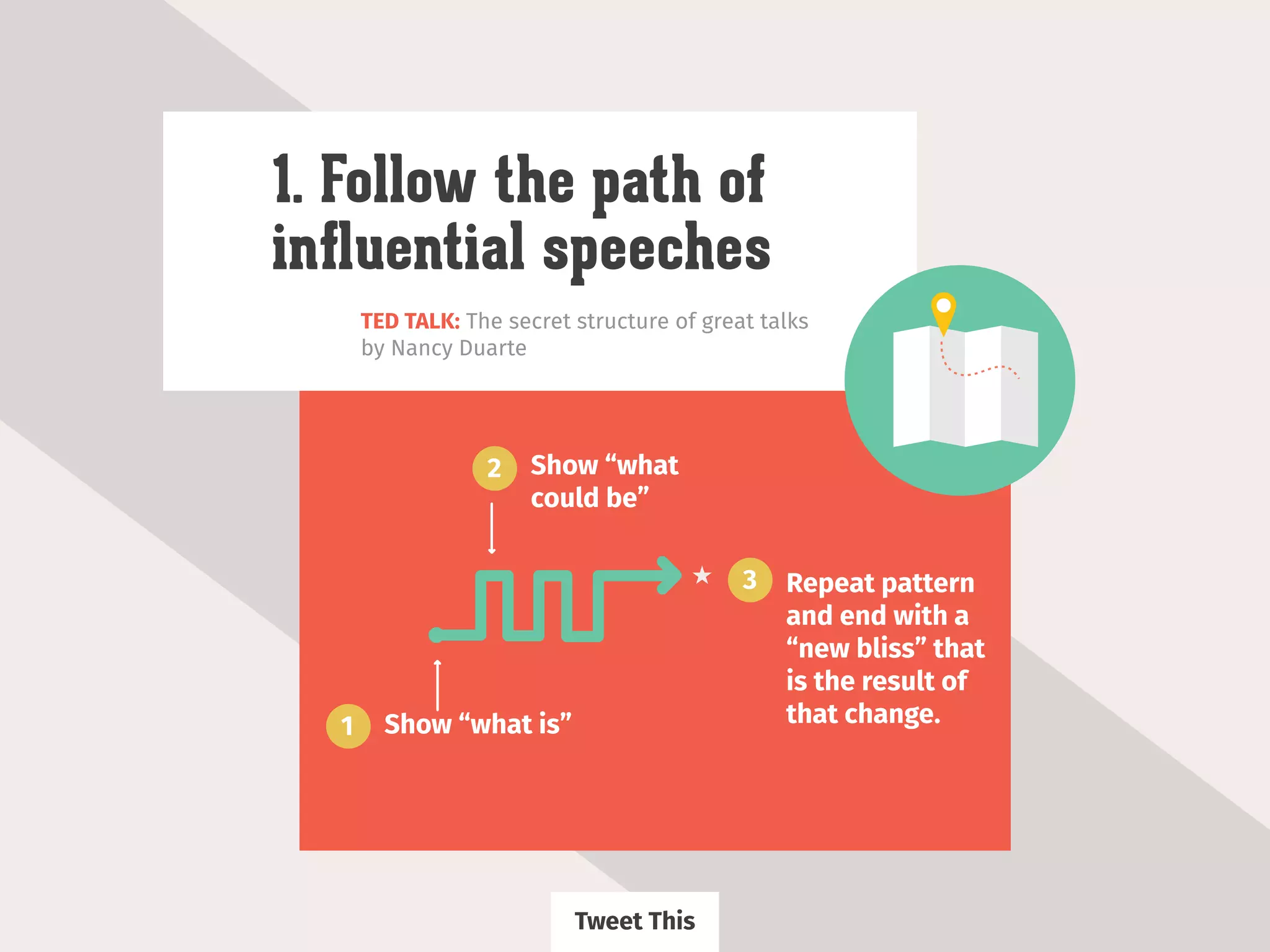
TED TALK: The secret structure of great talks
by Nancy Duarte
1. Follow the path of
influential speeches
Show “what is”1
Show “what
could be”
2
Repeat pattern
and end with a
“new bliss” that
is the result of
that change.
3
Tweet This
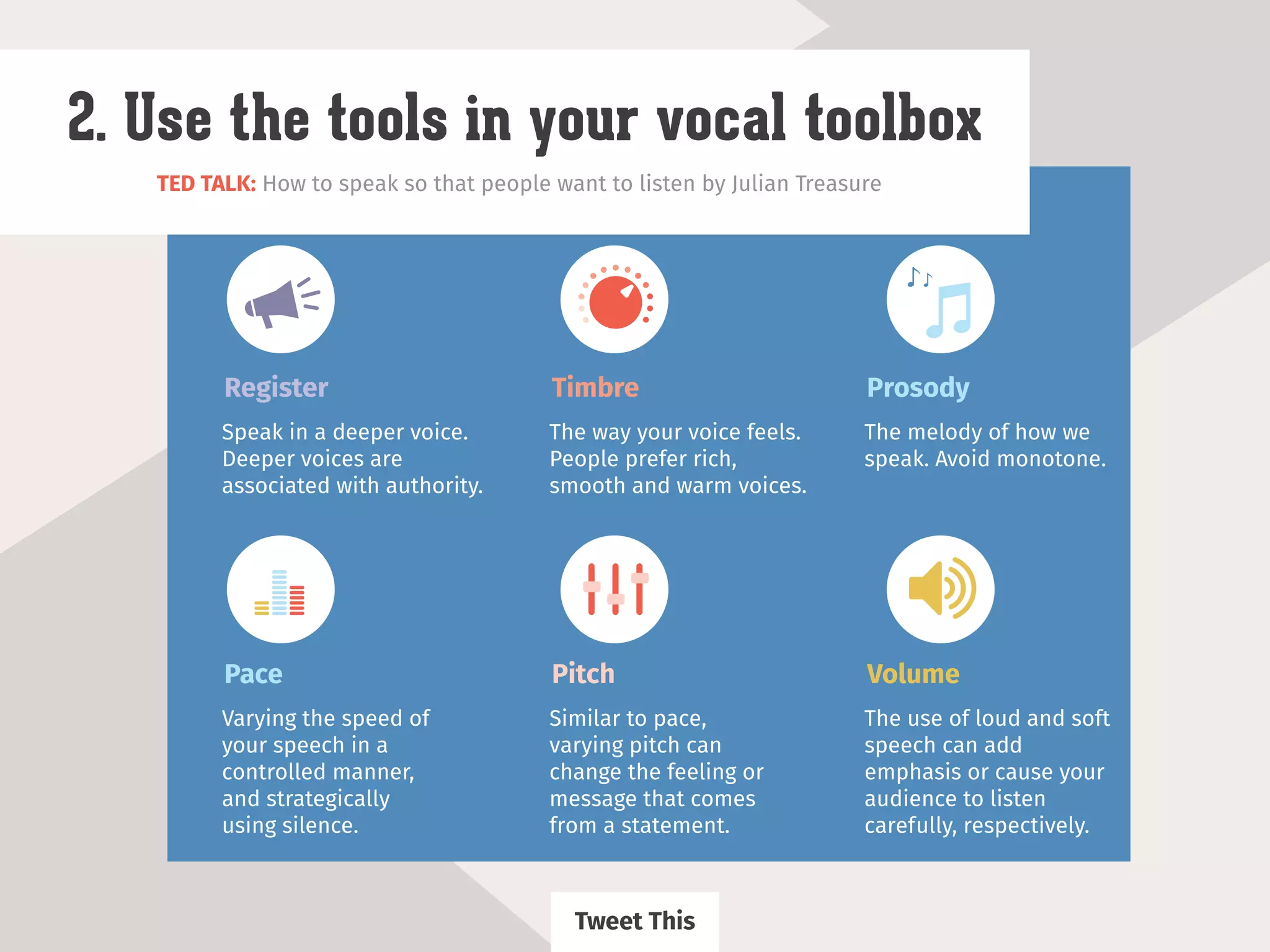
Register
Speak in a deeper voice.
Deeper voices are
associated with authority.
Timbre
The way your voice feels.
People prefer rich,
smooth and warm voices.
Prosody
The melody of how we
speak. Avoid monotone.
Pace
Varying the speed of
your speech in a
controlled manner,
and strategically
using silence.
Pitch
Similar to pace,
varying pitch can
change the feeling or
message that comes
from a statement.
Volume
The use of loud and soft
speech can add
emphasis or cause your
audience to listen
carefully, respectively.
TED TALK: How to speak so that people want to listen by Julian Treasure
2. Use the tools in your vocal toolbox
Tweet This
TED TALK: The best stats you’ve ever seen
by Hans Rosling
3. Be engaged
Be familiar enough with your presentation so
that you can be excited and animated while
you present, rather than just reading
information from a screen. In doing this, your
audience will want to stay engaged with you.
Know your data and be excited about it
Tweet This
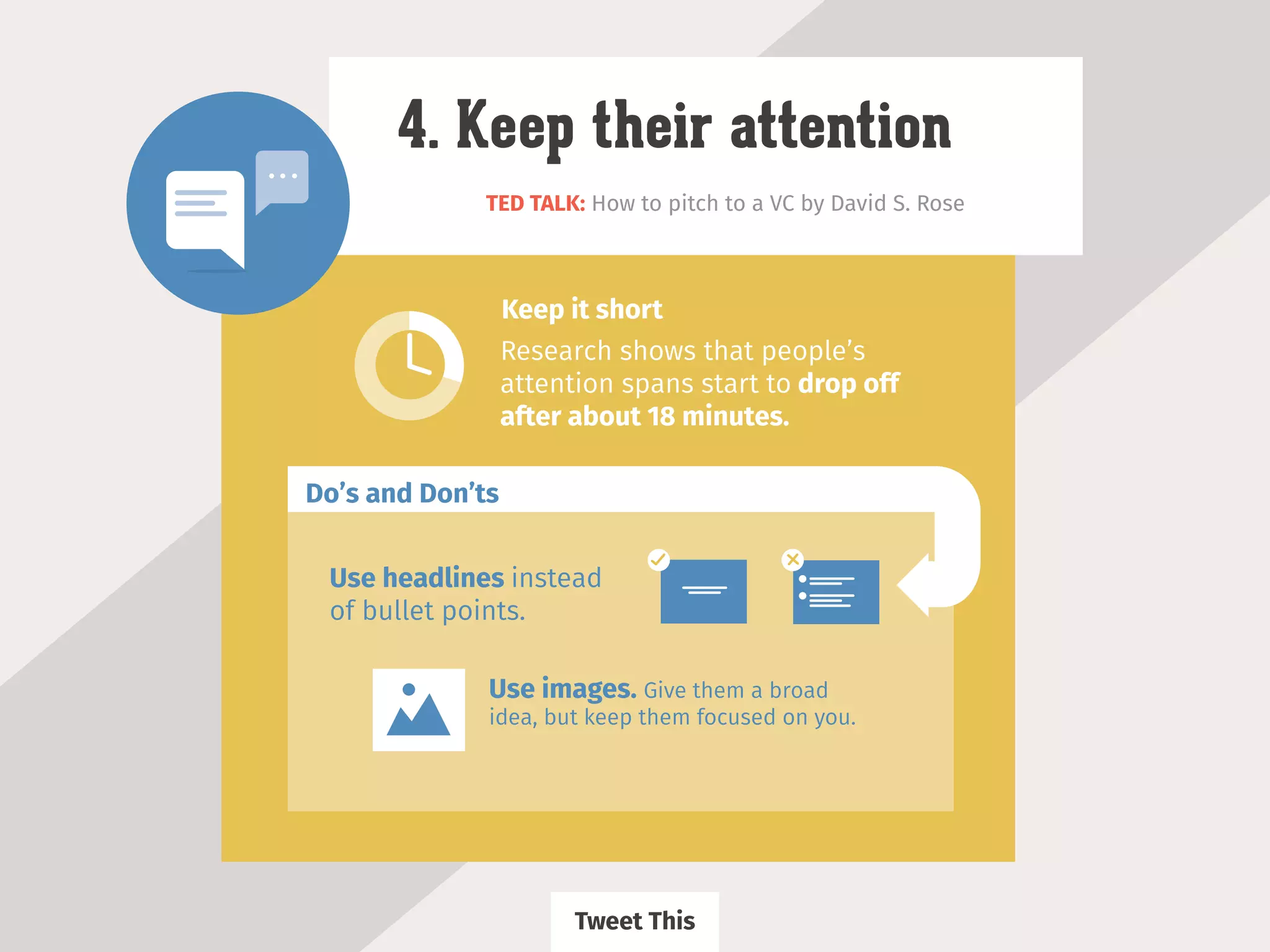
TED TALK: How to pitch to a VC by David S. Rose
4. Keep their attention
Research shows that people’s
attention spans start to drop off
after about 18 minutes.
Keep it short
Use headlines instead
of bullet points.
Use images. Give them a broad
idea, but keep them focused on you.
Do’s and Don’ts
Tweet This
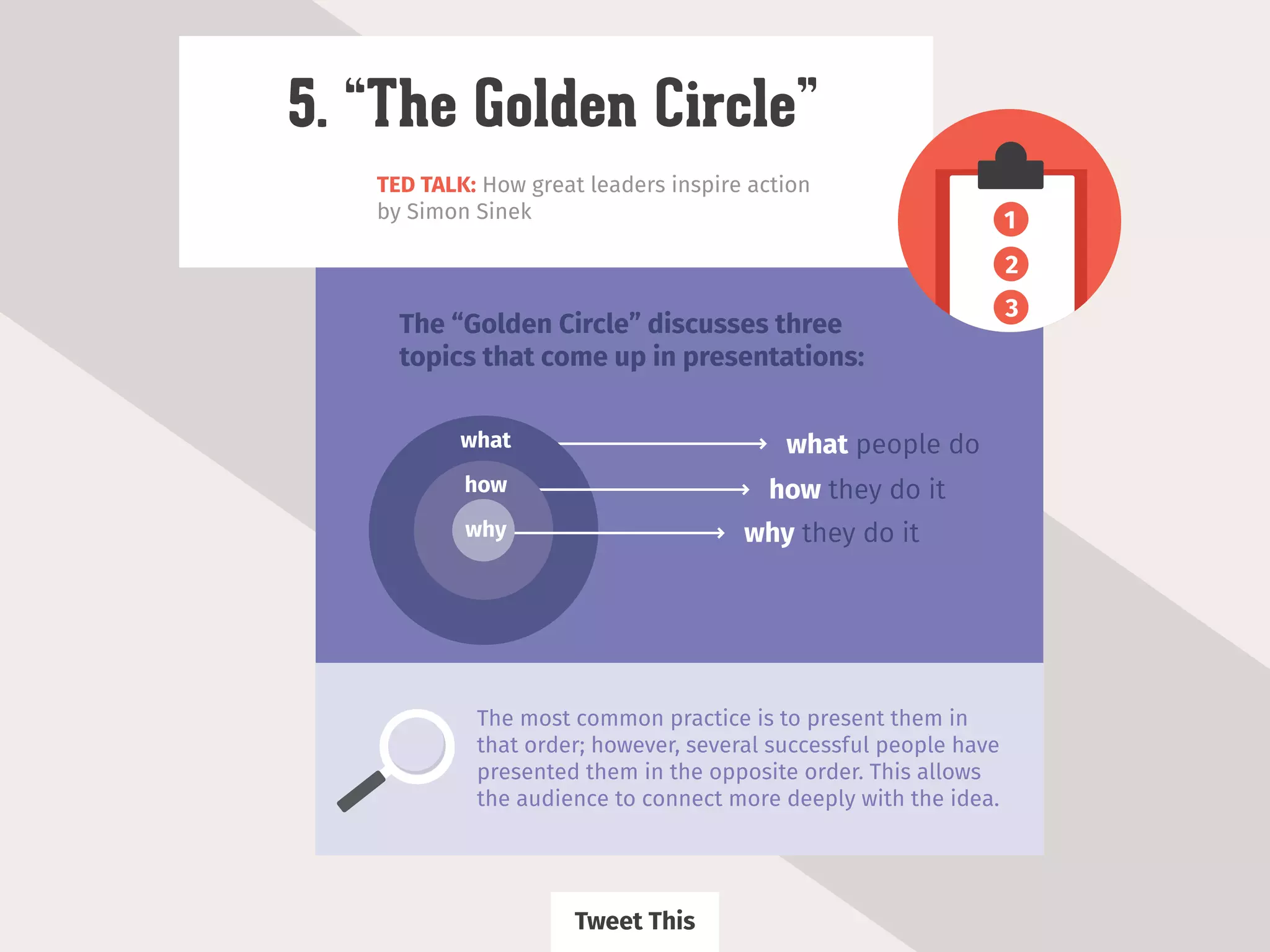
TED TALK: How great leaders inspire action
by Simon Sinek
5. “The Golden Circle”
what people do
why they do it
how they do it
what
how
why
The “Golden Circle” discusses three
topics that come up in presentations:
The most common practice is to present them in
that order; however, several successful people have
presented them in the opposite order. This allows
the audience to connect more deeply with the idea.
1
2
3
Tweet This
TED TALK: Once upon a time, my mother... by
Carmen Agra Deedy
6. Connect with
the audience
Allow for interaction within the presentation.
Draw parallels between your topic and the audience by
presenting familiar situations in a relatable way.
Deedy tells a simple story about an outing
to the store with her mother, she finds
connecting points with the audience and
creates an interesting tale from something
that could easily be seen as mundane.
Tweet This
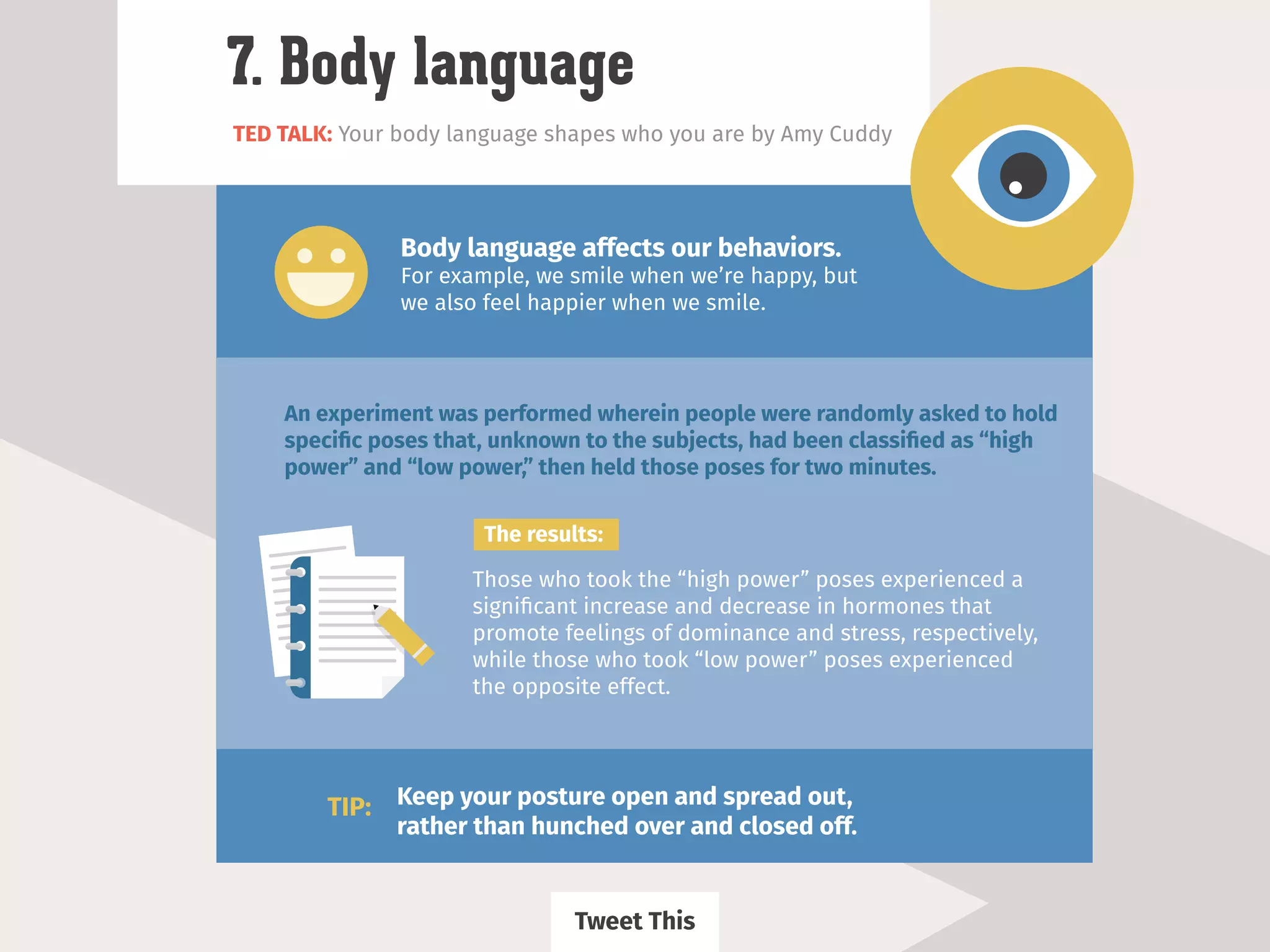
TED TALK: Your body language shapes who you are by Amy Cuddy
7. Body language
Body language affects our behaviors.
For example, we smile when we’re happy, but
we also feel happier when we smile.
Keep your posture open and spread out,
rather than hunched over and closed off.
TIP:
An experiment was performed wherein people were randomly asked to hold
specific poses that, unknown to the subjects, had been classified as “high
power” and “low power,” then held those poses for two minutes.
Those who took the “high power” poses experienced a
significant increase and decrease in hormones that
promote feelings of dominance and stress, respectively,
while those who took “low power” poses experienced
the opposite effect.
The results:
Tweet This
TED TALK: How I beat stage fright by Joe Kowan
8. Break the ice
Joe Kowan talks about his struggles with stage fright as he
worked to become a folk singer. Eventually, he wrote a
song about stage fright and how he was feeling. Doing this,
he connected with the audience, and they were able to
feel more comfortable watching him, because they no
longer had to feel uncomfortable for him.
This follows along with the practice of
telling a joke before a talk, or even poking
gentle fun at oneself in moderation.ha
ha
ha
Tweet This
SOURCES:
http://www.ted.com/talks/nancy_duarte_the_secret_structure_of_great_talks
http://www.ted.com/talks/julian_treasure_how_to_speak_so_that_people_want_to_listen
http://www.ted.com/talks/hans_rosling_shows_the_best_stats_you_ve_ever_seen
http://www.ted.com/talks/david_s_rose_on_pitching_to_vcs#t-92339
http://www.ted.com/talks/simon_sinek_how_great_leaders_inspire_action
http://www.ted.com/talks/carmen_agra_deedy_spins_stories
http://www.ted.com/talks/amy_cuddy_your_body_language_shapes_who_you_are
http://www.ted.com/talks/joe_kowan_how_i_beat_stage_fright
Click here to view the full infographic:

8 TED TALKS THAT TEACH PUBLIC SPEAKING

  • 1.
    LET TED DOTHE TALKING: 8 TED TALKS THAT TEACH PUBLIC SPEAKING
  • 2.
  • 3.
    Click this buttonto Tweet the information on each slide. Tweet This
  • 4.
    TED TALK: Thesecret structure of great talks by Nancy Duarte 1. Follow the path of influential speeches Show “what is”1 Show “what could be” 2 Repeat pattern and end with a “new bliss” that is the result of that change. 3 Tweet This
  • 5.
    Register Speak in adeeper voice. Deeper voices are associated with authority. Timbre The way your voice feels. People prefer rich, smooth and warm voices. Prosody The melody of how we speak. Avoid monotone. Pace Varying the speed of your speech in a controlled manner, and strategically using silence. Pitch Similar to pace, varying pitch can change the feeling or message that comes from a statement. Volume The use of loud and soft speech can add emphasis or cause your audience to listen carefully, respectively. TED TALK: How to speak so that people want to listen by Julian Treasure 2. Use the tools in your vocal toolbox Tweet This
  • 6.
    TED TALK: Thebest stats you’ve ever seen by Hans Rosling 3. Be engaged Be familiar enough with your presentation so that you can be excited and animated while you present, rather than just reading information from a screen. In doing this, your audience will want to stay engaged with you. Know your data and be excited about it Tweet This
  • 7.
    TED TALK: Howto pitch to a VC by David S. Rose 4. Keep their attention Research shows that people’s attention spans start to drop off after about 18 minutes. Keep it short Use headlines instead of bullet points. Use images. Give them a broad idea, but keep them focused on you. Do’s and Don’ts Tweet This
  • 8.
    TED TALK: Howgreat leaders inspire action by Simon Sinek 5. “The Golden Circle” what people do why they do it how they do it what how why The “Golden Circle” discusses three topics that come up in presentations: The most common practice is to present them in that order; however, several successful people have presented them in the opposite order. This allows the audience to connect more deeply with the idea. 1 2 3 Tweet This
  • 9.
    TED TALK: Onceupon a time, my mother... by Carmen Agra Deedy 6. Connect with the audience Allow for interaction within the presentation. Draw parallels between your topic and the audience by presenting familiar situations in a relatable way. Deedy tells a simple story about an outing to the store with her mother, she finds connecting points with the audience and creates an interesting tale from something that could easily be seen as mundane. Tweet This
  • 10.
    TED TALK: Yourbody language shapes who you are by Amy Cuddy 7. Body language Body language affects our behaviors. For example, we smile when we’re happy, but we also feel happier when we smile. Keep your posture open and spread out, rather than hunched over and closed off. TIP: An experiment was performed wherein people were randomly asked to hold specific poses that, unknown to the subjects, had been classified as “high power” and “low power,” then held those poses for two minutes. Those who took the “high power” poses experienced a significant increase and decrease in hormones that promote feelings of dominance and stress, respectively, while those who took “low power” poses experienced the opposite effect. The results: Tweet This
  • 11.
    TED TALK: HowI beat stage fright by Joe Kowan 8. Break the ice Joe Kowan talks about his struggles with stage fright as he worked to become a folk singer. Eventually, he wrote a song about stage fright and how he was feeling. Doing this, he connected with the audience, and they were able to feel more comfortable watching him, because they no longer had to feel uncomfortable for him. This follows along with the practice of telling a joke before a talk, or even poking gentle fun at oneself in moderation.ha ha ha Tweet This
  • 12.