A Strong Conclusion Is 
Important D. Patricia LaRochelle, M.S.P.C. 
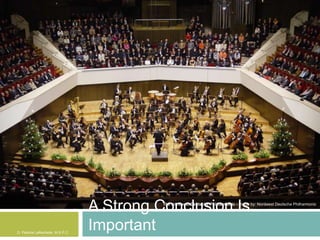
The Nordwest Deutsche Philharmonic - image by: Nordwest Deutsche Philharmonic
Three Steps To A Great 
Conclusion 
 Signal The End 
 Reiterate Main 
Points 
 Dramatic 
Statement
Keep In Mind 
Remember that audiences tend 
to prefer short conclusions.
A. Signal The End 
 This can be done by stating "In 
conclusion." 
No, this is not boring or redundant - 
audiences need quick signposts to let 
them know where you are. 
Other variations of "in conclusion" may 
be used: Finally... In summary... In a 
nutshell... In closing... To conclude... 
To sum up... In short... In essence... 
Overall, etc.
Signal The End, Cont’d 
 You can also work it this way: 
"Now that I've told you about bla-bla- 
bla, let me remind you of the 
three options I discussed: a, b, 
and c.”
B. Reiterate Main 
Points 
 Remind your audience of the main 
points you covered. 
 Even in short speeches this helps the 
audience retain your central ideas and 
reinforces their commitment to what 
you have said.
C. Dramatic Statement 
This summarizes and adds a finish to a 
speech. Speech endings are similar to 
those of another aural form, music. 
Some options are: 
 Crescendo 
 Diminish 
 Circular
Dramatic Statement 
Cont’d 
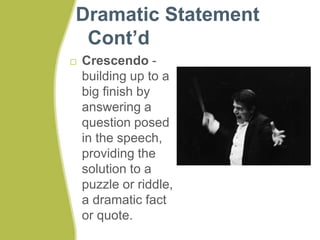
 Crescendo - 
building up to a 
big finish by 
answering a 
question posed 
in the speech, 
providing the 
solution to a 
puzzle or riddle, 
a dramatic fact 
or quote.
Dramatic Statement 
Cont’d 
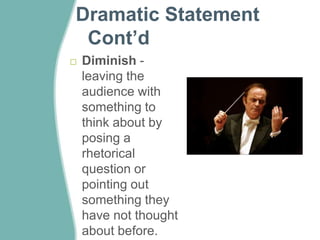
 Diminish - 
leaving the 
audience with 
something to 
think about by 
posing a 
rhetorical 
question or 
pointing out 
something they 
have not thought 
about before.
Dramatic Statement 
Cont’d 
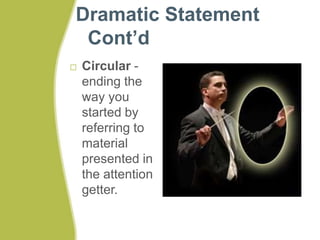
 Circular - 
ending the 
way you 
started by 
referring to 
material 
presented in 
the attention 
getter.
A Few Last Tips 
 Stay on message. 
 The conclusion is not the right place to expand 
on main points or add new information. 
 Take the time to ask and answer any 
questions. 
 Thank the audience and make it clear that 
your presentation is over before leaving the 
lectern.
Good luck!

A strong conclusion is important

  • 1.
    A Strong ConclusionIs Important D. Patricia LaRochelle, M.S.P.C. The Nordwest Deutsche Philharmonic - image by: Nordwest Deutsche Philharmonic
  • 2.
    Three Steps ToA Great Conclusion  Signal The End  Reiterate Main Points  Dramatic Statement
  • 3.
    Keep In Mind Remember that audiences tend to prefer short conclusions.
  • 5.
    A. Signal TheEnd  This can be done by stating "In conclusion." No, this is not boring or redundant - audiences need quick signposts to let them know where you are. Other variations of "in conclusion" may be used: Finally... In summary... In a nutshell... In closing... To conclude... To sum up... In short... In essence... Overall, etc.
  • 6.
    Signal The End,Cont’d  You can also work it this way: "Now that I've told you about bla-bla- bla, let me remind you of the three options I discussed: a, b, and c.”
  • 8.
    B. Reiterate Main Points  Remind your audience of the main points you covered.  Even in short speeches this helps the audience retain your central ideas and reinforces their commitment to what you have said.
  • 10.
    C. Dramatic Statement This summarizes and adds a finish to a speech. Speech endings are similar to those of another aural form, music. Some options are:  Crescendo  Diminish  Circular
  • 11.
    Dramatic Statement Cont’d  Crescendo - building up to a big finish by answering a question posed in the speech, providing the solution to a puzzle or riddle, a dramatic fact or quote.
  • 12.
    Dramatic Statement Cont’d  Diminish - leaving the audience with something to think about by posing a rhetorical question or pointing out something they have not thought about before.
  • 13.
    Dramatic Statement Cont’d  Circular - ending the way you started by referring to material presented in the attention getter.
  • 15.
    A Few LastTips  Stay on message.  The conclusion is not the right place to expand on main points or add new information.  Take the time to ask and answer any questions.  Thank the audience and make it clear that your presentation is over before leaving the lectern.
  • 16.