EMM3583 MANUFACTURING
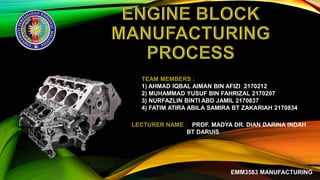
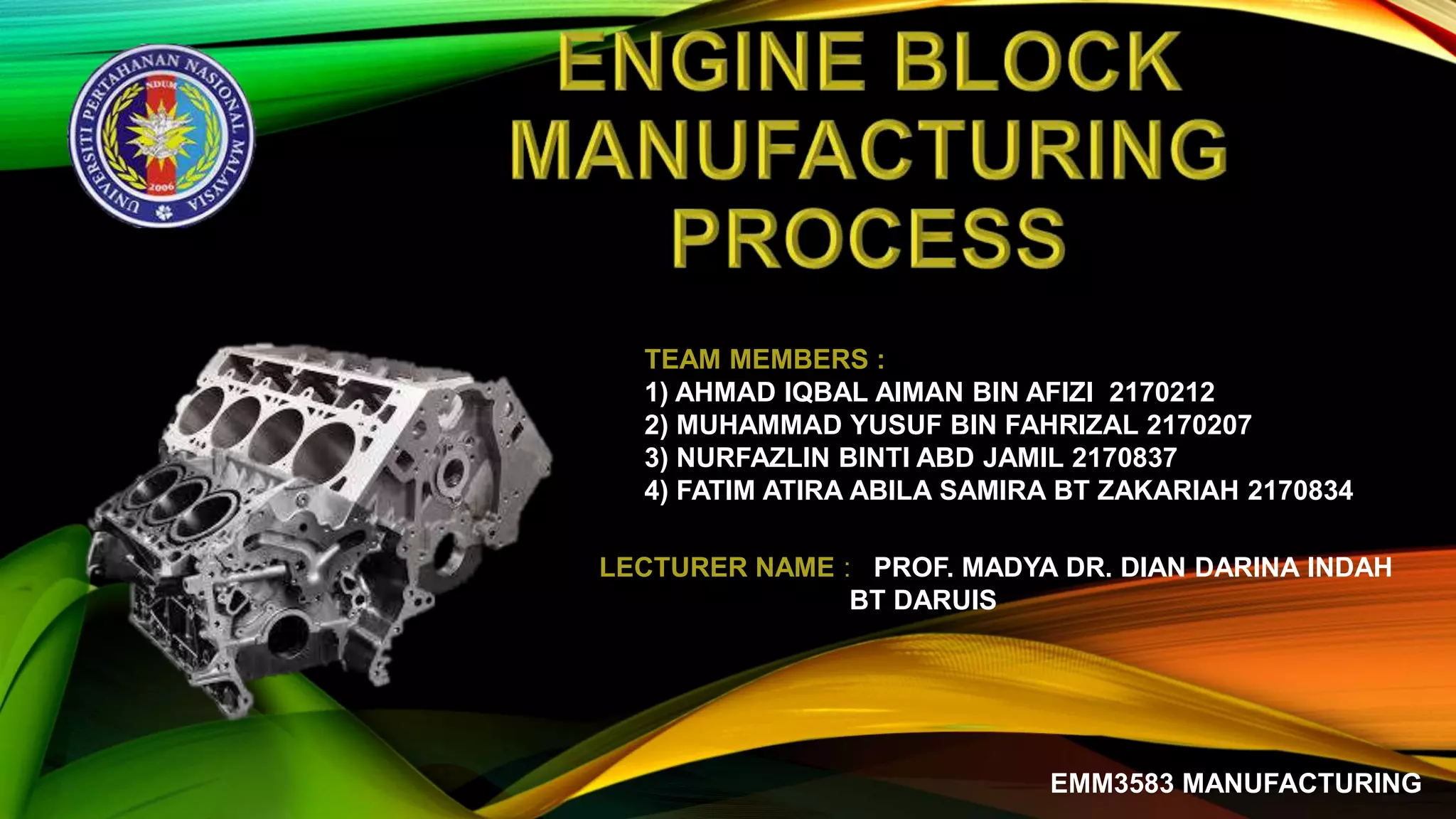
TEAM MEMBERS :
1) AHMAD IQBAL AIMAN BIN AFIZI 2170212
2) MUHAMMAD YUSUF BIN FAHRIZAL 2170207
3) NURFAZLIN BINTI ABD JAMIL 2170837
4) FATIM ATIRA ABILA SAMIRA BT ZAKARIAH 2170834
LECTURER NAME : PROF. MADYA DR. DIAN DARINA INDAH
BT DARUIS
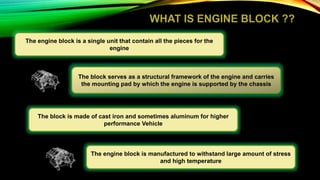
The engine block is a single unit that contain all the pieces for the
engine
The block serves as a structural framework of the engine and carries
the mounting pad by which the engine is supported by the chassis
The block is made of cast iron and sometimes aluminum for higher
performance Vehicle
The engine block is manufactured to withstand large amount of stress
and high temperature
 High modulus of elasticity & High
abrasion resistance
 High corrosion resistance
 High strength is a particular concern in
diesel engines, since compression ratios
are normally 17.0:1 or higher
 Low density
 Low thermal expansion and conductivity
requirement used cast iron and
aluminum alloys to manufacture the
blocks.
 Gray cast iron Gray cast iron alloy have
been the dominant metal that was used to
manufacture conventional gas-powered
engine blocks
 Contains :
2.5-4 wt.% carbon
6 and 1-3 wt.% silicon
0.2-1.0 wt.% manganese
0.02-0.25 wt.% sulfur
 To reduce the overall weight of the vehicle
 There are two practical implications :
-Improved performance-to-weight ratio
-Increased fuel efficiency
*using aluminum in manufacturing engine blocks
are more expensive
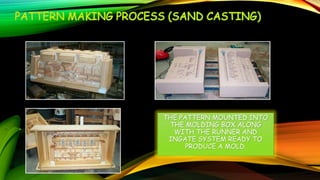
THE PATTERN MOUNTED INTO
THE MOLDING BOX ALONG
WITH THE RUNNER AND
INGATE SYSTEM READY TO
PRODUCE A MOLD.
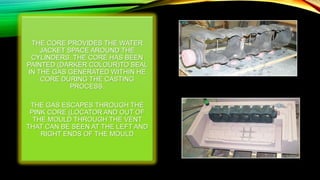
THE CORE PROVIDES THE WATER
JACKET SPACE AROUND THE
CYLINDERS. THE CORE HAS BEEN
PAINTED (DARKER COLOUR)TO SEAL
IN THE GAS GENERATED WITHIN HE
CORE DURING THE CASTING
PROCESS.
THE GAS ESCAPES THROUGH THE
PINK CORE (LOCATOR AND OUT OF
THE MOULD THROUGH THE VENT
THAT CAN BE SEEN AT THE LEFT AND
RIGHT ENDS OF THE MOULD
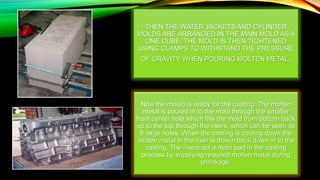
THEN THE WATER JACKETS AND CYLINDER
MOLDS ARE ARRANGED IN THE MAIN MOLD AS A
ONE CUBE. THE MOLD IS THEN TIGHTENED
USING CLAMPS TO WITHSTAND THE PRESSURE
OF GRAVITY WHEN POURING MOLTEN METAL.
Now the mould is ready for the casting. The molten
metal is poured in to the mold through the smaller
front center hole which fills the mold from bottom back
up to the top through the risers, which can be seen as
8 large holes. When the casting is cooling down the
molten metal in the riser is drawn back down in to the
casting. The risers act a main part in the casting
process by supplying required molten metal during
shrinkage.
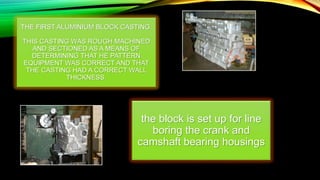
THE FIRST ALUMINIUM BLOCK CASTING.
THIS CASTING WAS ROUGH MACHINED
AND SECTIONED AS A MEANS OF
DETERMINING THAT HE PATTERN
EQUIPMENT WAS CORRECT AND THAT
THE CASTING HAD A CORRECT WALL
THICKNESS.
the block is set up for line
boring the crank and
camshaft bearing housings
ALTERNATIVE PROCESS
1
1.0)
A
B
S
T
R
A
C
T
Th
e
ma
in
obj
ect
ive
s
for
thi
s
ex
per
im
ent
are
to
un
der
sta
nd
the
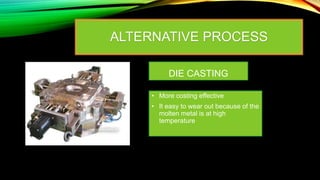
DIE CASTING
• More costing effective
• It easy to wear out because of the
molten metal is at high
temperature

How It Is Made: Engine Block

  • 1.
    EMM3583 MANUFACTURING TEAM MEMBERS: 1) AHMAD IQBAL AIMAN BIN AFIZI 2170212 2) MUHAMMAD YUSUF BIN FAHRIZAL 2170207 3) NURFAZLIN BINTI ABD JAMIL 2170837 4) FATIM ATIRA ABILA SAMIRA BT ZAKARIAH 2170834 LECTURER NAME : PROF. MADYA DR. DIAN DARINA INDAH BT DARUIS
  • 2.
    The engine blockis a single unit that contain all the pieces for the engine The block serves as a structural framework of the engine and carries the mounting pad by which the engine is supported by the chassis The block is made of cast iron and sometimes aluminum for higher performance Vehicle The engine block is manufactured to withstand large amount of stress and high temperature
  • 3.
     High modulusof elasticity & High abrasion resistance  High corrosion resistance  High strength is a particular concern in diesel engines, since compression ratios are normally 17.0:1 or higher  Low density  Low thermal expansion and conductivity requirement used cast iron and aluminum alloys to manufacture the blocks.  Gray cast iron Gray cast iron alloy have been the dominant metal that was used to manufacture conventional gas-powered engine blocks  Contains : 2.5-4 wt.% carbon 6 and 1-3 wt.% silicon 0.2-1.0 wt.% manganese 0.02-0.25 wt.% sulfur  To reduce the overall weight of the vehicle  There are two practical implications : -Improved performance-to-weight ratio -Increased fuel efficiency *using aluminum in manufacturing engine blocks are more expensive
  • 4.
    THE PATTERN MOUNTEDINTO THE MOLDING BOX ALONG WITH THE RUNNER AND INGATE SYSTEM READY TO PRODUCE A MOLD.
  • 5.
    THE CORE PROVIDESTHE WATER JACKET SPACE AROUND THE CYLINDERS. THE CORE HAS BEEN PAINTED (DARKER COLOUR)TO SEAL IN THE GAS GENERATED WITHIN HE CORE DURING THE CASTING PROCESS. THE GAS ESCAPES THROUGH THE PINK CORE (LOCATOR AND OUT OF THE MOULD THROUGH THE VENT THAT CAN BE SEEN AT THE LEFT AND RIGHT ENDS OF THE MOULD
  • 6.
    THEN THE WATERJACKETS AND CYLINDER MOLDS ARE ARRANGED IN THE MAIN MOLD AS A ONE CUBE. THE MOLD IS THEN TIGHTENED USING CLAMPS TO WITHSTAND THE PRESSURE OF GRAVITY WHEN POURING MOLTEN METAL. Now the mould is ready for the casting. The molten metal is poured in to the mold through the smaller front center hole which fills the mold from bottom back up to the top through the risers, which can be seen as 8 large holes. When the casting is cooling down the molten metal in the riser is drawn back down in to the casting. The risers act a main part in the casting process by supplying required molten metal during shrinkage.
  • 7.
    THE FIRST ALUMINIUMBLOCK CASTING. THIS CASTING WAS ROUGH MACHINED AND SECTIONED AS A MEANS OF DETERMINING THAT HE PATTERN EQUIPMENT WAS CORRECT AND THAT THE CASTING HAD A CORRECT WALL THICKNESS. the block is set up for line boring the crank and camshaft bearing housings
  • 8.
    ALTERNATIVE PROCESS 1 1.0) A B S T R A C T Th e ma in obj ect ive s for thi s ex per im ent are to un der sta nd the DIE CASTING •More costing effective • It easy to wear out because of the molten metal is at high temperature