HOARSENESS OF VOICE
Presentation by- Jitendra kumar
Guided by- Professor Marina Anatolevna
Hoarseness
Abnormal changes in the voice are called hoarseness.
When hoarse, the voice may sound breathy, raspy,
strained, or show changes in volume or pitch (depending
on how high or low the voice is). Voice changes are
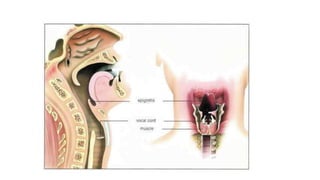
related to disorders in the sound-producing parts (vocal
folds) of the voice box (larynx). While breathing, the vocal
folds remain apart. When speaking or singing, they come
together and, as air leaves the lungs, they vibrate,
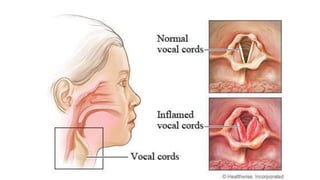
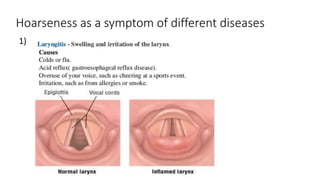
producing sound. Swelling or lumps on the vocal folds
hinder vibration, altering voice quality, volume, and pitch.
Hoarseness as a symptom of different diseases
1)
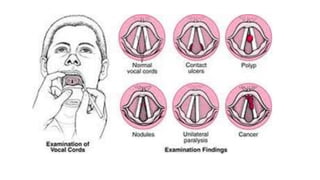
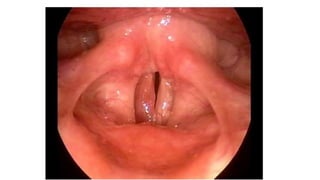
Benign Vocal Cord Lesions: Prolonged hoarseness can
occur when you use your voice too much, or too loudly for
extended periods of time. These habits can lead to nodules,
polyps, and cysts. Vocal nodules (singer’s nodes) are
callus-like growths of the vocal folds. Vocal fold polyps and
cysts also occur in those who misuse their voice, but can
also occur in those who do not.
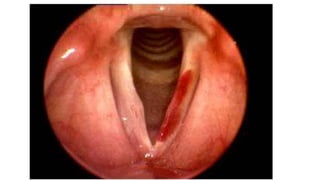
Vocal Hemorrhage: If you experience a sudden loss
of voice following a yell or other strenuous vocal use,
you may have developed a vocal fold hemorrhage.
Vocal fold hemorrhage occurs when one of the blood
vessels on the surface of the vocal folds ruptures and
the soft tissues fill with blood. It is considered a vocal
emergency and should be treated with absolute voice
rest and examination by an otolaryngologist.
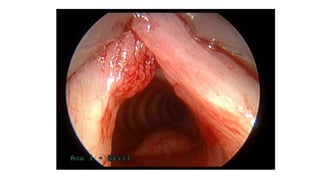
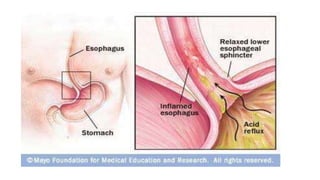
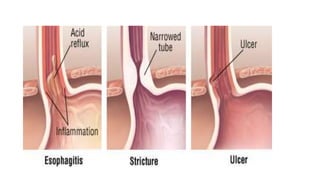
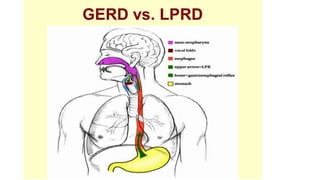
Gastro esophageal Reflux (GERD): A possible
cause of hoarseness is gastro-esophageal reflux,
when stomach acid comes up the swallowing tube
(esophagus) and irritates the vocal folds. Other
typical symptoms of GERD include heartburn and
regurgitation. Usually, the voice is worse in the
morning and improves during the day. These people
may have a sensation of a lump or mucus in their
throat and have an excessive desire to clear it.
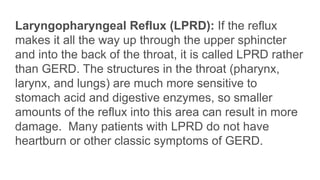
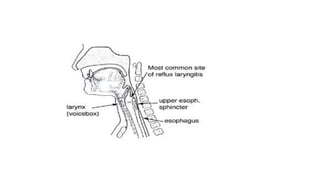
Laryngopharyngeal Reflux (LPRD): If the reflux
makes it all the way up through the upper sphincter
and into the back of the throat, it is called LPRD rather
than GERD. The structures in the throat (pharynx,
larynx, and lungs) are much more sensitive to
stomach acid and digestive enzymes, so smaller
amounts of the reflux into this area can result in more
damage. Many patients with LPRD do not have
heartburn or other classic symptoms of GERD.
Smoking: Smoking is another cause of
hoarseness. Because smoking is the major
cause of throat cancer, if smokers become
hoarse, they should see an
otolaryngologist.
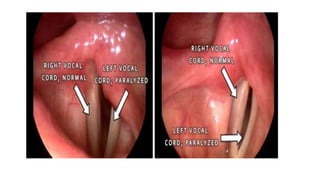
Neurological Diseases or Disorders: Hoarseness
can also appear in those who have neurological
diseases such as Parkinsonism or a stroke, or may be
a symptom of spasmodic dysphonia, a rare
neurological disorder that usually affects only the
voice, but sometimes affects breathing. A paralyzed
vocal fold may be the cause of a weak, breathy voice.
If the hoarseness persists for more than three months
and other causes have been ruled out, a neurologist
may be helpful for diagnosis.
Other Causes: These include allergies, thyroid
problems, trauma to the voice box, and,
occasionally, menstruation. Very serious
conditions such as laryngeal cancer can also
cause hoarseness, which is why it is important to
have chronic hoarseness evaluated promptly by
an otolaryngologist
DIAGNOSIS-
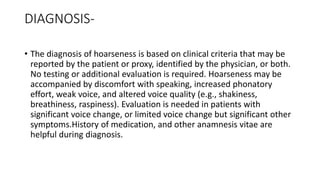
• The diagnosis of hoarseness is based on clinical criteria that may be
reported by the patient or proxy, identified by the physician, or both.
No testing or additional evaluation is required. Hoarseness may be
accompanied by discomfort with speaking, increased phonatory
effort, weak voice, and altered voice quality (e.g., shakiness,
breathiness, raspiness). Evaluation is needed in patients with
significant voice change, or limited voice change but significant other
symptoms.History of medication, and other anamnesis vitae are
helpful during diagnosis.
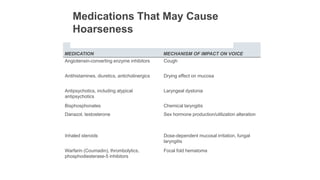
MEDICATION MECHANISM OF IMPACT ON VOICE
Angiotensin-converting enzyme inhibitors Cough
Antihistamines, diuretics, anticholinergics Drying effect on mucosa
Antipsychotics, including atypical
antipsychotics
Laryngeal dystonia
Bisphosphonates Chemical laryngitis
Danazol, testosterone Sex hormone production/utilization alteration
Inhaled steroids Dose-dependent mucosal irritation, fungal
laryngitis
Warfarin (Coumadin), thrombolytics,
phosphodiesterase-5 inhibitors
Focal fold hematoma
Medications That May Cause
Hoarseness
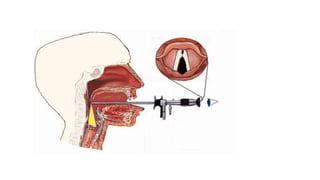
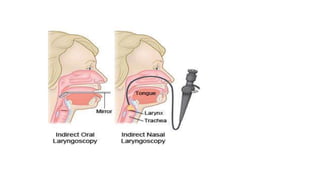
LARYNGOSCOPY-
Laryngoscopy may be performed at any time,
although it is recommended when hoarseness does
not resolve within three months of onset or if a
serious underlying cause is suspected.
Visualizing the larynx and vocal folds is important in
a patient presenting with hoarseness, especially if
symptoms persist.
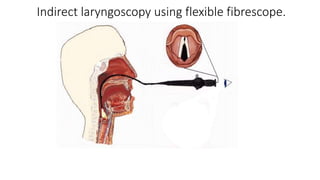
Indirect laryngoscopy using flexible fibrescope.
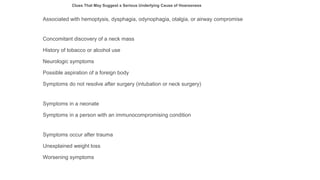
Associated with hemoptysis, dysphagia, odynophagia, otalgia, or airway compromise
Concomitant discovery of a neck mass
History of tobacco or alcohol use
Neurologic symptoms
Possible aspiration of a foreign body
Symptoms do not resolve after surgery (intubation or neck surgery)
Symptoms in a neonate
Symptoms in a person with an immunocompromising condition
Symptoms occur after trauma
Unexplained weight loss
Worsening symptoms
Clues That May Suggest a Serious Underlying Cause of Hoarseness
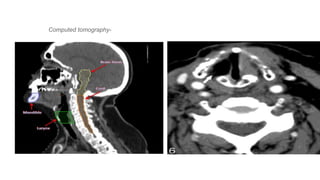
Computed tomography-
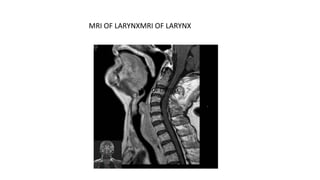
MRI OF LARYNX
MRI OF LARYNXMRI OF LARYNX
TREATMENT-
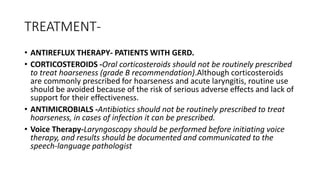
• ANTIREFLUX THERAPY- PATIENTS WITH GERD.
• CORTICOSTEROIDS -Oral corticosteroids should not be routinely prescribed
to treat hoarseness (grade B recommendation).Although corticosteroids
are commonly prescribed for hoarseness and acute laryngitis, routine use
should be avoided because of the risk of serious adverse effects and lack of
support for their effectiveness.
• ANTIMICROBIALS -Antibiotics should not be routinely prescribed to treat
hoarseness, in cases of infection it can be prescribed.
• Voice Therapy-Laryngoscopy should be performed before initiating voice
therapy, and results should be documented and communicated to the
speech-language pathologist
..
• Invasive Therapy--SURGERY
Surgery should be advocated in patients with hoarseness and suspected
laryngeal malignancy, benign laryngeal soft tissue lesions, or glottic
insufficiency
• BOTULINUM TOXIN-Botulinum toxin injections should be prescribed
for the treatment of hoarseness caused by spasmodic dysphonia
PROPHYLAXIS-
• Patient with hoarseness may be educated about preventive measures
• Preventive measures may lower the risk of hoarseness, but studies
are limited. Measures that may be beneficial include hydration,
avoidance of irritants (e.g., smoke, chemicals), voice training, and
amplification. Benefits of these measures should be weighed against
the risk of hoarseness or voice problems in asymptomatic patients.
THANK YOU………………..

Hoarseness

  • 1.
    HOARSENESS OF VOICE Presentationby- Jitendra kumar Guided by- Professor Marina Anatolevna
  • 2.
    Hoarseness Abnormal changes inthe voice are called hoarseness. When hoarse, the voice may sound breathy, raspy, strained, or show changes in volume or pitch (depending on how high or low the voice is). Voice changes are related to disorders in the sound-producing parts (vocal folds) of the voice box (larynx). While breathing, the vocal folds remain apart. When speaking or singing, they come together and, as air leaves the lungs, they vibrate, producing sound. Swelling or lumps on the vocal folds hinder vibration, altering voice quality, volume, and pitch.
  • 4.
    Hoarseness as asymptom of different diseases 1)
  • 5.
    Benign Vocal CordLesions: Prolonged hoarseness can occur when you use your voice too much, or too loudly for extended periods of time. These habits can lead to nodules, polyps, and cysts. Vocal nodules (singer’s nodes) are callus-like growths of the vocal folds. Vocal fold polyps and cysts also occur in those who misuse their voice, but can also occur in those who do not.
  • 7.
    Vocal Hemorrhage: Ifyou experience a sudden loss of voice following a yell or other strenuous vocal use, you may have developed a vocal fold hemorrhage. Vocal fold hemorrhage occurs when one of the blood vessels on the surface of the vocal folds ruptures and the soft tissues fill with blood. It is considered a vocal emergency and should be treated with absolute voice rest and examination by an otolaryngologist.
  • 11.
    Gastro esophageal Reflux(GERD): A possible cause of hoarseness is gastro-esophageal reflux, when stomach acid comes up the swallowing tube (esophagus) and irritates the vocal folds. Other typical symptoms of GERD include heartburn and regurgitation. Usually, the voice is worse in the morning and improves during the day. These people may have a sensation of a lump or mucus in their throat and have an excessive desire to clear it.
  • 14.
    Laryngopharyngeal Reflux (LPRD):If the reflux makes it all the way up through the upper sphincter and into the back of the throat, it is called LPRD rather than GERD. The structures in the throat (pharynx, larynx, and lungs) are much more sensitive to stomach acid and digestive enzymes, so smaller amounts of the reflux into this area can result in more damage. Many patients with LPRD do not have heartburn or other classic symptoms of GERD.
  • 17.
    Smoking: Smoking isanother cause of hoarseness. Because smoking is the major cause of throat cancer, if smokers become hoarse, they should see an otolaryngologist.
  • 19.
    Neurological Diseases orDisorders: Hoarseness can also appear in those who have neurological diseases such as Parkinsonism or a stroke, or may be a symptom of spasmodic dysphonia, a rare neurological disorder that usually affects only the voice, but sometimes affects breathing. A paralyzed vocal fold may be the cause of a weak, breathy voice. If the hoarseness persists for more than three months and other causes have been ruled out, a neurologist may be helpful for diagnosis.
  • 23.
    Other Causes: Theseinclude allergies, thyroid problems, trauma to the voice box, and, occasionally, menstruation. Very serious conditions such as laryngeal cancer can also cause hoarseness, which is why it is important to have chronic hoarseness evaluated promptly by an otolaryngologist
  • 24.
    DIAGNOSIS- • The diagnosisof hoarseness is based on clinical criteria that may be reported by the patient or proxy, identified by the physician, or both. No testing or additional evaluation is required. Hoarseness may be accompanied by discomfort with speaking, increased phonatory effort, weak voice, and altered voice quality (e.g., shakiness, breathiness, raspiness). Evaluation is needed in patients with significant voice change, or limited voice change but significant other symptoms.History of medication, and other anamnesis vitae are helpful during diagnosis.
  • 25.
    MEDICATION MECHANISM OFIMPACT ON VOICE Angiotensin-converting enzyme inhibitors Cough Antihistamines, diuretics, anticholinergics Drying effect on mucosa Antipsychotics, including atypical antipsychotics Laryngeal dystonia Bisphosphonates Chemical laryngitis Danazol, testosterone Sex hormone production/utilization alteration Inhaled steroids Dose-dependent mucosal irritation, fungal laryngitis Warfarin (Coumadin), thrombolytics, phosphodiesterase-5 inhibitors Focal fold hematoma Medications That May Cause Hoarseness
  • 26.
    LARYNGOSCOPY- Laryngoscopy may beperformed at any time, although it is recommended when hoarseness does not resolve within three months of onset or if a serious underlying cause is suspected. Visualizing the larynx and vocal folds is important in a patient presenting with hoarseness, especially if symptoms persist.
  • 29.
    Indirect laryngoscopy usingflexible fibrescope.
  • 30.
    Associated with hemoptysis,dysphagia, odynophagia, otalgia, or airway compromise Concomitant discovery of a neck mass History of tobacco or alcohol use Neurologic symptoms Possible aspiration of a foreign body Symptoms do not resolve after surgery (intubation or neck surgery) Symptoms in a neonate Symptoms in a person with an immunocompromising condition Symptoms occur after trauma Unexplained weight loss Worsening symptoms Clues That May Suggest a Serious Underlying Cause of Hoarseness
  • 31.
  • 32.
    MRI OF LARYNX MRIOF LARYNXMRI OF LARYNX
  • 33.
    TREATMENT- • ANTIREFLUX THERAPY-PATIENTS WITH GERD. • CORTICOSTEROIDS -Oral corticosteroids should not be routinely prescribed to treat hoarseness (grade B recommendation).Although corticosteroids are commonly prescribed for hoarseness and acute laryngitis, routine use should be avoided because of the risk of serious adverse effects and lack of support for their effectiveness. • ANTIMICROBIALS -Antibiotics should not be routinely prescribed to treat hoarseness, in cases of infection it can be prescribed. • Voice Therapy-Laryngoscopy should be performed before initiating voice therapy, and results should be documented and communicated to the speech-language pathologist
  • 34.
    .. • Invasive Therapy--SURGERY Surgeryshould be advocated in patients with hoarseness and suspected laryngeal malignancy, benign laryngeal soft tissue lesions, or glottic insufficiency • BOTULINUM TOXIN-Botulinum toxin injections should be prescribed for the treatment of hoarseness caused by spasmodic dysphonia
  • 35.
    PROPHYLAXIS- • Patient withhoarseness may be educated about preventive measures • Preventive measures may lower the risk of hoarseness, but studies are limited. Measures that may be beneficial include hydration, avoidance of irritants (e.g., smoke, chemicals), voice training, and amplification. Benefits of these measures should be weighed against the risk of hoarseness or voice problems in asymptomatic patients.
  • 36.