Md Limon Mia
MBBS,4TH year
Abdul Malek Ukil Medical College
Noakhali,Chittagong,Bangladesh
gmail:mdlimonmia1952@gmail.com
HISTORY OF HIV
1979
CDC reported unexplained pcp in 5 previously
healthy homosexual men
CDC reported kaposi’s sarcoma in 26 healthy
homosexual men
The disease was named GRID(GAY RELATED
IMMUNE
1981-aids was recognized as separate disease
1981-1982 increased association with IV drug
use,recepiants blood transfusion ,hemophiliacs
• 1983
• Virus isolated then named LAV-lymphadenopathy
associated virus
• 1984
• Named HTLV-HUMAN T-cell lymphotrophic virus
• 1985 named –ARV(aids related virus)
• 1986-named HIV international committee on the
toxonomy of virus
AIDS: final stage of HIV infection in which the
body is unable to fight opportunistic infections
such as pneumonia, tuberculosis, Kaposi’s
sarcoma among others.
.
In Bangladesh HIV positive cases
was 1st dected in 1989 in
Chittagong
Type of HIV
HIV-1
HIV-2
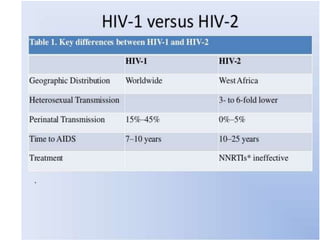
HIV-1 is more easily transmitted and more
virulent than HIV-2.
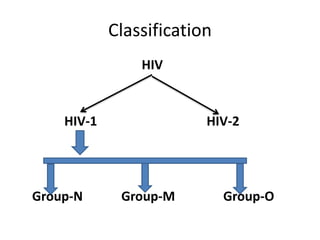
Classification
HIV
HIV-1 HIV-2
Group-N Group-M Group-O
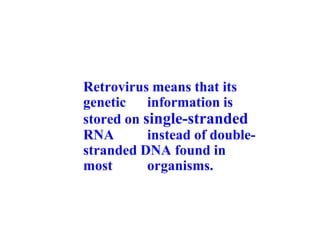
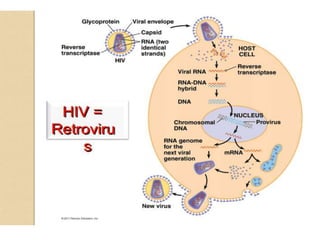
Retrovirus means that its
genetic information is
stored on single-stranded
RNA instead of double-
stranded DNA found in
most organisms.
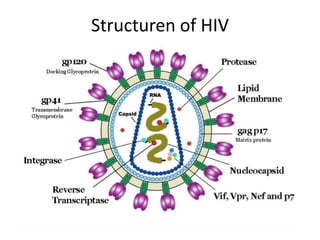
Structuren of HIV
• `
ENZYMES
•Polymerase
•Integrase
•Protease
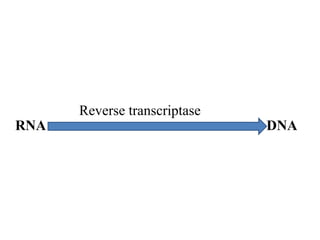
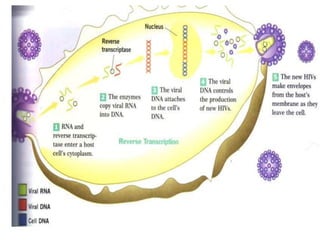
Reverse transcriptase
RNA DNA
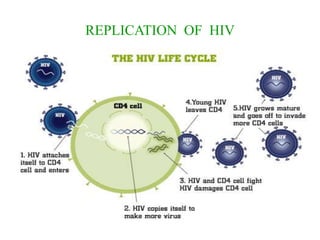
REPLICATION OF HIV
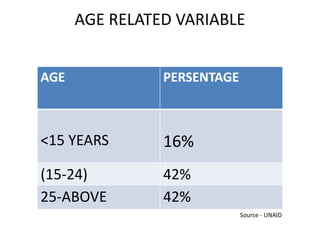
AGE RELATED VARIABLE
Source - UNAID
AGE PERSENTAGE
<15 YEARS 16%
(15-24) 42%
25-ABOVE 42%
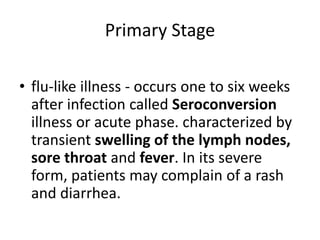
Primary Stage
ed person can infect other people
• flu-like illness - occurs one to six weeks
after infection called Seroconversion
illness or acute phase. characterized by
transient swelling of the lymph nodes,
sore throat and fever. In its severe
form, patients may complain of a rash
and diarrhea.
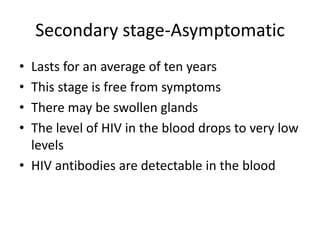
Secondary stage-Asymptomatic
• Lasts for an average of ten years
• This stage is free from symptoms
• There may be swollen glands
• The level of HIV in the blood drops to very low
levels
• HIV antibodies are detectable in the blood
Stage-3 Symptomatic
• The symptoms are mild
• The immune system deteriorates
• emergence of opportunistic infections and
cancers
Stage 4:HIV TO AIDS
• The immune system weakens
• The illnesses become more severe leading to
an AIDS diagnosis
SPECTRUM of HIV/AIDS
window period : 6 weeks to 6 months.
the person may remain in the carrier stage for more than
10 years without developing any symptoms.
Approximately 50% of HIV carriers develop AIDS after
8 to 10 years.
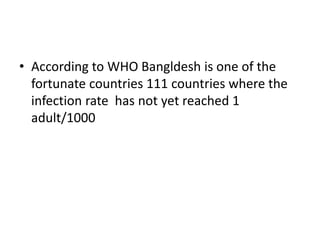
• According to WHO Bangldesh is one of the
fortunate countries 111 countries where the
infection rate has not yet reached 1
adult/1000
Who are most affected person
• Commercial sex worker sex
• MSM
• IDU(Injecting Drug User)
• rickshaw pullers
• injecting drug users
• men who have sex with men(MSM)
• Patient with sexually transmitted disease(STDs)
• migrant workers.
• Transgender people/Hijras
• Long distance Truck Driver
• Professional blood donar
• Sailor
• Non –resident
• Garment worker
Source-
ICDDR,B
Opportunistic Infections associated
with AIDSBacterial
• Tuberculosis (TB)
• Strep pneumonia
Viral
• Kaposi Sarcoma
• Herpes
• Influenza (flu
Parasitic
• Pneumocystis carinii
Fungal
• Candida
• Cryptococcu
Provisional diagnosis of AIDS
recommended by WHO
MAJOR SIGNS:
1. weight loss more than 10% within last 6 months.
2. fever for longer than 1 month.
3. Chronic diarrhea for longer than 1 month.
Provisional diagnosis of AIDS
recommended by WHO
MINOR SIGNS:
-Persistent cough for longer than 1 month.
- Generalized dermatitis
- Recurrent herpes zoster.
-Recurrent Oro-pharyngeal candidiasis.
-Chronic progressive herpes simplex infection.
-Generalized lymphadenopathy.
Modes of Transmission of HIV
Sexual Transmission.
Transmission through blood/blood products.
Mother-to-child Transmission.
HIV-contaminated instruments.
Other possible Modes of Transmission.
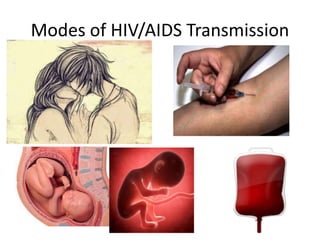
Modes of HIV/AIDS Transmission
Through Bodily Fluids
• Blood products
• Semen
• CSF
• Saliva and tear
• Vaginal fluids
• Breast Milk
Through IV Drug Use
• Sharing Needles Without sterilization
• IV drug abuse
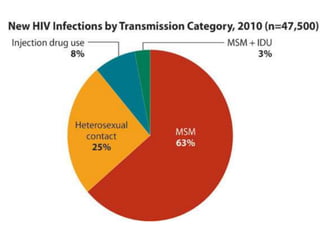
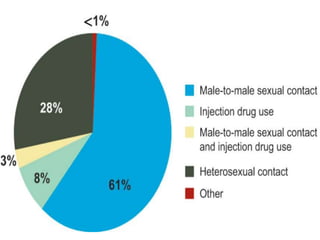
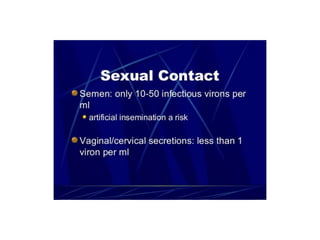
SEXUAL TRANSMISSION(75%-85%)
 Vaginal sex
 Anal sex
 Oral sex
 Deep kiss
 Homosexual contact
 Bisexual contact
 Heterosexual contact
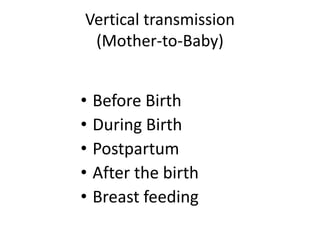
Vertical transmission
(Mother-to-Baby)
• Before Birth
• During Birth
• Postpartum
• After the birth
• Breast feeding
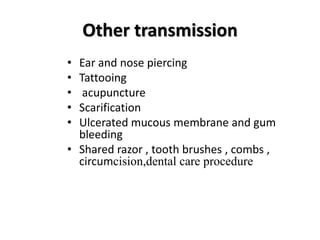
Other transmission
• Ear and nose piercing
• Tattooing
• acupuncture
• Scarification
• Ulcerated mucous membrane and gum
bleeding
• Shared razor , tooth brushes , combs ,
circumcision,dental care procedure
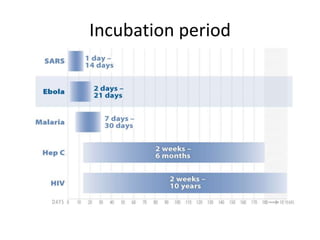
Incubation period
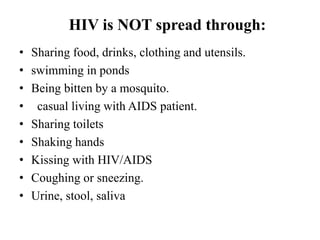
HIV is NOT spread through:
• Sharing food, drinks, clothing and utensils.
• swimming in ponds
• Being bitten by a mosquito.
• casual living with AIDS patient.
• Sharing toilets
• Shaking hands
• Kissing with HIV/AIDS
• Coughing or sneezing.
• Urine, stool, saliva
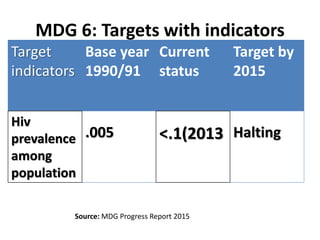
MDG 6: Targets with indicators
Source: MDG Progress Report 2015
Target
indicators
Base year
1990/91
Current
status
Target by
2015
Hiv
prevalence
among
population
.005 <.1(2013 Halting
• Prevalence of HIV/AIDS in
Bangladesh currently is <0.1%
• below an epidemic level
Diagnosis of HIV
 Clinical diagnosis
 Lab diagnosis
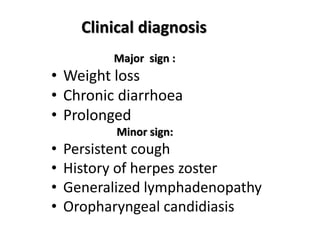
Clinical diagnosis
Major sign :
• Weight loss
• Chronic diarrhoea
• Prolonged
Minor sign:
• Persistent cough
• History of herpes zoster
• Generalized lymphadenopathy
• Oropharyngeal candidiasis
• Blood
• Urine
• Oral
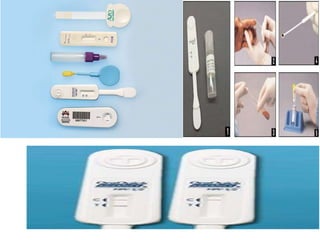
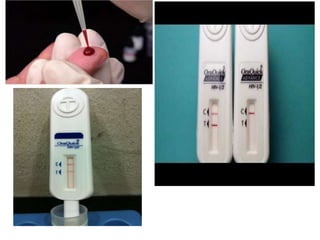
Blood Detection Tests
• Enzyme-Linked Immunosorbent Assay/Enzyme
Immunoassay (ELISA/EIA)
• Radio Immunoprecipitation Assay/Indirect
Fluorescent Antibody Assay (RIP/IFA)
• Polymerase Chain Reaction (PCR)
• Isolation of virus and culture
Confirmatory test
 Western Blot
test
Urine Testing
• Urine Western Blot
• As sensitive as testing blood
• Safe way to screen for HIV
• Can cause false positives in
certain people at high risk for HIV
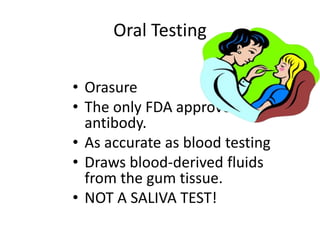
Oral Testing
• Orasure
• The only FDA approved HIV
antibody.
• As accurate as blood testing
• Draws blood-derived fluids
from the gum tissue.
• NOT A SALIVA TEST!
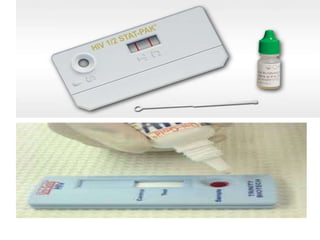
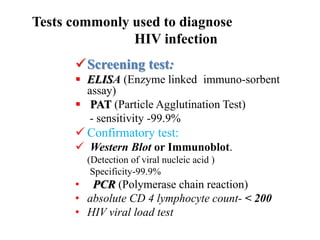
Tests commonly used to diagnose
HIV infection
Screening test:
 ELISA (Enzyme linked immuno-sorbent
assay)
 PAT (Particle Agglutination Test)
- sensitivity -99.9%
 Confirmatory test:
 Western Blot or Immunoblot.
(Detection of viral nucleic acid )
Specificity-99.9%
• PCR (Polymerase chain reaction)
• absolute CD 4 lymphocyte count- < 200
• HIV viral load test
False negative results of
HIV testing.
1.Testing performed too early
(window period).
2. Testing performed during advanced stages of the
disease when ability to form antibodies is impaired.
3. Technical errors.
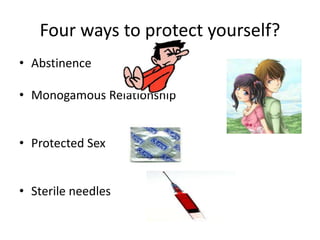
Four ways to protect yourself?
• Abstinence
• Monogamous Relationship
• Protected Sex
• Sterile needles
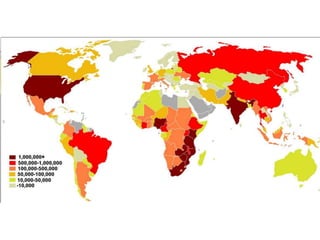
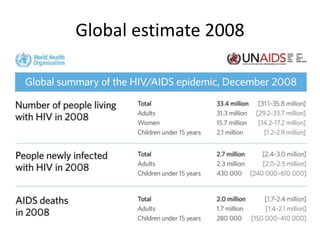
Global estimate 2008
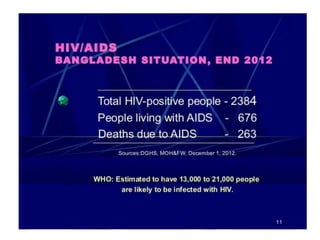
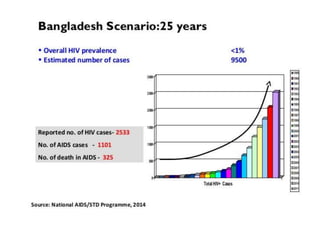
HIV and AIDS estimates IN BANGLADESH (2014)
Number of people living with HIV 8,900 [8,000 - 9,800]
Adults aged 15 to 49 prevalence rate <0.1% [<0.1% - <0.1%]
Adults aged 15 and up living with HIV 8,600 [7,700 - 9,400]
Women aged 15 and up living with HIV 2,900 [2,600 - 3,100]
Children aged 0 to 14 living with HIV <500 [<500 - <500]
Deaths due to AIDS <1000 [<1000 - 1,200]
Orphans due to AIDS aged 0 to 17 N/A
COMMON AIDS-DEFINING CONDITIONS
Oesophageal candidiasis.
meningitis.
Chronic diarrhoea.
CMV retinitis.
Chronic herpes simplex.
Miliary and extrapulmonary tuberculosis.
pneumonia.
Progressive leucoencephalopathy.
Kaposi’s sarcoma.
Non-Hodgkin’s lymphoma.
cerebral lymphoma.
wasting
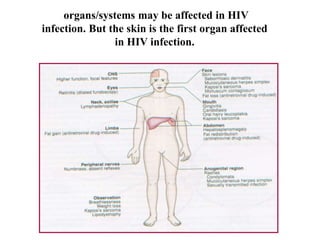
organs/systems may be affected in HIV
infection. But the skin is the first organ affected
in HIV infection.
Neoplasm associated with AIDS
• Kaposi’s sarcoma in homosexuals
• B-cell lymphoma
• Cerebral lymphooma
• High grade non-Hodgkin’s lymphoma
• Burkitt’s lymphoma
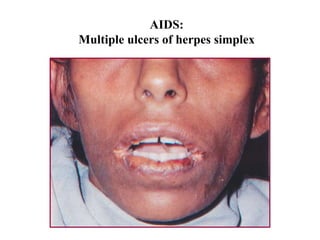
AIDS:
Multiple ulcers of herpes simplex
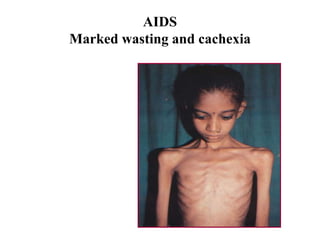
AIDS
Marked wasting and cachexia
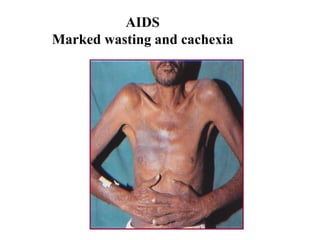
AIDS
Marked wasting and cachexia
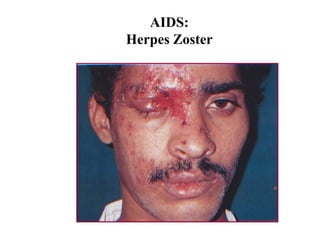
AIDS:
Herpes Zoster
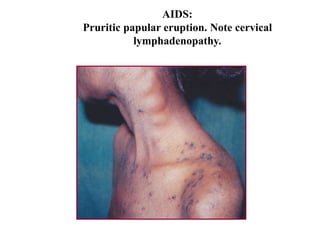
AIDS:
Pruritic papular eruption. Note cervical
lymphadenopathy.
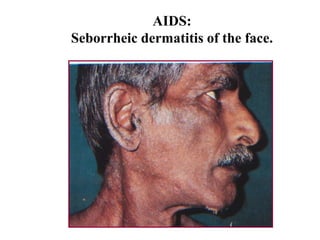
AIDS:
Seborrheic dermatitis of the face.
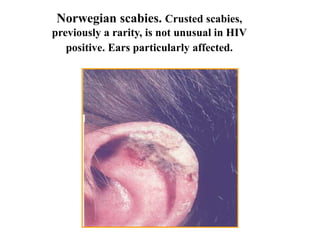
Norwegian scabies. Crusted scabies,
previously a rarity, is not unusual in HIV
positive. Ears particularly affected.
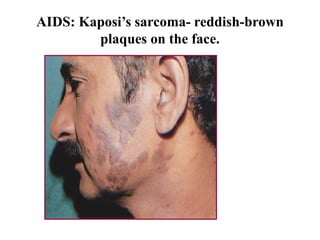
AIDS: Kaposi’s sarcoma- reddish-brown
plaques on the face.
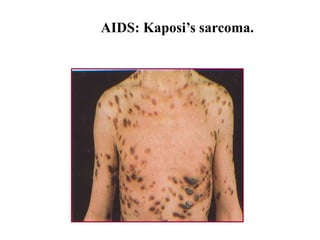
AIDS: Kaposi’s sarcoma.
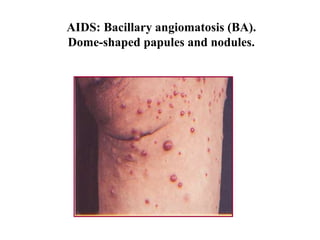
AIDS: Bacillary angiomatosis (BA).
Dome-shaped papules and nodules.
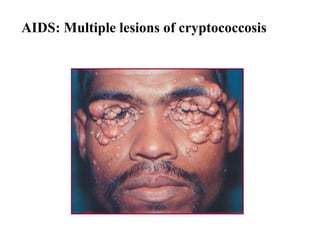
AIDS: Multiple lesions of cryptococcosis
Control measure of AIDS
Preventive measure
Health and sex education
Prevention of blood borne STD,transmissoin
Control of prostitution
Social welfare measures
Abiding by the law of religion
Antiretroviral treatment
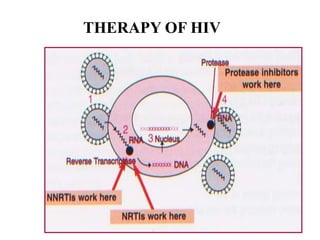
NUCLEOSIDE REVERSE TRANSCRIPTASE INHIHITOR:
Zidovudine
Stavudine
Lamivudine
Didanosine
Zalcitabine
Non-NUCLEOSIDE REVERSE TRANSCRIPTASE INHIHITOR:
Nevirapine
Efavirenz
Delavirdine
Protease inhibitors:
Indinavir
Nelfinavir
Ritonavir
THERAPY OF HIV
Specific prophylaxis
Primary health care
- Mother –child health care
- Family planning and education
Aids Related Complex(ARC)
• Unexplained diarrhoea
• Fatigue
• Malaise
• Weight loss more than 10%
• Fever
• Night sweats
• Generalized lymphadenopathy
Why can’t HIV infection be eradicated?
-HIV infects CNS, testes, lymphoid tissue, CD4 cells etc.
-The virus lived resting memory CD4 cells.
-Antiretroviral therapy is not effective against HIV
VACCINE:NO VACCINE
National strategy for the prevention and
control of HIV/AIDS in Bangladesh
Prevention of sexual transmission.
Prevention of transmission through blood/blood
products.
Prevention of transmission through IVD use.
Reduction of risk-generating environment.
Reduction of personal, social and economic
impact.
Mobilization of national, regional and
international efforts.
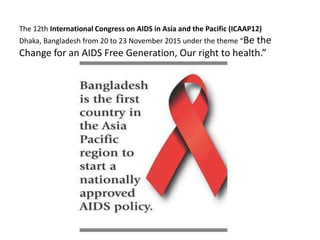
The 12th International Congress on AIDS in Asia and the Pacific (ICAAP12)
Dhaka, Bangladesh from 20 to 23 November 2015 under the theme “Be the
Change for an AIDS Free Generation, Our right to health.”
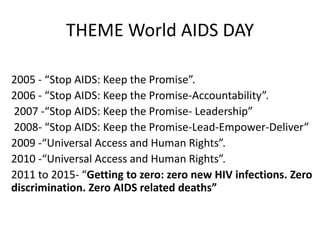
THEME World AIDS DAY
2005 - “Stop AIDS: Keep the Promise”.
2006 - “Stop AIDS: Keep the Promise-Accountability”.
2007 -“Stop AIDS: Keep the Promise- Leadership”
2008- “Stop AIDS: Keep the Promise-Lead-Empower-Deliver”
2009 -“Universal Access and Human Rights”.
2010 -“Universal Access and Human Rights”.
2011 to 2015- “Getting to zero: zero new HIV infections. Zero
discrimination. Zero AIDS related deaths”
THANK YOU

HIV and AIDS

  • 1.
    Md Limon Mia MBBS,4THyear Abdul Malek Ukil Medical College Noakhali,Chittagong,Bangladesh gmail:mdlimonmia1952@gmail.com
  • 3.
  • 4.
    1979 CDC reported unexplainedpcp in 5 previously healthy homosexual men CDC reported kaposi’s sarcoma in 26 healthy homosexual men The disease was named GRID(GAY RELATED IMMUNE 1981-aids was recognized as separate disease 1981-1982 increased association with IV drug use,recepiants blood transfusion ,hemophiliacs
  • 5.
    • 1983 • Virusisolated then named LAV-lymphadenopathy associated virus • 1984 • Named HTLV-HUMAN T-cell lymphotrophic virus • 1985 named –ARV(aids related virus) • 1986-named HIV international committee on the toxonomy of virus
  • 6.
    AIDS: final stageof HIV infection in which the body is unable to fight opportunistic infections such as pneumonia, tuberculosis, Kaposi’s sarcoma among others. .
  • 7.
    In Bangladesh HIVpositive cases was 1st dected in 1989 in Chittagong
  • 8.
    Type of HIV HIV-1 HIV-2 HIV-1is more easily transmitted and more virulent than HIV-2.
  • 9.
  • 12.
    Retrovirus means thatits genetic information is stored on single-stranded RNA instead of double- stranded DNA found in most organisms.
  • 13.
  • 14.
  • 15.
  • 16.
  • 20.
    AGE RELATED VARIABLE Source- UNAID AGE PERSENTAGE <15 YEARS 16% (15-24) 42% 25-ABOVE 42%
  • 21.
    Primary Stage ed personcan infect other people • flu-like illness - occurs one to six weeks after infection called Seroconversion illness or acute phase. characterized by transient swelling of the lymph nodes, sore throat and fever. In its severe form, patients may complain of a rash and diarrhea.
  • 22.
    Secondary stage-Asymptomatic • Lastsfor an average of ten years • This stage is free from symptoms • There may be swollen glands • The level of HIV in the blood drops to very low levels • HIV antibodies are detectable in the blood
  • 23.
    Stage-3 Symptomatic • Thesymptoms are mild • The immune system deteriorates • emergence of opportunistic infections and cancers
  • 24.
    Stage 4:HIV TOAIDS • The immune system weakens • The illnesses become more severe leading to an AIDS diagnosis
  • 25.
    SPECTRUM of HIV/AIDS windowperiod : 6 weeks to 6 months. the person may remain in the carrier stage for more than 10 years without developing any symptoms. Approximately 50% of HIV carriers develop AIDS after 8 to 10 years.
  • 30.
    • According toWHO Bangldesh is one of the fortunate countries 111 countries where the infection rate has not yet reached 1 adult/1000
  • 31.
    Who are mostaffected person • Commercial sex worker sex • MSM • IDU(Injecting Drug User) • rickshaw pullers • injecting drug users • men who have sex with men(MSM) • Patient with sexually transmitted disease(STDs) • migrant workers. • Transgender people/Hijras • Long distance Truck Driver • Professional blood donar • Sailor • Non –resident • Garment worker Source- ICDDR,B
  • 32.
    Opportunistic Infections associated withAIDSBacterial • Tuberculosis (TB) • Strep pneumonia Viral • Kaposi Sarcoma • Herpes • Influenza (flu Parasitic • Pneumocystis carinii Fungal • Candida • Cryptococcu
  • 33.
    Provisional diagnosis ofAIDS recommended by WHO MAJOR SIGNS: 1. weight loss more than 10% within last 6 months. 2. fever for longer than 1 month. 3. Chronic diarrhea for longer than 1 month.
  • 34.
    Provisional diagnosis ofAIDS recommended by WHO MINOR SIGNS: -Persistent cough for longer than 1 month. - Generalized dermatitis - Recurrent herpes zoster. -Recurrent Oro-pharyngeal candidiasis. -Chronic progressive herpes simplex infection. -Generalized lymphadenopathy.
  • 35.
    Modes of Transmissionof HIV Sexual Transmission. Transmission through blood/blood products. Mother-to-child Transmission. HIV-contaminated instruments. Other possible Modes of Transmission.
  • 36.
    Modes of HIV/AIDSTransmission
  • 37.
    Through Bodily Fluids •Blood products • Semen • CSF • Saliva and tear • Vaginal fluids • Breast Milk
  • 38.
    Through IV DrugUse • Sharing Needles Without sterilization • IV drug abuse
  • 39.
    SEXUAL TRANSMISSION(75%-85%)  Vaginalsex  Anal sex  Oral sex  Deep kiss  Homosexual contact  Bisexual contact  Heterosexual contact
  • 42.
    Vertical transmission (Mother-to-Baby) • BeforeBirth • During Birth • Postpartum • After the birth • Breast feeding
  • 44.
    Other transmission • Earand nose piercing • Tattooing • acupuncture • Scarification • Ulcerated mucous membrane and gum bleeding • Shared razor , tooth brushes , combs , circumcision,dental care procedure
  • 45.
  • 46.
    HIV is NOTspread through: • Sharing food, drinks, clothing and utensils. • swimming in ponds • Being bitten by a mosquito. • casual living with AIDS patient. • Sharing toilets • Shaking hands • Kissing with HIV/AIDS • Coughing or sneezing. • Urine, stool, saliva
  • 48.
    MDG 6: Targetswith indicators Source: MDG Progress Report 2015 Target indicators Base year 1990/91 Current status Target by 2015 Hiv prevalence among population .005 <.1(2013 Halting
  • 49.
    • Prevalence ofHIV/AIDS in Bangladesh currently is <0.1% • below an epidemic level
  • 50.
    Diagnosis of HIV Clinical diagnosis  Lab diagnosis
  • 51.
    Clinical diagnosis Major sign: • Weight loss • Chronic diarrhoea • Prolonged Minor sign: • Persistent cough • History of herpes zoster • Generalized lymphadenopathy • Oropharyngeal candidiasis
  • 52.
  • 53.
    Blood Detection Tests •Enzyme-Linked Immunosorbent Assay/Enzyme Immunoassay (ELISA/EIA) • Radio Immunoprecipitation Assay/Indirect Fluorescent Antibody Assay (RIP/IFA) • Polymerase Chain Reaction (PCR) • Isolation of virus and culture
  • 54.
  • 56.
    Urine Testing • UrineWestern Blot • As sensitive as testing blood • Safe way to screen for HIV • Can cause false positives in certain people at high risk for HIV
  • 57.
    Oral Testing • Orasure •The only FDA approved HIV antibody. • As accurate as blood testing • Draws blood-derived fluids from the gum tissue. • NOT A SALIVA TEST!
  • 60.
    Tests commonly usedto diagnose HIV infection Screening test:  ELISA (Enzyme linked immuno-sorbent assay)  PAT (Particle Agglutination Test) - sensitivity -99.9%  Confirmatory test:  Western Blot or Immunoblot. (Detection of viral nucleic acid ) Specificity-99.9% • PCR (Polymerase chain reaction) • absolute CD 4 lymphocyte count- < 200 • HIV viral load test
  • 61.
    False negative resultsof HIV testing. 1.Testing performed too early (window period). 2. Testing performed during advanced stages of the disease when ability to form antibodies is impaired. 3. Technical errors.
  • 62.
    Four ways toprotect yourself? • Abstinence • Monogamous Relationship • Protected Sex • Sterile needles
  • 64.
  • 66.
    HIV and AIDSestimates IN BANGLADESH (2014) Number of people living with HIV 8,900 [8,000 - 9,800] Adults aged 15 to 49 prevalence rate <0.1% [<0.1% - <0.1%] Adults aged 15 and up living with HIV 8,600 [7,700 - 9,400] Women aged 15 and up living with HIV 2,900 [2,600 - 3,100] Children aged 0 to 14 living with HIV <500 [<500 - <500] Deaths due to AIDS <1000 [<1000 - 1,200] Orphans due to AIDS aged 0 to 17 N/A
  • 67.
    COMMON AIDS-DEFINING CONDITIONS Oesophagealcandidiasis. meningitis. Chronic diarrhoea. CMV retinitis. Chronic herpes simplex. Miliary and extrapulmonary tuberculosis. pneumonia. Progressive leucoencephalopathy. Kaposi’s sarcoma. Non-Hodgkin’s lymphoma. cerebral lymphoma. wasting
  • 68.
    organs/systems may beaffected in HIV infection. But the skin is the first organ affected in HIV infection.
  • 69.
    Neoplasm associated withAIDS • Kaposi’s sarcoma in homosexuals • B-cell lymphoma • Cerebral lymphooma • High grade non-Hodgkin’s lymphoma • Burkitt’s lymphoma
  • 70.
  • 71.
  • 72.
  • 73.
  • 74.
    AIDS: Pruritic papular eruption.Note cervical lymphadenopathy.
  • 75.
  • 76.
    Norwegian scabies. Crustedscabies, previously a rarity, is not unusual in HIV positive. Ears particularly affected.
  • 77.
    AIDS: Kaposi’s sarcoma-reddish-brown plaques on the face.
  • 78.
  • 79.
    AIDS: Bacillary angiomatosis(BA). Dome-shaped papules and nodules.
  • 80.
    AIDS: Multiple lesionsof cryptococcosis
  • 81.
    Control measure ofAIDS Preventive measure Health and sex education Prevention of blood borne STD,transmissoin Control of prostitution Social welfare measures Abiding by the law of religion
  • 82.
    Antiretroviral treatment NUCLEOSIDE REVERSETRANSCRIPTASE INHIHITOR: Zidovudine Stavudine Lamivudine Didanosine Zalcitabine Non-NUCLEOSIDE REVERSE TRANSCRIPTASE INHIHITOR: Nevirapine Efavirenz Delavirdine Protease inhibitors: Indinavir Nelfinavir Ritonavir
  • 83.
  • 84.
    Specific prophylaxis Primary healthcare - Mother –child health care - Family planning and education
  • 85.
    Aids Related Complex(ARC) •Unexplained diarrhoea • Fatigue • Malaise • Weight loss more than 10% • Fever • Night sweats • Generalized lymphadenopathy
  • 86.
    Why can’t HIVinfection be eradicated? -HIV infects CNS, testes, lymphoid tissue, CD4 cells etc. -The virus lived resting memory CD4 cells. -Antiretroviral therapy is not effective against HIV VACCINE:NO VACCINE
  • 87.
    National strategy forthe prevention and control of HIV/AIDS in Bangladesh Prevention of sexual transmission. Prevention of transmission through blood/blood products. Prevention of transmission through IVD use. Reduction of risk-generating environment. Reduction of personal, social and economic impact. Mobilization of national, regional and international efforts.
  • 94.
    The 12th InternationalCongress on AIDS in Asia and the Pacific (ICAAP12) Dhaka, Bangladesh from 20 to 23 November 2015 under the theme “Be the Change for an AIDS Free Generation, Our right to health.”
  • 96.
    THEME World AIDSDAY 2005 - “Stop AIDS: Keep the Promise”. 2006 - “Stop AIDS: Keep the Promise-Accountability”. 2007 -“Stop AIDS: Keep the Promise- Leadership” 2008- “Stop AIDS: Keep the Promise-Lead-Empower-Deliver” 2009 -“Universal Access and Human Rights”. 2010 -“Universal Access and Human Rights”. 2011 to 2015- “Getting to zero: zero new HIV infections. Zero discrimination. Zero AIDS related deaths”
  • 101.