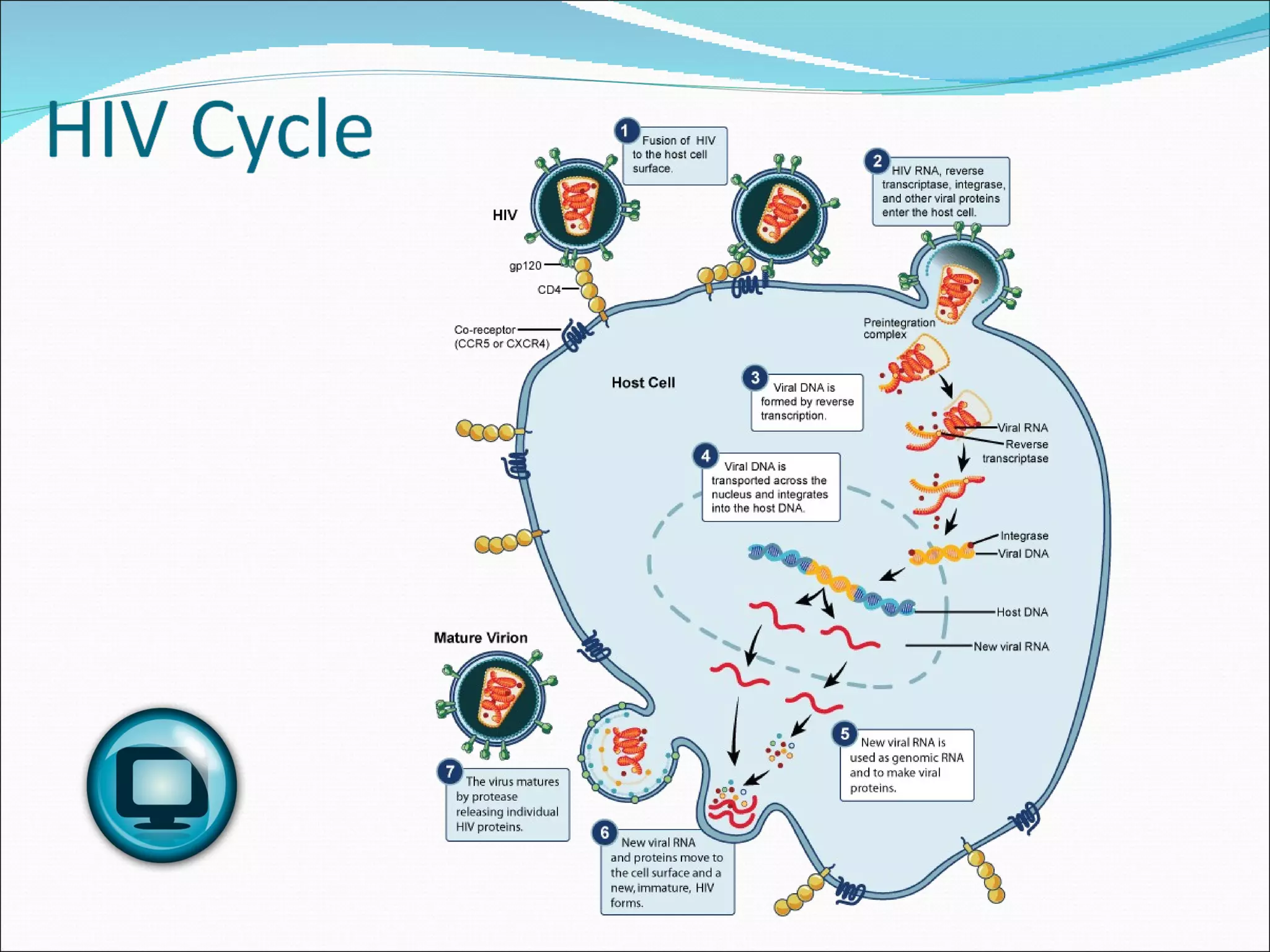
HIV “ Human Immunodeficiency Syndrome” A specific type of virus (a retrovirus) HIV invades the helper T cells to replicate itself. No Cure
AIDS Acquired Immunodeficiency Syndrome HIV is the virus that causes AIDS Disease limits the body’s ability to fight infection A person with AIDS has a very weak immune system No Cure
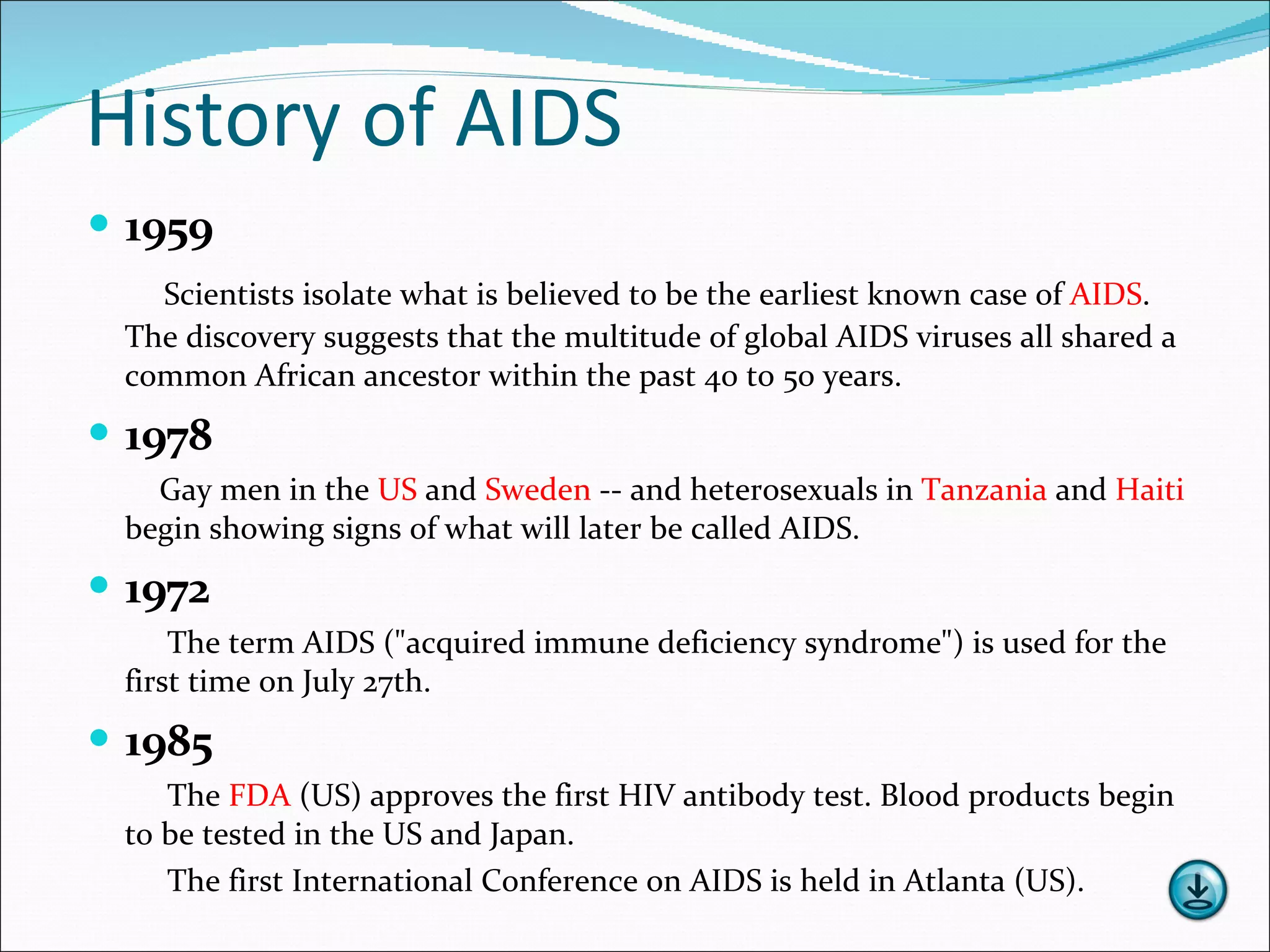
History of AIDS 1959 Scientists isolate what is believed to be the earliest known case of  AIDS . The discovery suggests that the multitude of global AIDS viruses all shared a common African ancestor within the past 40 to 50 years. 1978 Gay men in the  US  and  Sweden  -- and heterosexuals in  Tanzania  and  Haiti   begin showing signs of what will later be called AIDS. 1972 The term AIDS ("acquired immune deficiency syndrome") is used for the first time on July 27th. 1985 The  FDA  (US) approves the first HIV antibody test. Blood products begin to be tested in the US and Japan. The first International Conference on AIDS is held in Atlanta (US).
 
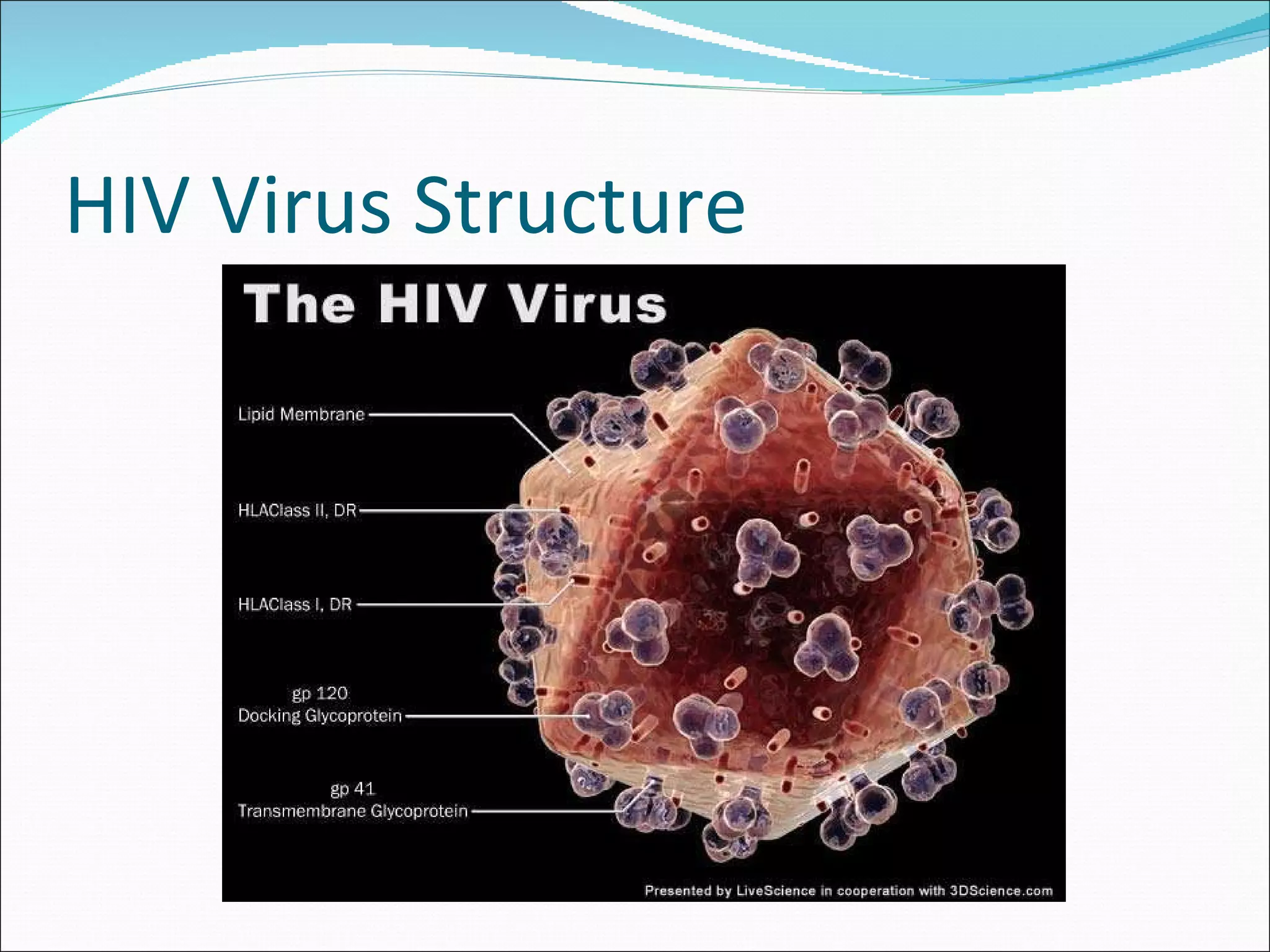
HIV Virus Structure
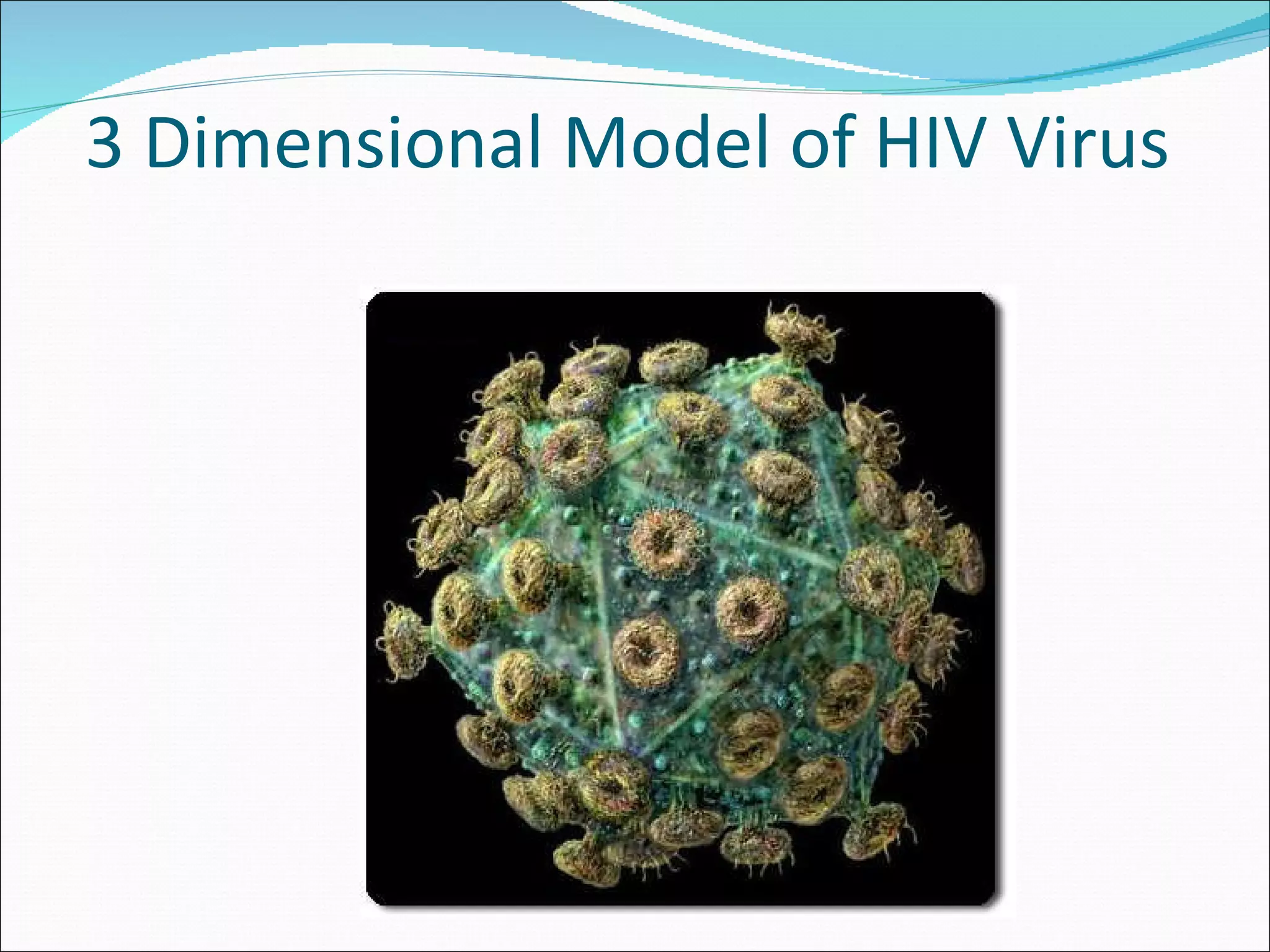
3 Dimensional Model of HIV Virus
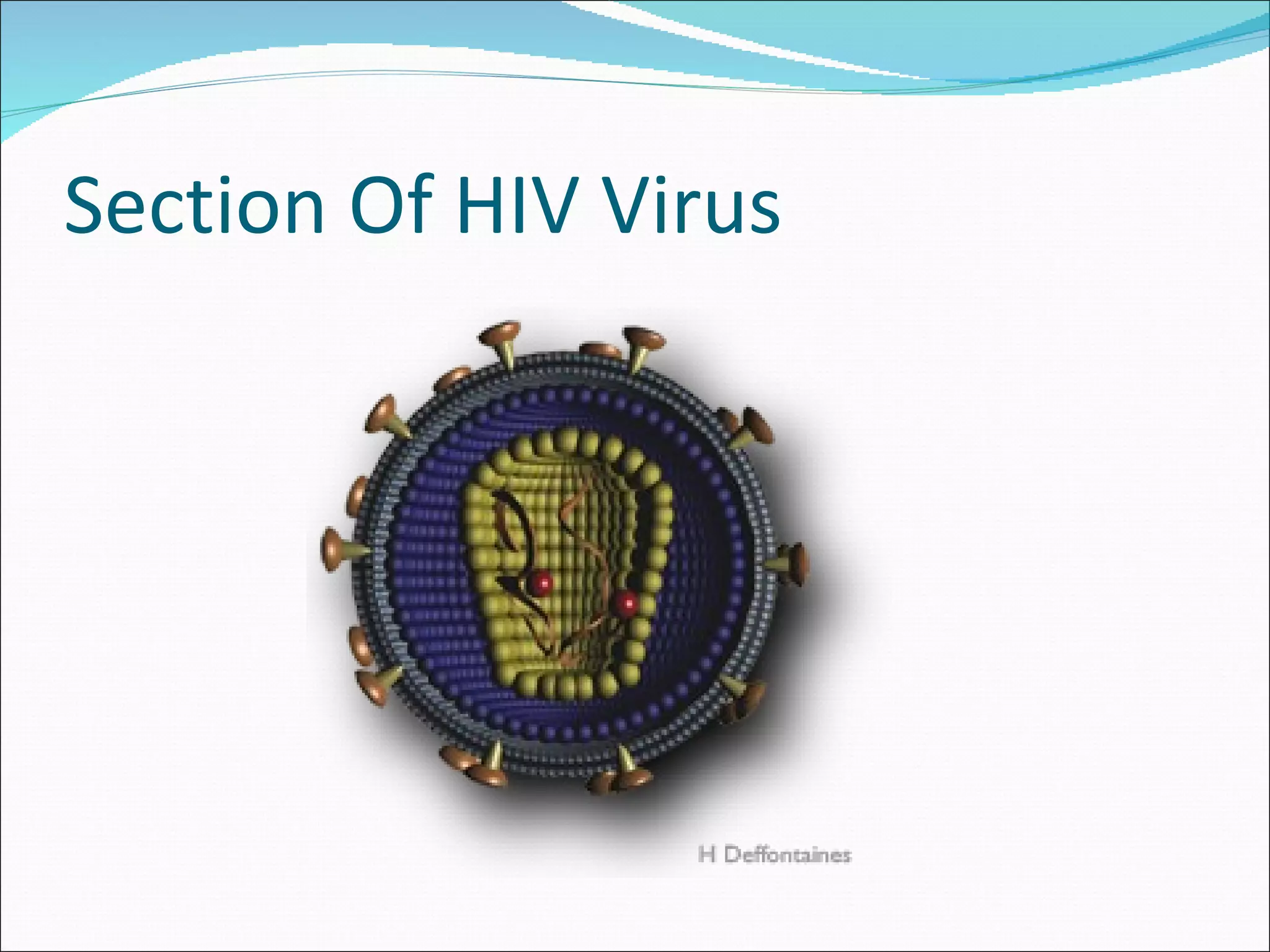
Section Of HIV Virus
 
 
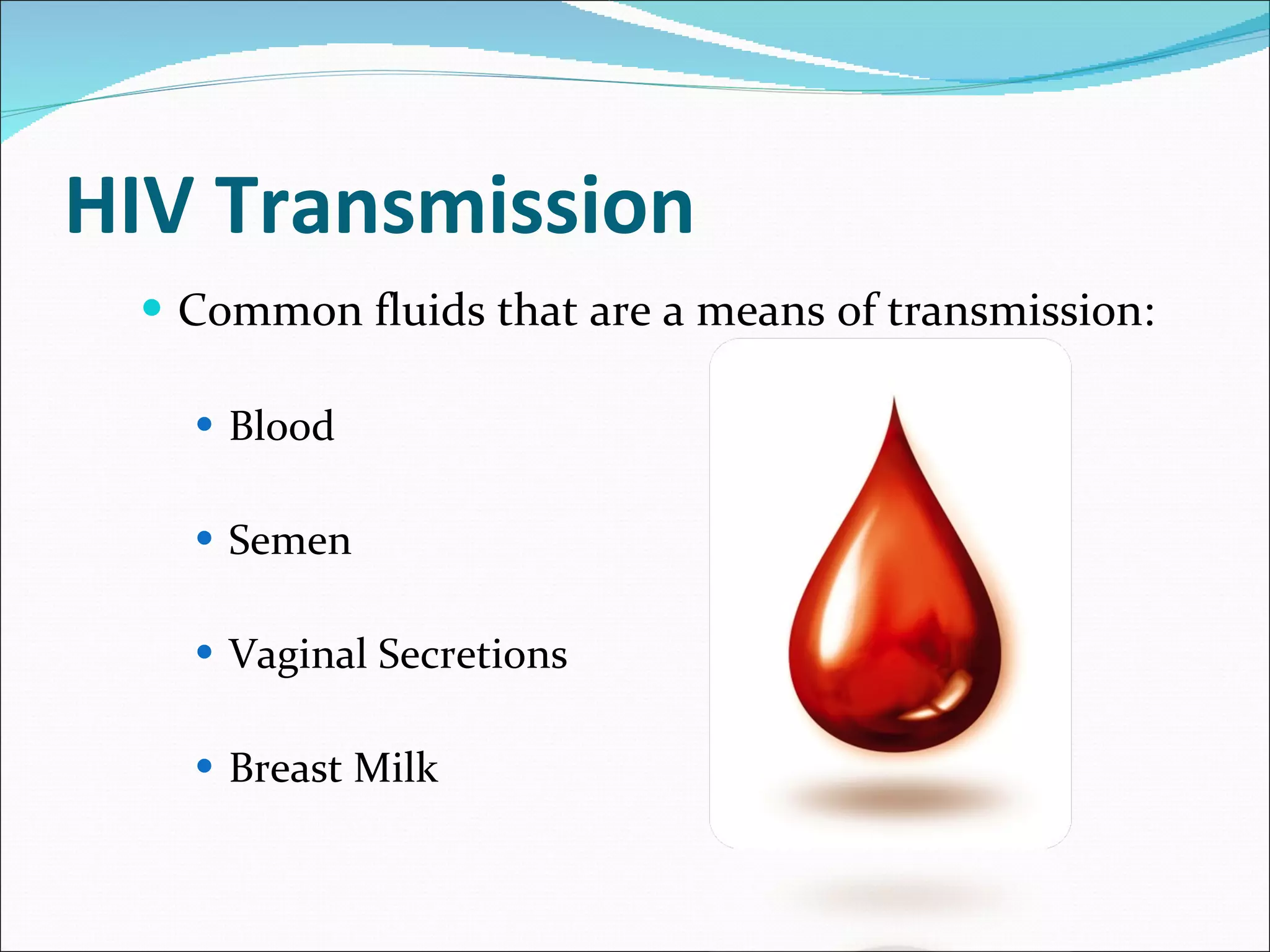
HIV Transmission Common fluids that are a means of transmission: Blood Semen Vaginal Secretions Breast Milk
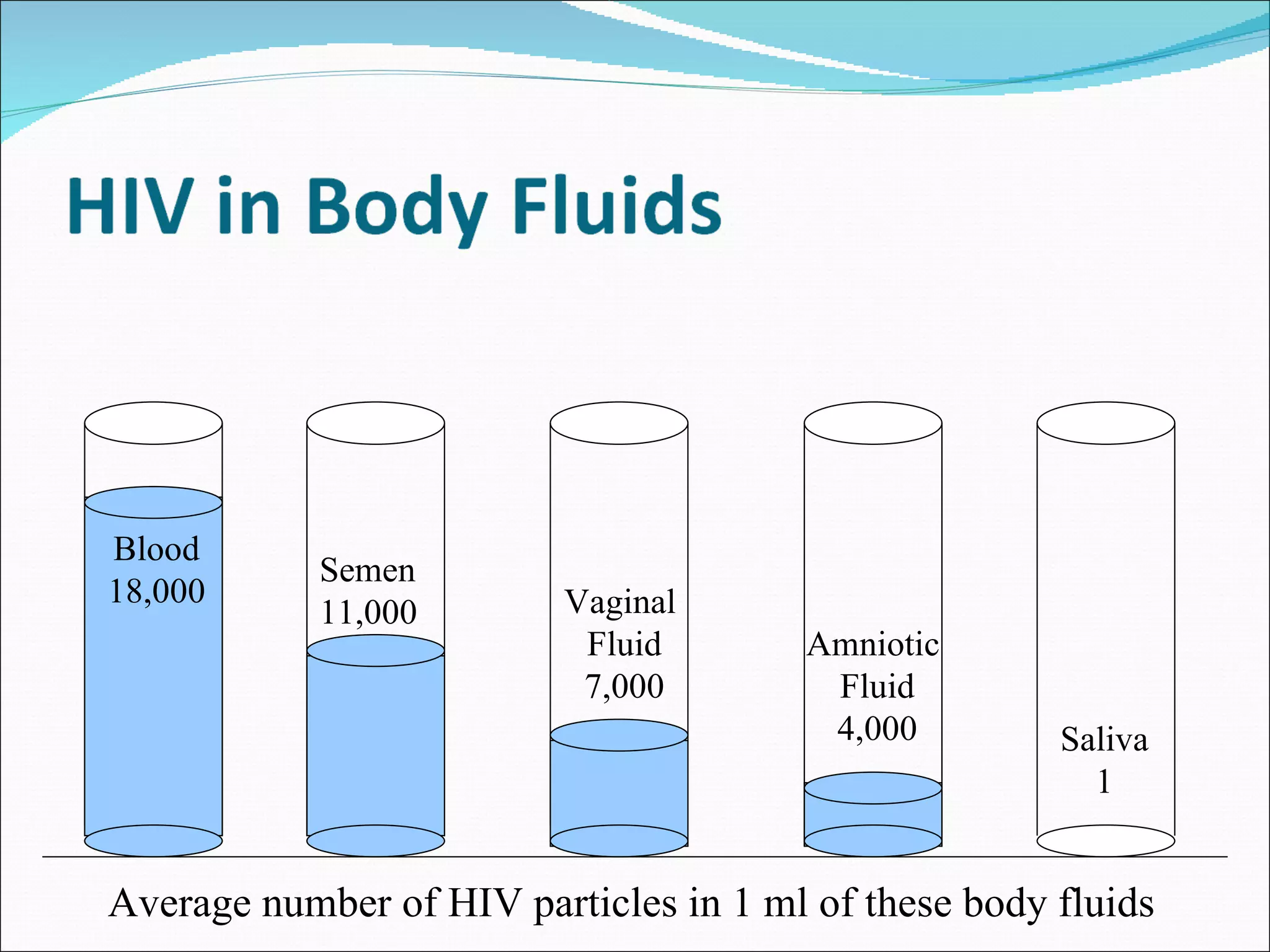
Semen 11,000 Vaginal  Fluid 7,000 Blood 18,000 Amniotic  Fluid 4,000 Saliva 1 Average number of HIV particles in 1 ml of these body fluids
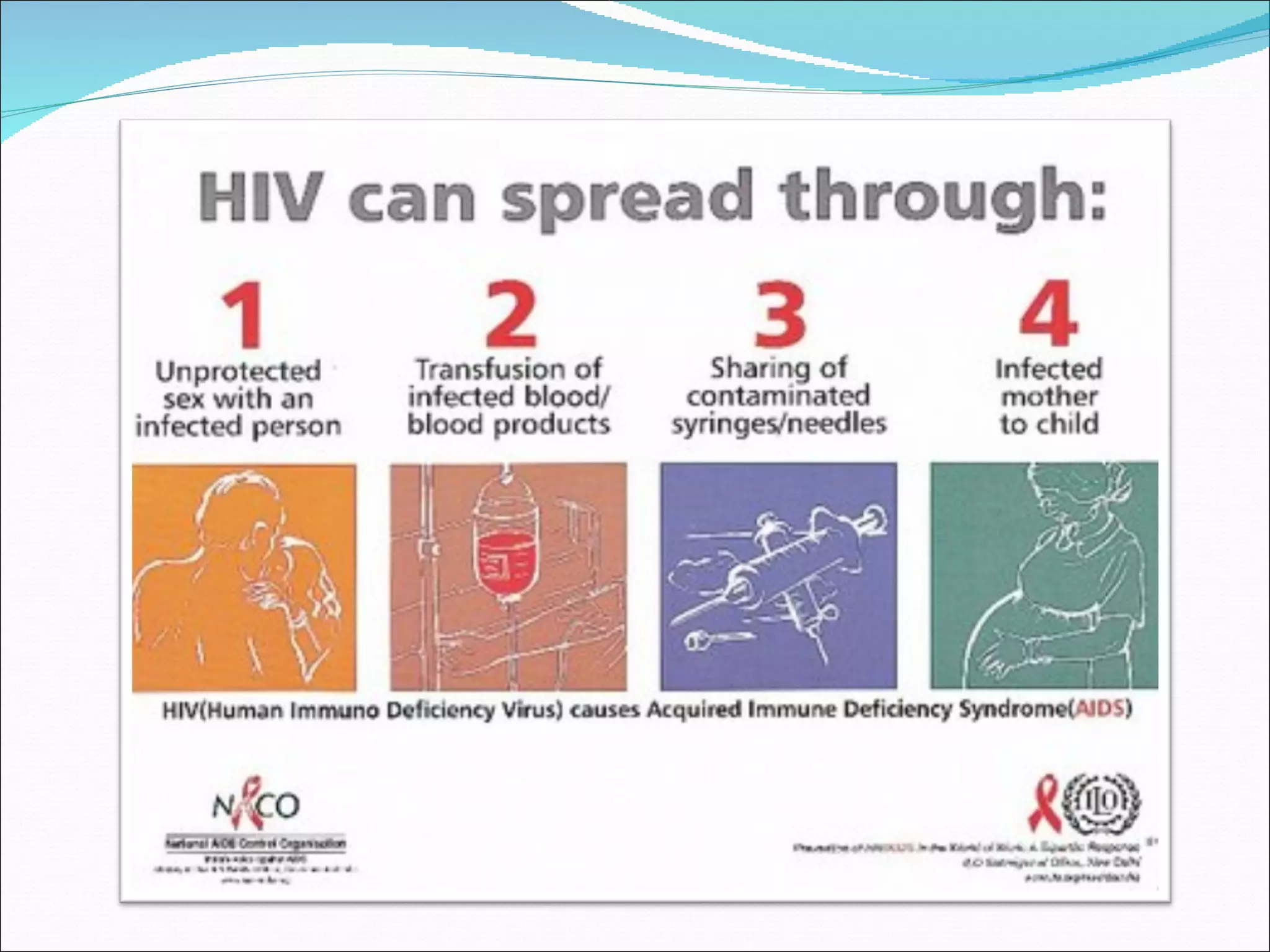
Routes of Transmission of HIV Sexual Contact: Male-to-male Male-to-female or vice versa Female-to-female Blood Exposure:     Injecting drug use/needle sharing   Occupational exposure   Transfusion of blood products Prenatal:   Transmission from mom to baby Breastfeeding
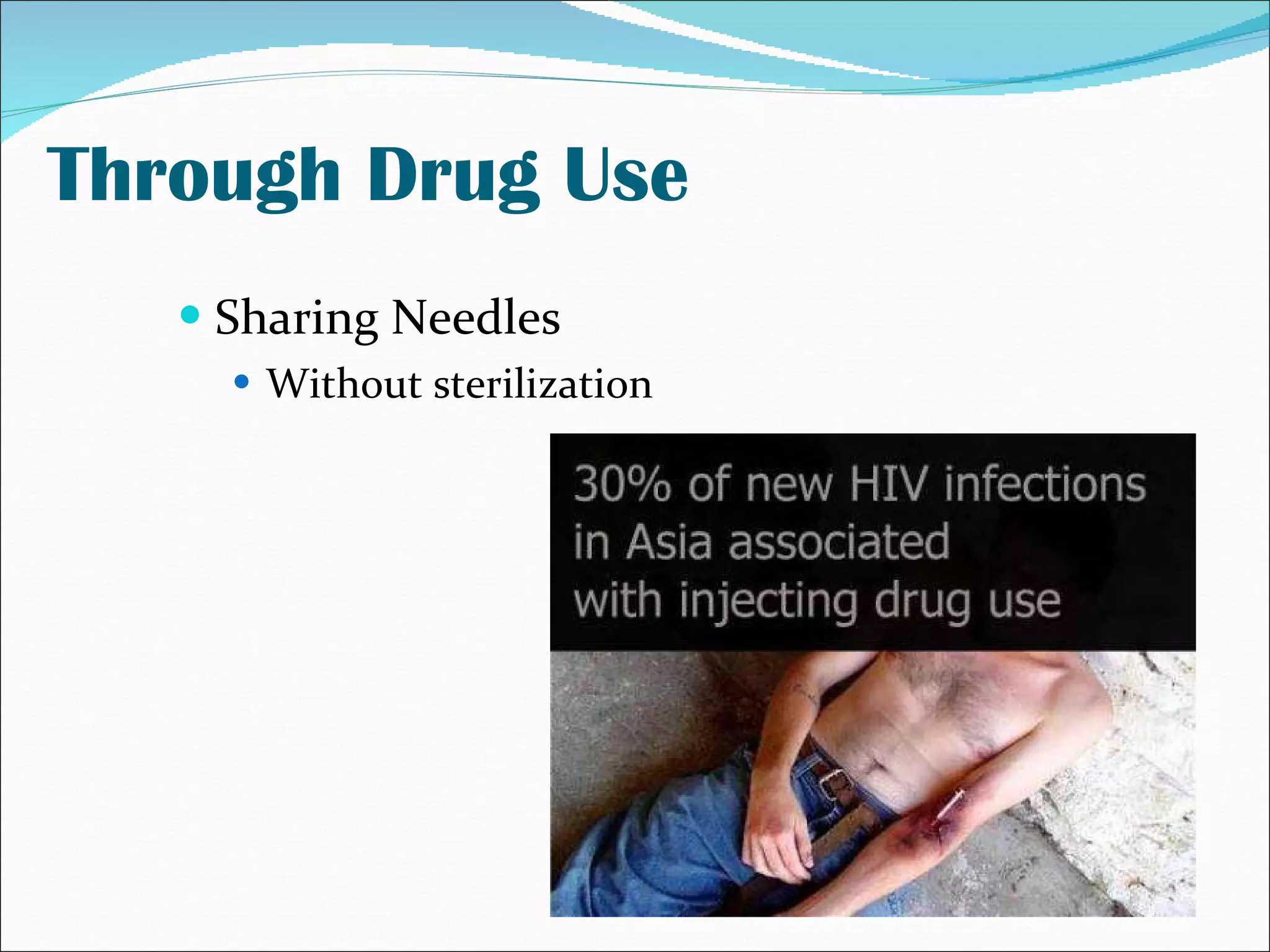
Through Drug Use Sharing Needles Without sterilization
Through Sex Intercourse (penile penetration into the vagina) Oral Anal Digital Sex
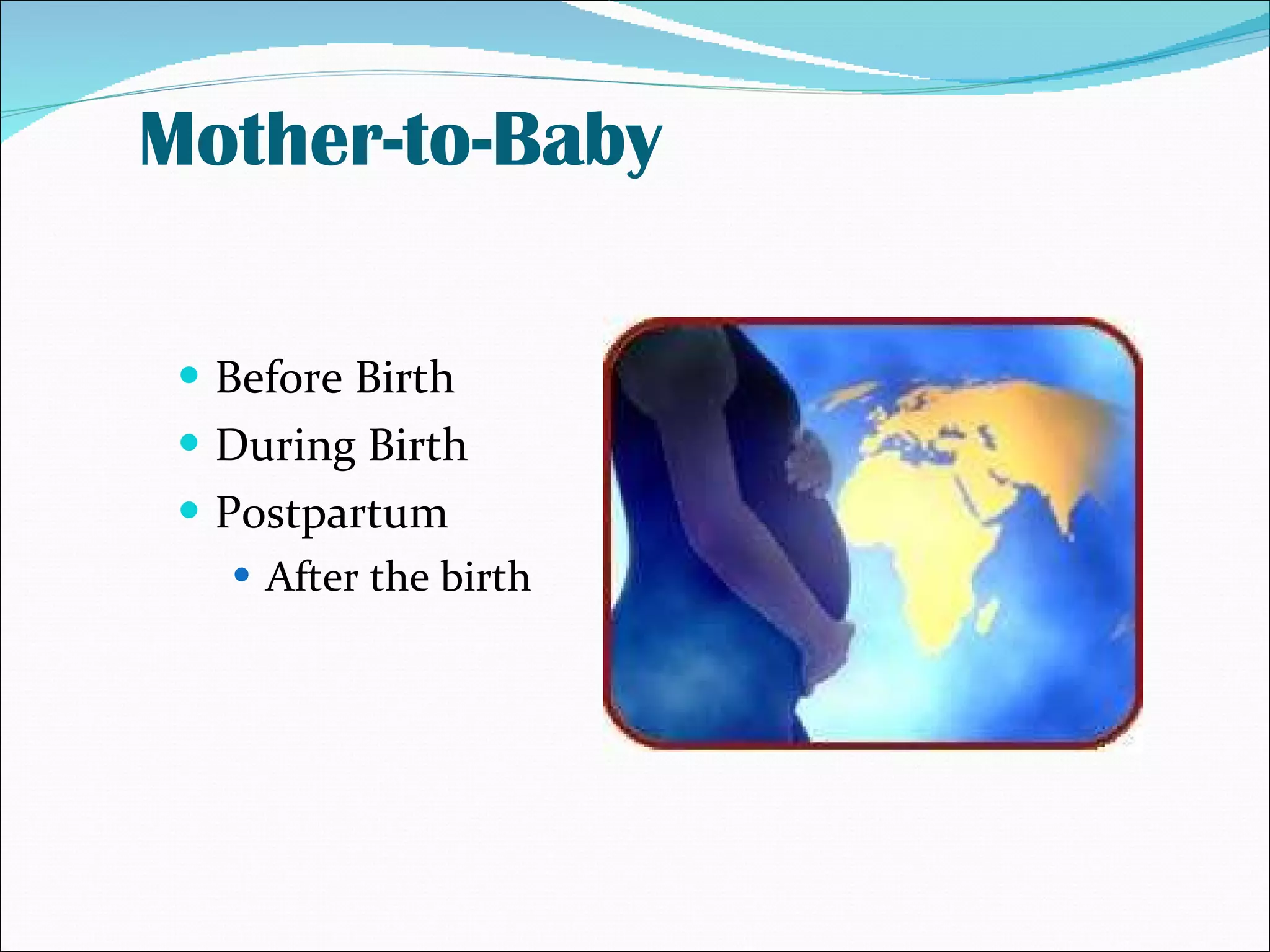
Mother-to-Baby Before Birth During Birth Postpartum After the birth
 
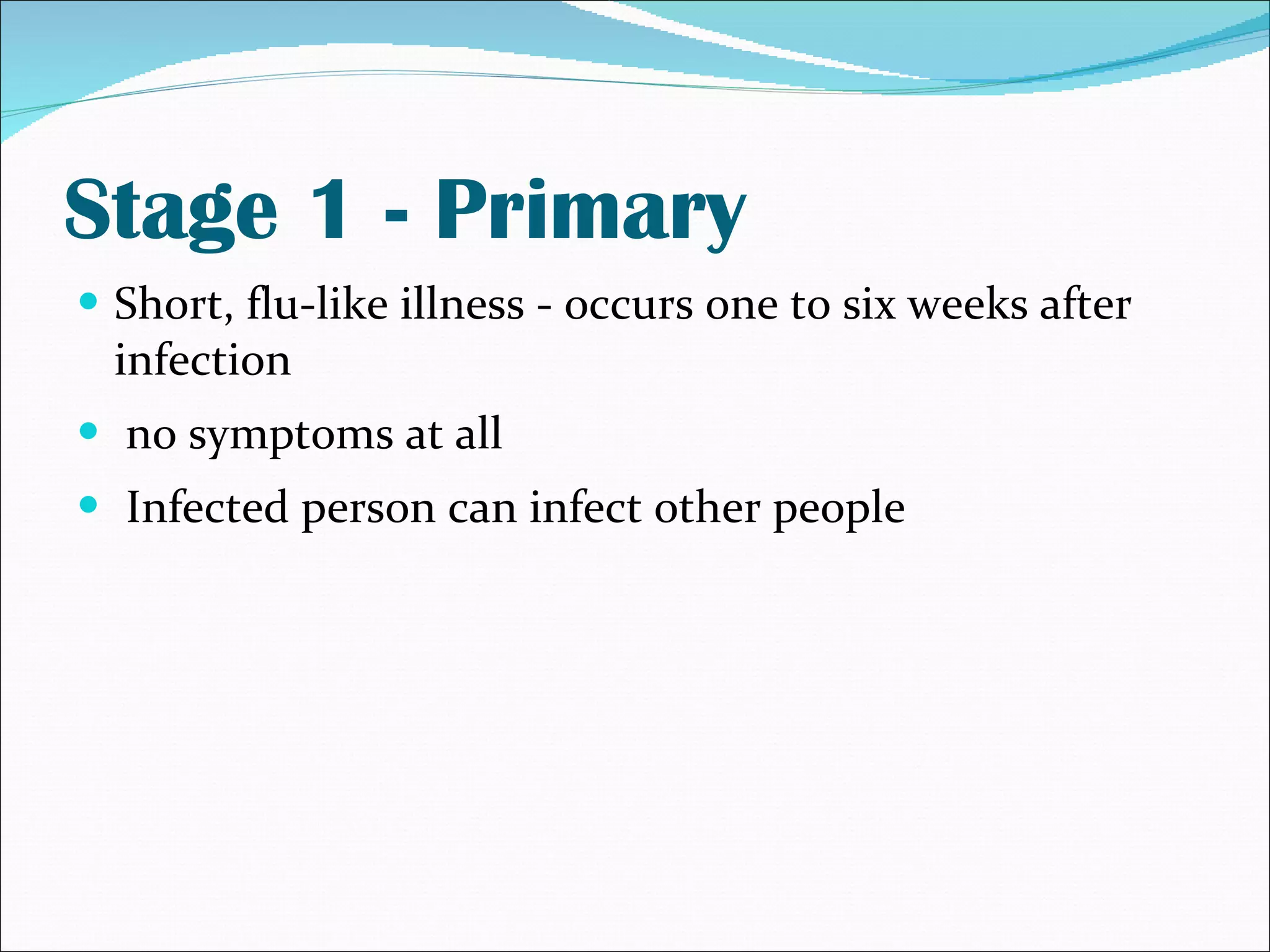
Stage 1 - Primary Short, flu-like illness - occurs one to six weeks after infection no symptoms at all Infected person can infect other people
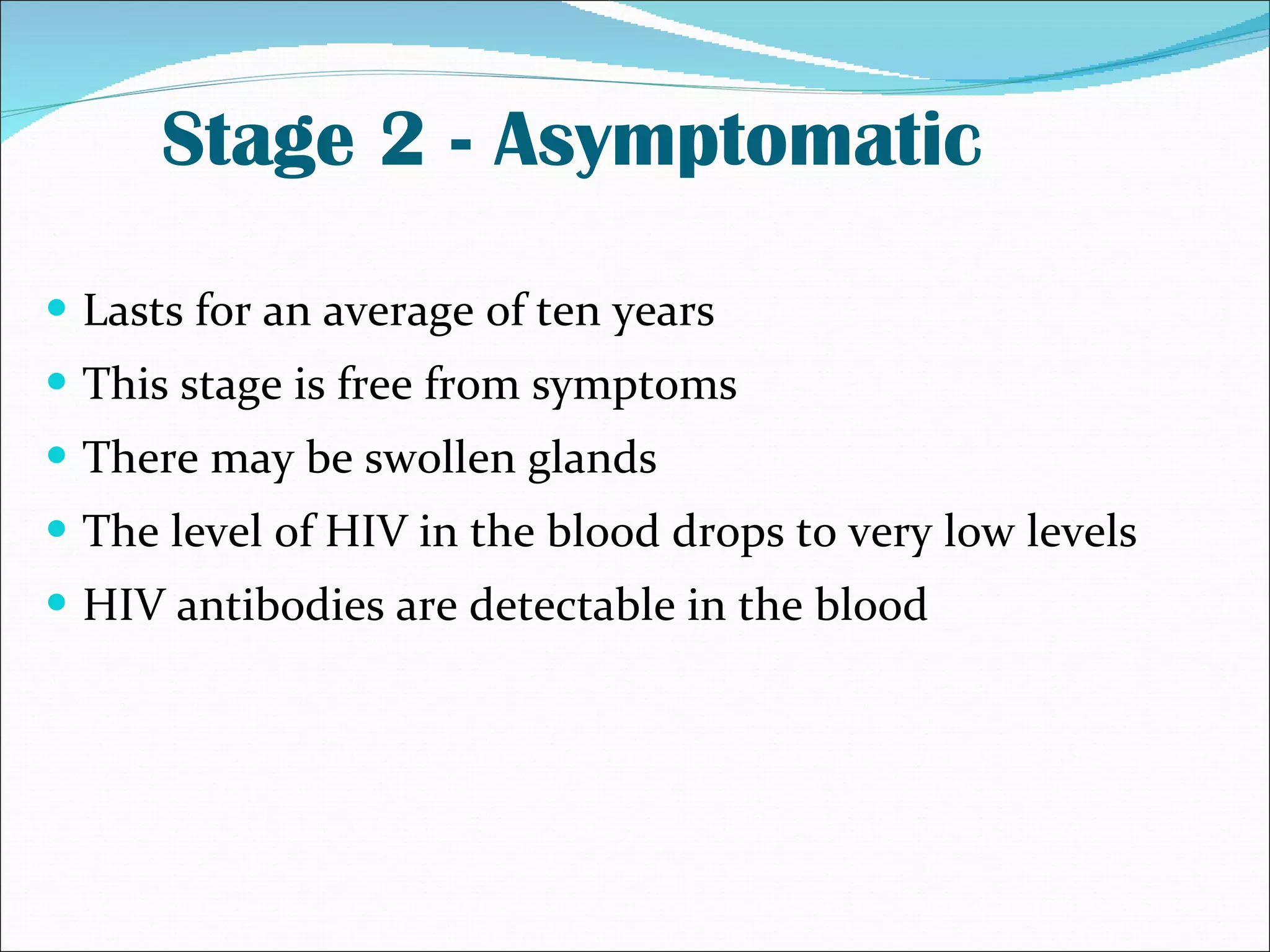
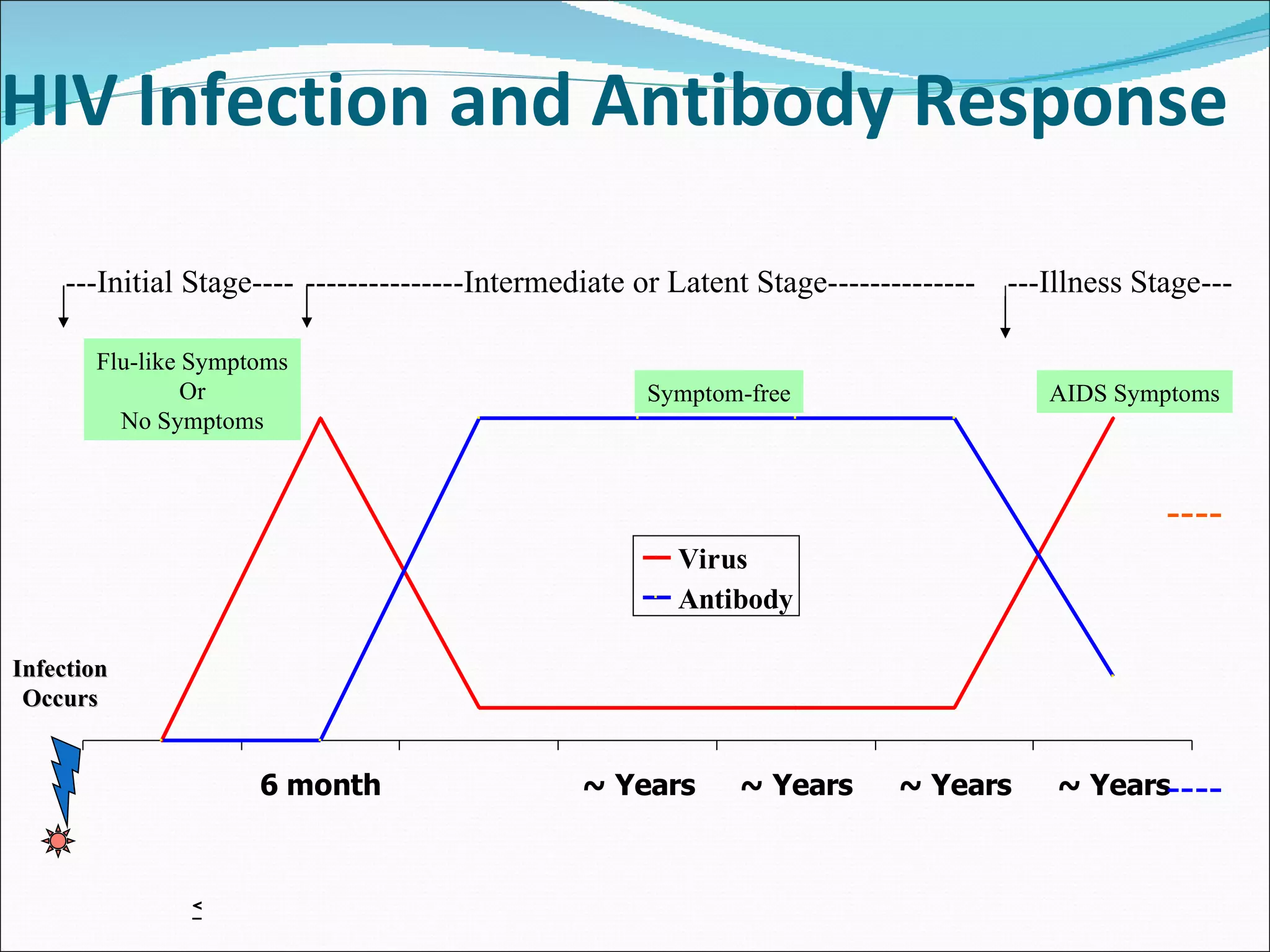
Stage 2 - Asymptomatic Lasts for an average of ten years  This stage is free from symptoms There may be swollen glands The level of HIV in the blood drops to very low levels  HIV antibodies are detectable in the blood
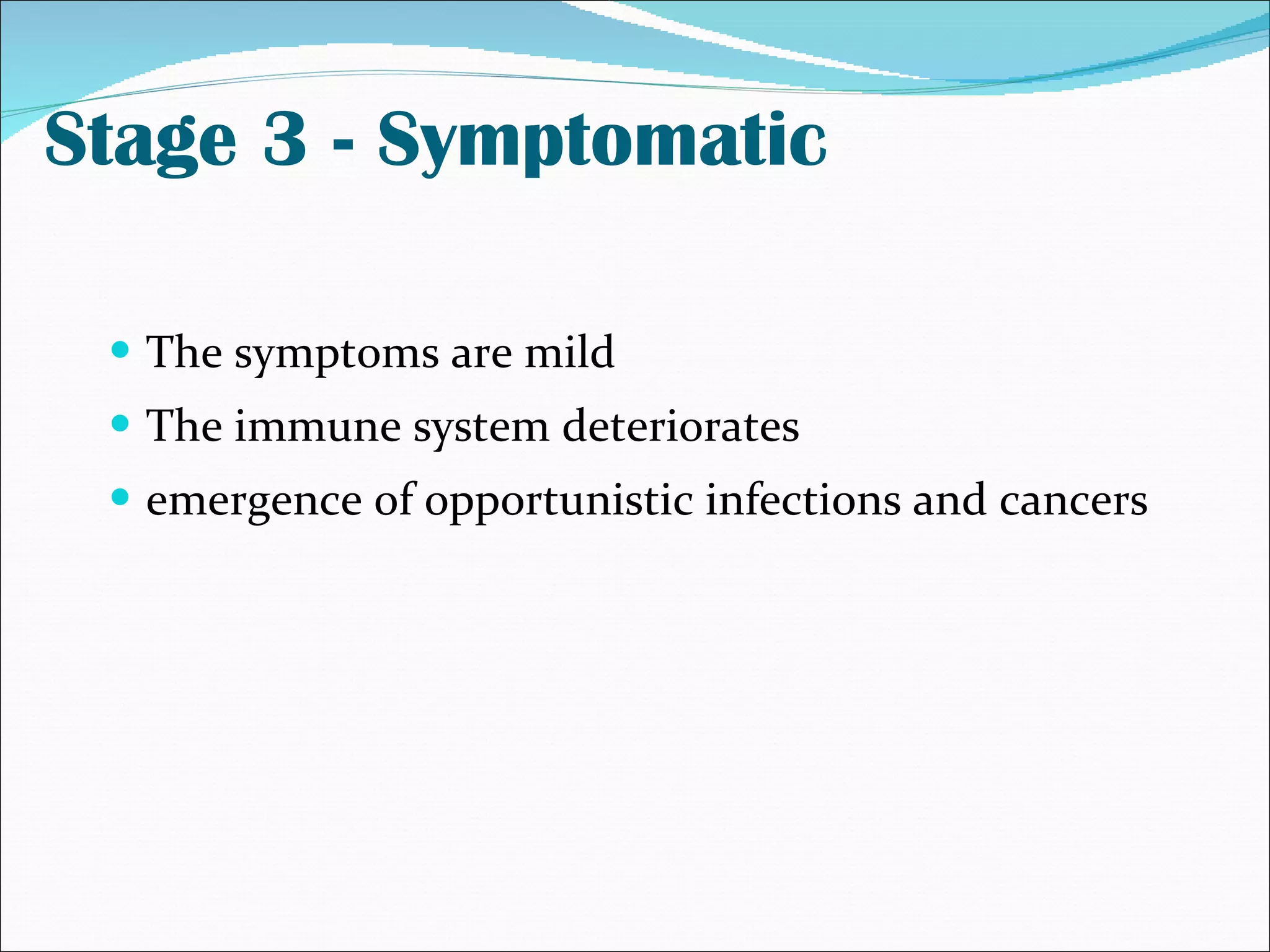
Stage 3 - Symptomatic The symptoms are mild The immune system deteriorates  emergence of opportunistic infections and cancers
Stage 4 - HIV    AIDS The immune system weakens The illnesses become more severe leading to an AIDS diagnosis
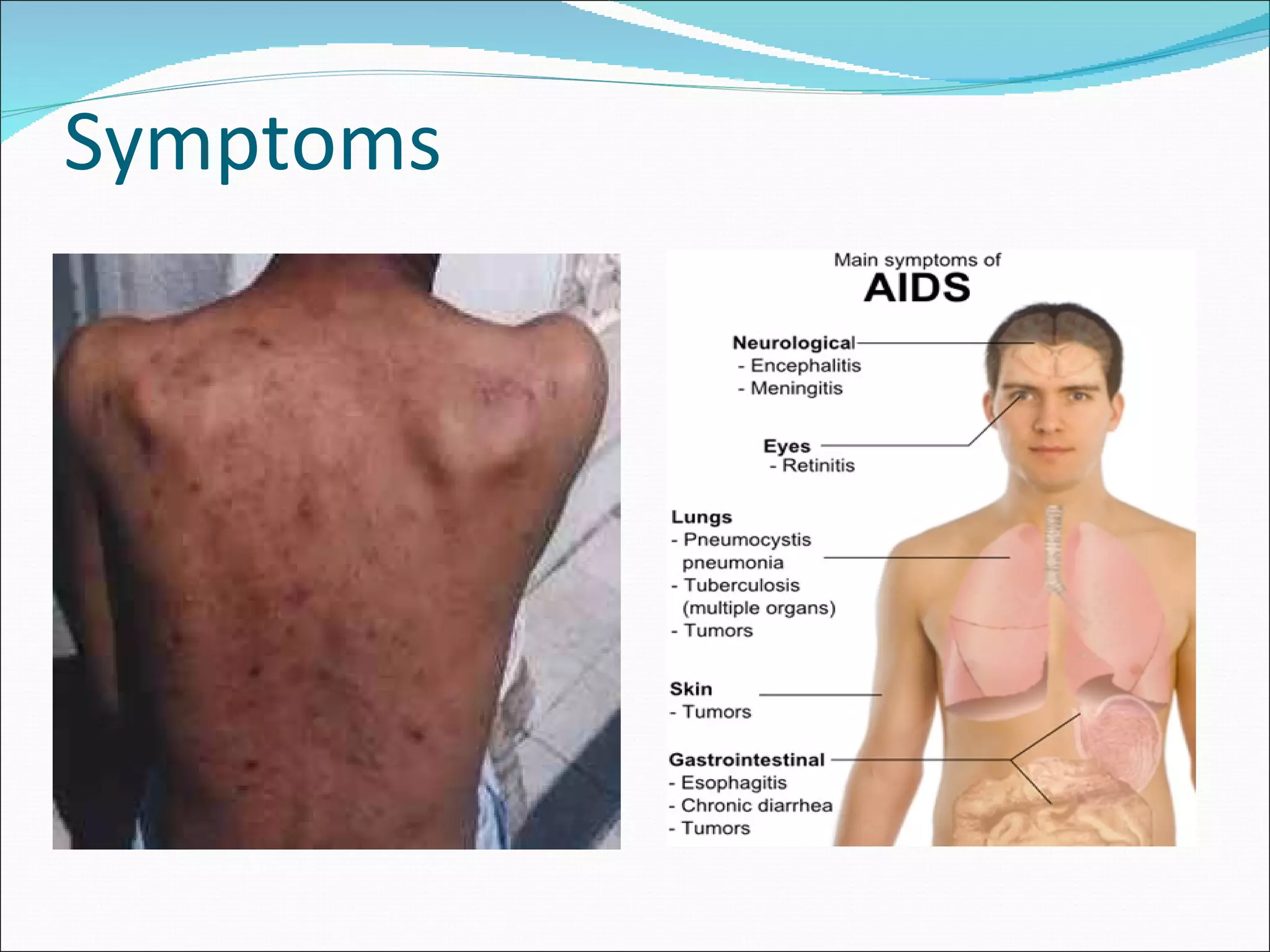
Symptoms
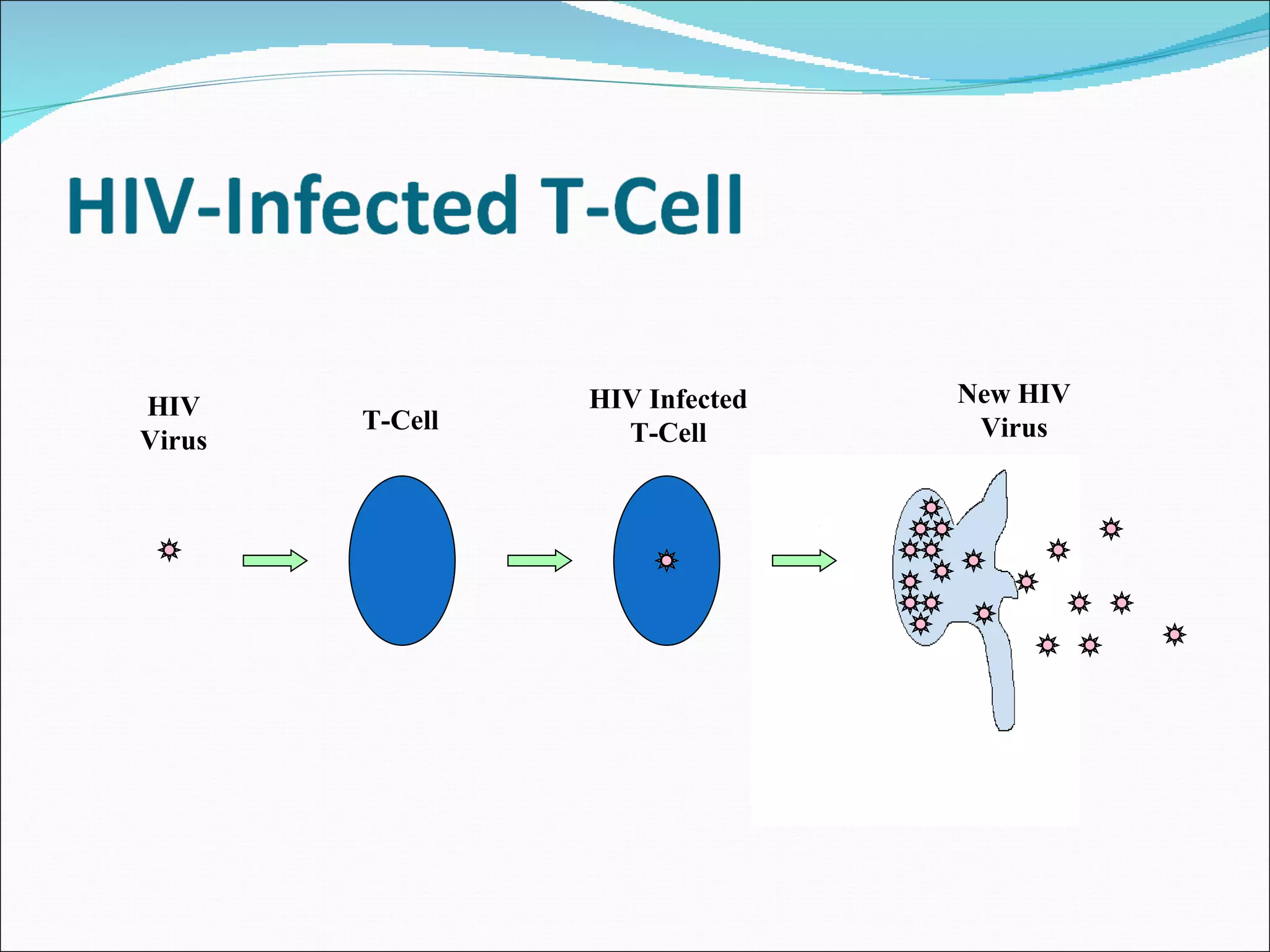
HIV Virus T-Cell HIV Infected T-Cell New HIV Virus
 
Window Period This is the period of time after becoming infected when an HIV test is negative 90 percent of cases test positive within three months of exposure 10 percent of cases test positive within three to six months of exposure
HIV Infection and Antibody Response Infection Occurs AIDS Symptoms ---Initial Stage---- ---------------Intermediate or Latent Stage-------------- ---Illness Stage--- Flu-like Symptoms Or No Symptoms Symptom-free < ---- ----
Importance of Early Testing  and Diagnosis Allows for early treatment to maintain and stabilize the immune system response Decreases risk of HIV transmission from mother to newborn baby Allows for risk reduction education to reduce or eliminate high-risk behavior
Opportunistic Infections associated with AIDS Bacterial Tuberculosis (TB) Strep pneumonia Viral Kaposi Sarcoma Herpes Influenza (flu)
Opportunistic Infections associated with AIDS Parasitic Pneumocystis carinii Fungal Candida Cryptococcus
 
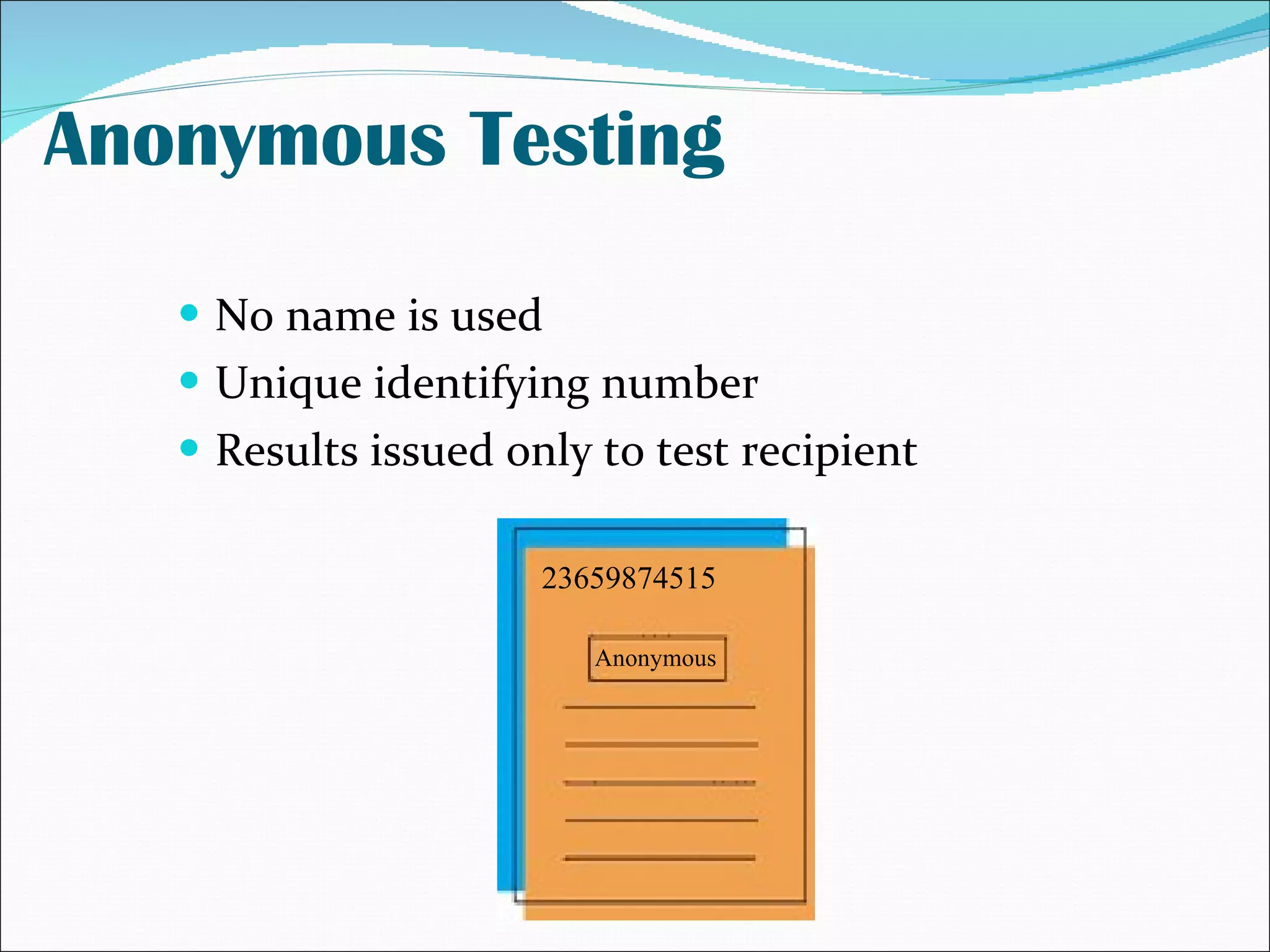
Anonymous Testing No name is used Unique identifying number Results issued only to test recipient 23659874515 Anonymous
Confidential Testing Person’s name is recorded along with HIV results Name and positive results are reported to the State Department and the Centers for Disease Control and Prevention Results issued only to test recipient
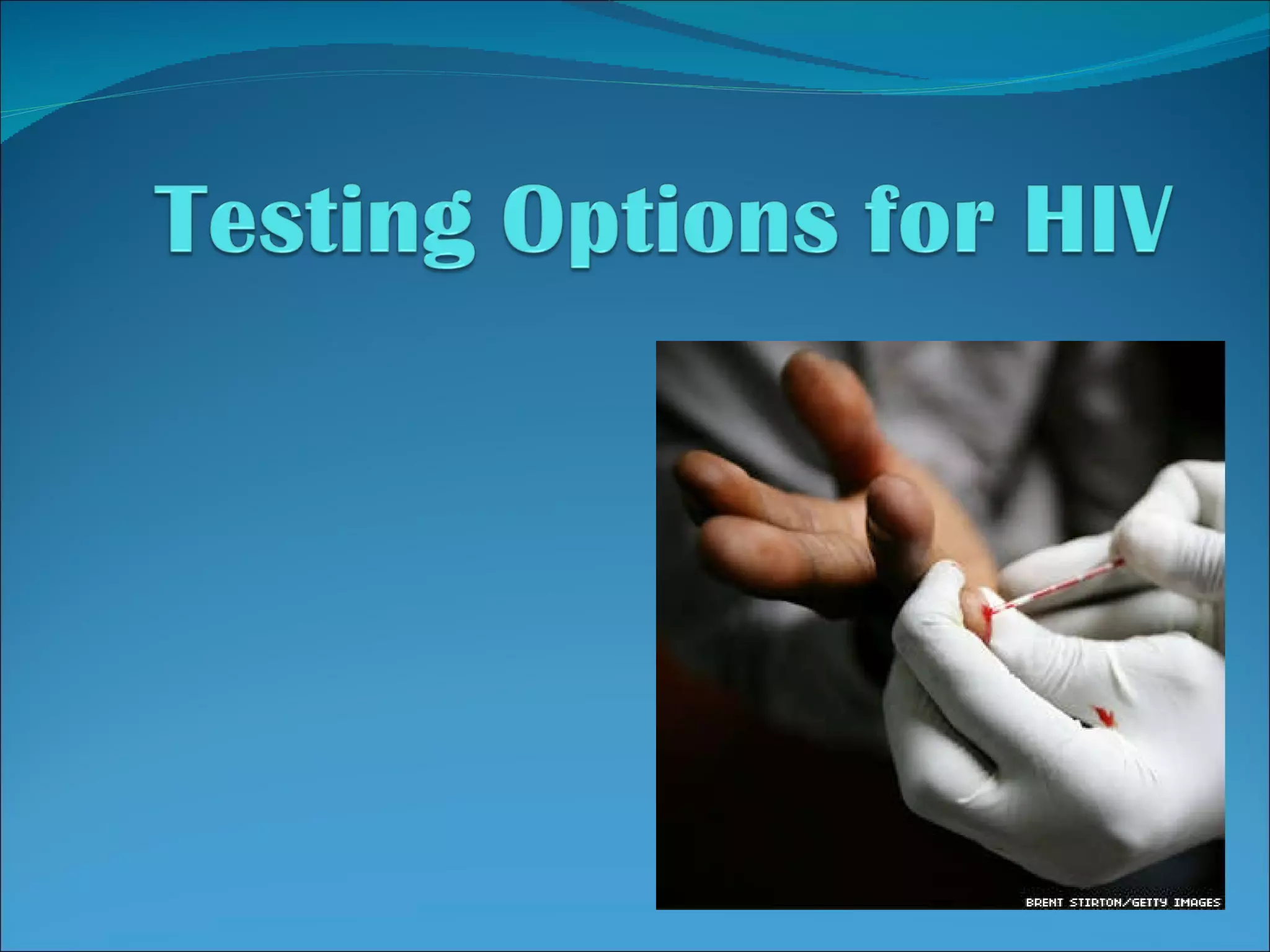
HIV Testing   Requires a blood or oral fluid sample HIV test detects the body’s antibody response to HIV infection The test does NOT detect the HIV virus
Blood Detection Tests Enzyme-Linked Immunosorbent Assay/Enzyme Immunoassay (ELISA/EIA) Radio Immunoprecipitation Assay/Indirect Fluorescent Antibody Assay (RIP/IFA) Polymerase Chain Reaction (PCR) Western Blot Confirmatory test
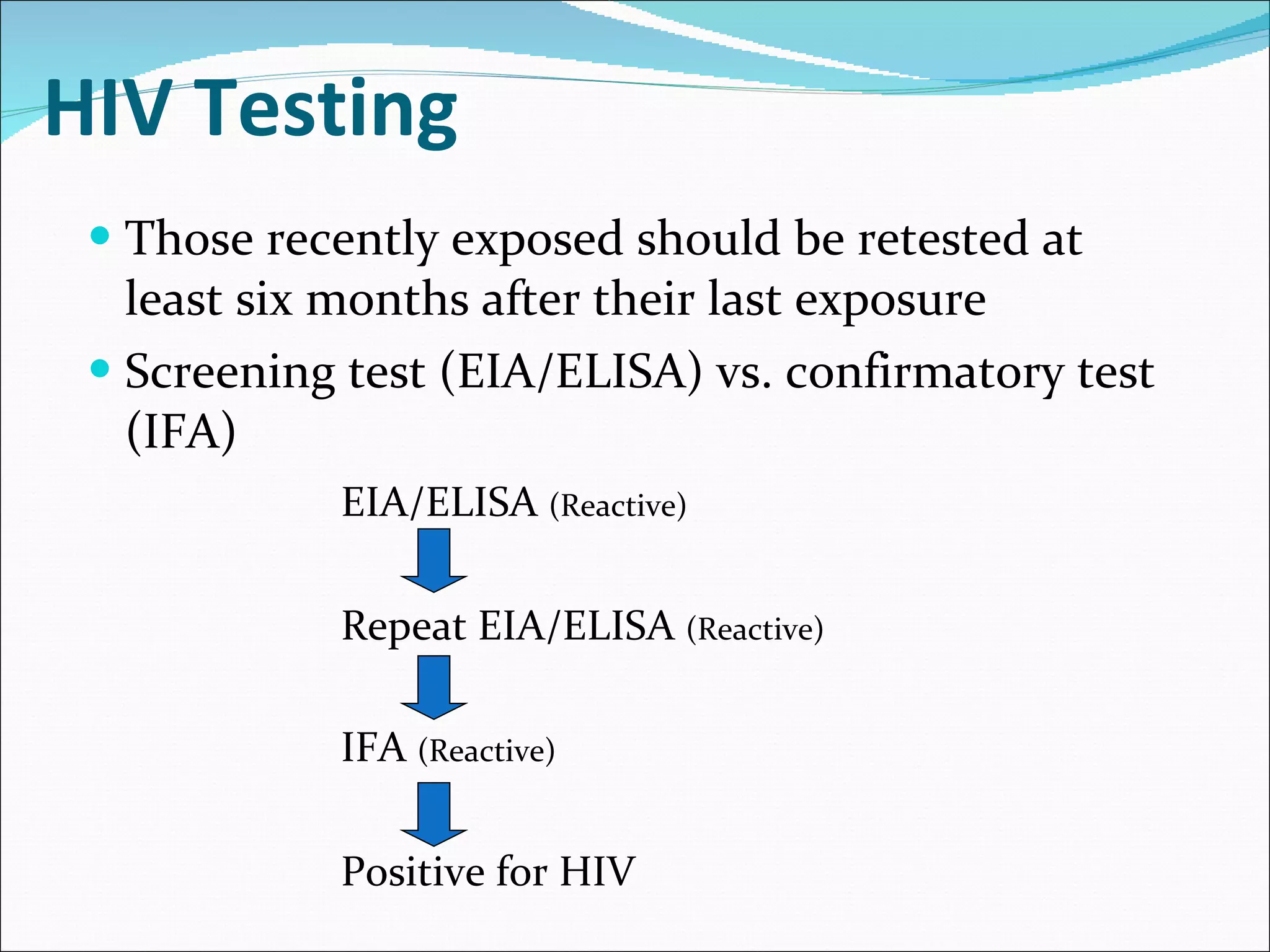
HIV Testing Those recently exposed should be retested at least six months after their last exposure Screening test (EIA/ELISA) vs. confirmatory test (IFA)   EIA/ELISA  (Reactive) Repeat EIA/ELISA  (Reactive) IFA  (Reactive) Positive for HIV
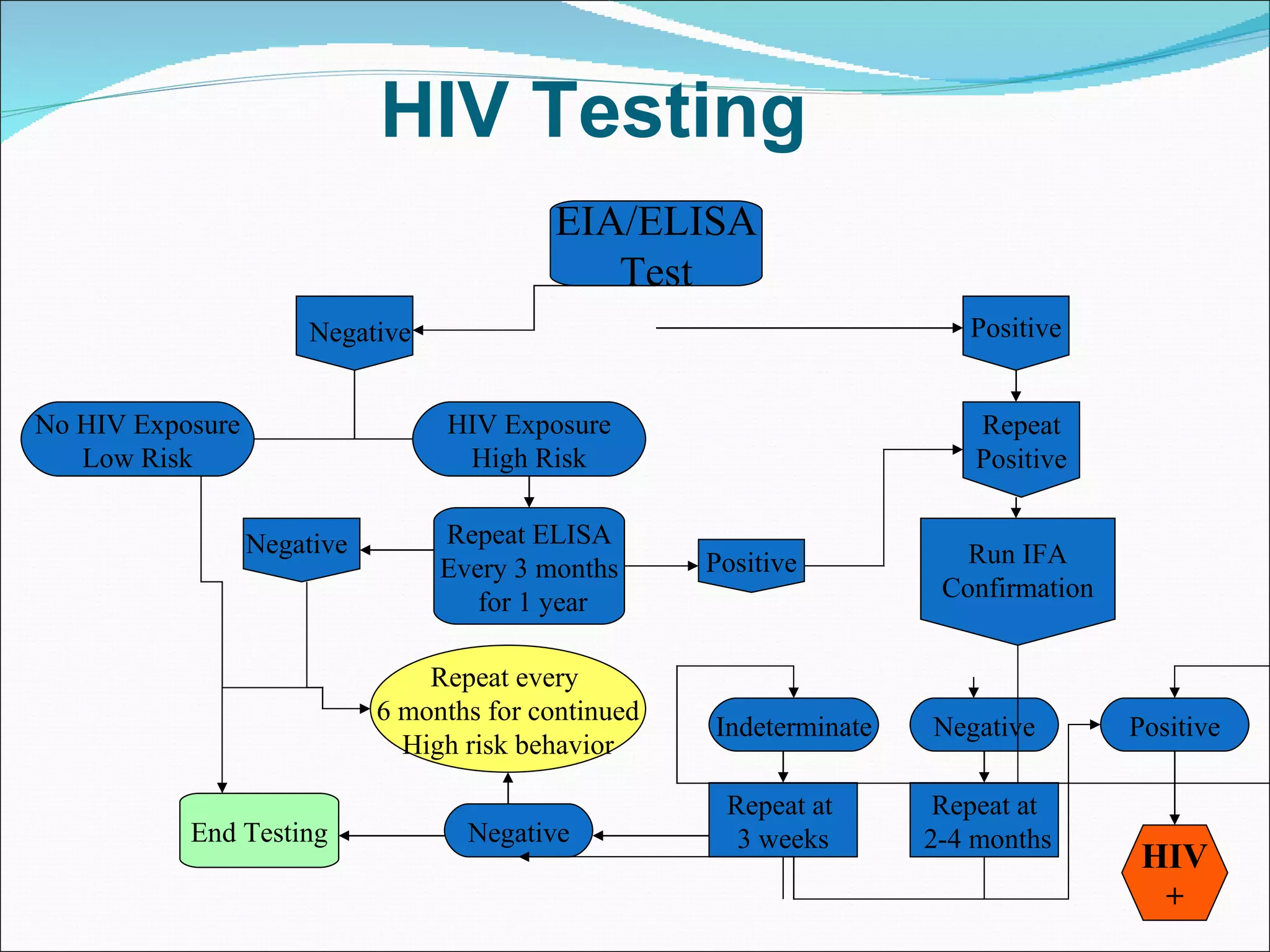
EIA/ELISA Test Positive Negative Run IFA Confirmation Repeat Positive Positive End Testing Repeat ELISA Every 3 months for 1 year Negative Positive Negative Indeterminate Repeat at 2-4 months Repeat at  3 weeks HIV Testing No HIV Exposure Low Risk HIV Exposure High Risk Negative HIV + Repeat every  6 months for continued High risk behavior
Urine Testing Urine Western Blot As sensitive as testing blood Safe way to screen for HIV Can cause false positives in certain people at high risk for HIV
Oral Testing Orasure The only FDA approved HIV antibody. As accurate as blood testing Draws blood-derived fluids from the gum tissue. NOT A SALIVA TEST!
  Once a person is infected they are always infected Medications are available to prolong life but they do not cure the disease Those who are infected are capable of infecting others without having symptoms or knowing of the infection HIV  AIDS
 
HIV and Sexually  Transmitted Diseases STDs increase infectivity of HIV A person co-infected with an STD and HIV may be more likely to transmit HIV due to an increase in HIV viral shedding More white blood cells, some carrying HIV, may be present in the mucosa of the genital area due to a sexually transmitted infection
HIV and Sexually  Transmitted Diseases STDs increase the susceptibility to HIV Ulcerative and inflammatory STDs compromise the mucosal or cutaneous surfaces of the genital tract that normally act as a barrier against HIV Ulcerative STDs include:  syphilis, chancroid, and genital herpes Inflammatory STDs include:  chlamydia, gonorrhea, and trichomoniasis
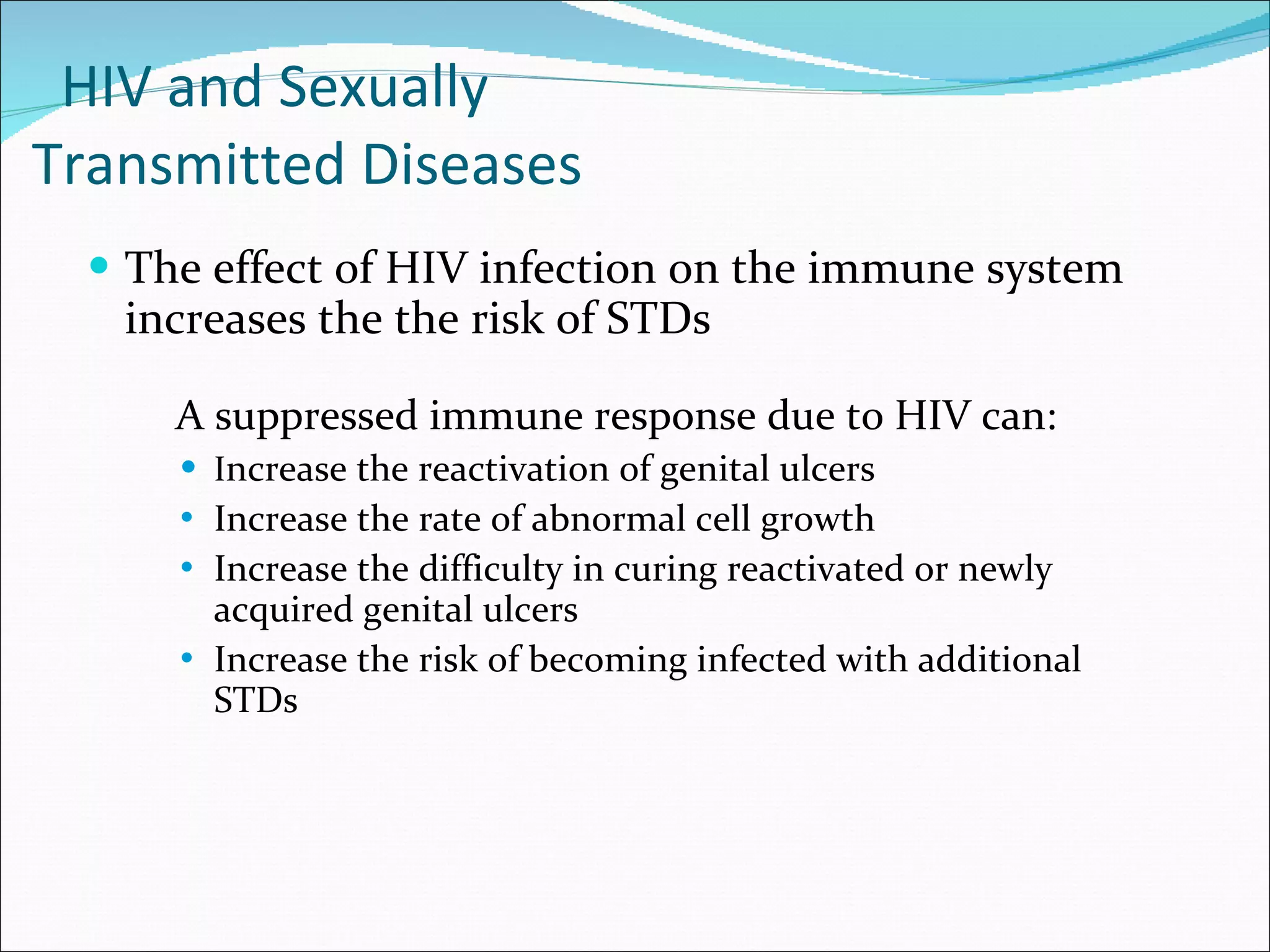
HIV and Sexually  Transmitted Diseases The effect of HIV infection on the immune system increases the the risk of STDs A suppressed immune response due to HIV can: I ncrease the reactivation of genital ulcers Increase the rate of abnormal cell growth  Increase the difficulty in curing reactivated or newly acquired genital ulcers Increase the risk of becoming infected with additional STDs
 
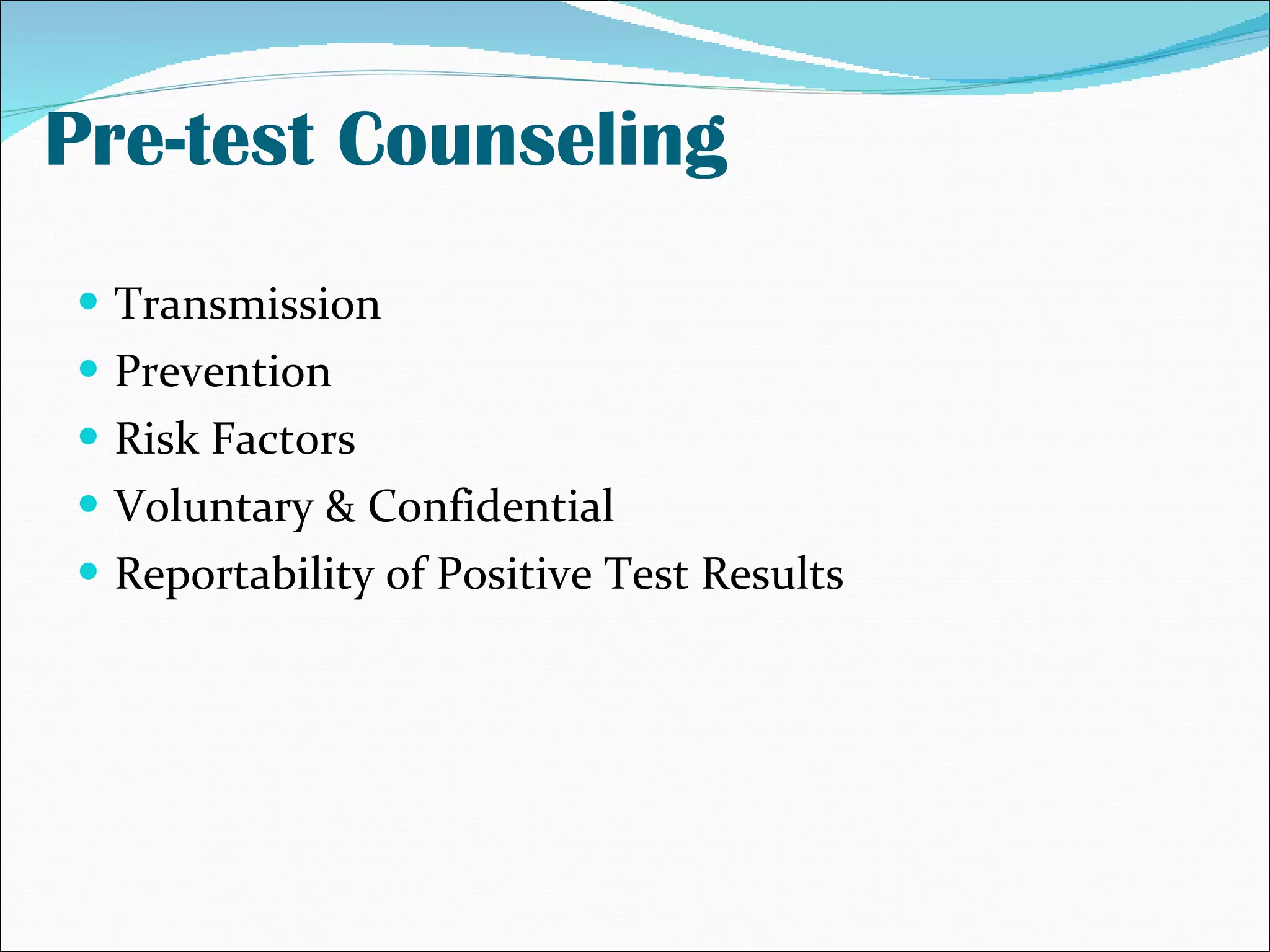
Pre-test Counseling Transmission Prevention Risk Factors Voluntary & Confidential Reportability of Positive Test Results
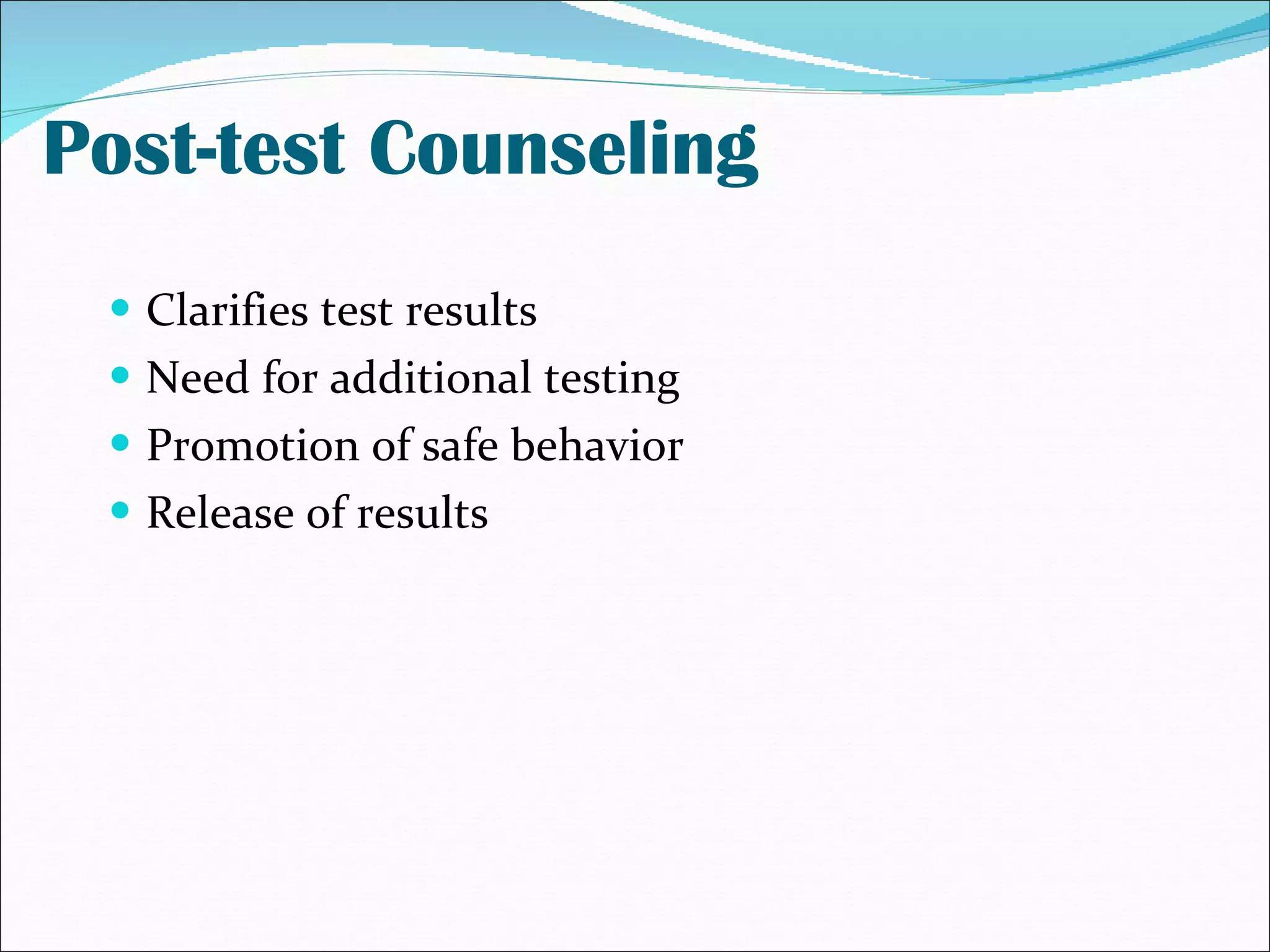
Post-test Counseling Clarifies test results Need for additional testing Promotion of safe behavior Release of results
HIV Risk Reduction Avoid unprotected sexual contact   Use barriers such as condoms and dental dams Limit multiple partners by maintaining a long-term relationship with one person  Talk to your partner about being tested before you begin a sexual relationship
HIV Risk Reduction Avoid drug and alcohol use to maintain good judgment Don’t share needles used by others for: Drugs Tattoos Body piercing Avoid exposure to blood products
Abstinence It is the only 100 % effective method of not acquiring HIV/AIDS.  Refraining from sexual contact: oral, anal, or vaginal. Refraining from intravenous drug use
Monogamous relationship A mutually monogamous (only one sex partner) relationship with a person who is not infected with HIV  HIV testing before intercourse is necessary to prove your partner is  not infected
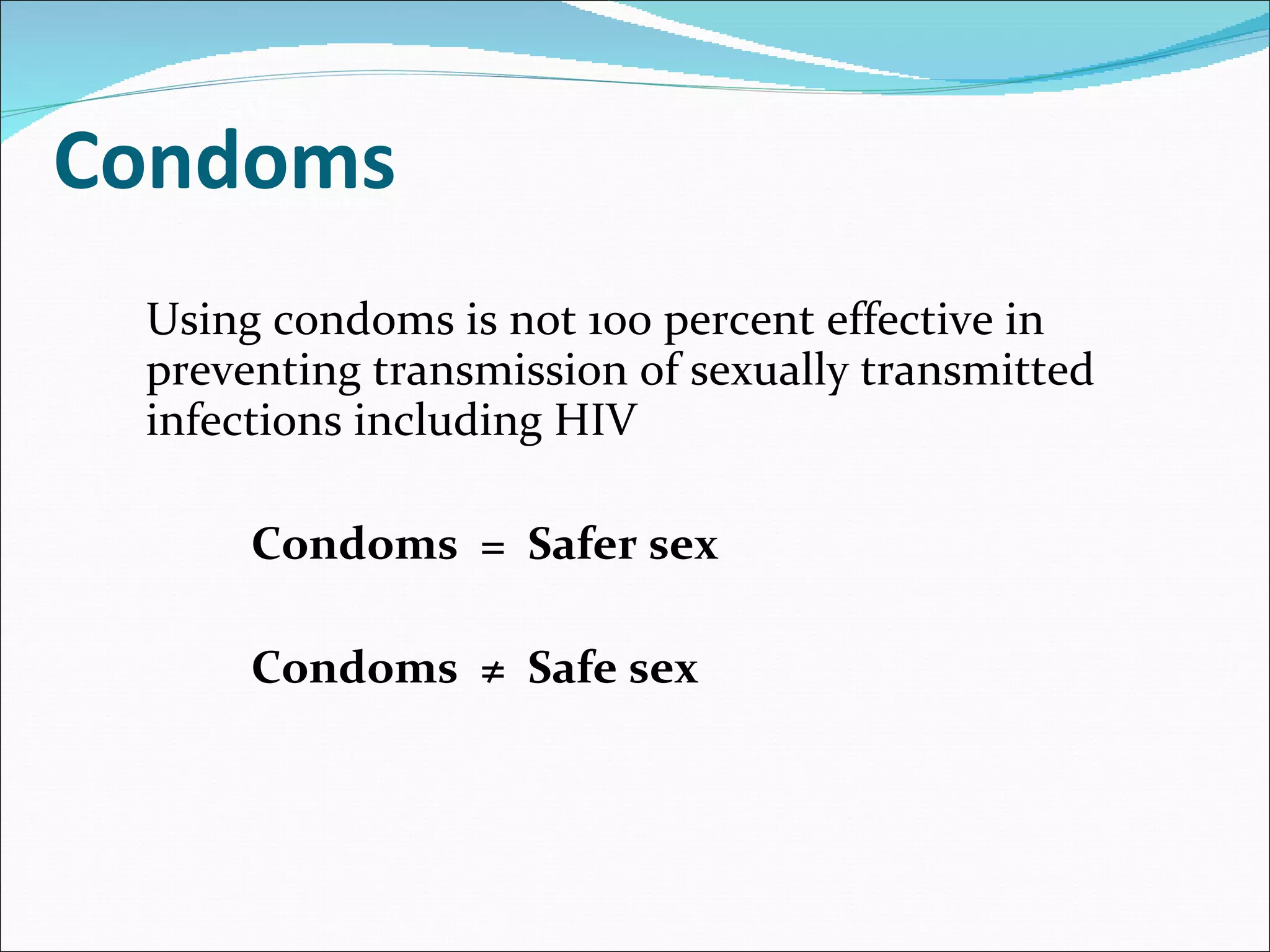
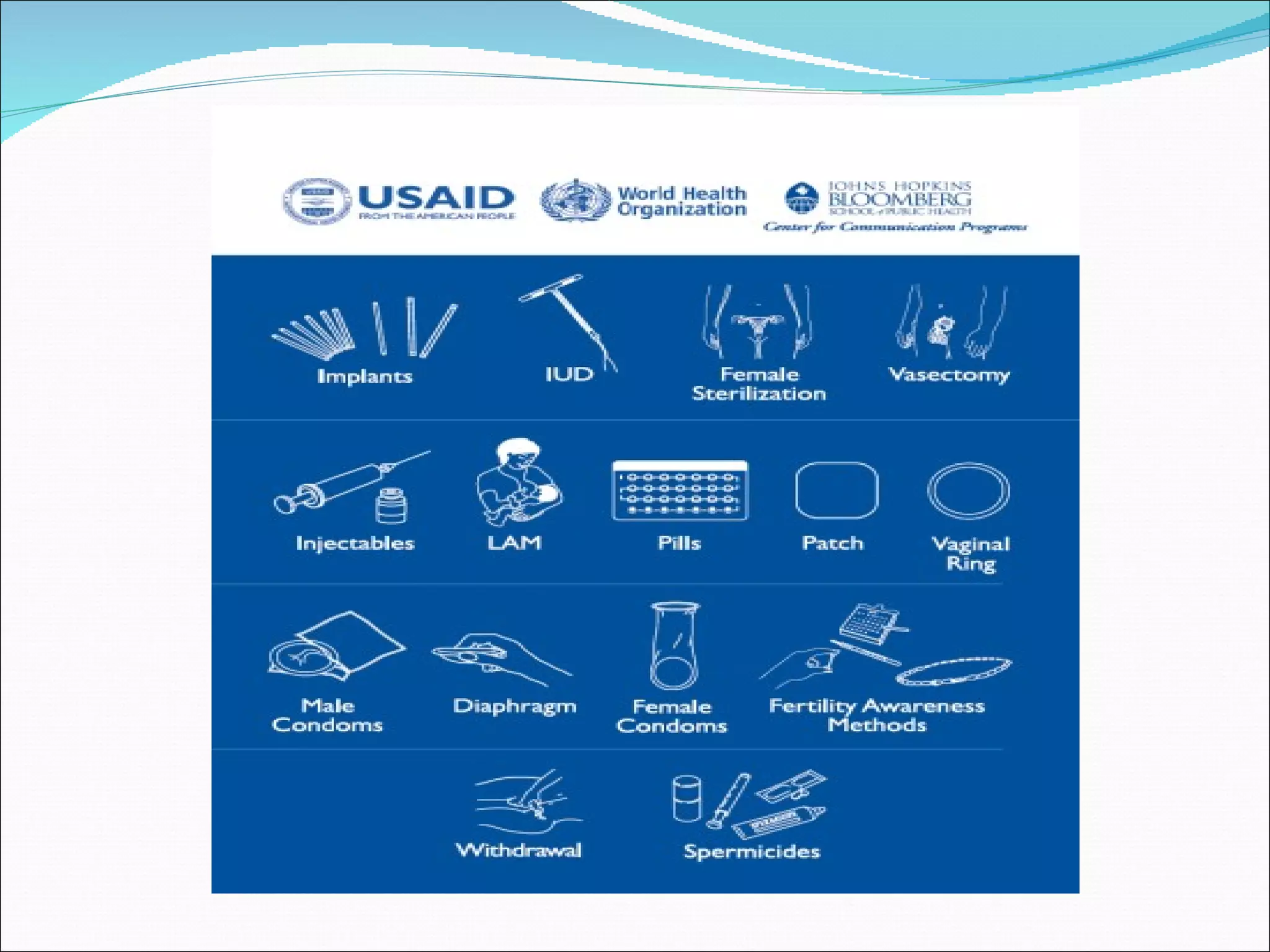
Condoms Using condoms is not 100 percent effective in preventing transmission of sexually transmitted infections including HIV Condoms  =  Safer sex Condoms  ≠  Safe sex
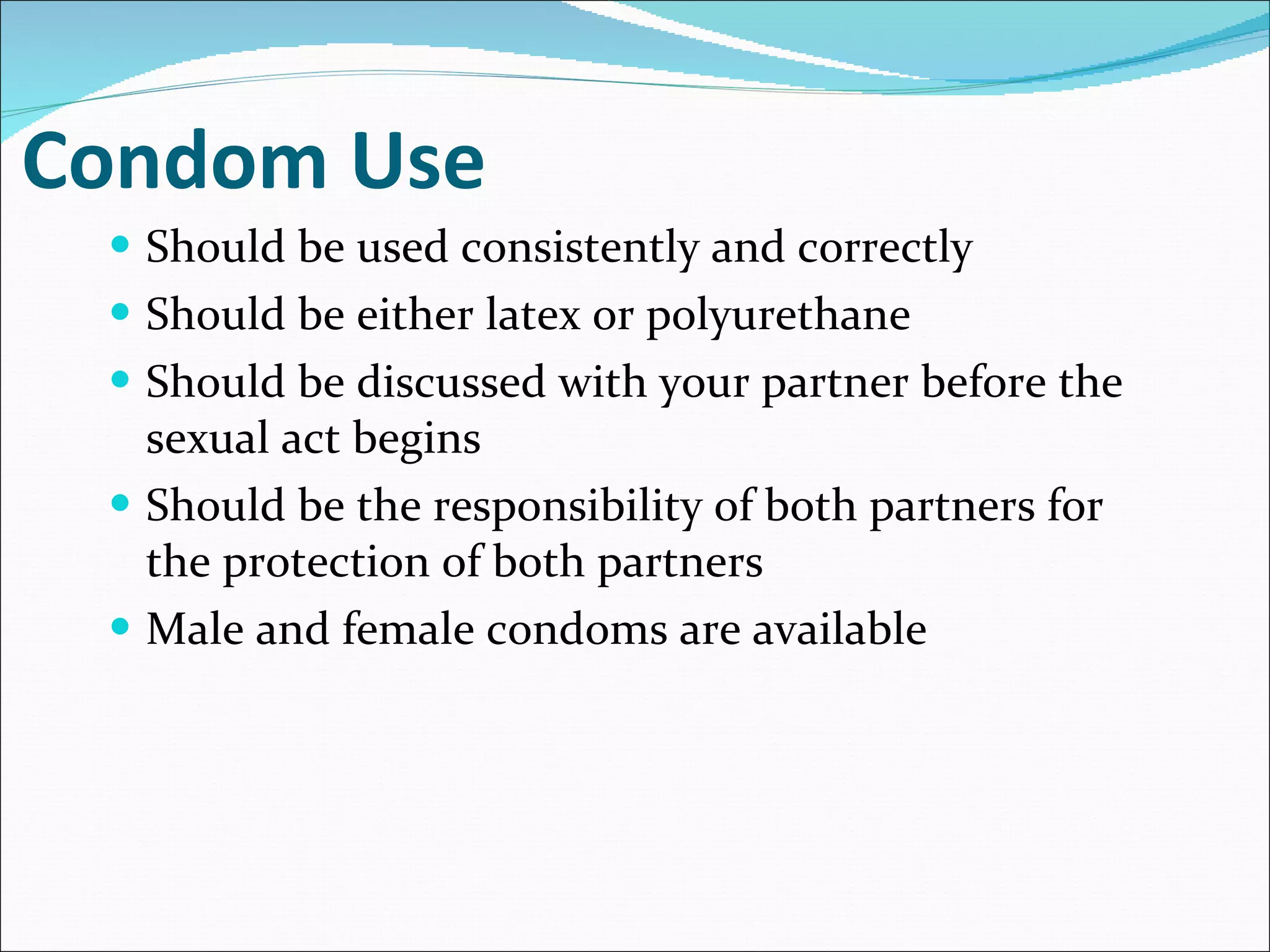
Condom Use Should be used consistently and correctly Should be either latex or polyurethane Should be discussed with your partner before the sexual act begins Should be the responsibility of both partners for the protection of both partners  Male and female condoms are available
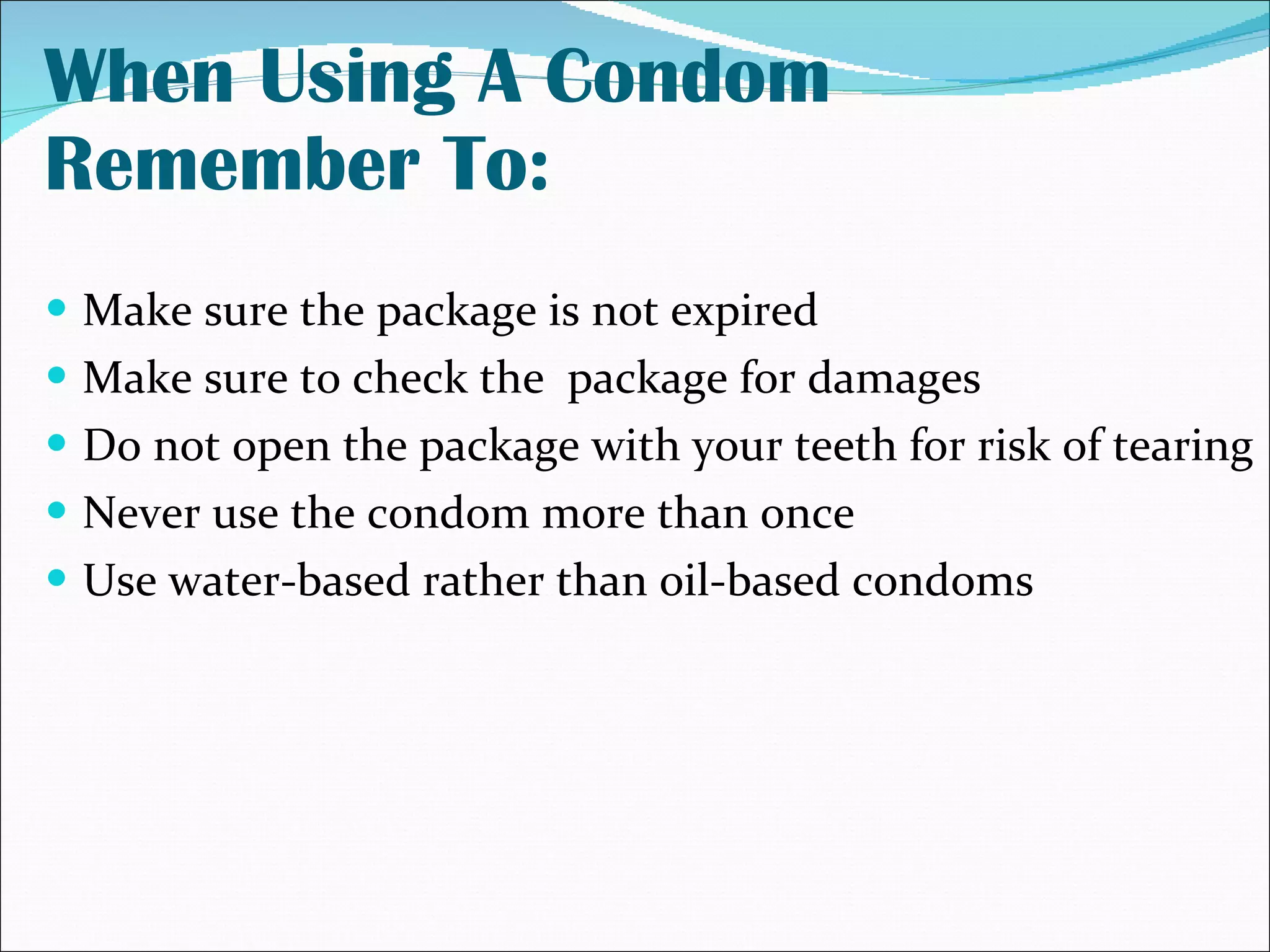
When Using A Condom Remember To: Make sure the package is not expired Make sure to check the  package for damages Do not open the package with your teeth for risk of tearing Never use the condom more than once Use water-based rather than oil-based condoms
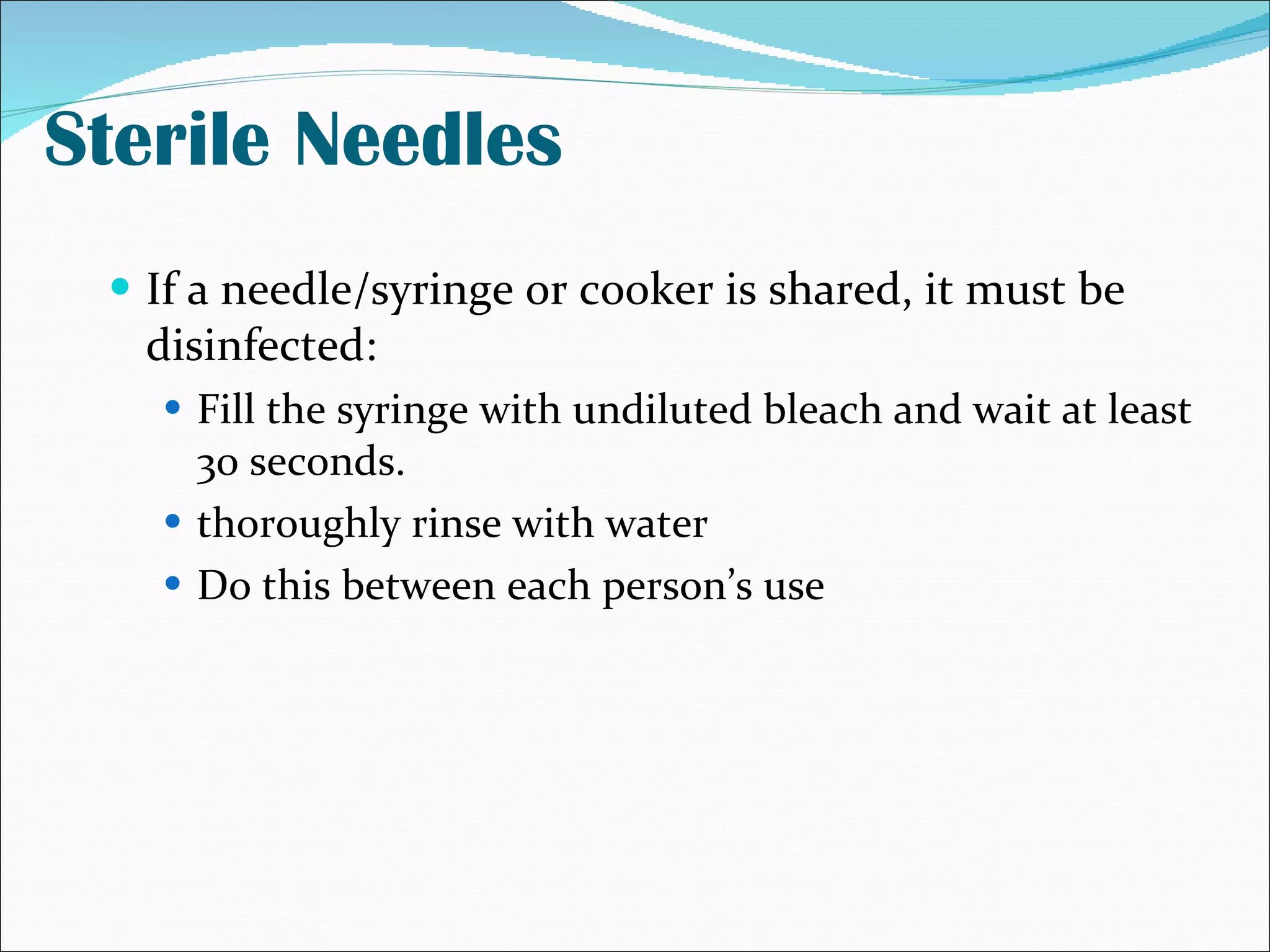
Sterile Needles If a needle/syringe or cooker is shared, it must be disinfected: Fill the syringe with undiluted bleach and wait at least 30 seconds. thoroughly rinse with water Do this between each person’s use
People Infected with HIV Can look healthy Can be unaware of their infection Can live long productive lives when their HIV infection is managed Can infect people when they engage in high-risk behavior
HIV Exposure and Infection Some people have had multiple exposures without becoming infected Some people have been exposed one time and become infected
 
“ When you have sex with someone, you are having sex with everyone they have had sex with for the last ten years.” Former Surgeon General C. Everett Koop
 
HIV Occupational Exposure Review facility policy and report the incident Medical follow-up is necessary to determine the exposure risk and course of treatment Baseline and follow-up HIV testing Four week course of medication initiated one to two hours after exposure  Liver function tests to monitor medication tolerance Exposure precautions practiced
HIV Non-Occupational Exposure   No data exists on the efficacy of antiretroviral medication after non-occupational exposures The health care provider and patient  may  decide to use antiretroviral therapy after weighing the risks and benefits Antiretrovirals should not be used for those with low-risk transmissions or exposures occurring more than 72 hours after exposure PREVENTION --- FIRST
HIV Non-Occupational Exposure Provider Considerations: Evaluate HIV status of patient and risk history of source patient Provide necessary medical care and counseling Evaluate risk event and factors for exposure Determine elapsed time from exposure Evaluate potential for continuous HIV exposure Obtain informed consent for testing and treatment Evaluate pregnancy status of females Monitor for drug toxicity and acute infection
 
 
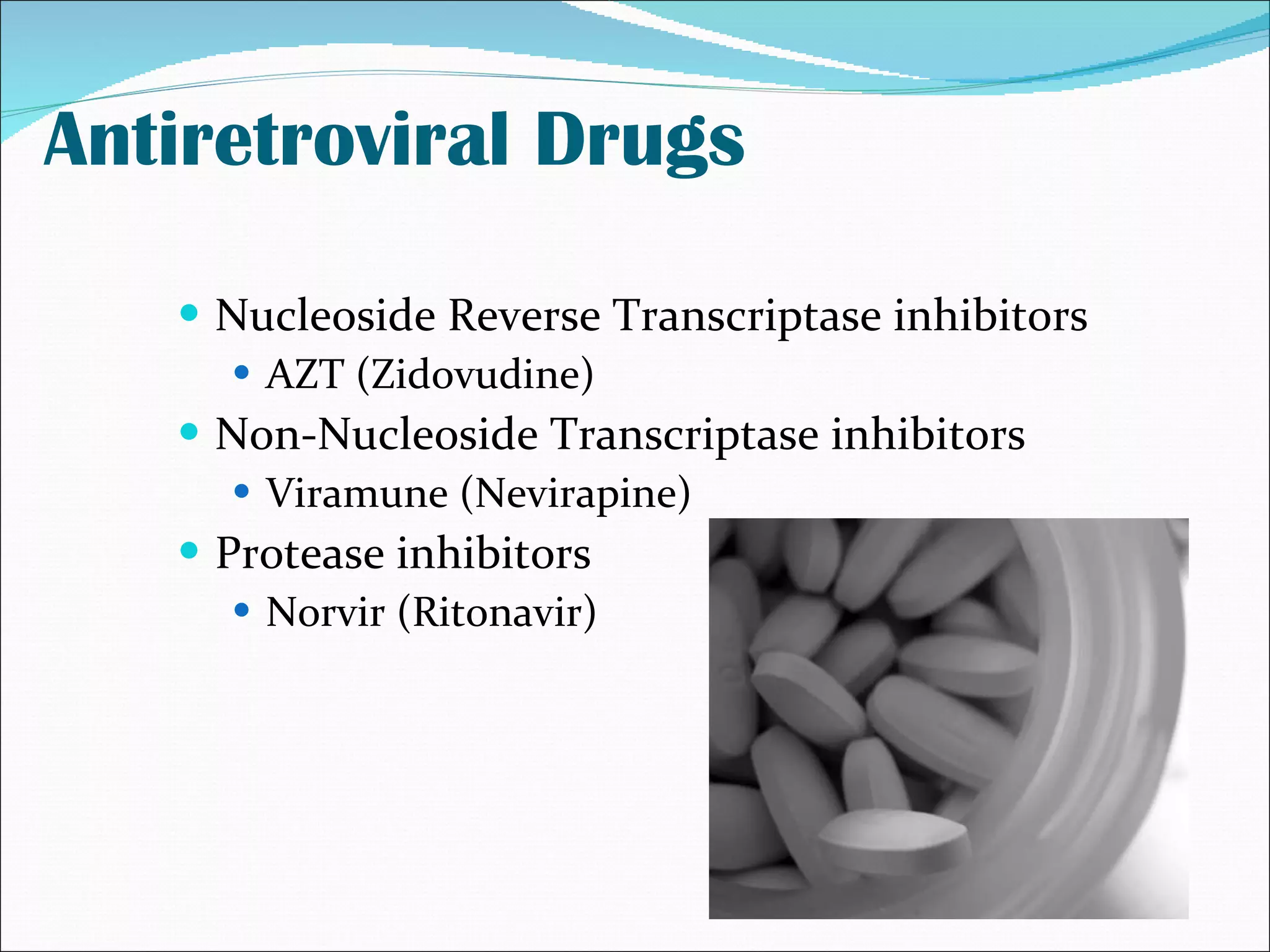
Antiretroviral Drugs Nucleoside Reverse Transcriptase inhibitors AZT (Zidovudine) Non-Nucleoside Transcriptase inhibitors Viramune (Nevirapine) Protease inhibitors Norvir (Ritonavir)
 
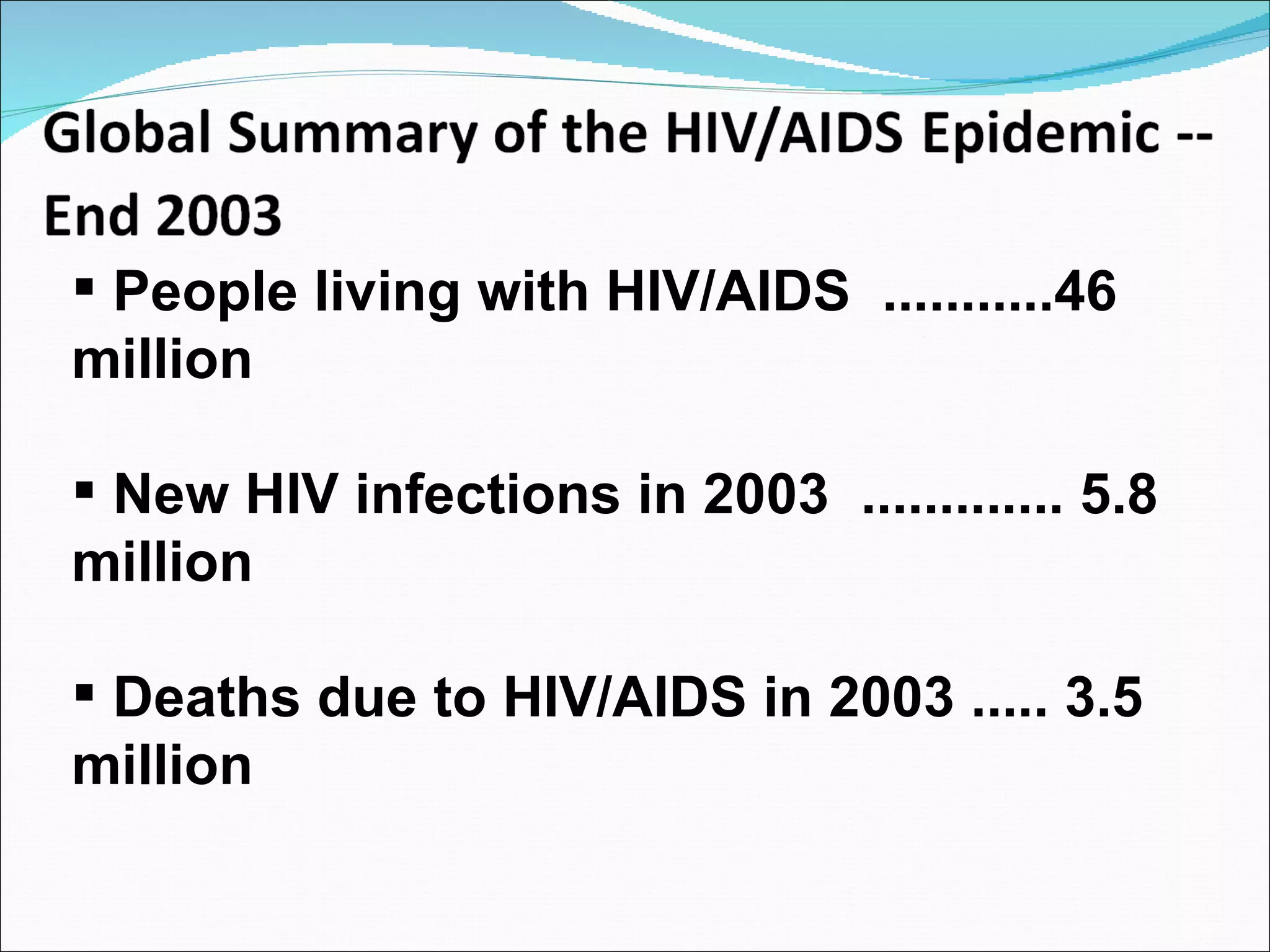
People living with HIV/AIDS  ...........46 million New HIV infections in 2003  ............. 5.8 million Deaths due to HIV/AIDS in 2003 ..... 3.5 million
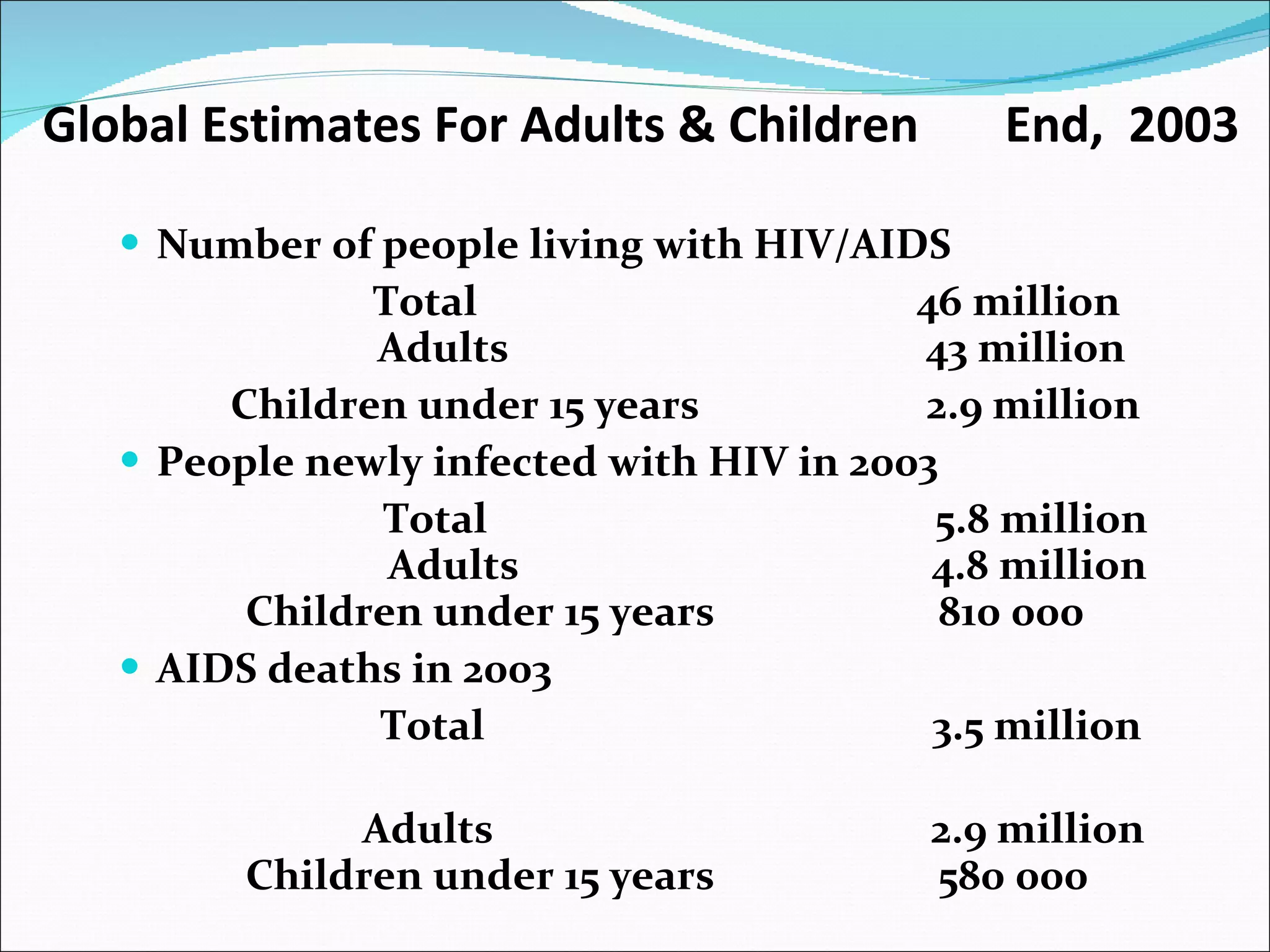
Global Estimates For Adults & Children  End,  2003   Number of people living with HIV/AIDS  Total   46 million   Adults  43 million Children under 15 years   2.9 million People newly infected with HIV in 2003  Total  5.8 million   Adults   4.8 million Children under 15 years  810 000 AIDS deaths in 2003   Total  3.5 million  Adults  2.9 million Children under 15 years  580 000
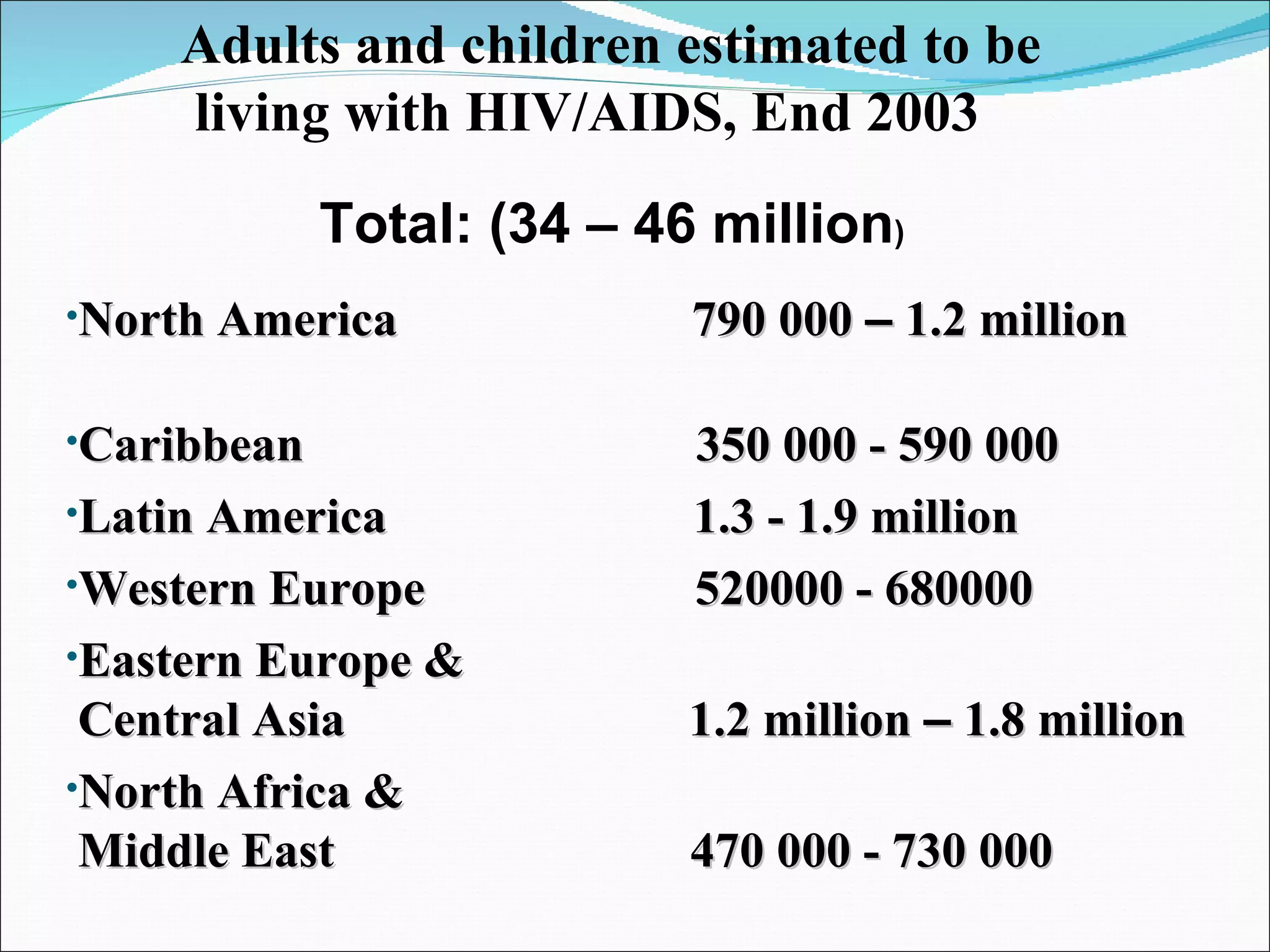
Adults and children estimated to be  living with HIV/AIDS, End 2003   Total: (34 – 46 million ) North America  790 000  –  1.2 million  Caribbean  350 000 - 590 000 Latin America  1.3 - 1.9 million  Western Europe   520000 - 680000 Eastern Europe &  Central Asia  1.2 million  –  1.8 million North Africa &  Middle East  470 000 - 730 000
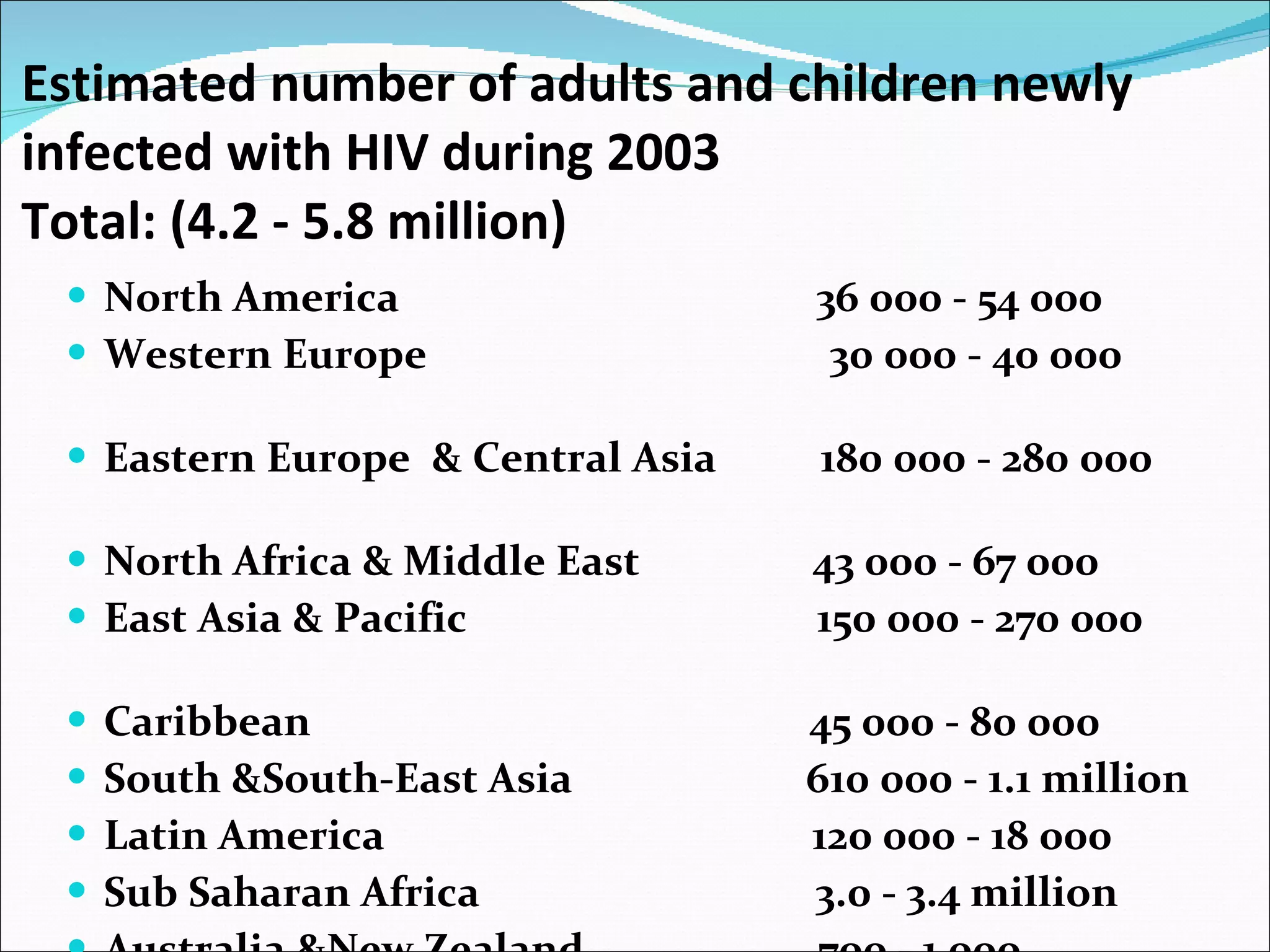
Estimated number of adults and children newly infected with HIV during 2003 Total: (4.2 - 5.8 million) North America  36 000 - 54 000 Western Europe  30 000 - 40 000  Eastern Europe  & Central Asia  180 000 - 280 000  North Africa & Middle East  43 000 - 67 000  East Asia & Pacific  150 000 - 270 000  Caribbean  45 000 - 80 000  South &South-East Asia  610 000 - 1.1 million Latin America  120 000 - 18 000  Sub Saharan Africa  3.0 - 3.4 million  Australia &New Zealand  700 - 1 000
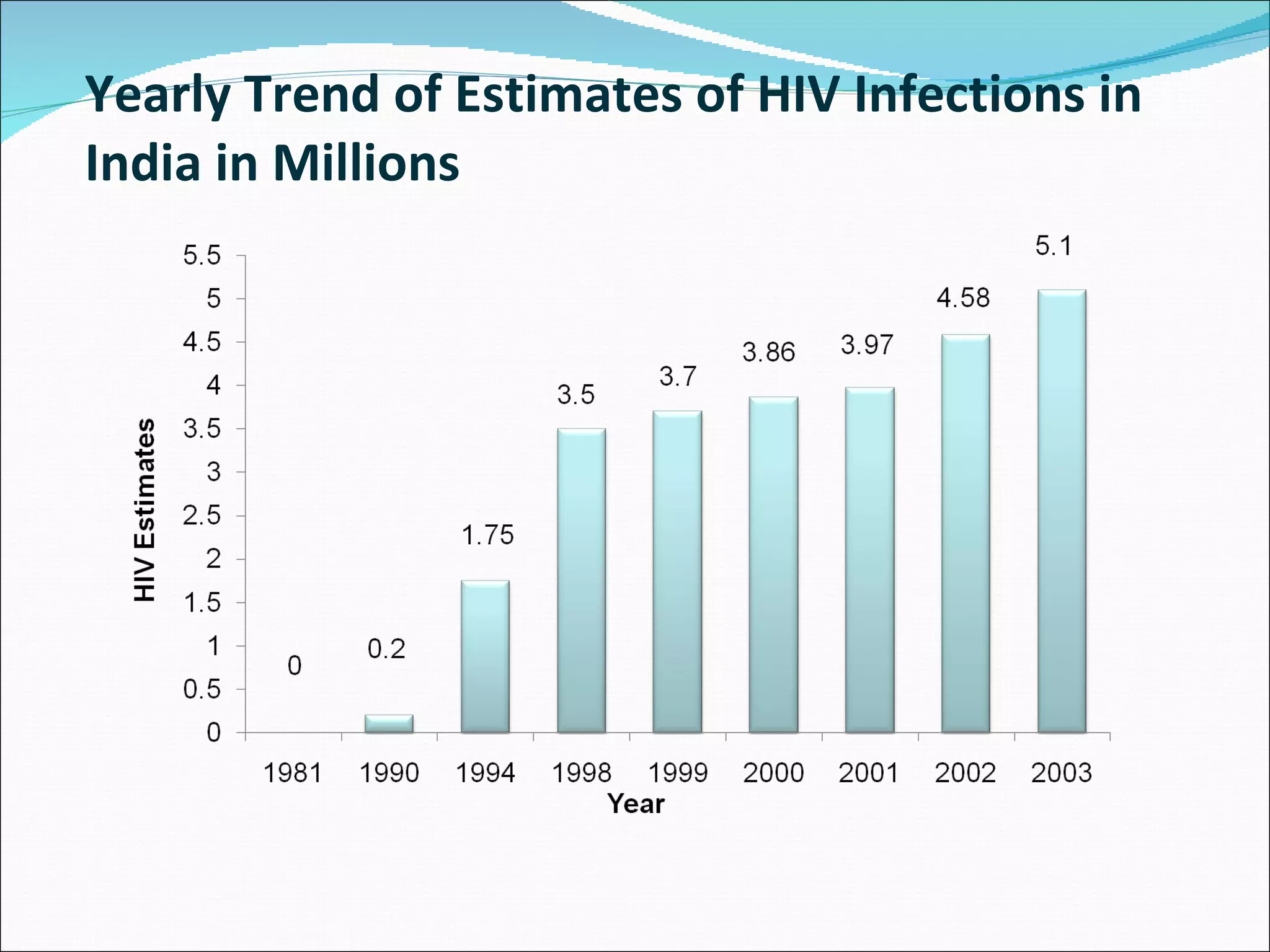
Yearly Trend of Estimates of HIV Infections in India in Millions
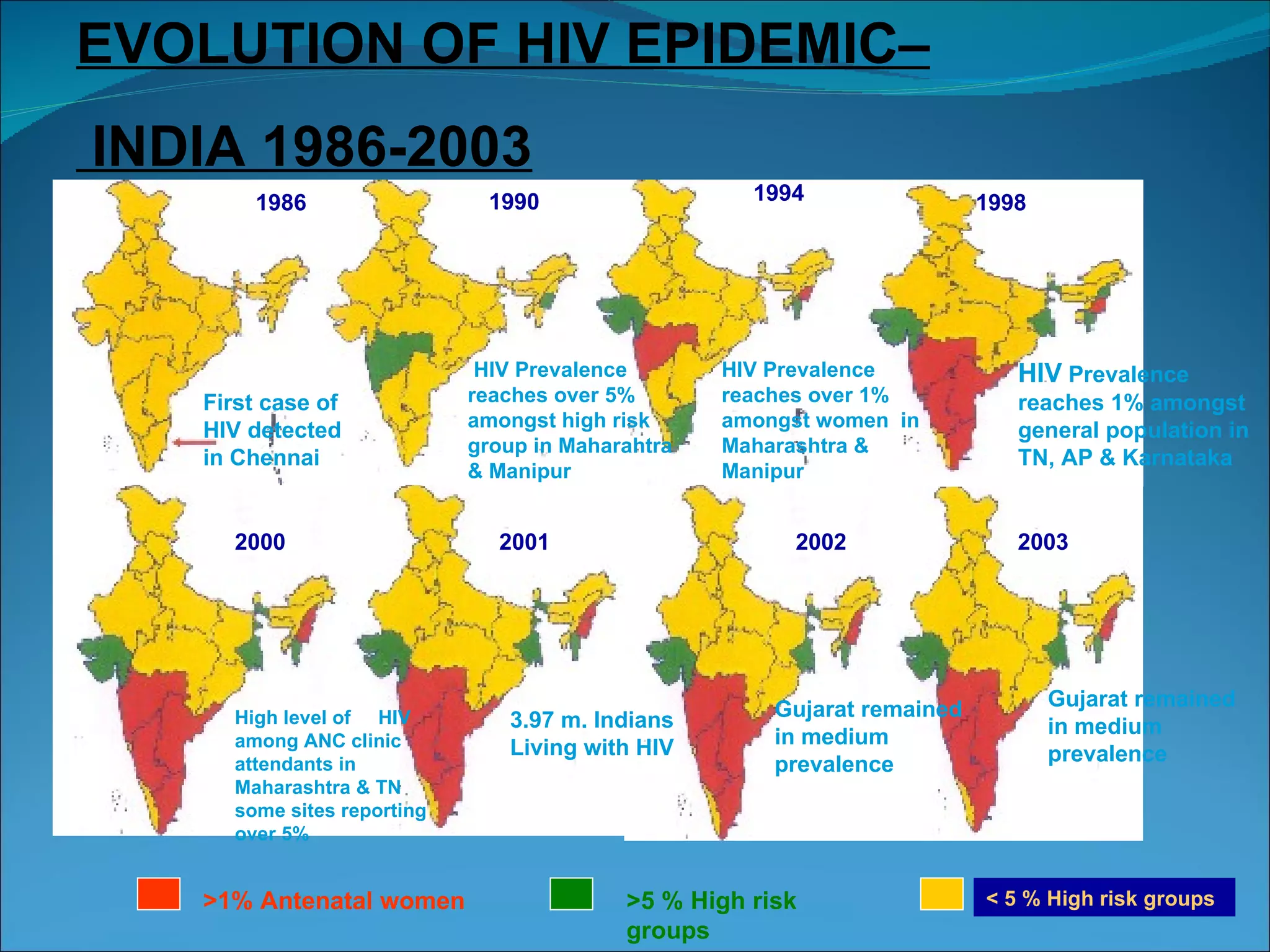
3.97 m. Indians Living with HIV 1998 2002 2003 HIV  Prevalence reaches 1% amongst general population in TN, AP & Karnataka Gujarat remained  in medium  prevalence Gujarat remained  in medium  prevalence >1% Antenatal women >5 % High risk groups < 5 % High risk groups 1990 1986 1994 2001 2000 First case of HIV detected in Chennai   HIV Prevalence  reaches over 5%  amongst high risk group in Maharahtra  & Manipur  HIV Prevalence reaches over 1% amongst women  in Maharashtra & Manipur EVOLUTION OF HIV EPIDEMIC– INDIA 1986-2003 High level of  HIV among ANC clinic attendants in Maharashtra & TN some sites reporting over 5%
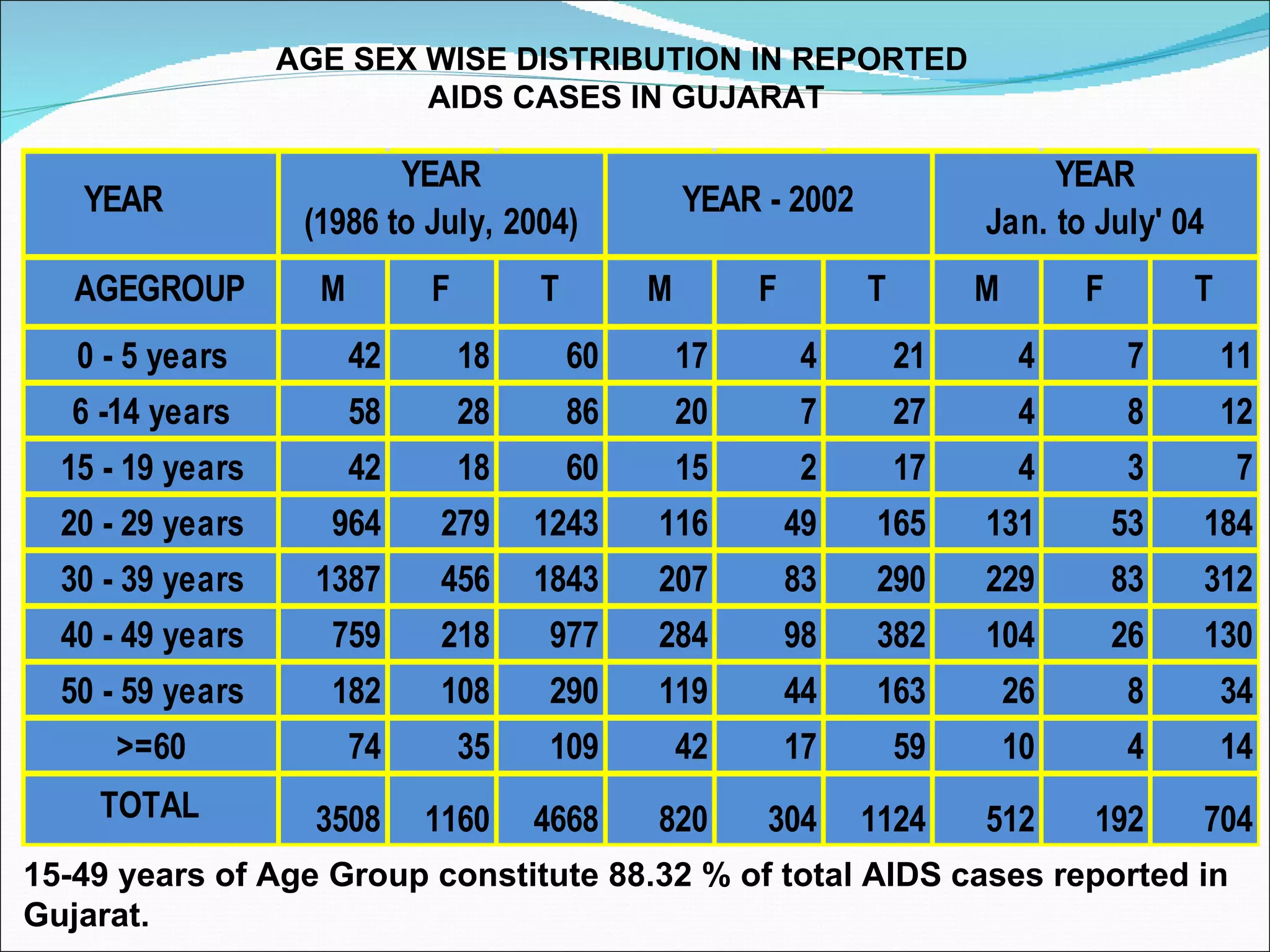
AGE SEX WISE DISTRIBUTION IN REPORTED  AIDS CASES IN GUJARAT 15-49 years of Age Group constitute 88.32 % of total AIDS cases reported in Gujarat.
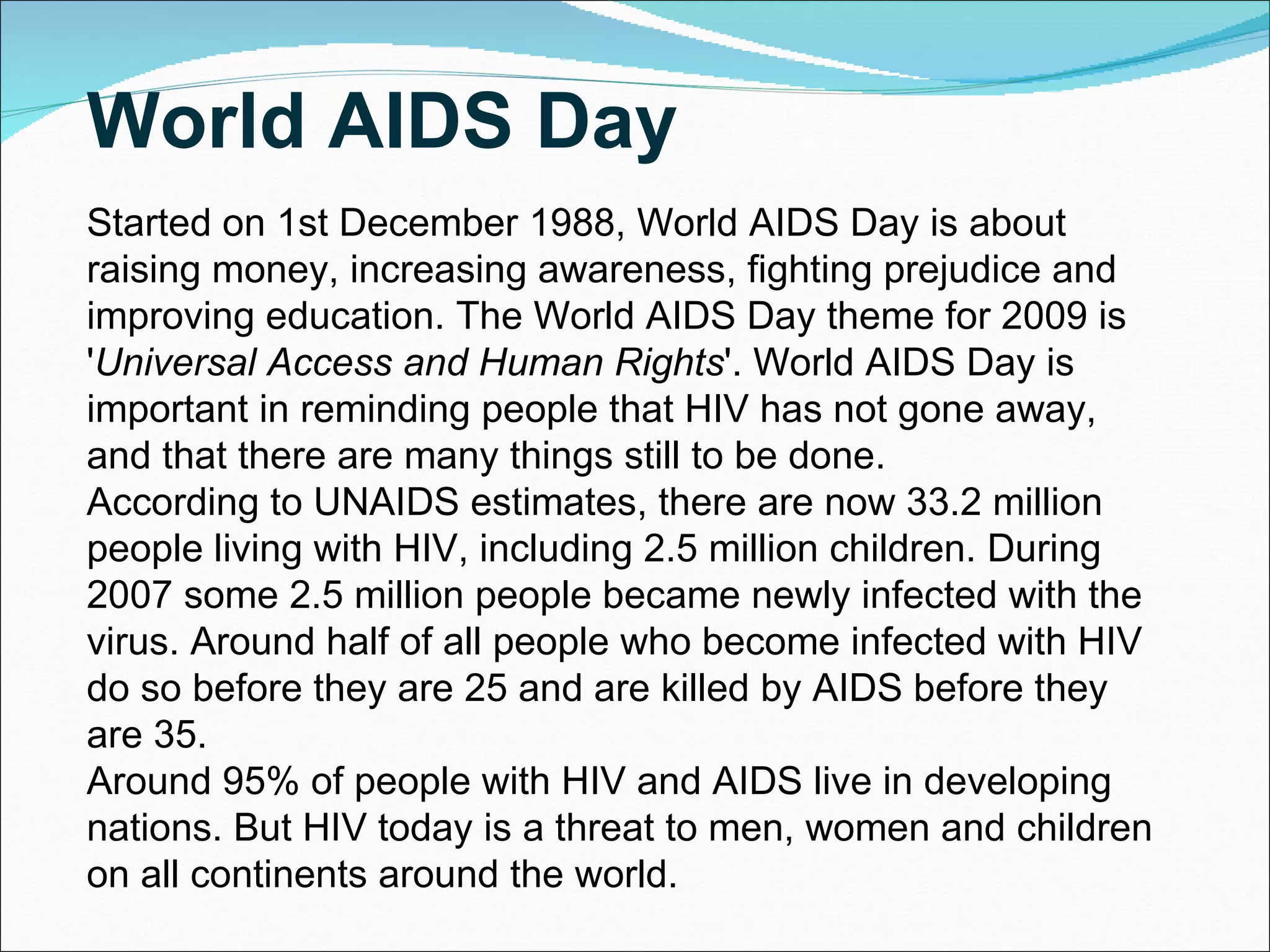
Started on 1st December 1988, World AIDS Day is about raising money, increasing awareness, fighting prejudice and improving education. The World AIDS Day theme for 2009 is ' Universal Access and Human Rights '. World AIDS Day is important in reminding people that HIV has not gone away, and that there are many things still to be done. According to UNAIDS estimates, there are now 33.2 million people living with HIV, including 2.5 million children. During 2007 some 2.5 million people became newly infected with the virus. Around half of all people who become infected with HIV do so before they are 25 and are killed by AIDS before they are 35. Around 95% of people with HIV and AIDS live in developing nations. But HIV today is a threat to men, women and children on all continents around the world. World AIDS Day
“ The world we have made as a result of the level of thinking we have done thus far creates problems that we cannot solve at the same level at which we have created them... We shall require a substantially new manner of thinking if humankind is to survive.  .” Albert Einstein
References http://www.avert.org/world-aids-day.htm http://www.avert.org/aids.htm http://www.who.int/hiv/en/ http://www.freedomhivaids.in/ http://www.aidsallianceindia.net/ http://www.aidsdatahub.org/ http://www.undp.org/hiv/ www.aids-info.ch www.youtube.com/hivaids


AIDS

  • 1.
  • 2.
    HIV “ HumanImmunodeficiency Syndrome” A specific type of virus (a retrovirus) HIV invades the helper T cells to replicate itself. No Cure
  • 3.
    AIDS Acquired ImmunodeficiencySyndrome HIV is the virus that causes AIDS Disease limits the body’s ability to fight infection A person with AIDS has a very weak immune system No Cure
  • 4.
    History of AIDS1959 Scientists isolate what is believed to be the earliest known case of AIDS . The discovery suggests that the multitude of global AIDS viruses all shared a common African ancestor within the past 40 to 50 years. 1978 Gay men in the US and Sweden -- and heterosexuals in Tanzania and Haiti begin showing signs of what will later be called AIDS. 1972 The term AIDS (&quot;acquired immune deficiency syndrome&quot;) is used for the first time on July 27th. 1985 The FDA (US) approves the first HIV antibody test. Blood products begin to be tested in the US and Japan. The first International Conference on AIDS is held in Atlanta (US).
  • 5.
  • 6.
  • 7.
    3 Dimensional Modelof HIV Virus
  • 8.
  • 9.
  • 10.
  • 11.
    HIV Transmission Commonfluids that are a means of transmission: Blood Semen Vaginal Secretions Breast Milk
  • 12.
    Semen 11,000 Vaginal Fluid 7,000 Blood 18,000 Amniotic Fluid 4,000 Saliva 1 Average number of HIV particles in 1 ml of these body fluids
  • 13.
    Routes of Transmissionof HIV Sexual Contact: Male-to-male Male-to-female or vice versa Female-to-female Blood Exposure: Injecting drug use/needle sharing Occupational exposure Transfusion of blood products Prenatal: Transmission from mom to baby Breastfeeding
  • 14.
    Through Drug UseSharing Needles Without sterilization
  • 15.
    Through Sex Intercourse(penile penetration into the vagina) Oral Anal Digital Sex
  • 16.
    Mother-to-Baby Before BirthDuring Birth Postpartum After the birth
  • 17.
  • 18.
    Stage 1 -Primary Short, flu-like illness - occurs one to six weeks after infection no symptoms at all Infected person can infect other people
  • 19.
    Stage 2 -Asymptomatic Lasts for an average of ten years This stage is free from symptoms There may be swollen glands The level of HIV in the blood drops to very low levels HIV antibodies are detectable in the blood
  • 20.
    Stage 3 -Symptomatic The symptoms are mild The immune system deteriorates emergence of opportunistic infections and cancers
  • 21.
    Stage 4 -HIV  AIDS The immune system weakens The illnesses become more severe leading to an AIDS diagnosis
  • 22.
  • 23.
    HIV Virus T-CellHIV Infected T-Cell New HIV Virus
  • 24.
  • 25.
    Window Period Thisis the period of time after becoming infected when an HIV test is negative 90 percent of cases test positive within three months of exposure 10 percent of cases test positive within three to six months of exposure
  • 26.
    HIV Infection andAntibody Response Infection Occurs AIDS Symptoms ---Initial Stage---- ---------------Intermediate or Latent Stage-------------- ---Illness Stage--- Flu-like Symptoms Or No Symptoms Symptom-free < ---- ----
  • 27.
    Importance of EarlyTesting and Diagnosis Allows for early treatment to maintain and stabilize the immune system response Decreases risk of HIV transmission from mother to newborn baby Allows for risk reduction education to reduce or eliminate high-risk behavior
  • 28.
    Opportunistic Infections associatedwith AIDS Bacterial Tuberculosis (TB) Strep pneumonia Viral Kaposi Sarcoma Herpes Influenza (flu)
  • 29.
    Opportunistic Infections associatedwith AIDS Parasitic Pneumocystis carinii Fungal Candida Cryptococcus
  • 30.
  • 31.
    Anonymous Testing Noname is used Unique identifying number Results issued only to test recipient 23659874515 Anonymous
  • 32.
    Confidential Testing Person’sname is recorded along with HIV results Name and positive results are reported to the State Department and the Centers for Disease Control and Prevention Results issued only to test recipient
  • 33.
    HIV Testing Requires a blood or oral fluid sample HIV test detects the body’s antibody response to HIV infection The test does NOT detect the HIV virus
  • 34.
    Blood Detection TestsEnzyme-Linked Immunosorbent Assay/Enzyme Immunoassay (ELISA/EIA) Radio Immunoprecipitation Assay/Indirect Fluorescent Antibody Assay (RIP/IFA) Polymerase Chain Reaction (PCR) Western Blot Confirmatory test
  • 35.
    HIV Testing Thoserecently exposed should be retested at least six months after their last exposure Screening test (EIA/ELISA) vs. confirmatory test (IFA) EIA/ELISA (Reactive) Repeat EIA/ELISA (Reactive) IFA (Reactive) Positive for HIV
  • 36.
    EIA/ELISA Test PositiveNegative Run IFA Confirmation Repeat Positive Positive End Testing Repeat ELISA Every 3 months for 1 year Negative Positive Negative Indeterminate Repeat at 2-4 months Repeat at 3 weeks HIV Testing No HIV Exposure Low Risk HIV Exposure High Risk Negative HIV + Repeat every 6 months for continued High risk behavior
  • 37.
    Urine Testing UrineWestern Blot As sensitive as testing blood Safe way to screen for HIV Can cause false positives in certain people at high risk for HIV
  • 38.
    Oral Testing OrasureThe only FDA approved HIV antibody. As accurate as blood testing Draws blood-derived fluids from the gum tissue. NOT A SALIVA TEST!
  • 39.
    Oncea person is infected they are always infected Medications are available to prolong life but they do not cure the disease Those who are infected are capable of infecting others without having symptoms or knowing of the infection HIV AIDS
  • 40.
  • 41.
    HIV and Sexually Transmitted Diseases STDs increase infectivity of HIV A person co-infected with an STD and HIV may be more likely to transmit HIV due to an increase in HIV viral shedding More white blood cells, some carrying HIV, may be present in the mucosa of the genital area due to a sexually transmitted infection
  • 42.
    HIV and Sexually Transmitted Diseases STDs increase the susceptibility to HIV Ulcerative and inflammatory STDs compromise the mucosal or cutaneous surfaces of the genital tract that normally act as a barrier against HIV Ulcerative STDs include: syphilis, chancroid, and genital herpes Inflammatory STDs include: chlamydia, gonorrhea, and trichomoniasis
  • 43.
    HIV and Sexually Transmitted Diseases The effect of HIV infection on the immune system increases the the risk of STDs A suppressed immune response due to HIV can: I ncrease the reactivation of genital ulcers Increase the rate of abnormal cell growth Increase the difficulty in curing reactivated or newly acquired genital ulcers Increase the risk of becoming infected with additional STDs
  • 44.
  • 45.
    Pre-test Counseling TransmissionPrevention Risk Factors Voluntary & Confidential Reportability of Positive Test Results
  • 46.
    Post-test Counseling Clarifiestest results Need for additional testing Promotion of safe behavior Release of results
  • 47.
    HIV Risk ReductionAvoid unprotected sexual contact Use barriers such as condoms and dental dams Limit multiple partners by maintaining a long-term relationship with one person Talk to your partner about being tested before you begin a sexual relationship
  • 48.
    HIV Risk ReductionAvoid drug and alcohol use to maintain good judgment Don’t share needles used by others for: Drugs Tattoos Body piercing Avoid exposure to blood products
  • 49.
    Abstinence It isthe only 100 % effective method of not acquiring HIV/AIDS. Refraining from sexual contact: oral, anal, or vaginal. Refraining from intravenous drug use
  • 50.
    Monogamous relationship Amutually monogamous (only one sex partner) relationship with a person who is not infected with HIV HIV testing before intercourse is necessary to prove your partner is not infected
  • 51.
    Condoms Using condomsis not 100 percent effective in preventing transmission of sexually transmitted infections including HIV Condoms = Safer sex Condoms ≠ Safe sex
  • 52.
    Condom Use Shouldbe used consistently and correctly Should be either latex or polyurethane Should be discussed with your partner before the sexual act begins Should be the responsibility of both partners for the protection of both partners Male and female condoms are available
  • 53.
    When Using ACondom Remember To: Make sure the package is not expired Make sure to check the package for damages Do not open the package with your teeth for risk of tearing Never use the condom more than once Use water-based rather than oil-based condoms
  • 54.
    Sterile Needles Ifa needle/syringe or cooker is shared, it must be disinfected: Fill the syringe with undiluted bleach and wait at least 30 seconds. thoroughly rinse with water Do this between each person’s use
  • 55.
    People Infected withHIV Can look healthy Can be unaware of their infection Can live long productive lives when their HIV infection is managed Can infect people when they engage in high-risk behavior
  • 56.
    HIV Exposure andInfection Some people have had multiple exposures without becoming infected Some people have been exposed one time and become infected
  • 57.
  • 58.
    “ When youhave sex with someone, you are having sex with everyone they have had sex with for the last ten years.” Former Surgeon General C. Everett Koop
  • 59.
  • 60.
    HIV Occupational ExposureReview facility policy and report the incident Medical follow-up is necessary to determine the exposure risk and course of treatment Baseline and follow-up HIV testing Four week course of medication initiated one to two hours after exposure Liver function tests to monitor medication tolerance Exposure precautions practiced
  • 61.
    HIV Non-Occupational Exposure No data exists on the efficacy of antiretroviral medication after non-occupational exposures The health care provider and patient may decide to use antiretroviral therapy after weighing the risks and benefits Antiretrovirals should not be used for those with low-risk transmissions or exposures occurring more than 72 hours after exposure PREVENTION --- FIRST
  • 62.
    HIV Non-Occupational ExposureProvider Considerations: Evaluate HIV status of patient and risk history of source patient Provide necessary medical care and counseling Evaluate risk event and factors for exposure Determine elapsed time from exposure Evaluate potential for continuous HIV exposure Obtain informed consent for testing and treatment Evaluate pregnancy status of females Monitor for drug toxicity and acute infection
  • 63.
  • 64.
  • 65.
    Antiretroviral Drugs NucleosideReverse Transcriptase inhibitors AZT (Zidovudine) Non-Nucleoside Transcriptase inhibitors Viramune (Nevirapine) Protease inhibitors Norvir (Ritonavir)
  • 66.
  • 67.
    People living withHIV/AIDS ...........46 million New HIV infections in 2003 ............. 5.8 million Deaths due to HIV/AIDS in 2003 ..... 3.5 million
  • 68.
    Global Estimates ForAdults & Children End, 2003 Number of people living with HIV/AIDS Total 46 million Adults 43 million Children under 15 years 2.9 million People newly infected with HIV in 2003 Total 5.8 million Adults 4.8 million Children under 15 years 810 000 AIDS deaths in 2003 Total 3.5 million Adults 2.9 million Children under 15 years 580 000
  • 69.
    Adults and childrenestimated to be living with HIV/AIDS, End 2003 Total: (34 – 46 million ) North America 790 000 – 1.2 million Caribbean 350 000 - 590 000 Latin America 1.3 - 1.9 million Western Europe 520000 - 680000 Eastern Europe & Central Asia 1.2 million – 1.8 million North Africa & Middle East 470 000 - 730 000
  • 70.
    Estimated number ofadults and children newly infected with HIV during 2003 Total: (4.2 - 5.8 million) North America 36 000 - 54 000 Western Europe 30 000 - 40 000 Eastern Europe & Central Asia 180 000 - 280 000 North Africa & Middle East 43 000 - 67 000 East Asia & Pacific 150 000 - 270 000 Caribbean 45 000 - 80 000 South &South-East Asia 610 000 - 1.1 million Latin America 120 000 - 18 000 Sub Saharan Africa 3.0 - 3.4 million Australia &New Zealand 700 - 1 000
  • 71.
    Yearly Trend ofEstimates of HIV Infections in India in Millions
  • 72.
    3.97 m. IndiansLiving with HIV 1998 2002 2003 HIV Prevalence reaches 1% amongst general population in TN, AP & Karnataka Gujarat remained in medium prevalence Gujarat remained in medium prevalence >1% Antenatal women >5 % High risk groups < 5 % High risk groups 1990 1986 1994 2001 2000 First case of HIV detected in Chennai HIV Prevalence reaches over 5% amongst high risk group in Maharahtra & Manipur HIV Prevalence reaches over 1% amongst women in Maharashtra & Manipur EVOLUTION OF HIV EPIDEMIC– INDIA 1986-2003 High level of HIV among ANC clinic attendants in Maharashtra & TN some sites reporting over 5%
  • 73.
    AGE SEX WISEDISTRIBUTION IN REPORTED AIDS CASES IN GUJARAT 15-49 years of Age Group constitute 88.32 % of total AIDS cases reported in Gujarat.
  • 74.
    Started on 1stDecember 1988, World AIDS Day is about raising money, increasing awareness, fighting prejudice and improving education. The World AIDS Day theme for 2009 is ' Universal Access and Human Rights '. World AIDS Day is important in reminding people that HIV has not gone away, and that there are many things still to be done. According to UNAIDS estimates, there are now 33.2 million people living with HIV, including 2.5 million children. During 2007 some 2.5 million people became newly infected with the virus. Around half of all people who become infected with HIV do so before they are 25 and are killed by AIDS before they are 35. Around 95% of people with HIV and AIDS live in developing nations. But HIV today is a threat to men, women and children on all continents around the world. World AIDS Day
  • 75.
    “ The worldwe have made as a result of the level of thinking we have done thus far creates problems that we cannot solve at the same level at which we have created them... We shall require a substantially new manner of thinking if humankind is to survive. .” Albert Einstein
  • 76.
    References http://www.avert.org/world-aids-day.htm http://www.avert.org/aids.htmhttp://www.who.int/hiv/en/ http://www.freedomhivaids.in/ http://www.aidsallianceindia.net/ http://www.aidsdatahub.org/ http://www.undp.org/hiv/ www.aids-info.ch www.youtube.com/hivaids
  • 77.
  • 78.