IF LEFT UNTREATED THIS
CAN LEAD TO AIDS !!
HISTORY OF HIV
Scientists
identified a
type of
chimpanzee
in West
Africa as the
source of
HIV
infection in
humans.
They believe that
the chimpanzee
version of the
immunodeficiency
virus most likely
was transmitted
to humans and
mutated into HIV
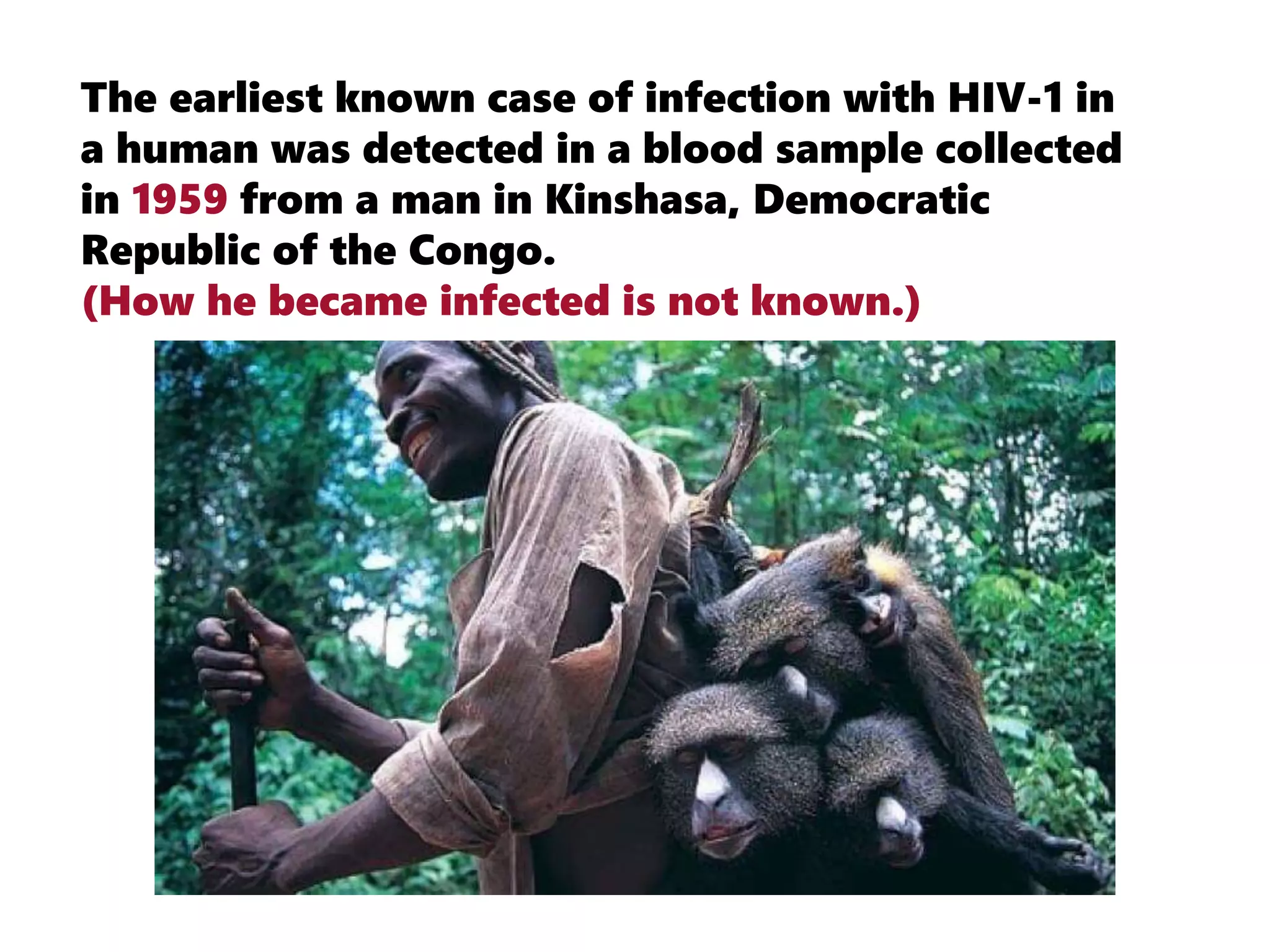
The earliest known case of infection with HIV-1 in
a human was detected in a blood sample collected
in 1959 from a man in Kinshasa, Democratic
Republic of the Congo.
(How he became infected is not known.)
TREATMENT
 Antiretroviral therapy is the use of
HIV medicines to treat HIV infection.
 People on ART take a combination of
HIV medicines (called an HIV
treatment regimen) every day.
 ART can’t cure HIV, but HIV medicines
help people with HIV live longer,
healthier lives.
Does HIV Viral Load Affect
Getting or Transmitting HIV?
Taking HIV medicine (antiretroviral
therapy) daily as prescribed can make the
viral load very low—so low that a test
can’t detect it ; Undetectable Viral Load
People with HIV who take HIV medicine daily
as prescribed, get and keep an undetectable
viral load have effectively no risk of
transmitting HIV to an HIV-negative partner
through sex.
YES!
VIRAL LOAD IS THE AMOUNT OF HIV IN
THE BLOOD OF AN INFECTED.
SO, FOLLOW THE PRESCRIBE MEDICINE!
HIV AIDS
(AUTOIMMUNE DEFICIENCY
SYNDROME)
late stage of HIV infection
Occurs when the body’s immune
system is badly damaged
because of the virus.
the number of their CD4 cells
falls below 200 cells per cubic
millimeter of blood (200
cells/mm3)
WHAT ARE CD4 CELLS?
WHITE BLOOD CELLS
YOUR BODY'S NATURAL
DEFENSE SYSTEM AGAINST
PATHOGENS, INFECTIONS
& ILLNESSES.
CD4 COUNT OF A
HEALTHY IMMUNE
SYSTEM ARE BETWEEN 500
& 1,800 CELL/mm
3
YOU CAN'T CATCH AIDS!
AIDS is the most advanced stage of
HIV infection.
People with AIDS have such badly
damaged immune systems that
they get a number of severe
illnesses, called opportunistic
infections.
INCIDENCE AND PREVALENCE
According to UNAIDS: There was
approximately 36.9 million people
worldwide living with HIV/AIDS in
2017.
1.8 million were children (<15 years old)
Estimated 1.8 million individuals
worldwide became newly infected with
HIV
PHILIPPINES
The Philippines is a low-HIV-prevalence
country, with less than 0.1 percent of the
adult population estimated to be HIV-
positive, but the rate of increase in infections
is one of the highest.
Country with fastest growing HIV
epidemic in Asia and the Pacific
One of eight countries that account
for more than 85% of new HIV
infections in the region
In April 2015, 560 new cases were
reported showing a 42% increase
compared to the same period in the
previous year
PHILIPPINES
• In the year 2014, a total of 6,011 cases
of HIV were reported with 91% of the
cases being asymptomatic at the time
of reporting while 543 cases were
diagnosed as AIDS.
• From 2001 to 2015 the number of
cases diagnosed per year increased 37
times, from 174 cases diagnosed in
2001 to 6,552 for the first 10 months
on 2015.
• May 2018, there were 950 new
HIV antibody seropositive
individuals reported to the
HIV/AIDS & ART Registry of the
Philippines (HARP) . Seventeen
percent (166) had clinical
manifestations of advanced HIV
infection.
• As of June 2018, the
Department of Health
(DOH) AIDS Registry in the
Philippines reported 56,275
cumulative cases since
1984.
• Ninety-three percent (882)
of the newly diagnosed were
male. The median age was
27 years old (range: 2 - 68
years old).
• Almost half (49%, 461) were
25-34 years old and 31%
(293) were 15-24 years old
at the time of testing.
• About one third (31%, 294) were
from the National Capital Region
(NCR).
• Region 4A (17%, 163 cases)
• Region 7 (10%, 94)
• Region 3 (9%, 86)
• Region 6 (6%, 61) round off
the top six regions with the
most number of newly
diagnosed cases for the
month, together accounting
for 73% of the total.
• Among the newly diagnosed
females this month, five were
pregnant at the time of
diagnosis, three of the cases
were from Region 7 and one
each from NCR and Region
4A.
CEBU
• The Department of Health (DOH) 7
said three people get infected with
the human immunodeficiency virus
(HIV) every day in Central Visayas
• Van Baton, DOH 7 focal person for
HIV/AIDS, said the state of HIV cases
in the country, especially in Central
Visayas, is now very alarming.
CEBU
• In February 2019, 90 cases were added to
the recorded data of the DOH in Region 7
alone.
• Based on DOH 7 records, there were 8,104
people living with HIV in the region in 2018,
and there is a 7% increase in the first five
months of 2019. If this trend continues, by
2022, there will be an estimated 10,279
people living with HIV in the region.
• Baton said Cebu remains with the highest
number of HIV cases in Central Visayas.
CURRENT DATA
Men who have sex with men
Sex workers and their clients
Individuals with multiple
heterosexual sex partners in the last
year
The spouses of individuals with
higher-risk behaviour and individuals
in stable heterosexual relationships
Injecting drug users
• Sexual contact remains the
predominant mode of
transmission (96%, 914).
• Among this, eighty-three
percent were from males who
have sex with males (MSM).
• Other mode of transmission were
needle sharing among injecting
drug users (3%, 28)
• mother-to-child transmission
(<1%, 3).
• There were five cases that had no
data on mode of transmission.
• Most newly-infected individuals
diagnosed in 2018 come from the
younger millennial generation:
– 4,344 were aged 25-34
– 2,505 were aged 15-24.
• This phenomenon, health experts and
advocates said, was brought by
developments in social media that
make finding sexual partners easier.
SIGNS AND SYMPTOMS
• Within a month or two of HIV
entering the body, 40% to 90% of
people experience flulike symptoms
known as acute retroviral syndrome
(ARS).
• But sometimes HIV symptoms don't
appear for years—sometimes even a
decade—after infection
1. Fever
• The fever, usually one of the first
symptoms of HIV, is often
accompanied by other mild
symptoms, such as fatigue,
swollen lymph glands, and a sore
throat.
2. Fatigue and headache
• The inflammatory response
generated by your besieged
immune system can cause you
to feel tired and lethargic.
Sometimes it can make you
feel winded while walking or
generally feel out of breath.
3. Swollen lymph nodes, achy
muscles and joint pain
•They tend to get
inflamed when there’s an
infection
4. Skin rash
• Skin rashes can occur early
or late in the course of HIV
seroconversion. In some
cases the rash can appear
similar to boils with itchy,
pink breakouts.
5. Nausea, Vomiting and
Diarrhea
•Diarrhea that is
unremitting and not
responding to usual
therapy might be an
indication of HIV.
6. Sore throat and
dry cough
• A severe, dry cough that can
last for weeks to months
without seeming to resolve
(even with antibiotics and
inhalers) is a typical symptom
in very ill HIV patients.
7. Night sweats
• Many people will get night
sweats during the early stages
of HIV. These can be even
more common later in
infection and aren’t related to
exercise or the temperature of
the room.
COMMON TESTS OR
LAB FINDINGS
• CD4 count (how well your
immune system is functioning
)
• HIV viral load (how rapidly
HIV is replicating, or
multiplying )
• Resistance test. HLA B*5701
• Complete blood count.(This is a
measure of the concentration of red
blood cells, white blood cells, and
platelets in a sample of your blood)
• Blood chemistry tests
• Fasting lipid profile.(These tests
measure your lipid levels, including
cholesterol and triglycerides)
• Tuberculosis test.(This blood
test checks for TB infection)
• How well your body is
functioning (tests to look at
your kidneys, liver,
cholesterol, and blood cells)
• Whether you have other diseases
that are associated with HIV
(tests for certain infections)
• STD screening (These screening
tests check for syphilis,
gonorrhea and
chlamydia)Hepatitis A,B and C
(check for current or past
infection with Hepatitis A, B, or
C)
WHAT ARE SOME
IMPORTANT TESTS?
DRUG RESISTANT
HIV can change form,
making it resitant to some HIV
medicines. A drug resistance test
helps your health care provider
choose the HIV medicines that will
work for you.
TESTS FOR OTHER INFECTIONS
HIV weakens the immune
system, leaving people vulnerable to
other infections. Health care providers
test for tuberculosis, hepatitis B & C
infections, and other potential illnesses.
The treatment for another
infection may affect HIV treatment.
BLOOD CHEMISTRY TESTS
This group of tests measures
sevral different chemicals in your blood
to help monitor the health of your
organs, especially your heart, liver &
kidneys.
Health care providers use
blood chemistry tests to look for side
effects caused by HIV medicines.
CLINICAL MANAGEMENT:
• Using antiretroviral therapy for HIV positive
patient.
. Earlier initiation of drug regimens and
simplified programming for the prevention
of pregnant women and mothers living with
HIV and preventing HIV infection among
their children.
• Priority should be given to individuals with
severe or advanced HIV disease.
OCCUPATIONAL RISKS
RELATED TO HIV
Surgeons, Nurses and Nurses Aids
• should take precautions to avoid
needlestick injuries, cuts with sharp
instruments and exposure through
skin lesions to potentially infectious
blood and body fluids
Physicians and Laboratory Workers
• These people continuously handle
infectious samples. Doctors, in
diagnosing HIV patients, carry
out physical examinations and
collect blood samples. Laboratory
technicians analyze potentially
infected samples.
Ambulance Workers
Ambulance workers are potentially at
risk because they attend accidents and
fatalities. Ambulance workers perform
first aid on individuals for whom no
medical information is available. Blood
contact is a possibility for workers
when removing injured people from the
scene of an accident.
Embalmers
Embalming the bodies of
persons with a HIV infection
presents a risk because HIV can
live for hours in a deceased
body.
DENTAL
MANAGEMENT
Dental Workers
Dental workers are exposed daily
to the blood and saliva of patients.
Precautionary measures should be
adopted because of possible
exposure to HIV, and because the
mouth can be the vehicle for the
transmission of many infectious
diseases.
 There are several points to note
when managing a patient with
HIV/AIDS in the dental setting
 The first concern is what
laboratory values the office needs
& the interval at which they
should be made available.
The following laboratory
should be collected:
1)Platelet count
2)Absolute Neutrophil Count
3)CD4 Count
4)HIV Viral Load
The second question Dental
Professionals may ask if patient
with HIV have low CD4 counts
or high viral loads need
Antibiotic Premedicatioin
As long as the Dental Proffesionals
follow recommended infection
prevention protocols to prevent
pathogenic exposure, there are no
safety concerns regarding the use
of Handpieces & Ultrasonic Scalers
& these devices should be used
when indicated HIV is
BLOODBORNE not an AIRBORNE
DISEASE.
• Available information
indicates that the risk of HIV
transmission in the dental
office is very low.
• Transmission of HIV from
three healthcare workers to
patients has been confirmed,
including a dentist who
infected six patients.
• There are >300 reports (102
confirmed) of occupational
transmission to healthcare
workers, including nine dental
workers (unconfirmed).
-PubMed
Exposure to HIV has been
reported by 0.5% dentists/year.
The risk of HIV infection after
percutaneous exposure (0.3%)
can be reduced by 81% with
zidovudine PEP.
ORAL COMPLICATIONS &
MANIFESTATIONS
• Oral lesions have been reported to be
early clinical features of HIV infection.
They are multiple and varied, and are
occasionally the first sign that
patients harbour the virus.
• Some of these lesions may have a
predictive value, warning of a
progression from HIV seropositivity
to clinically manifest as AIDS.
They are often indicators of
immune suppression and can be
used for early testing, diagnosis
and management of patients with
HIV/AIDS. Oral lesions in HIV may
serve as markers for immune
deterioration and disease
progression and may also indicate
poor prognosis.
They can therefore be used as an
entry or end-point in therapy and
vaccine trials and can be
determinants of opportunistic
infection and anti- HIV therapy,
staging and classification systems
Seven cardinal lesions:
• Oral candidiasis
• Hairy leukoplakia
• Kaposi sarcoma
• Linear gingival erythema
• Necrotizing ulcerative gingivitis
• Necrotizing ulcerative periodontitis
• Non-Hodgkin lymphoma which are
strongly associated with HIV infection
DENTAL MANAGEMENGT OF
ANGINA
1. Medical consultation
2. appointment
3. reduction of stress & anxiety
4. Local anesthesia
5. General anesthesia
6. treatment procedures
7. Drugs used in treatment
8. if the attck developed
MYOCARDIAL
INFARCTION
DENTAL MANAGEMENT :
As angina pectoris
except; Drugs used in
treatment
CONGESTIVE HEART FAILURE
DENTAL MANAGEMENT :
Same as Angina except;
1. Preoperative antibiotic
2. drugs used in treatment
3. Management of complications
if developed (attack)
HYPERTENSIVE DISEASE
DENTAL MANAGEMENT:
same as angina except ;
1. Local anesthesia
2. General anesthesia
3. Treatment procedure
LIVER DISORDERS
DENTAL MANAGEMENT:
1. Medical consultation
2. Avoid drugs metabolized in liver:
 L.A - Lidocaine, Mepicaine
 Sedatives - Valium
 Antibiotics - Ampicilin
Analgesics - Aspirin
3. Vitamin K - 10 mg/day
before surgery
4. General Anesthesia -
causes bleeding
VIRAL HEPATITIS
DENTAL MANAGEMENT :
1. Patient with active
hepatitis
2.Caries :
a) Low risk patient
b) High risk patient
ORAL MANIFESTATIONS
of diabetes mellitus
1. Gingivitis
2. Alveolar bone resorption
3. Xerostomia
4. Delayed wound healing
5. Pulpitis in non carious tooth
6. Burning sensation in tongue
7. Acetone smell in breath
DENTAL MANAGEMENT
of diabetes mellitus
1. Appointment
2.Premeditation
3.Local anesthesia
4.Treatment procedure
5.Patient Assessment
How Do You Get or
Transmit HIV?
You can only get HIV by coming
into direct contact with certain
body fluids from a person with HIV
who has a detectable viral load.
These fluids are:
• Blood
• Semen and pre-seminal fluid
• Rectal fluids
• Vaginal fluids
• Breast milk
• For transmission to occur, the HIV
in these fluids must get into the
bloodstream of an HIV-negative
person through a mucous
membrane (found in the rectum,
vagina, mouth, or tip of the
penis); open cuts or sores; or by
direct injection.
• People with HIV who take HIV
medicine daily as prescribed
and get and keep an
undetectable viral load have
effectively no risk of sexually
transmitting HIV to their HIV-
negative partners.
• Having vaginal or anal sex
with someone who has
HIV without using a
condom or taking medicine
• Sharing
injection drug
equipment
(“works”),
such as
needles, with
someone who
has HIV.
Less common ways are:
• From mother to child during pregnancy,
birth, or breastfeeding. However, the
use of HIV medicines and other
strategies have helped lower the risk of
mother-to-child transmission of HIV
• Getting stuck
with an HIV-
contaminated
needle or other
sharp object.
This is a risk
mainly for health
care workers.
HIV is spread only in extremely
rare cases by:
• Having oral sex
• Receiving blood transfusions, blood
products, or organ/tissue transplants
that are contaminated with HIV.
• Being bitten by a person with HIV.
• Deep, open-mouth kissing if both
partners have sores or bleeding gums
Ways HIV Cannot Be Spread
• Air or water
• Mosquitoes, ticks or other insects
• Saliva, tears, or sweat that is not mixed with the
blood of a person with HIV
• Shaking hands; hugging; sharing dishes,
silverware, or drinking glasses; or engaging in
closed-mouth or “social” kissing with a person
with HIV
• Other sexual activities that don’t involve the
exchange of body fluids (for example, touching).
• HIV can’t be passed through healthy, unbroken
skin.
CHAPTER II
THE PROBLEM
DENTISTS AND HEALTH
CARE PROVIDERS
• Refusal to treat patients with HIV was
primarily associated with lack of
ethical responsibility and fear related
to cross-infection. This fear is mostly
because of lack of proper knowledge
to deal with such patients," according
to a survey report.
WHAT DO THE DENTISTS
REALLY THINK?
Some practitioners had no reservations:
“If a person needs dental care
and you’re able to provide treatment,
then you are responsible to provide it,
providing it doesn’t put you at risk, and
I don’t see that HIV does that.”
Some practitioners said they were
concerned about the reactions of their
staff:
• “Even if you explain everything – HIV
has such a psychological aura about it
– if they genuinely do go home and
have sleepless nights…you could
potentially have tribunal concerns on
your hands.”
DENTAL AUXILLARIES/STAFFS
With the spread of human
immunodeficiency virus (HIV) infection
dental care workers like:
• Dentists
• dental hygienists
• dental assistants
fear to contact with people infected
with the virus
 Greatly contributed to discrimination by
some health care workers, including
Dentists against HIV-infected persons.
 The dental team can play an important role
in all phases of the human
immunodeficiency virus care continuum —
from diagnosis to disease management.
 The oral health care team should be vigilant
in recognizing oral manifestations that may
be related to HIV infection, so they can link
patients to appropriate care.
COLLABORATION IS KEY:
• There are many opportunities for
dental, medical, and support teams to
collaborate to ensure patients with
HIV are linked to medical and dental
care, retained in care, and adhere to
their prescribed treatment regimens.
This is where the intersection of oral-
systemic associations is important.
The oral health care team can also help
achieve an AIDS-free generation. In
2010, the White House released the
National HIV/AIDS Strategy with three
goals for 2015:
• Reduce the number of people who
become infected with HIV
• Increase access to care and optimize
health outcomes for individuals with
HIV/AIDS
• Decrease HIV-related health
disparities
PEOPLE LIVING WITH HIV
(PLHIV)
Some of the most common oral problems for
people with HIV/AIDS are:
• chronic dry mouth
• gingivitis
• bone loss around the teeth
(periodontitis)
• canker sores
• oral warts
• fever blisters
• oral candidiasis (thrush)
• hairy leukoplakia (which causes a rough,
white patch on the tongue)
• dental caries.
Oral conditions can be :
• Painful
• Annoying
• lead to other problems.
• The American Dental Association
recommends that dental health care
be part of all HIV/AIDS treatment
plans.
• That’s because people living with
HIV/AIDS are more susceptible to
infections including dental infections,
which can affect their overall health.
PRIVATE SECTORS
• In this day and age of easily accessible
information, it’s a sad that some people
still have extremely skewed notions and
beliefs about HIV and AIDS.
• It’s an even bigger pity that we live in a
third world country that has little to no
support when it comes to sexual education,
resulting in a 50% increase in HIV cases
over a single year.
HIV/STI PREVENTION
PROGRAM
Objective:
• Reduce the transmission of HIV
and STI among the Most At Risk
Population and General
Population and mitigate its
impact at the individual, family,
and community level.
PROGRAM ACTIVITIES
With regard to the prevention and fight against
stigma and discrimination, the following are the
trategies and interventions:
1. Availability of free voluntary HIV Counseling and
Testing Service;
2. 100% Condom Use Program (CUP) especially for
entertainment establishments;
3. Peer education and outreach;
4. Multi-sectoral coordination through
Philippine National AIDS Council
(PNAC);
5. Empowerment of communities;
6. Community assemblies and for a to reduce
stigma;
7. Augmentation of resources of social
Hygiene Clinics; and
8. Procured male condoms distributed as
education materials during outreach.
Program Accomplishments:
• As of the first quarter of 2011, the
program has attained particular
targets for the three major final
outputs: health policy and program
development; capability building of
local government units (LGUs) and
other stakeholders; and leveraging
services for priority health programs.
• For the health policy and program
development, the Manual of Procedures/
Standards/ Guidelines is already finalized
and disseminated. The ARV Resistance
surveillance among People Living with HIV
(PLHIV) on Treatment is being
implemented through the Research
Institute for Tropical Medicine (RITM).
Moreover, both the Strategic Plan 2012-
2016 for Prevention of Mother to Child
Transmission and the Strategic Plan 2012-
2016 for Most at Risk Young People and
HIV Prevention and Treatment are being
drafted.
• With regard to capability
building, the Training Curriculum
for HIV Counseling and Testing is
already revised. Twenty five
priority LGUs provided support
in strengthening Local AIDS
councils. as of March 2011, there
were already 17 Treatment Hubs
nationwide.
• Lastly, for the leveraging
services, baseline laboratory
testing is being provided
while male condoms are being
distributed through social
Hygiene Clinics. A total of
1,250 PLHIV were provided
with treatment and 4,000 STI
were treated.
Here are 8 organizations that
are working to educate the
Filipinos
1. TAKE THE TEST (TTT)
2. PINOY PLUS ASSOCIATION
3. THE POSITIVE ACTION FOUNDATION
PHILIPPINES, INC.
4. ACTION FOR HEALTH INTIATIVES, INC.
5. B-CHANGE GROUP
6. THE RED WHISTLE (TRW)
7. AIDS SOCIETY PHILIPPINES
8. LOVE YOURSELF GROUP
OTHER ORGANIZATIONS:
• World Health Organization
• UNICEF Philippines
• AMERICAN DENTAL
ASSOCIATION (ADA)
Research Methodology
• To explore and describe the experiences
of PLHIV and dentists to stop the stigma
intervention through a qualitative
interpretive description approach in both
HIV victims and in Dental field.
Method
Setting
The study is about to be
conducted in selected dental
clinics.
Population
The population consists of two
groups, namely PLHIV and
licensed dentists
Sample :
• purposive voluntary sampling is to be
conducted
• recruited through mediators with trust
relationship from local healthcare facilities
and non-governmental organization
• For PLHIV, the inclusion criteria
were as follows: Participants
should be male or female and
had to be diagnosed with HIV for
at least six months, able to
communicate freely, be prepared
to disclose their HIV status, and
willing to be interviewed and
recorded
• final sample should be 5-10
people diagnosed with HIV
Locale
•The study will be
conducted in Cebu City
on the First Semester of
2019-2020
Participants
• PLHIV (people living with
HIV)
• Dentists and healthcare
providers
• Auxiliary and staff
• Private sector that are living
in Cebu City area
LIMITATIONS
Here is one of the problems we
discussed in the limitations:
• First,Why are the respondents
afraid to get diagnosed
• Second, Young Adolescent are
more higher risk for having
HIV/AIDS.
CONCLUSION
• The majority of people having HIV are
mostly young adolescents, thus this
may present a challenge in getting the
needed surveys because of the ethical
and legal issues that make it difficult
to conduct the awareness on people
under 18 and the need for parental
approval to make the said
participants as subject.
• Unprotected sex is the most
common route of HIV infection
among young people. Low HIV
and sexual health knowledge is a
key barrier to reducing HIV
infections among young people a
‘life-cycle’ approach to HIV
prevention can help respond to
the changing challenges people
face at different ages.
REFERENCE/S:
• https://www.cdc.gov/hiv/basics/whatishiv.html
• Edward C. Klatt, “Pathology of HIV/AIDS”, v.29, april 16,2018
• https://www.ncbi.nlm.nih.gov/books/NBK64928/
• https://www.who.int/gho/hiv/en/biology.kenyun.edu
• https://www.who.int/bulletin/volumes/90/11/12-102574/en/
• https://www.doh.gov.ph/sites/default/files/statistics/EB_HIV_2018_May.pdf
• https://www.niaid.nih.gov/diseases-conditions/hivaids
• https://www.cdc.gov/hiv/basics/transmission.html
• https://www.intechopen.com/books/current-perspectives-in-hiv-infection/oral-manifestations-of-hiv
• https://www.nidcr.nih.gov/health-info/hiv-aids
• https://www.mouthhealthy.org/en/az-topics/h/hiv-aids-and-dental -health
• https://unicef.org
• https://aidsmap.com
• https://decisionsindentistry.com/article/managing-dental-patients-with-hiv/
• https://amp.rappler.com
• https://medicalxpress.com
• https://www.ncbi.nlm.nih.gov/pmc/articles/PMC4785592
• https://www.jmedscindmc.com/article.asp?issn=1011-
4564;year=2017;volume=37;issue=2;spage=44;epage=49;aulast=Doka
• https://pdf.sciencedirectassets.com
• https://ourworldindata.org/hiv.aids
• https://www.ncbi.nlm.nih.gov/pmc/articles/PMC4785592
• SHIFT_NSA_PHILIPPINES_2018PDF
• https://www.doh.gov.ph
HIV in the Philippines (esp. cebu)

HIV in the Philippines (esp. cebu)

  • 2.
    IF LEFT UNTREATEDTHIS CAN LEAD TO AIDS !!
  • 3.
    HISTORY OF HIV Scientists identifieda type of chimpanzee in West Africa as the source of HIV infection in humans. They believe that the chimpanzee version of the immunodeficiency virus most likely was transmitted to humans and mutated into HIV
  • 4.
    The earliest knowncase of infection with HIV-1 in a human was detected in a blood sample collected in 1959 from a man in Kinshasa, Democratic Republic of the Congo. (How he became infected is not known.)
  • 5.
    TREATMENT  Antiretroviral therapyis the use of HIV medicines to treat HIV infection.  People on ART take a combination of HIV medicines (called an HIV treatment regimen) every day.  ART can’t cure HIV, but HIV medicines help people with HIV live longer, healthier lives.
  • 6.
    Does HIV ViralLoad Affect Getting or Transmitting HIV? Taking HIV medicine (antiretroviral therapy) daily as prescribed can make the viral load very low—so low that a test can’t detect it ; Undetectable Viral Load People with HIV who take HIV medicine daily as prescribed, get and keep an undetectable viral load have effectively no risk of transmitting HIV to an HIV-negative partner through sex. YES! VIRAL LOAD IS THE AMOUNT OF HIV IN THE BLOOD OF AN INFECTED. SO, FOLLOW THE PRESCRIBE MEDICINE!
  • 7.
  • 8.
    (AUTOIMMUNE DEFICIENCY SYNDROME) late stageof HIV infection Occurs when the body’s immune system is badly damaged because of the virus. the number of their CD4 cells falls below 200 cells per cubic millimeter of blood (200 cells/mm3)
  • 9.
    WHAT ARE CD4CELLS? WHITE BLOOD CELLS YOUR BODY'S NATURAL DEFENSE SYSTEM AGAINST PATHOGENS, INFECTIONS & ILLNESSES. CD4 COUNT OF A HEALTHY IMMUNE SYSTEM ARE BETWEEN 500 & 1,800 CELL/mm 3
  • 10.
    YOU CAN'T CATCHAIDS! AIDS is the most advanced stage of HIV infection. People with AIDS have such badly damaged immune systems that they get a number of severe illnesses, called opportunistic infections.
  • 12.
    INCIDENCE AND PREVALENCE Accordingto UNAIDS: There was approximately 36.9 million people worldwide living with HIV/AIDS in 2017. 1.8 million were children (<15 years old) Estimated 1.8 million individuals worldwide became newly infected with HIV
  • 13.
    PHILIPPINES The Philippines isa low-HIV-prevalence country, with less than 0.1 percent of the adult population estimated to be HIV- positive, but the rate of increase in infections is one of the highest. Country with fastest growing HIV epidemic in Asia and the Pacific
  • 14.
    One of eightcountries that account for more than 85% of new HIV infections in the region In April 2015, 560 new cases were reported showing a 42% increase compared to the same period in the previous year PHILIPPINES
  • 15.
    • In theyear 2014, a total of 6,011 cases of HIV were reported with 91% of the cases being asymptomatic at the time of reporting while 543 cases were diagnosed as AIDS. • From 2001 to 2015 the number of cases diagnosed per year increased 37 times, from 174 cases diagnosed in 2001 to 6,552 for the first 10 months on 2015.
  • 16.
    • May 2018,there were 950 new HIV antibody seropositive individuals reported to the HIV/AIDS & ART Registry of the Philippines (HARP) . Seventeen percent (166) had clinical manifestations of advanced HIV infection.
  • 18.
    • As ofJune 2018, the Department of Health (DOH) AIDS Registry in the Philippines reported 56,275 cumulative cases since 1984.
  • 19.
    • Ninety-three percent(882) of the newly diagnosed were male. The median age was 27 years old (range: 2 - 68 years old). • Almost half (49%, 461) were 25-34 years old and 31% (293) were 15-24 years old at the time of testing.
  • 20.
    • About onethird (31%, 294) were from the National Capital Region (NCR). • Region 4A (17%, 163 cases) • Region 7 (10%, 94) • Region 3 (9%, 86)
  • 21.
    • Region 6(6%, 61) round off the top six regions with the most number of newly diagnosed cases for the month, together accounting for 73% of the total.
  • 22.
    • Among thenewly diagnosed females this month, five were pregnant at the time of diagnosis, three of the cases were from Region 7 and one each from NCR and Region 4A.
  • 24.
    CEBU • The Departmentof Health (DOH) 7 said three people get infected with the human immunodeficiency virus (HIV) every day in Central Visayas • Van Baton, DOH 7 focal person for HIV/AIDS, said the state of HIV cases in the country, especially in Central Visayas, is now very alarming.
  • 25.
    CEBU • In February2019, 90 cases were added to the recorded data of the DOH in Region 7 alone. • Based on DOH 7 records, there were 8,104 people living with HIV in the region in 2018, and there is a 7% increase in the first five months of 2019. If this trend continues, by 2022, there will be an estimated 10,279 people living with HIV in the region. • Baton said Cebu remains with the highest number of HIV cases in Central Visayas.
  • 26.
    CURRENT DATA Men whohave sex with men Sex workers and their clients Individuals with multiple heterosexual sex partners in the last year The spouses of individuals with higher-risk behaviour and individuals in stable heterosexual relationships Injecting drug users
  • 27.
    • Sexual contactremains the predominant mode of transmission (96%, 914). • Among this, eighty-three percent were from males who have sex with males (MSM).
  • 28.
    • Other modeof transmission were needle sharing among injecting drug users (3%, 28) • mother-to-child transmission (<1%, 3). • There were five cases that had no data on mode of transmission.
  • 29.
    • Most newly-infectedindividuals diagnosed in 2018 come from the younger millennial generation: – 4,344 were aged 25-34 – 2,505 were aged 15-24. • This phenomenon, health experts and advocates said, was brought by developments in social media that make finding sexual partners easier.
  • 30.
    SIGNS AND SYMPTOMS •Within a month or two of HIV entering the body, 40% to 90% of people experience flulike symptoms known as acute retroviral syndrome (ARS). • But sometimes HIV symptoms don't appear for years—sometimes even a decade—after infection
  • 31.
    1. Fever • Thefever, usually one of the first symptoms of HIV, is often accompanied by other mild symptoms, such as fatigue, swollen lymph glands, and a sore throat.
  • 32.
    2. Fatigue andheadache • The inflammatory response generated by your besieged immune system can cause you to feel tired and lethargic. Sometimes it can make you feel winded while walking or generally feel out of breath.
  • 33.
    3. Swollen lymphnodes, achy muscles and joint pain •They tend to get inflamed when there’s an infection
  • 34.
    4. Skin rash •Skin rashes can occur early or late in the course of HIV seroconversion. In some cases the rash can appear similar to boils with itchy, pink breakouts.
  • 35.
    5. Nausea, Vomitingand Diarrhea •Diarrhea that is unremitting and not responding to usual therapy might be an indication of HIV.
  • 36.
    6. Sore throatand dry cough • A severe, dry cough that can last for weeks to months without seeming to resolve (even with antibiotics and inhalers) is a typical symptom in very ill HIV patients.
  • 37.
    7. Night sweats •Many people will get night sweats during the early stages of HIV. These can be even more common later in infection and aren’t related to exercise or the temperature of the room.
  • 38.
    COMMON TESTS OR LABFINDINGS • CD4 count (how well your immune system is functioning ) • HIV viral load (how rapidly HIV is replicating, or multiplying ) • Resistance test. HLA B*5701
  • 39.
    • Complete bloodcount.(This is a measure of the concentration of red blood cells, white blood cells, and platelets in a sample of your blood) • Blood chemistry tests • Fasting lipid profile.(These tests measure your lipid levels, including cholesterol and triglycerides)
  • 40.
    • Tuberculosis test.(Thisblood test checks for TB infection) • How well your body is functioning (tests to look at your kidneys, liver, cholesterol, and blood cells)
  • 41.
    • Whether youhave other diseases that are associated with HIV (tests for certain infections) • STD screening (These screening tests check for syphilis, gonorrhea and chlamydia)Hepatitis A,B and C (check for current or past infection with Hepatitis A, B, or C)
  • 43.
  • 44.
    DRUG RESISTANT HIV canchange form, making it resitant to some HIV medicines. A drug resistance test helps your health care provider choose the HIV medicines that will work for you.
  • 45.
    TESTS FOR OTHERINFECTIONS HIV weakens the immune system, leaving people vulnerable to other infections. Health care providers test for tuberculosis, hepatitis B & C infections, and other potential illnesses. The treatment for another infection may affect HIV treatment.
  • 46.
    BLOOD CHEMISTRY TESTS Thisgroup of tests measures sevral different chemicals in your blood to help monitor the health of your organs, especially your heart, liver & kidneys. Health care providers use blood chemistry tests to look for side effects caused by HIV medicines.
  • 47.
    CLINICAL MANAGEMENT: • Usingantiretroviral therapy for HIV positive patient. . Earlier initiation of drug regimens and simplified programming for the prevention of pregnant women and mothers living with HIV and preventing HIV infection among their children. • Priority should be given to individuals with severe or advanced HIV disease.
  • 48.
    OCCUPATIONAL RISKS RELATED TOHIV Surgeons, Nurses and Nurses Aids • should take precautions to avoid needlestick injuries, cuts with sharp instruments and exposure through skin lesions to potentially infectious blood and body fluids
  • 49.
    Physicians and LaboratoryWorkers • These people continuously handle infectious samples. Doctors, in diagnosing HIV patients, carry out physical examinations and collect blood samples. Laboratory technicians analyze potentially infected samples.
  • 51.
    Ambulance Workers Ambulance workersare potentially at risk because they attend accidents and fatalities. Ambulance workers perform first aid on individuals for whom no medical information is available. Blood contact is a possibility for workers when removing injured people from the scene of an accident.
  • 52.
    Embalmers Embalming the bodiesof persons with a HIV infection presents a risk because HIV can live for hours in a deceased body.
  • 53.
  • 54.
    Dental Workers Dental workersare exposed daily to the blood and saliva of patients. Precautionary measures should be adopted because of possible exposure to HIV, and because the mouth can be the vehicle for the transmission of many infectious diseases.
  • 55.
     There areseveral points to note when managing a patient with HIV/AIDS in the dental setting  The first concern is what laboratory values the office needs & the interval at which they should be made available.
  • 56.
    The following laboratory shouldbe collected: 1)Platelet count 2)Absolute Neutrophil Count 3)CD4 Count 4)HIV Viral Load
  • 57.
    The second questionDental Professionals may ask if patient with HIV have low CD4 counts or high viral loads need Antibiotic Premedicatioin
  • 58.
    As long asthe Dental Proffesionals follow recommended infection prevention protocols to prevent pathogenic exposure, there are no safety concerns regarding the use of Handpieces & Ultrasonic Scalers & these devices should be used when indicated HIV is BLOODBORNE not an AIRBORNE DISEASE.
  • 59.
    • Available information indicatesthat the risk of HIV transmission in the dental office is very low. • Transmission of HIV from three healthcare workers to patients has been confirmed, including a dentist who infected six patients.
  • 60.
    • There are>300 reports (102 confirmed) of occupational transmission to healthcare workers, including nine dental workers (unconfirmed). -PubMed
  • 61.
    Exposure to HIVhas been reported by 0.5% dentists/year. The risk of HIV infection after percutaneous exposure (0.3%) can be reduced by 81% with zidovudine PEP.
  • 62.
    ORAL COMPLICATIONS & MANIFESTATIONS •Oral lesions have been reported to be early clinical features of HIV infection. They are multiple and varied, and are occasionally the first sign that patients harbour the virus. • Some of these lesions may have a predictive value, warning of a progression from HIV seropositivity to clinically manifest as AIDS.
  • 63.
    They are oftenindicators of immune suppression and can be used for early testing, diagnosis and management of patients with HIV/AIDS. Oral lesions in HIV may serve as markers for immune deterioration and disease progression and may also indicate poor prognosis.
  • 64.
    They can thereforebe used as an entry or end-point in therapy and vaccine trials and can be determinants of opportunistic infection and anti- HIV therapy, staging and classification systems
  • 65.
    Seven cardinal lesions: •Oral candidiasis • Hairy leukoplakia • Kaposi sarcoma • Linear gingival erythema • Necrotizing ulcerative gingivitis • Necrotizing ulcerative periodontitis • Non-Hodgkin lymphoma which are strongly associated with HIV infection
  • 72.
    DENTAL MANAGEMENGT OF ANGINA 1.Medical consultation 2. appointment 3. reduction of stress & anxiety 4. Local anesthesia 5. General anesthesia 6. treatment procedures 7. Drugs used in treatment 8. if the attck developed
  • 73.
    MYOCARDIAL INFARCTION DENTAL MANAGEMENT : Asangina pectoris except; Drugs used in treatment
  • 74.
    CONGESTIVE HEART FAILURE DENTALMANAGEMENT : Same as Angina except; 1. Preoperative antibiotic 2. drugs used in treatment 3. Management of complications if developed (attack)
  • 75.
    HYPERTENSIVE DISEASE DENTAL MANAGEMENT: sameas angina except ; 1. Local anesthesia 2. General anesthesia 3. Treatment procedure
  • 76.
    LIVER DISORDERS DENTAL MANAGEMENT: 1.Medical consultation 2. Avoid drugs metabolized in liver:  L.A - Lidocaine, Mepicaine  Sedatives - Valium  Antibiotics - Ampicilin Analgesics - Aspirin
  • 77.
    3. Vitamin K- 10 mg/day before surgery 4. General Anesthesia - causes bleeding
  • 78.
    VIRAL HEPATITIS DENTAL MANAGEMENT: 1. Patient with active hepatitis 2.Caries : a) Low risk patient b) High risk patient
  • 79.
    ORAL MANIFESTATIONS of diabetesmellitus 1. Gingivitis 2. Alveolar bone resorption 3. Xerostomia 4. Delayed wound healing 5. Pulpitis in non carious tooth 6. Burning sensation in tongue 7. Acetone smell in breath
  • 80.
    DENTAL MANAGEMENT of diabetesmellitus 1. Appointment 2.Premeditation 3.Local anesthesia 4.Treatment procedure 5.Patient Assessment
  • 81.
    How Do YouGet or Transmit HIV?
  • 82.
    You can onlyget HIV by coming into direct contact with certain body fluids from a person with HIV who has a detectable viral load. These fluids are: • Blood • Semen and pre-seminal fluid • Rectal fluids • Vaginal fluids • Breast milk
  • 83.
    • For transmissionto occur, the HIV in these fluids must get into the bloodstream of an HIV-negative person through a mucous membrane (found in the rectum, vagina, mouth, or tip of the penis); open cuts or sores; or by direct injection.
  • 84.
    • People withHIV who take HIV medicine daily as prescribed and get and keep an undetectable viral load have effectively no risk of sexually transmitting HIV to their HIV- negative partners.
  • 85.
    • Having vaginalor anal sex with someone who has HIV without using a condom or taking medicine
  • 86.
    • Sharing injection drug equipment (“works”), suchas needles, with someone who has HIV.
  • 87.
    Less common waysare: • From mother to child during pregnancy, birth, or breastfeeding. However, the use of HIV medicines and other strategies have helped lower the risk of mother-to-child transmission of HIV
  • 88.
    • Getting stuck withan HIV- contaminated needle or other sharp object. This is a risk mainly for health care workers.
  • 89.
    HIV is spreadonly in extremely rare cases by: • Having oral sex • Receiving blood transfusions, blood products, or organ/tissue transplants that are contaminated with HIV. • Being bitten by a person with HIV. • Deep, open-mouth kissing if both partners have sores or bleeding gums
  • 90.
    Ways HIV CannotBe Spread • Air or water • Mosquitoes, ticks or other insects • Saliva, tears, or sweat that is not mixed with the blood of a person with HIV • Shaking hands; hugging; sharing dishes, silverware, or drinking glasses; or engaging in closed-mouth or “social” kissing with a person with HIV • Other sexual activities that don’t involve the exchange of body fluids (for example, touching). • HIV can’t be passed through healthy, unbroken skin.
  • 92.
  • 93.
    DENTISTS AND HEALTH CAREPROVIDERS • Refusal to treat patients with HIV was primarily associated with lack of ethical responsibility and fear related to cross-infection. This fear is mostly because of lack of proper knowledge to deal with such patients," according to a survey report.
  • 94.
    WHAT DO THEDENTISTS REALLY THINK? Some practitioners had no reservations: “If a person needs dental care and you’re able to provide treatment, then you are responsible to provide it, providing it doesn’t put you at risk, and I don’t see that HIV does that.”
  • 95.
    Some practitioners saidthey were concerned about the reactions of their staff: • “Even if you explain everything – HIV has such a psychological aura about it – if they genuinely do go home and have sleepless nights…you could potentially have tribunal concerns on your hands.”
  • 96.
    DENTAL AUXILLARIES/STAFFS With thespread of human immunodeficiency virus (HIV) infection dental care workers like: • Dentists • dental hygienists • dental assistants fear to contact with people infected with the virus
  • 97.
     Greatly contributedto discrimination by some health care workers, including Dentists against HIV-infected persons.  The dental team can play an important role in all phases of the human immunodeficiency virus care continuum — from diagnosis to disease management.  The oral health care team should be vigilant in recognizing oral manifestations that may be related to HIV infection, so they can link patients to appropriate care.
  • 98.
    COLLABORATION IS KEY: •There are many opportunities for dental, medical, and support teams to collaborate to ensure patients with HIV are linked to medical and dental care, retained in care, and adhere to their prescribed treatment regimens. This is where the intersection of oral- systemic associations is important.
  • 99.
    The oral healthcare team can also help achieve an AIDS-free generation. In 2010, the White House released the National HIV/AIDS Strategy with three goals for 2015: • Reduce the number of people who become infected with HIV • Increase access to care and optimize health outcomes for individuals with HIV/AIDS • Decrease HIV-related health disparities
  • 100.
    PEOPLE LIVING WITHHIV (PLHIV) Some of the most common oral problems for people with HIV/AIDS are: • chronic dry mouth • gingivitis • bone loss around the teeth (periodontitis) • canker sores • oral warts • fever blisters • oral candidiasis (thrush) • hairy leukoplakia (which causes a rough, white patch on the tongue) • dental caries.
  • 101.
    Oral conditions canbe : • Painful • Annoying • lead to other problems.
  • 102.
    • The AmericanDental Association recommends that dental health care be part of all HIV/AIDS treatment plans. • That’s because people living with HIV/AIDS are more susceptible to infections including dental infections, which can affect their overall health.
  • 103.
    PRIVATE SECTORS • Inthis day and age of easily accessible information, it’s a sad that some people still have extremely skewed notions and beliefs about HIV and AIDS. • It’s an even bigger pity that we live in a third world country that has little to no support when it comes to sexual education, resulting in a 50% increase in HIV cases over a single year.
  • 104.
    HIV/STI PREVENTION PROGRAM Objective: • Reducethe transmission of HIV and STI among the Most At Risk Population and General Population and mitigate its impact at the individual, family, and community level.
  • 105.
    PROGRAM ACTIVITIES With regardto the prevention and fight against stigma and discrimination, the following are the trategies and interventions: 1. Availability of free voluntary HIV Counseling and Testing Service; 2. 100% Condom Use Program (CUP) especially for entertainment establishments; 3. Peer education and outreach;
  • 106.
    4. Multi-sectoral coordinationthrough Philippine National AIDS Council (PNAC); 5. Empowerment of communities; 6. Community assemblies and for a to reduce stigma; 7. Augmentation of resources of social Hygiene Clinics; and 8. Procured male condoms distributed as education materials during outreach.
  • 107.
    Program Accomplishments: • Asof the first quarter of 2011, the program has attained particular targets for the three major final outputs: health policy and program development; capability building of local government units (LGUs) and other stakeholders; and leveraging services for priority health programs.
  • 108.
    • For thehealth policy and program development, the Manual of Procedures/ Standards/ Guidelines is already finalized and disseminated. The ARV Resistance surveillance among People Living with HIV (PLHIV) on Treatment is being implemented through the Research Institute for Tropical Medicine (RITM). Moreover, both the Strategic Plan 2012- 2016 for Prevention of Mother to Child Transmission and the Strategic Plan 2012- 2016 for Most at Risk Young People and HIV Prevention and Treatment are being drafted.
  • 109.
    • With regardto capability building, the Training Curriculum for HIV Counseling and Testing is already revised. Twenty five priority LGUs provided support in strengthening Local AIDS councils. as of March 2011, there were already 17 Treatment Hubs nationwide.
  • 110.
    • Lastly, forthe leveraging services, baseline laboratory testing is being provided while male condoms are being distributed through social Hygiene Clinics. A total of 1,250 PLHIV were provided with treatment and 4,000 STI were treated.
  • 111.
    Here are 8organizations that are working to educate the Filipinos 1. TAKE THE TEST (TTT) 2. PINOY PLUS ASSOCIATION 3. THE POSITIVE ACTION FOUNDATION PHILIPPINES, INC. 4. ACTION FOR HEALTH INTIATIVES, INC. 5. B-CHANGE GROUP 6. THE RED WHISTLE (TRW) 7. AIDS SOCIETY PHILIPPINES 8. LOVE YOURSELF GROUP
  • 112.
    OTHER ORGANIZATIONS: • WorldHealth Organization • UNICEF Philippines • AMERICAN DENTAL ASSOCIATION (ADA)
  • 113.
    Research Methodology • Toexplore and describe the experiences of PLHIV and dentists to stop the stigma intervention through a qualitative interpretive description approach in both HIV victims and in Dental field.
  • 114.
    Method Setting The study isabout to be conducted in selected dental clinics. Population The population consists of two groups, namely PLHIV and licensed dentists
  • 115.
    Sample : • purposivevoluntary sampling is to be conducted • recruited through mediators with trust relationship from local healthcare facilities and non-governmental organization
  • 116.
    • For PLHIV,the inclusion criteria were as follows: Participants should be male or female and had to be diagnosed with HIV for at least six months, able to communicate freely, be prepared to disclose their HIV status, and willing to be interviewed and recorded • final sample should be 5-10 people diagnosed with HIV
  • 117.
    Locale •The study willbe conducted in Cebu City on the First Semester of 2019-2020
  • 118.
    Participants • PLHIV (peopleliving with HIV) • Dentists and healthcare providers • Auxiliary and staff • Private sector that are living in Cebu City area
  • 120.
    LIMITATIONS Here is oneof the problems we discussed in the limitations: • First,Why are the respondents afraid to get diagnosed • Second, Young Adolescent are more higher risk for having HIV/AIDS.
  • 121.
    CONCLUSION • The majorityof people having HIV are mostly young adolescents, thus this may present a challenge in getting the needed surveys because of the ethical and legal issues that make it difficult to conduct the awareness on people under 18 and the need for parental approval to make the said participants as subject.
  • 122.
    • Unprotected sexis the most common route of HIV infection among young people. Low HIV and sexual health knowledge is a key barrier to reducing HIV infections among young people a ‘life-cycle’ approach to HIV prevention can help respond to the changing challenges people face at different ages.
  • 124.
    REFERENCE/S: • https://www.cdc.gov/hiv/basics/whatishiv.html • EdwardC. Klatt, “Pathology of HIV/AIDS”, v.29, april 16,2018 • https://www.ncbi.nlm.nih.gov/books/NBK64928/ • https://www.who.int/gho/hiv/en/biology.kenyun.edu • https://www.who.int/bulletin/volumes/90/11/12-102574/en/ • https://www.doh.gov.ph/sites/default/files/statistics/EB_HIV_2018_May.pdf • https://www.niaid.nih.gov/diseases-conditions/hivaids • https://www.cdc.gov/hiv/basics/transmission.html • https://www.intechopen.com/books/current-perspectives-in-hiv-infection/oral-manifestations-of-hiv • https://www.nidcr.nih.gov/health-info/hiv-aids • https://www.mouthhealthy.org/en/az-topics/h/hiv-aids-and-dental -health • https://unicef.org • https://aidsmap.com • https://decisionsindentistry.com/article/managing-dental-patients-with-hiv/ • https://amp.rappler.com • https://medicalxpress.com • https://www.ncbi.nlm.nih.gov/pmc/articles/PMC4785592 • https://www.jmedscindmc.com/article.asp?issn=1011- 4564;year=2017;volume=37;issue=2;spage=44;epage=49;aulast=Doka • https://pdf.sciencedirectassets.com • https://ourworldindata.org/hiv.aids • https://www.ncbi.nlm.nih.gov/pmc/articles/PMC4785592 • SHIFT_NSA_PHILIPPINES_2018PDF • https://www.doh.gov.ph

Editor's Notes

  • #5 EXPLANATION When humans hunted these chimpanzees for meat and came into contact with their infected blood.
  • #8 HIV IF LEFT UNTREATED CAN LEAD TO AIDS
  • #34 Swollen lymph nodes can also be a sign of cancer such as leukemia, or lymphoma, which is a cancer of the immune cells. If a person does not receive treatment for HIV, they can become more prone to other infections and diseases, such as TB and lymphoma, over time. These can result in swollen lymph nodes.